Thermoregulation Sequence Nov 2007 ACo RN 2005 07




- Slides: 15
Thermoregulation Sequence Nov 2007 ACo. RN © 2005 -07
Nov 2007 ACo. RN © 2005 -07
Thermoregulation Sequence A lerting signs C ore steps O rganization of care R esponse N ext steps S pecific management Nov 2007 ACo. RN © 2005 -07
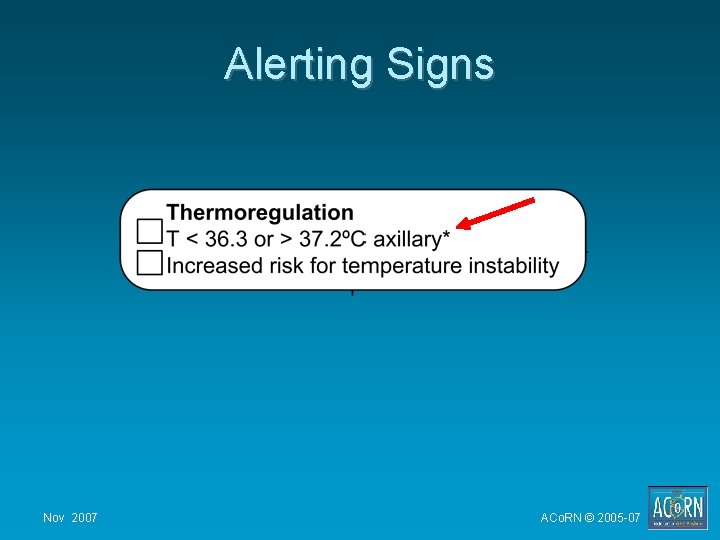
Alerting Signs Nov 2007 ACo. RN © 2005 -07
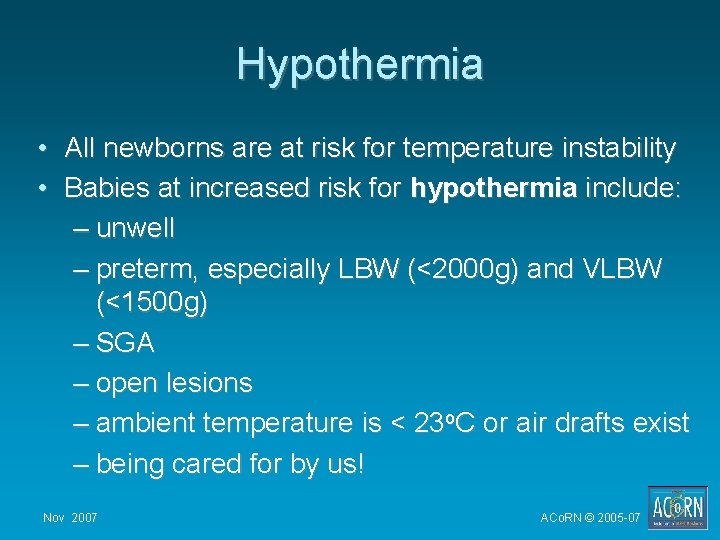
Hypothermia • All newborns are at risk for temperature instability • Babies at increased risk for hypothermia include: – unwell – preterm, especially LBW (<2000 g) and VLBW (<1500 g) – SGA – open lesions – ambient temperature is < 23 o. C or air drafts exist – being cared for by us! Nov 2007 ACo. RN © 2005 -07
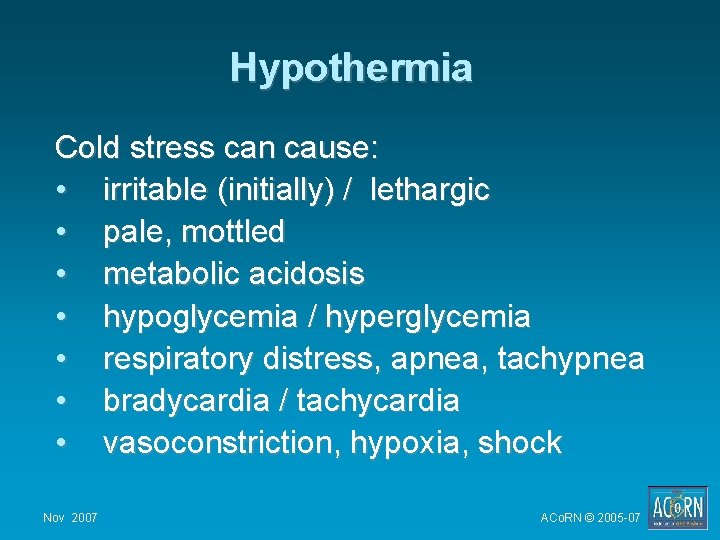
Hypothermia Cold stress can cause: • irritable (initially) / lethargic • pale, mottled • metabolic acidosis • hypoglycemia / hyperglycemia • respiratory distress, apnea, tachypnea • bradycardia / tachycardia • vasoconstriction, hypoxia, shock Nov 2007 ACo. RN © 2005 -07
Hyperthermia • Causes include: – iatrogenic – maternal epidural – maternal hyperthermia – infection – CNS disorders – administration of Pg. E 1 • Babies with intrapartum or neonatal hyperthermia are at increased risk of neurodevelopmental complications Nov 2007 ACo. RN © 2005 -07
Core Steps Nov 2007 ACo. RN © 2005 -07
Organization of Care and Response Nov 2007 ACo. RN © 2005 -07
Specific Management Nov 2007 ACo. RN © 2005 -07
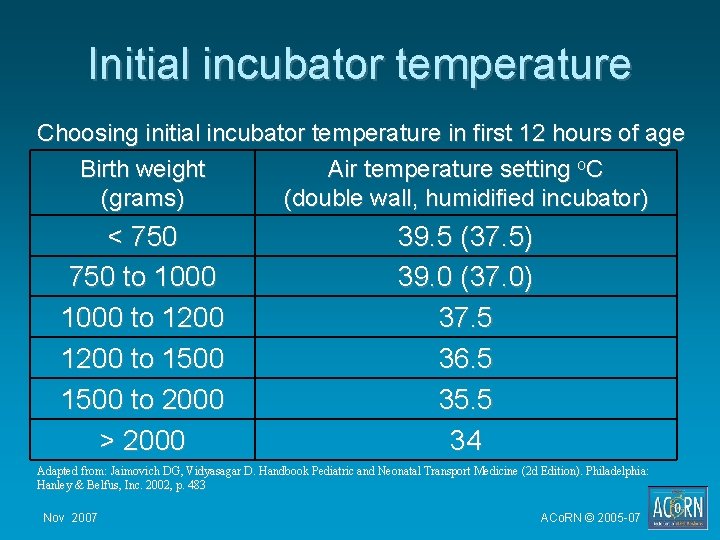
Initial incubator temperature Choosing initial incubator temperature in first 12 hours of age Birth weight Air temperature setting o. C (grams) (double wall, humidified incubator) < 750 to 1000 to 1200 to 1500 to 2000 > 2000 39. 5 (37. 5) 39. 0 (37. 0) 37. 5 36. 5 35. 5 34 Adapted from: Jaimovich DG, Vidyasagar D. Handbook Pediatric and Neonatal Transport Medicine (2 d Edition). Philadelphia: Hanley & Belfus, Inc. 2002, p. 483 Nov 2007 ACo. RN © 2005 -07
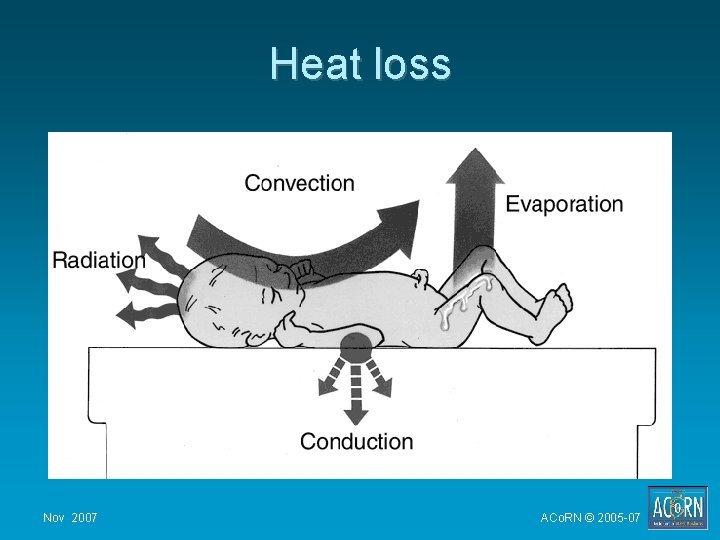
Heat loss Nov 2007 ACo. RN © 2005 -07
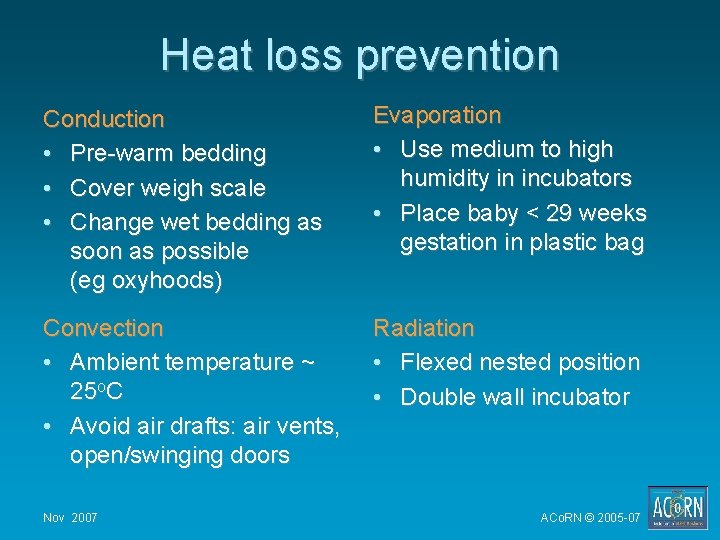
Heat loss prevention Conduction • Pre-warm bedding • Cover weigh scale • Change wet bedding as soon as possible (eg oxyhoods) Evaporation • Use medium to high humidity in incubators • Place baby < 29 weeks gestation in plastic bag Convection • Ambient temperature ~ 25 o. C • Avoid air drafts: air vents, open/swinging doors Radiation • Flexed nested position • Double wall incubator Nov 2007 ACo. RN © 2005 -07
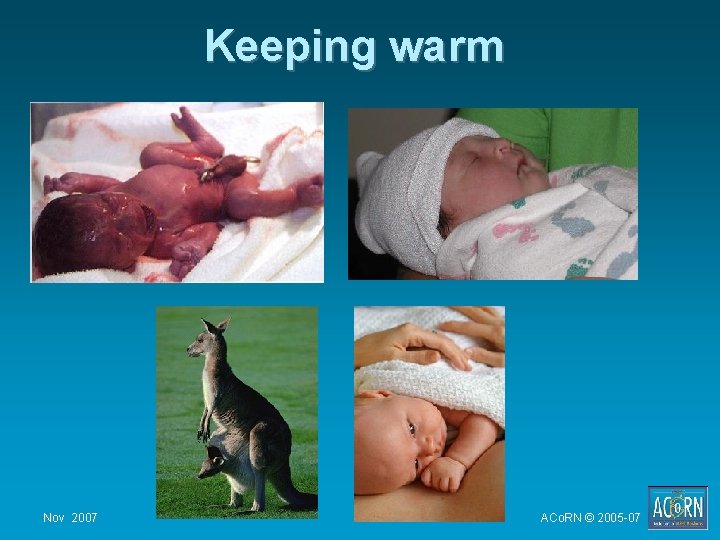
Keeping warm Nov 2007 ACo. RN © 2005 -07
Questions? Nov 2007 ACo. RN © 2005 -07