
Vinnytsya National Pirogov Memorial Medical University Pathophysiology Department

- Slides: 35
Vinnytsya National Pirogov Memorial Medical University Pathophysiology Department Lecture on the topic: Violation of heat exchange. Ph. D. , Victoriya Piliponova
The average daily temperature of the human body is 36, 4 -37, 2°C (97, 3 -99, 5 F) under measuring in an armpit fossula. The day's rhythm of temperature hesitates within the limits of 1°C. Between 5 and 6 o'clock a. m. the body temperature is the lowest At 6 o'clock p. m. the body temperature is the highest
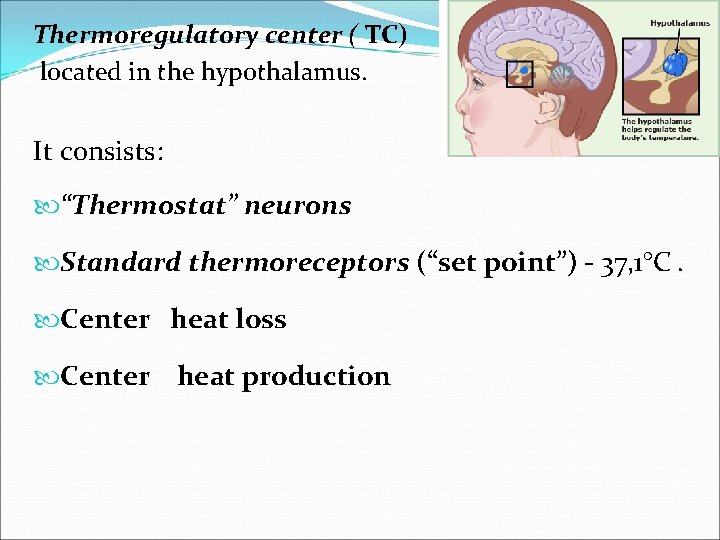
Thermoregulatory center ( TC) located in the hypothalamus. It consists: “Thermostat” neurons Standard thermoreceptors (“set point”) - 37, 1°C. Center heat loss Center heat production
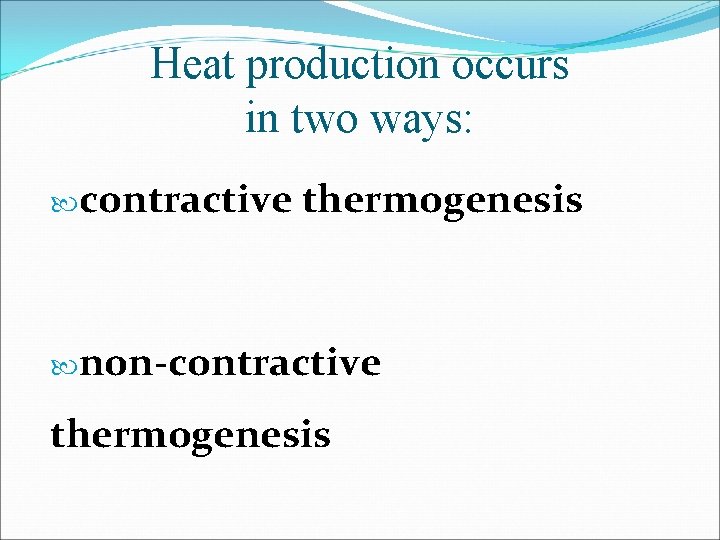
Heat production occurs in two ways: contractive thermogenesis non-contractive thermogenesis
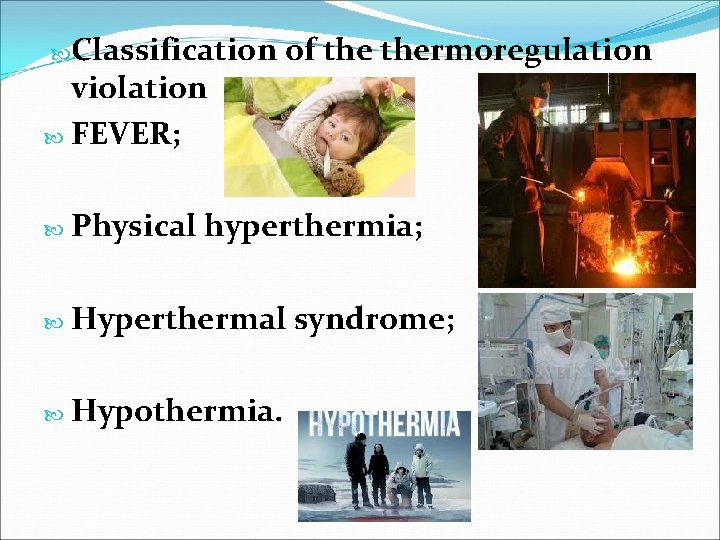
Classification violation FEVER; of thermoregulation Physical hyperthermia; Hyperthermal syndrome; Hypothermia.
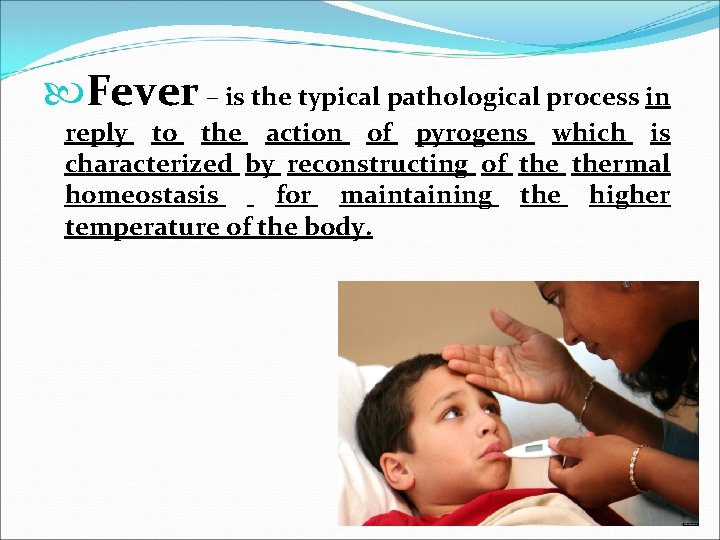
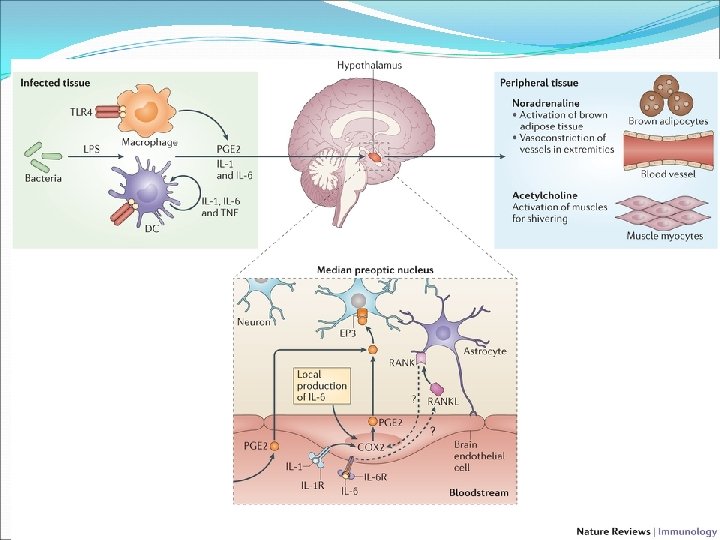
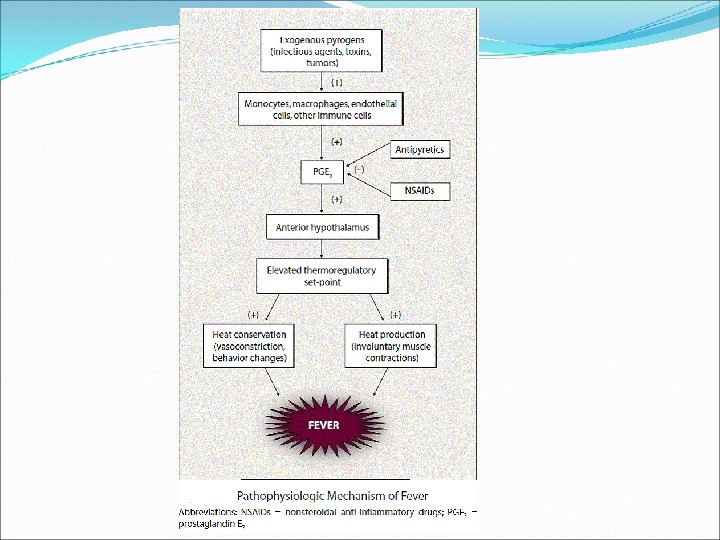
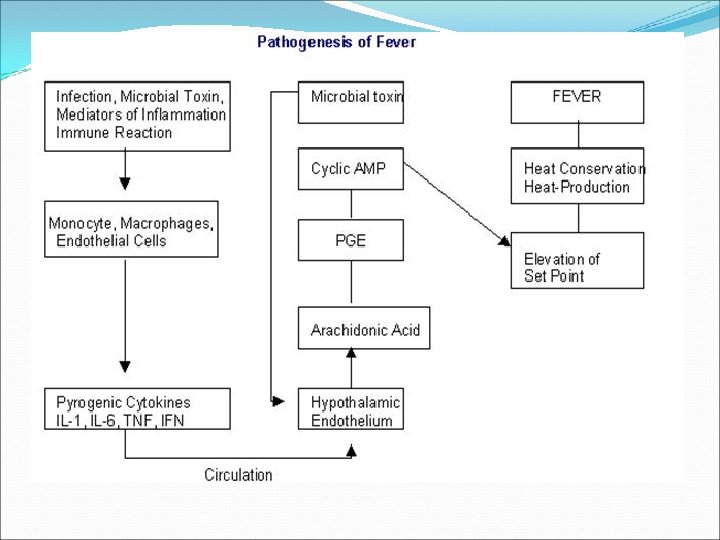
Fever – is the typical pathological process in reply to the action of pyrogens which is characterized by reconstructing of thermal homeostasis for maintaining the higher temperature of the body.
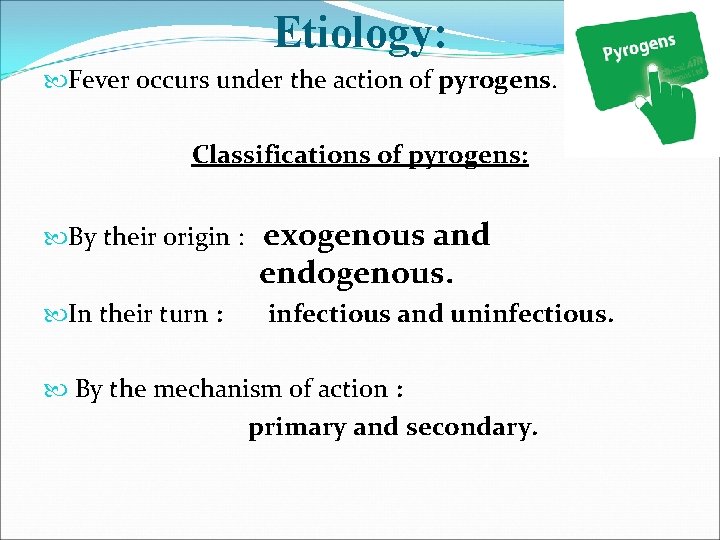
Etiology: Fever occurs under the action of pyrogens. Classifications of pyrogens: By their origin : exogenous and endogenous. In their turn : infectious and uninfectious. By the mechanism of action : primary and secondary.
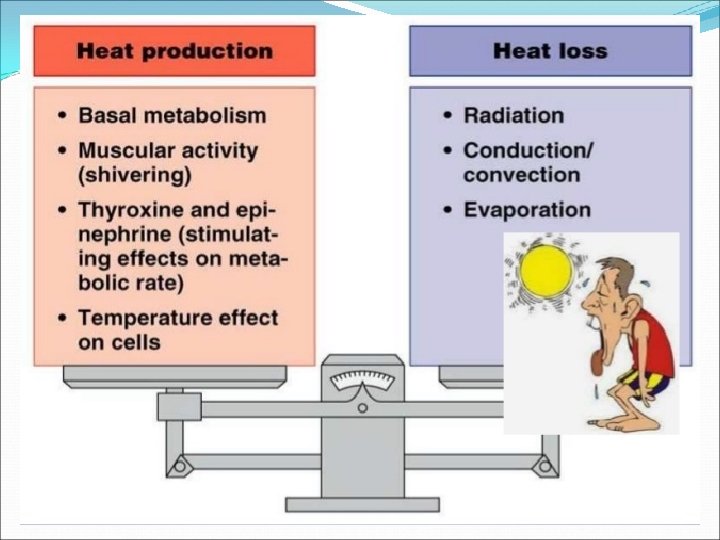
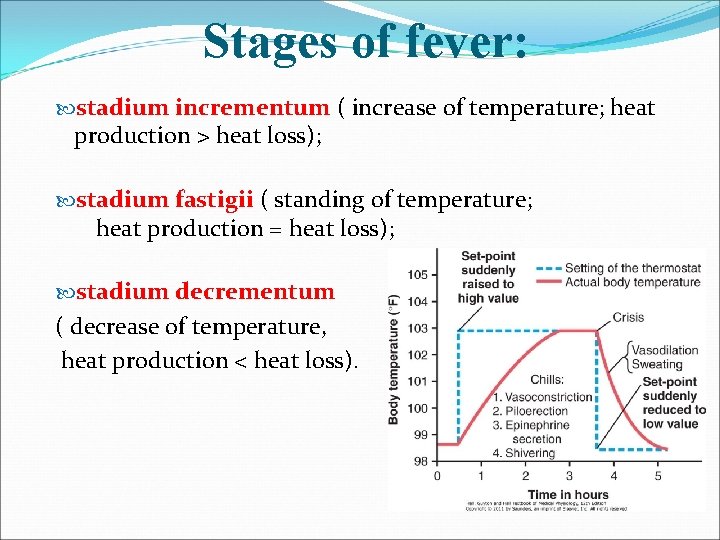
Stages of fever: stadium incrementum ( increase of temperature; heat production > heat loss); stadium fastigii ( standing of temperature; heat production = heat loss); stadium decrementum ( decrease of temperature, heat production < heat loss).
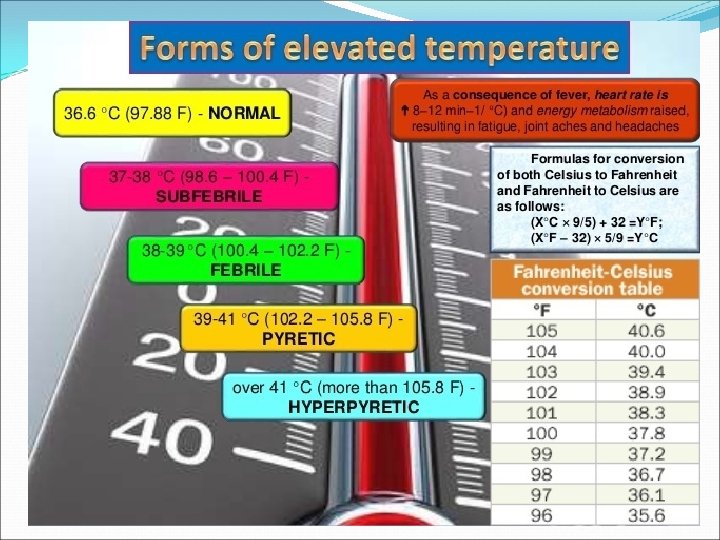
Classification of fever according to the level of temperature: subfebrile - from 37°C to 38°C; moderate - from 38°C to 39°C; high - from 39°C to 41°C; hyperpyretic - over 41°C.
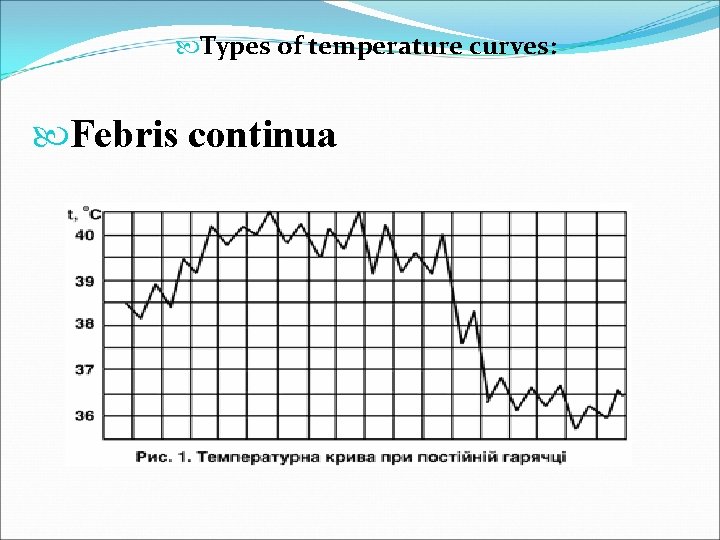
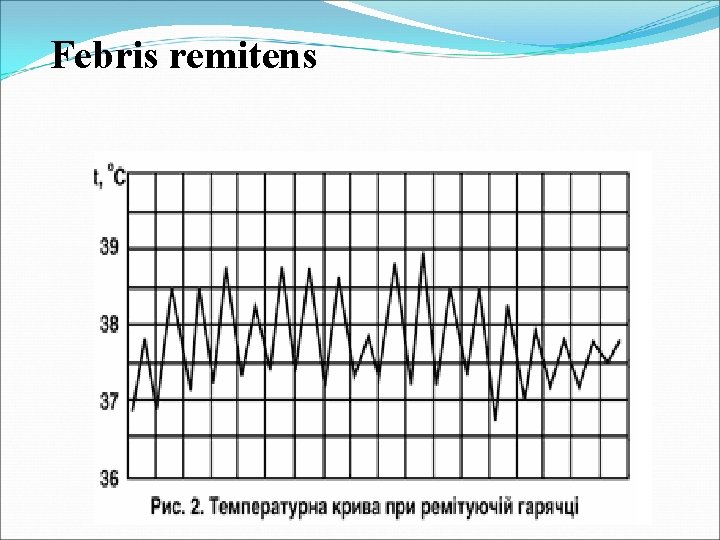
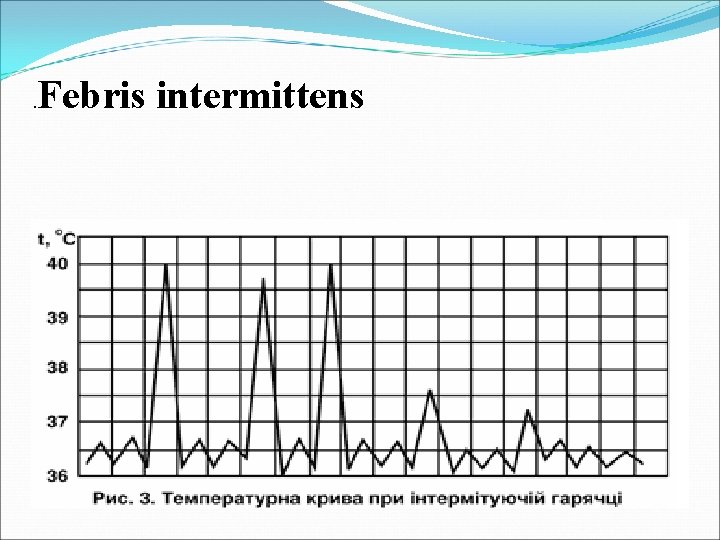
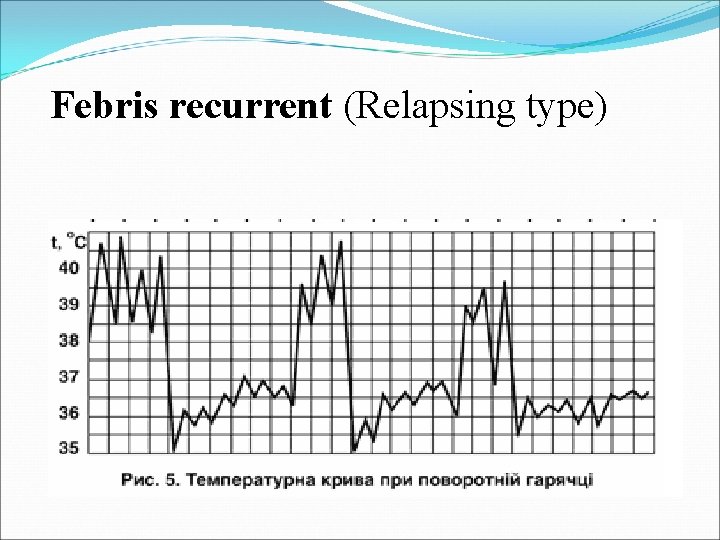
The second stage of fever - the stage of standing of temperature. At this stage of the fever may occur daily fluctuations in body temperature, which called the temperature curve.
Types of temperature curves: Febris continua
Febris remitens
Febris intermittens .
Febris recurrent (Relapsing type)
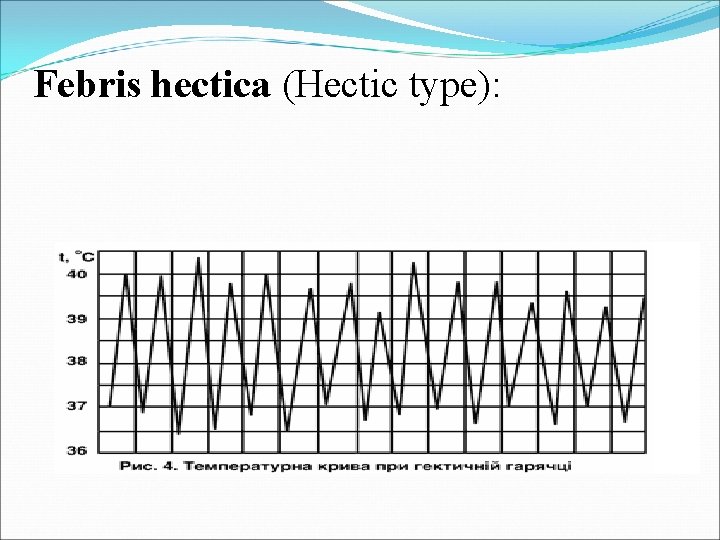
Febris hectica (Hectic type):
Febris inversa (Reverse type) Febris undulans (Undulating type) Febris atypica (Irregular type)
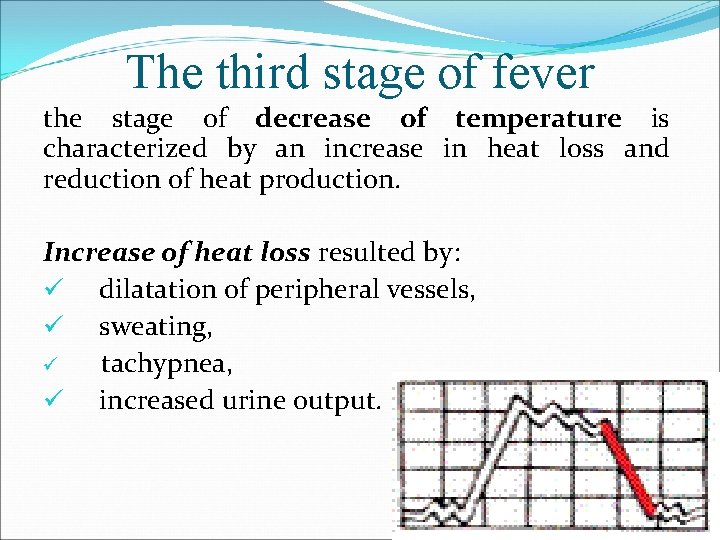
The third stage of fever the stage of decrease of temperature is characterized by an increase in heat loss and reduction of heat production. Increase of heat loss resulted by: ü dilatation of peripheral vessels, ü sweating, ü tachypnea, ü increased urine output.
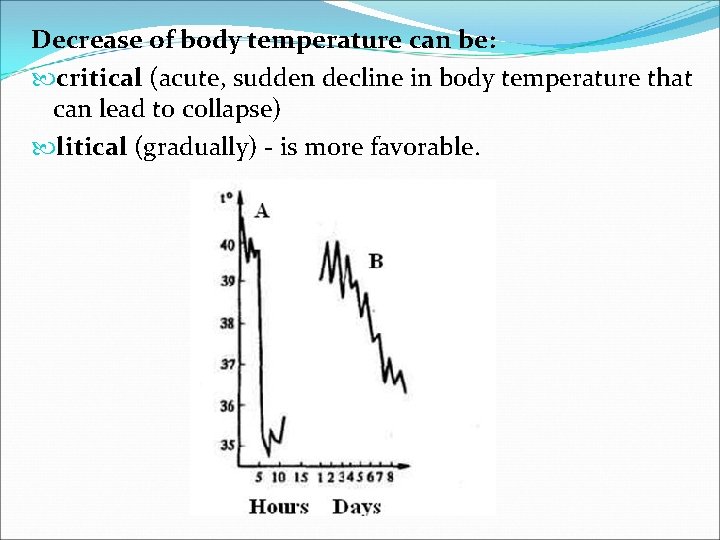
Decrease of body temperature can be: critical (acute, sudden decline in body temperature that can lead to collapse) litical (gradually) - is more favorable.
The principles of antipyretic therapy: Treatment fiver – only over 38, 5!!!! 1. Etiotropic – influence on the pyrogens 2. Patogenic: inhibitors COX 2 (Non-narcotic analgesics). phospholipase A 2 inhibitors. 3. Symptomatic
Changes from the side of organs and systems at fever. Cardiovascular system. increase of strock and cardiac volume, increased heart rate; (Libermeister’s rules: increase of body temperature at 1°C leads to an increase in heart rate by 8 -10 beats / min. ) decrease of vascular tone until the collapse that can occur during a critical reduction in body temperature at 3 rd stage.
Changes from the side of organs and systems at fever. Digestive system. reduction of secretory and motor functions of the gastrointestinal tract; reduction or loss of appetite; reduction of saliva. Respiratory system. ü Tachypnea at the 3 rd stage. ü CNS. ü Inhibition of the CNS; ü Febrile convulsions at kids.
Changes from the side of organs and systems at fever. Protein metabolism: negative nitrogen balance; Acid-base balance: metabolic acidosis; Water-electrolyte metabolism: dehydration. Basal metabolism: increased by 10 -12% with an increase in body temperature at 10°C. Carbohydrate metabolism: hyperglycemia Fat metabolism : ketoacidosis, ketonuria.
Significance of fever. Positive: destroying of some bacteria and decrease activity of virus replication; increased sensitivity of microorganisms to antibiotics; increase of synthesis of antibodies; increased activity of phagocytosis;
Significance of fever. Negative: Arrhythmias, acute cardiovascular failure, collapse. Periodic breathing. Ketonemic and hyperosmolar coma. fever in pregnant is dangerous during the formation of fetus organs and systems, could affect placentation, slow mental activity, febrile convulsions, delirium, loss of consciousness; individual intolerance.
Pyrotherapy Is a high temperature application in medicine for therapeutic purposes. Pyrotherapy used for: activation of reparative processes after injury, burns, scars, treatment of sexually transmitted diseases, in oncology practice.
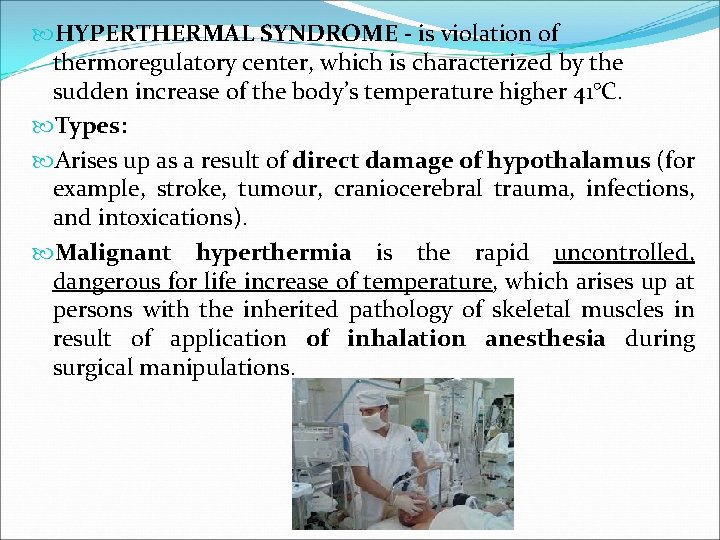
HYPERTHERMAL SYNDROME - is violation of thermoregulatory center, which is characterized by the sudden increase of the body’s temperature higher 41°C. Types: Arises up as a result of direct damage of hypothalamus (for example, stroke, tumour, craniocerebral trauma, infections, and intoxications). Malignant hyperthermia is the rapid uncontrolled, dangerous for life increase of temperature, which arises up at persons with the inherited pathology of skeletal muscles in result of application of inhalation anesthesia during surgical manipulations.
Etiology. Is the inherited pathology, which arises up as a result of mutation to the gene on the long shoulder of 19 -th chromosome, which encodes albumen which controls the exit of ions of calcium from sarcoplasmic reticulum in a cytoplasm during reduction of muscles. It is inherited autosomal-dommant.
Hypothermia - the state of the body in which the body temperature drops below the support necessary for normal metabolism and body functions. If the person have hypothermia, the temperature – + 35, 0 ° C (+95, 0 °F) and below. ↓↓ metabolic rate → reducing the need for oxygen.
Types of hypothermia: Local hypothermia: for treating bleeding, injuries and inflammations. General hypothermia: during heart surgery, the treatment of traumatic brain injury, intracranial hemorrhage