
Food Life Steady State Water O 2 Heat


- Slides: 15
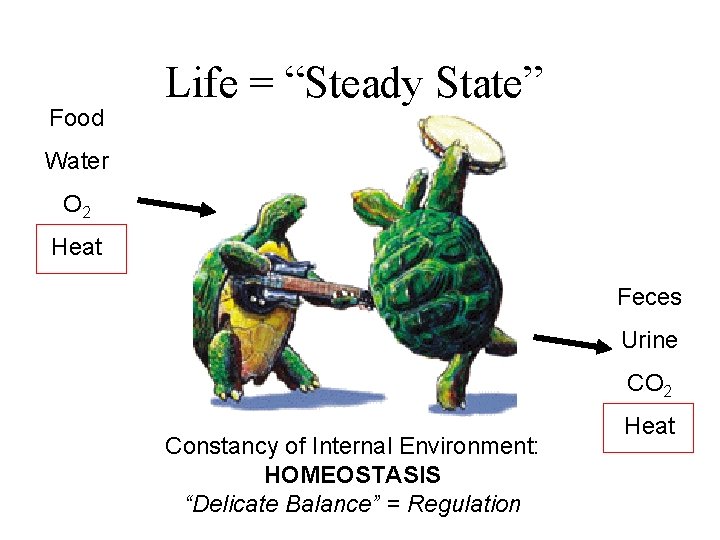
Food Life = “Steady State” Water O 2 Heat Feces Urine CO 2 Constancy of Internal Environment: HOMEOSTASIS “Delicate Balance” = Regulation Heat
Temperature It’s good to be constant
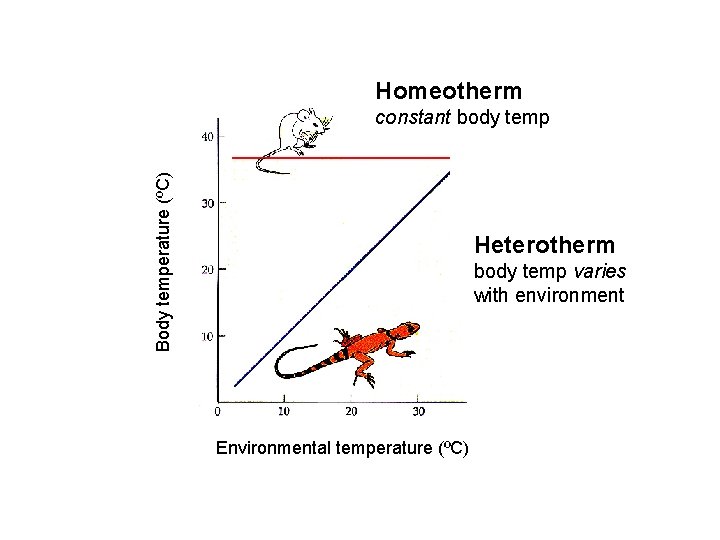
Homeotherm Body temperature (ºC) constant body temp Heterotherm body temp varies with environment Environmental temperature (ºC)
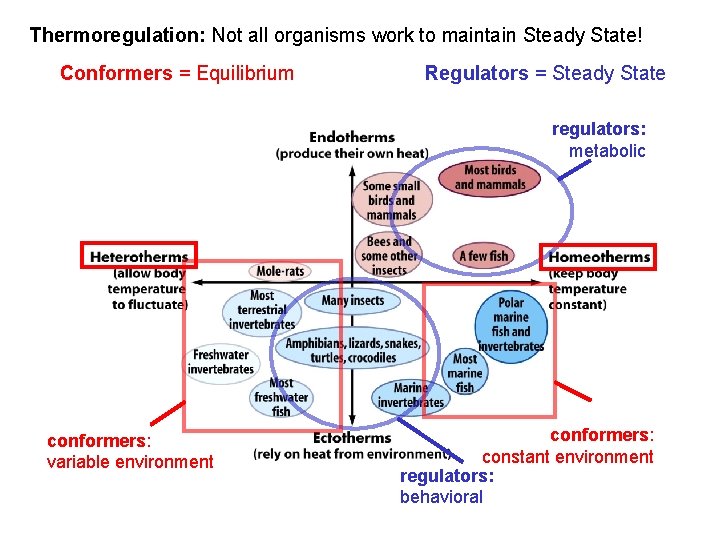
Thermoregulation: Not all organisms work to maintain Steady State! Conformers = Equilibrium Regulators = Steady State regulators: metabolic conformers: variable environment conformers: constant environment regulators: behavioral
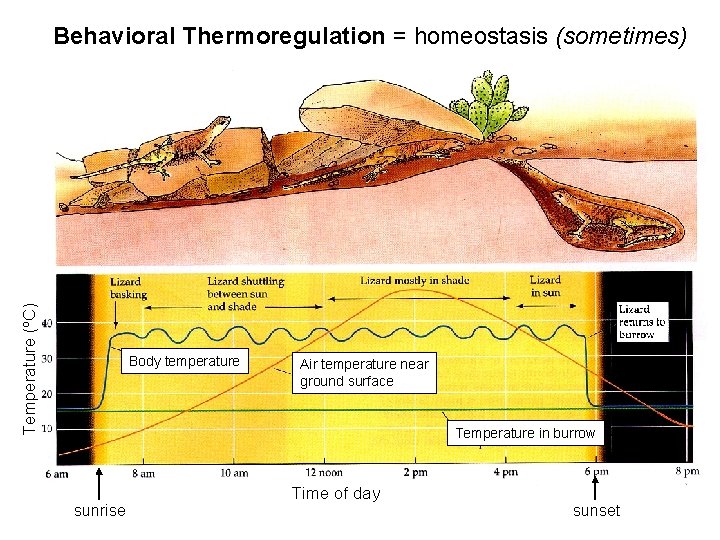
Temperature (ºC) Behavioral Thermoregulation = homeostasis (sometimes) Body temperature Air temperature near ground surface Temperature in burrow sunrise Time of day sunset
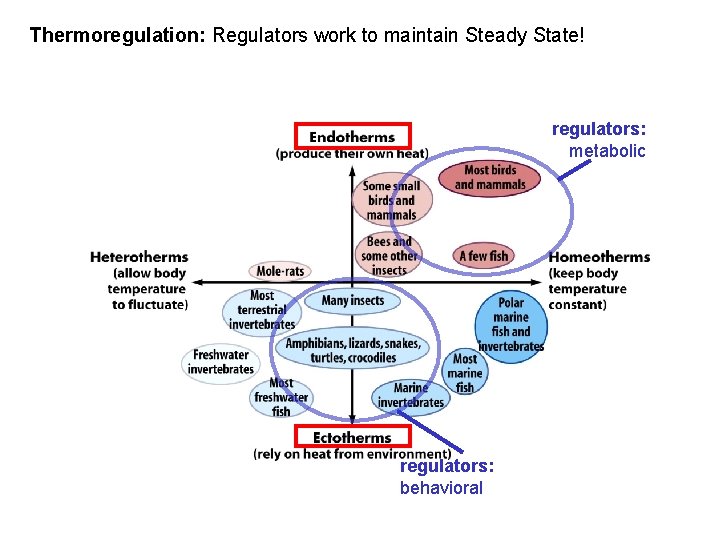
Thermoregulation: Regulators work to maintain Steady State! regulators: metabolic regulators: behavioral
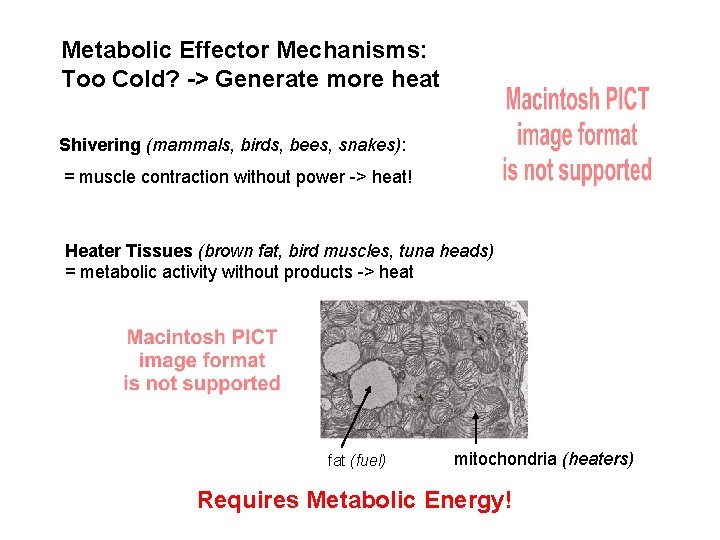
Metabolic Effector Mechanisms: Too Cold? -> Generate more heat Shivering (mammals, birds, bees, snakes): = muscle contraction without power -> heat! Heater Tissues (brown fat, bird muscles, tuna heads) = metabolic activity without products -> heat fat (fuel) mitochondria (heaters) Requires Metabolic Energy!
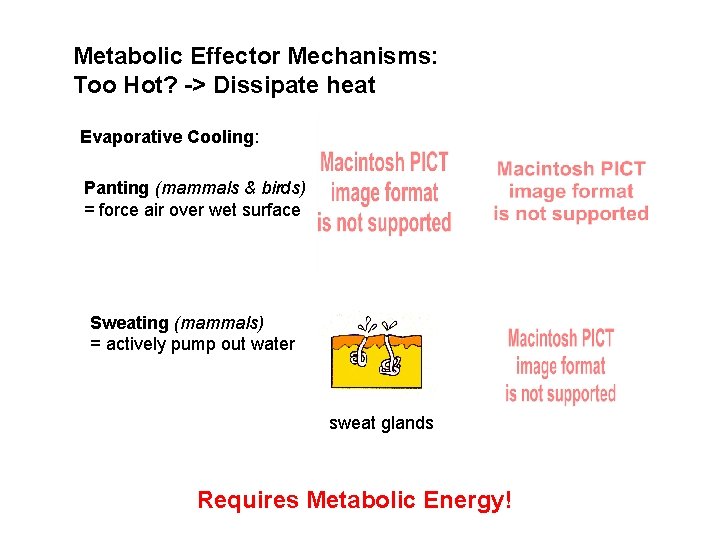
Metabolic Effector Mechanisms: Too Hot? -> Dissipate heat Evaporative Cooling: Panting (mammals & birds) = force air over wet surface Sweating (mammals) = actively pump out water sweat glands Requires Metabolic Energy!
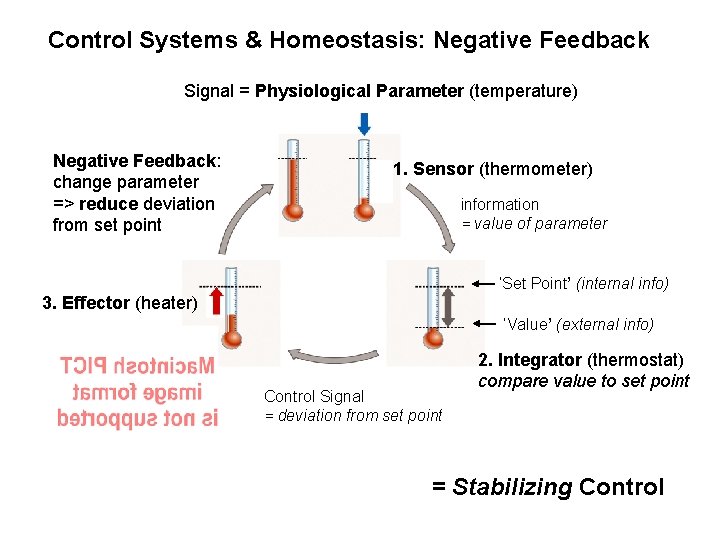
Control Systems & Homeostasis: Negative Feedback Signal = Physiological Parameter (temperature) Negative Feedback: change parameter => reduce deviation from set point 1. Sensor (thermometer) information = value of parameter ‘Set Point’ (internal info) 3. Effector (heater) ‘Value’ (external info) Control Signal = deviation from set point 2. Integrator (thermostat) compare value to set point = Stabilizing Control
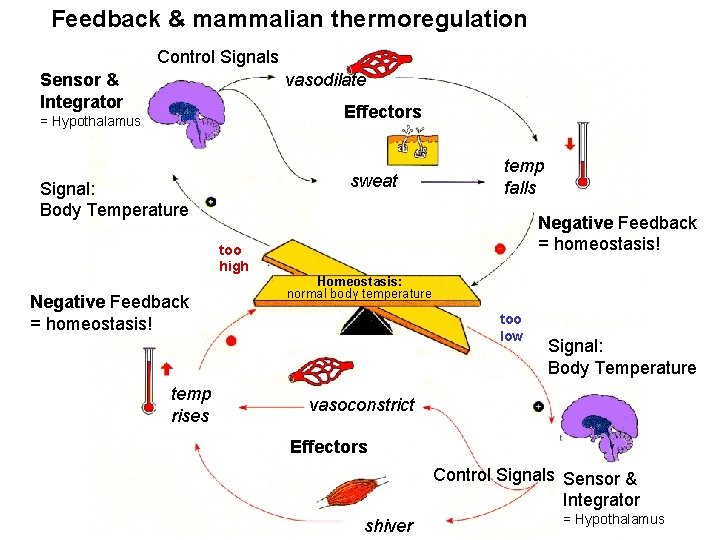
Feedback & mammalian thermoregulation Control Signals vasodilate Sensor & Integrator Effectors = Hypothalamus sweat Signal: Body Temperature too high Negative Feedback = homeostasis! temp rises temp falls Negative Feedback = homeostasis! Homeostasis: normal body temperature too low Signal: Body Temperature vasoconstrict Effectors Control Signals Sensor & Integrator shiver = Hypothalamus
Positive Feedback = One-Way, Irreversible Changes Clot -> platelet activation -> clotting -> platelet activation -> etc => Stop Bleeding!
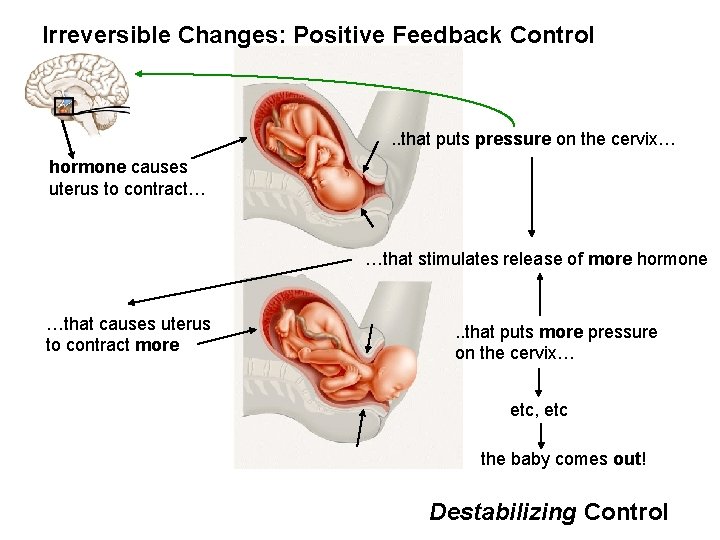
Irreversible Changes: Positive Feedback Control . . that puts pressure on the cervix… hormone causes uterus to contract… …that stimulates release of more hormone …that causes uterus to contract more . . that puts more pressure on the cervix… etc, etc the baby comes out! Destabilizing Control