The SENSECog Care Home Study An Introduction Nisha

- Slides: 16
The SENSE-Cog Care Home Study An Introduction Nisha Chauhan SENSE-Cog Research Assistant & Kristina Link Ph. D Student, University of Manchester SENSE-Cog has received funding from the European Union’s Horizon 2020 research and innovation programme under grant agreement No 668648.
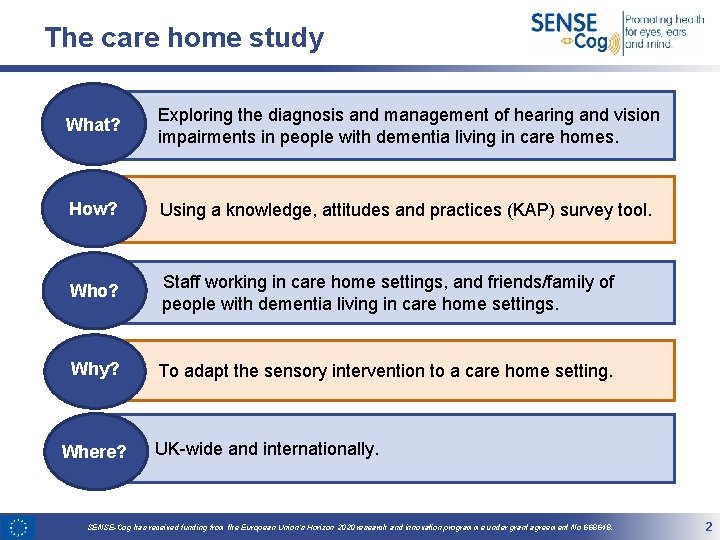
The care home study What? Exploring the diagnosis and management of hearing and vision impairments in people with dementia living in care homes. How? Using a knowledge, attitudes and practices (KAP) survey tool. Who? Staff working in care home settings, and friends/family of people with dementia living in care home settings. Why? To adapt the sensory intervention to a care home setting. Where? UK-wide and internationally. SENSE-Cog has received funding from the European Union’s Horizon 2020 research and innovation programme under grant agreement No 668648. 2
SENSE-Cog has received funding from the European Union’s Horizon 2020 research and innovation programme under grant agreement No 668648. 3
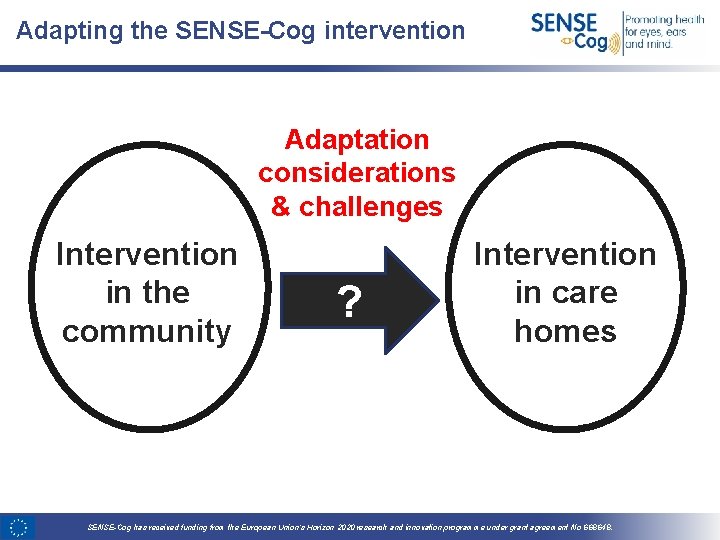
Adapting the SENSE-Cog intervention Adaptation considerations & challenges Intervention in the community ? ? Intervention in care homes SENSE-Cog has received funding from the European Union’s Horizon 2020 research and innovation programme under grant agreement No 668648.
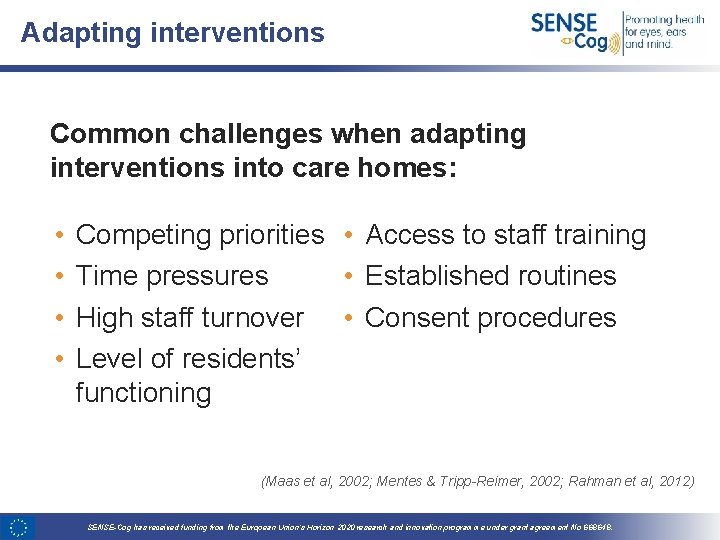
Adapting interventions Common challenges when adapting interventions into care homes: • • Competing priorities • Access to staff training ? Time pressures • Established routines High staff turnover Level of residents’ functioning • Consent procedures (Maas et al, 2002; Mentes & Tripp-Reimer, 2002; Rahman et al, 2012) SENSE-Cog has received funding from the European Union’s Horizon 2020 research and innovation programme under grant agreement No 668648.
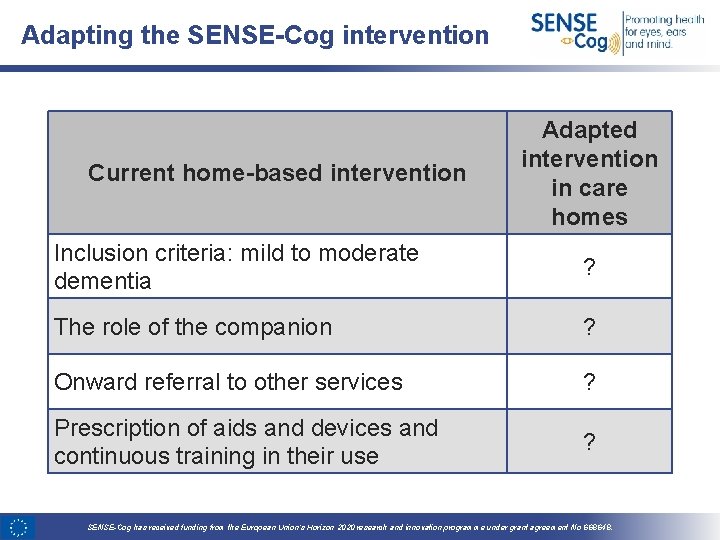
Adapting the SENSE-Cog intervention Current home-based intervention Adapted intervention in care homes Inclusion criteria: mild to moderate dementia ? The role of the companion ? Onward referral to other services ? Prescription of aids and devices and continuous training in their use ? SENSE-Cog has received funding from the European Union’s Horizon 2020 research and innovation programme under grant agreement No 668648.
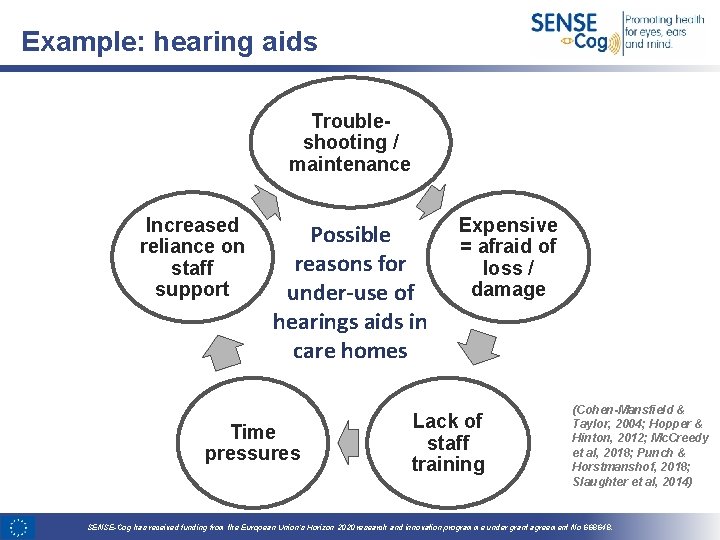
Example: hearing aids Troubleshooting / maintenance Increased reliance on staff support Possible reasons for under-use of hearings aids in care homes Time pressures Expensive = afraid of loss / damage Lack of staff training (Cohen-Mansfield & Taylor, 2004; Hopper & Hinton, 2012; Mc. Creedy et al, 2018; Punch & Horstmanshof, 2018; Slaughter et al, 2014) SENSE-Cog has received funding from the European Union’s Horizon 2020 research and innovation programme under grant agreement No 668648.
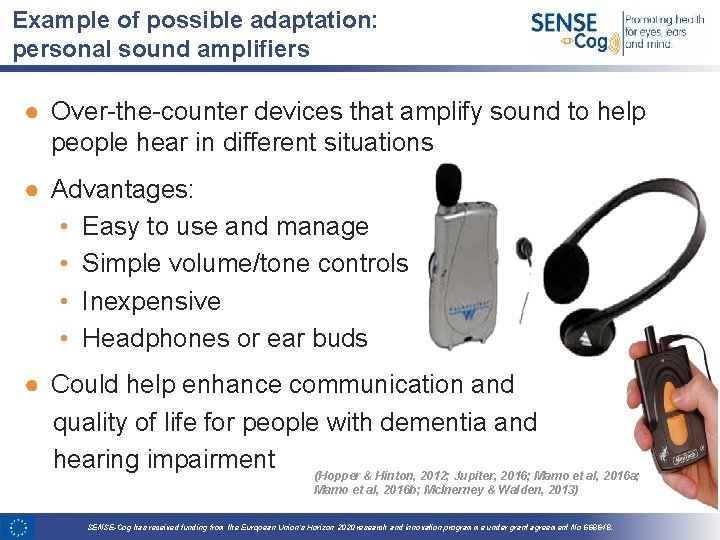
Example of possible adaptation: personal sound amplifiers ● Over-the-counter devices that amplify sound to help people hear in different situations ● Advantages: • Easy to use and manage • Simple volume/tone controls • Inexpensive • Headphones or ear buds ● Could help enhance communication and quality of life for people with dementia and hearing impairment (Hopper & Hinton, 2012; Jupiter, 2016; Mamo et al, 2016 a; Mamo et al, 2016 b; Mc. Inerney & Walden, 2013) SENSE-Cog has received funding from the European Union’s Horizon 2020 research and innovation programme under grant agreement No 668648.
The SENSE-Cog Care Home Study Group Activity SENSE-Cog has received funding from the European Union’s Horizon 2020 research and innovation programme under grant agreement No 668648.
Group activity ● Please complete the activity in groups of 2– 3. ● Please complete one questionnaire per group – you can find this in your registration pack. ● You will have approximately 2 minutes for each question. ● If you need help, please do not hesitate to ask. There are no wrong answers! ● We will collate your responses, and the main themes will be shown on the screen shortly. SENSE-Cog has received funding from the European Union’s Horizon 2020 research and innovation programme under grant agreement No 668648.
Scenario 1 ● Imagine you work in a care home with people with dementia – for example as a manager, nurse, allied health professional or paid caregiver. ● What do you think are the important things to consider when supporting a person with a hearing and/or vision impairment? 1: 00 1: 01 1: 02 1: 03 1: 04 1: 05 1: 06 1: 07 1: 08 1: 09 1: 10 1: 11 1: 12 1: 13 1: 14 1: 15 1: 16 1: 17 1: 18 1: 19 1: 20 1: 21 1: 22 1: 23 1: 24 1: 25 1: 26 1: 27 1: 28 1: 29 1: 30 1: 31 1: 32 1: 33 1: 34 1: 35 1: 36 1: 37 1: 38 1: 39 1: 40 1: 41 1: 42 1: 43 1: 44 1: 45 1: 46 1: 47 1: 48 1: 49 1: 50 1: 51 1: 52 1: 53 1: 54 1: 55 1: 56 1: 57 1: 58 1: 59 2: 00 0: 01 0: 02 0: 03 0: 04 0: 05 0: 06 0: 07 0: 08 0: 09 0: 10 0: 11 0: 12 0: 13 0: 14 0: 15 0: 16 0: 17 0: 18 0: 19 0: 20 0: 21 0: 22 0: 23 0: 24 0: 25 0: 26 0: 27 0: 28 0: 29 0: 30 0: 31 0: 32 0: 33 0: 34 0: 35 0: 36 0: 37 0: 38 0: 39 0: 40 0: 41 0: 42 0: 43 0: 44 0: 45 0: 46 0: 47 0: 48 0: 49 0: 50 0: 51 0: 52 0: 53 0: 54 0: 55 0: 56 0: 57 0: 58 0: 59 End SENSE-Cog has received funding from the European Union’s Horizon 2020 research and innovation programme under grant agreement No 668648.
Scenario 2 ● Now imagine that you are a family member or friend of someone living in a care home who has dementia and a hearing and/or vision impairment. ● What do you think your role could be in supporting them? 1: 00 1: 01 1: 02 1: 03 1: 04 1: 05 1: 06 1: 07 1: 08 1: 09 1: 10 1: 11 1: 12 1: 13 1: 14 1: 15 1: 16 1: 17 1: 18 1: 19 1: 20 1: 21 1: 22 1: 23 1: 24 1: 25 1: 26 1: 27 1: 28 1: 29 1: 30 1: 31 1: 32 1: 33 1: 34 1: 35 1: 36 1: 37 1: 38 1: 39 1: 40 1: 41 1: 42 1: 43 1: 44 1: 45 1: 46 1: 47 1: 48 1: 49 1: 50 1: 51 1: 52 1: 53 1: 54 1: 55 1: 56 1: 57 1: 58 1: 59 2: 00 0: 01 0: 02 0: 03 0: 04 0: 05 0: 06 0: 07 0: 08 0: 09 0: 10 0: 11 0: 12 0: 13 0: 14 0: 15 0: 16 0: 17 0: 18 0: 19 0: 20 0: 21 0: 22 0: 23 0: 24 0: 25 0: 26 0: 27 0: 28 0: 29 0: 30 0: 31 0: 32 0: 33 0: 34 0: 35 0: 36 0: 37 0: 38 0: 39 0: 40 0: 41 0: 42 0: 43 0: 44 0: 45 0: 46 0: 47 0: 48 0: 49 0: 50 0: 51 0: 52 0: 53 0: 54 0: 55 0: 56 0: 57 0: 58 0: 59 End SENSE-Cog has received funding from the European Union’s Horizon 2020 research and innovation programme under grant agreement No 668648.
Scenario 3 ● Finally, imagine that you are a person living in a care home who has dementia and a hearing and/or vision impairment. ● How might other’s support you to manage your hearing impairment? 1: 00 1: 01 1: 02 1: 03 1: 04 1: 05 1: 06 1: 07 1: 08 1: 09 1: 10 1: 11 1: 12 1: 13 1: 14 1: 15 1: 16 1: 17 1: 18 1: 19 1: 20 1: 21 1: 22 1: 23 1: 24 1: 25 1: 26 1: 27 1: 28 1: 29 1: 30 1: 31 1: 32 1: 33 1: 34 1: 35 1: 36 1: 37 1: 38 1: 39 1: 40 1: 41 1: 42 1: 43 1: 44 1: 45 1: 46 1: 47 1: 48 1: 49 1: 50 1: 51 1: 52 1: 53 1: 54 1: 55 1: 56 1: 57 1: 58 1: 59 2: 00 0: 01 0: 02 0: 03 0: 04 0: 05 0: 06 0: 07 0: 08 0: 09 0: 10 0: 11 0: 12 0: 13 0: 14 0: 15 0: 16 0: 17 0: 18 0: 19 0: 20 0: 21 0: 22 0: 23 0: 24 0: 25 0: 26 0: 27 0: 28 0: 29 0: 30 0: 31 0: 32 0: 33 0: 34 0: 35 0: 36 0: 37 0: 38 0: 39 0: 40 0: 41 0: 42 0: 43 0: 44 0: 45 0: 46 0: 47 0: 48 0: 49 0: 50 0: 51 0: 52 0: 53 0: 54 0: 55 0: 56 0: 57 0: 58 0: 59 End SENSE-Cog has received funding from the European Union’s Horizon 2020 research and innovation programme under grant agreement No 668648.
The SENSE-Cog Care Home Study Individual Questionnaire SENSE-Cog has received funding from the European Union’s Horizon 2020 research and innovation programme under grant agreement No 668648.
Individual questionnaire ● Please complete the ‘individual questionnaire’ in your packs. ● Please let us know if you need any help. ● All the information you provide will help when adapting the intervention in a care home setting. ● There is a space at the end to give any further comments or feedback. ● We will collect your questionnaire at the door as you leave. SENSE-Cog has received funding from the European Union’s Horizon 2020 research and innovation programme under grant agreement No 668648.
Thank you for your participation SENSE-Cog has received funding from the European Union’s Horizon 2020 research and innovation programme under grant agreement No 668648. 16