The Roots of WWI Quick Draw Activity World







- Slides: 30
The Roots of WWI Quick Draw Activity World War I
Objective • SWBAT sequence the course of events leading up to WWI by completing a quick-draw activity.
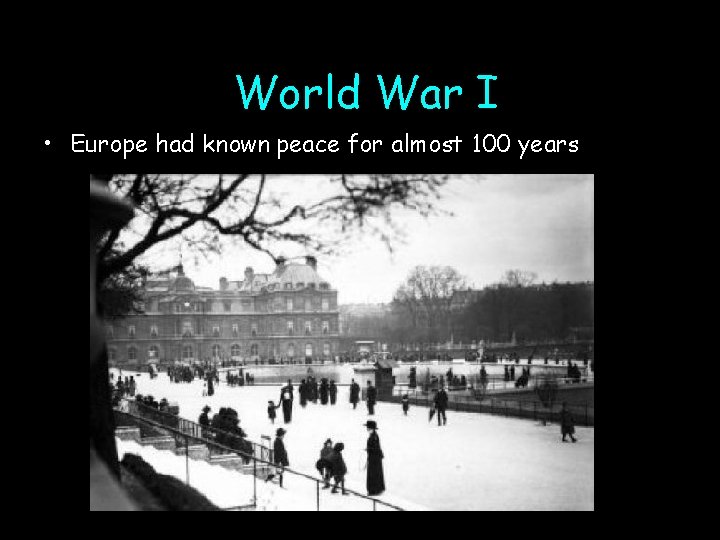
World War I • Europe had known peace for almost 100 years • http: //www. thestar. com/content/dam/thesta r/news/insight/2014/01/04/ebook_excerpt_ the_winter_before_world_war_i/skating_o n_jardinshttp: //www. thestar. com/content/d am/thestar/newhttp: //www. thestar. com/con tent/dam/thestar/news/insight/2014/01/04/ ebook_excerpt_the_winter_before_world_ war_i/skating_on_jardins_du_luxembourg _circa_1913. jpg. size. xxlexcerpt_the_winte
Causes of WWI M. A. N. I. A Militarism Alliances Nationalism Imperialism Assassination
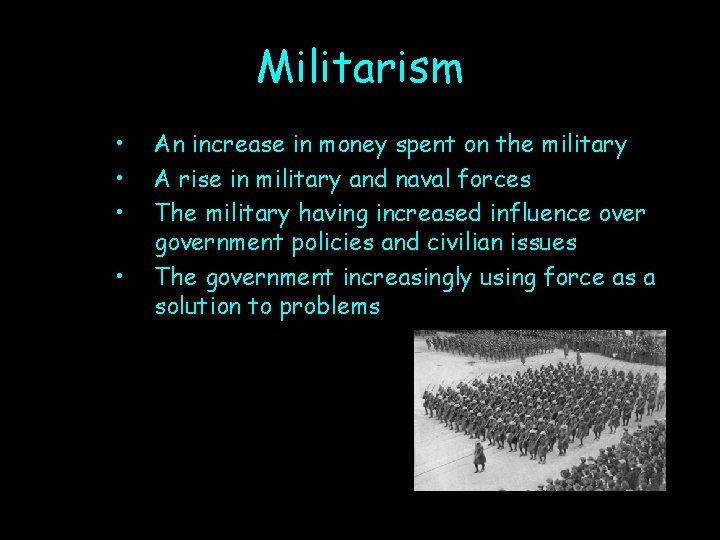
Militarism • • An increase in money spent on the military A rise in military and naval forces The military having increased influence over government policies and civilian issues The government increasingly using force as a solution to problems
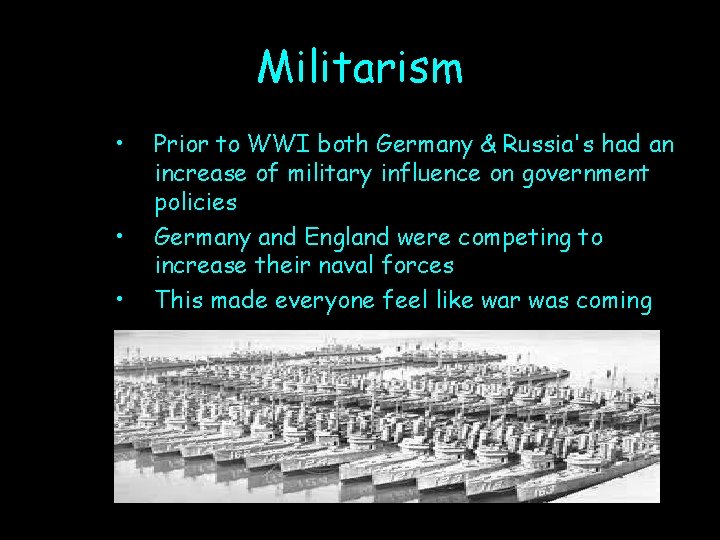
Militarism • • • Prior to WWI both Germany & Russia's had an increase of military influence on government policies Germany and England were competing to increase their naval forces This made everyone feel like war was coming
Quick Draw #1
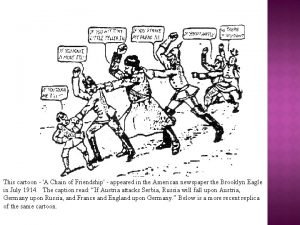
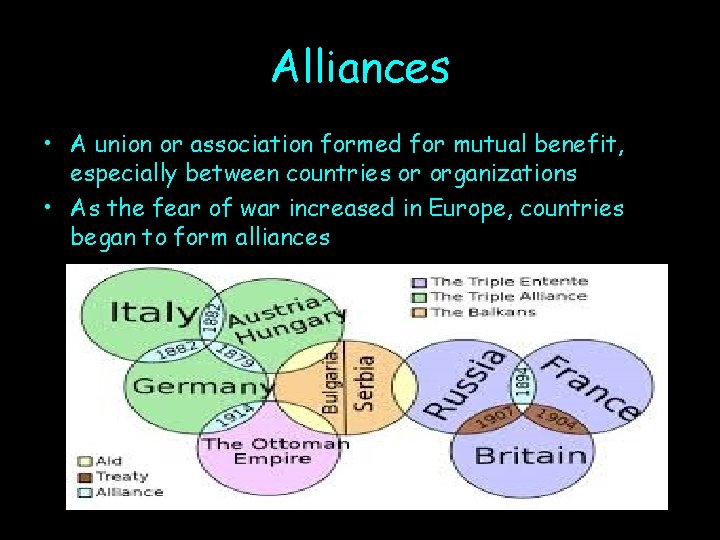
Alliances • A union or association formed for mutual benefit, especially between countries or organizations • As the fear of war increased in Europe, countries began to form alliances
Quick Draw #2
Nationalism • An extreme form of patriotism and loyalty to ones own country; placing the interests of your own country above others. • Prior to WWI, nationalism gave Europeans excessive confidence in their countries government and military. The high-power countries all believed they could not be defeated and would have the upper hand in any war.
Quick Draw #3
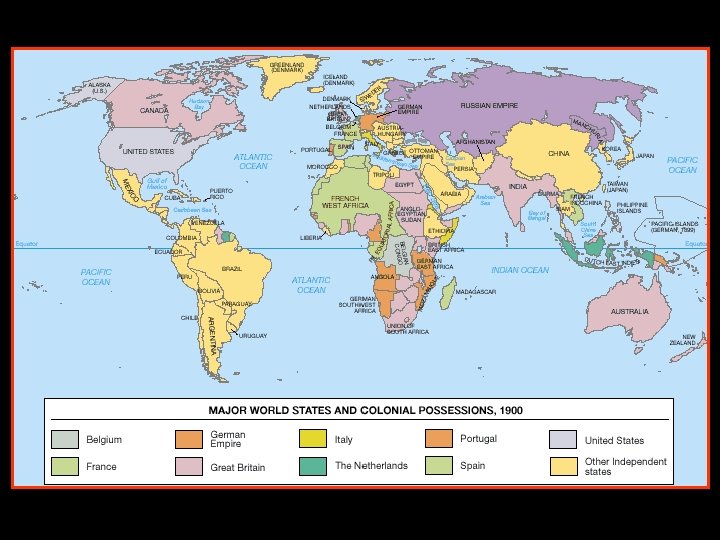
Imperialism • Empire building-countries take possession of new lands through diplomacy or military force. • Many European countries were expanding their empires around the world. • This created competition between the countries
While Europe had been industrializing and building up colonial empires, the Ottoman Empire had been in decline. The Balkans were set to become the “powder keg” that would start World War I…
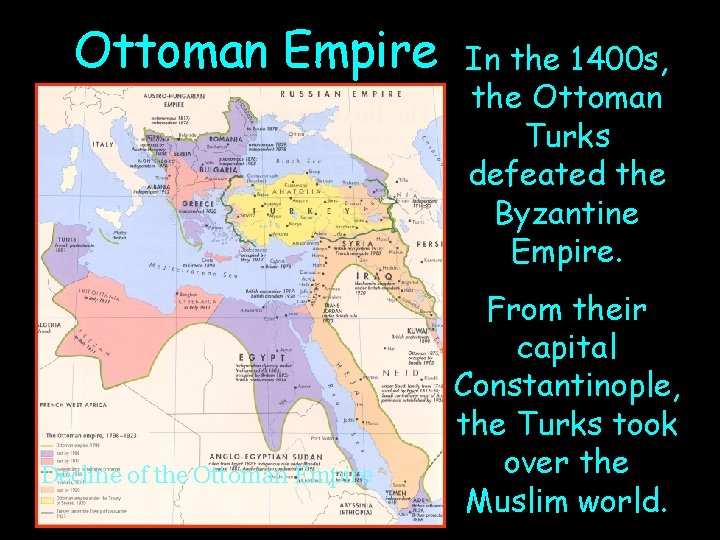
Ottoman Empire Decline of the Ottoman Empire In the 1400 s, the Ottoman Turks defeated the Byzantine Empire. From their capital Constantinople, the Turks took over the Muslim world.
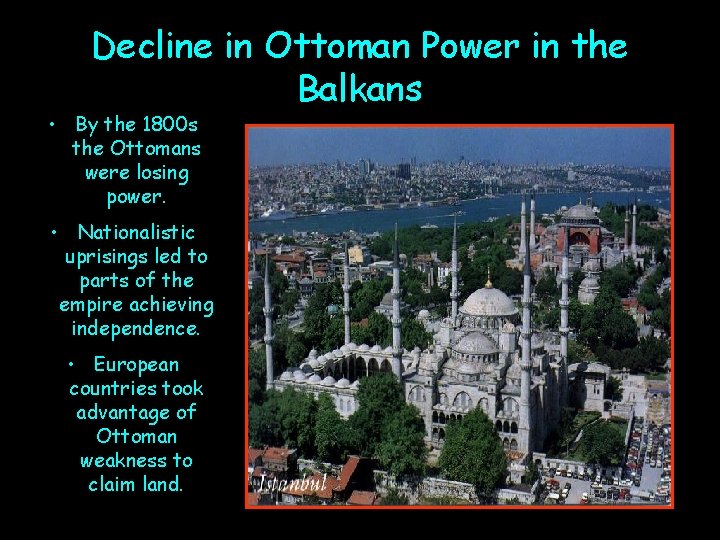
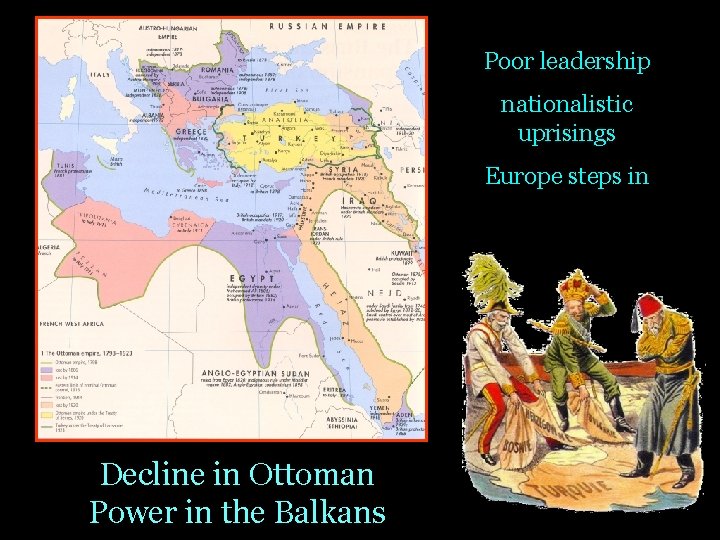
Decline in Ottoman Power in the Balkans • By the 1800 s the Ottomans were losing power. • Nationalistic uprisings led to parts of the empire achieving independence. • European countries took advantage of Ottoman weakness to claim land.
Poor leadership nationalistic uprisings Europe steps in Decline in Ottoman Power in the Balkans
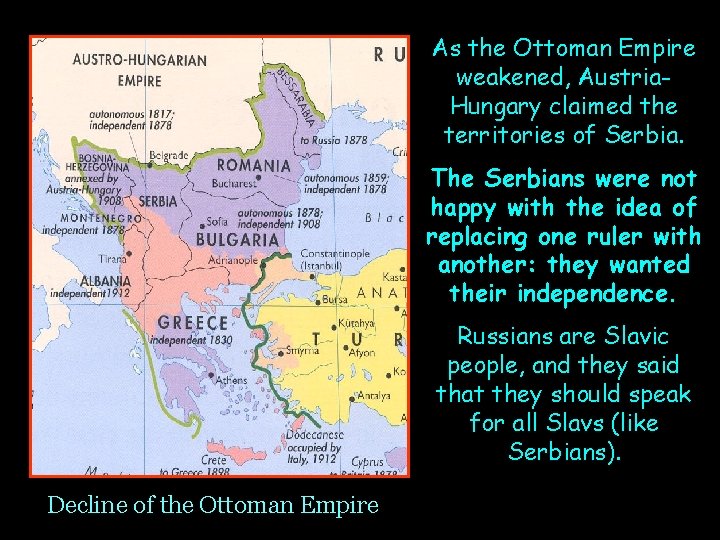
As the Ottoman Empire weakened, Austria. Hungary claimed the territories of Serbia. The Serbians were not happy with the idea of replacing one ruler with another: they wanted their independence. Russians are Slavic people, and they said that they should speak for all Slavs (like Serbians). Decline of the Ottoman Empire
Quick Draw #4
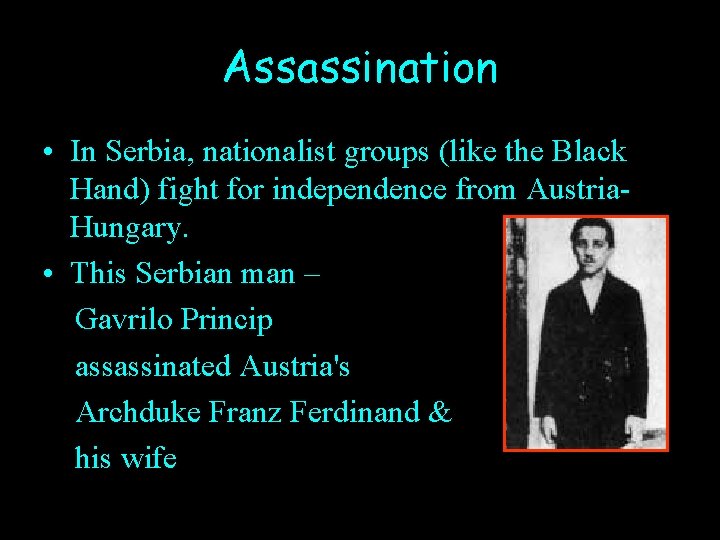
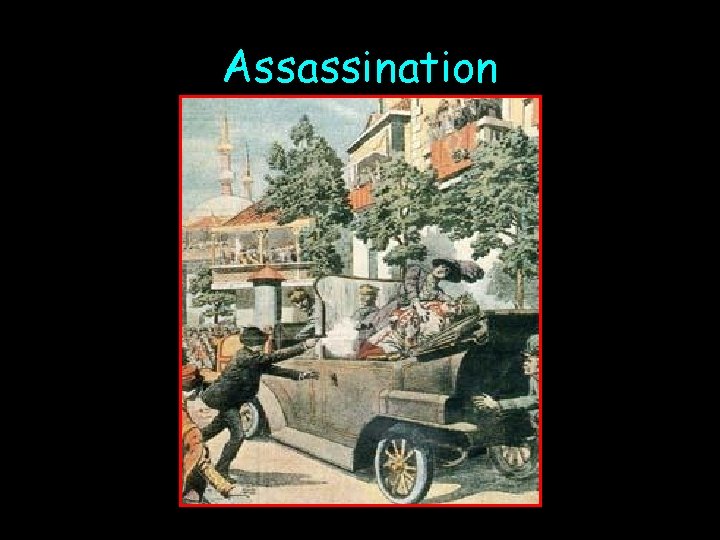
Assassination • In Serbia, nationalist groups (like the Black Hand) fight for independence from Austria. Hungary. • This Serbian man – Gavrilo Princip assassinated Austria's Archduke Franz Ferdinand & his wife
Assassination
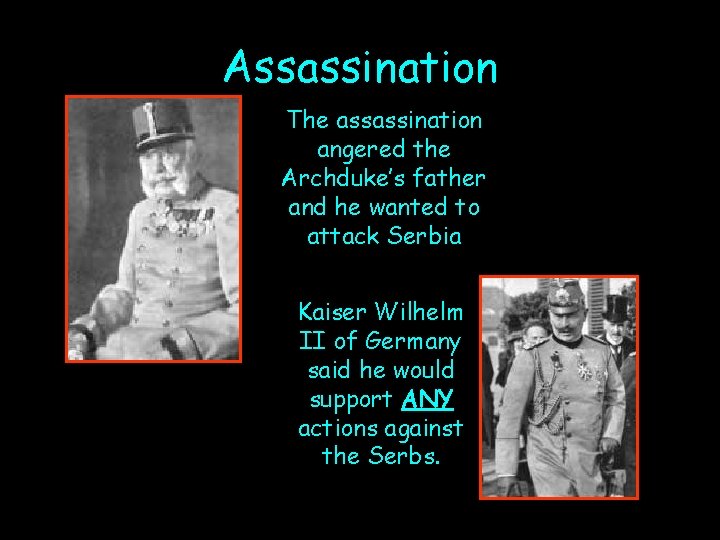
Assassination The assassination angered the Archduke’s father and he wanted to attack Serbia Kaiser Wilhelm II of Germany said he would support ANY actions against the Serbs.
Quick Draw #5
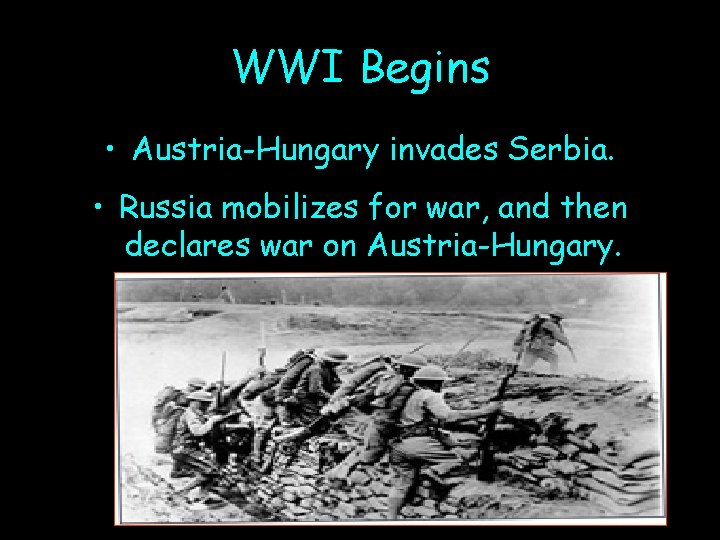
WWI Begins • Austria-Hungary invades Serbia. • Russia mobilizes for war, and then declares war on Austria-Hungary.
The War Begins § long-simmering conflicts in the Balkans boiled over in 1914 when a Serb nationalist assassinated Archduke Franz Ferdinand. § the system of rival alliances came into play and started World War I. § today, historians agree that the major powers shared responsibility for starting World War I.
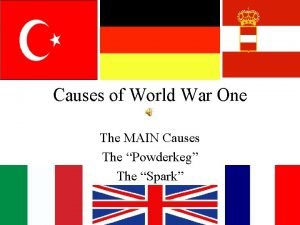
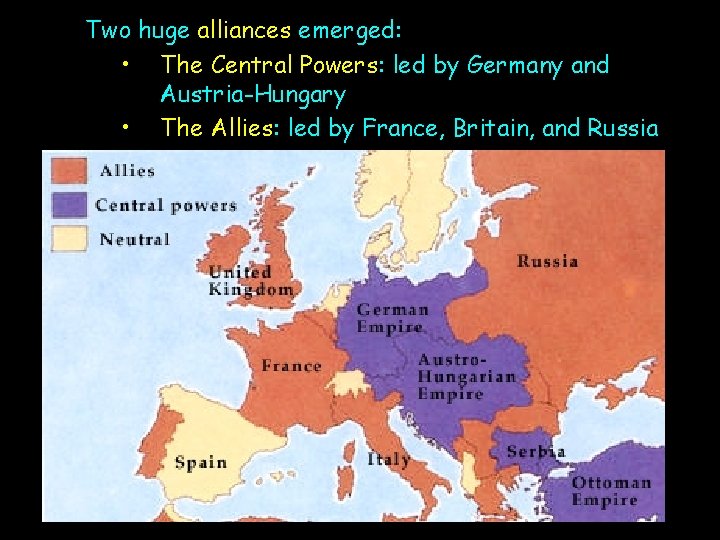
Two huge alliances emerged: • The Central Powers: led by Germany and Austria-Hungary • The Allies: led by France, Britain, and Russia
Quick Draw #6 -Map
Film Clip: The Roots of World War I • Roots of War
Quick Draw #7 & 8
Wrap-Up Discussion • Which country do you think was the most and least at fault for causing WWI?