World War I had a huge impact on

- Slides: 21
World War I had a huge impact on the United States Examine how World War I impacted Americans at home by analyzing each document. Take notes on the chart provided
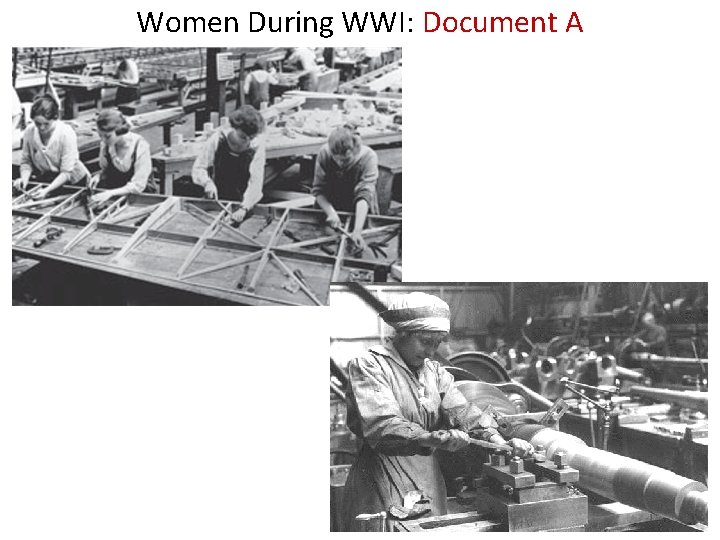
Women During WWI: Document A
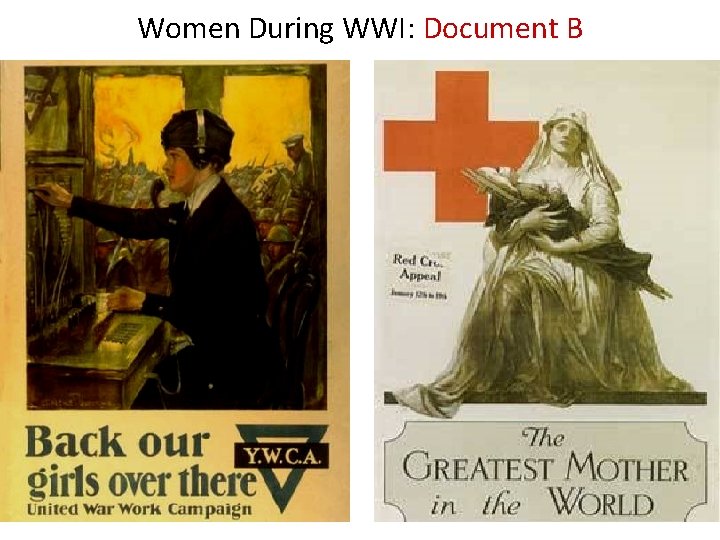
Women During WWI: Document B
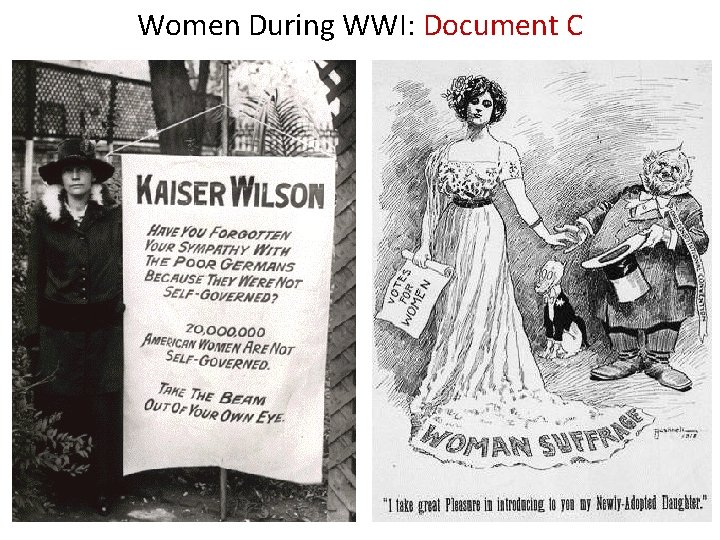
Women During WWI: Document C
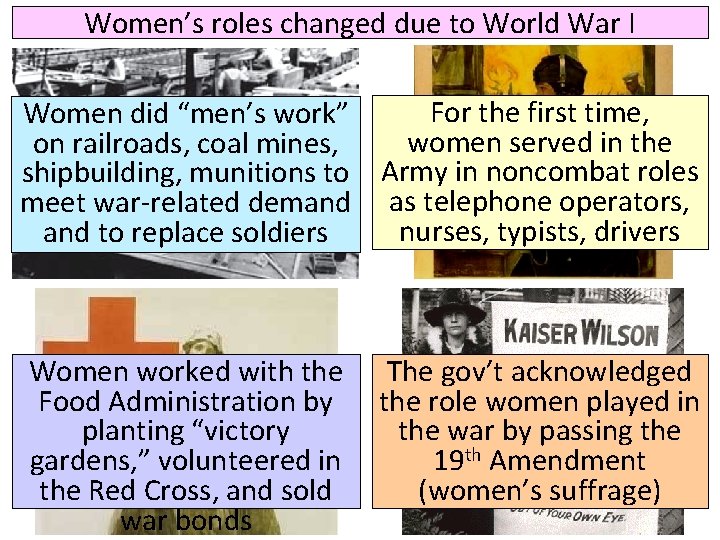
Women’s roles changed due to World War I For the first time, Women did “men’s work” women served in the on railroads, coal mines, shipbuilding, munitions to Army in noncombat roles meet war-related demand as telephone operators, nurses, typists, drivers and to replace soldiers Women worked with the Food Administration by planting “victory gardens, ” volunteered in the Red Cross, and sold war bonds The gov’t acknowledged the role women played in the war by passing the 19 th Amendment (women’s suffrage)
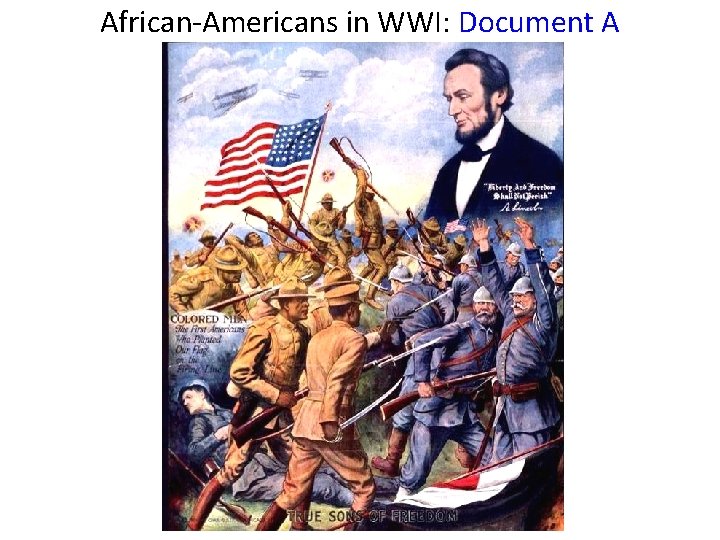
African-Americans in WWI: Document A
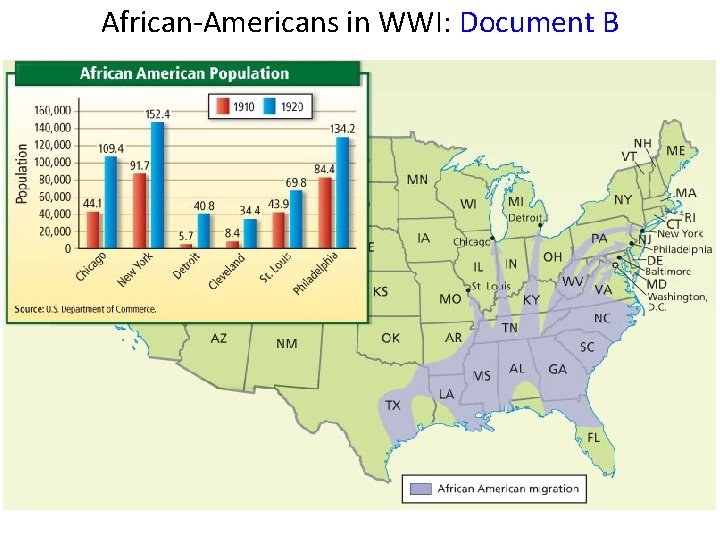
African-Americans in WWI: Document B
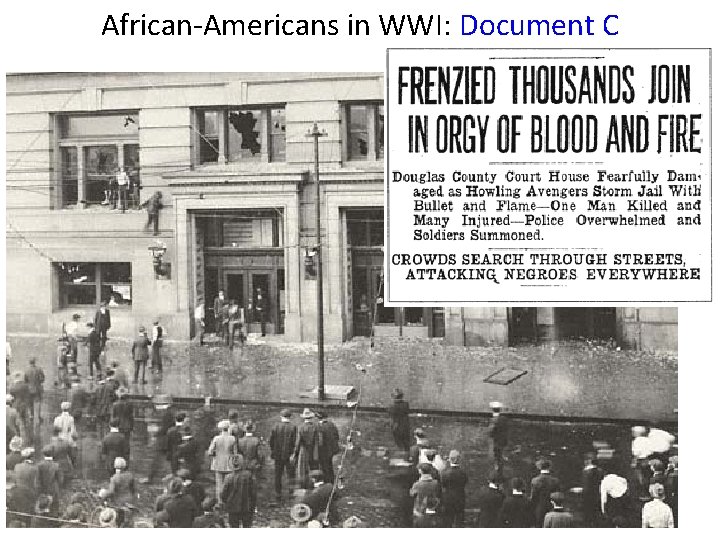
African-Americans in WWI: Document C
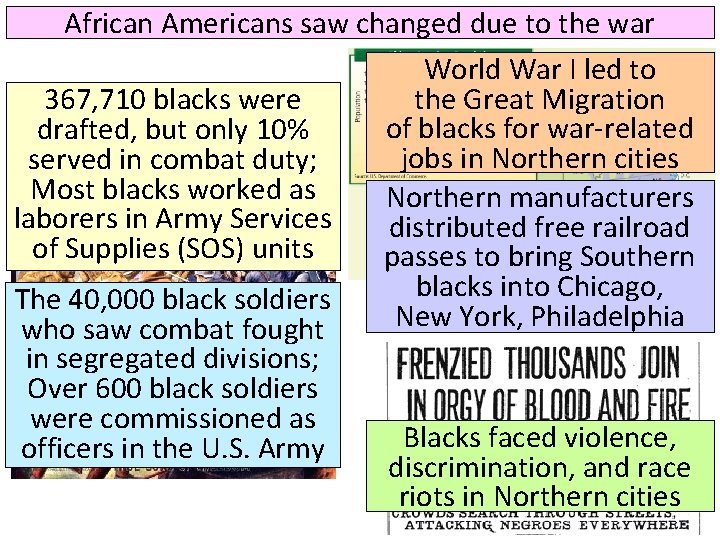
African Americans saw changed due to the war World War I led to the Great Migration 367, 710 blacks were of blacks for war-related drafted, but only 10% jobs in Northern cities served in combat duty; Most blacks worked as Northern manufacturers laborers in Army Services distributed free railroad of Supplies (SOS) units passes to bring Southern blacks into Chicago, The 40, 000 black soldiers New York, Philadelphia who saw combat fought in segregated divisions; Over 600 black soldiers were commissioned as Blacks faced violence, officers in the U. S. Army discrimination, and race riots in Northern cities
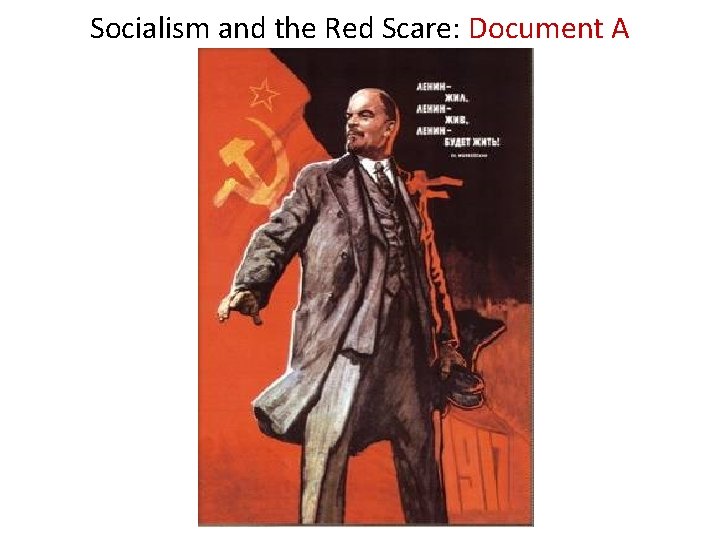
Socialism and the Red Scare: Document A
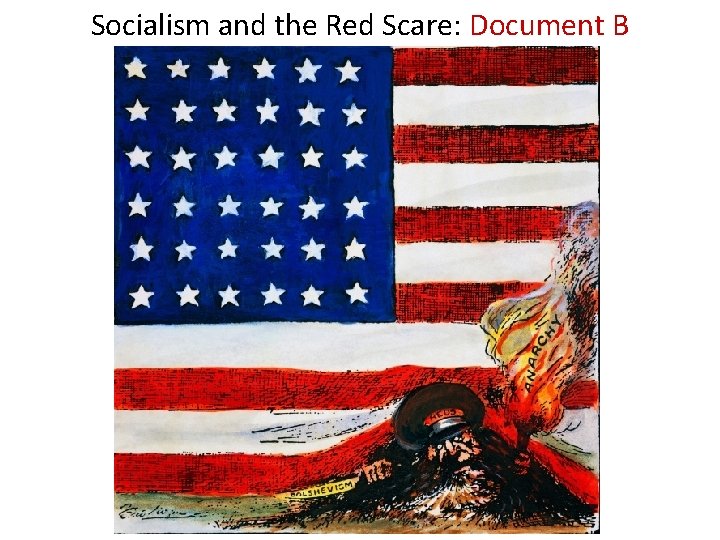
Socialism and the Red Scare: Document B
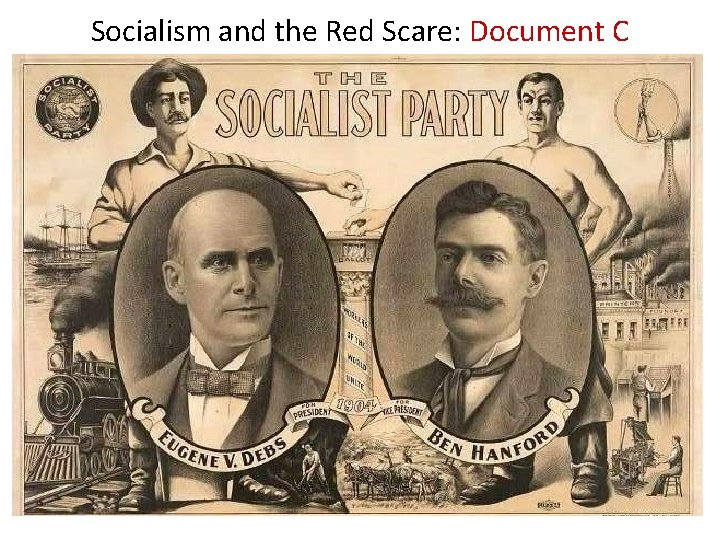
Socialism and the Red Scare: Document C
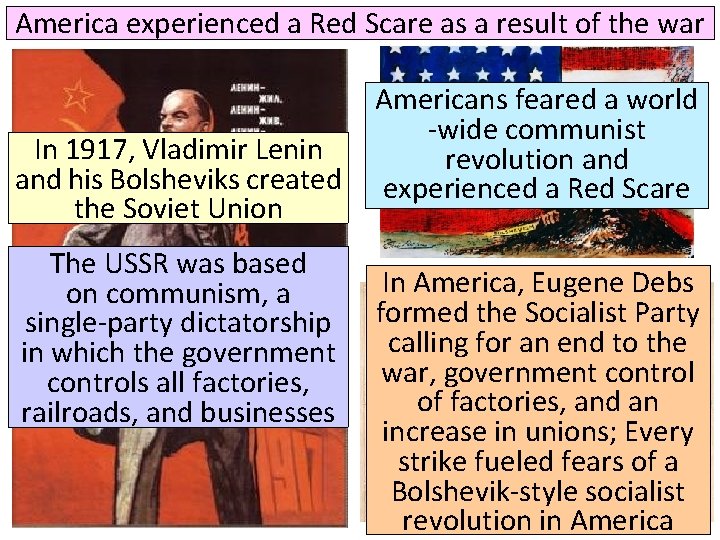
America experienced a Red Scare as a result of the war In 1917, Vladimir Lenin and his Bolsheviks created the Soviet Union The USSR was based on communism, a single-party dictatorship in which the government controls all factories, railroads, and businesses Americans feared a world -wide communist revolution and experienced a Red Scare In America, Eugene Debs formed the Socialist Party calling for an end to the war, government control of factories, and an increase in unions; Every strike fueled fears of a Bolshevik-style socialist revolution in America
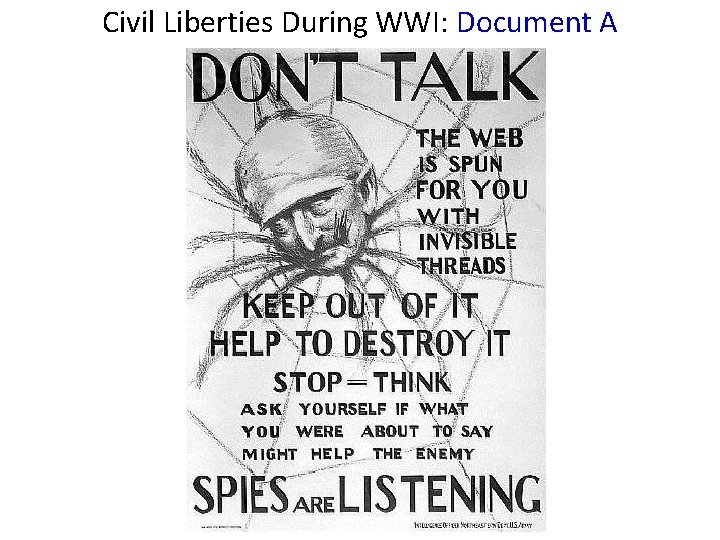
Civil Liberties During WWI: Document A
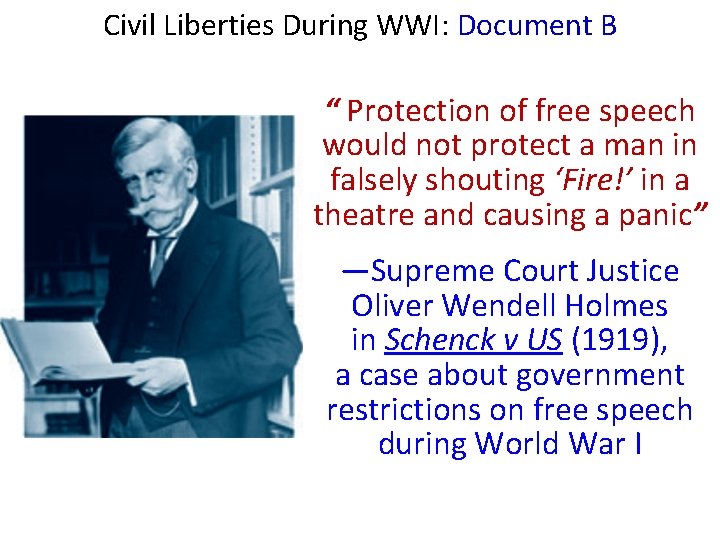
Civil Liberties During WWI: Document B “ Protection of free speech would not protect a man in falsely shouting ‘Fire!’ in a theatre and causing a panic” —Supreme Court Justice Oliver Wendell Holmes in Schenck v US (1919), a case about government restrictions on free speech during World War I
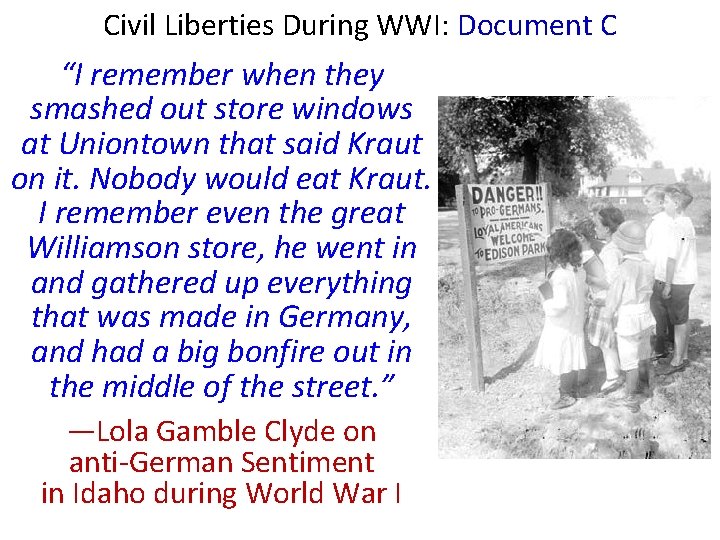
Civil Liberties During WWI: Document C “I remember when they smashed out store windows at Uniontown that said Kraut on it. Nobody would eat Kraut. I remember even the great Williamson store, he went in and gathered up everything that was made in Germany, and had a big bonfire out in the middle of the street. ” —Lola Gamble Clyde on anti-German Sentiment in Idaho during World War I
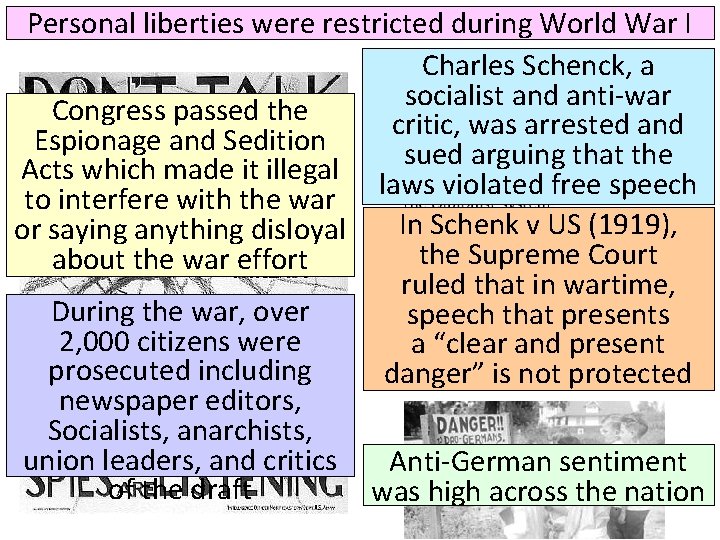
Personal liberties were restricted during World War I Charles Schenck, a socialist and anti-war Congress passed the critic, was arrested and Espionage and Sedition sued arguing that the Acts which made it illegal laws violated free speech to interfere with the war In Schenk v US (1919), or saying anything disloyal the Supreme Court about the war effort ruled that in wartime, During the war, over speech that presents 2, 000 citizens were a “clear and present prosecuted including danger” is not protected newspaper editors, Socialists, anarchists, union leaders, and critics Anti-German sentiment of the draft was high across the nation
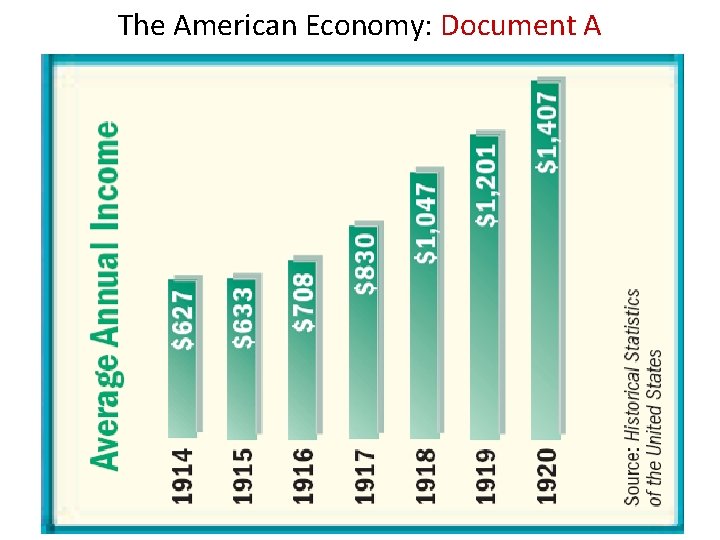
The American Economy: Document A
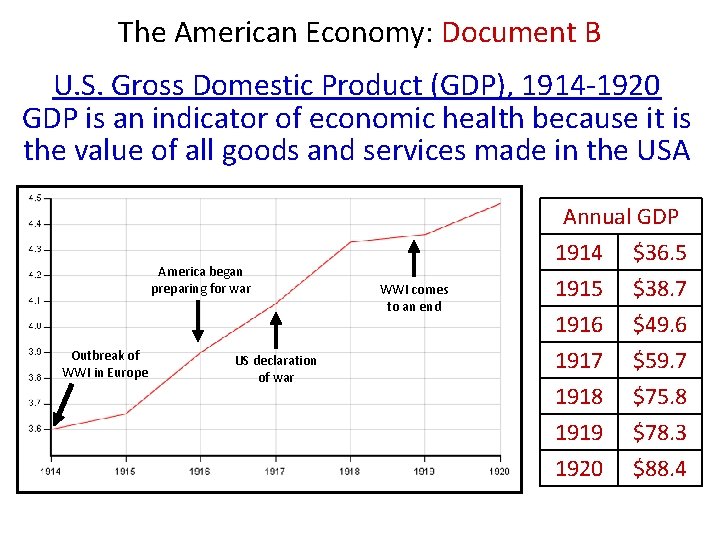
The American Economy: Document B U. S. Gross Domestic Product (GDP), 1914 -1920 GDP is an indicator of economic health because it is the value of all goods and services made in the USA America began preparing for war Outbreak of WWI in Europe US declaration of war WWI comes to an end Annual GDP 1914 $36. 5 1915 $38. 7 1916 $49. 6 1917 1918 1919 1920 $59. 7 $75. 8 $78. 3 $88. 4
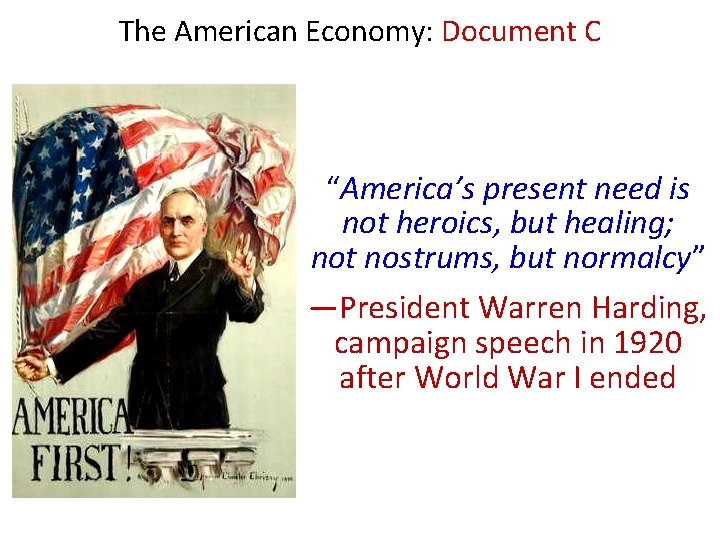
The American Economy: Document C “America’s present need is not heroics, but healing; not nostrums, but normalcy” —President Warren Harding, campaign speech in 1920 after World War I ended
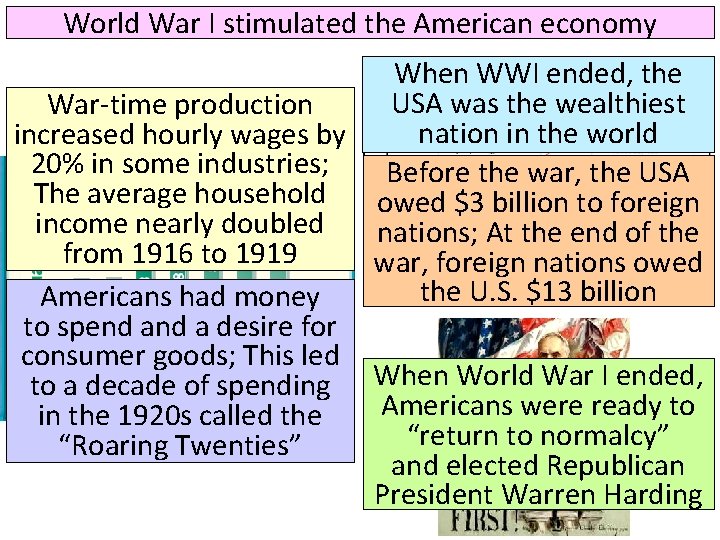
World War I stimulated the American economy When WWI ended, the USA was the wealthiest War-time production nation in the world increased hourly wages by 20% in some industries; Before the war, the USA The average household owed $3 billion to foreign income nearly doubled nations; At the end of the from 1916 to 1919 war, foreign nations owed the U. S. $13 billion Americans had money to spend a desire for consumer goods; This led to a decade of spending When World War I ended, Americans were ready to in the 1920 s called the “return to normalcy” “Roaring Twenties” and elected Republican President Warren Harding