
Question of the Day Question of the Day
- Slides: 42
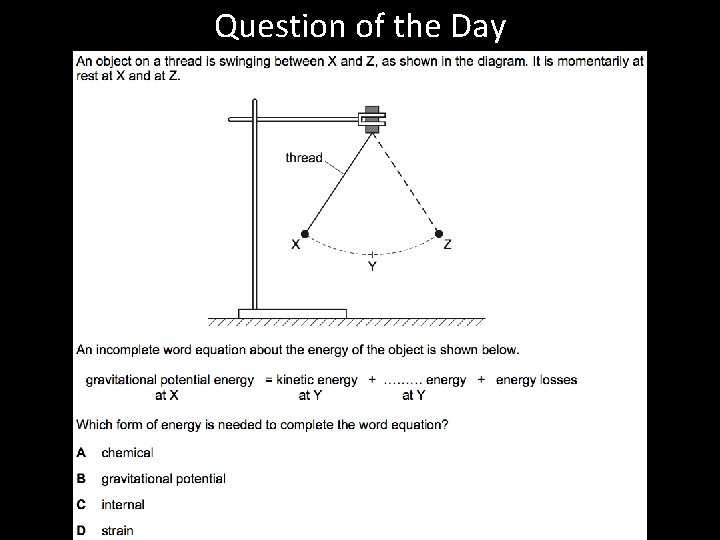
Question of the Day
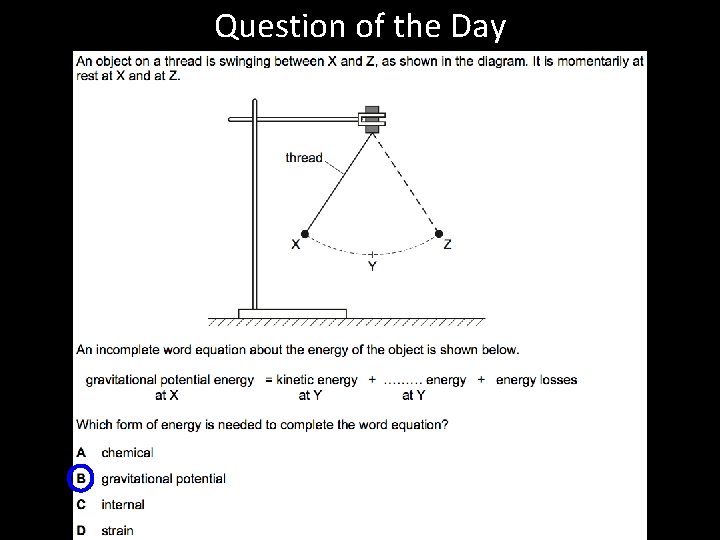
Question of the Day
Today’s Objectives: • • You will be able to trace the movement of energy through examples involving multiple stages. You will be able to identify where and when energy is dissipated.
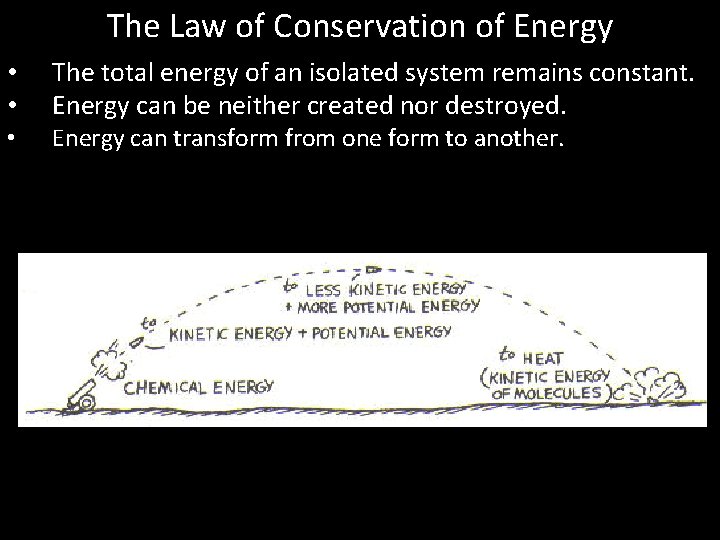
The Law of Conservation of Energy • • • The total energy of an isolated system remains constant. Energy can be neither created nor destroyed. Energy can transform from one form to another.
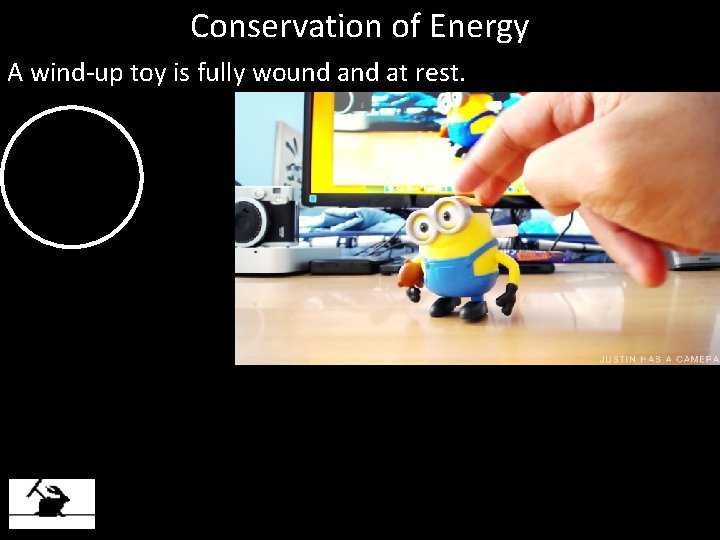
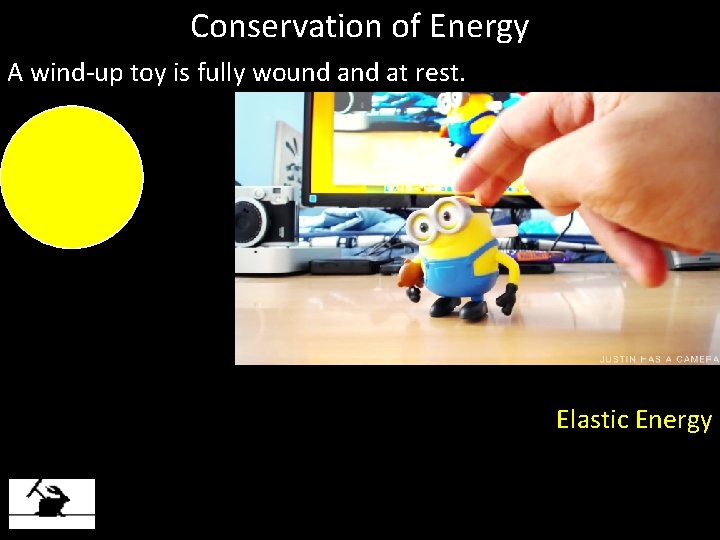
Conservation of Energy A wind-up toy is fully wound at rest. Gravitational Potential Energy Elastic Energy Kinetic Energy Internal Energy (Dissipated to Heat & Sound)
Conservation of Energy A wind-up toy is fully wound at rest. Gravitational Potential Energy Elastic Energy Kinetic Energy Internal Energy (Dissipated to Heat & Sound)
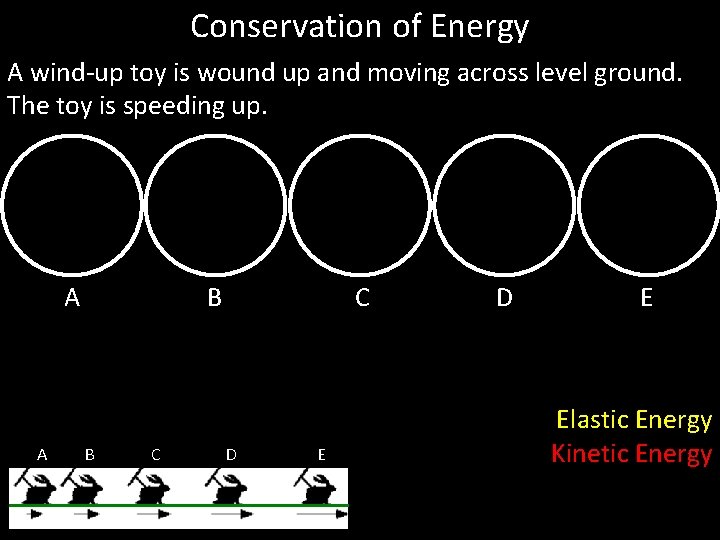
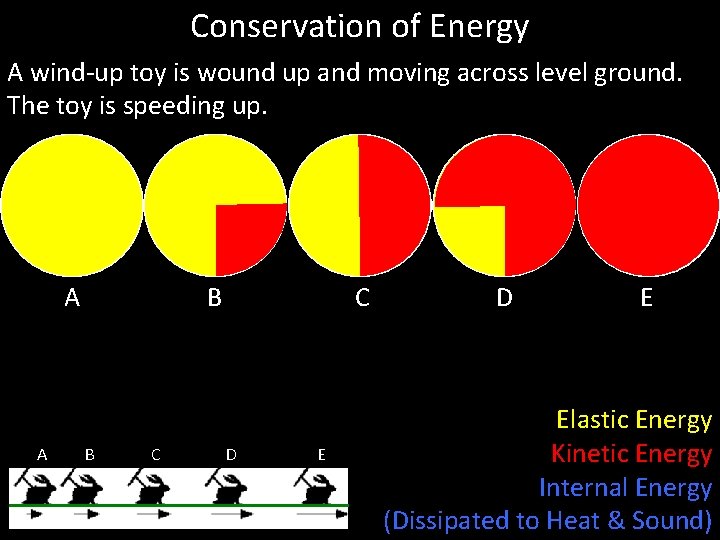
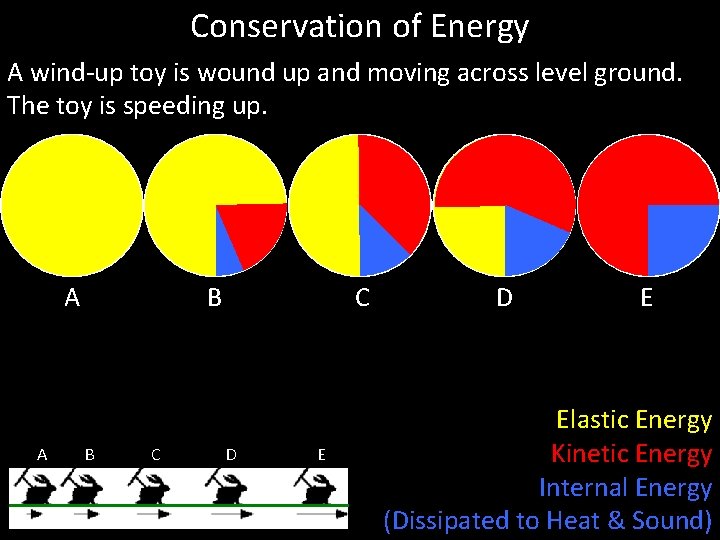
Conservation of Energy A wind-up toy is wound up and moving across level ground. The toy is speeding up. A A B B C C D E Gravitational Potential Energy Elastic Energy Kinetic Energy Internal Energy (Dissipated to Heat & Sound)
Conservation of Energy A wind-up toy is wound up and moving across level ground. The toy is speeding up. A A B B C C D E Elastic Energy Kinetic Energy Internal Energy (Dissipated to Heat & Sound)
Conservation of Energy A wind-up toy is wound up and moving across level ground. The toy is speeding up. A A B B C C D E Gravitational Potential Energy Elastic Energy Kinetic Energy Internal Energy (Dissipated to Heat & Sound)
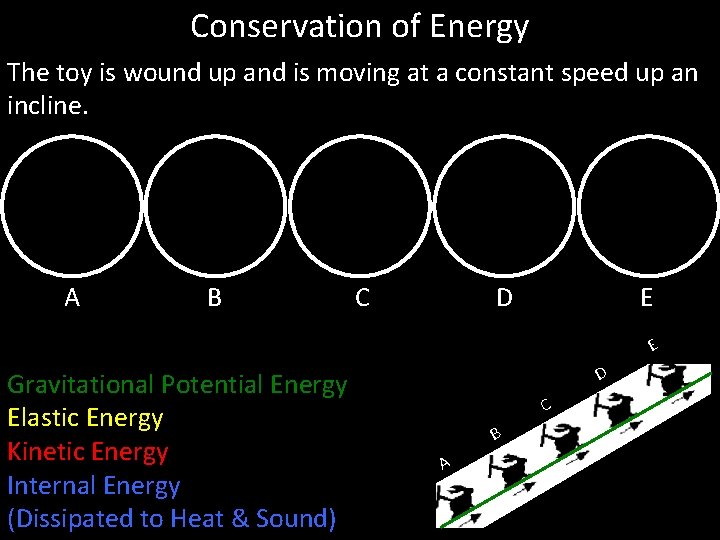
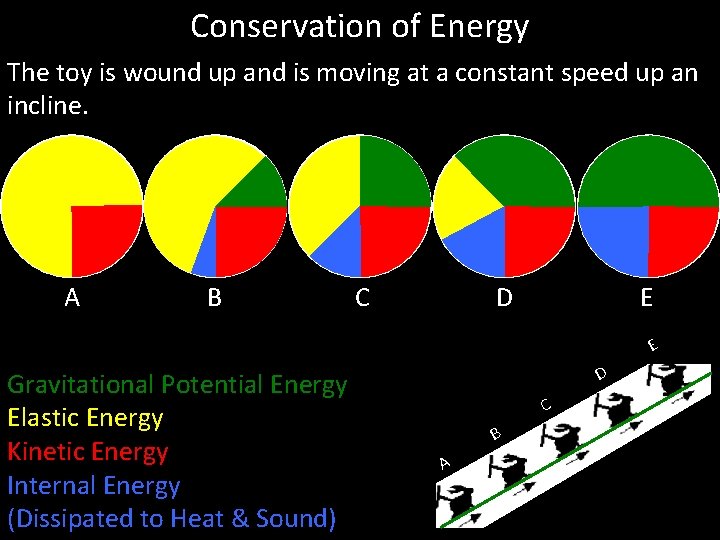
Conservation of Energy The toy is wound up and is moving at a constant speed up an incline. A B C D E E Gravitational Potential Energy Elastic Energy Kinetic Energy Internal Energy (Dissipated to Heat & Sound) D C B A
Conservation of Energy The toy is wound up and is moving at a constant speed up an incline. A B C D E E Gravitational Potential Energy Elastic Energy Kinetic Energy Internal Energy (Dissipated to Heat & Sound) D C B A
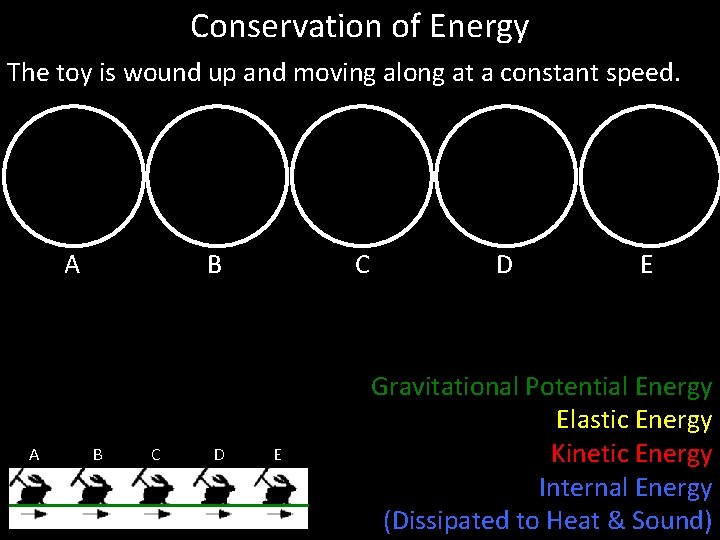
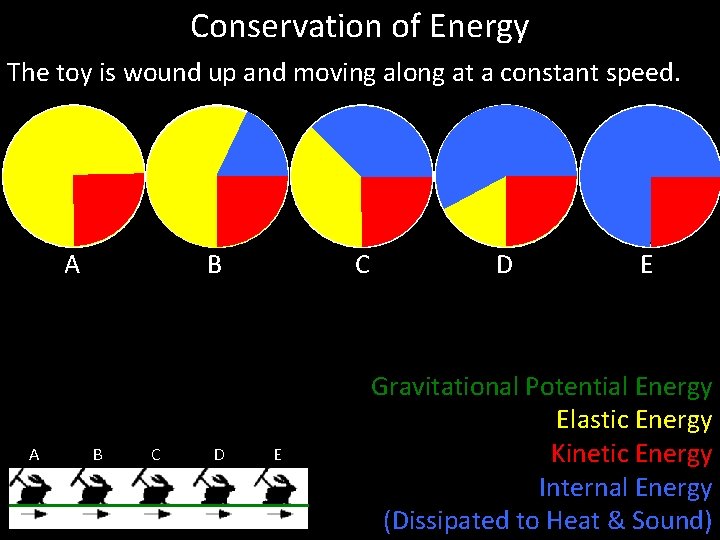
Conservation of Energy The toy is wound up and moving along at a constant speed. A A B B C D C E D E Gravitational Potential Energy Elastic Energy Kinetic Energy Internal Energy (Dissipated to Heat & Sound)
Conservation of Energy The toy is wound up and moving along at a constant speed. A A B B C D C E D E Gravitational Potential Energy Elastic Energy Kinetic Energy Internal Energy (Dissipated to Heat & Sound)
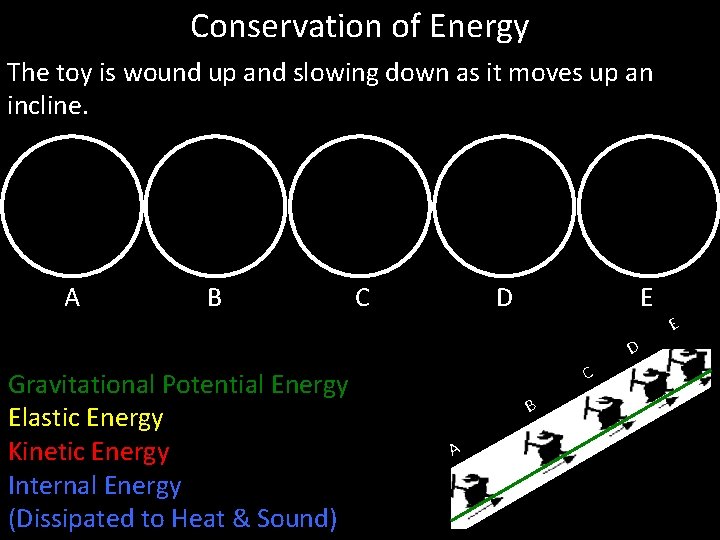
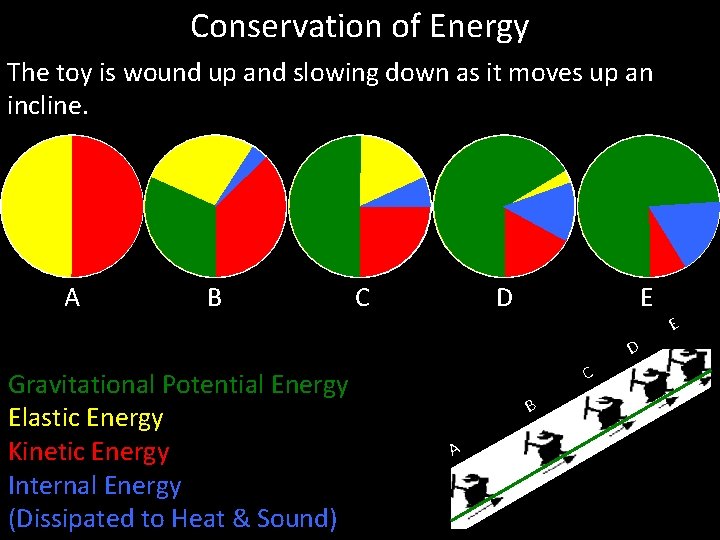
Conservation of Energy The toy is wound up and slowing down as it moves up an incline. A B C D E E D Gravitational Potential Energy Elastic Energy Kinetic Energy Internal Energy (Dissipated to Heat & Sound) C B A
Conservation of Energy The toy is wound up and slowing down as it moves up an incline. A B C D E E D Gravitational Potential Energy Elastic Energy Kinetic Energy Internal Energy (Dissipated to Heat & Sound) C B A
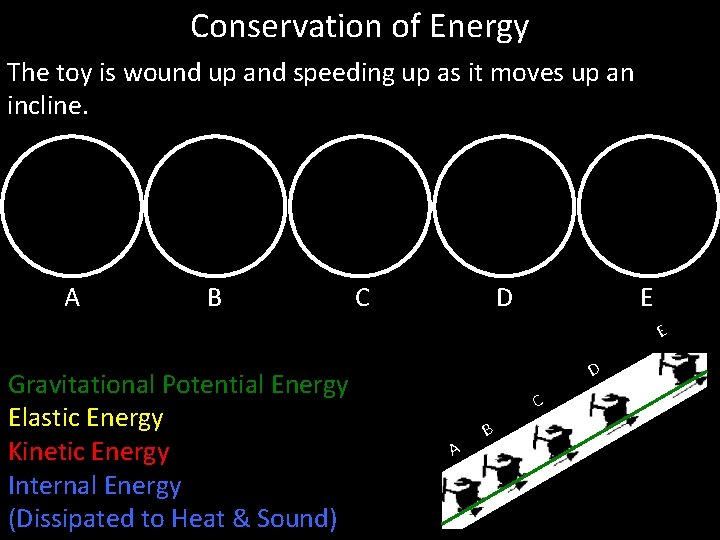
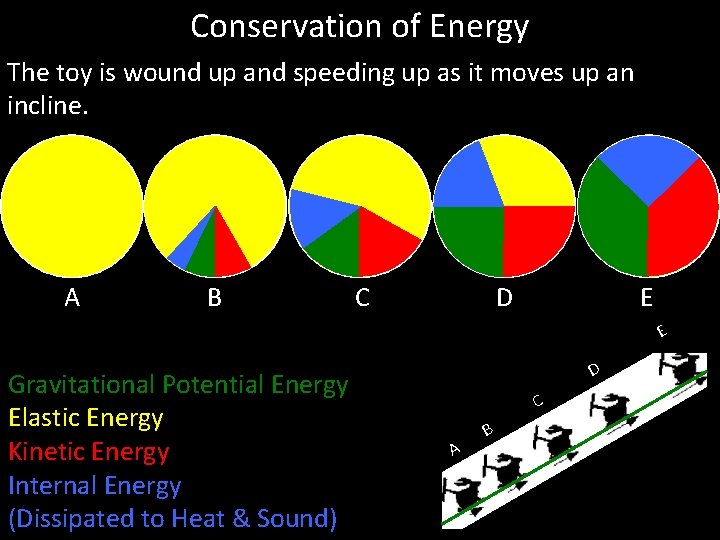
Conservation of Energy The toy is wound up and speeding up as it moves up an incline. A B C D E E Gravitational Potential Energy Elastic Energy Kinetic Energy Internal Energy (Dissipated to Heat & Sound) D C A B
Conservation of Energy The toy is wound up and speeding up as it moves up an incline. A B C D E E Gravitational Potential Energy Elastic Energy Kinetic Energy Internal Energy (Dissipated to Heat & Sound) D C A B
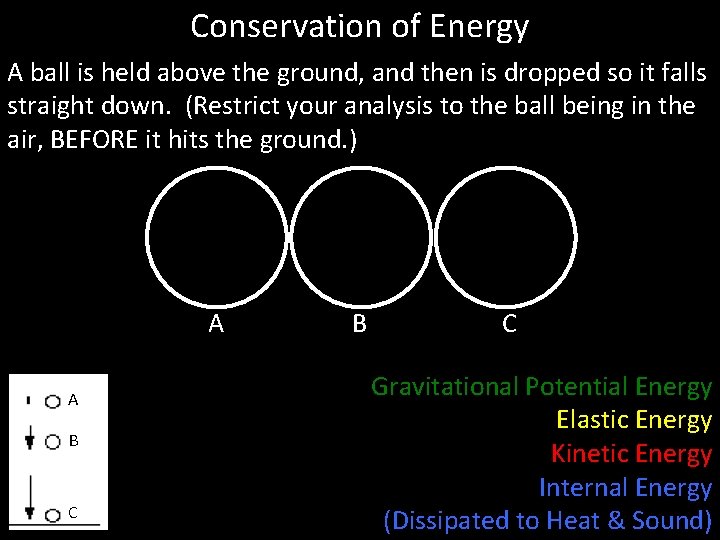
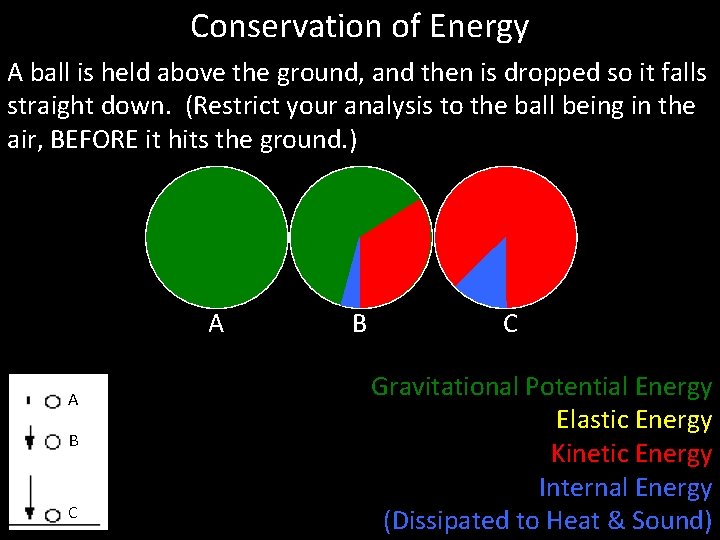
Conservation of Energy A ball is held above the ground, and then is dropped so it falls straight down. (Restrict your analysis to the ball being in the air, BEFORE it hits the ground. ) A A B C Gravitational Potential Energy Elastic Energy Kinetic Energy Internal Energy (Dissipated to Heat & Sound)
Conservation of Energy A ball is held above the ground, and then is dropped so it falls straight down. (Restrict your analysis to the ball being in the air, BEFORE it hits the ground. ) A A B C Gravitational Potential Energy Elastic Energy Kinetic Energy Internal Energy (Dissipated to Heat & Sound)
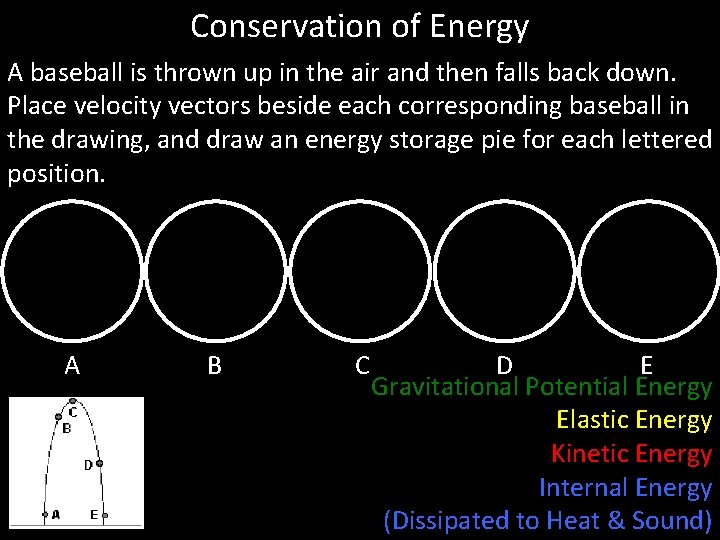
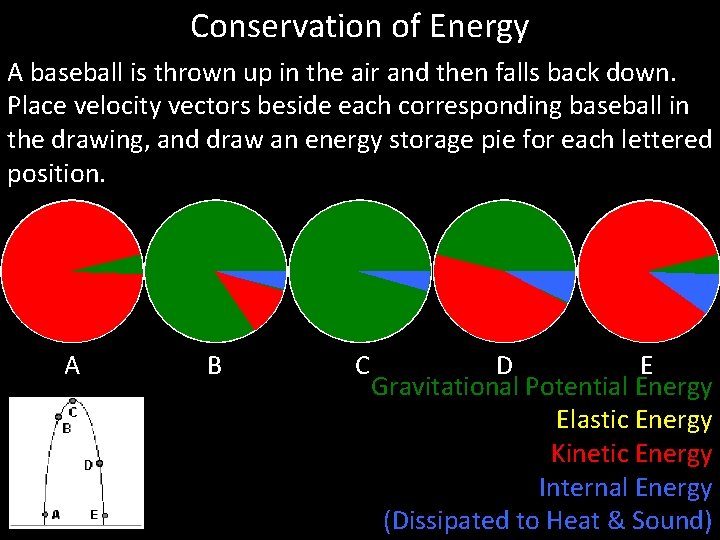
Conservation of Energy A baseball is thrown up in the air and then falls back down. Place velocity vectors beside each corresponding baseball in the drawing, and draw an energy storage pie for each lettered position. A B C D E Gravitational Potential Energy Elastic Energy Kinetic Energy Internal Energy (Dissipated to Heat & Sound)
Conservation of Energy A baseball is thrown up in the air and then falls back down. Place velocity vectors beside each corresponding baseball in the drawing, and draw an energy storage pie for each lettered position. A B C D E Gravitational Potential Energy Elastic Energy Kinetic Energy Internal Energy (Dissipated to Heat & Sound)
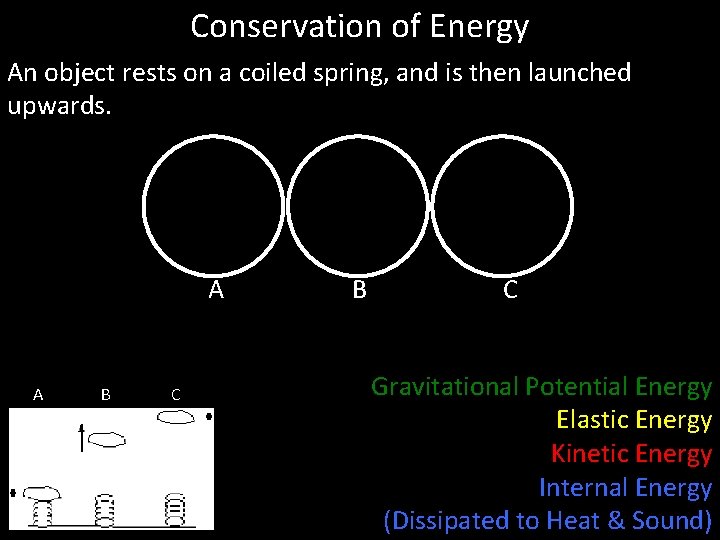
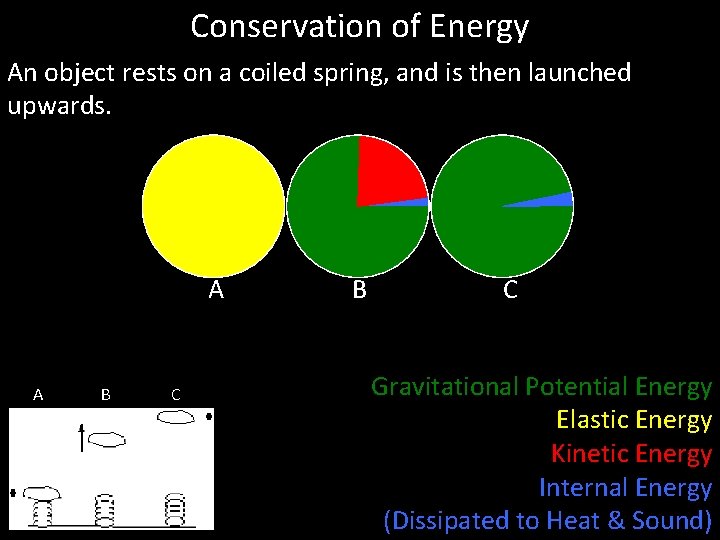
Conservation of Energy An object rests on a coiled spring, and is then launched upwards. A A B C Gravitational Potential Energy Elastic Energy Kinetic Energy Internal Energy (Dissipated to Heat & Sound)
Conservation of Energy An object rests on a coiled spring, and is then launched upwards. A A B C Gravitational Potential Energy Elastic Energy Kinetic Energy Internal Energy (Dissipated to Heat & Sound)
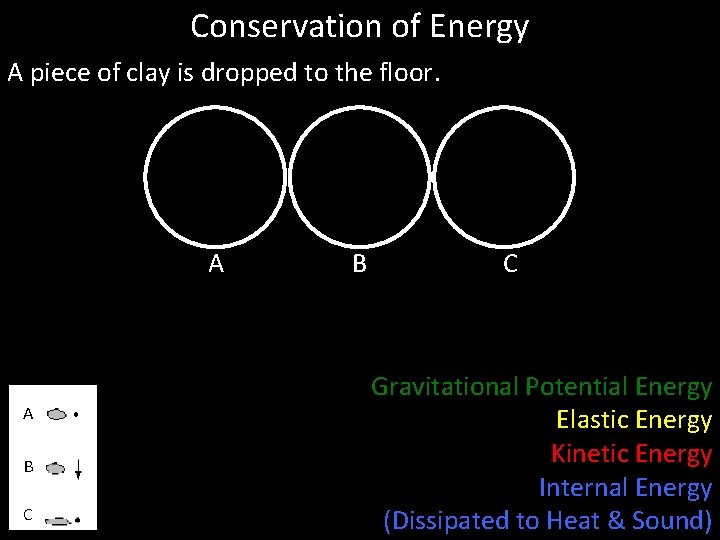
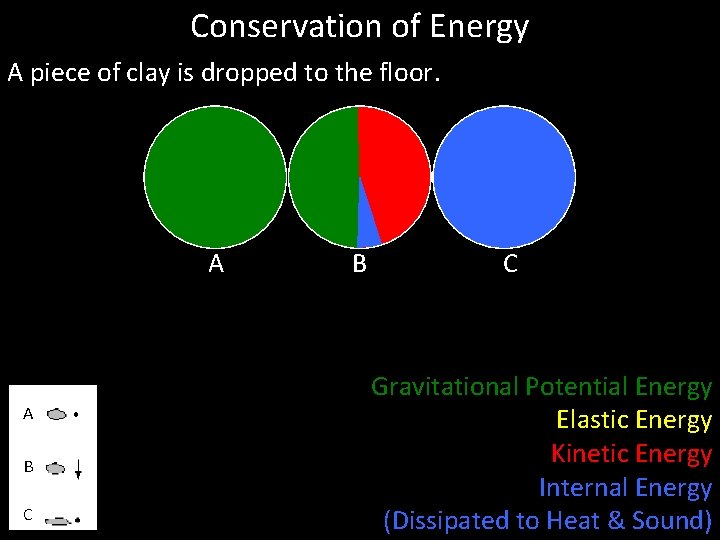
Conservation of Energy A piece of clay is dropped to the floor. A A B C Gravitational Potential Energy Elastic Energy Kinetic Energy Internal Energy (Dissipated to Heat & Sound)
Conservation of Energy A piece of clay is dropped to the floor. A A B C Gravitational Potential Energy Elastic Energy Kinetic Energy Internal Energy (Dissipated to Heat & Sound)
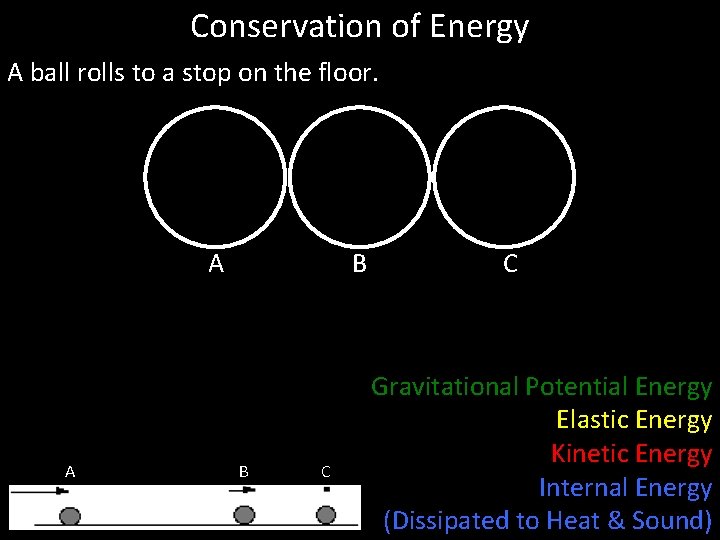
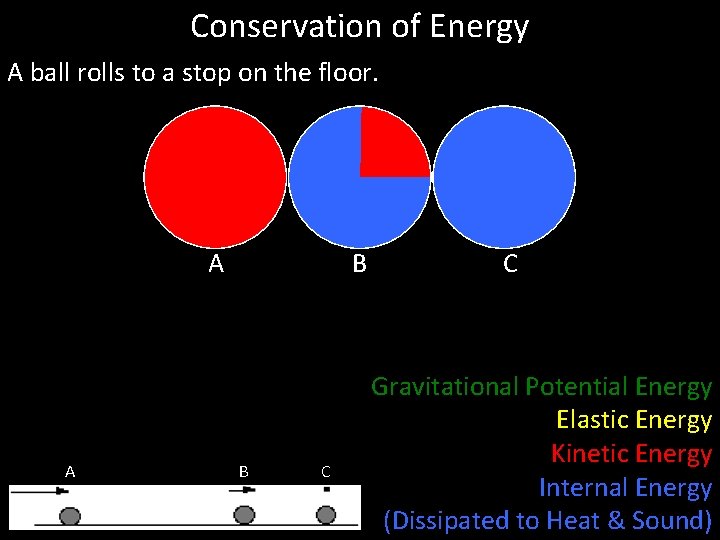
Conservation of Energy A ball rolls to a stop on the floor. A A B B C C Gravitational Potential Energy Elastic Energy Kinetic Energy Internal Energy (Dissipated to Heat & Sound)
Conservation of Energy A ball rolls to a stop on the floor. A A B B C C Gravitational Potential Energy Elastic Energy Kinetic Energy Internal Energy (Dissipated to Heat & Sound)
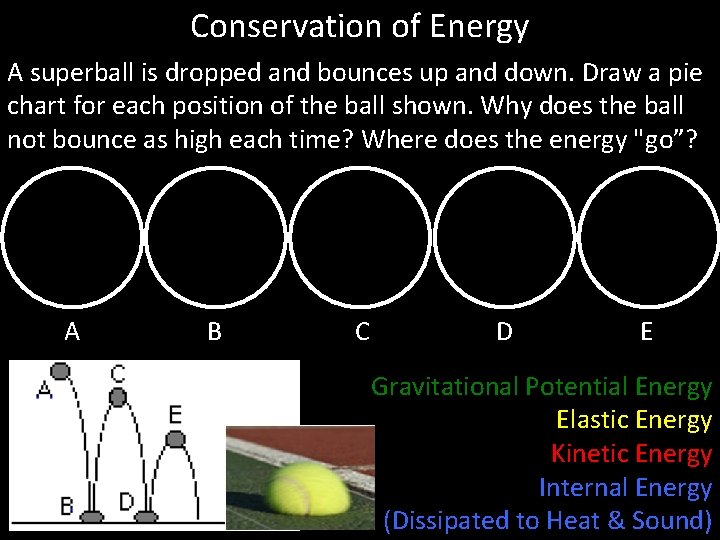
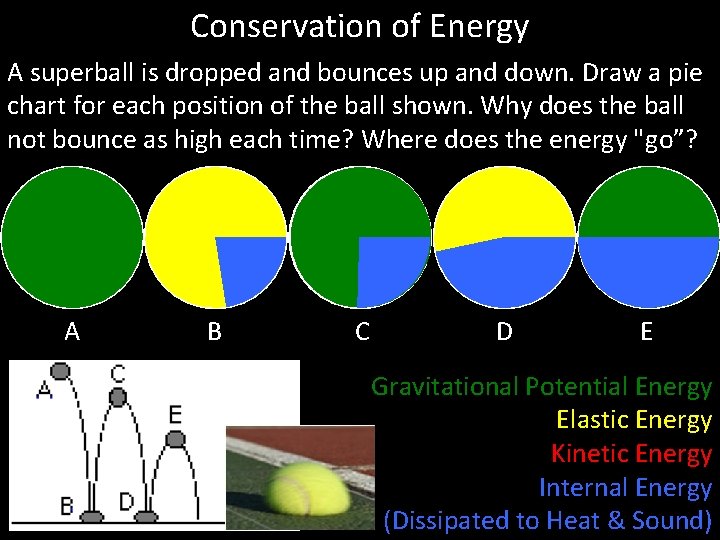
Conservation of Energy A superball is dropped and bounces up and down. Draw a pie chart for each position of the ball shown. Why does the ball not bounce as high each time? Where does the energy "go”? A B C D E Gravitational Potential Energy Elastic Energy Kinetic Energy Internal Energy (Dissipated to Heat & Sound)
Conservation of Energy A superball is dropped and bounces up and down. Draw a pie chart for each position of the ball shown. Why does the ball not bounce as high each time? Where does the energy "go”? A B C D E Gravitational Potential Energy Elastic Energy Kinetic Energy Internal Energy (Dissipated to Heat & Sound)
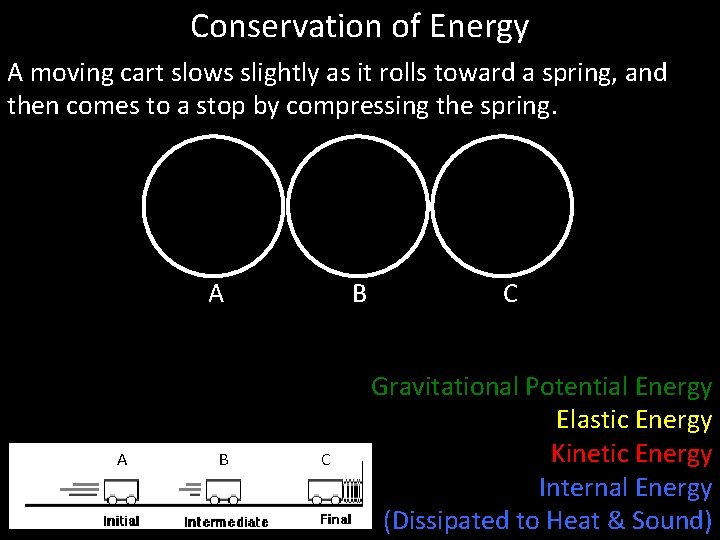
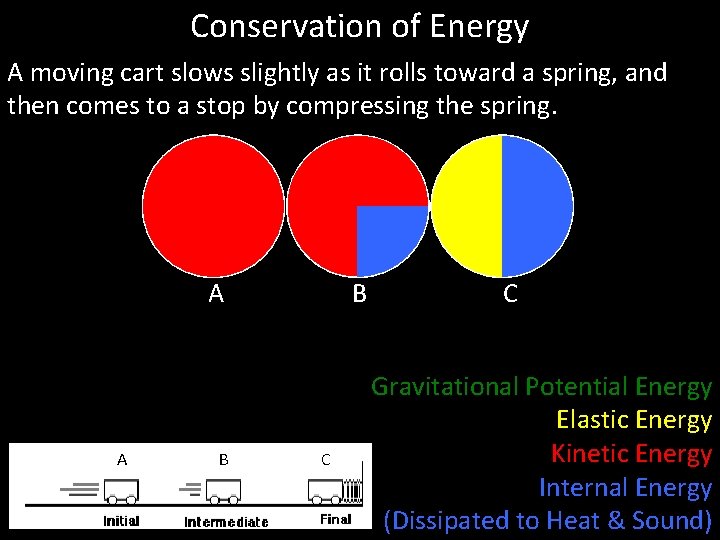
Conservation of Energy A moving cart slows slightly as it rolls toward a spring, and then comes to a stop by compressing the spring. A A B B C C Gravitational Potential Energy Elastic Energy Kinetic Energy Internal Energy (Dissipated to Heat & Sound)
Conservation of Energy A moving cart slows slightly as it rolls toward a spring, and then comes to a stop by compressing the spring. A A B B C C Gravitational Potential Energy Elastic Energy Kinetic Energy Internal Energy (Dissipated to Heat & Sound)
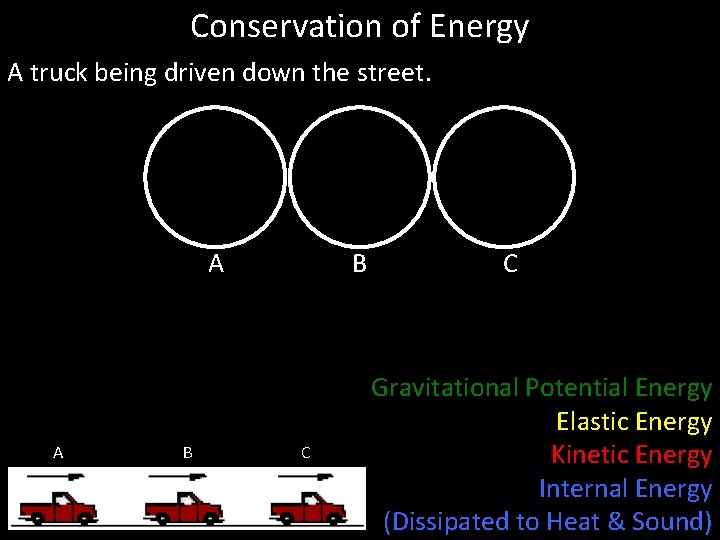
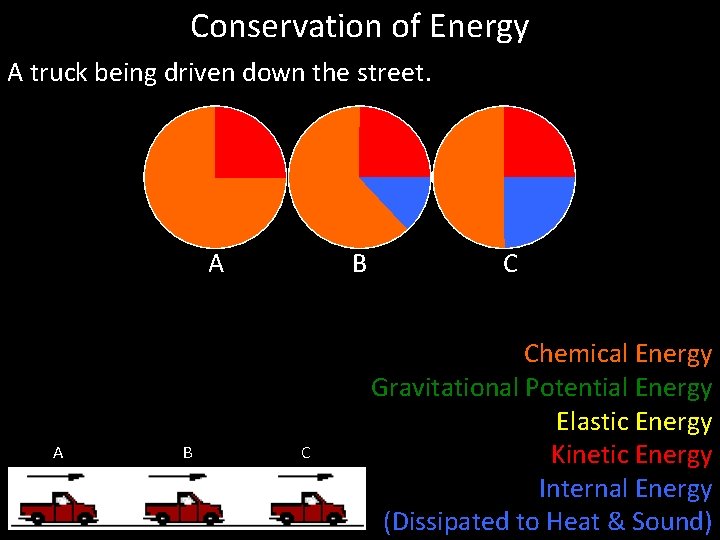
Conservation of Energy A truck being driven down the street. A A B B C C Chemical Energy Gravitational Potential Energy Elastic Energy Kinetic Energy Internal Energy (Dissipated to Heat & Sound)
Conservation of Energy A truck being driven down the street. A A B B C C Chemical Energy Gravitational Potential Energy Elastic Energy Kinetic Energy Internal Energy (Dissipated to Heat & Sound)
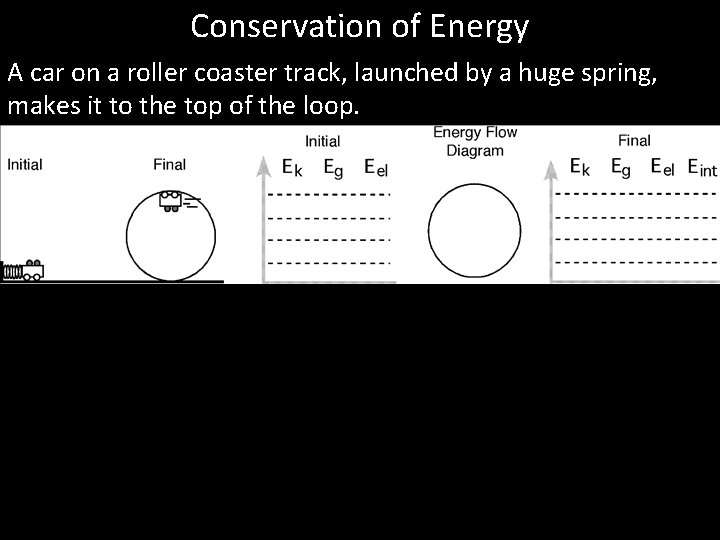
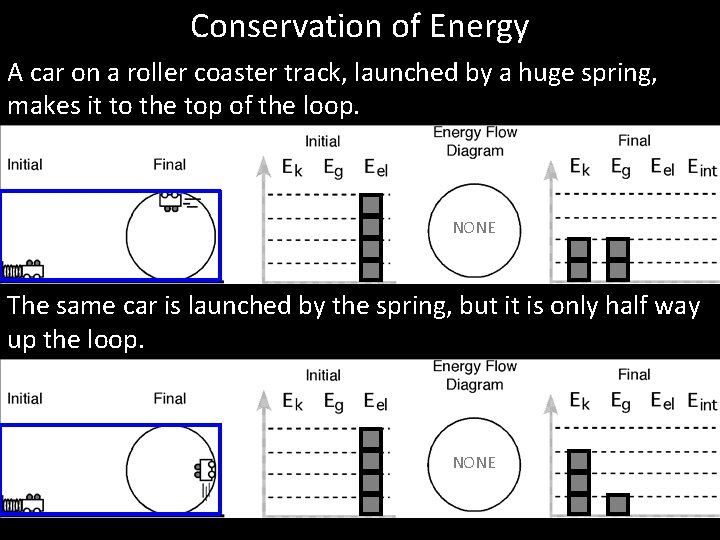
Conservation of Energy A car on a roller coaster track, launched by a huge spring, makes it to the top of the loop.
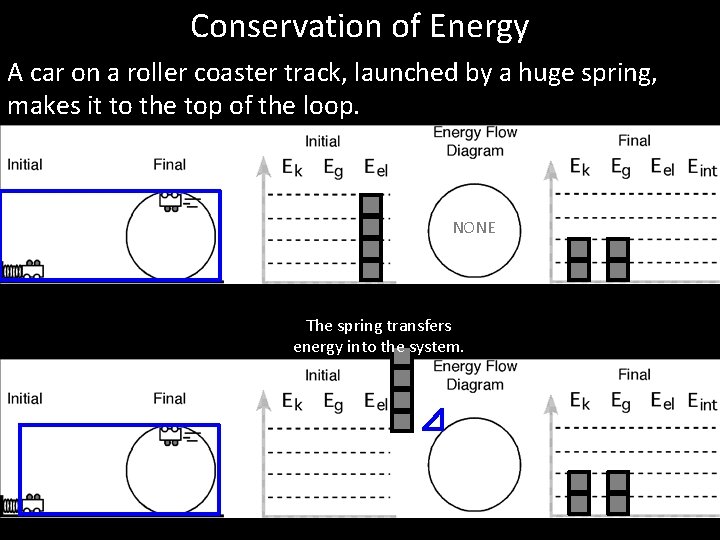
Conservation of Energy A car on a roller coaster track, launched by a huge spring, makes it to the top of the loop. NONE The spring transfers energy into the system.
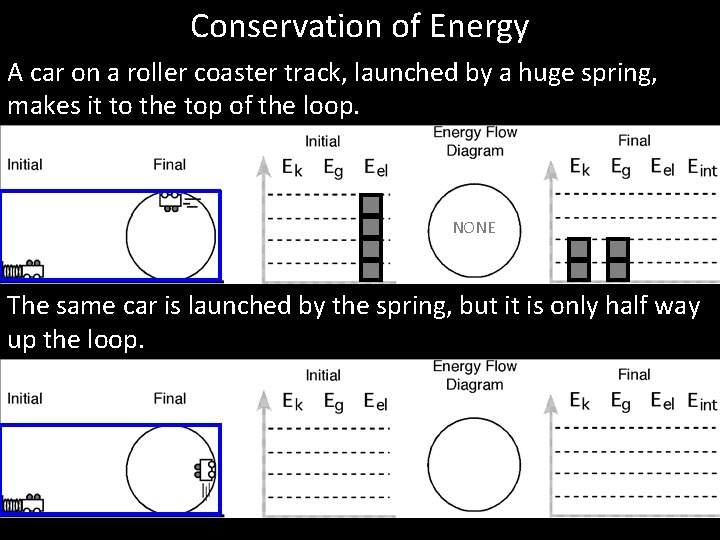
Conservation of Energy A car on a roller coaster track, launched by a huge spring, makes it to the top of the loop. NONE The same car is launched by the spring, but it is only half way up the loop.
Conservation of Energy A car on a roller coaster track, launched by a huge spring, makes it to the top of the loop. NONE The same car is launched by the spring, but it is only half way up the loop. NONE
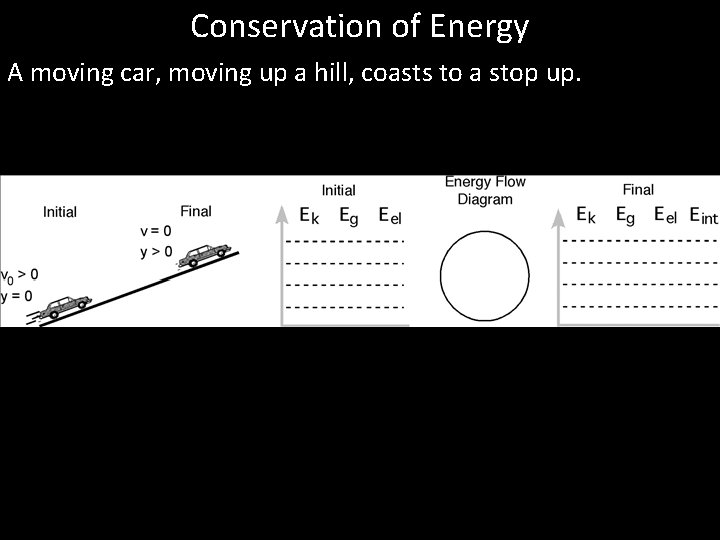
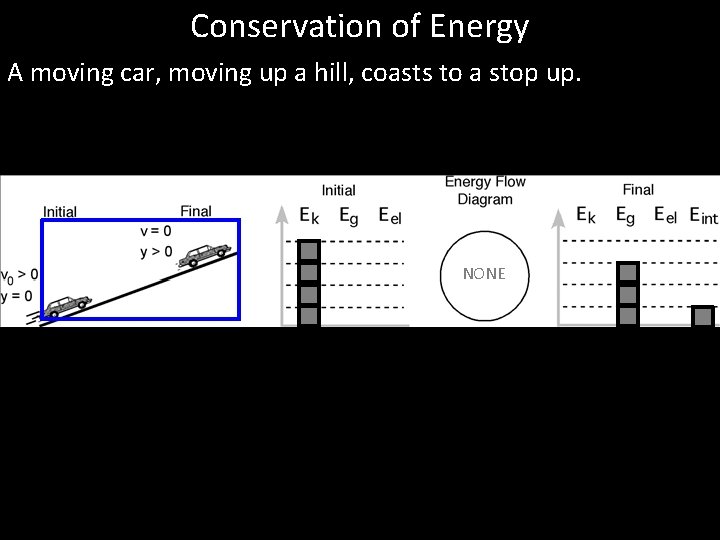
Conservation of Energy A moving car, moving up a hill, coasts to a stop up.
Conservation of Energy A moving car, moving up a hill, coasts to a stop up. NONE
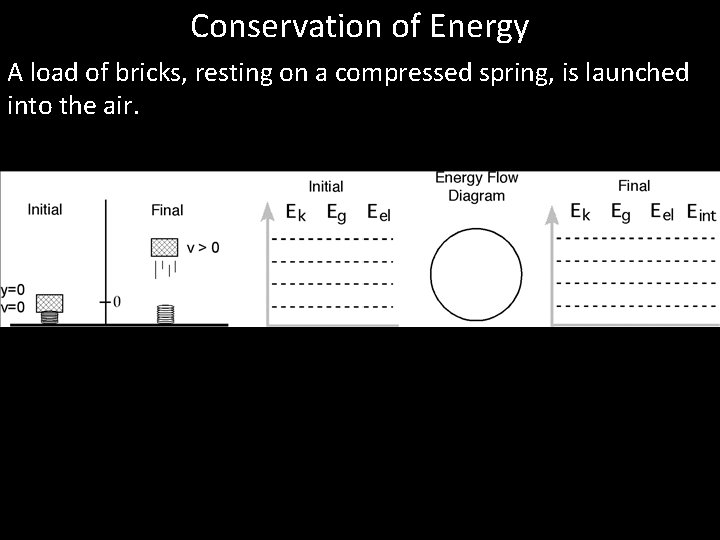
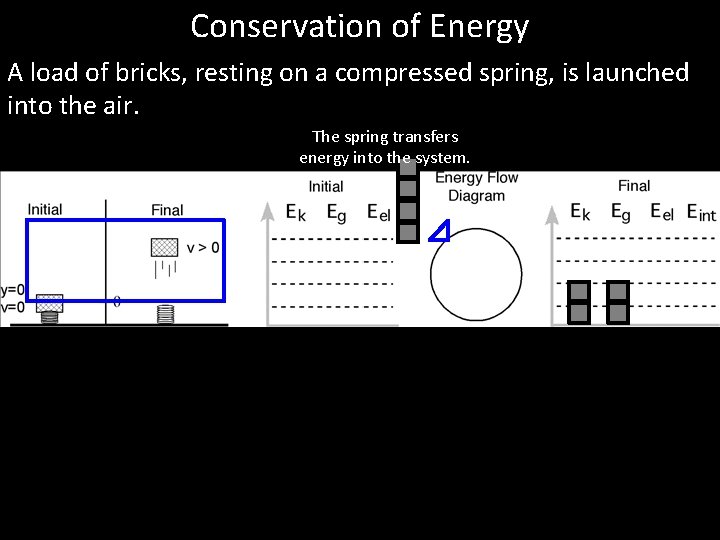
Conservation of Energy A load of bricks, resting on a compressed spring, is launched into the air.
Conservation of Energy A load of bricks, resting on a compressed spring, is launched into the air. The spring transfers energy into the system.
Additional Practice: • Read p. 84 – 87 • # 6. 9 – 6. 14