The Primordial Emotions The Dawning of Consciousness Denton
- Slides: 22
The Primordial Emotions: The Dawning of Consciousness Denton 2006 Christina Weng October 17, 2008
The Physiology of the Primordial Emotion of Thirst
Questions to Keep in Mind 1) 2) 3) 4) How is thirst generated? Where is the change in physical state that generates thirst detected? Where does the thirst system fit on the evolutionary development timeline? How is immediate gratification of thirst possible?
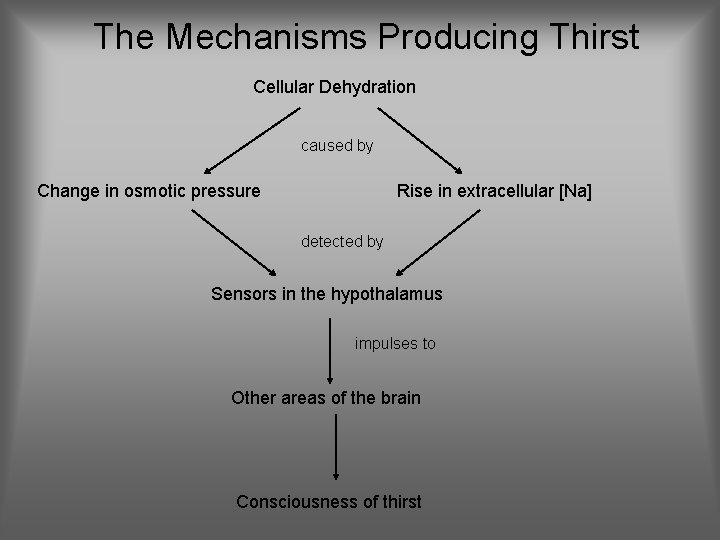
The Mechanisms Producing Thirst Cellular Dehydration caused by Change in osmotic pressure Rise in extracellular [Na] detected by Sensors in the hypothalamus impulses to Other areas of the brain Consciousness of thirst
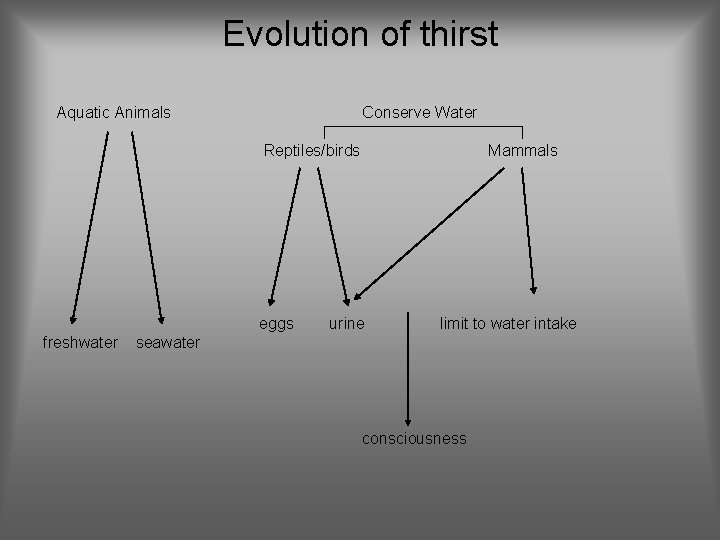
Evolution of thirst Aquatic Animals Conserve Water Reptiles/birds eggs freshwater Mammals urine limit to water intake seawater consciousness
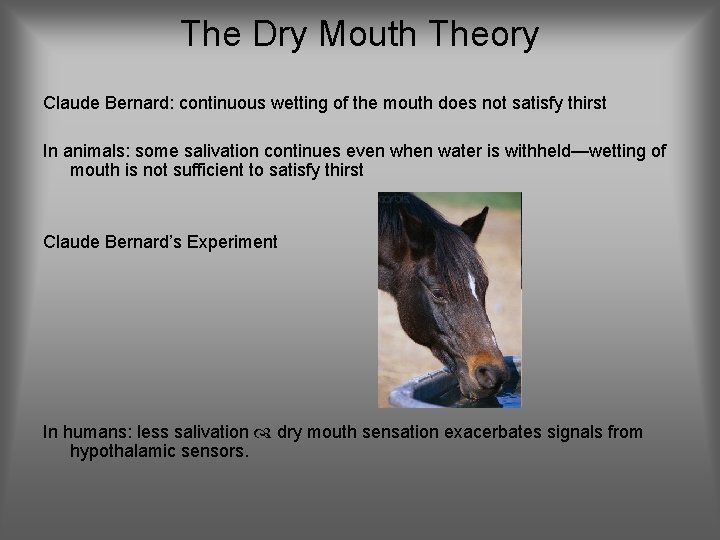
The Dry Mouth Theory Claude Bernard: continuous wetting of the mouth does not satisfy thirst In animals: some salivation continues even when water is withheld—wetting of mouth is not sufficient to satisfy thirst Claude Bernard’s Experiment In humans: less salivation dry mouth sensation exacerbates signals from hypothalamic sensors.
Rapid Gratification of Thirst Loss of thirst occurs long before the water is absorbed from the gut and the chemical imbalance (origin of thirst sensation) is corrected. In experiments, animals drink just enough to repair the water and/or sodium deficit. HOW? Taste of water Esophageal metering Filling of stomach Satisfaction
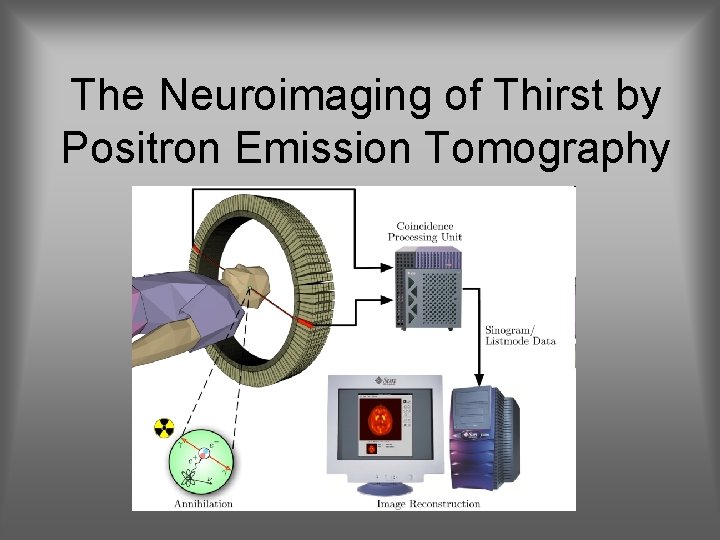
The Neuroimaging of Thirst by Positron Emission Tomography
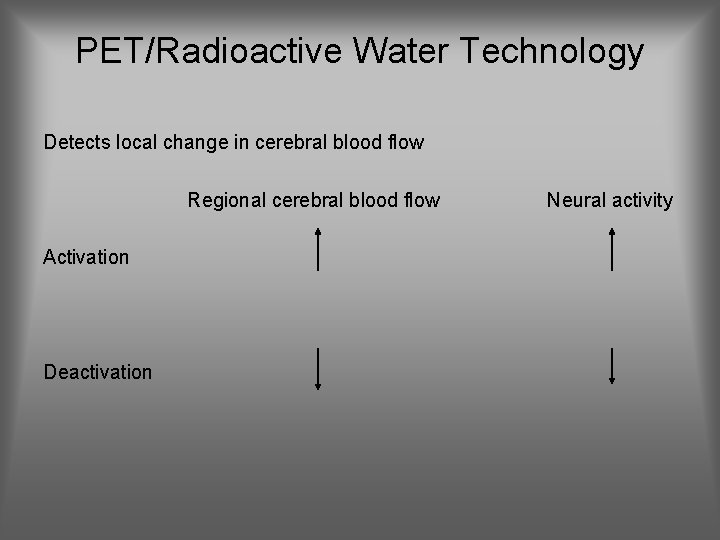
PET/Radioactive Water Technology Detects local change in cerebral blood flow Regional cerebral blood flow Activation Deactivation Neural activity
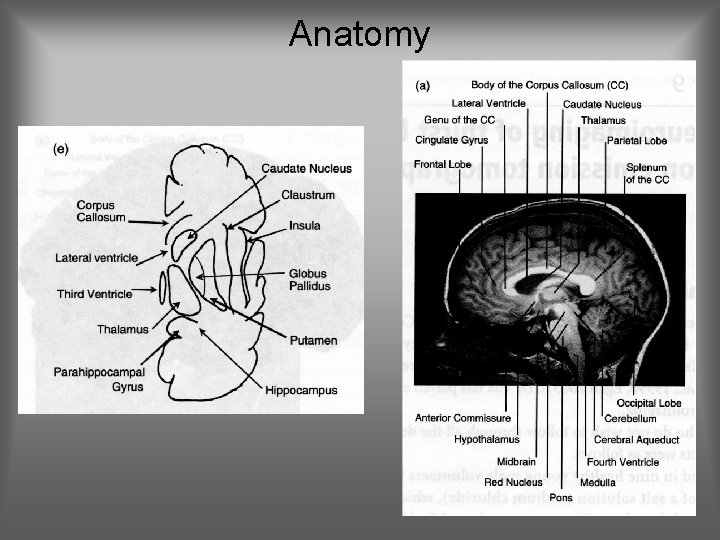
Anatomy
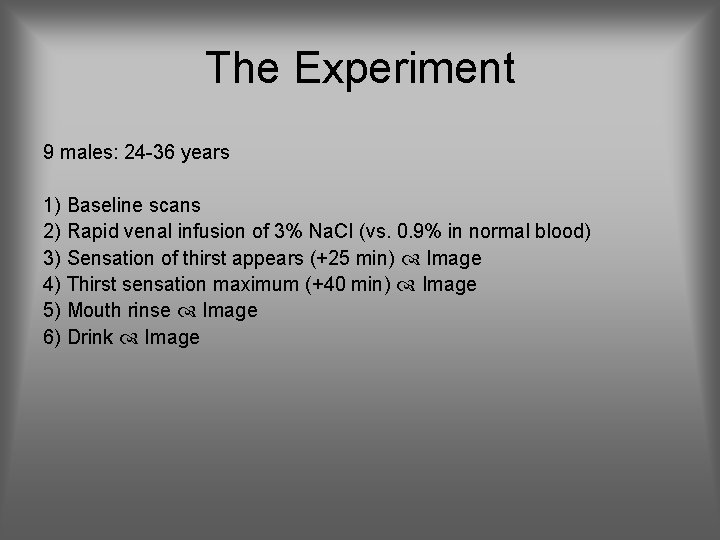
The Experiment 9 males: 24 -36 years 1) Baseline scans 2) Rapid venal infusion of 3% Na. Cl (vs. 0. 9% in normal blood) 3) Sensation of thirst appears (+25 min) Image 4) Thirst sensation maximum (+40 min) Image 5) Mouth rinse Image 6) Drink Image
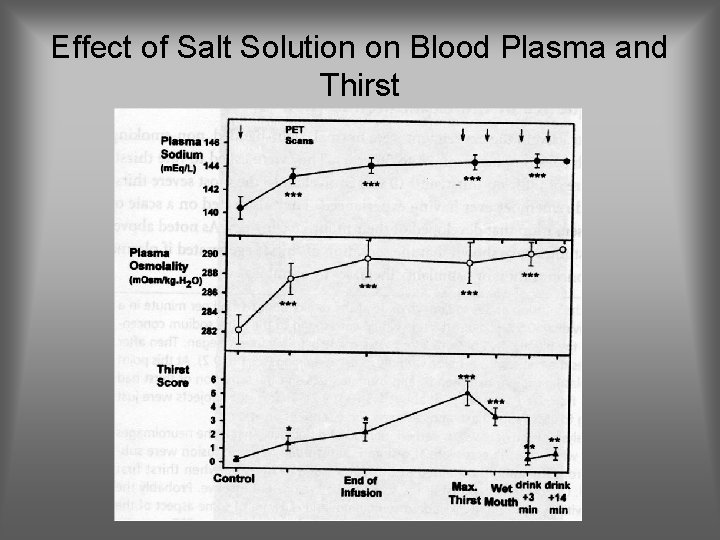
Effect of Salt Solution on Blood Plasma and Thirst
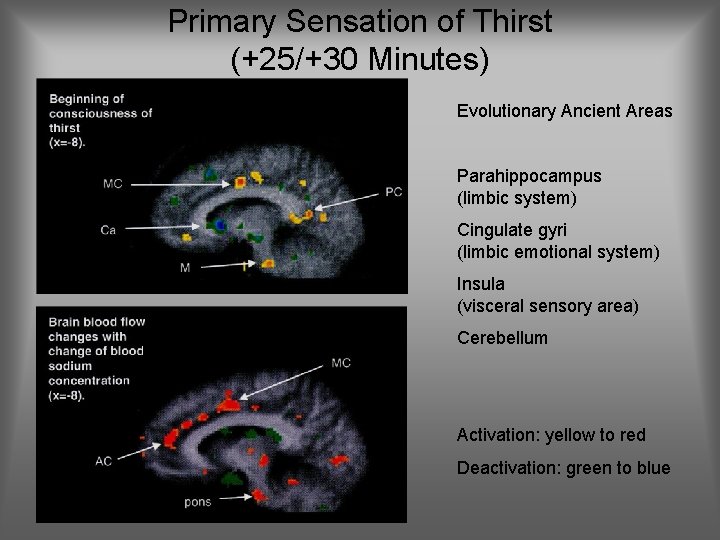
Primary Sensation of Thirst (+25/+30 Minutes) Evolutionary Ancient Areas Parahippocampus (limbic system) Cingulate gyri (limbic emotional system) Insula (visceral sensory area) Cerebellum Activation: yellow to red Deactivation: green to blue
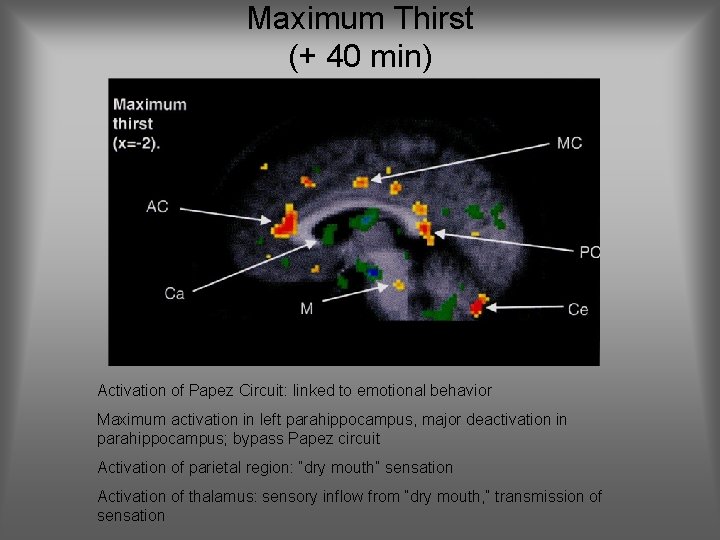
Maximum Thirst (+ 40 min) Activation of Papez Circuit: linked to emotional behavior Maximum activation in left parahippocampus, major deactivation in parahippocampus; bypass Papez circuit Activation of parietal region: “dry mouth” sensation Activation of thalamus: sensory inflow from “dry mouth, ” transmission of sensation
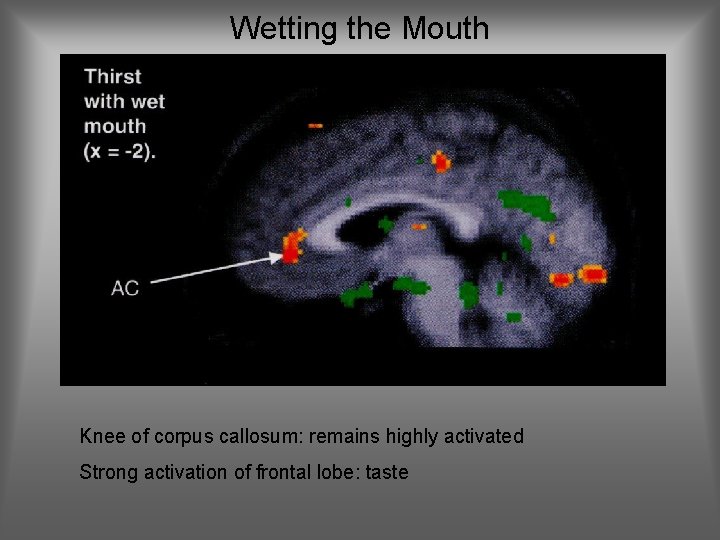
Wetting the Mouth Knee of corpus callosum: remains highly activated Strong activation of frontal lobe: taste
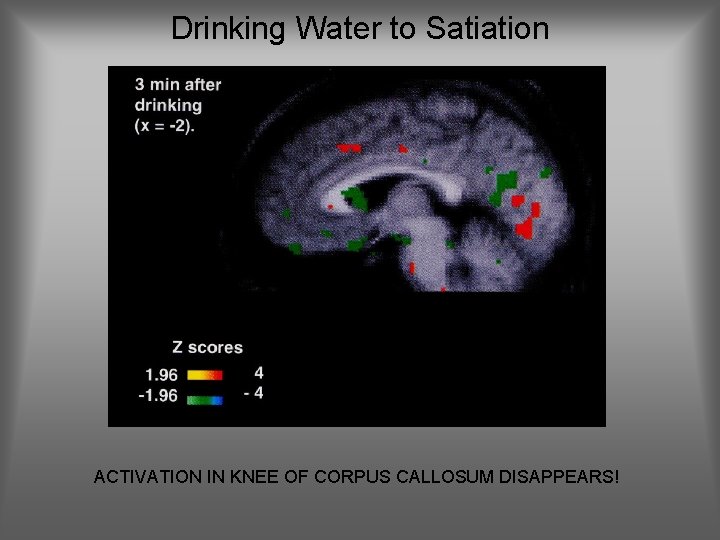
Drinking Water to Satiation ACTIVATION IN KNEE OF CORPUS CALLOSUM DISAPPEARS!
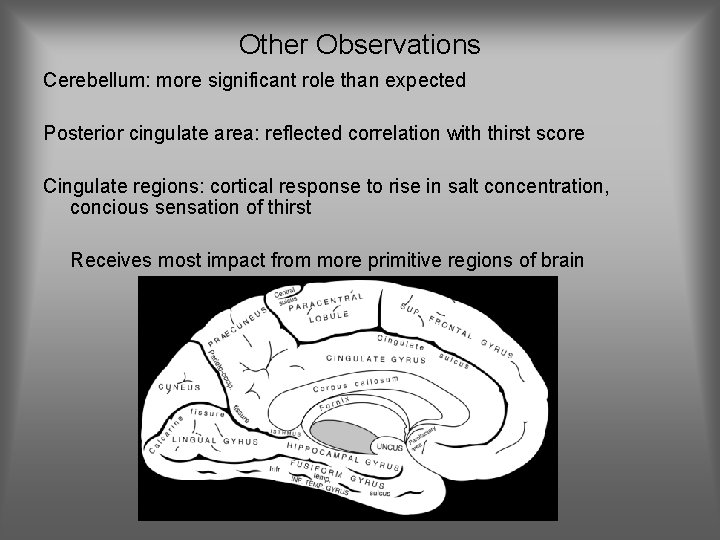
Other Observations Cerebellum: more significant role than expected Posterior cingulate area: reflected correlation with thirst score Cingulate regions: cortical response to rise in salt concentration, concious sensation of thirst Receives most impact from more primitive regions of brain
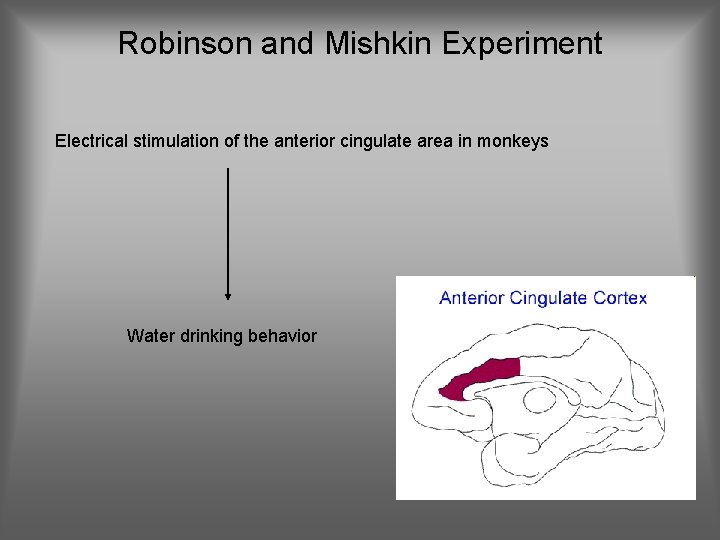
Robinson and Mishkin Experiment Electrical stimulation of the anterior cingulate area in monkeys Water drinking behavior
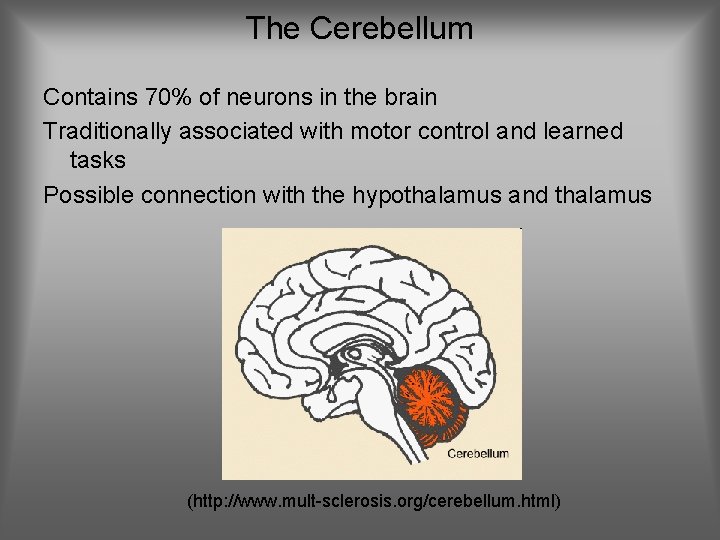
The Cerebellum Contains 70% of neurons in the brain Traditionally associated with motor control and learned tasks Possible connection with the hypothalamus and thalamus (http: //www. mult-sclerosis. org/cerebellum. html)
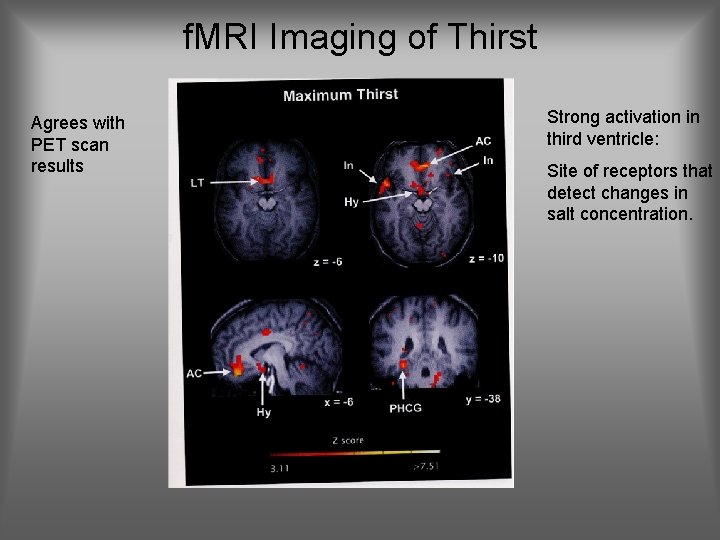
f. MRI Imaging of Thirst Agrees with PET scan results Strong activation in third ventricle: Site of receptors that detect changes in salt concentration.
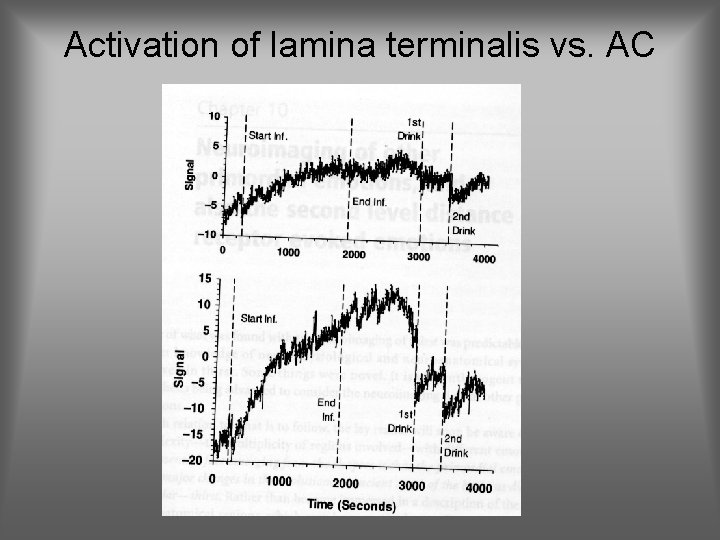
Activation of lamina terminalis vs. AC
Future Directions 1) 2) 3) Activity of the anterior cingulate with respect to rapid increase of sodium concentration in the plasma. Involvement of the cerebellum in response to rising sodium concentration Role of the cerebellum in the emergence of consciousness of thirst