
Federal Emergency Management Agency Region 6 Denton Texas











- Slides: 30
Federal Emergency Management Agency Region 6 – Denton, Texas
Mission Statement FEMA's Mission: Helping people before, during and after disasters.
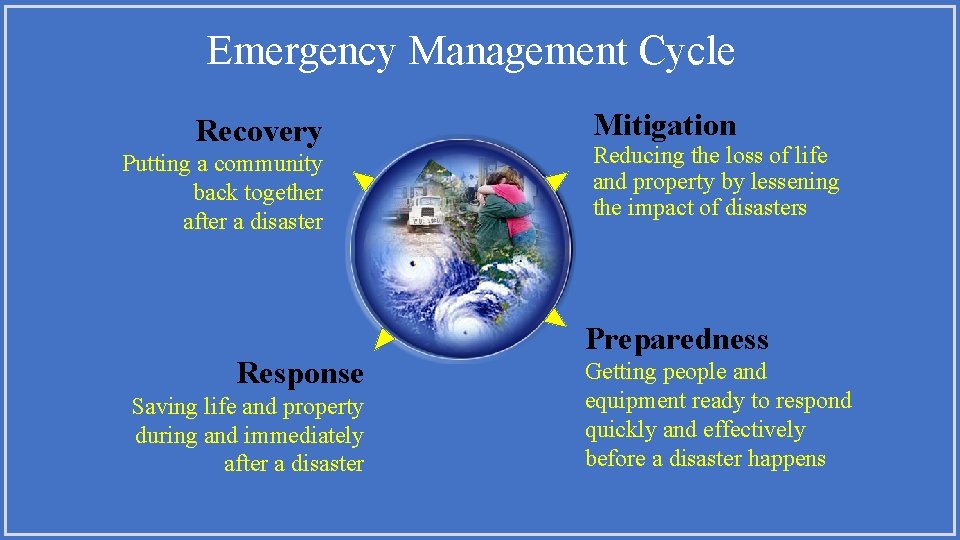
Emergency Management Cycle Recovery Putting a community back together after a disaster Response Saving life and property during and immediately after a disaster Mitigation Reducing the loss of life and property by lessening the impact of disasters Preparedness Getting people and equipment ready to respond quickly and effectively before a disaster happens
FEMA Region 6: One of the Busiest in the Nation
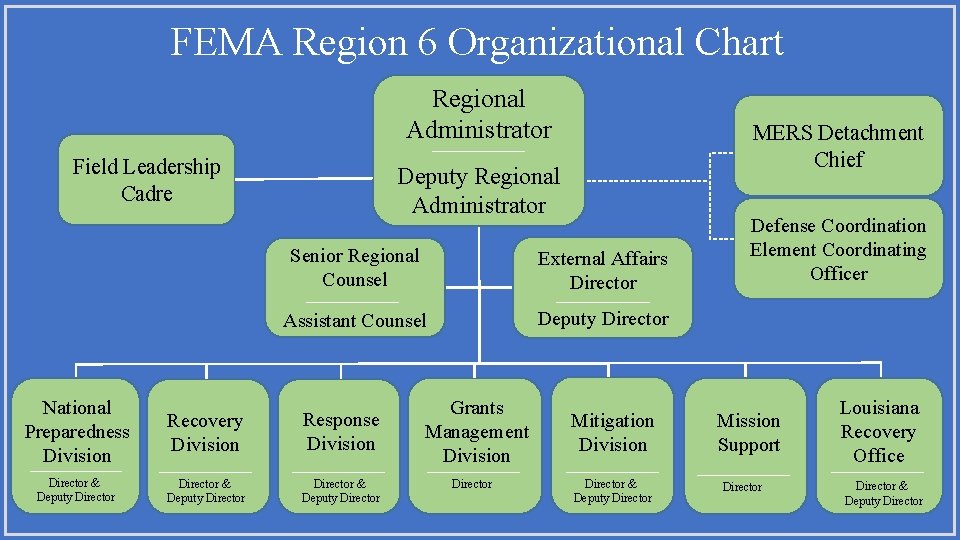
FEMA Region 6 Organizational Chart Regional Administrator Deputy Regional Administrator -------- Field Leadership Cadre ----------- Senior Regional Counsel External Affairs Director Assistant Counsel Deputy Director National Preparedness Division Recovery Division Response Division Director & Deputy Director Grants Management Division Director MERS Detachment ---Chief Mitigation Division Director & Deputy Director Defense Coordination ---Element Coordinating Officer Mission Support Director Louisiana Recovery Office Director & Deputy Director
Oklahoma 38 New Mexico 23 Louisiana Texas 4 3 68 Federally Recognized Tribes and Pueblos
Top Natural Disaster Threats within Region 6 Hurricanes Earthquakes Severe Storms / Tornadoes Wildfires Flooding Severe Winter Storms **Other threats, such as Terrorism and Pandemics within Region 6, are considered to be high impact (resource intensive) but lower probability**
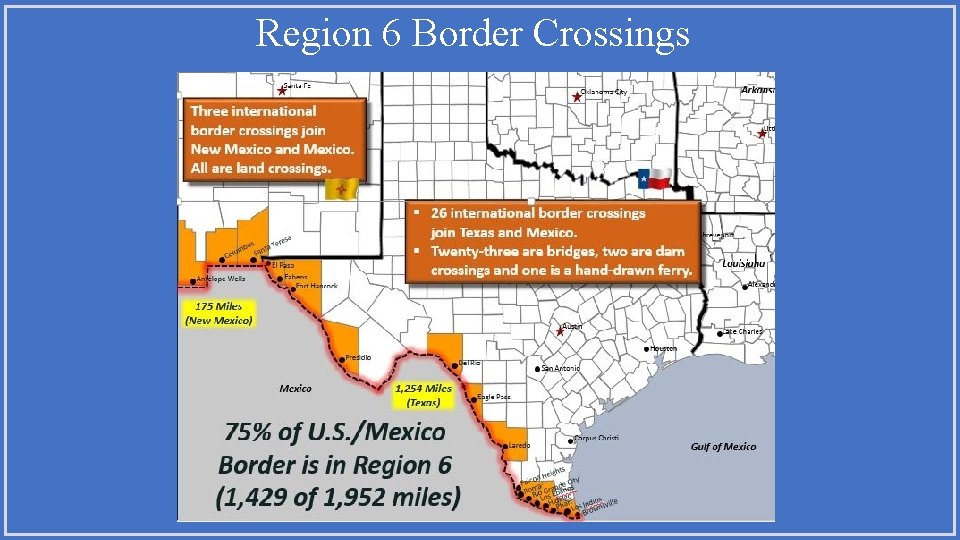
Region 6 Border Crossings
Billion-Dollar Disasters in Region 6 Katrina Rita/La. $32. 57 B $1. 92 B Harvey Rita/Texas $5. 23 B $1. 87 B Ike Gustav/La. $4. 39 B $1. 66 B 2016 La. Floods TS Allison $2. 32 B $1. 14 B
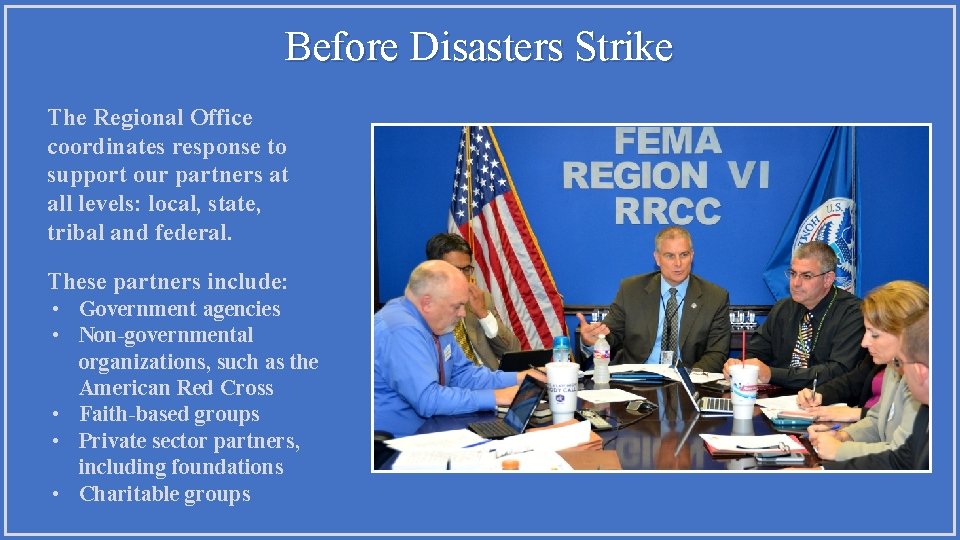
Before Disasters Strike The Regional Office coordinates response to support our partners at all levels: local, state, tribal and federal. These partners include: • Government agencies • Non-governmental organizations, such as the American Red Cross • Faith-based groups • Private sector partners, including foundations • Charitable groups
How Does FEMA Get Involved When Disaster Strikes? A quick look at how disasters receive federal declarations
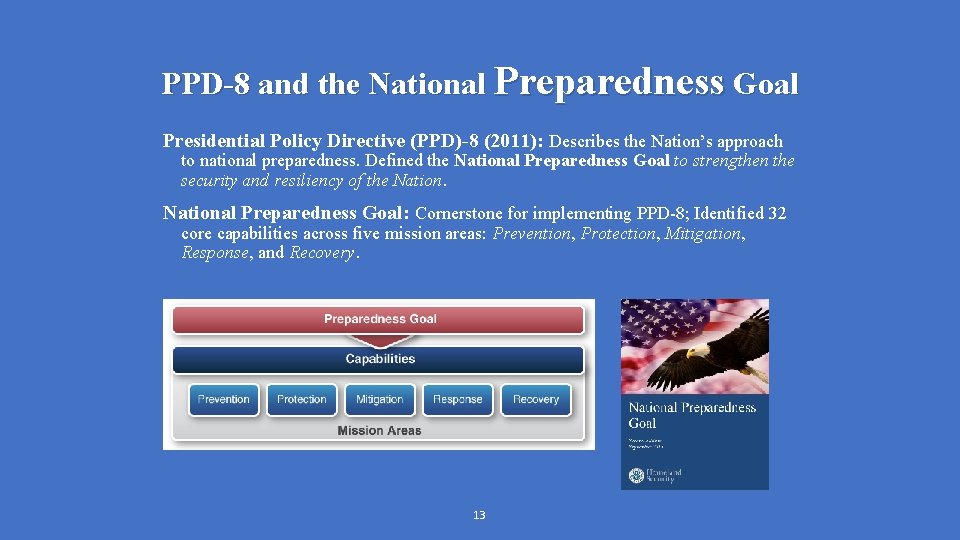
PPD-8 and the National Preparedness Goal Presidential Policy Directive (PPD)-8 (2011): Describes the Nation’s approach to national preparedness. Defined the National Preparedness Goal to strengthen the security and resiliency of the National Preparedness Goal: Cornerstone for implementing PPD-8; Identified 32 core capabilities across five mission areas: Prevention, Protection, Mitigation, Response, and Recovery. 13
National Planning Frameworks 14
Response: Saving lives and property immediately after a disaster strikes
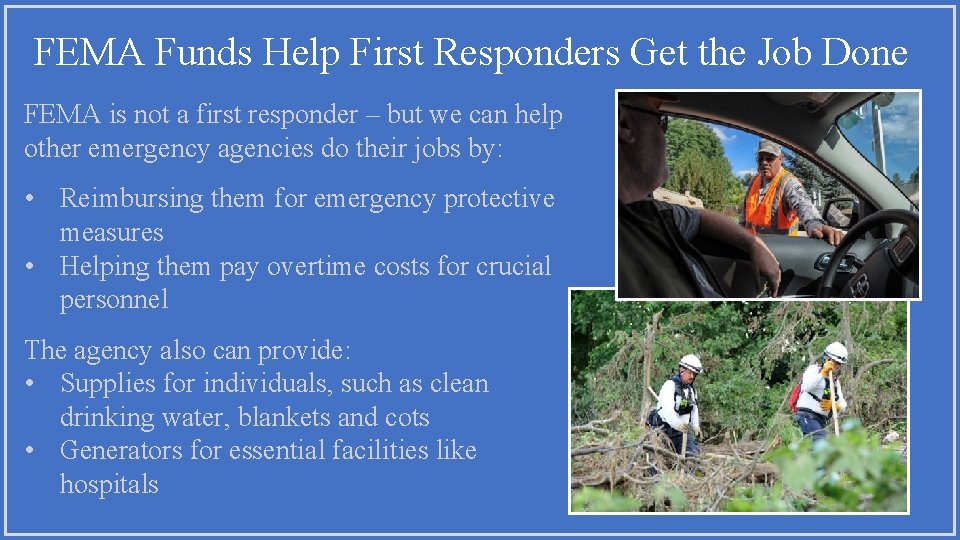
FEMA Funds Help First Responders Get the Job Done FEMA is not a first responder – but we can help other emergency agencies do their jobs by: • Reimbursing them for emergency protective measures • Helping them pay overtime costs for crucial personnel The agency also can provide: • Supplies for individuals, such as clean drinking water, blankets and cots • Generators for essential facilities like hospitals
Recovery: Helping individuals and their communities get back on their feet after a disaster
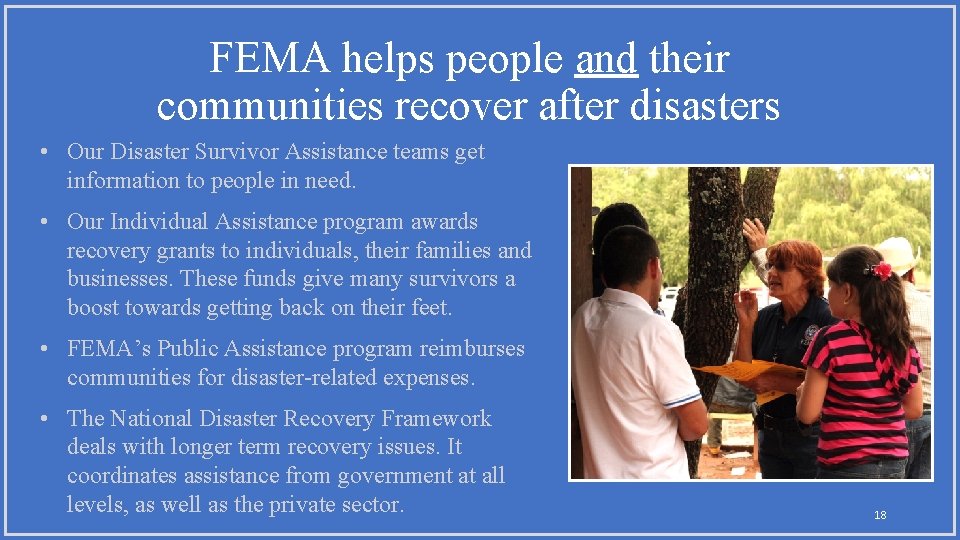
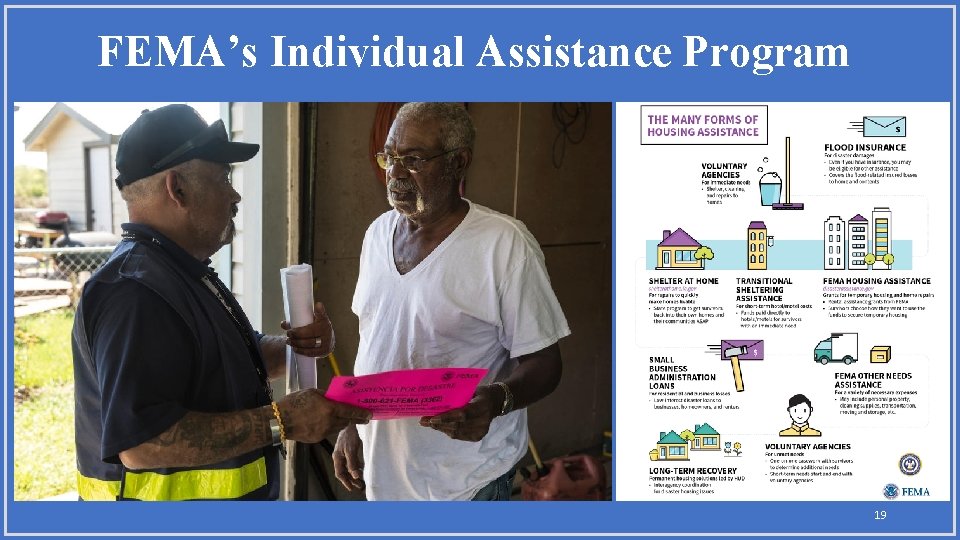
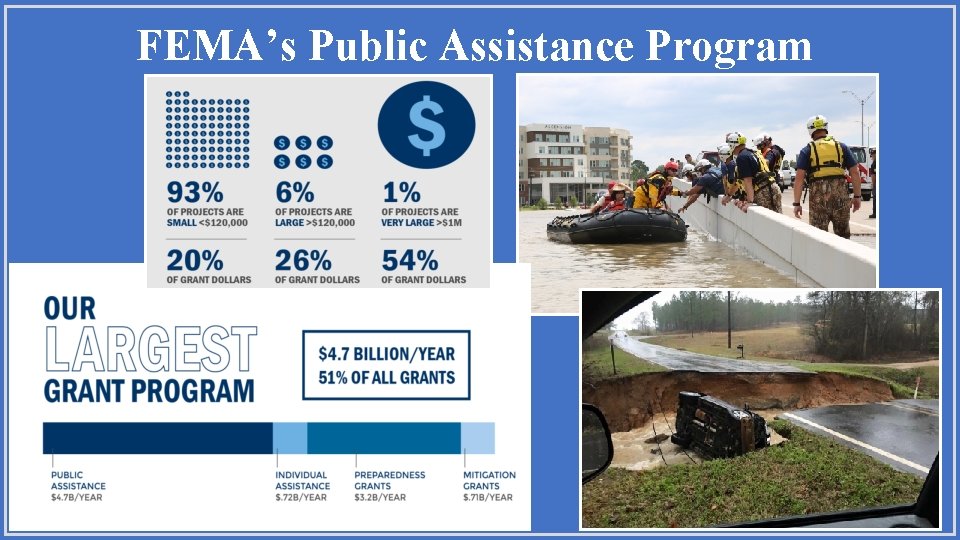
FEMA helps people and their communities recover after disasters • Our Disaster Survivor Assistance teams get information to people in need. • Our Individual Assistance program awards recovery grants to individuals, their families and businesses. These funds give many survivors a boost towards getting back on their feet. • FEMA’s Public Assistance program reimburses communities for disaster-related expenses. • The National Disaster Recovery Framework deals with longer term recovery issues. It coordinates assistance from government at all levels, as well as the private sector. 18
FEMA’s Individual Assistance Program 19
FEMA’s Public Assistance Program 20
Mitigation: Building back stronger and safer, to better withstand future disasters
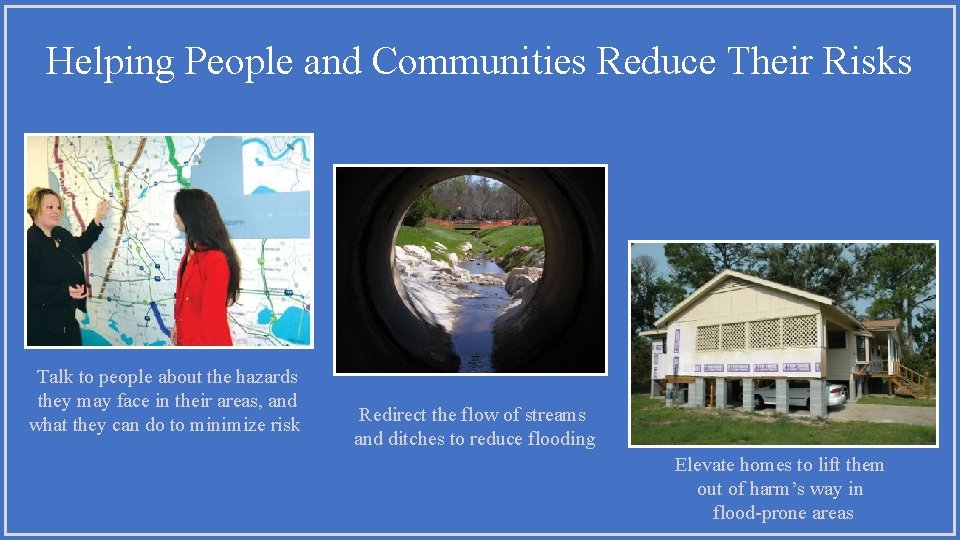
Helping People and Communities Reduce Their Risks Talk to people about the hazards they may face in their areas, and what they can do to minimize risk Redirect the flow of streams and ditches to reduce flooding Elevate homes to lift them out of harm’s way in flood-prone areas
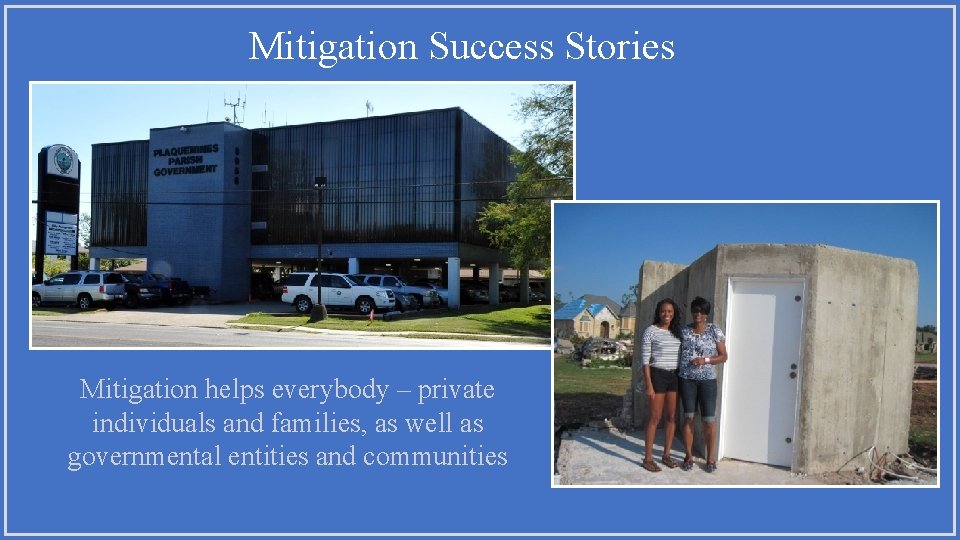
Mitigation Success Stories Mitigation helps everybody – private individuals and families, as well as governmental entities and communities
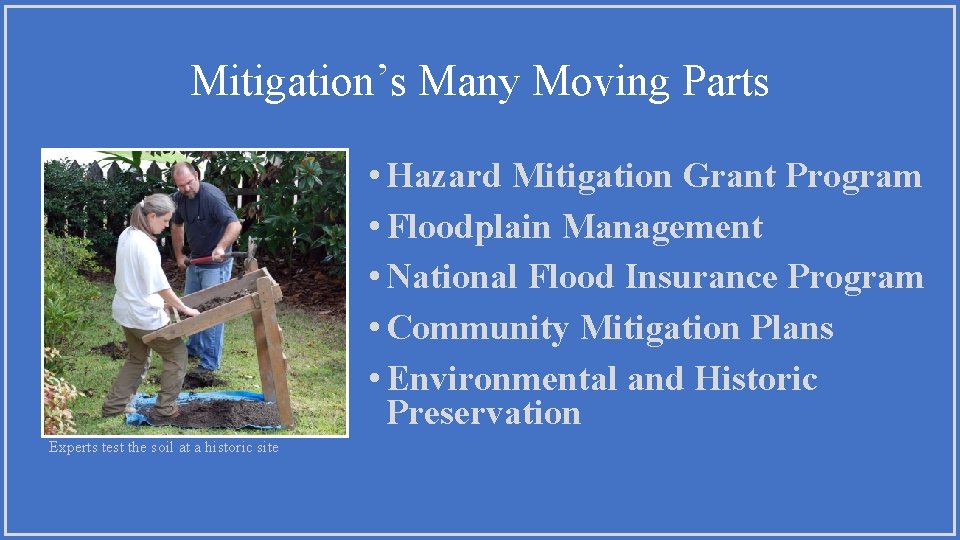
Mitigation’s Many Moving Parts • Hazard Mitigation Grant Program • Floodplain Management • National Flood Insurance Program • Community Mitigation Plans • Environmental and Historic Preservation Experts test the soil at a historic site
Preparedness: Educating ourselves – and acting on what we learn – to survive disasters with minimal impact to our homes, our families and ourselves
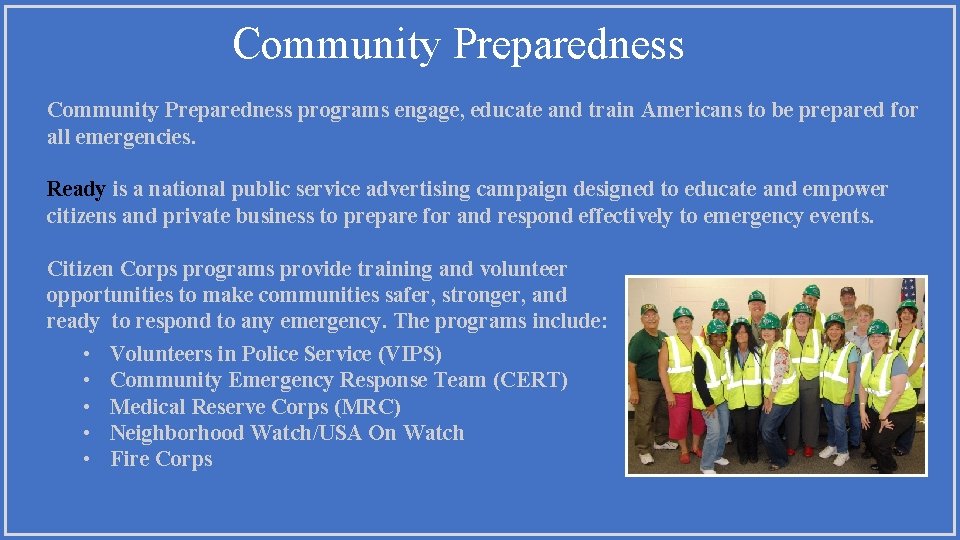
Community Preparedness programs engage, educate and train Americans to be prepared for all emergencies. Ready is a national public service advertising campaign designed to educate and empower citizens and private business to prepare for and respond effectively to emergency events. Citizen Corps programs provide training and volunteer opportunities to make communities safer, stronger, and ready to respond to any emergency. The programs include: • Volunteers in Police Service (VIPS) • Community Emergency Response Team (CERT) • Medical Reserve Corps (MRC) • Neighborhood Watch/USA On Watch • Fire Corps
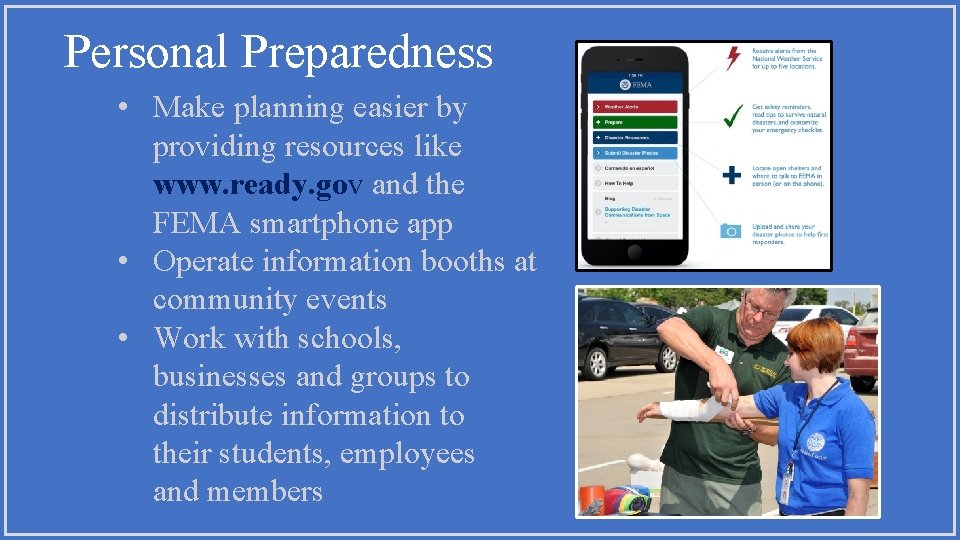
Personal Preparedness • Make planning easier by providing resources like www. ready. gov and the FEMA smartphone app • Operate information booths at community events • Work with schools, businesses and groups to distribute information to their students, employees and members
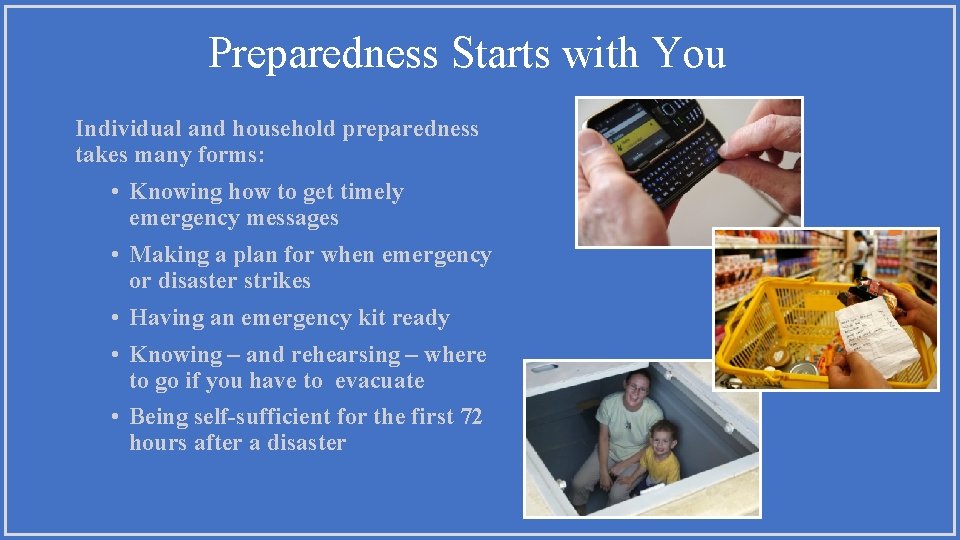
Preparedness Starts with You Individual and household preparedness takes many forms: • Knowing how to get timely emergency messages • Making a plan for when emergency or disaster strikes • Having an emergency kit ready • Knowing – and rehearsing – where to go if you have to evacuate • Being self-sufficient for the first 72 hours after a disaster