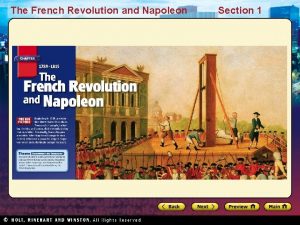
THE FRENCH REVOLUTION AND NAPOLEON 1789 1815 THE



- Slides: 64
THE FRENCH REVOLUTION AND NAPOLEON, 1789 -1815 THE FRENCH REVOLUTION BEGINS CAUSES
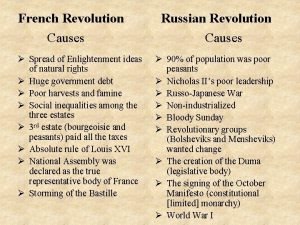
BACKGROUND • 1700’s – France was considered the most advanced country in Europe. It had a large population and wealth. It was also the center of the Enlightenment. But unrest was growing in the lower classes
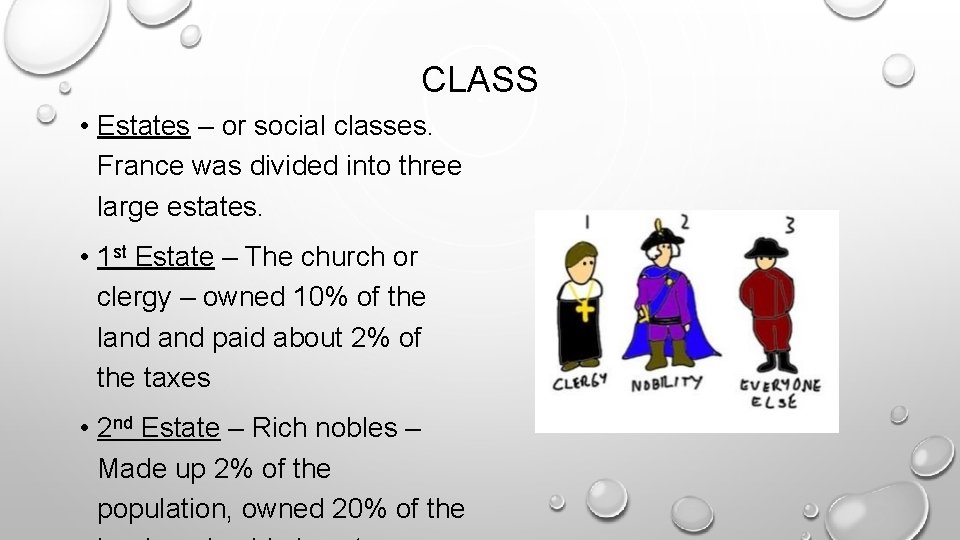
CLASS • Estates – or social classes. France was divided into three large estates. • 1 st Estate – The church or clergy – owned 10% of the land paid about 2% of the taxes • 2 nd Estate – Rich nobles – Made up 2% of the population, owned 20% of the
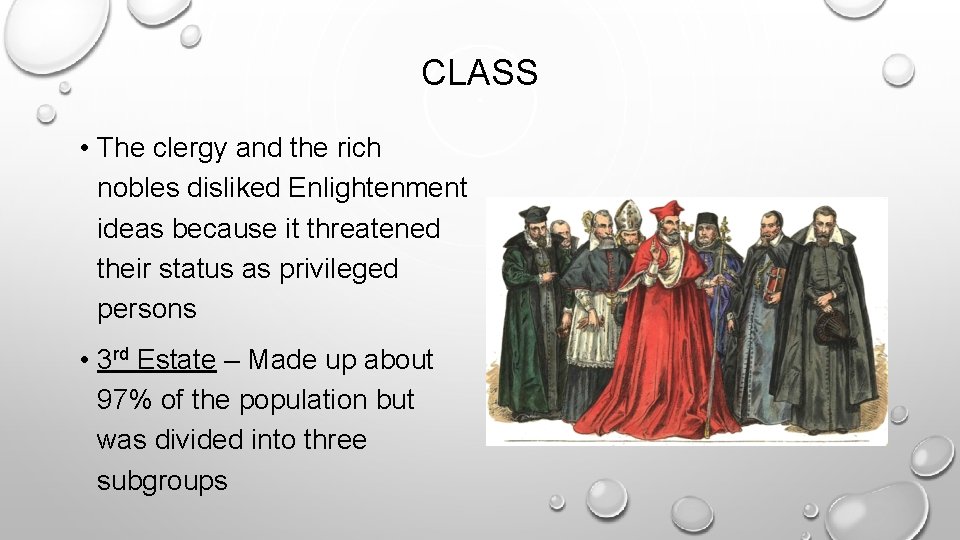
CLASS • The clergy and the rich nobles disliked Enlightenment ideas because it threatened their status as privileged persons • 3 rd Estate – Made up about 97% of the population but was divided into three subgroups
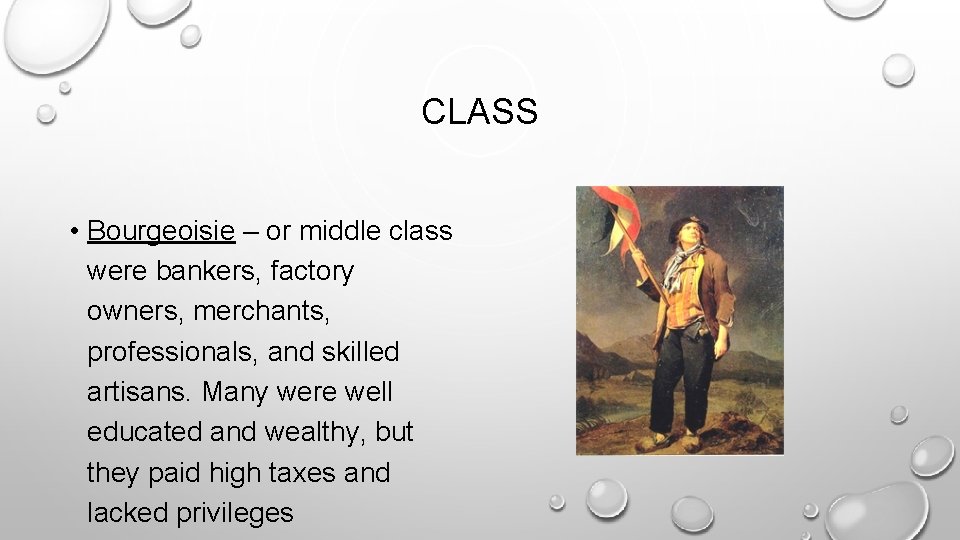
CLASS • Bourgeoisie – or middle class were bankers, factory owners, merchants, professionals, and skilled artisans. Many were well educated and wealthy, but they paid high taxes and lacked privileges
CLASS • Workers – They were urban people and the poorest group. They included tradespeople, apprentices, laborers, and domestic servants. They were paid low wages and were often unemployed
CLASS • Peasants – Made up 80% of the population. They paid heavy taxes to nobles, the church, and the government. They were bitter and eager for change • Inspired by the success of the American Revolution, the peasants began questioning the long-standing notions of
ECONOMY • Although France’s international trade was still strong, high taxes made it difficult to do business within France. The cost of living rose and a series of bad crops led to food shortages and people began to starve
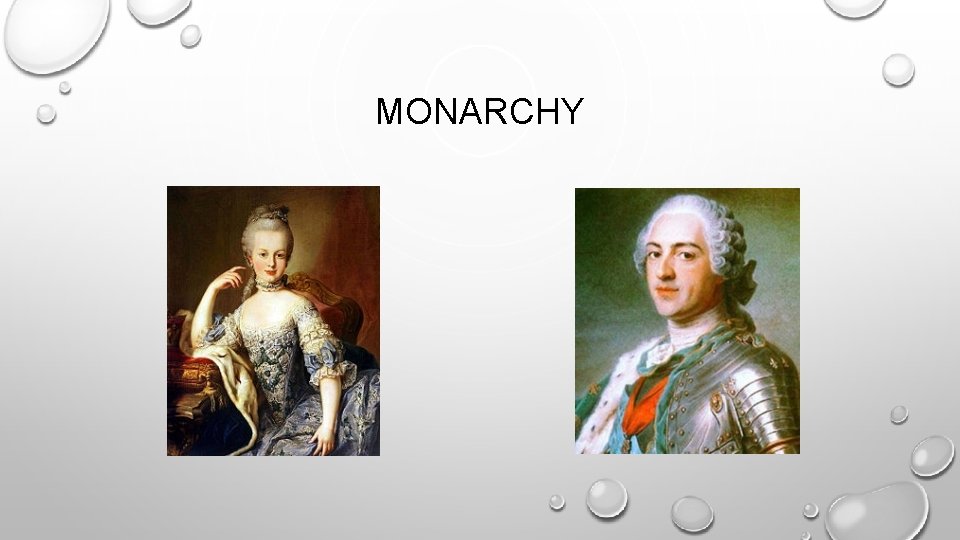
LOUIS XVI • King Louis XVI and Marie Antoinette – governed France and seemed oblivious to the problems. They spent heavily and doubled France’s debt to the point that France could no longer get loans from other countries.
MONARCHY
LOUIS XVI (16 TH) • Louis was also a weak leader with little interest in government. He was very indecisive and allowed problems to drift. Marie was a member of the Austrian royal family and was very disliked in France. Her behavior and spending only made it worse.
ACTIVITY • IN YOUR NOTEBOOK, USE AN ENTIRE PAGE TO CREATE A PAMPHLET (OR MINI-POSTER/BILLBOARD) TO MOTIVATE PEOPLE IN FRANCE TO JOIN THE REVOLUTION. USE IDEAS YOU LISTED FROM THE CAUSES IN YOUR NOTES AND WHAT YOU KNOW THAT MOTIVATED THE COLONISTS IN THE AMERICAN REVOLUTION • PAGE 570 -580 CAN HELP WITH PICTURES • IF YOU HAVE EXTRA TIME, CREATE A POLITICAL CARTOON TO CRITICIZE THE KING AND QUEEN
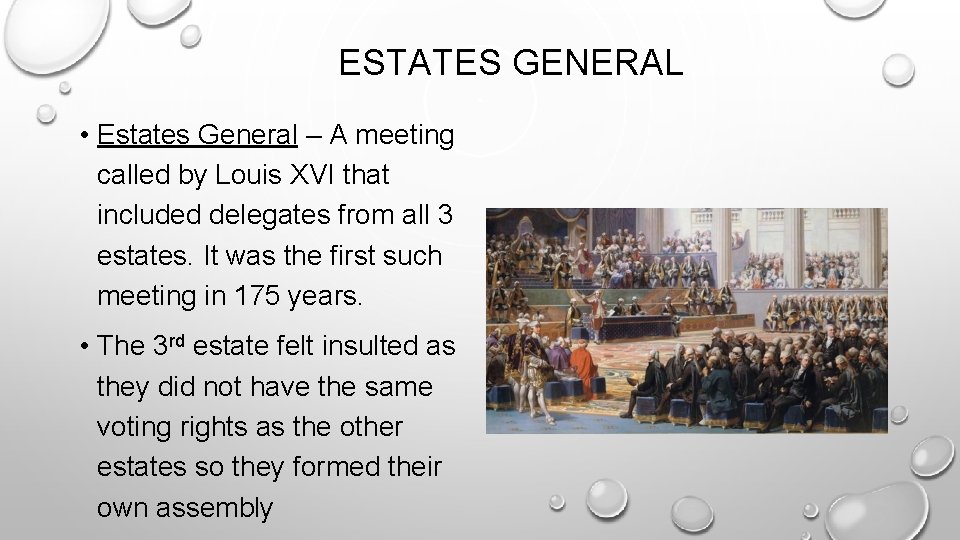
ESTATES GENERAL • Estates General – A meeting called by Louis XVI that included delegates from all 3 estates. It was the first such meeting in 175 years. • The 3 rd estate felt insulted as they did not have the same voting rights as the other estates so they formed their own assembly
NATIONAL ASSEMBLY • National Assembly – A new government established by the 3 rd estate. At first they had no real power but were in effect proclaiming the end of the absolute monarchy and the rule of King Louis. It was the first act of the Revolution.
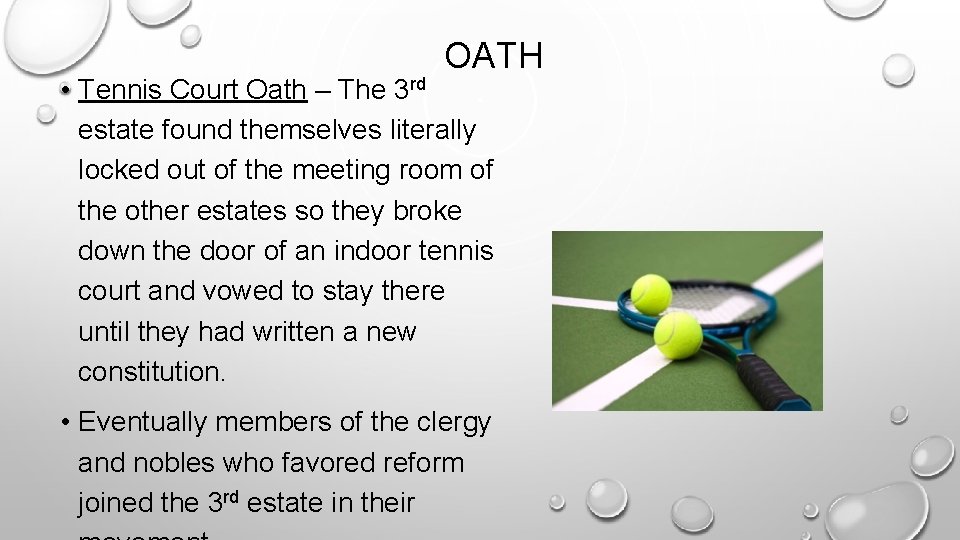
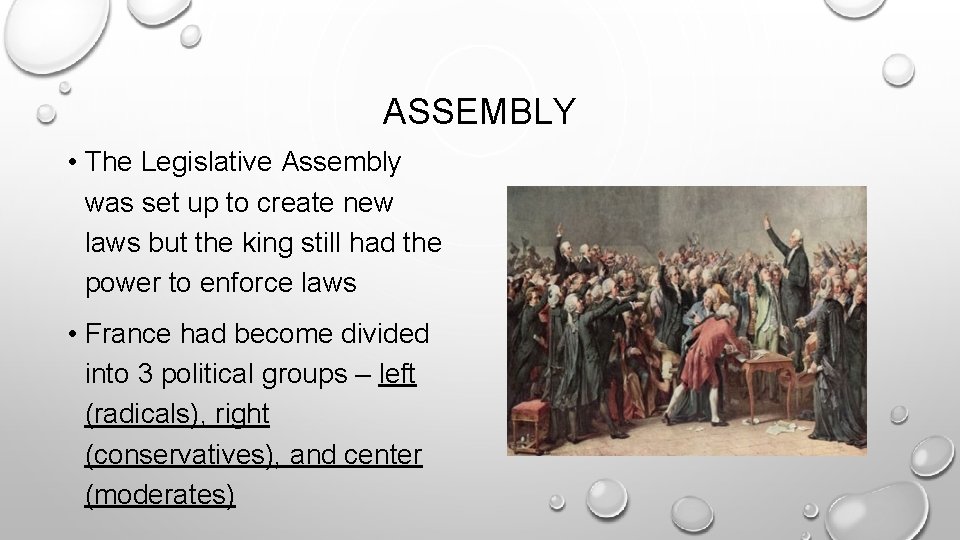
OATH • Tennis Court Oath – The 3 rd estate found themselves literally locked out of the meeting room of the other estates so they broke down the door of an indoor tennis court and vowed to stay there until they had written a new constitution. • Eventually members of the clergy and nobles who favored reform joined the 3 rd estate in their
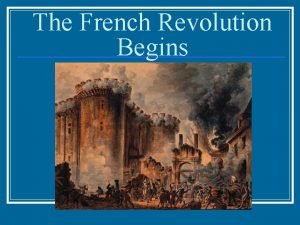
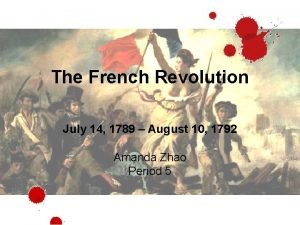
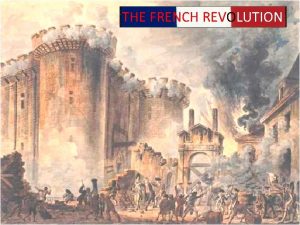
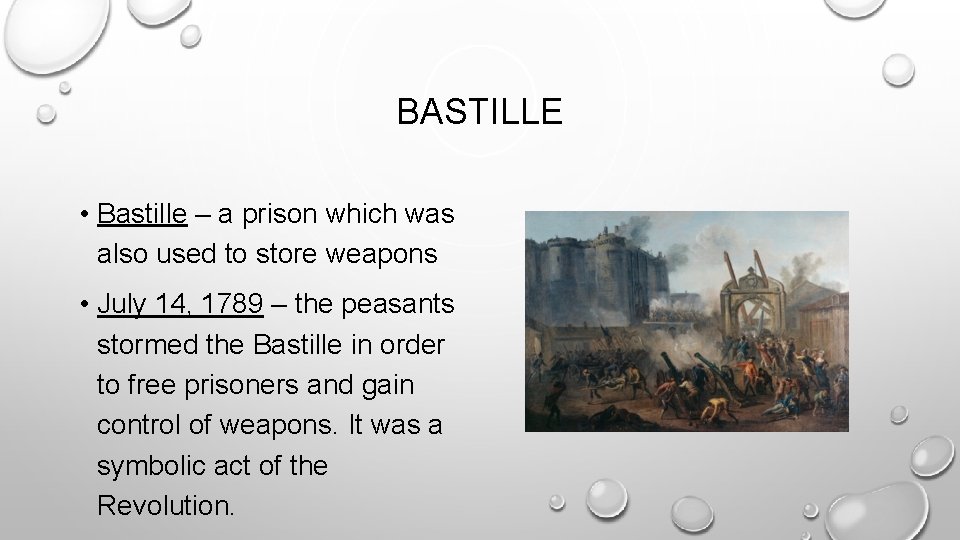
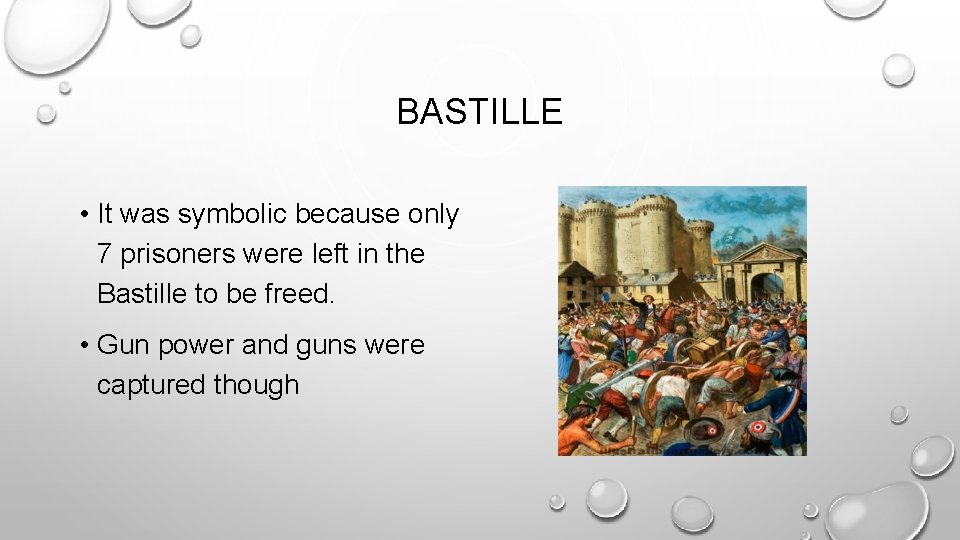
BASTILLE • Bastille – a prison which was also used to store weapons • July 14, 1789 – the peasants stormed the Bastille in order to free prisoners and gain control of weapons. It was a symbolic act of the Revolution.
BASTILLE • It was symbolic because only 7 prisoners were left in the Bastille to be freed. • Gun power and guns were captured though
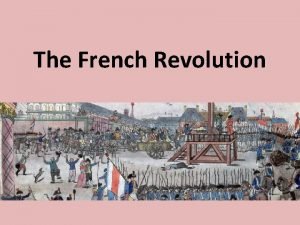
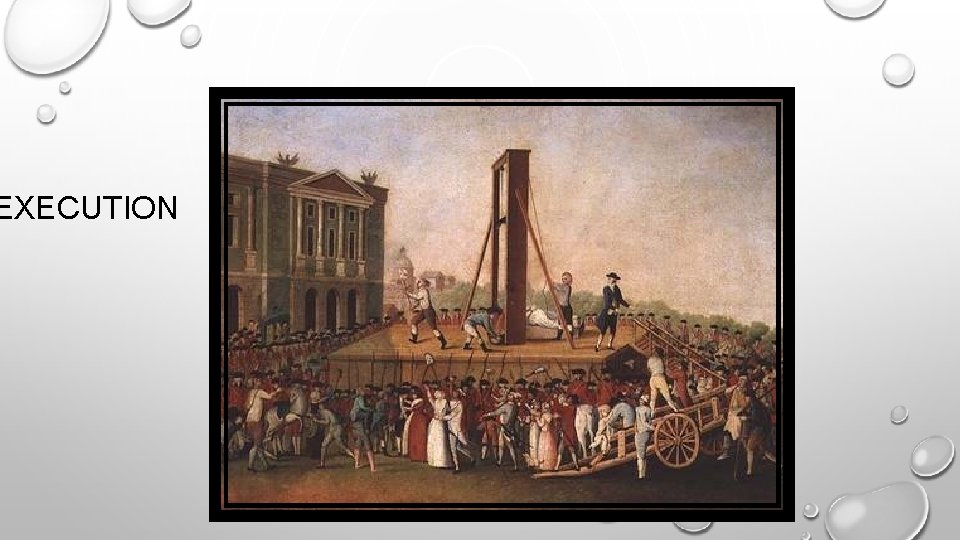
EFFECTS • Great Fear – A period of peasant uprising against the nobles and eventually the king and queen • They killed many nobles and burned and looted their farms • King Louis XVI and Marie Antoinette tried to flee but were captured. They were tried and executed in 1793
EXECUTION
SEC. 2: REVOLUTION BRINGS REFORM AND TERROR
CHANGE • August 4, 1789 – An all night meeting between nobles and peasants made sweeping changes. The estates were eliminated and all were considered equal. • For the nobles and the clergy, this was done more out of fear than idealism
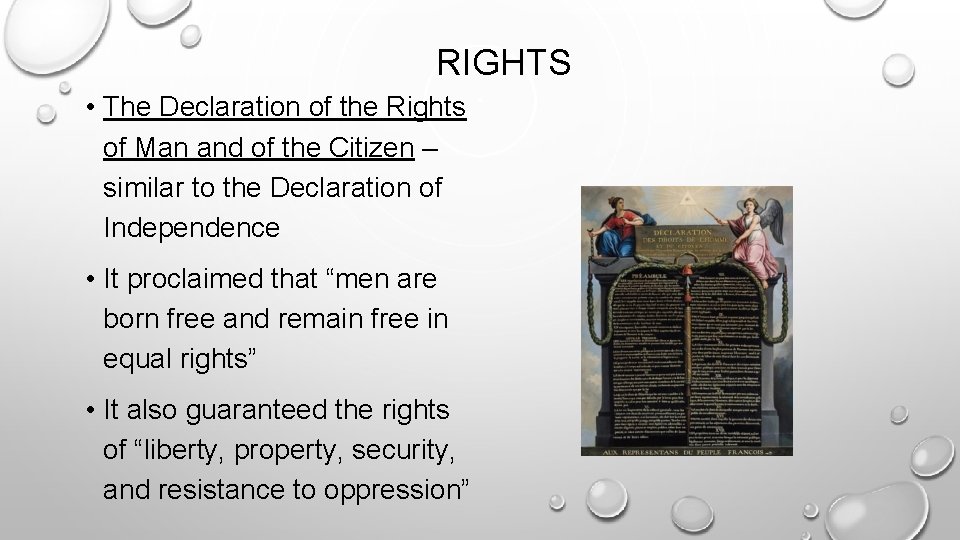
RIGHTS • The Declaration of the Rights of Man and of the Citizen – similar to the Declaration of Independence • It proclaimed that “men are born free and remain free in equal rights” • It also guaranteed the rights of “liberty, property, security, and resistance to oppression”
CHANGE • These rights did not apply to women • The church would no longer be independent of the state. Its lands would be sold to pay off French debt and its leaders would be elected and paid by the state. • This upset many peasants who were devout Catholics
ASSEMBLY • The Legislative Assembly was set up to create new laws but the king still had the power to enforce laws • France had become divided into 3 political groups – left (radicals), right (conservatives), and center (moderates)
HISTORY • France still had problems with food shortages and debt. It also has issues with citizens of very different opinions. Some wanted more change while others wanted to go back to the old regime.
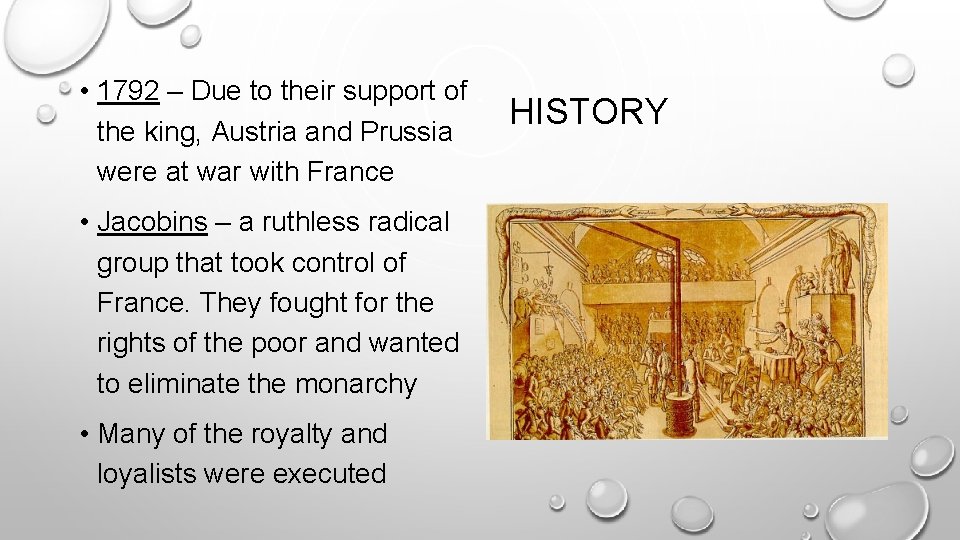
• 1792 – Due to their support of the king, Austria and Prussia were at war with France • Jacobins – a ruthless radical group that took control of France. They fought for the rights of the poor and wanted to eliminate the monarchy • Many of the royalty and loyalists were executed HISTORY
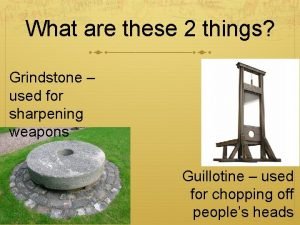
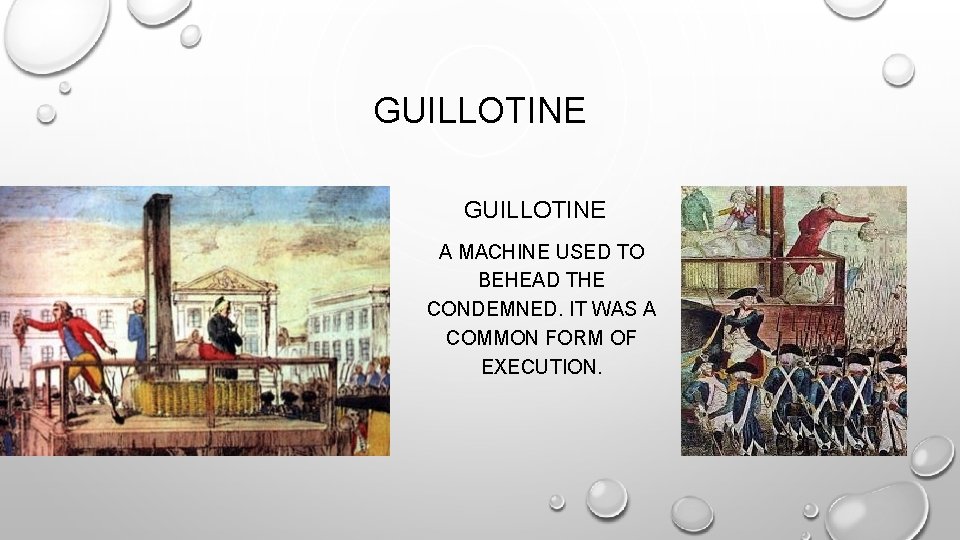
GUILLOTINE A MACHINE USED TO BEHEAD THE CONDEMNED. IT WAS A COMMON FORM OF EXECUTION.
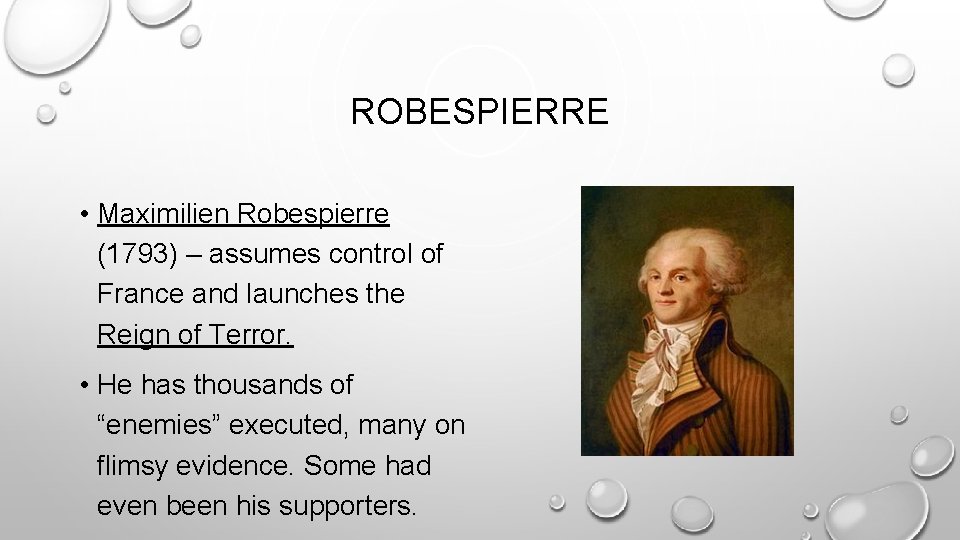
ROBESPIERRE • Maximilien Robespierre (1793) – assumes control of France and launches the Reign of Terror. • He has thousands of “enemies” executed, many on flimsy evidence. Some had even been his supporters.
ROBESPIERRE (A RADICAL) • He also created a new calendar that had no Sundays because he believed that religion was old-fashioned and dangerous. • 1794 – Robespierre’s allies turned on him and had him executed ending the Reign of Terror. • 1795 – a third government was created • While not perfect, this government brought about a period of calm. It also brought in a general to lead France’s army – Napoleon Bonaparte
SEC. 3: NAPOLEON FORGES AN EMPIRE
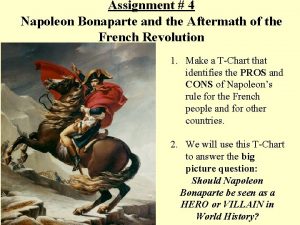
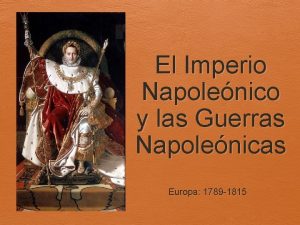
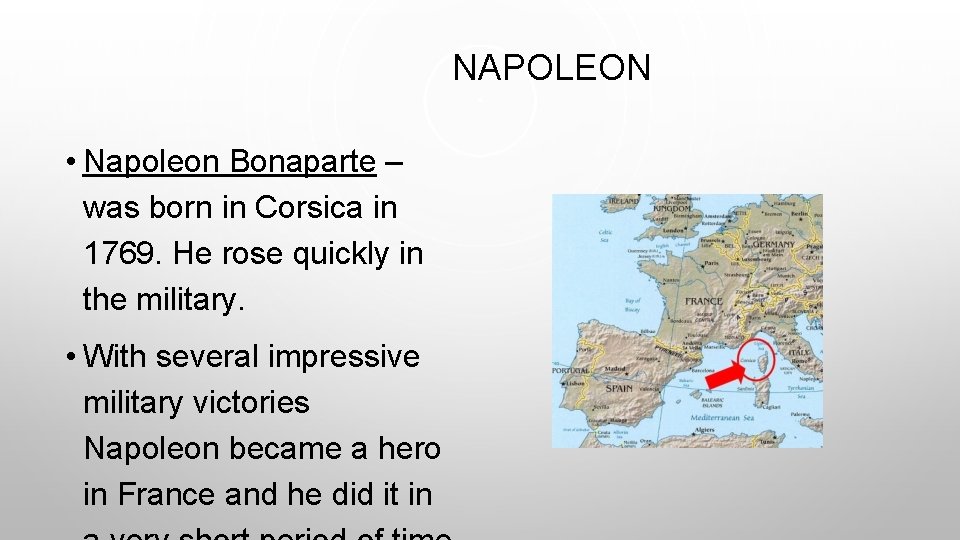
NAPOLEON • Napoleon Bonaparte – was born in Corsica in 1769. He rose quickly in the military. • With several impressive military victories Napoleon became a hero in France and he did it in
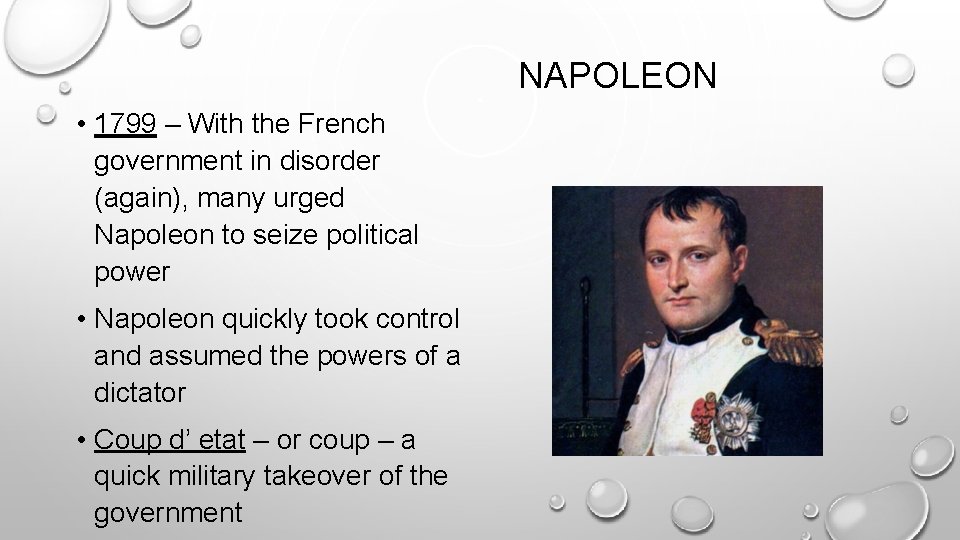
NAPOLEON • 1799 – With the French government in disorder (again), many urged Napoleon to seize political power • Napoleon quickly took control and assumed the powers of a dictator • Coup d’ etat – or coup – a quick military takeover of the government
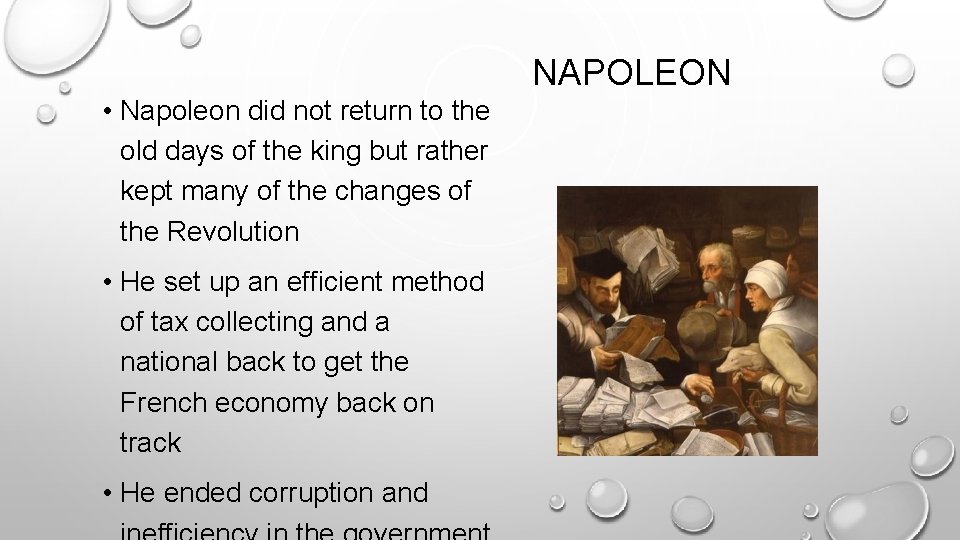
NAPOLEON • Napoleon did not return to the old days of the king but rather kept many of the changes of the Revolution • He set up an efficient method of tax collecting and a national back to get the French economy back on track • He ended corruption and
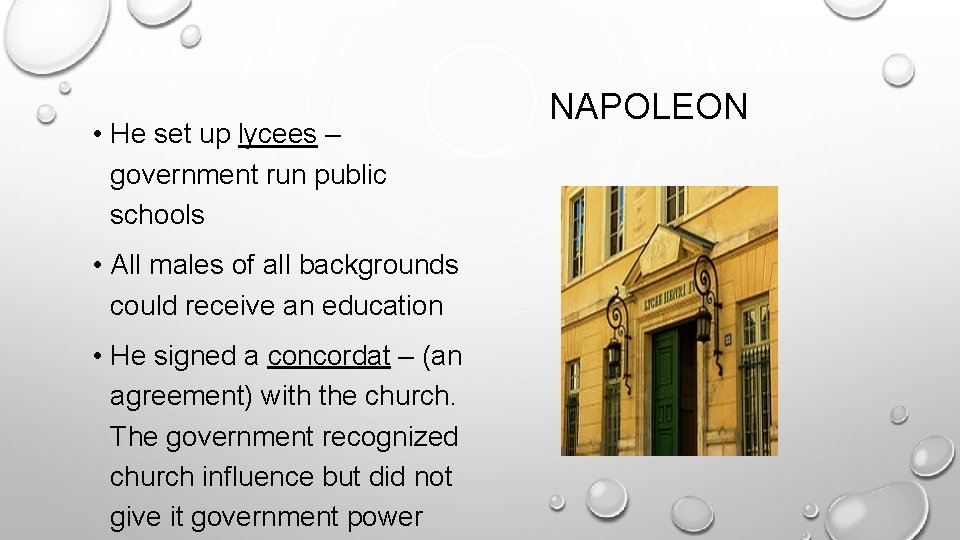
• He set up lycees – government run public schools • All males of all backgrounds could receive an education • He signed a concordat – (an agreement) with the church. The government recognized church influence but did not give it government power NAPOLEON
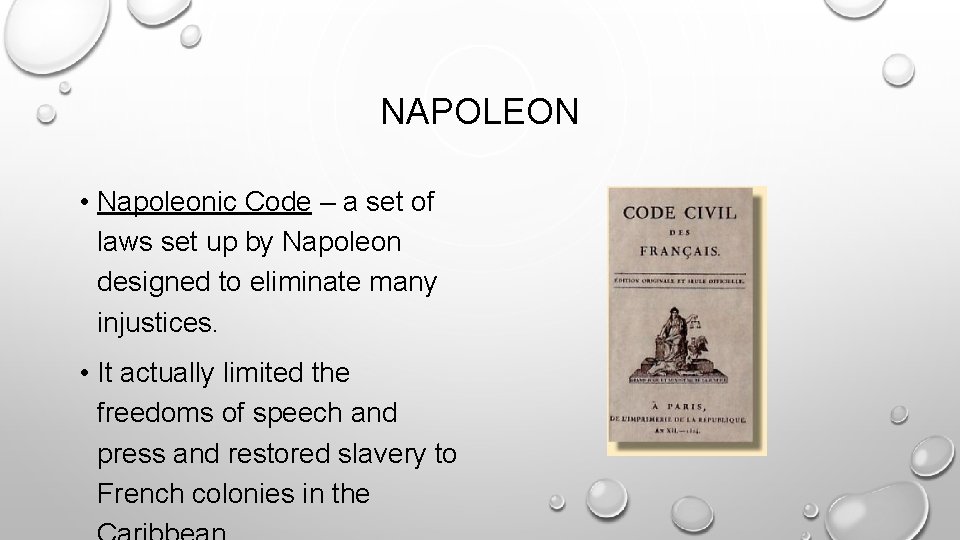
NAPOLEON • Napoleonic Code – a set of laws set up by Napoleon designed to eliminate many injustices. • It actually limited the freedoms of speech and press and restored slavery to French colonies in the
HISTORY 1804 – Napoleon names himself emperor of France. He had the support of the people. He was 35 years old at the time. 1803 – Napoleon decides to rid France of her colonies in America.
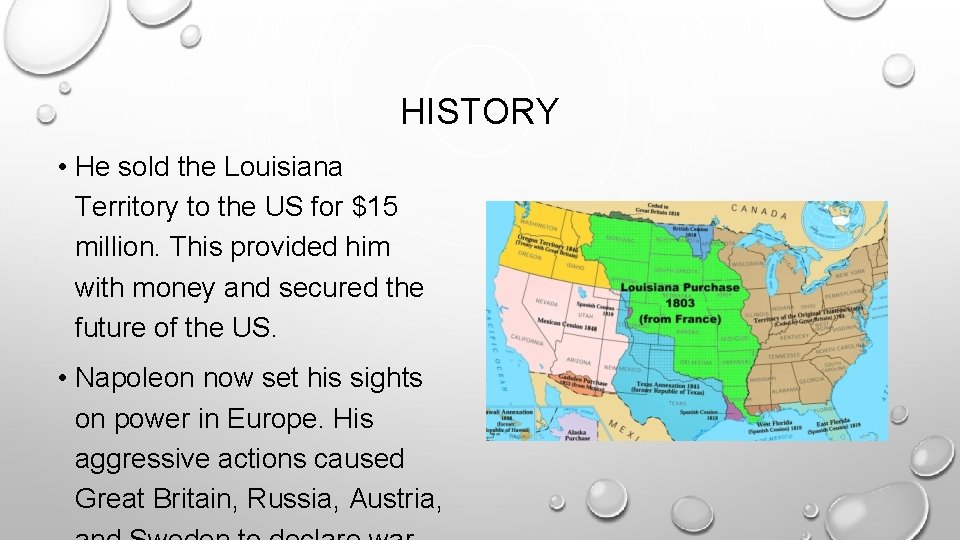
HISTORY • He sold the Louisiana Territory to the US for $15 million. This provided him with money and secured the future of the US. • Napoleon now set his sights on power in Europe. His aggressive actions caused Great Britain, Russia, Austria,
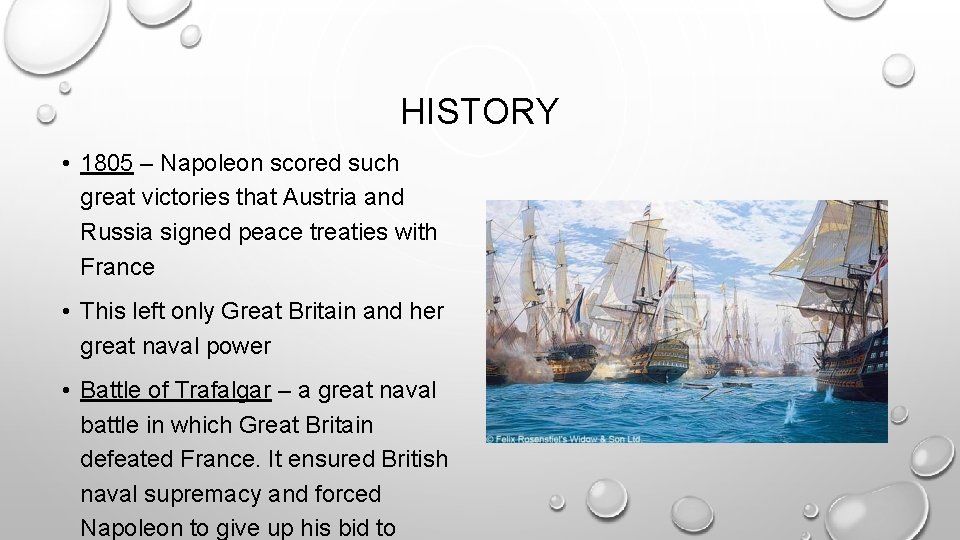
HISTORY • 1805 – Napoleon scored such great victories that Austria and Russia signed peace treaties with France • This left only Great Britain and her great naval power • Battle of Trafalgar – a great naval battle in which Great Britain defeated France. It ensured British naval supremacy and forced Napoleon to give up his bid to
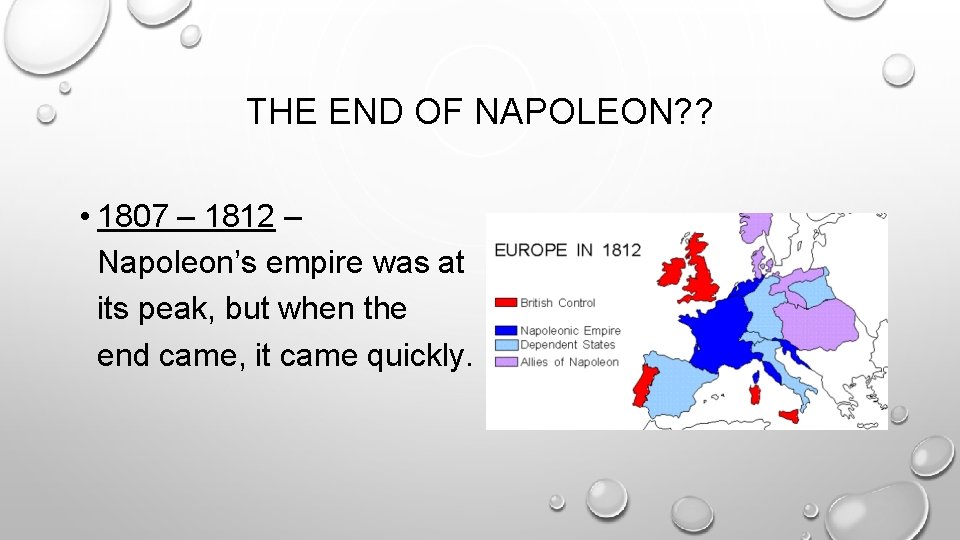
THE END OF NAPOLEON? ? • 1807 – 1812 – Napoleon’s empire was at its peak, but when the end came, it came quickly.
SEC. 4: NAPOLEON’S EMPIRE COLLAPSES
DOWNFALL • Napoleon made 3 serious mistakes that led to his downfall • The Continental System: • 1806 – Napoleon set up a blockade – a forced closing of ports – to prevent trade between Great Britain and other European nations. • Continental System – The blockade was supposed to make continental Europe more self-sufficient. It was also supposed to destroy British commerce and industry
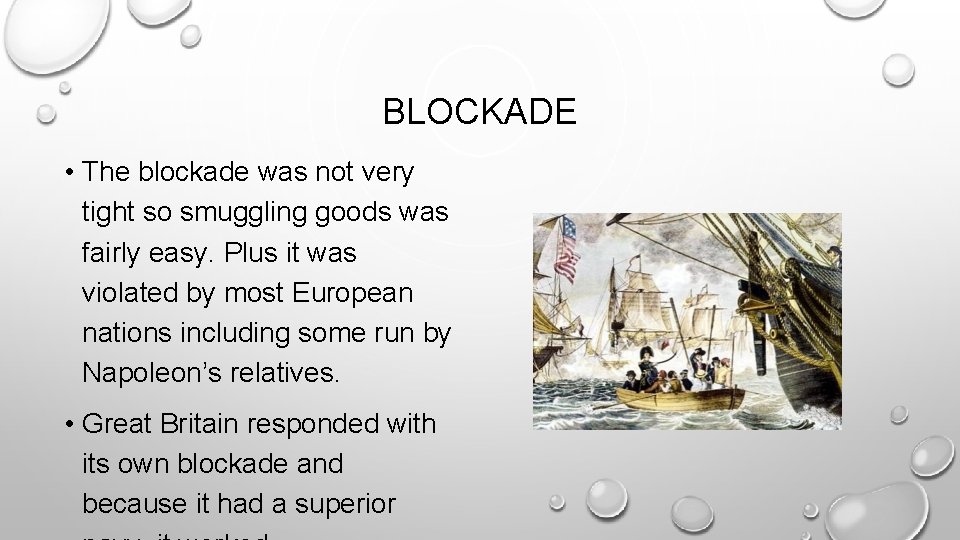
BLOCKADE • The blockade was not very tight so smuggling goods was fairly easy. Plus it was violated by most European nations including some run by Napoleon’s relatives. • Great Britain responded with its own blockade and because it had a superior
WAR • The Peninsular War • 1808 – Napoleon sends an invasion force to Portugal to get them to accept the Continental System • In order to get to Portugal, the French military had to go through Spain. This upset the Spanish. • France could easily defeat the Spanish in open war so the Spanish peasants fought a guerrilla style war
WAR • Guerrilla – working in small groups with quick strikes and a retreat into hiding • Napoleon lost about 300, 000 men in the war, which dragged on for 6 years
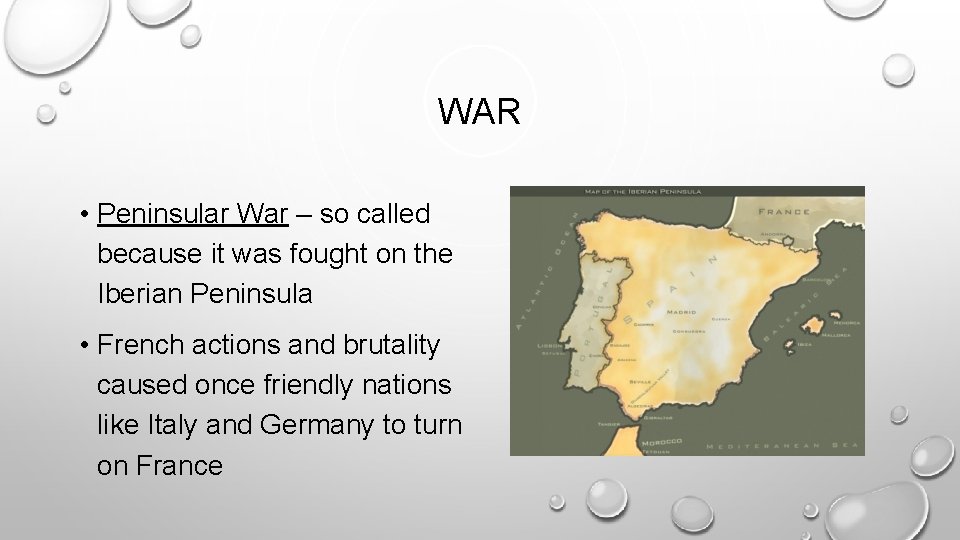
WAR • Peninsular War – so called because it was fought on the Iberian Peninsula • French actions and brutality caused once friendly nations like Italy and Germany to turn on France
RUSSIA • France and Russia had once been allies but as the Russians refused to stop selling grain to Great Britain, this upset Napoleon. Also, both countries had their eye on Poland so distrust began. • June, 1812 – Napoleon and more than 400, 000 soldiers invade Russia • At first, Napoleon advanced quickly and Russian troops pulled back
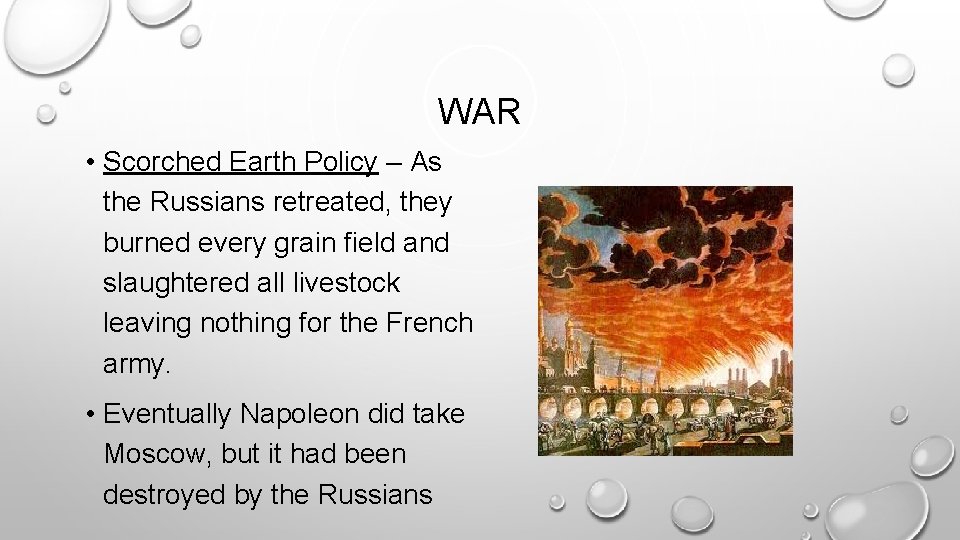
WAR • Scorched Earth Policy – As the Russians retreated, they burned every grain field and slaughtered all livestock leaving nothing for the French army. • Eventually Napoleon did take Moscow, but it had been destroyed by the Russians
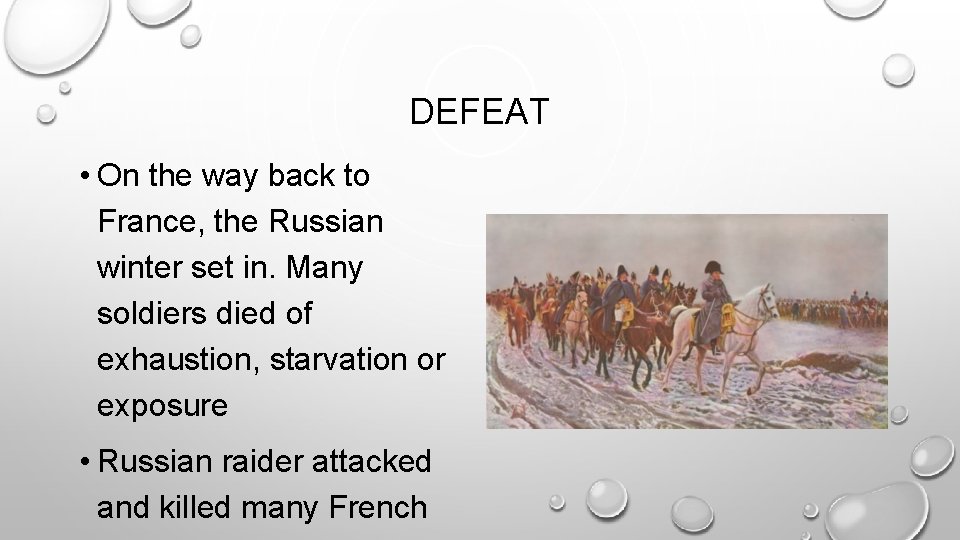
DEFEAT • On the way back to France, the Russian winter set in. Many soldiers died of exhaustion, starvation or exposure • Russian raider attacked and killed many French
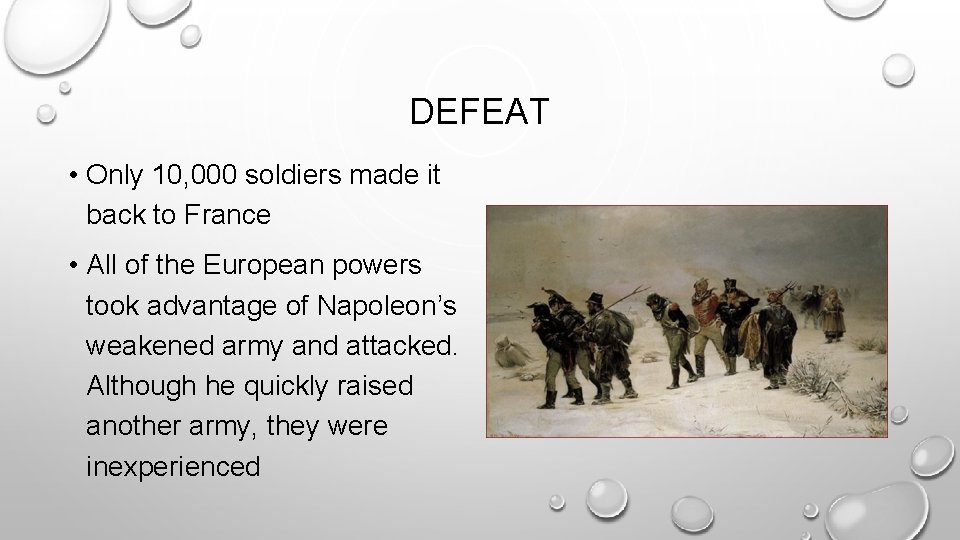
DEFEAT • Only 10, 000 soldiers made it back to France • All of the European powers took advantage of Napoleon’s weakened army and attacked. Although he quickly raised another army, they were inexperienced
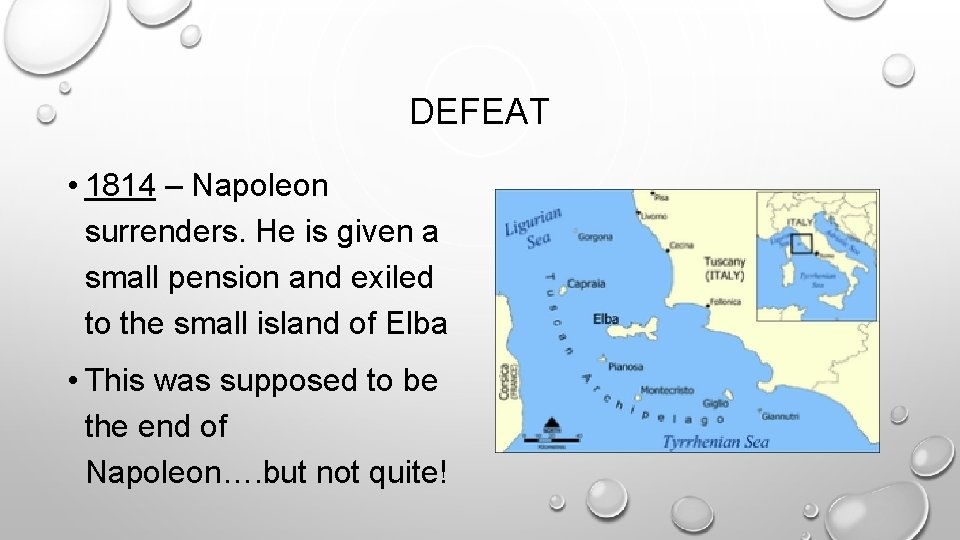
DEFEAT • 1814 – Napoleon surrenders. He is given a small pension and exiled to the small island of Elba • This was supposed to be the end of Napoleon…. but not quite!
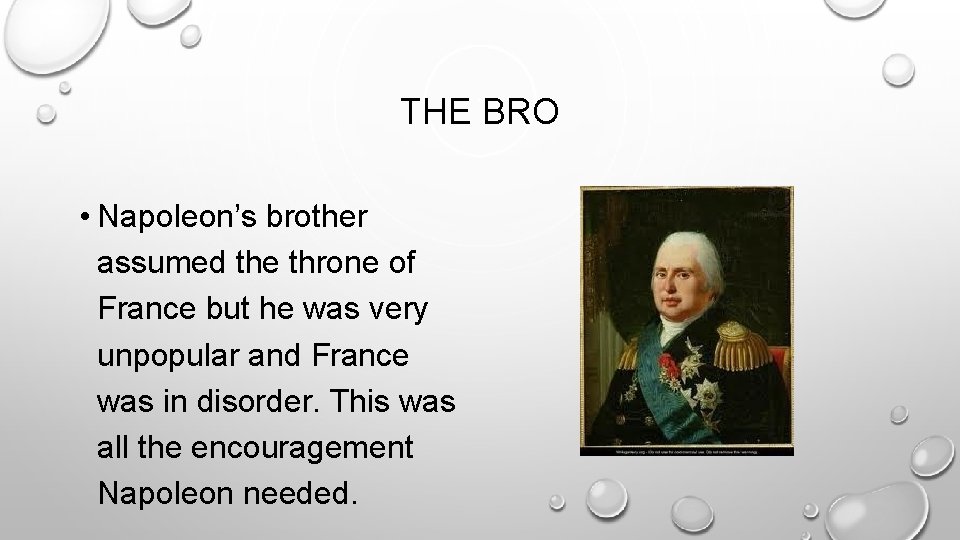
THE BRO • Napoleon’s brother assumed the throne of France but he was very unpopular and France was in disorder. This was all the encouragement Napoleon needed.
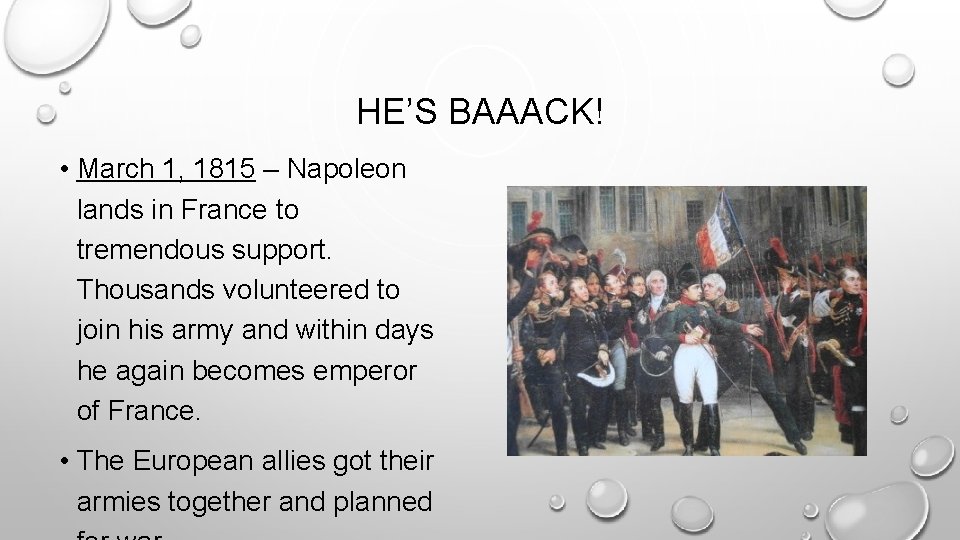
HE’S BAAACK! • March 1, 1815 – Napoleon lands in France to tremendous support. Thousands volunteered to join his army and within days he again becomes emperor of France. • The European allies got their armies together and planned
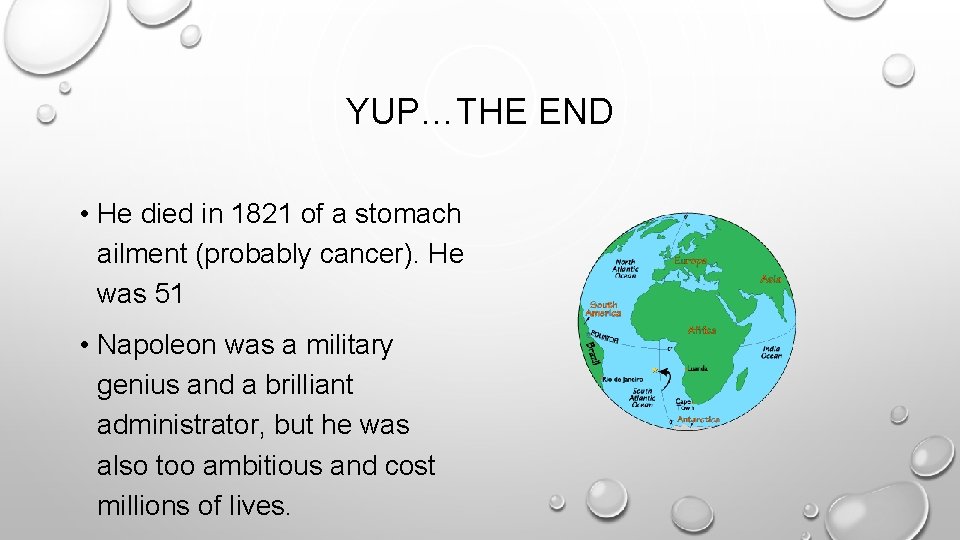
THE END? ? • June 18, 1815 – Napoleon attacks but is defeated • Waterloo – A village in Belgium where the final battle took place. • Hundred Days – The term for Napoleon’s last bid for power. It ended at Waterloo • Napoleon was again exiled, this time to St. Helena in the South Atlantic. He lived there for only six years
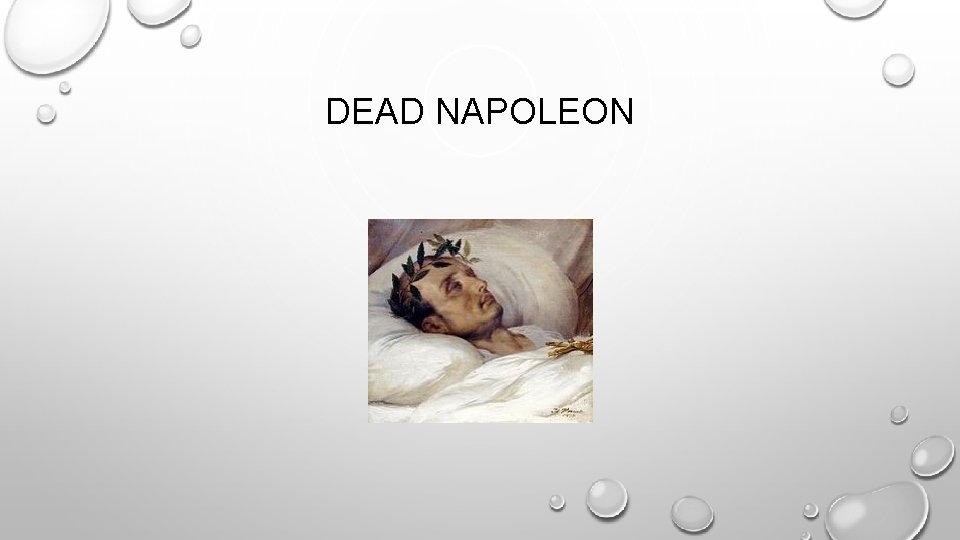
YUP…THE END • He died in 1821 of a stomach ailment (probably cancer). He was 51 • Napoleon was a military genius and a brilliant administrator, but he was also too ambitious and cost millions of lives.
DEAD NAPOLEON
SEC. 5: THE CONGRESS OF VIENNA
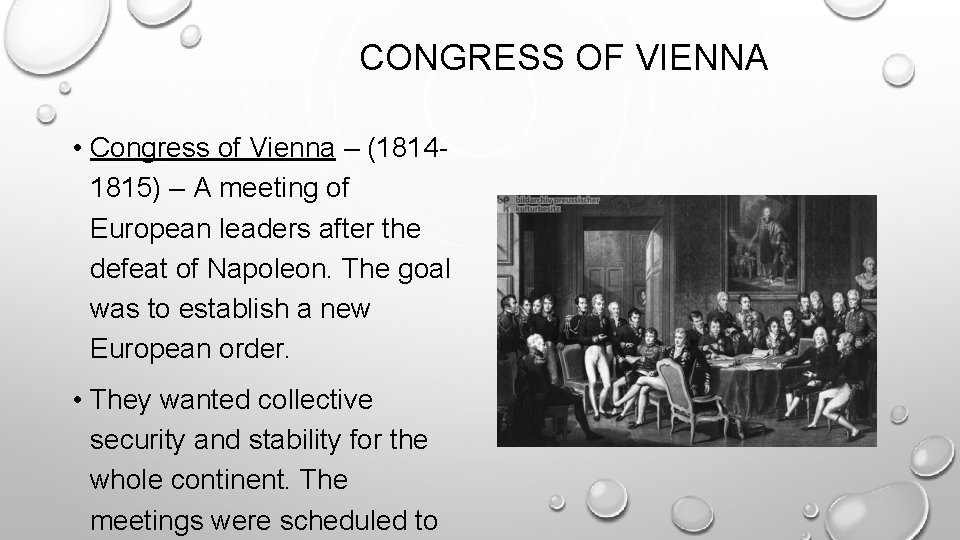
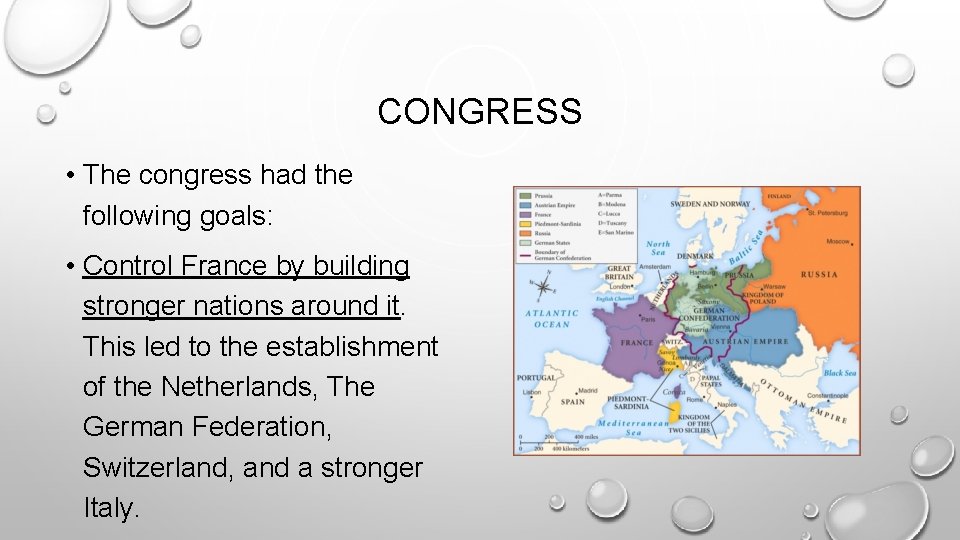
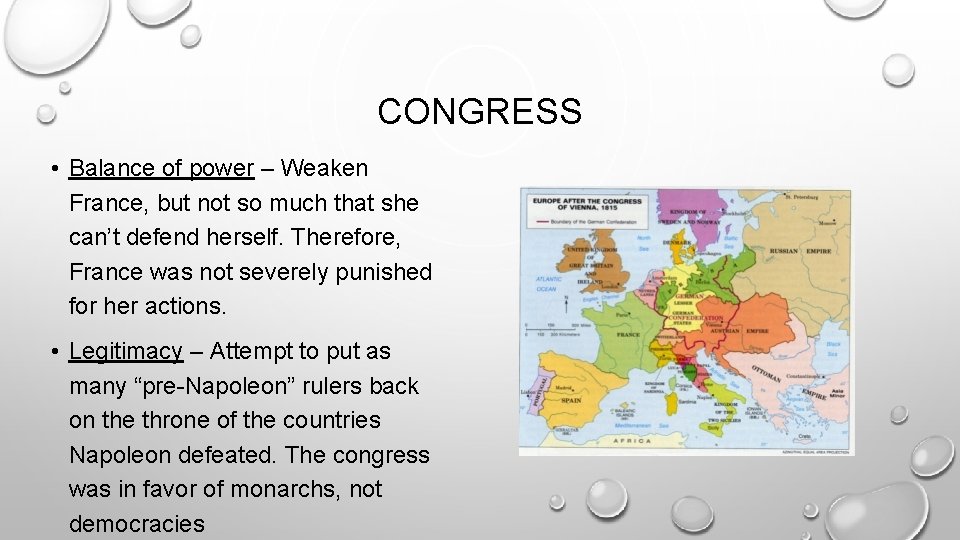
CONGRESS OF VIENNA • Congress of Vienna – (18141815) – A meeting of European leaders after the defeat of Napoleon. The goal was to establish a new European order. • They wanted collective security and stability for the whole continent. The meetings were scheduled to
CONGRESS • The congress had the following goals: • Control France by building stronger nations around it. This led to the establishment of the Netherlands, The German Federation, Switzerland, and a stronger Italy.
CONGRESS • Balance of power – Weaken France, but not so much that she can’t defend herself. Therefore, France was not severely punished for her actions. • Legitimacy – Attempt to put as many “pre-Napoleon” rulers back on the throne of the countries Napoleon defeated. The congress was in favor of monarchs, not democracies
CONGRESS • The congress was successful in unifying Europe. There were no wars between European nations for 40 years. • There were still differing opinions about government in Europe. The conservative monarchies wanted to “erase” the French revolution. They did not want a democracy. • Many lower classes still favored equality and used the French revolution as their inspiration
THE FUTURE • The French Revolution brought the first democratic experiment to Europe and it failed, but it encouraged many to keep trying. • The French Revolution reached beyond Europe. It was the spark that led Mexico to end Spanish rule and Brazil to end Portuguese rule.
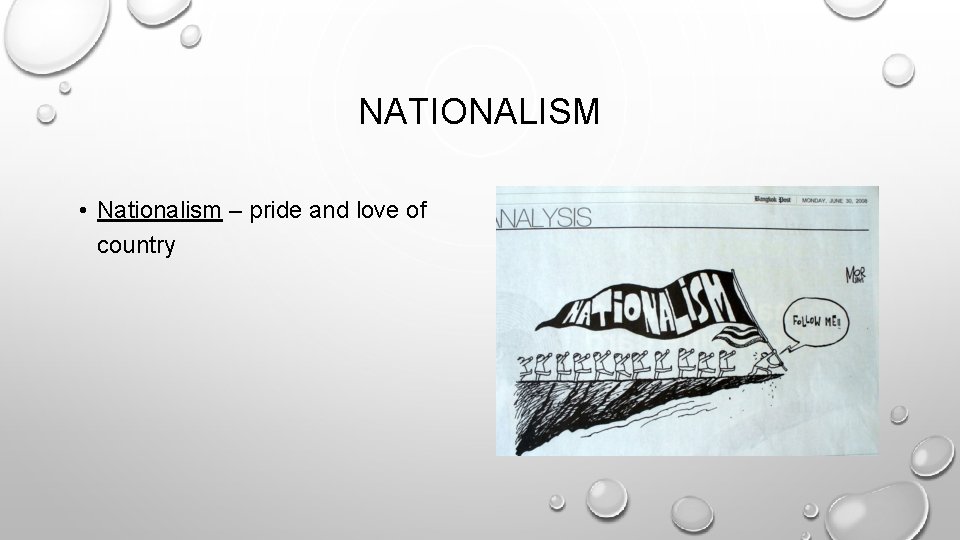
NATIONALISM • Nationalism – pride and love of country
NATIONALISM • This increased in post French Revolution Europe. It also led to many alliances between European nations which would become troublesome in the future. • The French revolution began the push for democracy throughout Europe and the world.
THE END