The Composition of Seawater Chapter 15 Section 1

- Slides: 15
The Composition of Seawater Chapter 15, Section 1
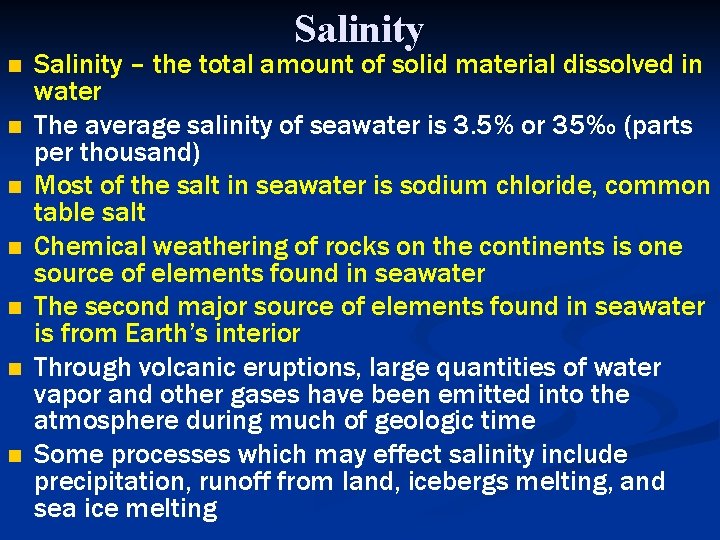
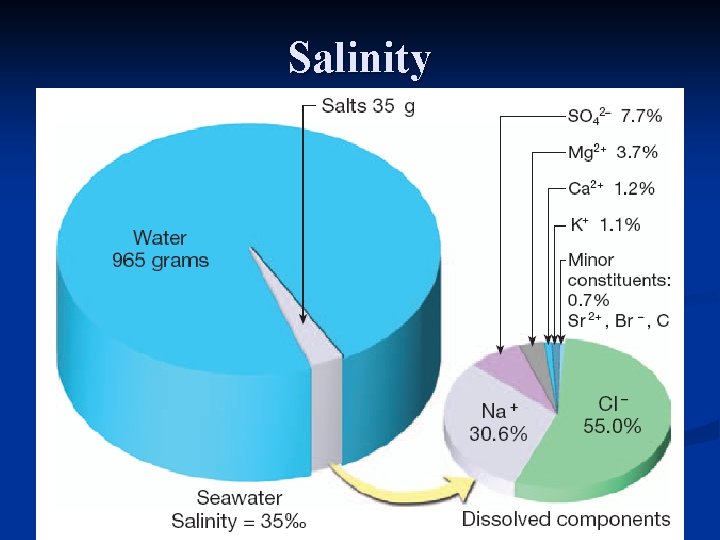
Salinity n n n n Salinity – the total amount of solid material dissolved in water The average salinity of seawater is 3. 5% or 35‰ (parts per thousand) Most of the salt in seawater is sodium chloride, common table salt Chemical weathering of rocks on the continents is one source of elements found in seawater The second major source of elements found in seawater is from Earth’s interior Through volcanic eruptions, large quantities of water vapor and other gases have been emitted into the atmosphere during much of geologic time Some processes which may effect salinity include precipitation, runoff from land, icebergs melting, and sea ice melting
Salinity
Concept Check n n What units are used to express the salinity of ocean water? Parts per thousand
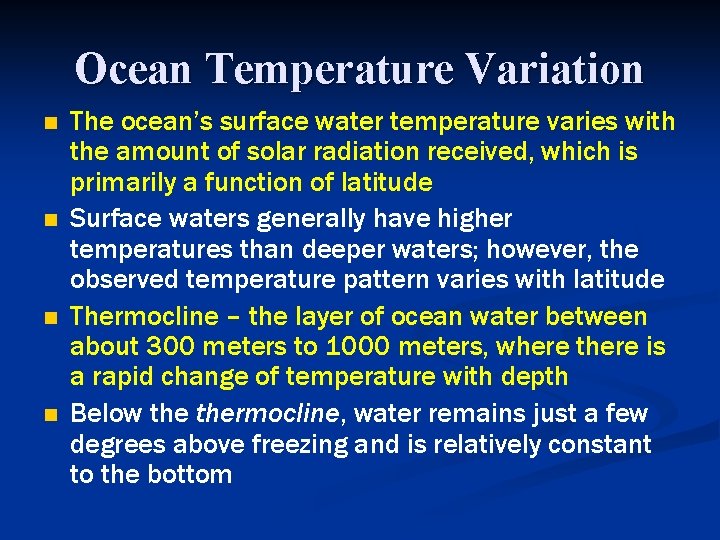
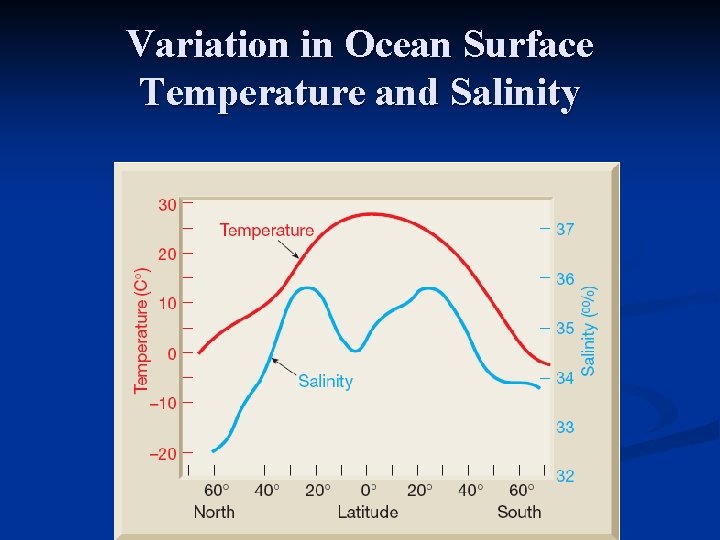
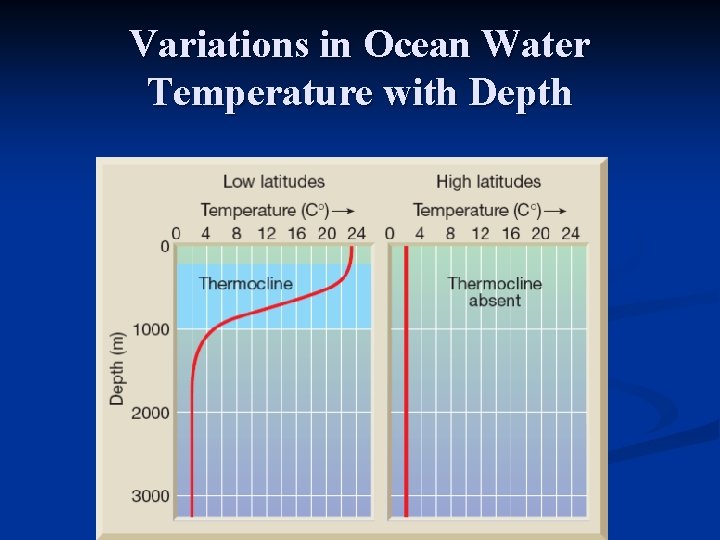
Ocean Temperature Variation n n The ocean’s surface water temperature varies with the amount of solar radiation received, which is primarily a function of latitude Surface waters generally have higher temperatures than deeper waters; however, the observed temperature pattern varies with latitude Thermocline – the layer of ocean water between about 300 meters to 1000 meters, where there is a rapid change of temperature with depth Below thermocline, water remains just a few degrees above freezing and is relatively constant to the bottom
Variation in Ocean Surface Temperature and Salinity
Variations in Ocean Water Temperature with Depth
Concept Check n n How does temperature affect the density of seawater? As the temperature of seawater decreases, its density increases.
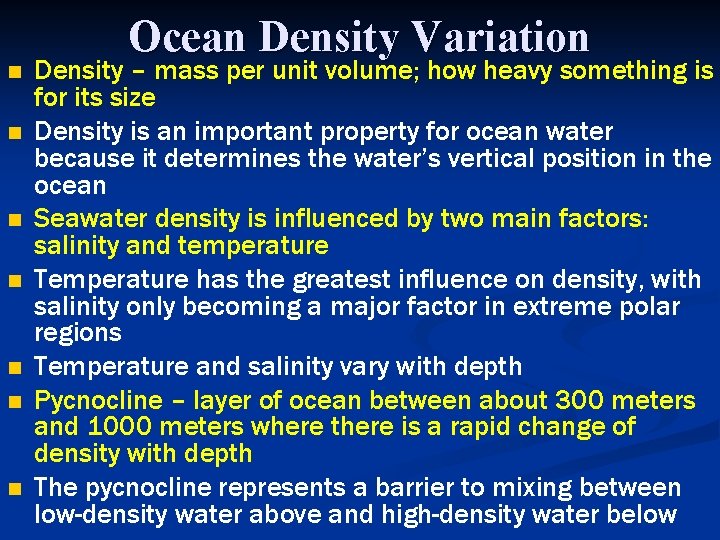
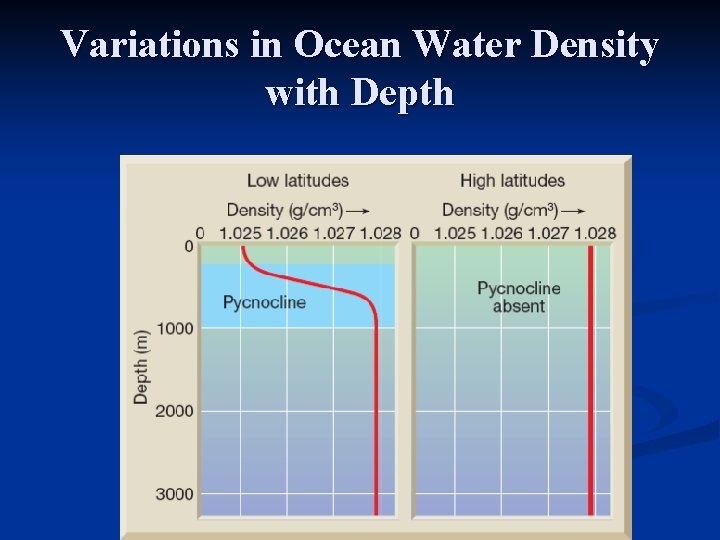
n n n n Ocean Density Variation Density – mass per unit volume; how heavy something is for its size Density is an important property for ocean water because it determines the water’s vertical position in the ocean Seawater density is influenced by two main factors: salinity and temperature Temperature has the greatest influence on density, with salinity only becoming a major factor in extreme polar regions Temperature and salinity vary with depth Pycnocline – layer of ocean between about 300 meters and 1000 meters where there is a rapid change of density with depth The pycnocline represents a barrier to mixing between low-density water above and high-density water below
Variations in Ocean Water Density with Depth
Concept Check n n What factors affect the density of ocean water? Temperature and salinity
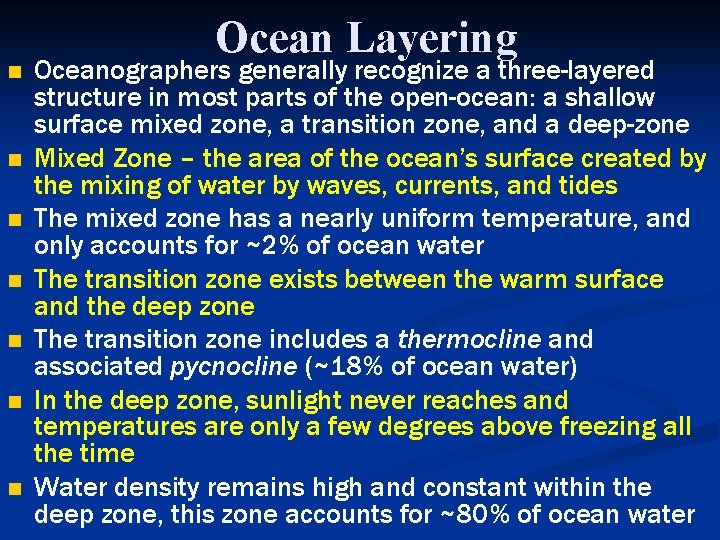
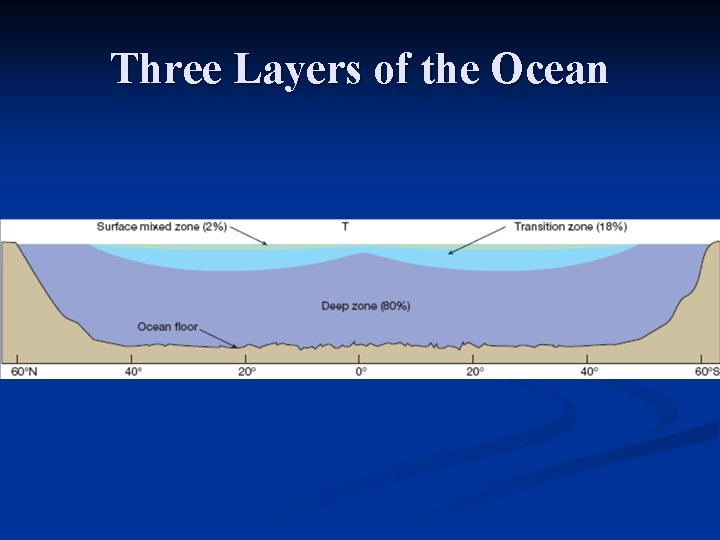
n n n n Ocean Layering Oceanographers generally recognize a three-layered structure in most parts of the open-ocean: a shallow surface mixed zone, a transition zone, and a deep-zone Mixed Zone – the area of the ocean’s surface created by the mixing of water by waves, currents, and tides The mixed zone has a nearly uniform temperature, and only accounts for ~2% of ocean water The transition zone exists between the warm surface and the deep zone The transition zone includes a thermocline and associated pycnocline (~18% of ocean water) In the deep zone, sunlight never reaches and temperatures are only a few degrees above freezing all the time Water density remains high and constant within the deep zone, this zone accounts for ~80% of ocean water
Three Layers of the Ocean
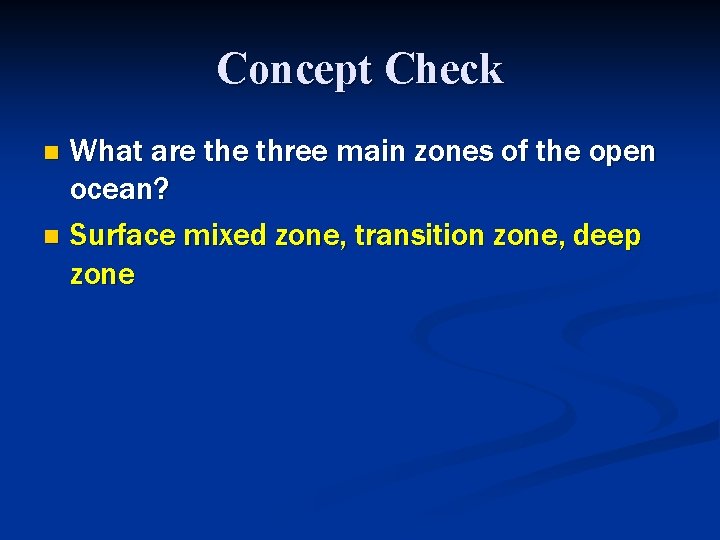
Concept Check What are three main zones of the open ocean? n Surface mixed zone, transition zone, deep zone n
Assignment Read Chapter 15, Section 1 (pg. 422 -427) n Do the Chapter 15 Assessment #1 -32 (pg. 443444) n For Section 1: Do #’s 1 -4, 11 -15, 24, 25, 30, 31 n