The Allies Turn the Tide Chapter 14 Section
- Slides: 44
The Allies Turn the Tide Chapter 14 Section 3
Total War To defeat the Axis powers in WWII, the Allies devoted all their resources to the war effort – called total war Governments took a greater role in the economy For example: governments ordered factories to make tanks instead of cars and refrigerators Factories closed during the Great Depression roared back to life putting people back to work Consumer goods were rationed, and wages and prices were regulated A positive result of the war was that people went back to work which caused an increase in production that ended the Great Depression
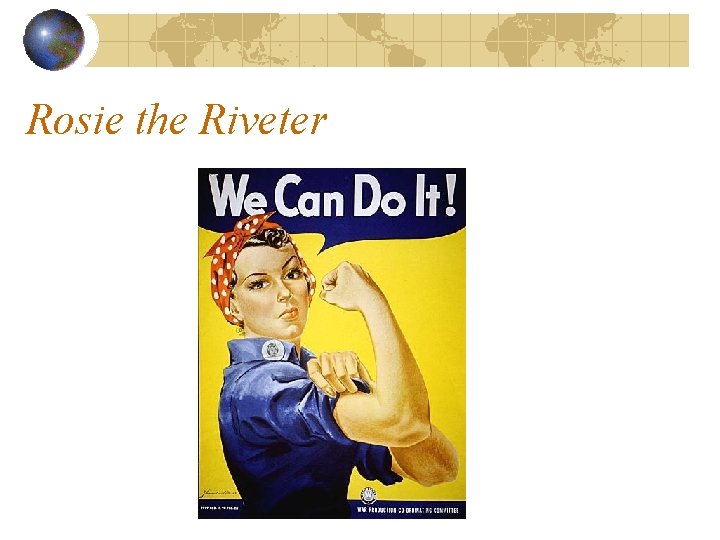
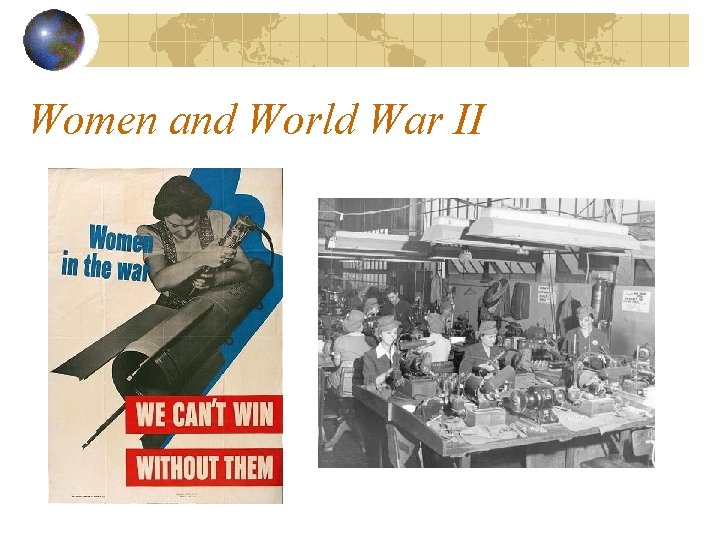
Total War However, governments also limited citizens’ rights, censored the press, and resorted to propaganda At the same time, women, symbolized by “Rosie the Riveter”, replaced men in factories Women also played a more direct role in some military operations
Rosie the Riveter
Women and World War II
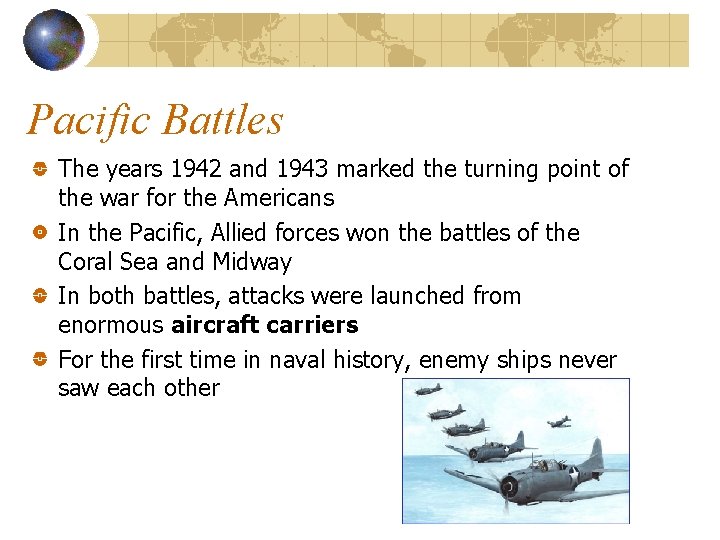
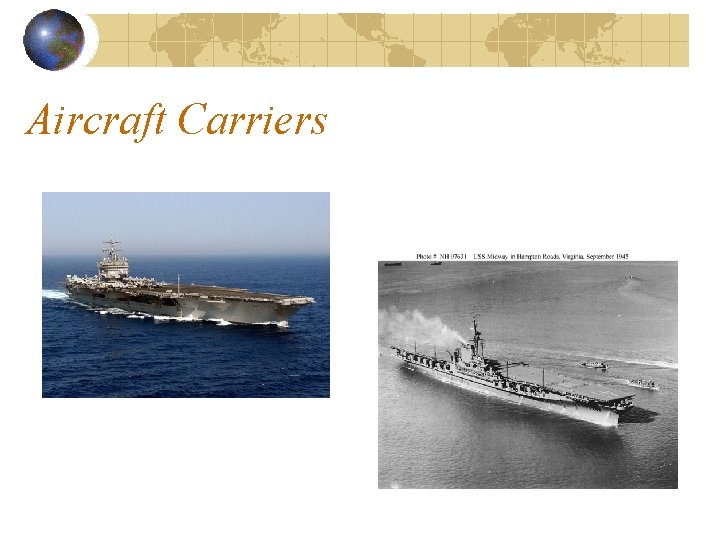
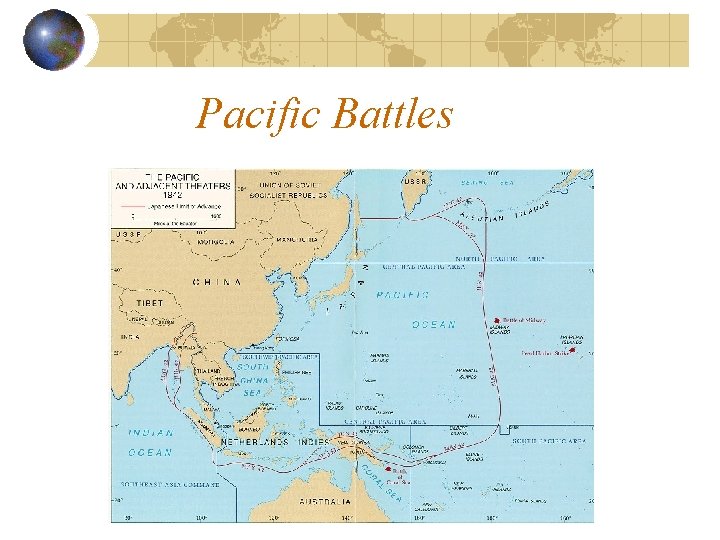
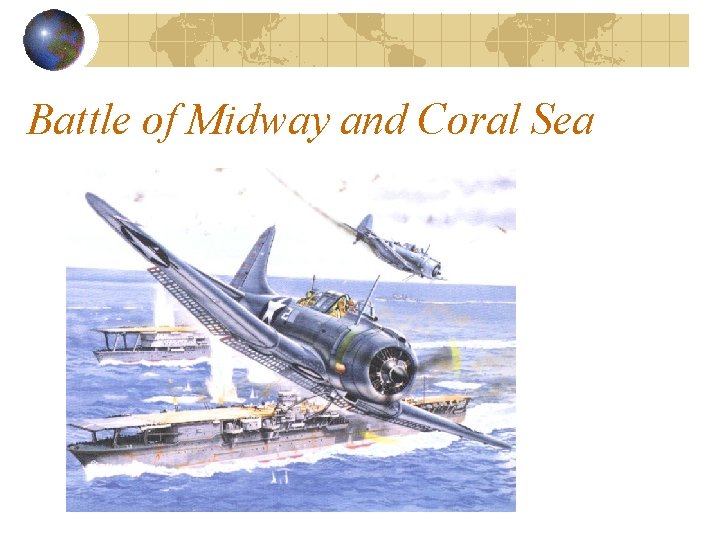
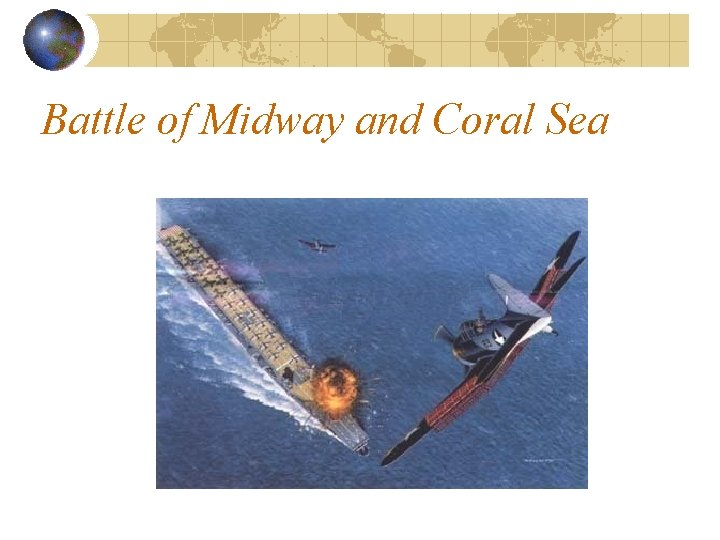
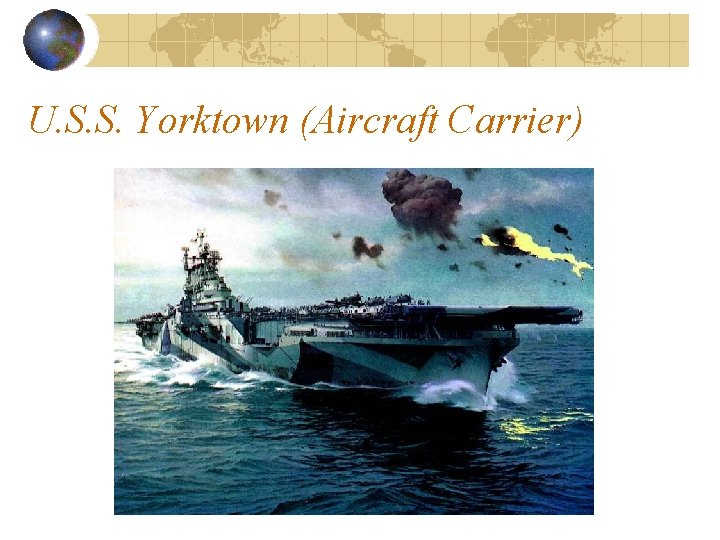
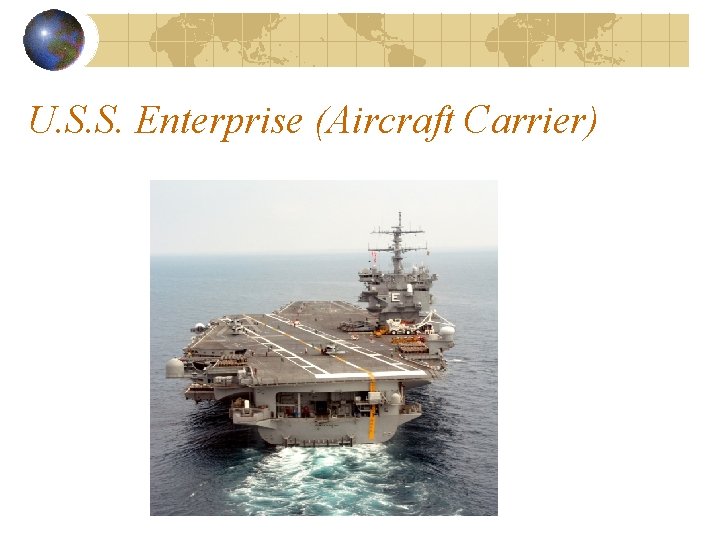
Pacific Battles The years 1942 and 1943 marked the turning point of the war for the Americans In the Pacific, Allied forces won the battles of the Coral Sea and Midway In both battles, attacks were launched from enormous aircraft carriers For the first time in naval history, enemy ships never saw each other
Aircraft Carriers
Pacific Battles
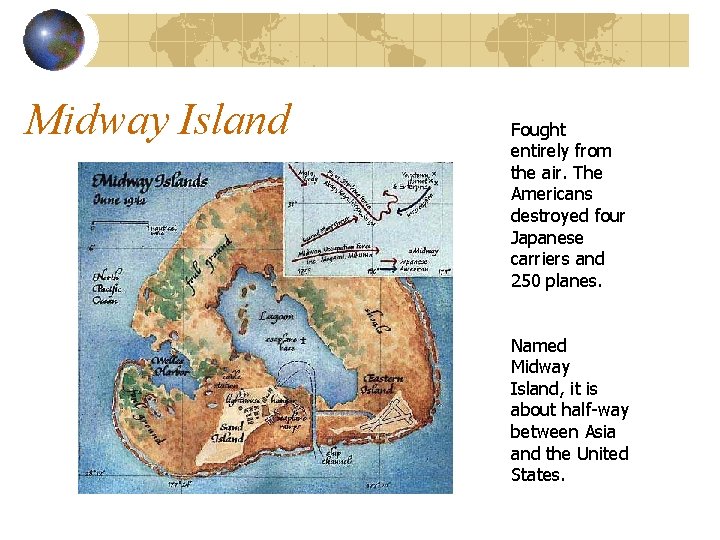
Midway Island Fought entirely from the air. The Americans destroyed four Japanese carriers and 250 planes. Named Midway Island, it is about half-way between Asia and the United States.
Battle of Midway and Coral Sea
Battle of Midway and Coral Sea
U. S. S. Yorktown (Aircraft Carrier)
U. S. S. Enterprise (Aircraft Carrier)
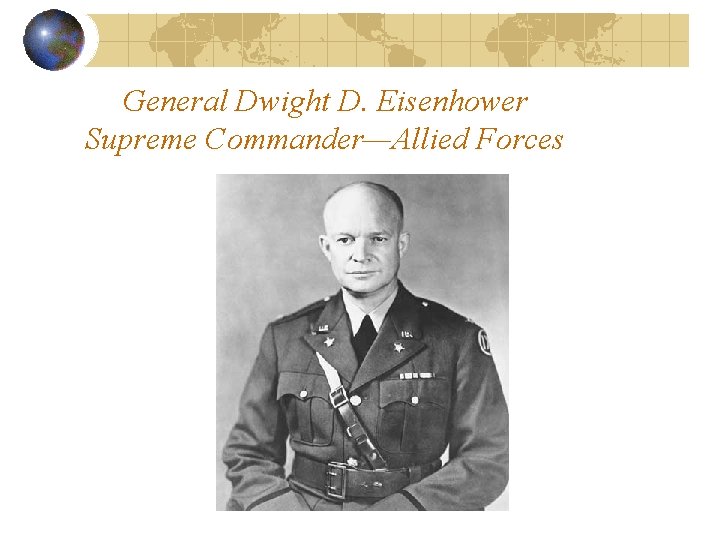
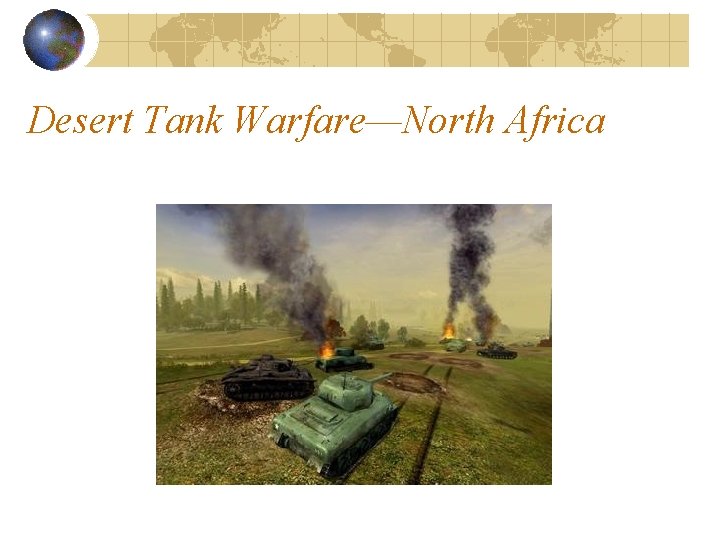
North Africa In North Africa, British and American forces, led by General Dwight Eisenhower, soon trapped Rommel’s army Rommel surrendered in May, 1943 With North Africa under their control, the Allies crossed the Mediterranean and landed in Sicily Allied victories in Italy led to the overthrow of Mussolini, but fighting continued for another 18 months
General Dwight D. Eisenhower Supreme Commander—Allied Forces
Desert Tank Warfare—North Africa
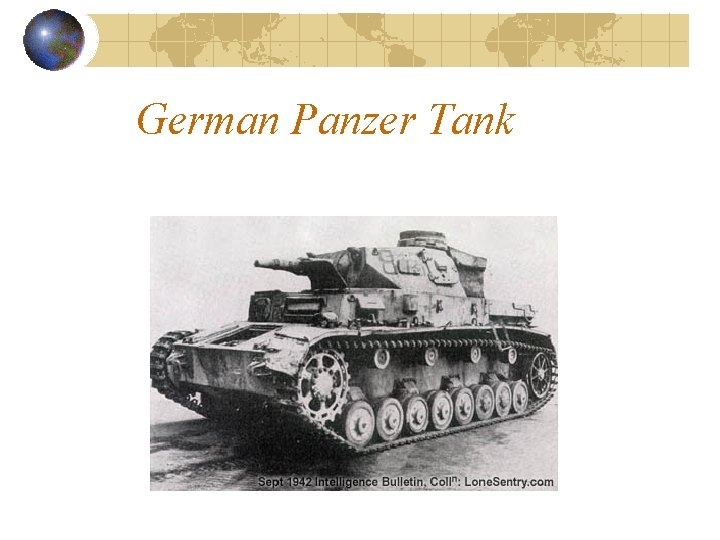
German Panzer Tank
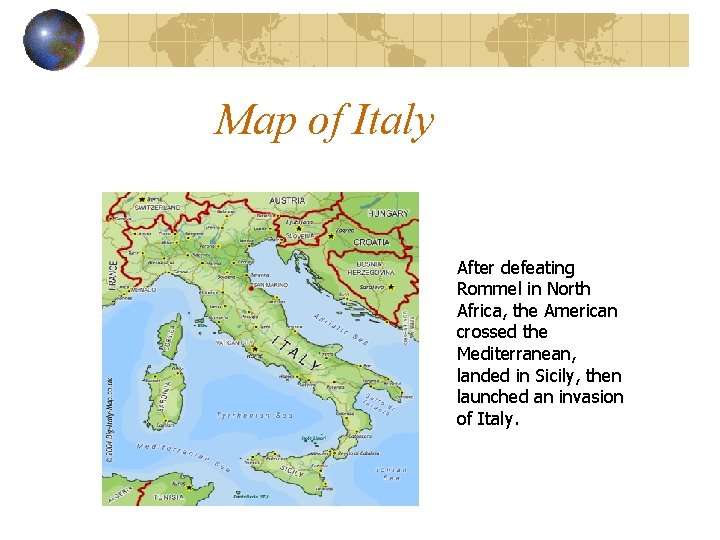
Map of Italy After defeating Rommel in North Africa, the American crossed the Mediterranean, landed in Sicily, then launched an invasion of Italy.
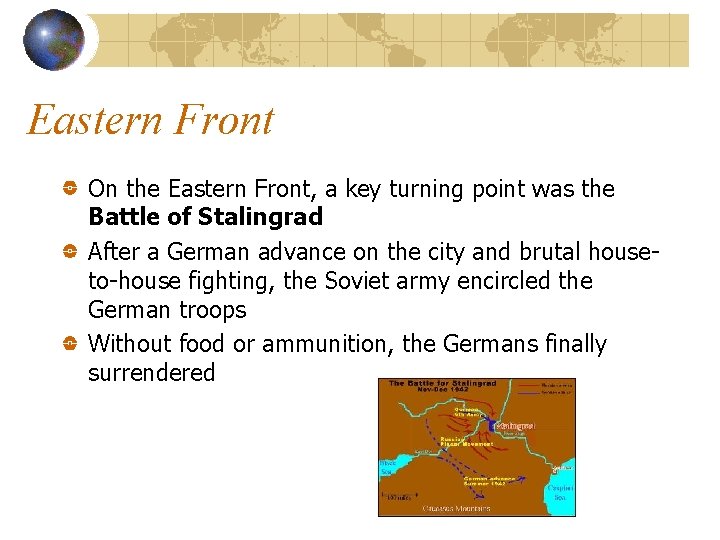
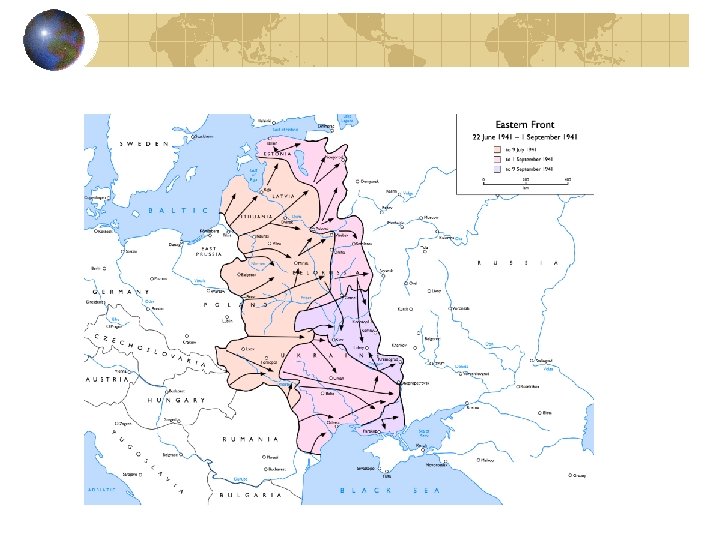
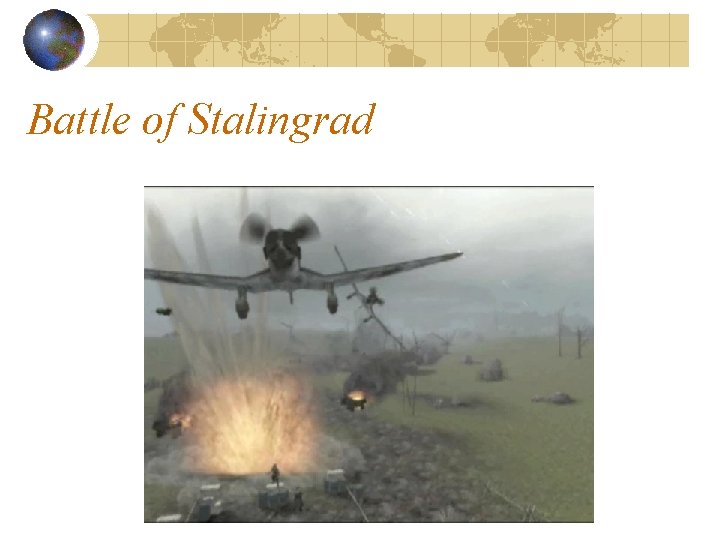
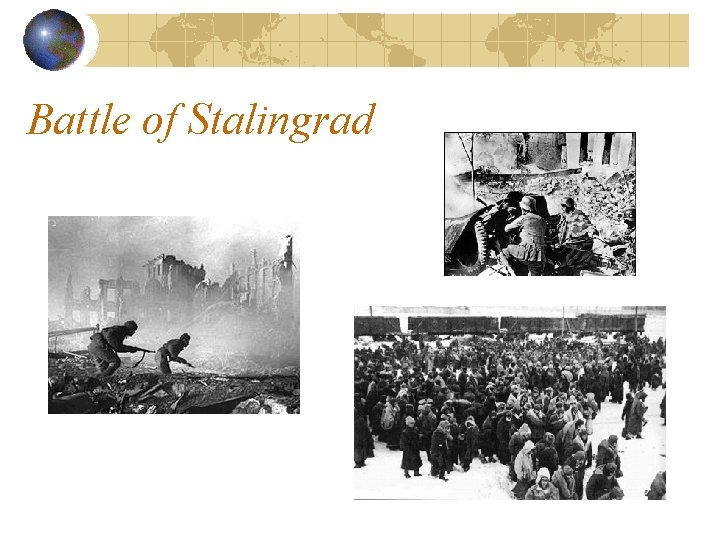
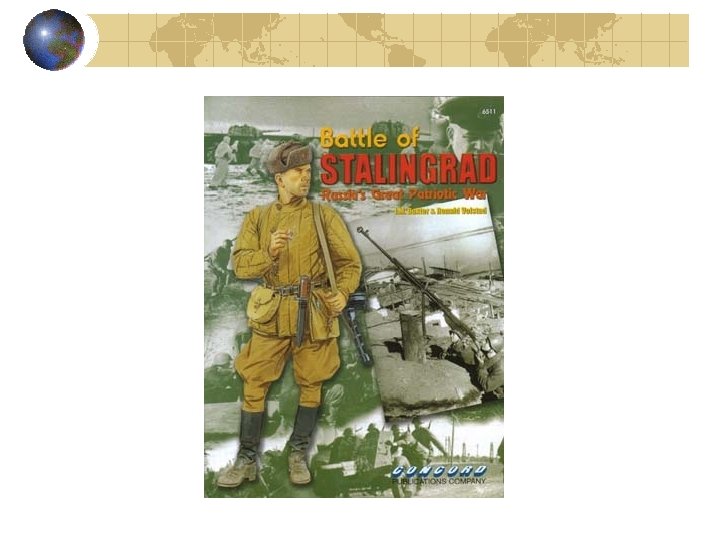
Eastern Front On the Eastern Front, a key turning point was the Battle of Stalingrad After a German advance on the city and brutal houseto-house fighting, the Soviet army encircled the German troops Without food or ammunition, the Germans finally surrendered
Battle of Stalingrad
Battle of Stalingrad
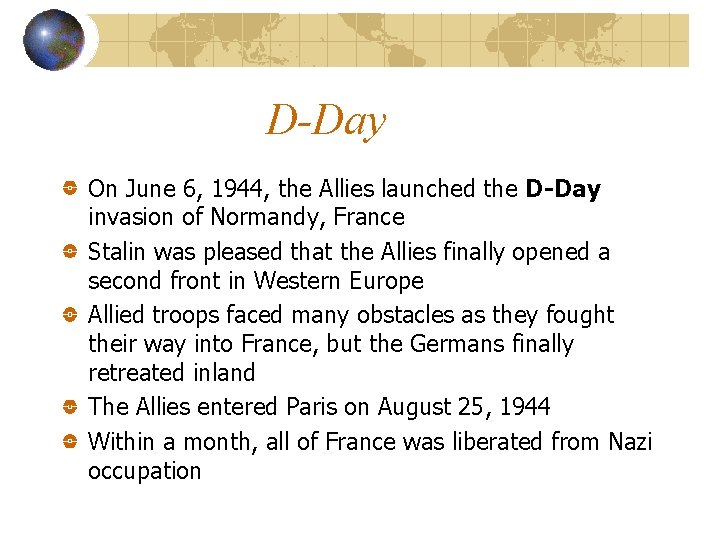
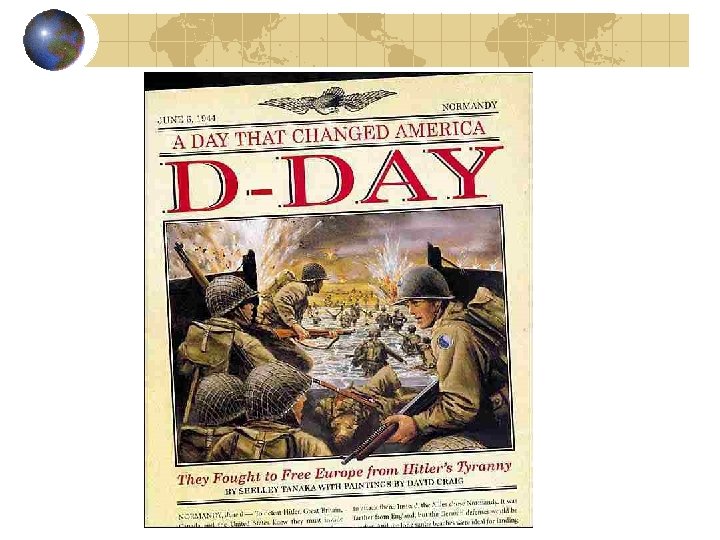
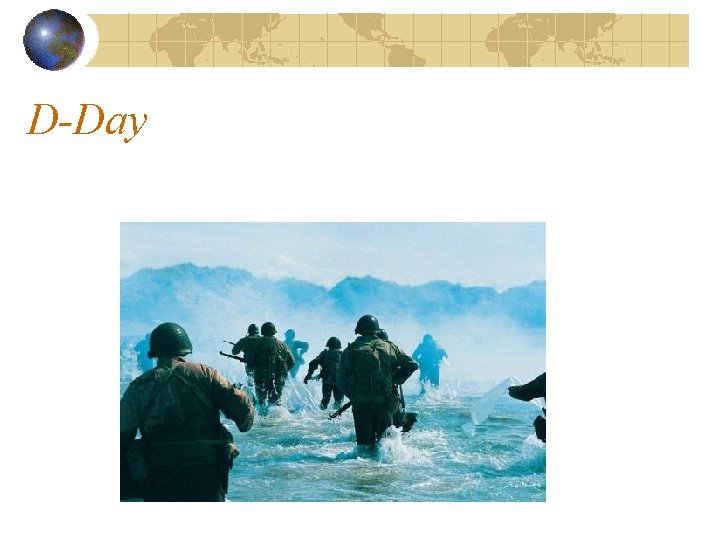
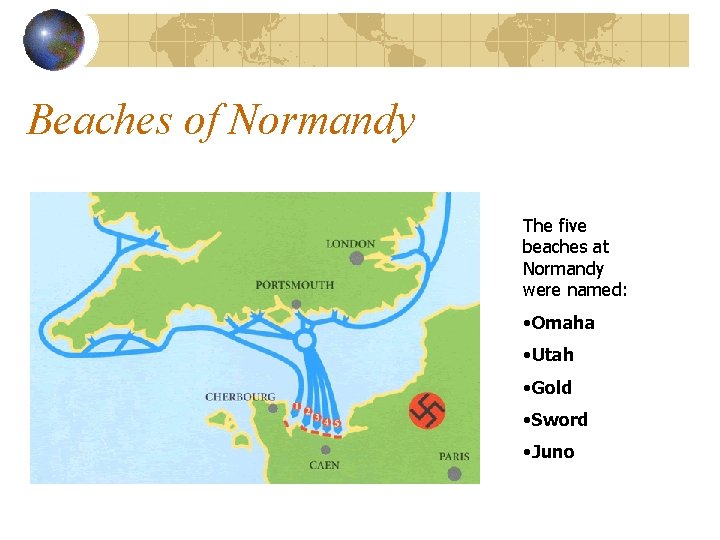
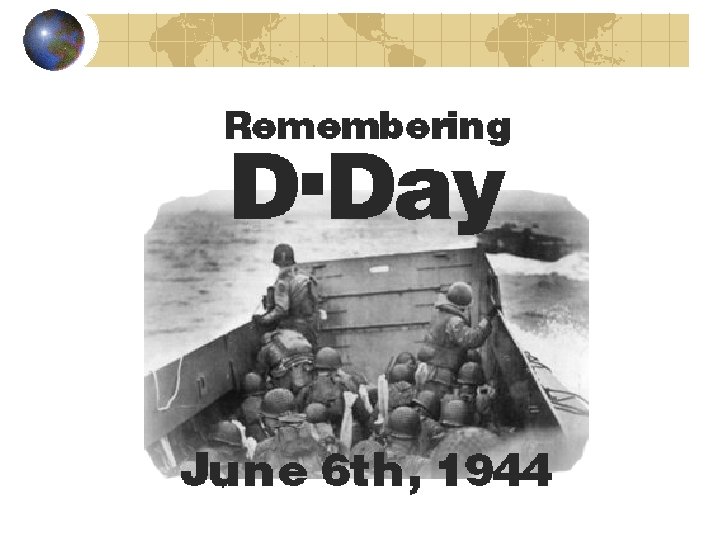
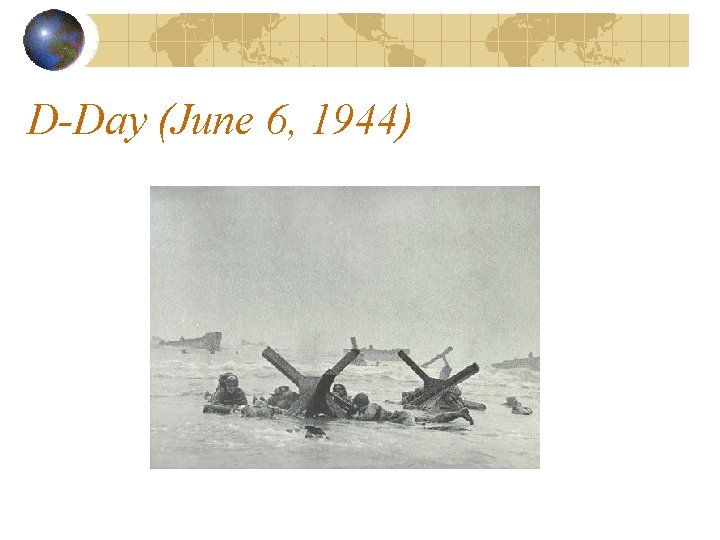
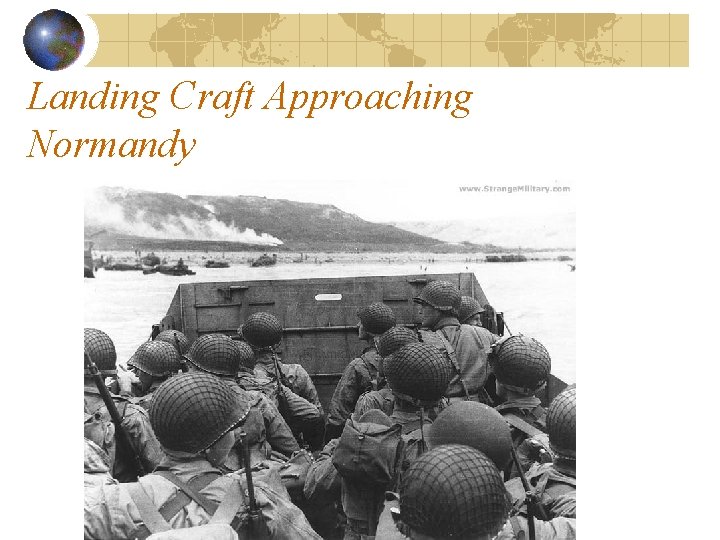
D-Day On June 6, 1944, the Allies launched the D-Day invasion of Normandy, France Stalin was pleased that the Allies finally opened a second front in Western Europe Allied troops faced many obstacles as they fought their way into France, but the Germans finally retreated inland The Allies entered Paris on August 25, 1944 Within a month, all of France was liberated from Nazi occupation
D-Day
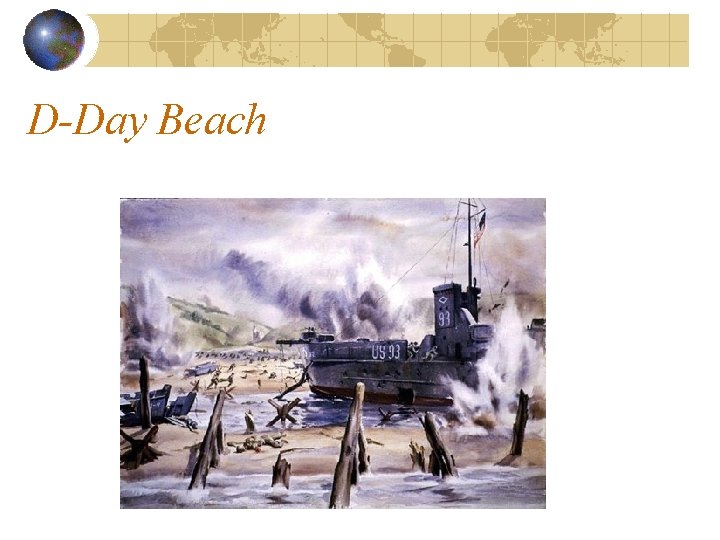
D-Day Beach
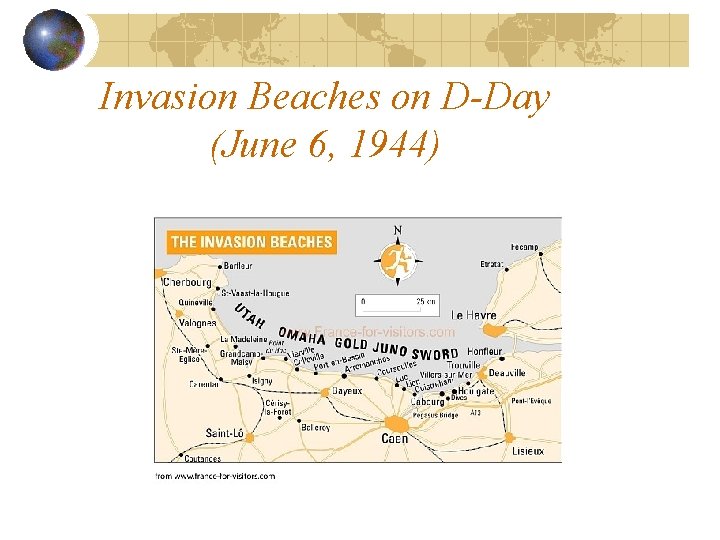
Beaches of Normandy The five beaches at Normandy were named: • Omaha • Utah • Gold • Sword • Juno
Invasion Beaches on D-Day (June 6, 1944)
D-Day (June 6, 1944)
Landing Craft Approaching Normandy
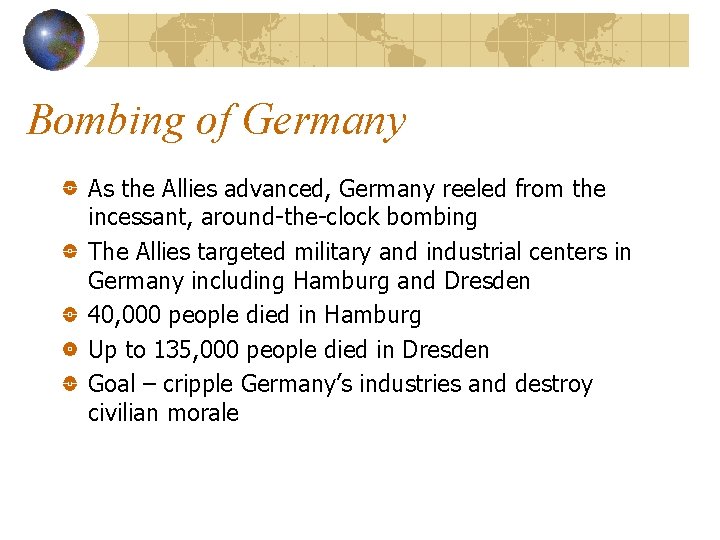
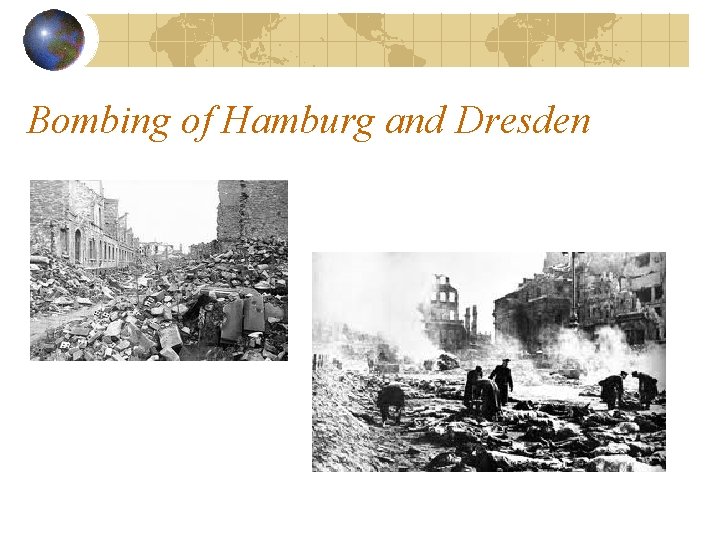
Bombing of Germany As the Allies advanced, Germany reeled from the incessant, around-the-clock bombing The Allies targeted military and industrial centers in Germany including Hamburg and Dresden 40, 000 people died in Hamburg Up to 135, 000 people died in Dresden Goal – cripple Germany’s industries and destroy civilian morale
Bombing of Hamburg and Dresden
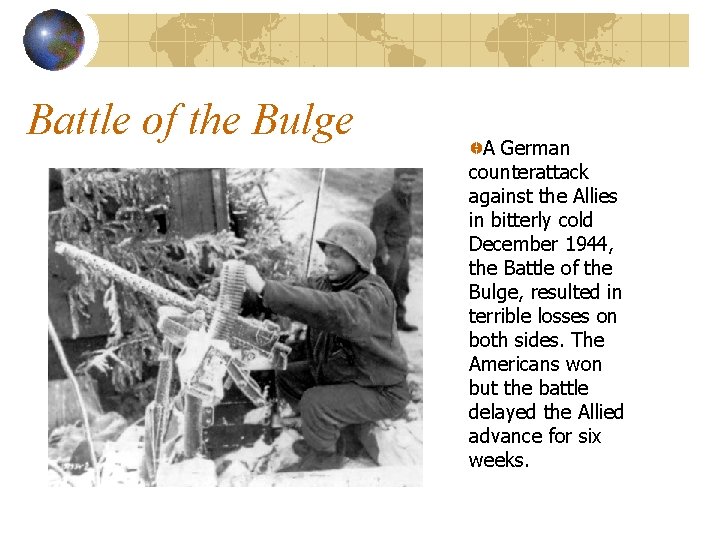
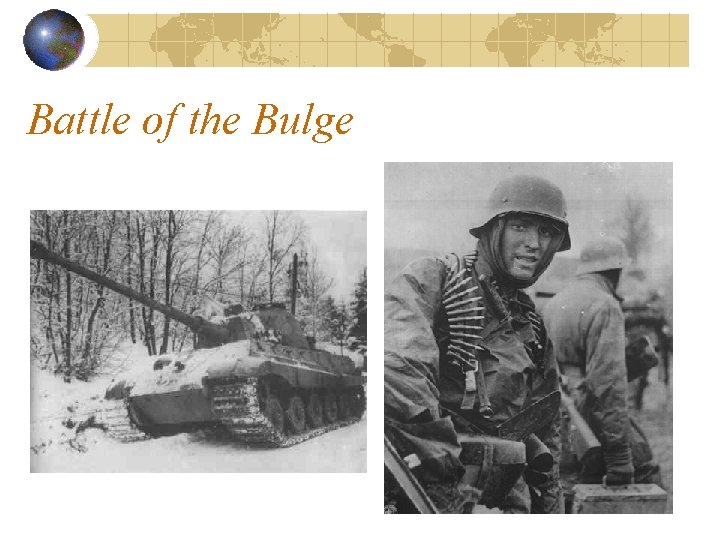
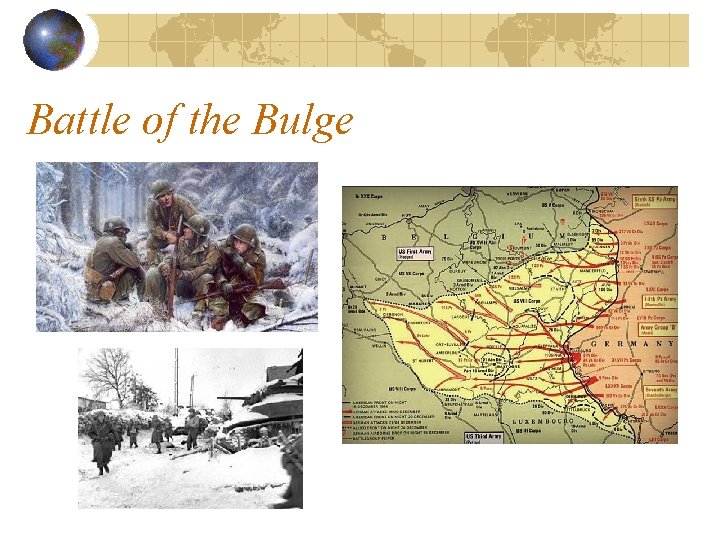
Battle of the Bulge A German counterattack against the Allies in bitterly cold December 1944, the Battle of the Bulge, resulted in terrible losses on both sides. The Americans won but the battle delayed the Allied advance for six weeks.
Battle of the Bulge
Battle of the Bulge
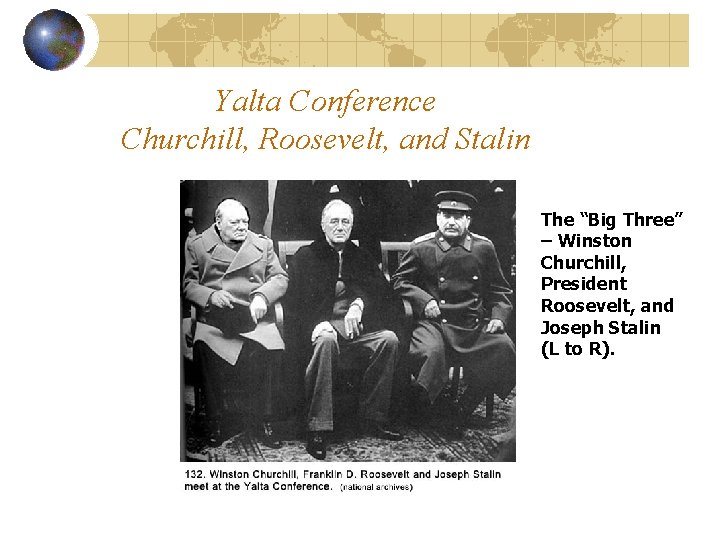
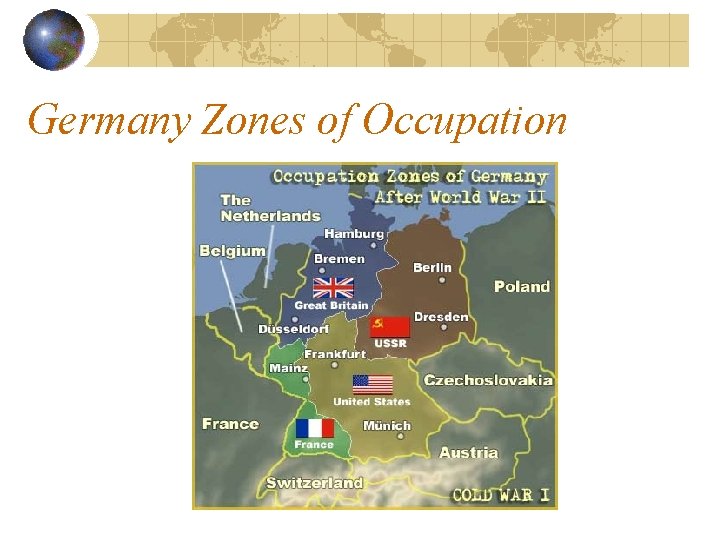
Yalta Conference However, with Germany’s defeat seeming inevitable, the “Big Three”—Roosevelt, Churchill, and Stalin— met to plan the end of the war Stalin insisted that the USSR needed to control E. Europe to protect itself from future aggression Roosevelt and Churchill favored self-determination for E. Europe – the people’s right to choose their form of government Key features at this Yalta Conference were the 1) Soviet agreement to enter the war against Japan and 2) the division of Germany into four zones of occupation (British, French, American, and Soviet) However, growing mistrust at Yalta foreshadowed a split among the Allies that would lead to the Cold War
Yalta Conference Churchill, Roosevelt, and Stalin The “Big Three” – Winston Churchill, President Roosevelt, and Joseph Stalin (L to R).
Germany Zones of Occupation
Powerpoint Questions (17 points) 1. How do you define total war? 2. Who symbolized the war efforts of women as men went off to fight the battles? 3. What happened for the first time in naval history with the launching of planes from aircraft carriers? 4. What American commander defeated Rommel, the “Desert Fox” in North Africa? 5. After Rommel’s defeat, where did the Allies go? 6. What is the name of the German tanks?
Powerpoint Questions (17 points) 7. What battle was the key turning point on the Eastern Front? 8. What did the Allies launch on June 6, 1944? 9. What two German cities did the Allies destroy to cripple German industries? (2 points) 10. Which battle was a German counteroffensive against the Allies in December, 1944? 11. Who were the leaders called the “Big Three” (3 points)
Powerpoint Questions (17 points) 12. Identify the conference where the “Big Three” met (city and country). 13. What were the two key features of the conference? (2 points)
The End