
World War I 1914 1918 Whos To Blame
World War I 1914 -1918
Who’s To Blame? n Germany was blamed…BUT n Many countries actually share the responsibility. n Austria, Serbia, Germany, France, Russia…
The Four Underlying Causes of WWI M ~ Militarism A ~ Alliance Systems I ~ Imperialism N ~ Nationalism
Militarism n Glorification & building up of armed forces. n Powerful military = greatness, respect and fear of other countries n Large standing armies with the ability to mobilize quickly were valued
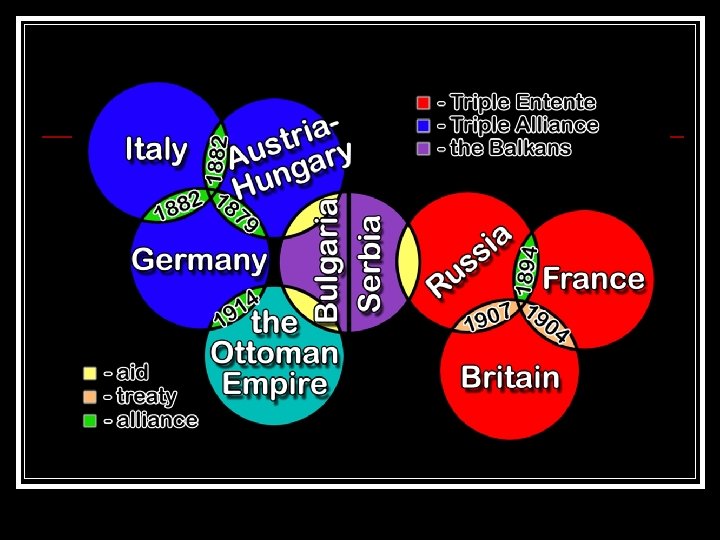
Alliances n An association of countries; an agreement of defense or common policies. n Were formed for the purpose of keeping peace in Europe. n Ironic, because they actually pushed all of Europe into war.
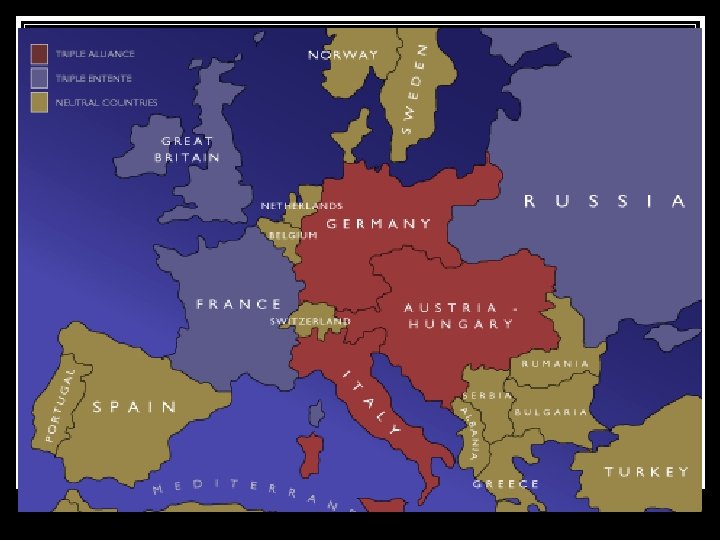
Alliances n Triple Alliance n Triple Entente n Germany n France n Austria- n Russia Hungary n Italy n Great Britain
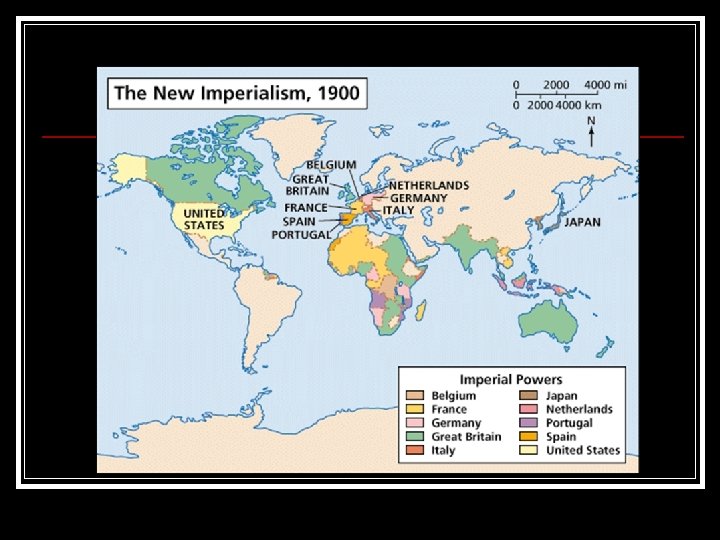
Imperialism n When powerful countries try to dominate other countries. n European nations were competing for colonies in Africa.
Imperialism Countries often disputed over land, which intensified rivalries n As territories to colonize became more scarce, rivalries heated up and countries began to increase their military to protect their interests n
Nationalism n Deep devotion to/extreme pride in one’s nation n Led to intense competition between nations n By 1900, there were 6 Great Powers in Europe: n Great Britain, France, Russia, Germany, Austria-Hungary, and Italy.
Nationalism n Competition for markets/materials n GB and Germany competed for industrial dominance in Europe n France and Germany hated each other. 1870 -Franco-Prussian War. France wanted Alsace-Lorraine back.
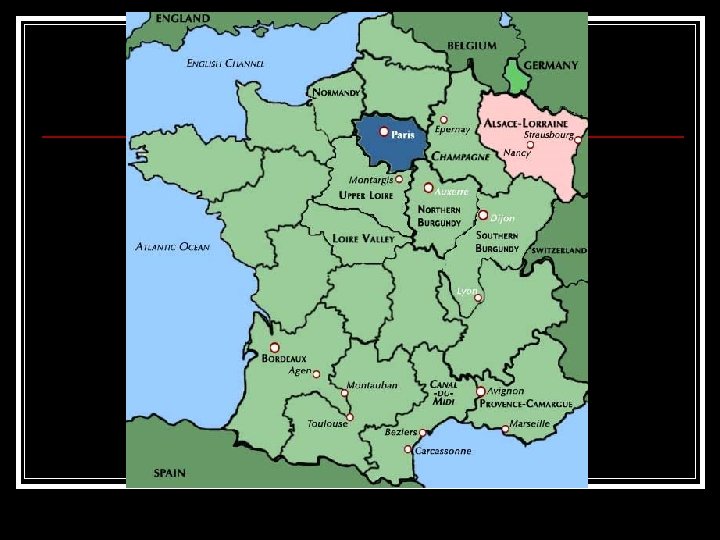
Nationalism n Balkans = “Powder keg” of Europe (SE peninsula). Very unstable. n Austria-Hungary and Serbia both wanted to annex Bosnia (on the border). 1908 - A-H annexed it.
Nationalism n Pan-Slavism- belief that all Slavic people shared a common nationality and should be united. Russia was considered the “mother country” of all Slavic people, and stood ready to support any smaller Slavic nations.
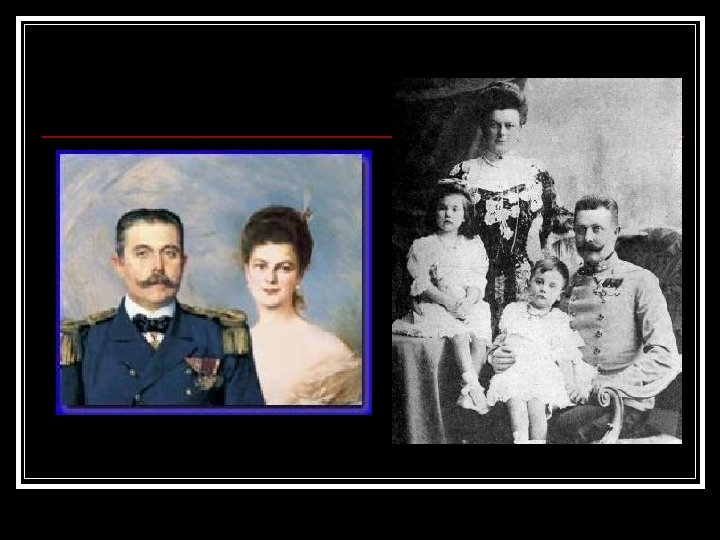
The Spark That Started WWI n June 28, 1914 - Franz Ferdinand wife Sophie assassinated in Sarajevo, Bosnia. n Killed by Gavrilo Princip- 19 yrs old n Member of the Black Hand, a Serbian terrorist group
n http: //www. biography. com/people/franzferdinand 9300680#awesm=~o. BINsc. Ows. Pwl. GL
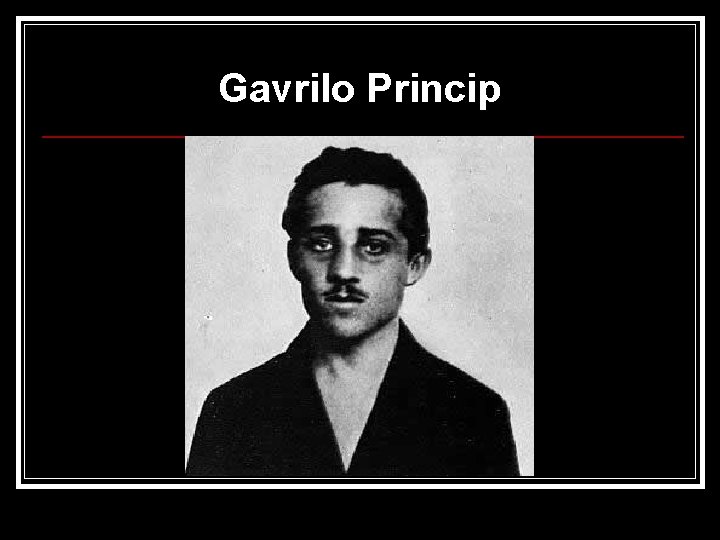
Gavrilo Princip
Germany’s Role – Blank Check n Stunned Franz Joseph and his ally Kaiser Wilhelm II because Ferdinand was royalty. n Wilhelm II gave Joseph a “blank check, ” ~ promise of unconditional support, no matter what the cost. n A-H wanted to crush Serbia, and saw this as the perfect excuse.
IF WWI were a barfight….
The Ultimatum n July 23, 1914 - Austria-Hungary gave Serbia a very harsh ultimatum, and only 48 hrs to reply. Serbia met 11/12 demands, but A-H was unwilling to negotiate. n July 28, 1914 ~ A-H declared war on Serbia
A World War 1. ) A-H declares war on Serbia. (7/28) 2. ) Russia begins to mobilize in Serbia’s defense. 3. ) Germany declares war on Russia. (8/1) 4. ) Germany declares war on France, invades Belgium. (8/3) 5. ) Great Britain declares war on Germany. (8/4)
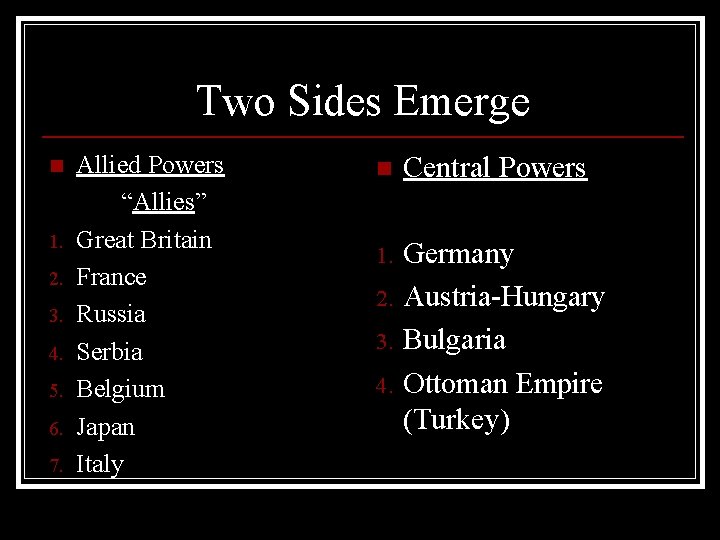
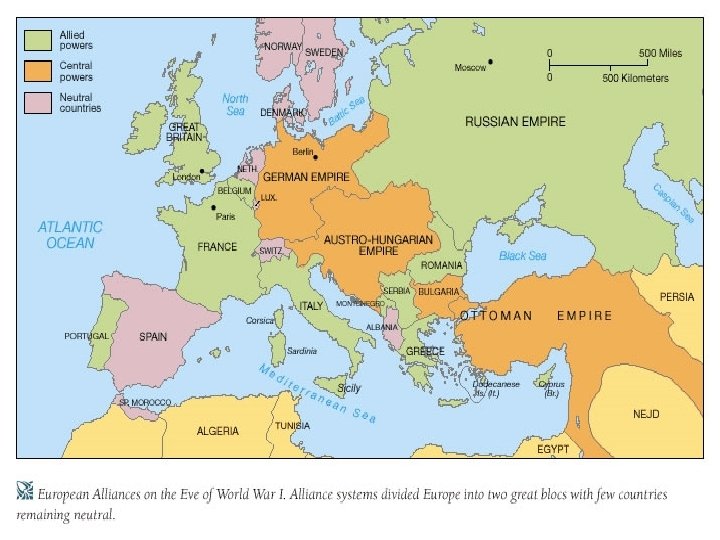
Two Sides Emerge n 1. 2. 3. 4. 5. 6. 7. Allied Powers “Allies” Great Britain France Russia Serbia Belgium Japan Italy n Central Powers 1. Germany Austria-Hungary Bulgaria Ottoman Empire (Turkey) 2. 3. 4.
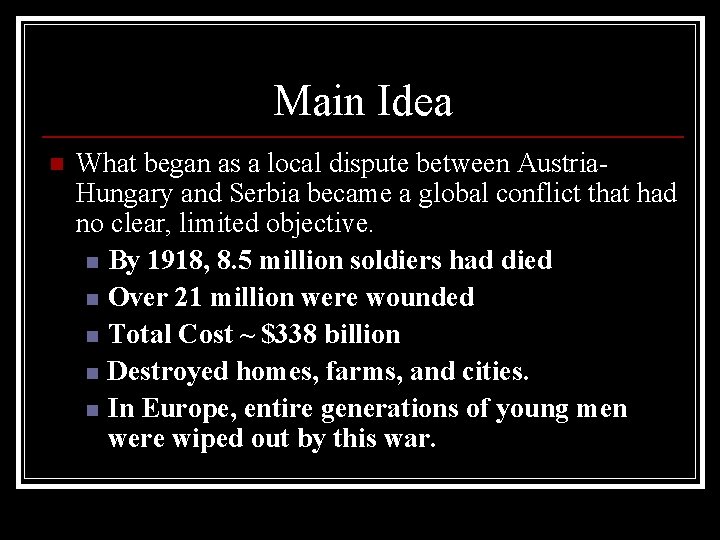
Main Idea n What began as a local dispute between Austria. Hungary and Serbia became a global conflict that had no clear, limited objective. n By 1918, 8. 5 million soldiers had died n Over 21 million were wounded n Total Cost ~ $338 billion n Destroyed homes, farms, and cities. n In Europe, entire generations of young men were wiped out by this war.
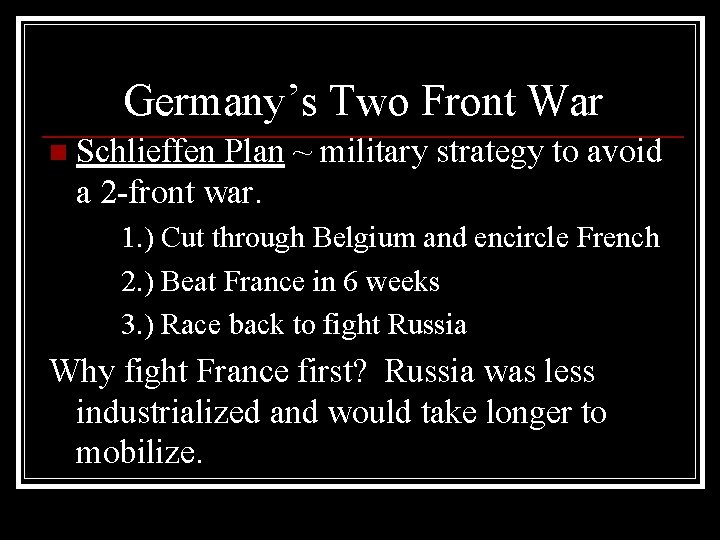
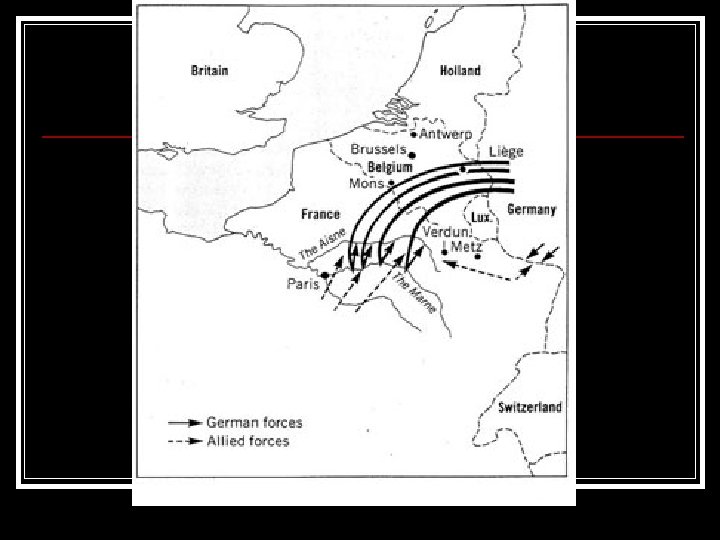
Germany’s Two Front War n Schlieffen Plan ~ military strategy to avoid a 2 -front war. 1. ) Cut through Belgium and encircle French 2. ) Beat France in 6 weeks 3. ) Race back to fight Russia Why fight France first? Russia was less industrialized and would take longer to mobilize.
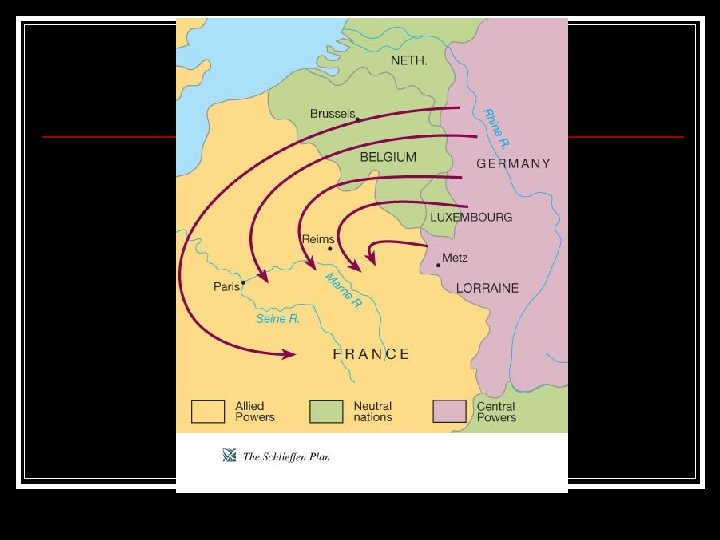
The Schlieffen Plan n Key to success: SPEED! n Why it didn’t work: § France & GB were stronger than the Germans anticipated. § Russia mobilized quicker than they expected.
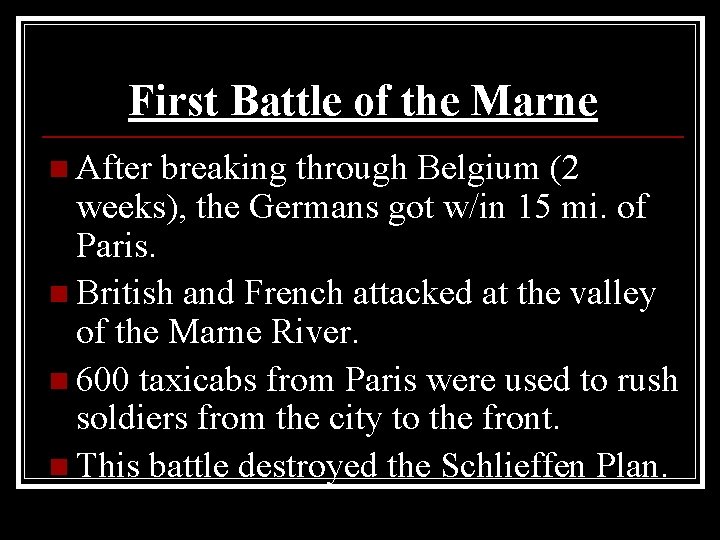
First Battle of the Marne n After breaking through Belgium (2 weeks), the Germans got w/in 15 mi. of Paris. n British and French attacked at the valley of the Marne River. n 600 taxicabs from Paris were used to rush soldiers from the city to the front. n This battle destroyed the Schlieffen Plan.
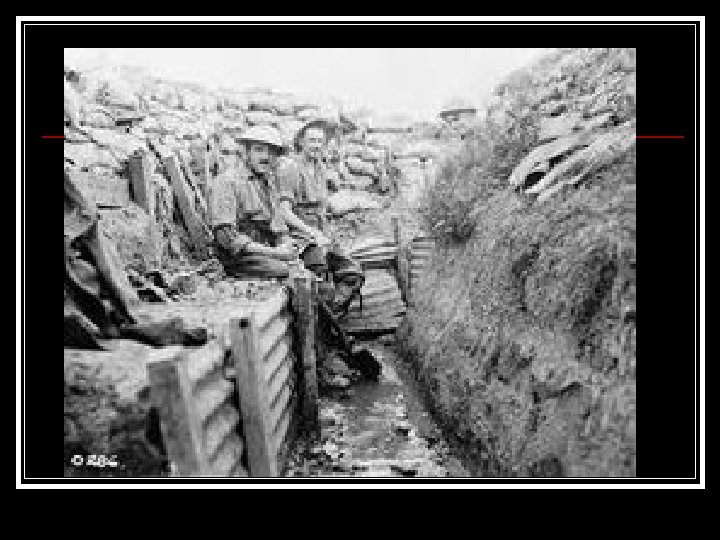
The Western Front n The war settled into a stalemate. n Both sides dug deep trenches; eventually 500 mi. of parallel trenches (North Sea to Switzerland). n “The men slept in mud, washed in mud, ate mud, and dreamed mud. ”
Trench Warfare n Soldiers shared their food with rats and their beds with lice. n Fresh food was nonexistent, and sleep was nearly impossible. n “No-man’s land” : space b/w the opposing trenches. A man-made desert.
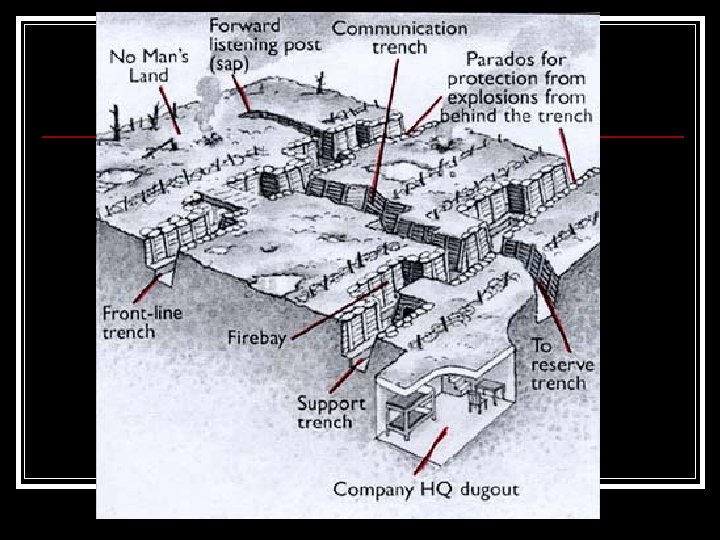
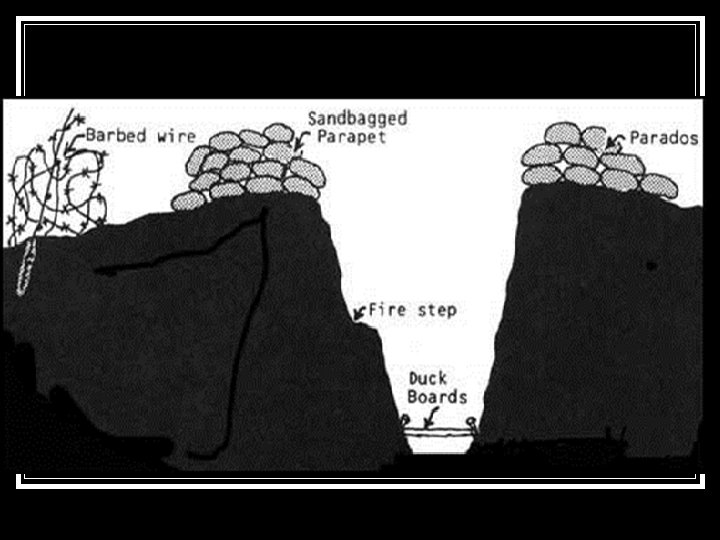
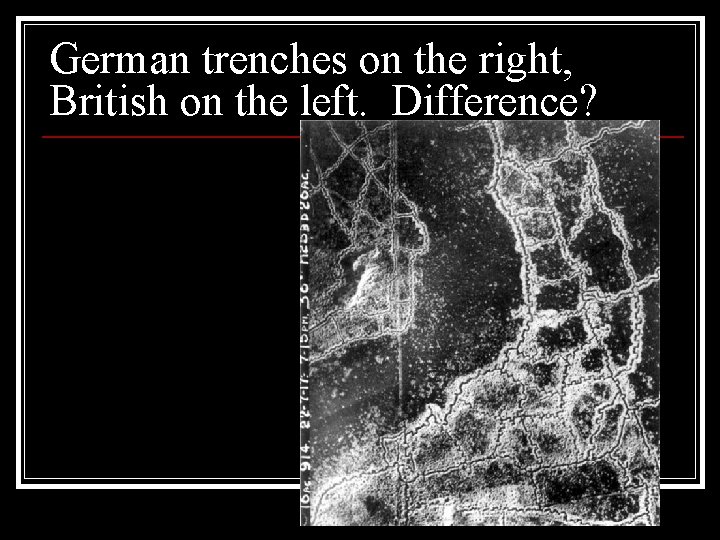
German trenches on the right, British on the left. Difference?
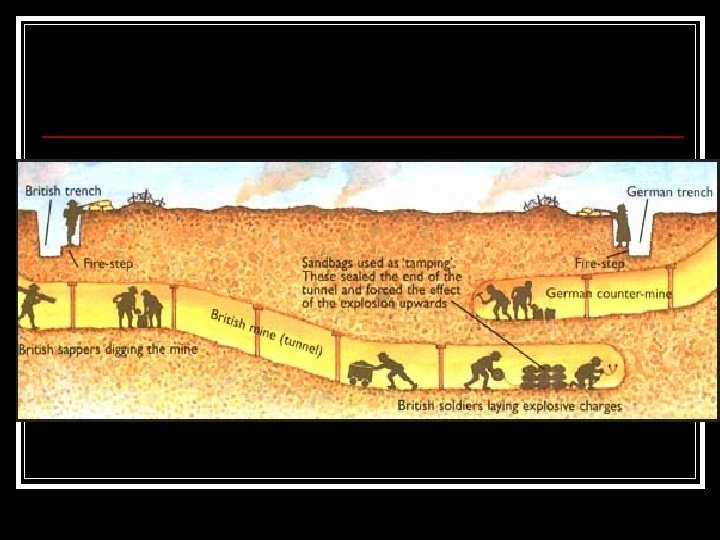
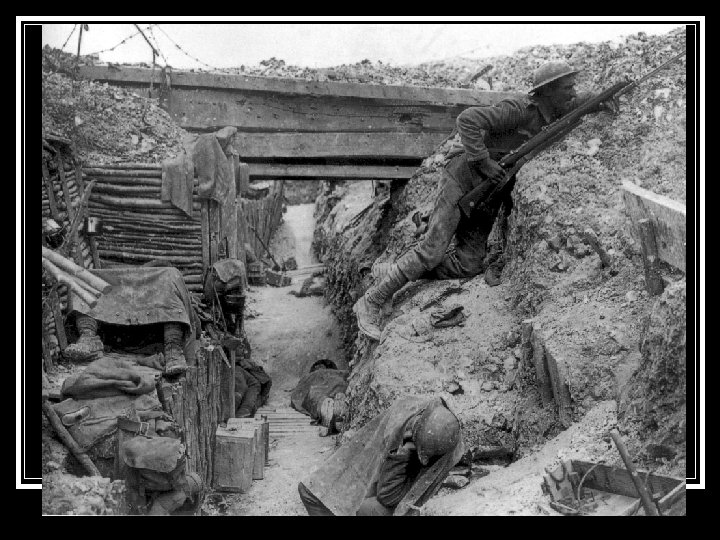
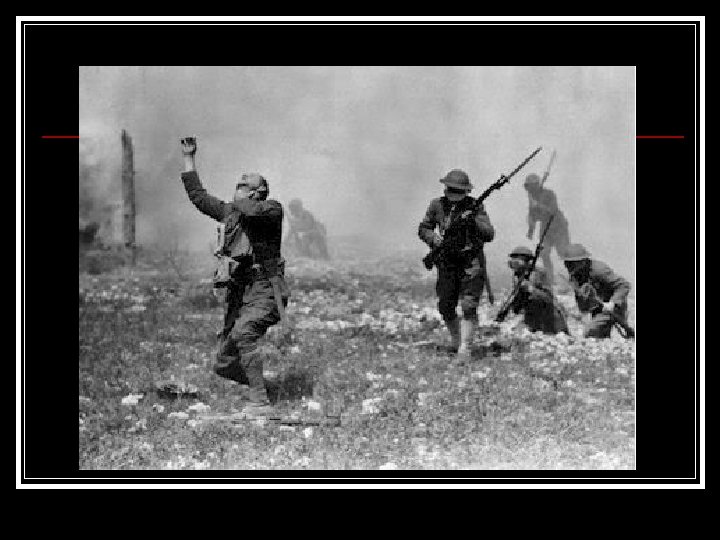
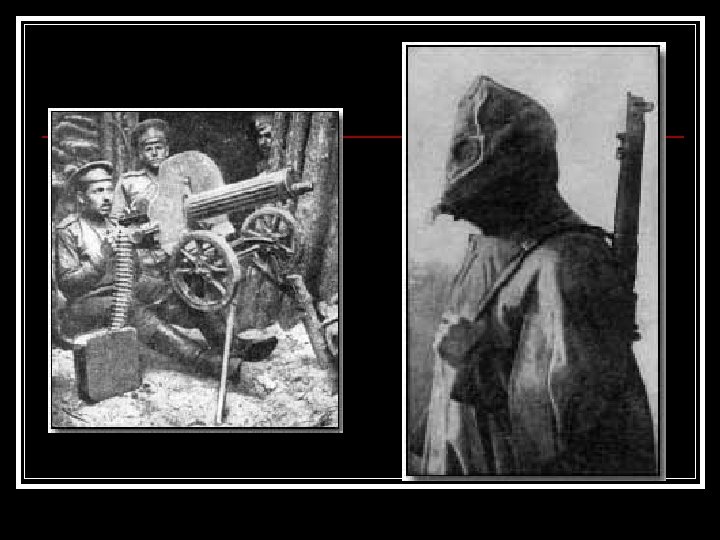
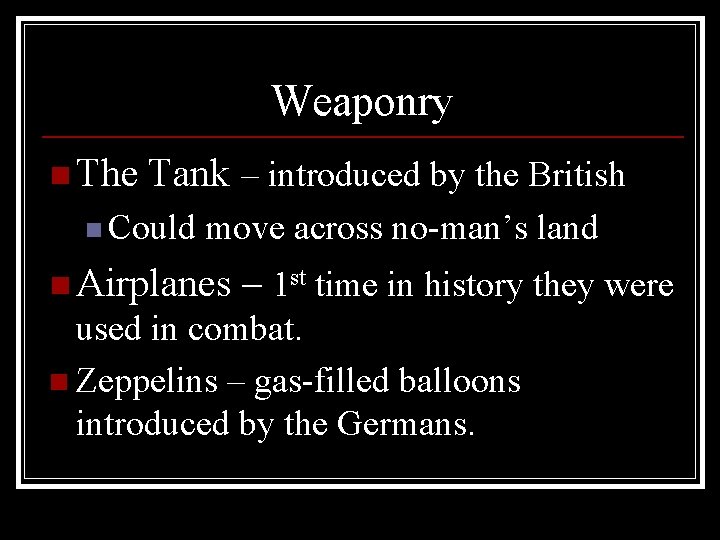
The Weapons of WWI n Machine guns - worsened the stalemate; n Poison Gas – developed by the Germans. Caused blindness, choking, burns, and even death. Very unpredictable.
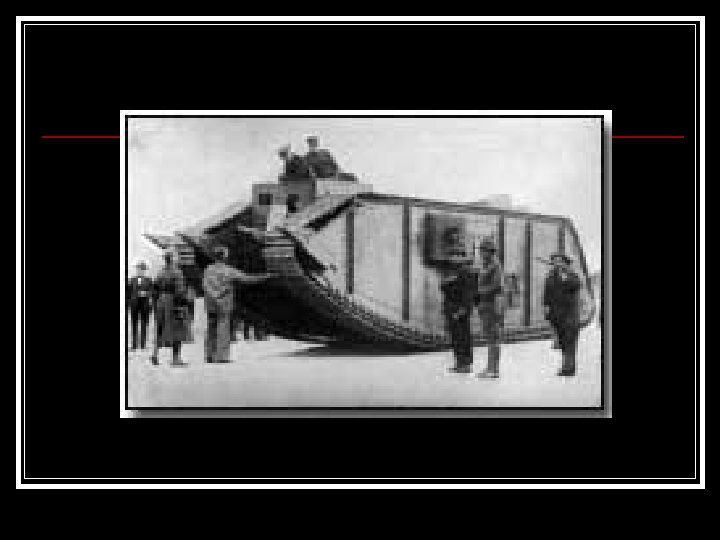
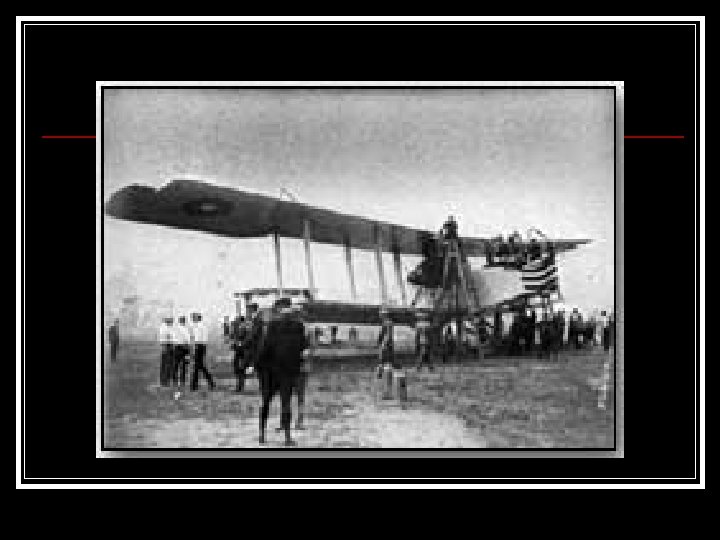
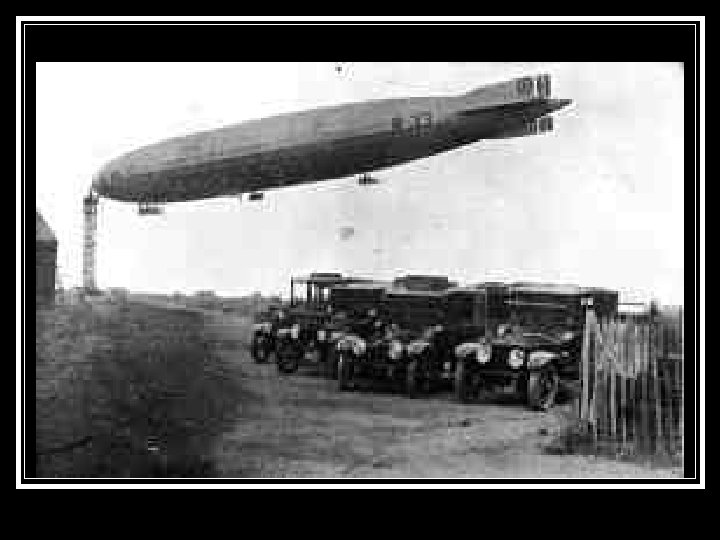
Weaponry n The Tank – introduced by the British n Could move across no-man’s land n Airplanes – 1 st time in history they were used in combat. n Zeppelins – gas-filled balloons introduced by the Germans.
Weaponry n Submarines- introduced by the Germans; called U-boats from the German word “Unterseeboot”
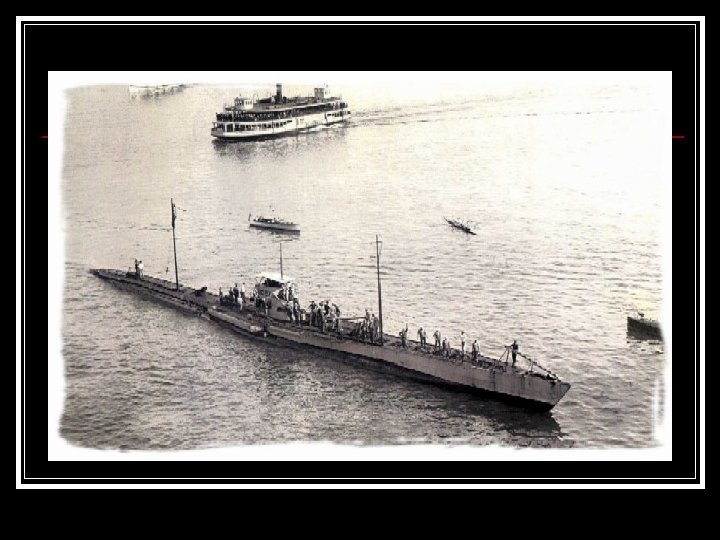
Weaponry n Most people believed this new technology would deliver a fastmoving war, but it did the opposite…it actually worsened the stalemate and resulted in higher death tolls all-around.
The U. S. Joins WWI The U. S. joined the war in 1917 on the side of the Allies. 1. ) Germany’s unrestricted U-boat warfare n -May 1915 – a German U-boat torpedoed the Lusitania, killing 128 Americans -Sussex pledge: a promise to stop! -Resumed on Feb 1, 1917, sank 4 ships
Reasons for U. S. entry in WWI 2. ) Cultural Ties -Allied nations were democratic like the ‘ U. S. -Common language, history
3. ) Democracy in Russia? -Czar Nicholas II forced to step down in 1917 - A democratic govt. had seized control and the U. S believed it should support this new govt. -Once the Bolsheviks have power, they take Russia out of war. Now where can Germany concentrate all of their forces?
Reasons for U. S. entry in WWI 4. ) Zimmermann Telegram -British intelligence intercepted a note from the German foreign minister, Arthur Zimmermann, to his ambassador in Mexico. -Suggested that Mexico attack the U. S. ; in exchange Germany would help them regain TX, NM, and AZ. Authentic?
The Allies Move Toward Victory U. S. declares war on Germany – April 1917 n Germany launched a huge offensive on the Western Front after Russia dropped out and before U. S. troops arrived. n U. S. sent between 1 -2 million troops n Allies launched a counterattack with U. S. help; Germans can’t win. n
The Allies Win Kaiser Wilhelm II stepped down and went into exile. n Germany arranged an armistice with the Allies. n WWI came to an end at 11 a. m. on November 11, 1918. n
And what NOW? n Treaty of Versailles
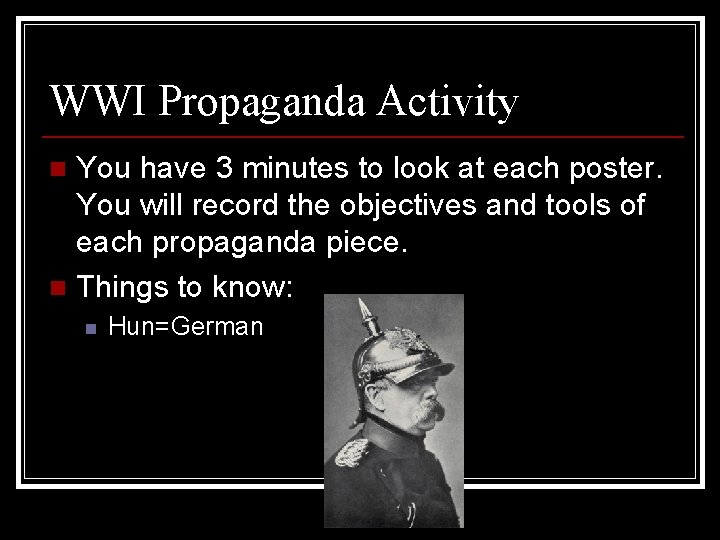
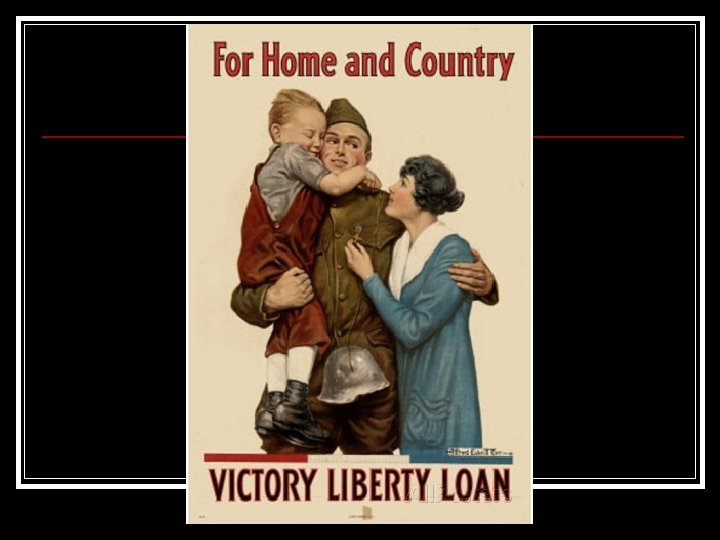
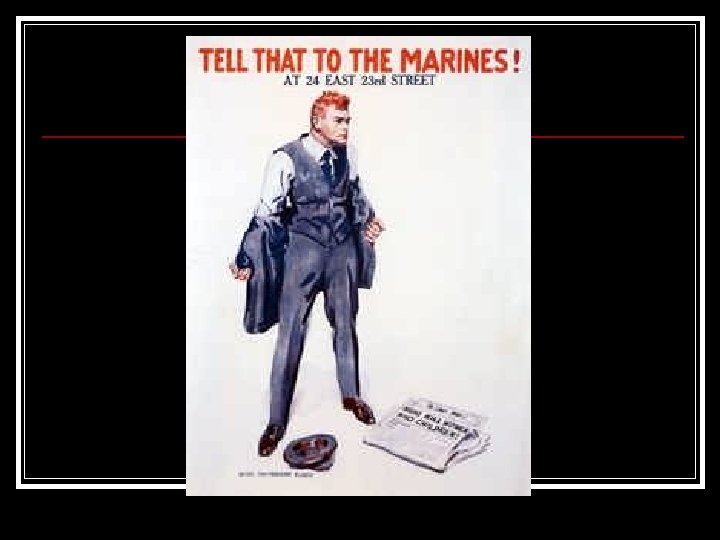
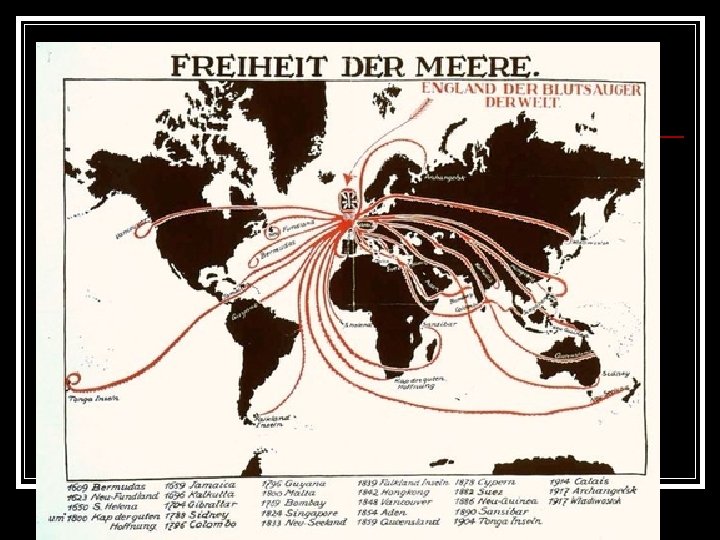
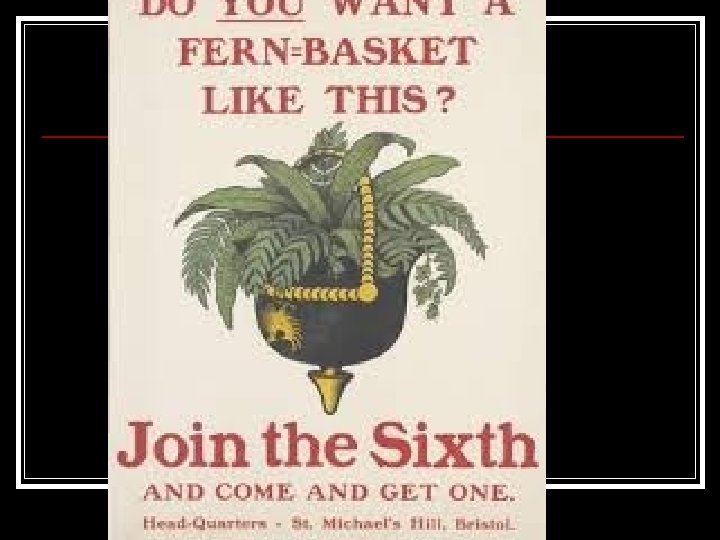
WWI Propaganda Activity You have 3 minutes to look at each poster. You will record the objectives and tools of each propaganda piece. n Things to know: n n Hun=German
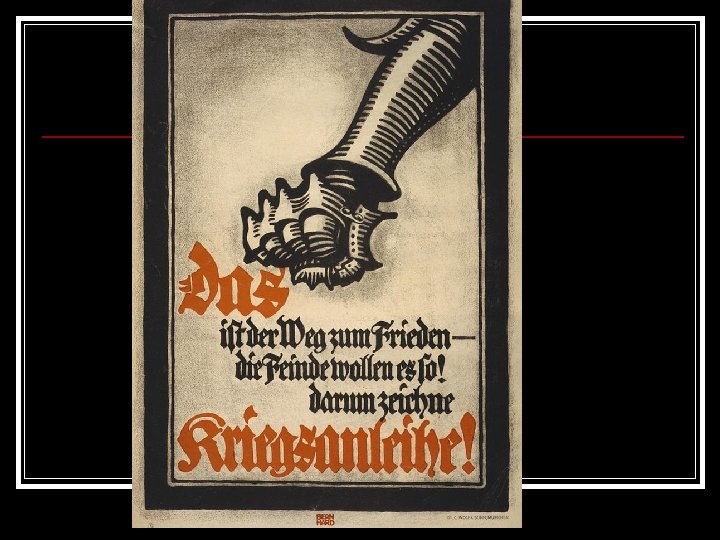
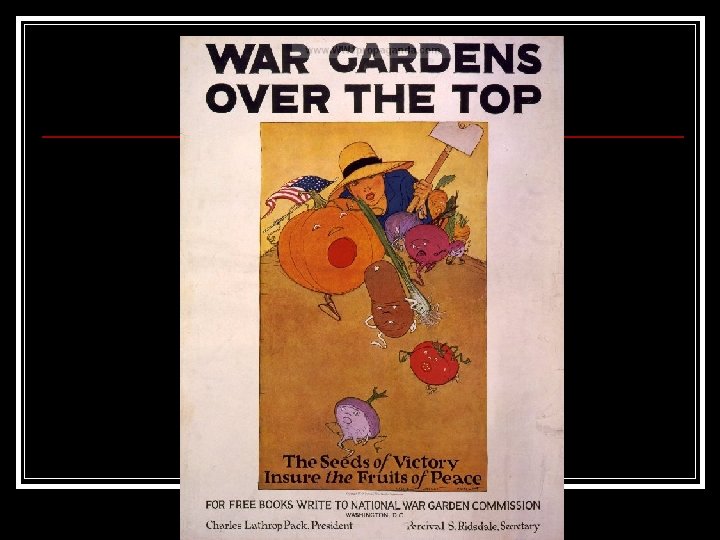
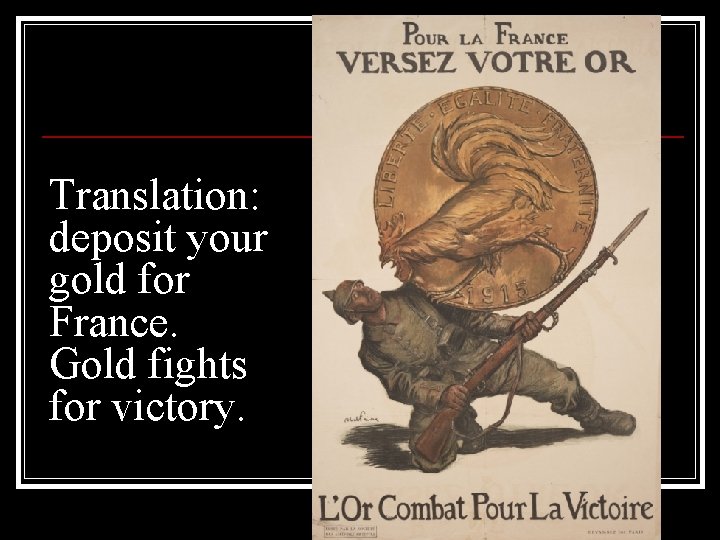
Translation: deposit your gold for France. Gold fights for victory.
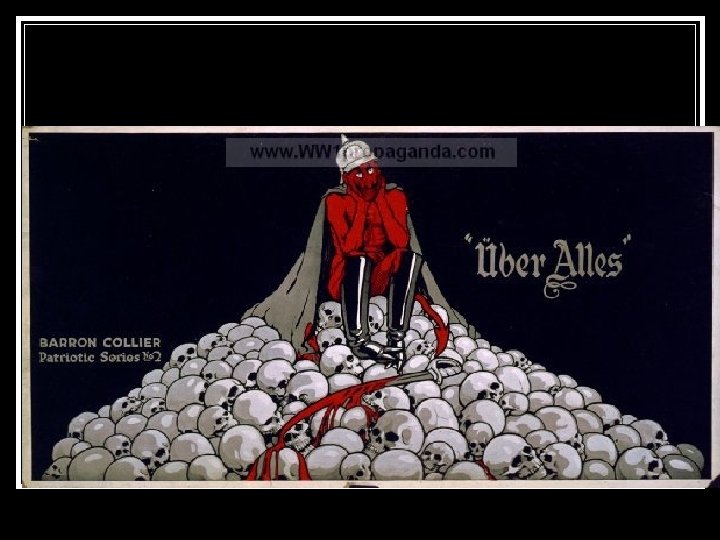
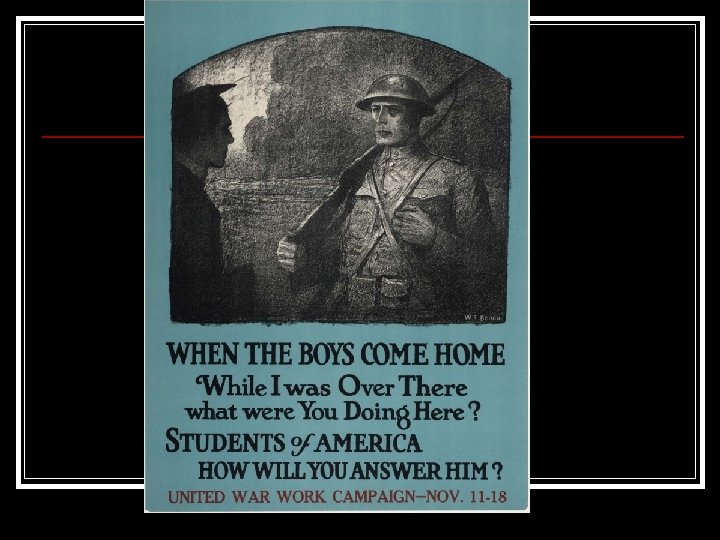
n The United War Work Campaign brought together seven organizations--the YMCA, the YWCA, the American Library Association, the War Camp Community Service, the Knights of Columbus, the Jewish Welfare Board, and the Salvation Army--into one large funding drive charged with raising over $170 million for the war in 1918. The Woman's Work Division of the campaign formed a "telephone brigade" to inform people about the effort.
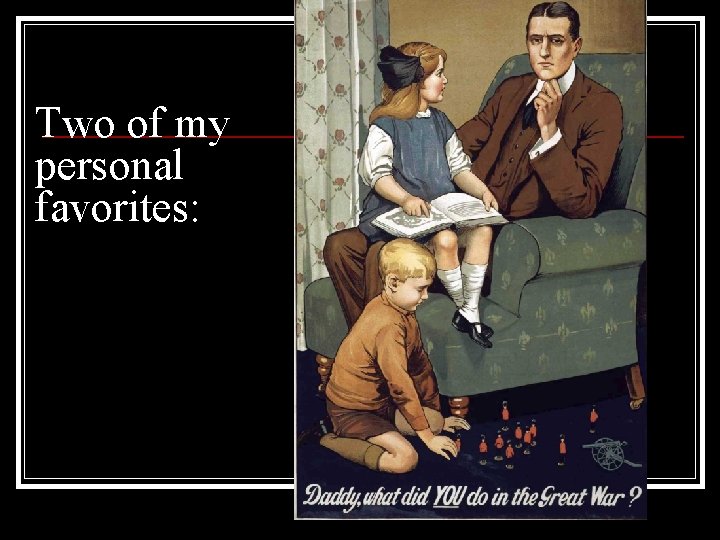
Two of my personal favorites:
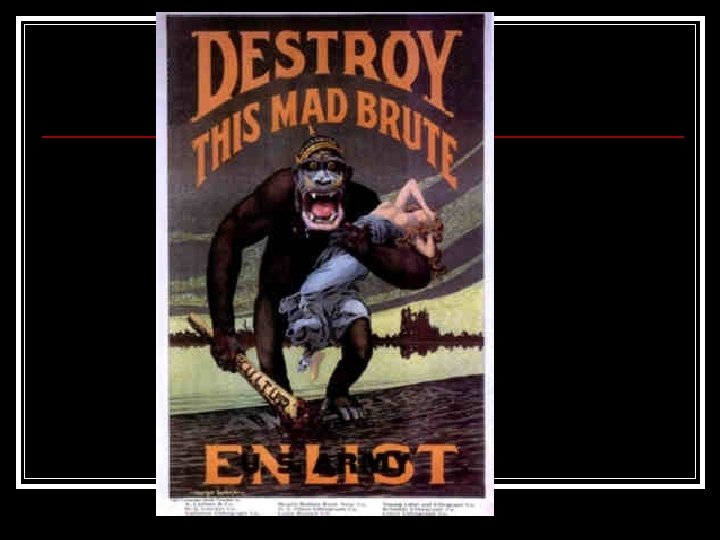
Objectives of Propaganda Recruitment of soldiers n Financing the war effort n Eliminating dissent/unifying country n Conservation of Resources n Participation in home-front organizations n
Tools for Propaganda Demonization n Emotional Appeals n Name Calling n Patriotic Appeals n Half-Truths/Lies n Catchy Slogans n Evocative Visual Symbols n Humor/Caricatures n
- Slides: 72