Terrestrial Arthropods Hexapods and Myrapods Evolutionary Perspective 750


- Slides: 51
Terrestrial Arthropods Hexapods and Myrapods
Evolutionary Perspective • 750, 000 species described with estimates as high as 30 million species total • Described species equal 75% of all living species • During the late silurian early Devonian (400 million years ago) low growing plants and the first forests began to develop • Exoskeleton pre adapted insects to life on land • Flight contributed by allowing access to widely scattered food sources
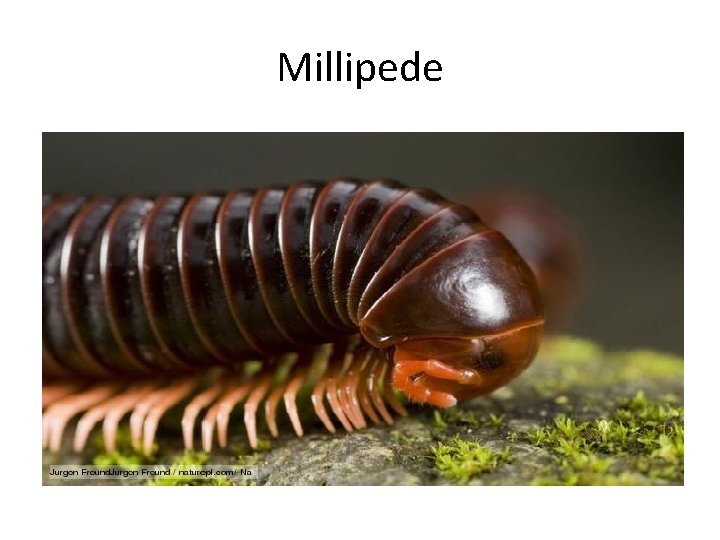
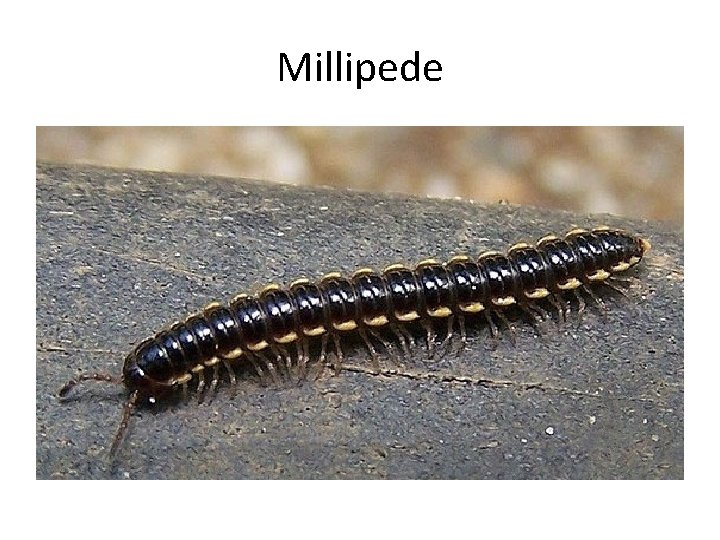
Subphylum Myrapoda • Class Diplopoda- millipedes, among first terrestrial animals, lack a waxy epicuticle • 11 to 100 segments (fused Tagmata) two pairs of appendages (uniramus) on each segment, also two ganglia, two ostia, and two trachea • Found worldwide living in leaf litter to prevent dessication, feed on decaying vegetation • Repugnatorial glands release hydrogen cyanide as a deterrent also roll up into ball
Millipede
Millipede
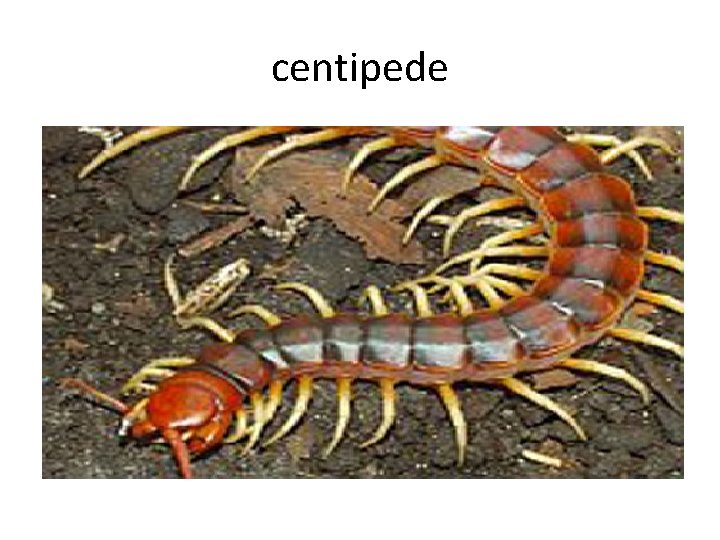
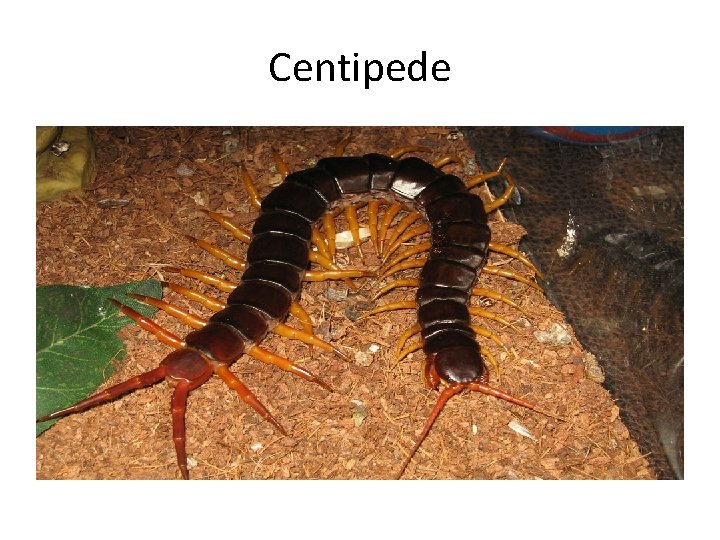
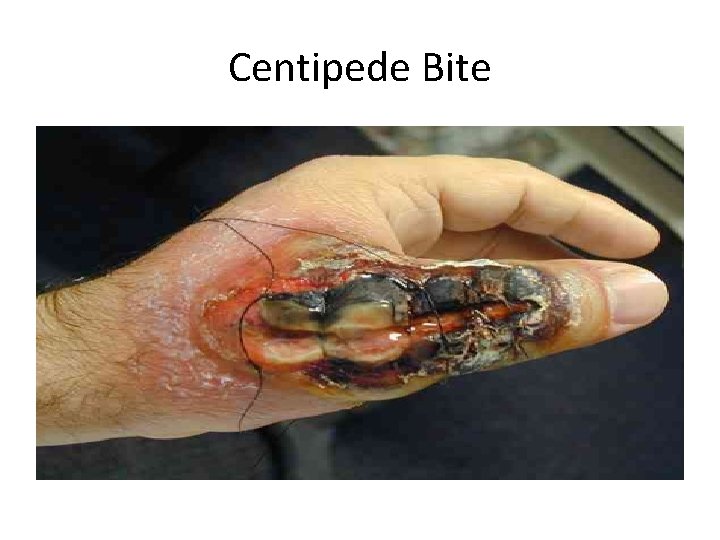
Subphylum Myrapoda • Class Chilopoda-centipedes, most nocturnal move about forest floor debri, lack waxy epicuticle • Fast moving predators, one pair legs per segment, poison claws kill or immobilize prey • Feed on arthropods, earthworms, snails, frogs and rodents • Most centipedes harmless to humans, few human deaths attributed to large tropical species
centipede
Centipede
Centipede Bite
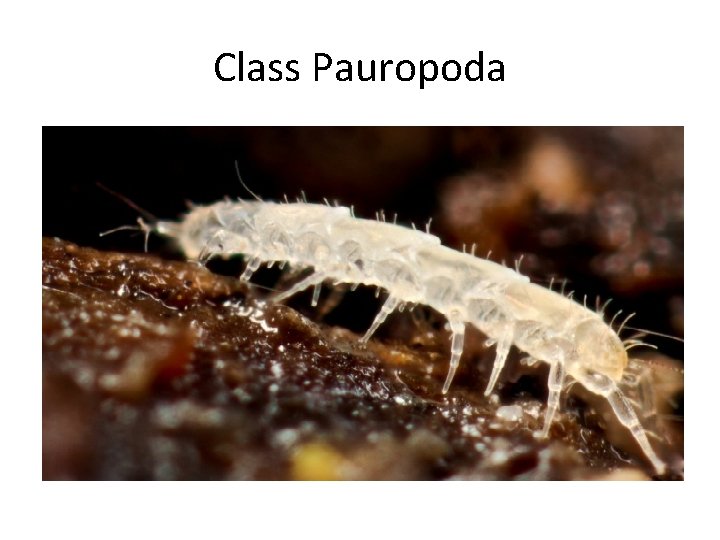
Subphylum Myrapoda • Class Pauropoda- soft bodied animals live on forest floor, 11 body segments • Feed on fungis and decaying matter • Thin moist exoskeleton allows gas exchange and diffusion of wastes • Class Symphyla- small arthropods, resemble centipedes, feed on decaying vegetation • 12 trunk segments, lack eyes, posterior segment has spinnerets or sensory bristles
Class Pauropoda
Class Symphyla
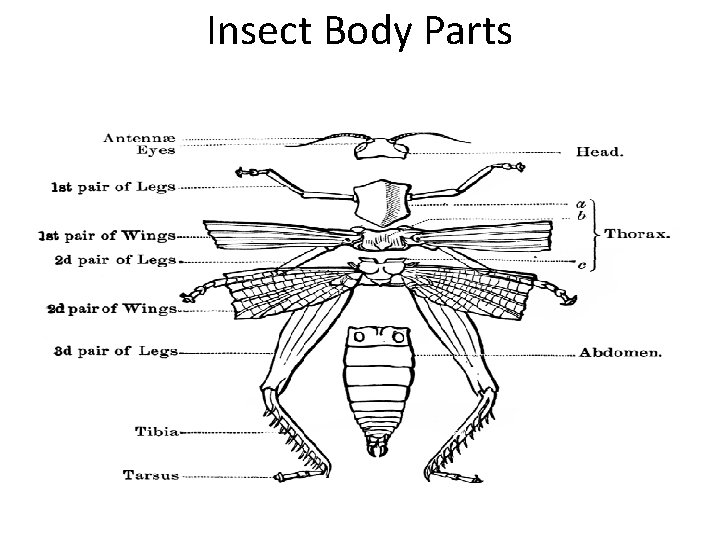
Subphylum Hexapoda • Bodies divided into three tagmata(specialized sections) have 5 pairs head appendages, three pairs of legs on the thorax, two pairs of wings • Class Insecta- Most successful land animals • Body divided into Head, Thorax and abdomen • Head bears antennae, mouth, compound eyes and zero, two, or three ocelli • Thorax contains legs, wings, spiracles • Abdomen made up of 10 or 11 segments, each segment contains a pair of spiracles
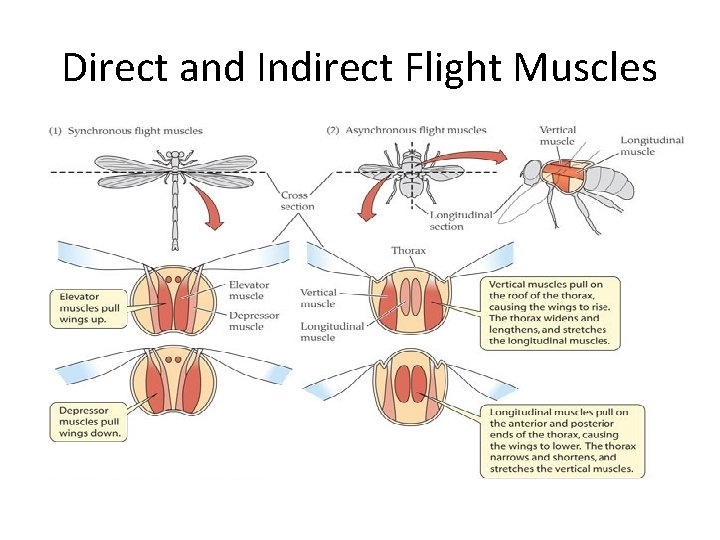
Insect Flight • Most important form of insect locomotion • Wings probably evolved from gill-like outgrowths used for gliding originally • Body temp must be regulated 25 degrees C or higher to contract muscles fast enough • Direct Flight (synchronous)- muscles act on bases of wings to produce downward thrust, muscles attached to exoskeleton (dorsal ventral) contract to produce upward thrust, butterflies, Dragonflies and grasshoppers
Direct and Indirect Flight Muscles
Insect Flight • Indirect Flight (asynchronous)- muscles act to change the shape of the exoskeleton for upward and downward strokes • Dorso ventral muscles pull downward for up stroke • Longitudinal muscles arch exoskeleton for down stroke • Energy stored in the exoskeleton by flexing is released producing very fast wing beats, 1000 cycles per second, flies and wasps
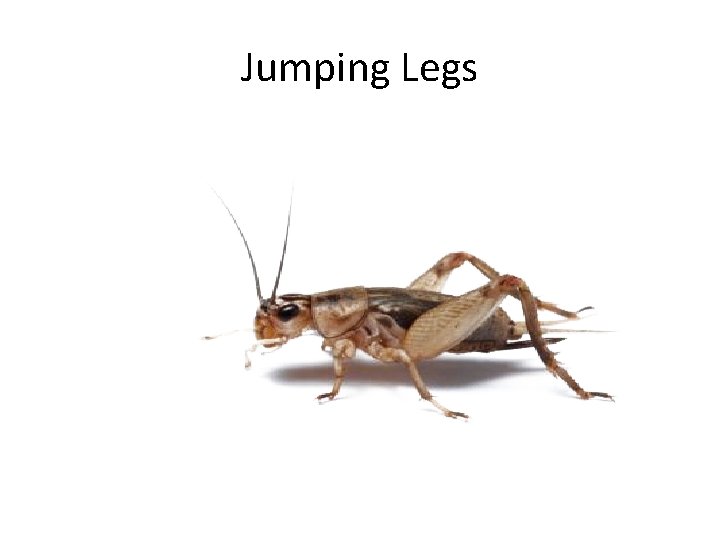
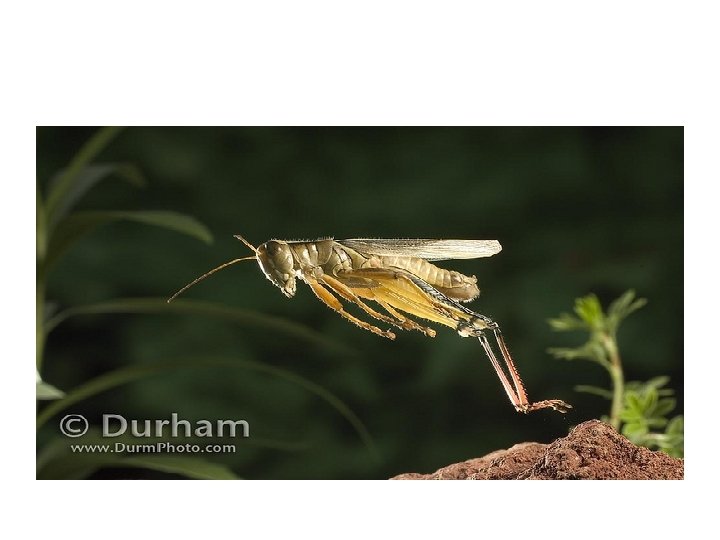
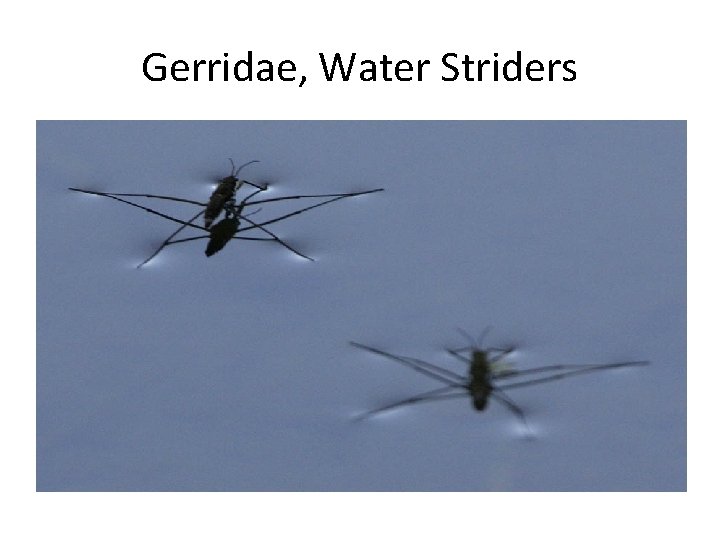
Insect Locomotion • Insects walk, run, jump and swim • Walking involves 3 or more legs contacting the ground at all times • Running involves 3 or fewer legs contacting the ground, cockroach 5 km/hr seems fast but they change direction fast • Jumping insects have long legs and large muscles, the exoskeleton is also distorted, a catch mechanism is involved which stores energy. Distances exceed 100 x body length
Insect Body Parts
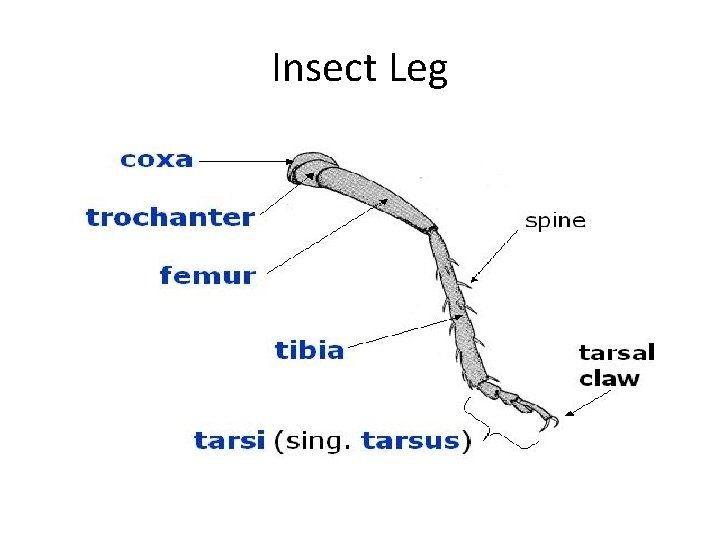
Insect Leg
Jumping Legs
Gerridae, Water Striders
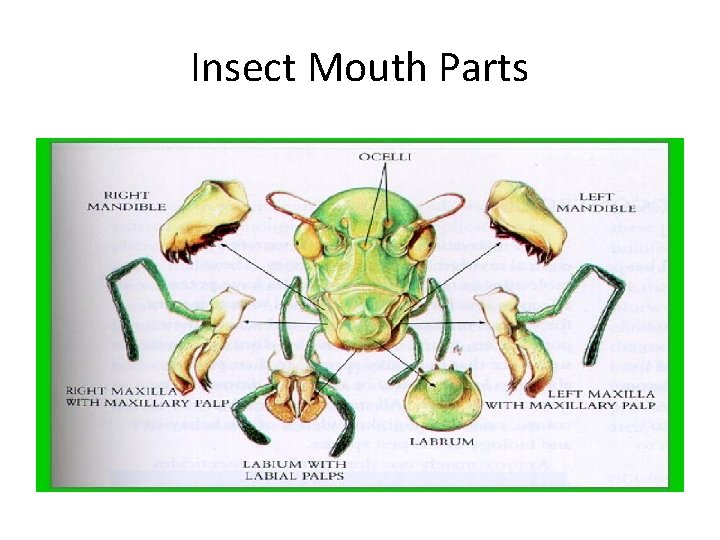
Nutrition and Digestion • Many variations of mouthparts but a common arrangement based on • Mandibles- tearing and cutting up food, bear teeth, side to side movement • Maxilla- cutting edges and a sensory palp for food holding • Labium- sensory lower lip • Hypopharnyx- sensory tongue like structure
Insect Mouth Parts
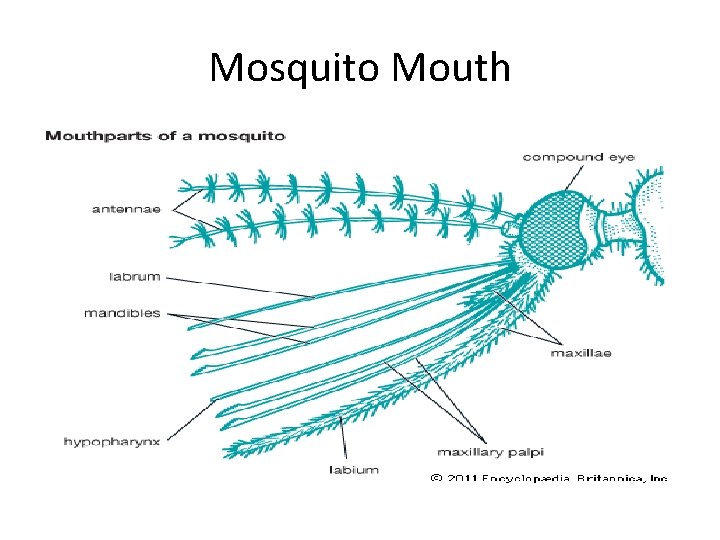
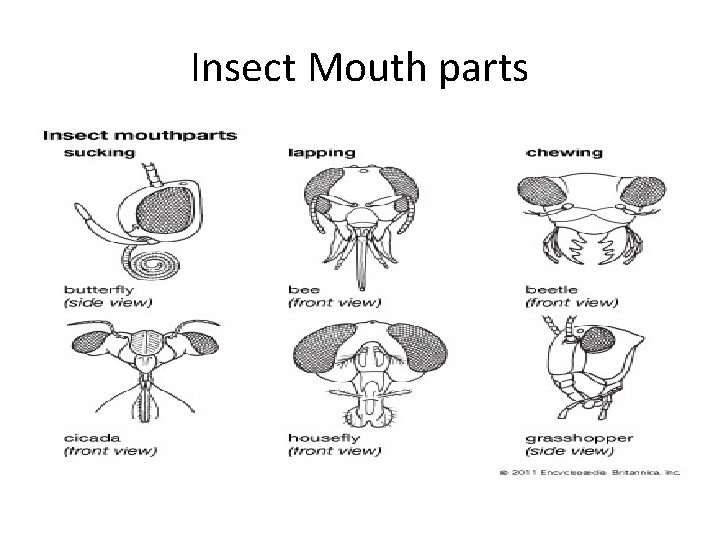
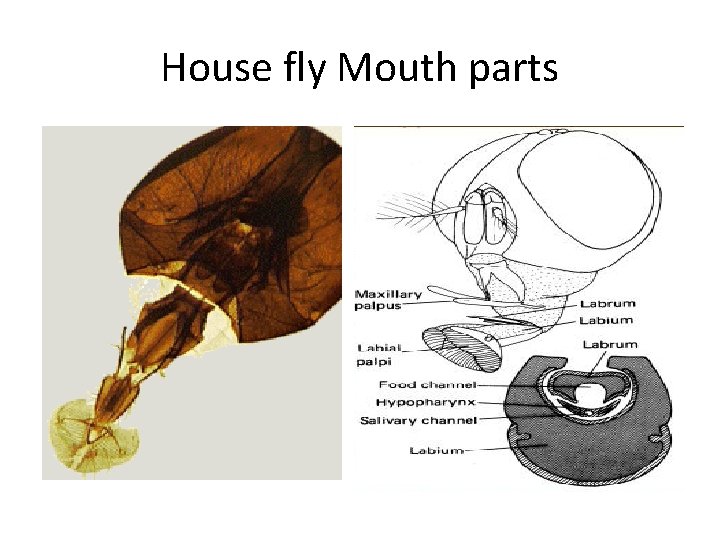
Insect Mouth Parts • Insects that suck liquid food modified their mouth parts • Mosquitos- Mouth modified into six stylets to pierce flesh and suck blood • Butterfly- maxilla modified into coiled tube for sucking nectar • Housefly- sponging mouth parts, saliva is secreted from mouth onto food and channels in labellum draw food up by capillary action
Mosquito Mouth
Insect Mouth parts
House fly Mouth parts
Insect Digestive System • Digestive tract is long and straight, divided into foregut, midgut and hindgut. • Foregut is often modified into muscular pharynx for sucking fluids • Crop used for food storage behind pharynx • Gizzard regulates food movement to midgut and may grind food (teeth) • Midgut provides surface area, digestion and absorption, Gastric Cacea increase surface • Hindgut (intestine) reabsorption of water
Circulation • Open System- Dorsal heart pumps blood into spaces of Hemocoel • Organs bathed in blood then returns through ostia • Blood distributes nutrients, hormones and wastes and amoeboid blood cells perform defense and repair
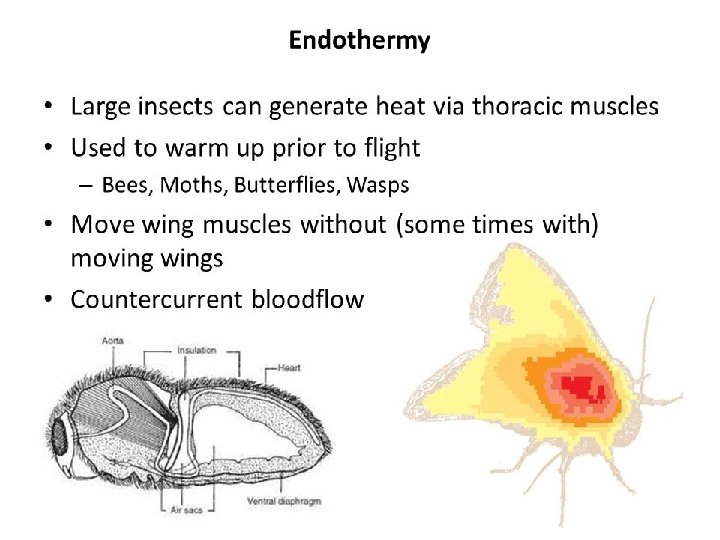
Thermoregulation • Flying insects must control their body temp • All insects warm themselves by basking in the sun or resting on warm surfaces • Moths, alpine bumblebees and beetles generate heat by rapid contraction of flight muscles (shivering thermogenesis) raise body temp from 0 to 35 degrees C • Insects also cool themselves by seeking cool moist areas
Thermoregulation • Honeybees must maintain body temp 35 degrees C for flight, contract flight muscles • Regurgitation of fluid through mouth for evaporative cooling • Hive temperature is regulated by clusters of bees contracting muscles and cooled by beating wings and circulating air at entrance • Hive temperatures of 20 degrees C maintained in winter
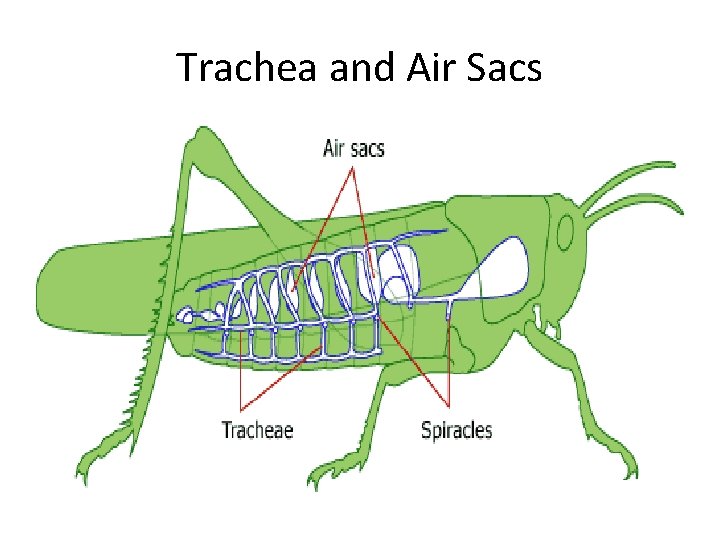
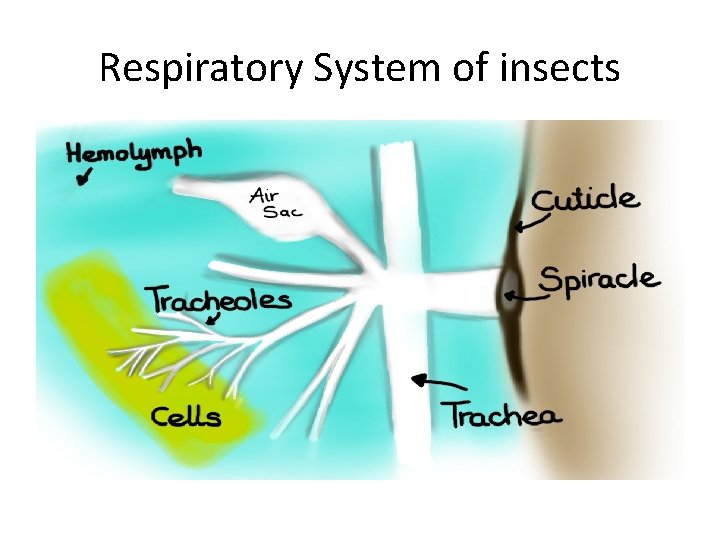
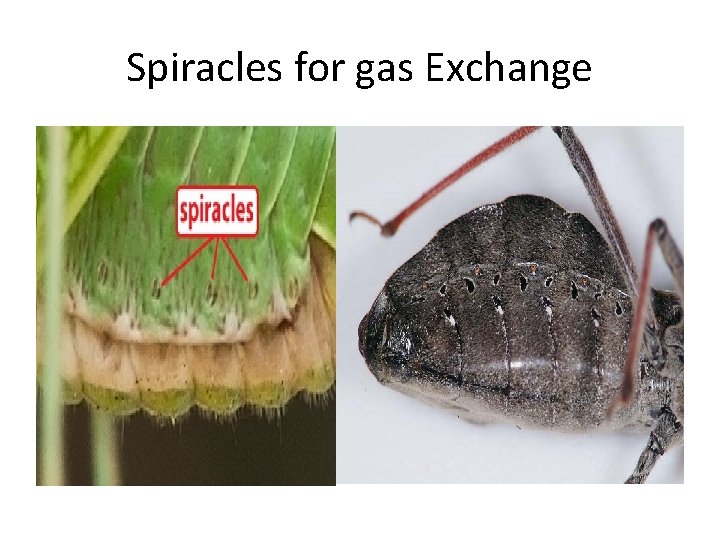
Gas Exchange • Spiracles are external openings leading to trachea Tubes which feed into Tracheoles which feed cells directly • No cells are more than 2 -3 thousanths of a meter from a tracheole • Insects either move flight muscles or contract abdominal muscles to move air in and out of the tracheal system • Aquatic insects usually do not use Trachea but gasses diffuse directly thru body wall
Trachea and Air Sacs
Respiratory System of insects
Spiracles for gas Exchange
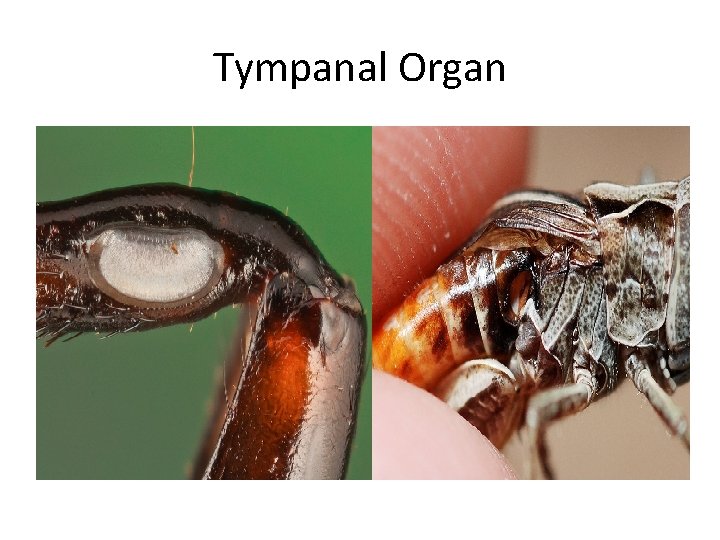
Nervous and sensory System • Supraesophageal ganglia connects to ventral nerve with segmental ganglia • Mechanoreceptors (seta) are spread over the body, sensitive to touch, wind and vibration • Tympanal organs (thin membrane over air sac) can be found on legs, abdomen or abdomen located bilaterally to give direction • Moths very sensitive, up to 150, 000 cps, what bats produce to navigate
Tympanal Organ
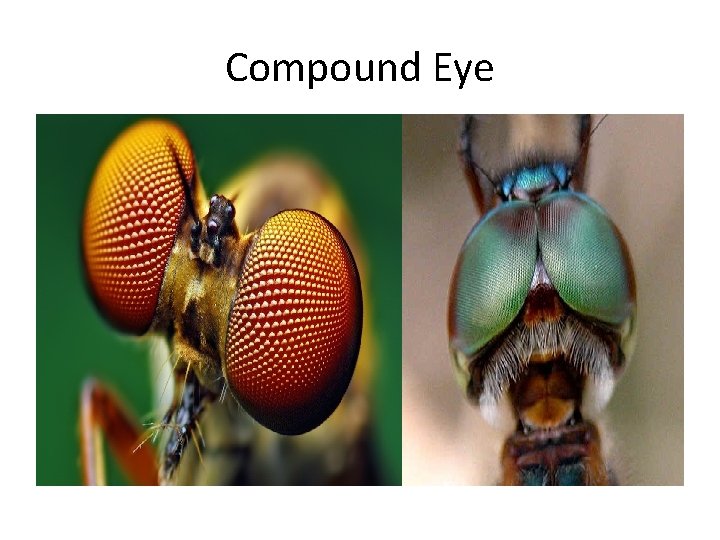
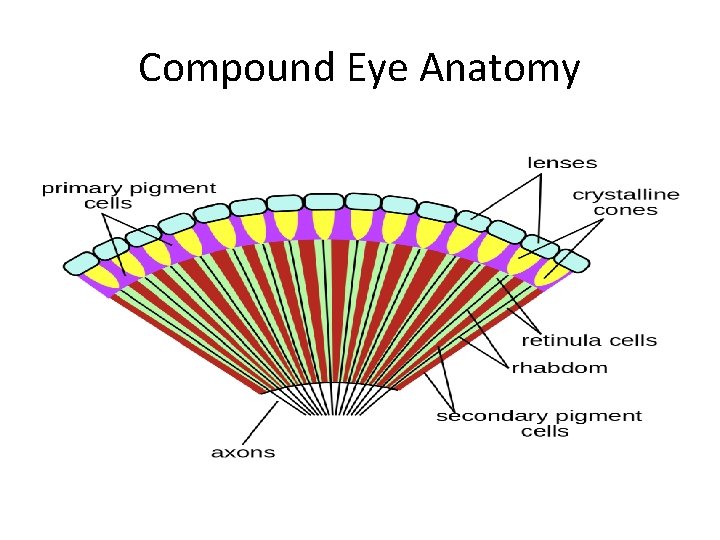
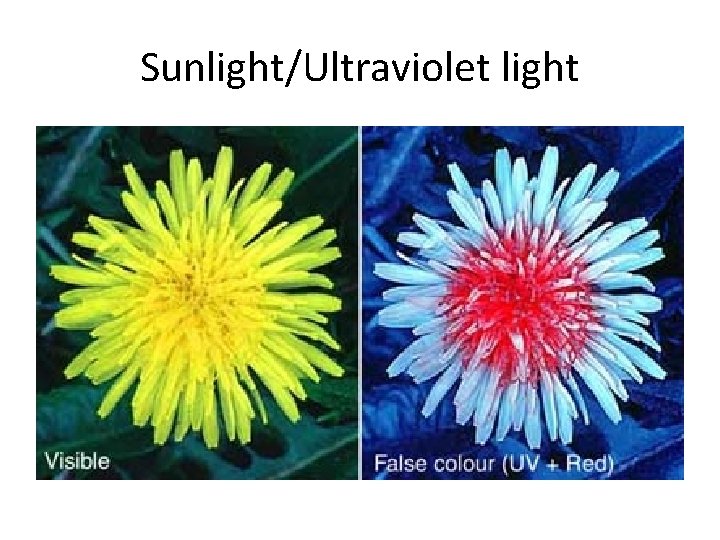
Sight • All insects detect light for orientation, navigation, feeding and other functions • Compound eyes- consist of a few to 28, 000 omnitidea fused into a multifaceted eye, detect vast spectrum including ultraviolet light • Better suited for detecting movement than image vision, bees detecting flowers in wind and predatory insects
Compound Eye
Compound Eye Anatomy
Sunlight/Ultraviolet light
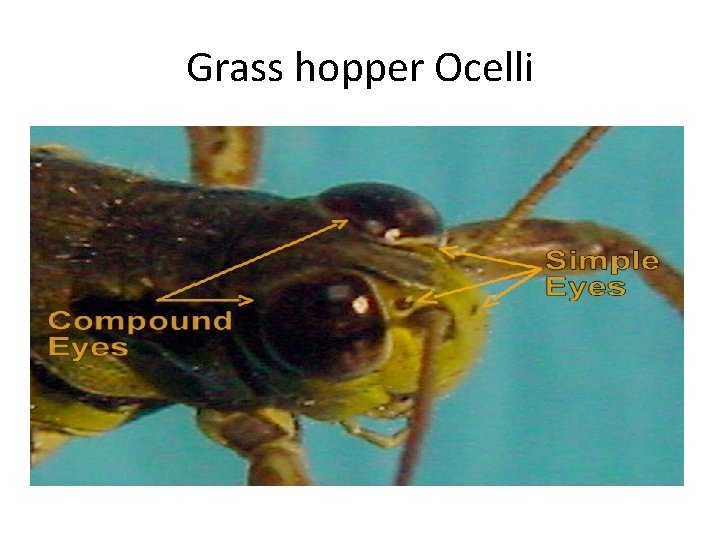
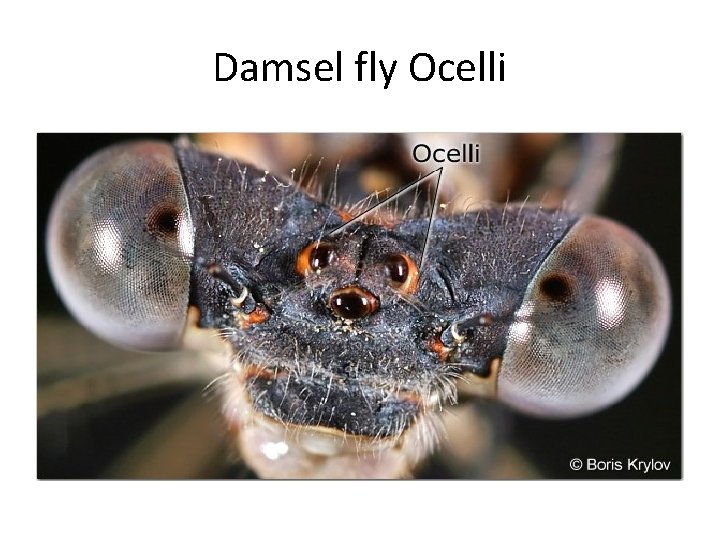
Sight • Ocelli consist of 500 to 1000 receptor cells beneath a single lens • Sensitive to changes in light intensity • Help regulate daily rythums
Grass hopper Ocelli
Damsel fly Ocelli
Reproduction • Metamorphosis- immature and adult body forms • Ametabolus-(wingless insects) egg, nymphs, adult. Body size difference nymph to adult • Hemimetabolous- (winged insects) egg, nymph(wingless stages), adult • Holometabolous- egg, larva, pupa (cocoon), adult. 75% of all insect species
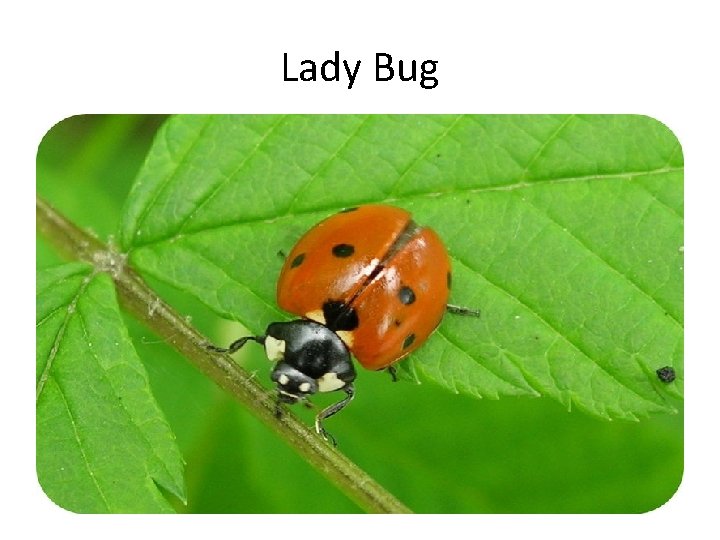
Insects and Humans • Pollinating insects- 65% of all plant species • Worth 19 billion per year in U. S. • Insects as Biological control, beetles control cottony cushion scale insect, Ladybugs, praying Mantis • Important role in food webs, aeration on soil and nutrient recycling • Spread diseases- malaria, yellow fever, Bubonic Plague, Typhus, Dutch Elm disease
Lady Bug
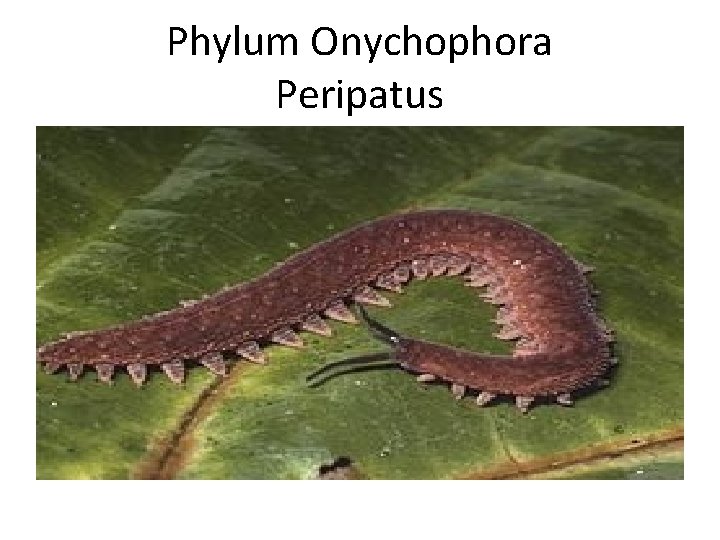
Phylum Onychophora Peripatus
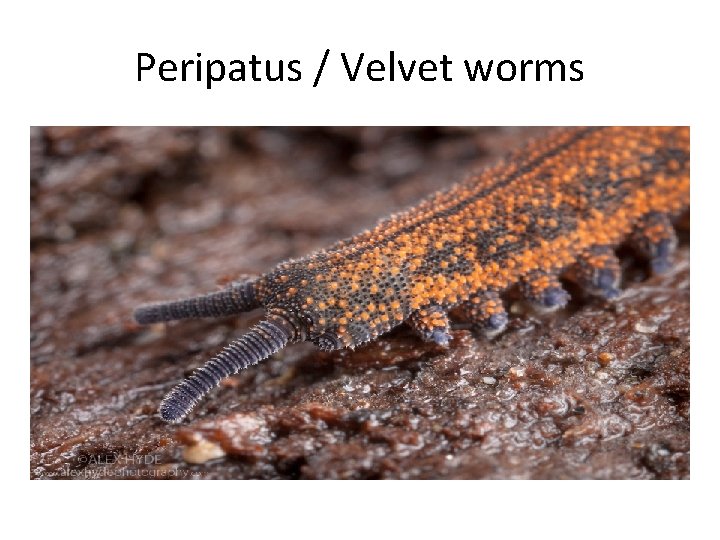
Peripatus / Velvet worms