
Parasites II Protozoa Helminths Arthropods Learning Objectives 1
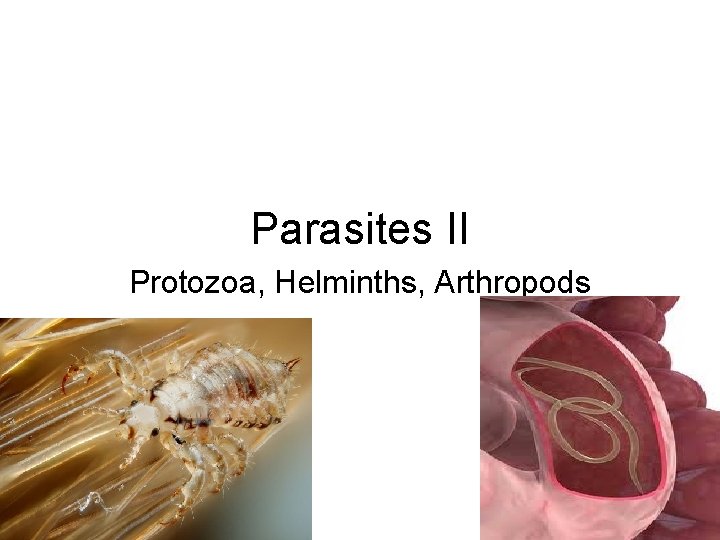
Parasites II Protozoa, Helminths, Arthropods
Learning Objectives 1. Know the general terminology 2. Learn clinical significances and main organisms 3. Know predisposing factors 4. Explain transmitting routes 5. Understand the management strategies and prevention
What is a parasite? • Parasitism is a type of symbiotic relationship between two different organisms. The parasite benefits from a prolonged, close association with the host, which is harmed • Many possess special adaptations
Definition • Parasite – an organism that lives off or on another organism, generally without killing it. • It comes from the Greek “one who eats off the table of another”.
Presence of Diseases in a Population (Prevalence): Factors required: 1. Source • infected persons • carriers • animals
Presence of Diseases in a Population (Prevalence): 2. Mode of transmission • direct • indirect • vectors 3. Susceptible host • immunity
Parasite • • endoparasite ectoparasite temporary parasite permanent parasite obligatory parasite facultative parasite accidental parasite opportunistic parasite

Endoparasite
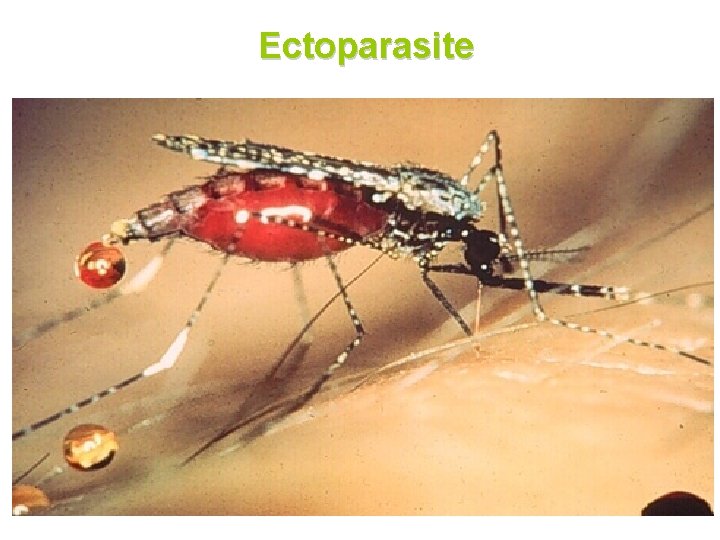
Ectoparasite
Host In parasitism, it supplies the parasite with nourishment and shelter, it is the injured partner. Carrier: A person who harbours parasite has no clinical symptoms, is an important source of infection in epidemiology.
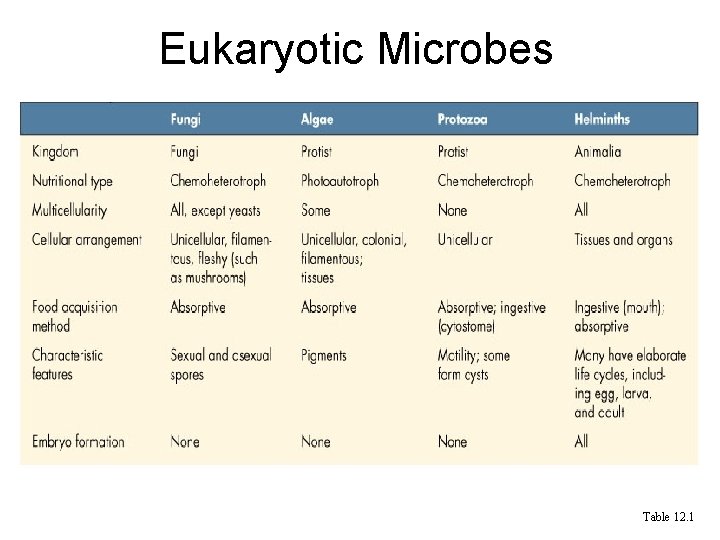
Eukaryotic Microbes Table 12. 1
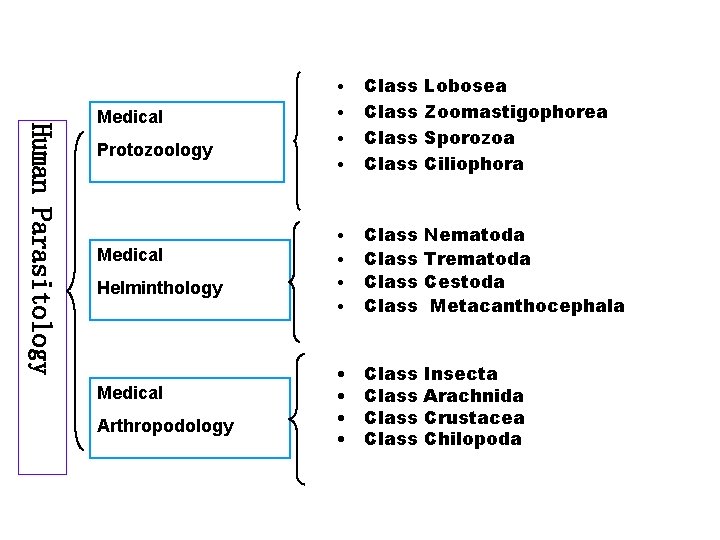
Class Lobosea Zoomastigophorea Sporozoa Ciliophora • Class Nematoda Trematoda Cestoda Metacanthocephala • • Class Insecta Arachnida Crustacea Chilopoda • Human Parasitology Medical Protozoology Medical Helminthology Medical Arthropodology • • •
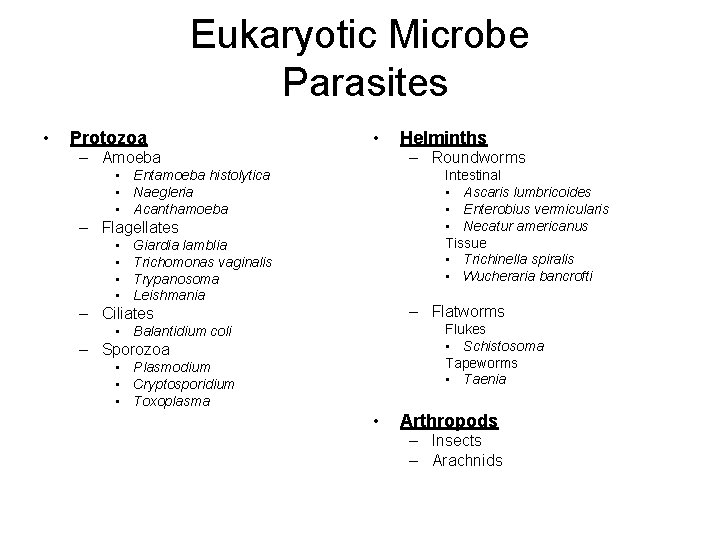
Eukaryotic Microbe Parasites • Protozoa • – Amoeba – Roundworms • Entamoeba histolytica • Naegleria • Acanthamoeba Intestinal • Ascaris lumbricoides • Enterobius vermicularis • Necatur americanus Tissue • Trichinella spiralis • Wucheraria bancrofti – Flagellates • • Helminths Giardia lamblia Trichomonas vaginalis Trypanosoma Leishmania – Flatworms – Ciliates Flukes • Schistosoma Tapeworms • Taenia • Balantidium coli – Sporozoa • Plasmodium • Cryptosporidium • Toxoplasma • Arthropods – Insects – Arachnids
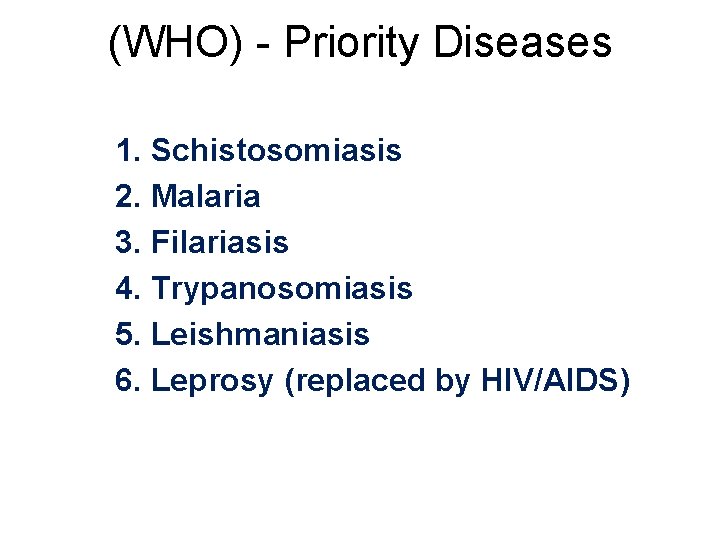
(WHO) - Priority Diseases 1. Schistosomiasis 2. Malaria 3. Filariasis 4. Trypanosomiasis 5. Leishmaniasis 6. Leprosy (replaced by HIV/AIDS)
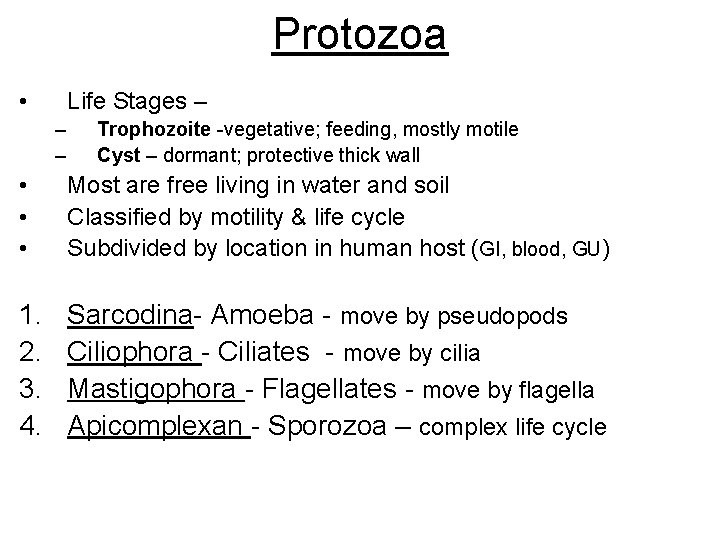
Protozoa • Life Stages – – – Trophozoite -vegetative; feeding, mostly motile Cyst – dormant; protective thick wall • • • Most are free living in water and soil Classified by motility & life cycle Subdivided by location in human host (GI, blood, GU) 1. 2. 3. 4. Sarcodina- Amoeba - move by pseudopods Ciliophora - Ciliates - move by cilia Mastigophora - Flagellates - move by flagella Apicomplexan - Sporozoa – complex life cycle
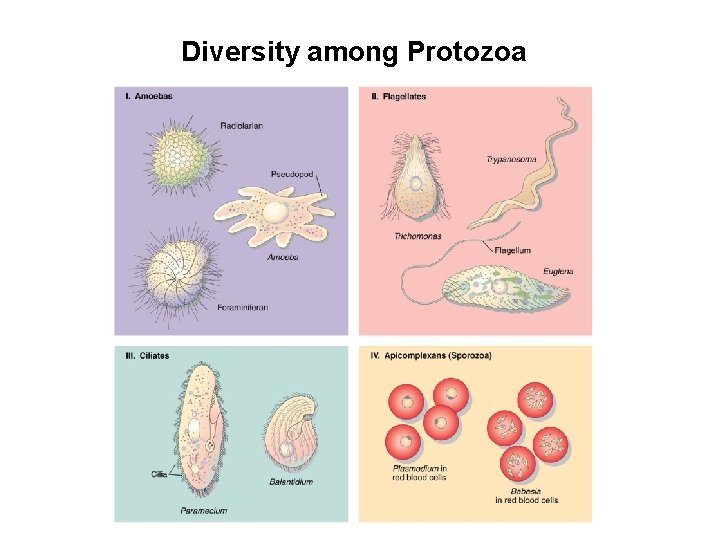
Diversity among Protozoa
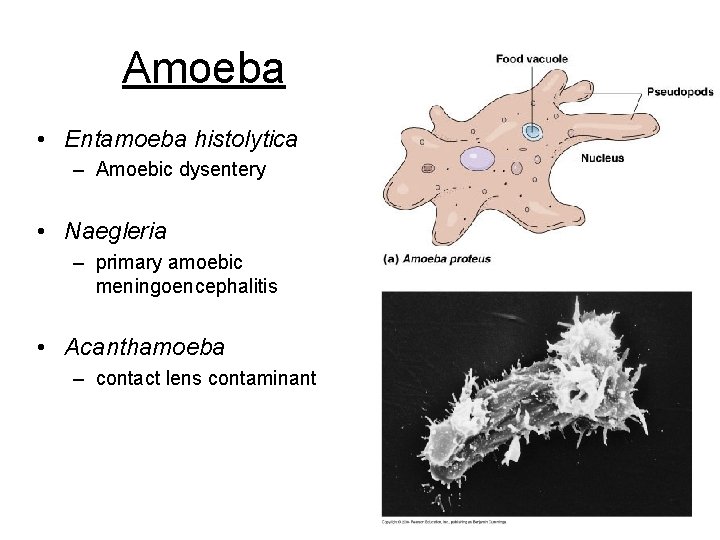
Amoeba • Entamoeba histolytica – Amoebic dysentery • Naegleria – primary amoebic meningoencephalitis • Acanthamoeba – contact lens contaminant Figure 12. 18 a
Amoebae • Protozoa with no truly defined shape • Move and acquire food through the use of pseudopodia • Found in water sources throughout the world • Few cause disease
Entamoeba histolytica • Carried asymptomatically in the digestive tracts of humans • No animal reservoir exists • Infection usually occurs by drinking water contaminated with feces that contain cysts • Trophozoites migrate to the large intestine where they multiply
Entamoeba histolytica • Three types of amebiasis can result from infection – Luminal amebiasis • Least severe form that is asymptomatic – Invasive amebic dysentery • More common form of infection • Characterized by bloody, mucus-containing stools and pain – Invasive extraintestinal amebiasis • Trophozoites carried via the bloodstream throughout the body • Maintaining clean water is important in prevention
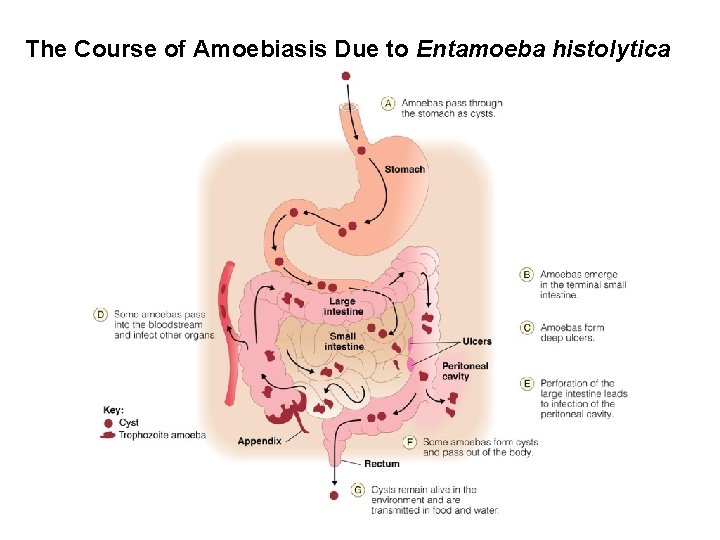
The Course of Amoebiasis Due to Entamoeba histolytica
Acanthamoeba and Naegleria • Cause rare and usually fatal brain infections • Common inhabitants of natural waterways as well as artificial water systems • Contact lenses wearers who use tap water to wash their lenses can become infected • Acanthamoeba diseases – Infection occurs through cuts or scrapes, the conjunctiva, or through inhalation – Acanthamoeba keratitis results from conjunctival inoculation – Amebic encephalitis is the more common disease
Acanthamoeba and Naegleria • Naegleria disease – Infection occurs when swimmers inhale contaminated water – Amoebic meningoencephalitis results when trophozoites migrate to the brain • Prevention is difficult because these organisms are environmentally hardy
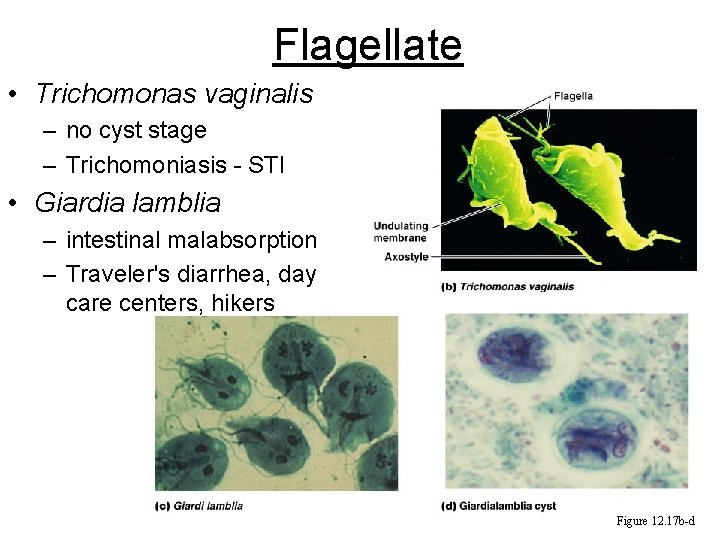
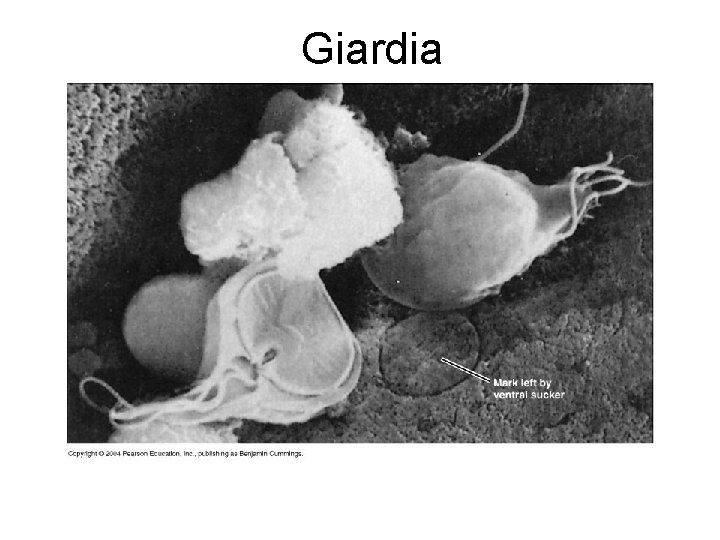
Flagellate • Trichomonas vaginalis – no cyst stage – Trichomoniasis - STI • Giardia lamblia – intestinal malabsorption – Traveler's diarrhea, day care centers, hikers Figure 12. 17 b-d
Giardia
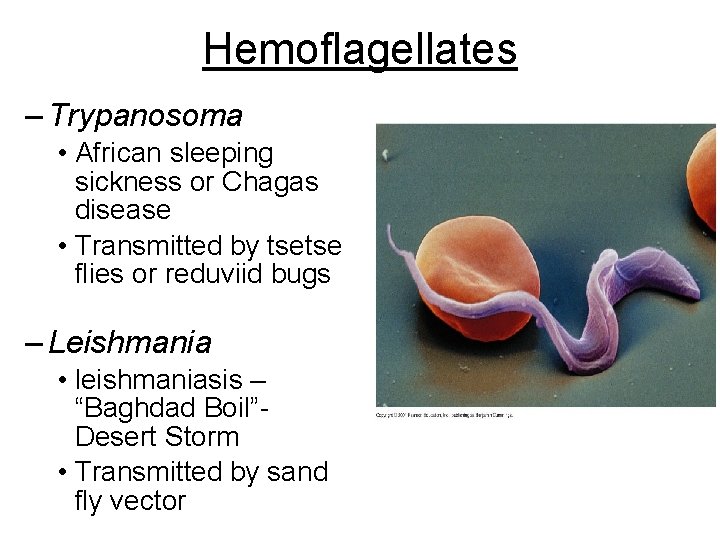
Hemoflagellates – Trypanosoma • African sleeping sickness or Chagas disease • Transmitted by tsetse flies or reduviid bugs – Leishmania • leishmaniasis – “Baghdad Boil”Desert Storm • Transmitted by sand fly vector
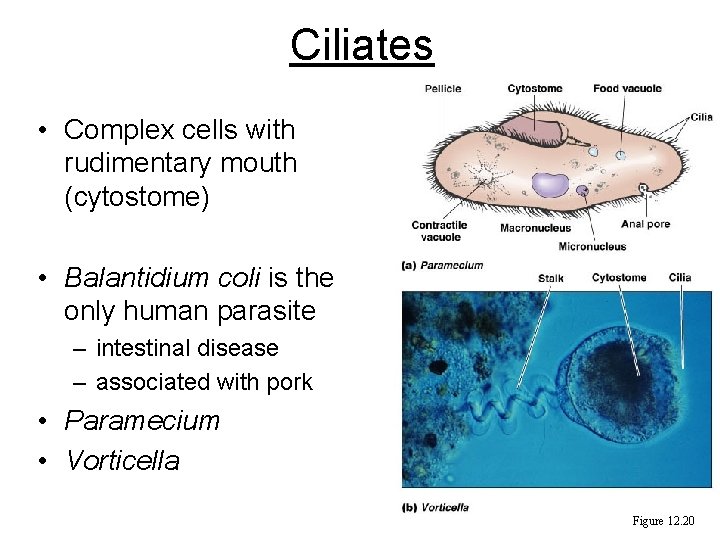
Ciliates • Complex cells with rudimentary mouth (cytostome) • Balantidium coli is the only human parasite – intestinal disease – associated with pork • Paramecium • Vorticella Figure 12. 20
Ciliates • Protozoa that use cilia in their trophozoite stage • Balantidium coli is the only ciliate known to cause disease in humans • Commonly found in animal intestinal tracts • Humans become infected by consuming food or water contaminated with feces containing cysts • Trophozoites attach to the mucosal epithelium lining the intestine • B. coli infections are generally asymptomatic in healthy adults
Ciliates • Balantidiasis occurs in those with poor health – Characterized by persistent diarrhea, abdominal pain, and weight loss – Dysentery results in severe infections • Presence of trophozoites is diagnostic for the disease • Prevention relies on good personal hygiene and efficient water sanitation
Apicomplexans (Sporozoa) • Characteristics: – Nonmotile, Intracellular parasites – Complex life cycles, Asexual/sexual reproduction • Plasmodium – malaria – transmitted by Anopheles mosquito • Babesia-babesiosis – transmitted by ticks • Cryptosporidium – diarrhea; AIDS related • Toxoplasma – toxoplasmosis; AIDS related
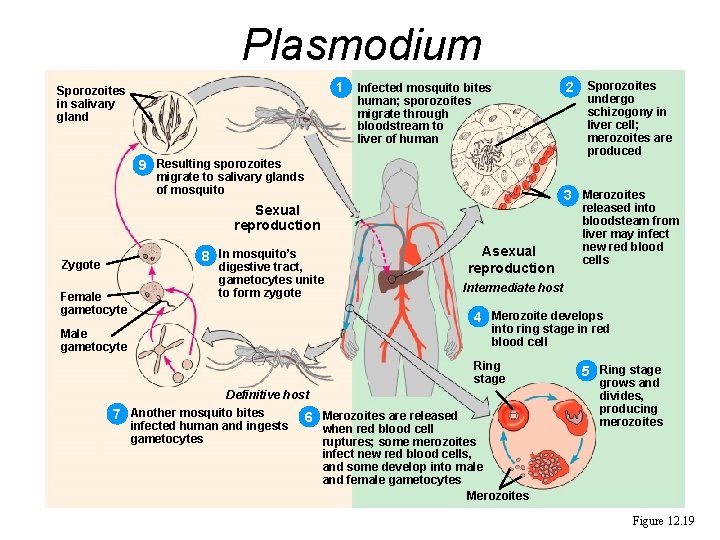
Plasmodium 1 Infected mosquito bites Sporozoites in salivary gland human; sporozoites migrate through bloodstream to liver of human 9 Resulting sporozoites migrate to salivary glands of mosquito Zygote Female gametocyte Male gametocyte digestive tract, gametocytes unite to form zygote Sporozoites undergo schizogony in liver cell; merozoites are produced 3 Merozoites Sexual reproduction 8 In mosquito’s 2 Asexual reproduction released into bloodsteam from liver may infect new red blood cells Intermediate host 4 Merozoite develops into ring stage in red blood cell Ring stage Definitive host 7 Another mosquito bites 6 Merozoites are released infected human and ingests when red blood cell gametocytes ruptures; some merozoites infect new red blood cells, and some develop into male and female gametocytes Merozoites 5 Ring stage grows and divides, producing merozoites Figure 12. 19
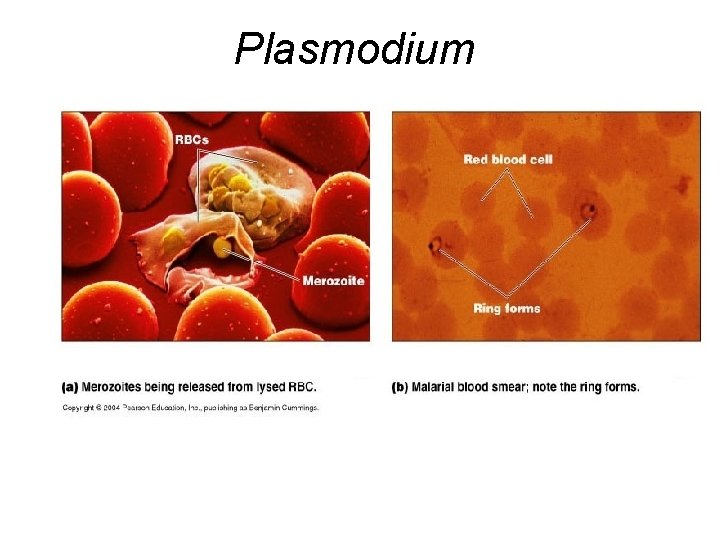
Plasmodium
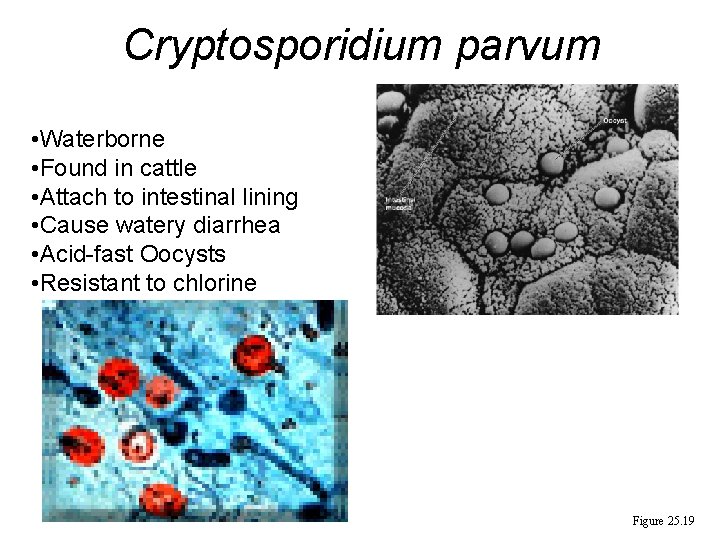
Cryptosporidium parvum • Waterborne • Found in cattle • Attach to intestinal lining • Cause watery diarrhea • Acid-fast Oocysts • Resistant to chlorine Figure 25. 19
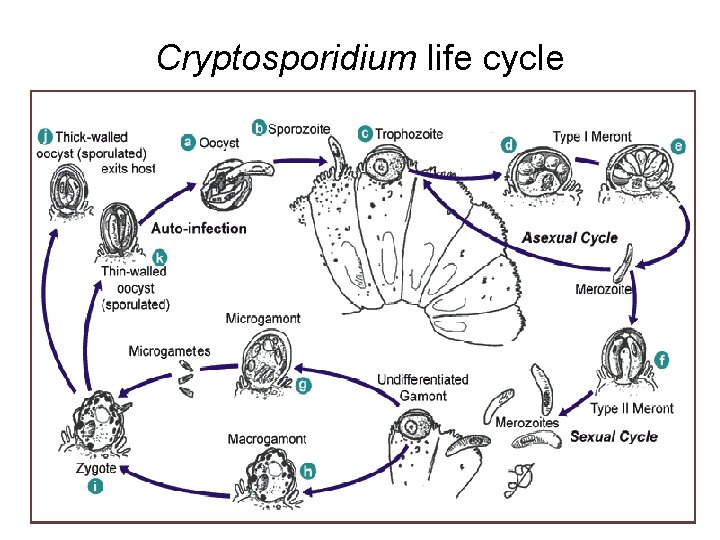
Cryptosporidium life cycle
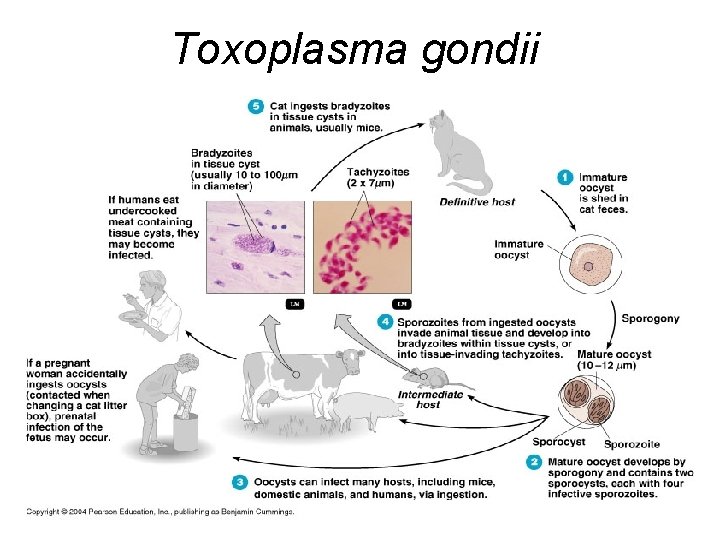
Toxoplasma gondii
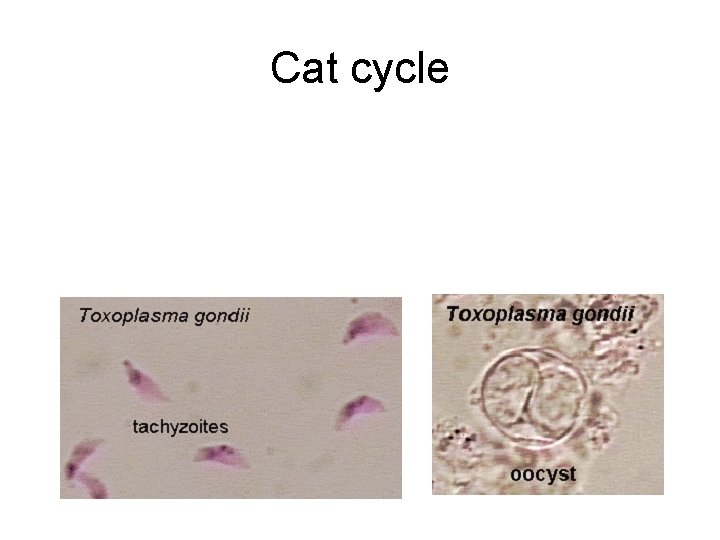
Cat cycle
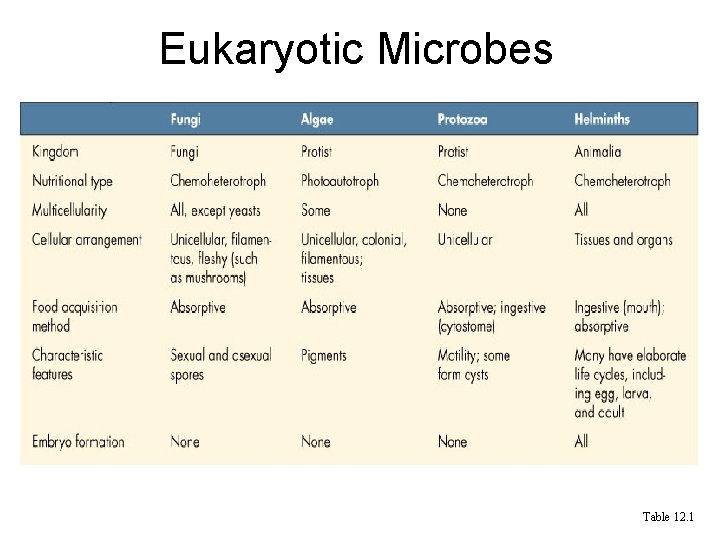
Eukaryotic Microbes Table 12. 1

Helminths - worms • Life Stages – egg, larva, adult; complex life cycles – infective stage: egg or larva – definitive host: harbors adult stage – intermediate hosts: may be more than one • Classifications: • Nematodes - roundworms • Platyhelminthes - flatworms – Trematodes - flukes- nonsegmented – Cestodes - tapeworms- segmented
Nematodes- Roundworms • Intestinal roundworms: – Ascaris (Giant intestinal roundworm) – Enterobius (Pinworm) – Necator / Ancylostoma (Hookworm) • Tissue roundworms – Trichinella spiralis - trichinosis
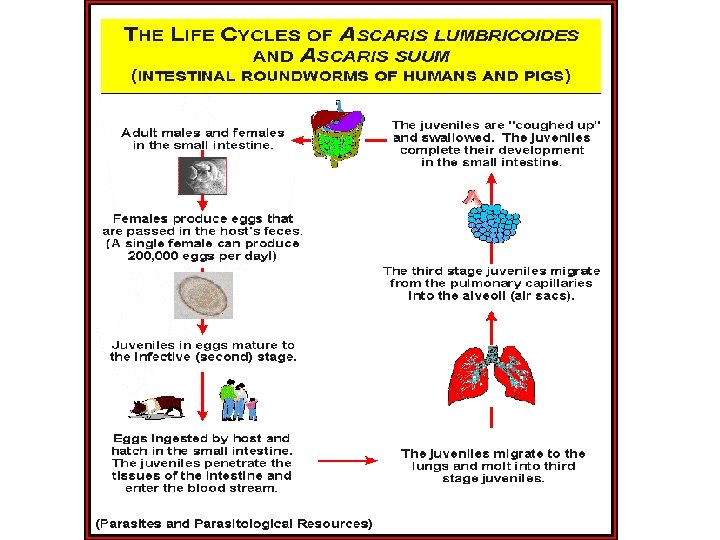
Features of the Life Cycle of Roundworms • Parasites of almost all vertebrates • Have a number of reproduction strategies – Most intestinal nematodes shed their eggs into the lumen of the intestine • Eggs are eliminated in feces • Eggs are consumed in contaminated food or water – Some intestinal nematodes release their eggs into the soil • Larvae actively penetrate the skin of a host • Inside the body, they travel to the intestine – Other nematodes encyst in muscle tissue and are consumed in raw or undercooked meat – Mosquitoes transmit a few species of nematodes • Adult sexually mature stages are found only in definitive hosts
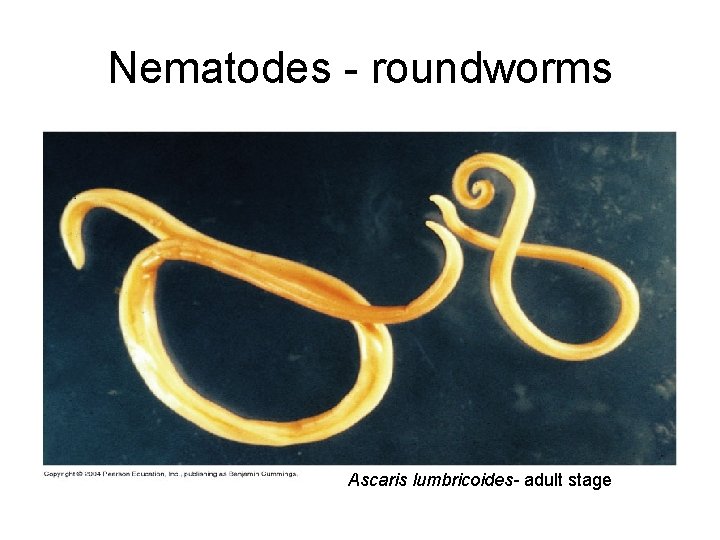
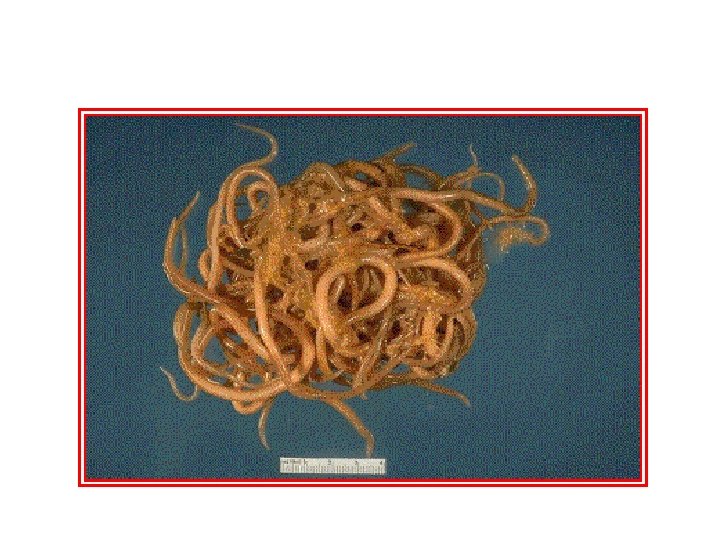
Nematodes - roundworms Ascaris lumbricoides- adult stage
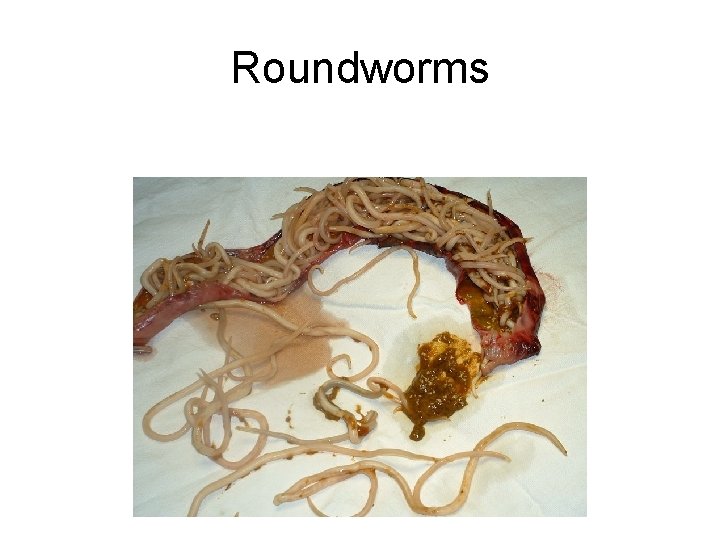
Roundworms
Pinworm disease is the most prevalent helminthic infection in the world • • Enterobius vermicularis Life cycle Diagnosis with cellophane tape Transmission
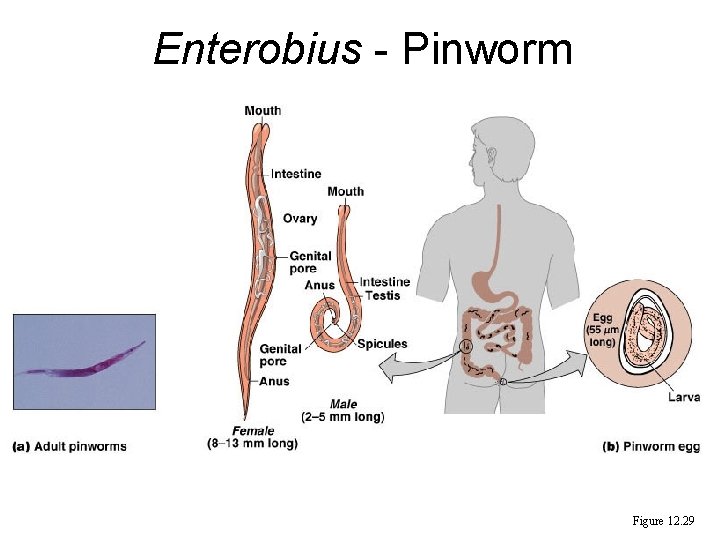
Enterobius - Pinworm Figure 12. 29
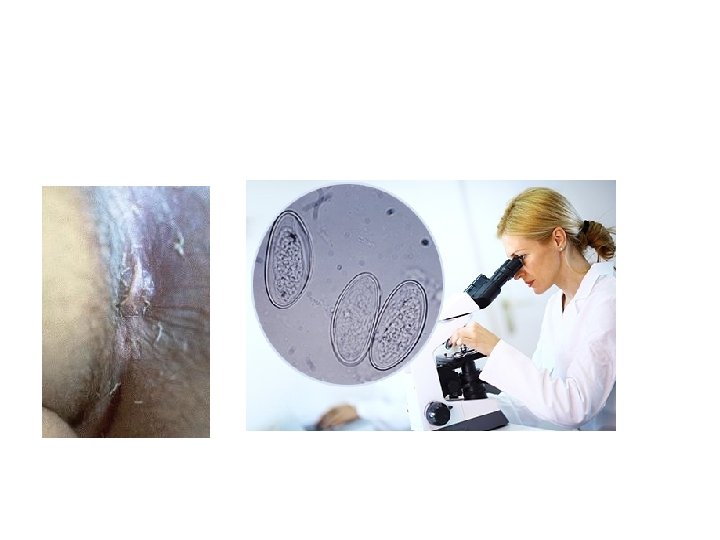
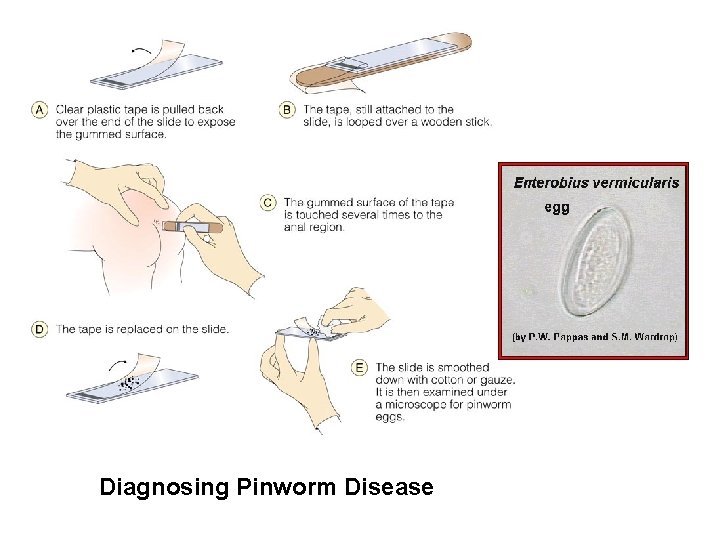
Diagnosing Pinworm Disease
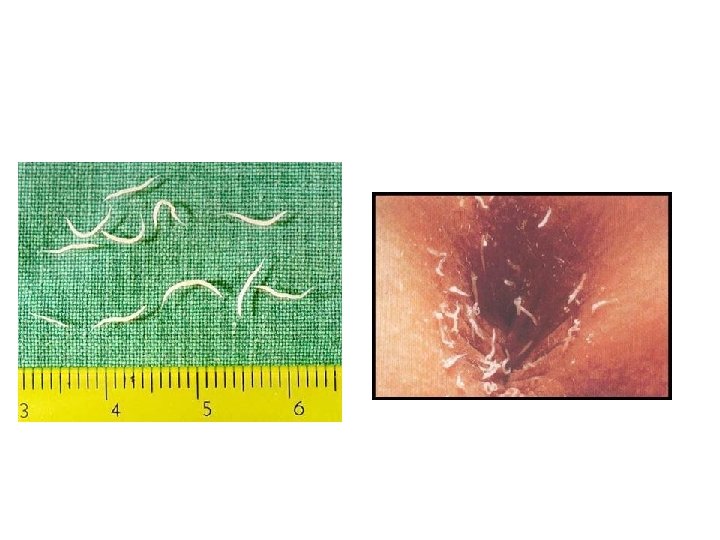
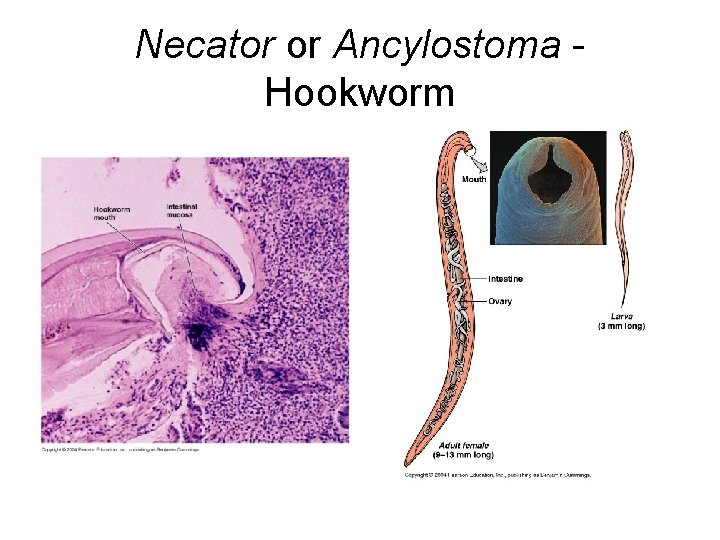
Necator or Ancylostoma Hookworm
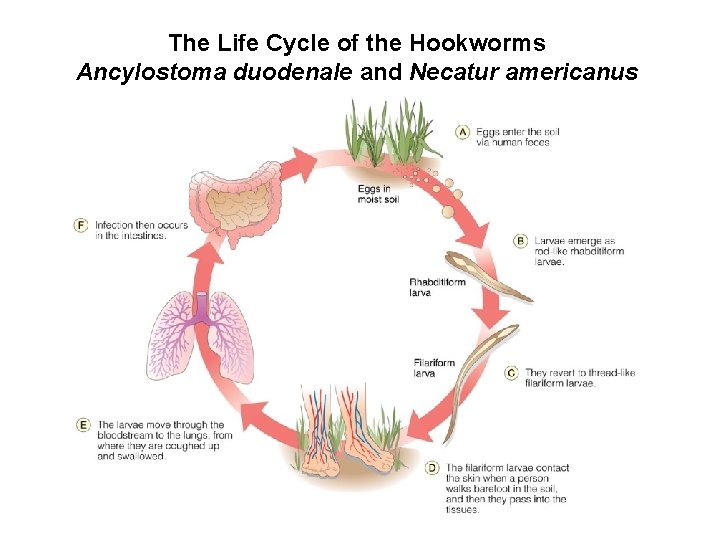
The Life Cycle of the Hookworms Ancylostoma duodenale and Necatur americanus
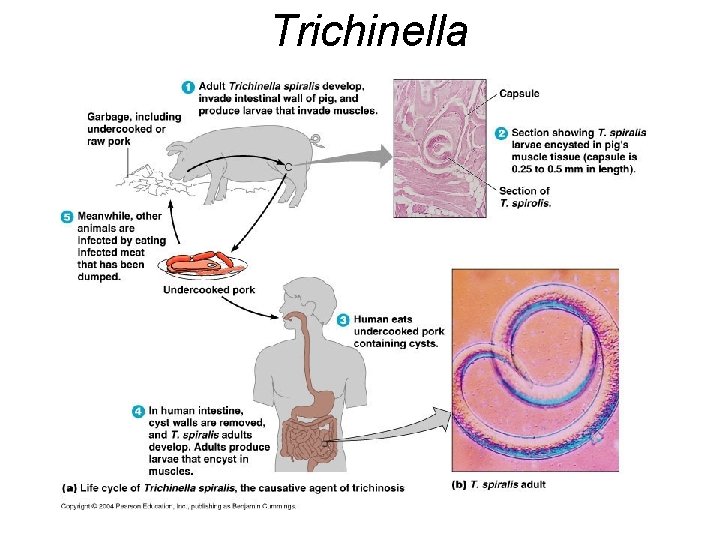
Trichinella
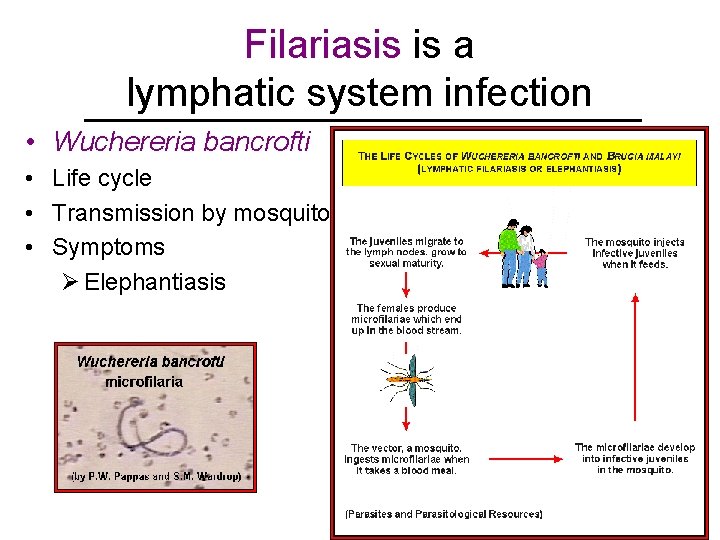
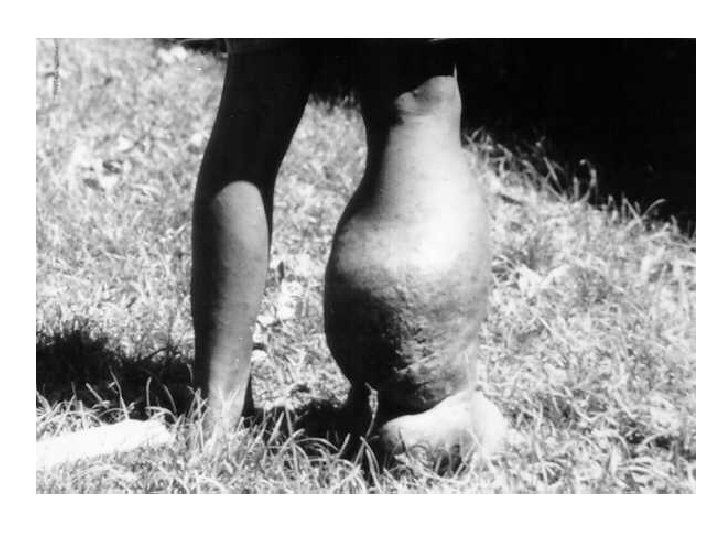
Filariasis is a lymphatic system infection • Wuchereria bancrofti • Life cycle • Transmission by mosquito • Symptoms Ø Elephantiasis
Platyhelminthes - Flatworms • Trematodes – Flukes - nonsegmented – Schistosoma - blood fluke; Swimmer’s itch • Cestodes – Tapeworms - segmented – Taenia – beef or pork tapeworm – Echinococcus – wild dog tapeworm
TREMATODES • blood flukes Schistosoma mansoni S. japonicum S. hematobium. • intestinal fluke Fasciolopsis buski • liver fluke Clonorchis sinensis Fasciola hepatica • lung fluke Paragonimus westermani.
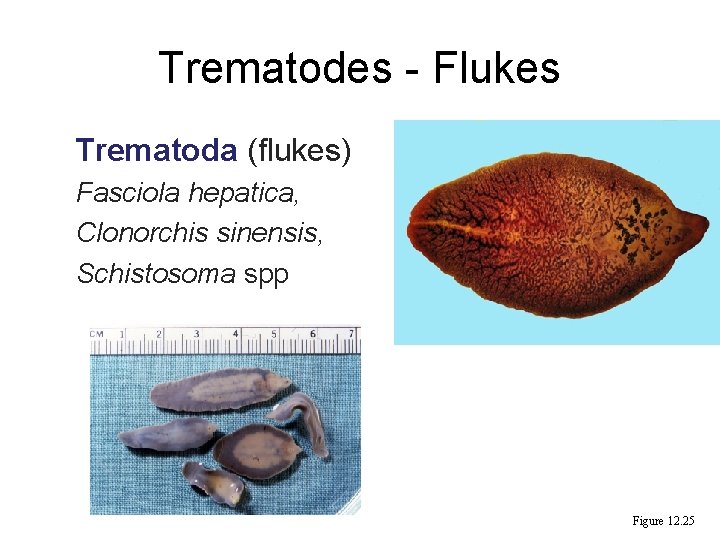
Trematodes - Flukes Trematoda (flukes) Fasciola hepatica, Clonorchis sinensis, Schistosoma spp Figure 12. 25
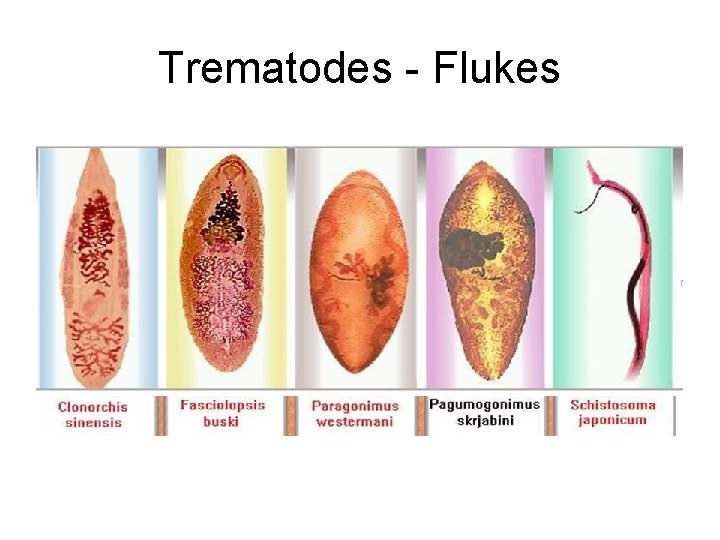
Trematodes - Flukes
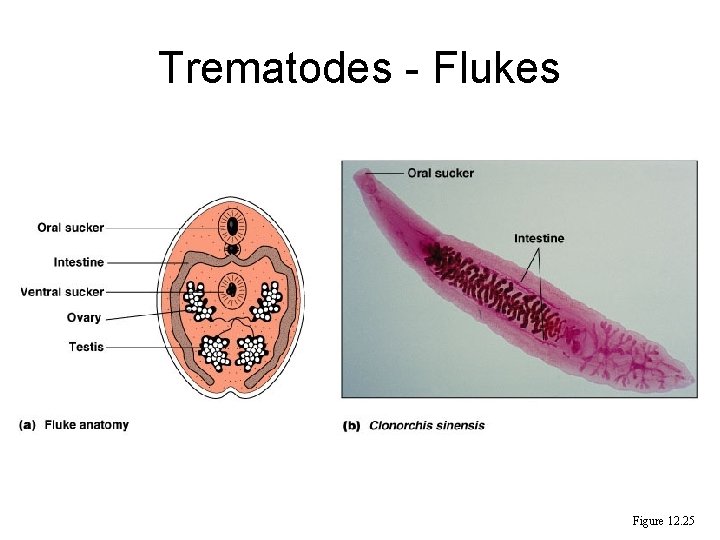
Trematodes - Flukes Figure 12. 25
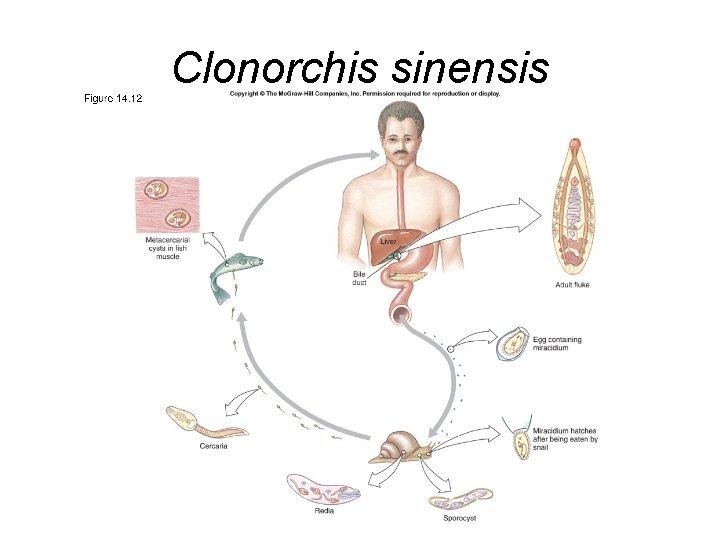
Clonorchis sinensis
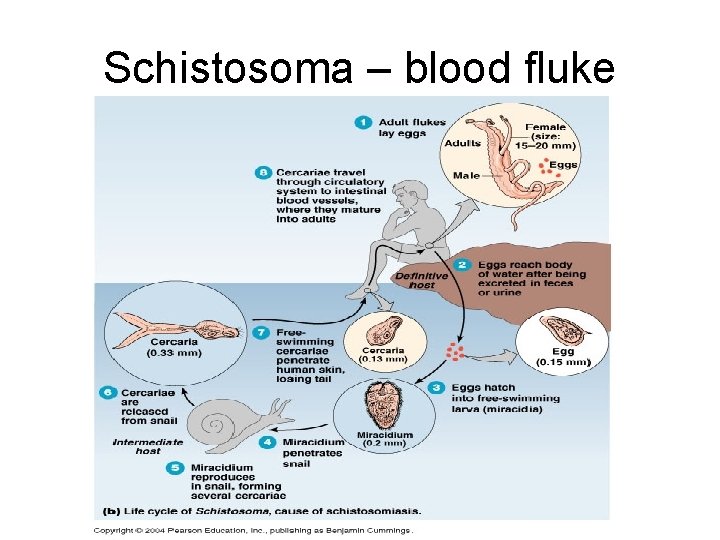
Schistosoma – blood fluke
Major sites • S. japonicum : VEINS OF GIT • S. mansoni : VEINS OF GIT • S. haematobium : VEINS OF BLADDER
Major syndromes 1. schistosome dermatitis 2. acute schistosomias (Katayama fever) 3. chronic schistosomiasis.
Cestodes • Clinically important cestodes pathogenic to man are • Tenia solium (pork tapeworm), • T. saginata (beef tapeworm), • Diphyllobothrium lattum (fish or broad tapeworm), • Hymenolepis nana (dwarf tapeworm) • Echinococcus granulosus and • E. multilocularis (hydatid).
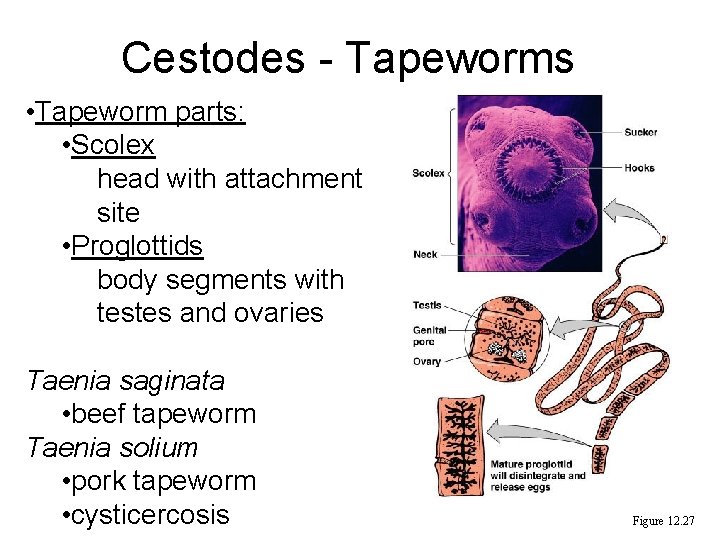
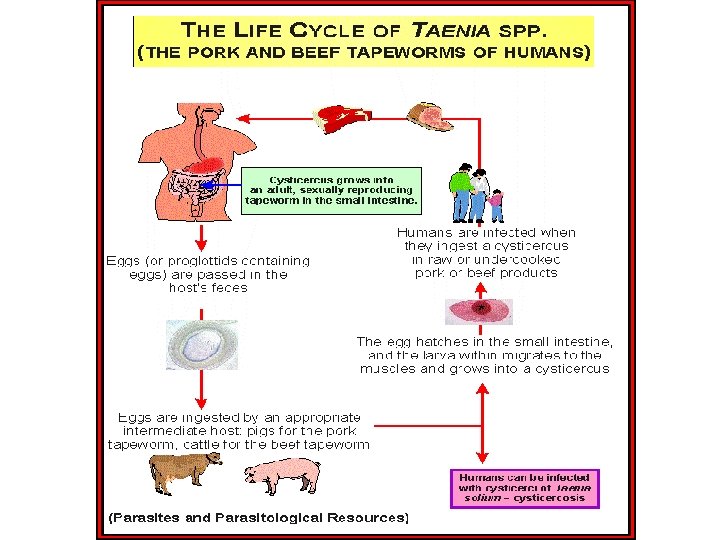
Cestodes - Tapeworms • Tapeworm parts: • Scolex head with attachment site • Proglottids body segments with testes and ovaries Taenia saginata • beef tapeworm Taenia solium • pork tapeworm • cysticercosis Figure 12. 27
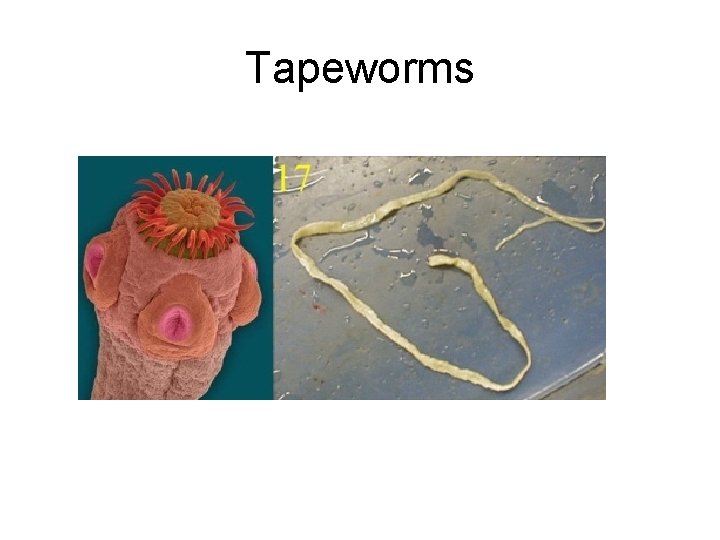
Tapeworms
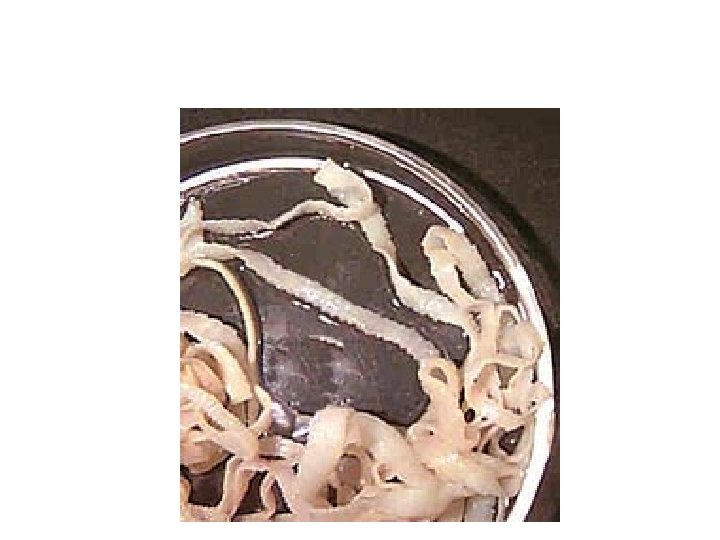

Diphyllobothrium latum
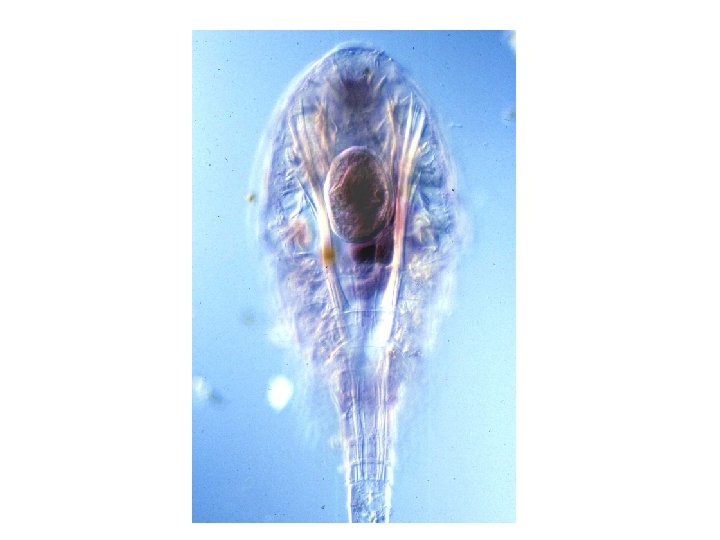
Diphyllobothrium latum • This is the longest tapeworm found in man, ranging from 3 -10 meters with more than 3000 proglottids • Procercoid is the first stage in the life cycle of tapeworms that develop from the coracidium stage.
A few other tapeworms also cause disease • Hymenolepis nana, the dwarf tapeworm, most common human tapeworm worldwide • Echinococcus granulosus, the dog tapeworm, humans are intermediate hosts
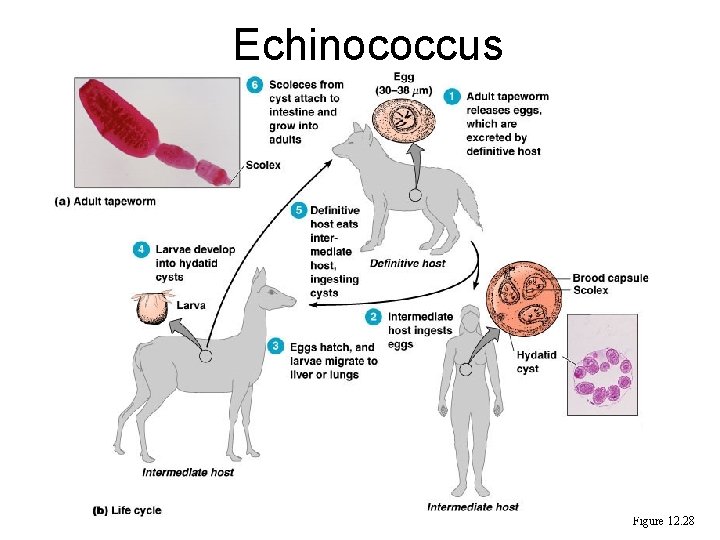
Echinococcus Figure 12. 28
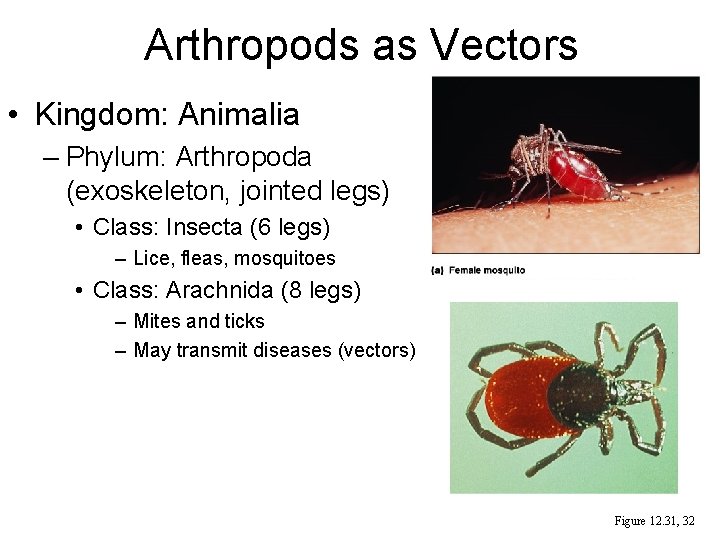
Arthropods as Vectors • Kingdom: Animalia – Phylum: Arthropoda (exoskeleton, jointed legs) • Class: Insecta (6 legs) – Lice, fleas, mosquitoes • Class: Arachnida (8 legs) – Mites and ticks – May transmit diseases (vectors) Figure 12. 31, 32
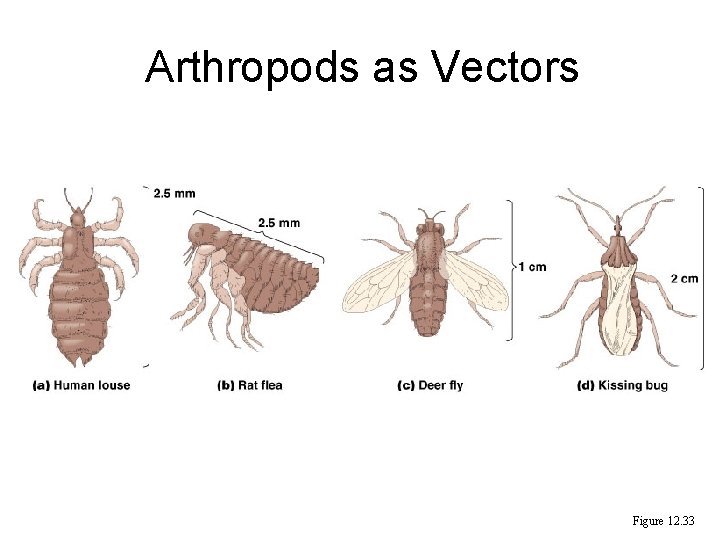
Arthropods as Vectors Figure 12. 33
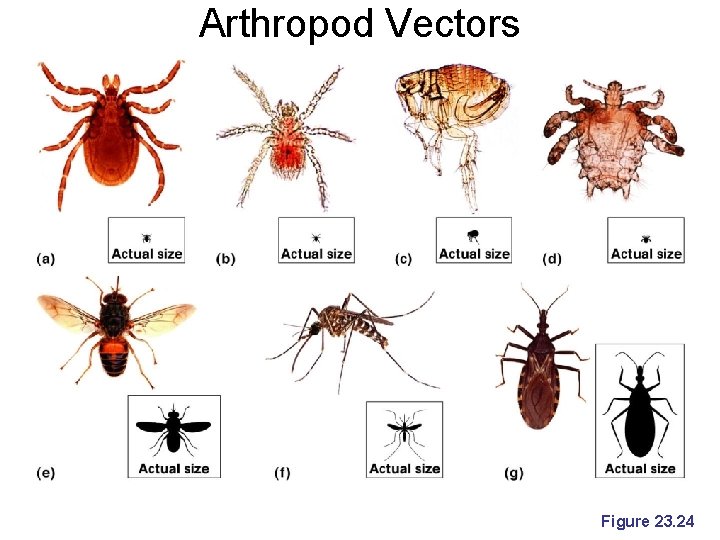
Arthropod Vectors Figure 23. 24
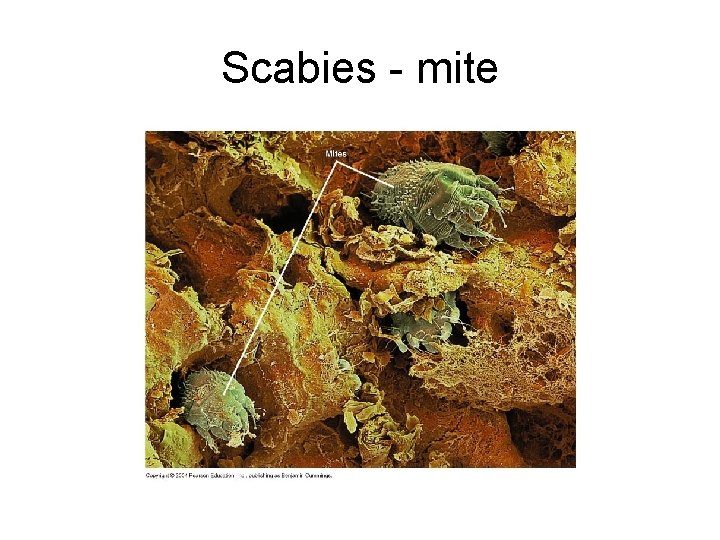
Scabies - mite
Arachnids • Adult arachnids have four pairs of legs • Ticks and mites resemble each other morphologically • Ticks are the most important arachnid vectors – Serve as vectors for bacterial, viral, and protozoan diseases – Second only to mosquitoes in the number of diseases they transmit – Hard ticks are the most prominent disease vector – Transmit Lyme disease, Rocky Mountain spotted fever, tularemia, relapsing fever, and tick-borne encephalitis
Arachnids • Parasitic mites are found wherever humans and animals coexist – Transmit rickettsial diseases among animals and humans
Insects • Adults have three pairs of legs as well as a head, thorax, and abdomen • Fleas – Most fleas are not associated with humans but a few do feed on humans – Plague is the most significant disease transmitted by fleas • Body lice – Parasites that can also transmit disease – Most common among poor or overcrowded communities
Insects • Flies – Among the most common insects – Those that transmit disease are generally bloodsuckers • Mosquitoes – Most important arthropod vector of disease – Carry some of the world’s most devastating diseases • Kissing bugs – Often take blood meals near the mouth of their human hosts – Feed on blood nocturnally while the host sleeps
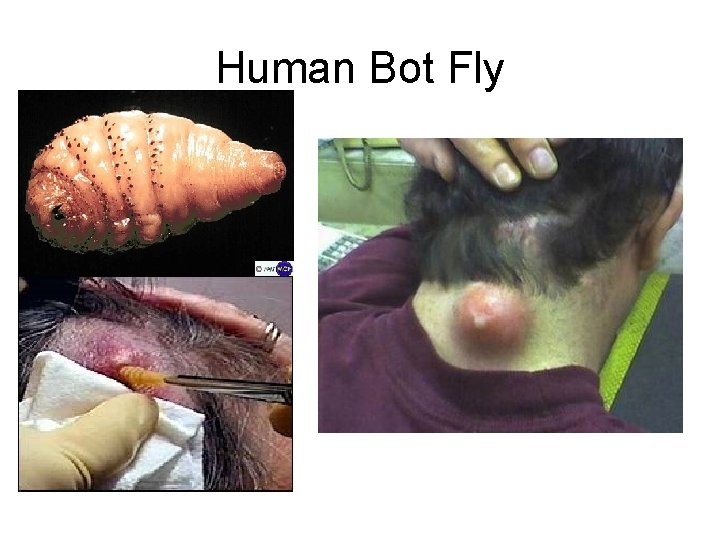
Human Bot Fly
Eukaryotic Microbe Parasites • Protozoa • – Amoeba – Roundworms • Entamoeba histolytica • Naegleria • Acanthamoeba Intestinal • Ascaris lumbricoides • Enterobius vermicularis • Necator americanus Tissue • Trichinella spiralis • Wucheraria bancrofti – Flagellates • • Helminths Giardia lamblia Trichomonas vaginalis Trypanosoma Leishmania – Flatworms – Ciliates Flukes • Schistosoma Tapeworms • Taenia • Balantidium coli – Sporozoa • Plasmodium • Cryptosporidium • Toxoplasma • Arthropods – Insects – Arachnids
TUS 2013 • Aşağıdaki parazitlerden hangisinin proserkoid evresi vardır? a. Diphyllobothrium latum b. Hymenolepsis nana c. Ascaris lumbricoides d. Strongiloides stercoralis e. ?
• Aşağıdaki parazitlerden hangisinin proserkoid evresi vardır? a. Diphyllobothrium latum b. Hymenolepsis nana c. Ascaris lumbricoides d. Strongiloides stercoralis e. ?
TUS 2013 • 4. Toksoplazma gondii’nın hangi formu dışkıda? a. Trofozoit b. Kist c. Sporokist d. Ookist e. Takizoit
• 4. Toksoplazma gondii’nın hangi formu dışkıda? a. Trofozoit b. Kist c. Sporokist d. Ookist e. Takizoit
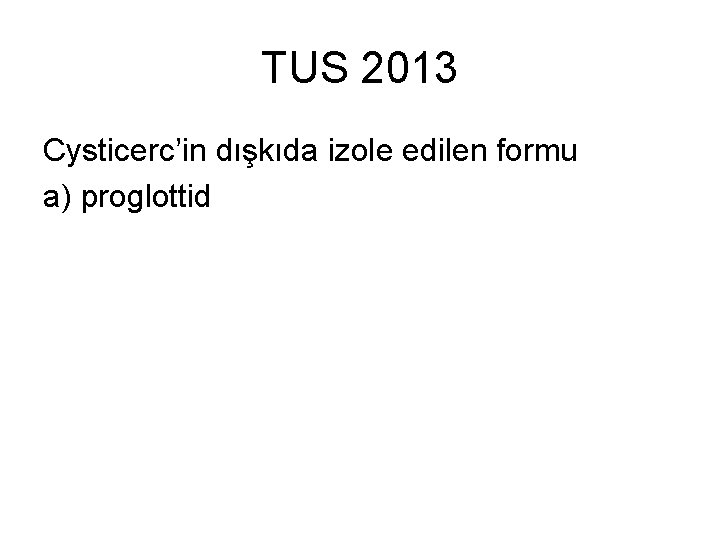
TUS 2013 Cysticerc’in dışkıda izole edilen formu a) proglottid
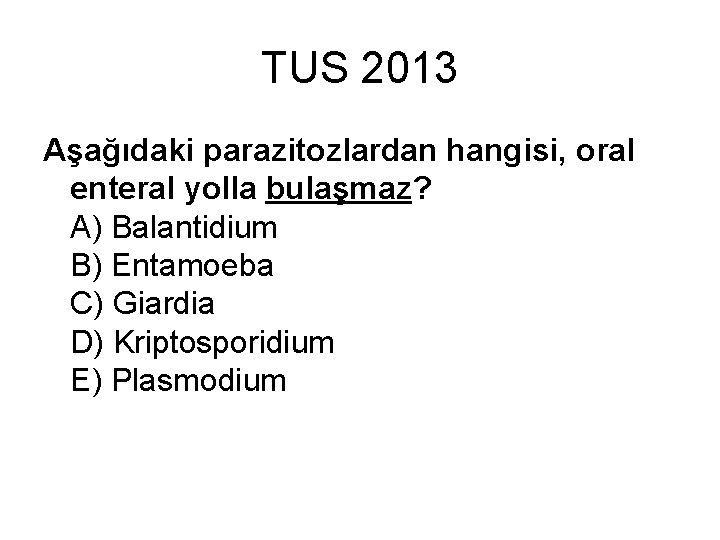
TUS 2013 Aşağıdaki parazitozlardan hangisi, oral enteral yolla bulaşmaz? A) Balantidium B) Entamoeba C) Giardia D) Kriptosporidium E) Plasmodium
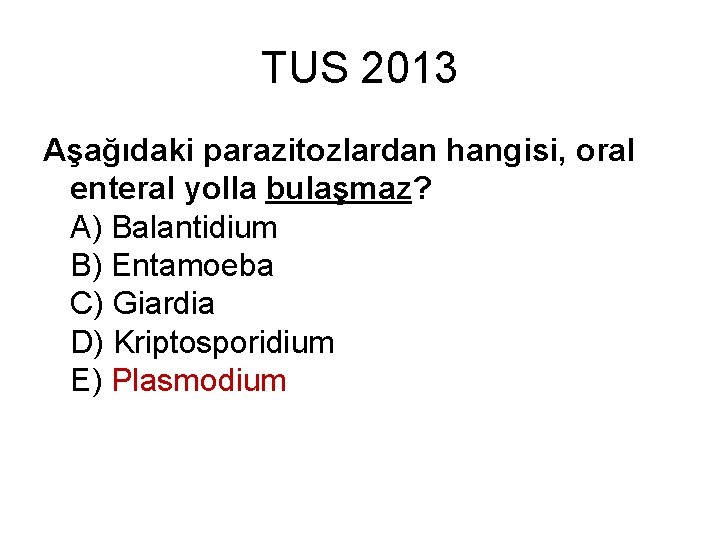
TUS 2013 Aşağıdaki parazitozlardan hangisi, oral enteral yolla bulaşmaz? A) Balantidium B) Entamoeba C) Giardia D) Kriptosporidium E) Plasmodium

TUS 2015
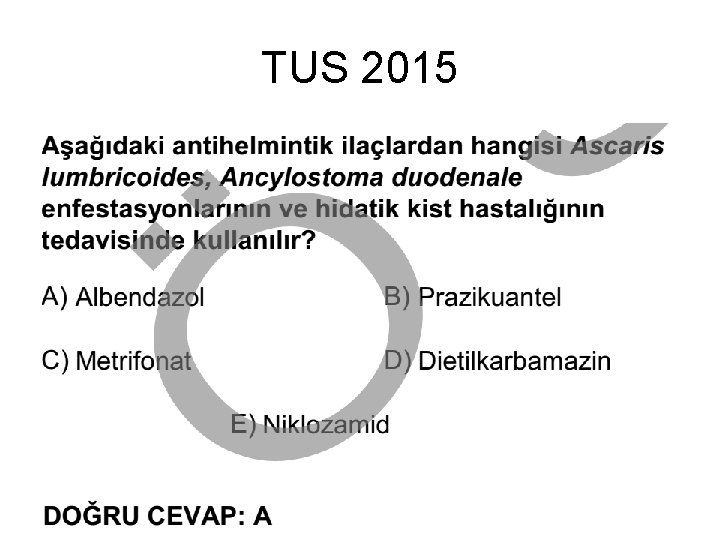
TUS 2015
- Slides: 92