
CONTINUATION ARTHROPODS PUBLIC HEALTH Arthropods introduction The term
CONTINUATION ARTHROPODS & PUBLIC HEALTH
Arthropods introduction ◦ The term ‘arthropoda‘ is derived from two Greek words : arthropods means jointed & poda meaning foot. ◦ Accordingly, arthropods are creatures having joined legs. ◦ The medical importance is that they transmit the diseases directly & indirectly. Directly they can act as parasites & indirectly they can spread the disease from other person or animals, by acting as ‘vectors’ or carriers of disease.
◦ There are numerous arthropods in the environment of man. ◦ Many of them are of no significance. ◦ But there a few which bite or infest man & transmit disease. A study of these arthropods, is known as “medical entomology”. ◦ In India arthropod – borne diseases are numerous.
Arthropods of medical importance The arthropods of medical importance in the country are : ◦ Mosquitoes ◦ Housefly ◦ Sandfly ◦ Louse ◦ Rat fleas ◦ Ticks.

How do arthropods transmit disease? All arthropods do not transmit the same way. Broadly 3 Ways in which arthropods transmit disease : • Direct contact • Mechanical transmission • Biological transmission.
◦ Direct contact – some arthropods spread disease by direct contact. For eg- itch mite which causes scabies is a spread of direct contact. ◦ Mechanical transmission- some arthropods spread disease mechanically by carrying the infection on their bodies. Eg- diarrhea, dysentery spreads by housefly through mechanical transmission. In these transmission the disease agent does not multiply in the insect host.
◦ Biological transmission – when the disease agent multiples or undergoes some developmental change in the insect host, it is known as biological transmission. For eg- transmission of malaria, filaria by the mosquito.
Mosquito
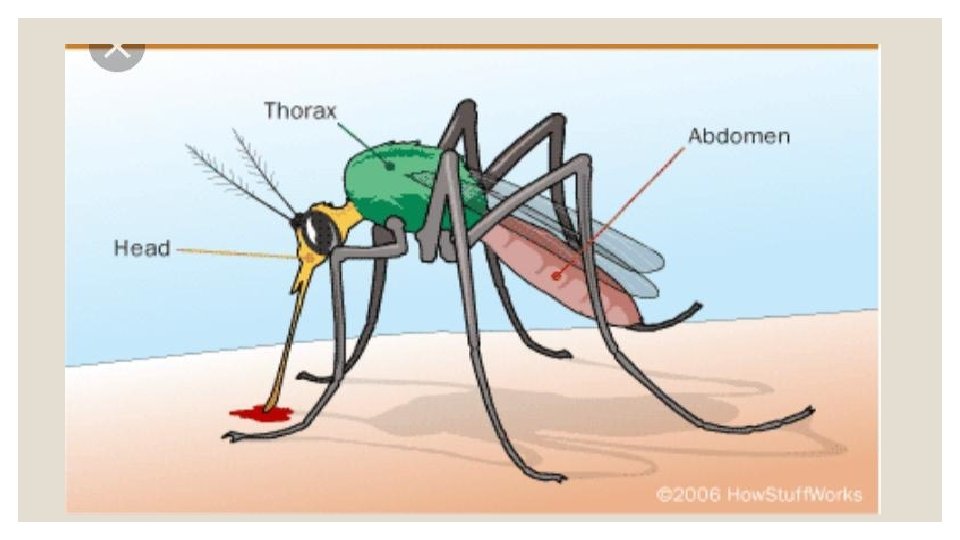
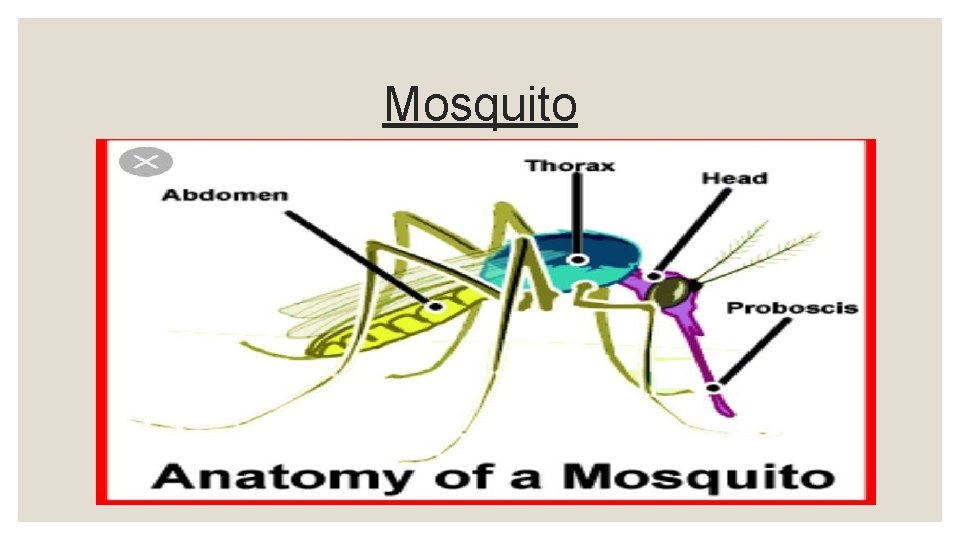
Mosquito ◦ Mosquitoes are the small biting insects found all over the world in millions & trillions. ◦ The body of a mosquito consists of 3 parts – head, thorax, & abdomen. ◦ The head is a conical in shape & bears a long needle like structure is called the proboscis with which it bites. The thorax bears a pair of wings dorsally, & 3 pairs of legs ventrally. The abdomen is long &narrow, is composed of 10 segments.
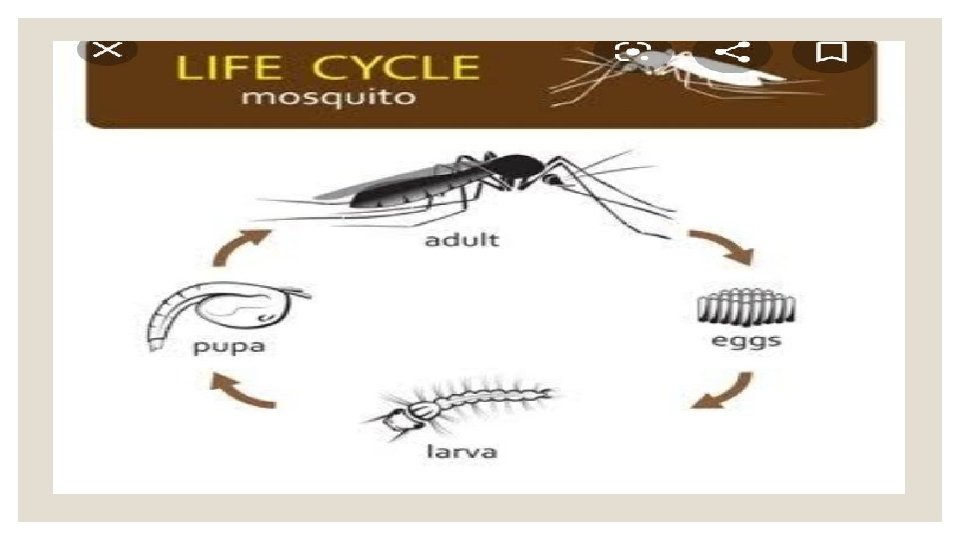
Life cycle of mosquito There are 4 stages in the life cycle of mosquito. 1. Egg- 1 -2 day. Eggs are laid on the surface of the water, 100250 at a time. The anopheles mosquito lays it’s eggs singely. Culex mosquito lays in small groups. 2. Larva – 5 -7 days. The larva lives in water. It has elongated body consists of head, thorax, & abdomen. It feeds on small plant and animal life present in water such as algae, bacteria & grows in size.
3. Pupa – 1 -2 day. The puppy stage is resting stage in life cycle of a mosquito. During this stage, the mosquito does not feed, but undergoes rapid developmental changes to become an adult mosquito. 4. Adult – about 2 week. When the development is complete, the pupils skin brusts open & the fully grown adult mosquito escapes.
Types of mosquitoes ◦ Anopheles mosquitoes – in India, some 44 varieties of anopheline mosquitoes have been found, but only 6 of them have been found carriers of malaria. These mosquitoes breed in clean water. ◦ Culex mosquitoes – these are more likely prevalent than anopheles mosquitoes. More than 250 species of culex mosquitoes have been identified. The most important member of these is culex fatigans which conveys filaria. These mosquitoes breed in dirty & polluted water, open drains, septic tanks, etc.
◦ Aedes (stegomyia) mosquitoes- it has black body marked by white stripes. An important species Of this group is Aedes aegypti, which transmits yellow fever. They breed in artificial collections of water i. e, water found in broken pots, broken bottles, flower pots, tree holes, etc. These mosquitoes are most abundant during rainy season.
Habits of mosquitoes ◦ The male Mosquitoes do not bite, only female mosquitoes bite because they need blood for laying eggs. ◦ Mosquitoes usually rest in dark corners, after a blood meal they usually rest on the surface of walls. ◦ Mosquitoes may fly up to 3 miles(about 5 km), they are more abundant during rainy season.
Control measures of mosquitoes The various mosquito control measures may be classified as: ◦ Anti- larval measures - elimination of breeding places - Application of oil – when oil is applied on water, it has a tendency to spread & form a thin form. It also lowers the water tension. So when oil is sprayed On breeding places of mosquitoes It kills larvae & puppet partly by its drowning action & partly by its toxic action. The oils commonly used is kerosene oil, petrol. . And generally oil is used once in a week. - Paris Green – or copper aceto- arsenite is a greenish, crystalline powder. It is effective on killing only the anopheline mosquitoes.
- Synthetic insecticides – DDT(dichloro diphenyltrichloroethane), BHC( benzene hexachloride), malathion etc. Use of these insecticides for control of mosquito larvae tend to become quickly resistant. - Biological control- certain types of fish readily feed on mosquito larvae. The best known are gambusia- fish, Barbados - fish. ◦ Anti – adult measures DDT, BHC, malathion are currently recommended for control of adult mosquitoes. These insecticides are sprayed. To control of adult mosquitoes.
House fly
Housefly is the component & familiar of all insects which live close to man. It is associated with filth ( disgusting dirt) & is rightly regarded as an index of sanitation. There are many species of house flies, the most common species is known by the name, Musca domestica.
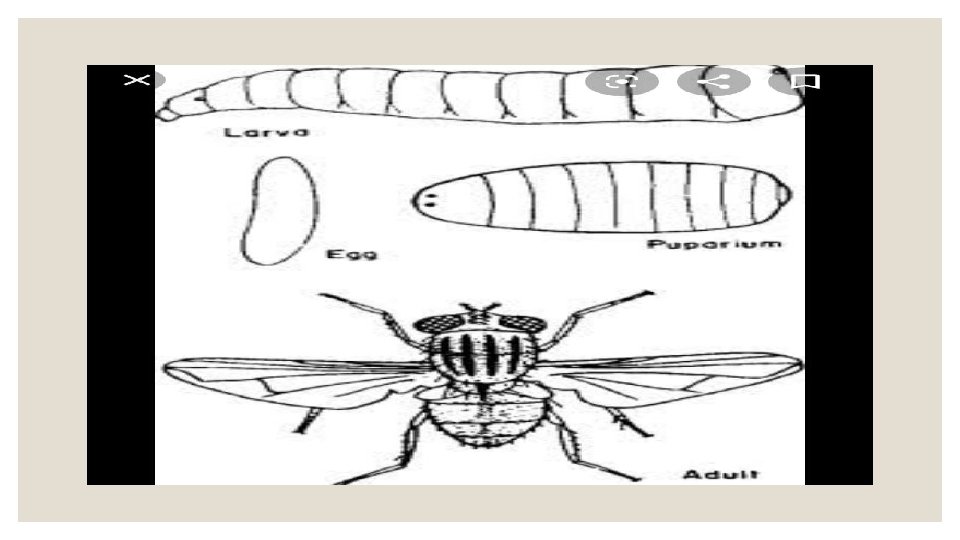
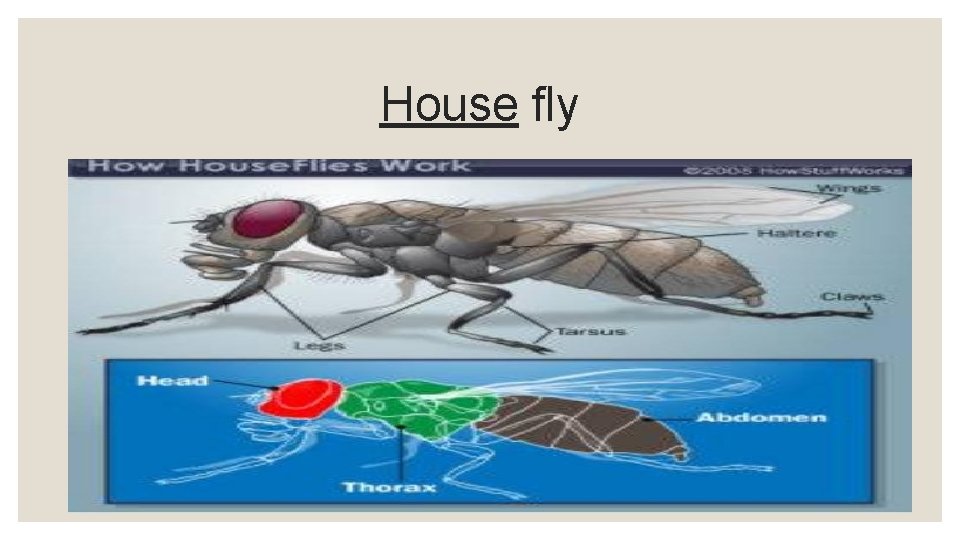
Characteristics of housefly ◦ The body is divided into three parts : head, thorax, &abdomen. ◦ The head bears a proboscis With which it sucks fluids. ◦ The thorax bears a pair of wings dorsally & 3 pair of legs Ventrally. ◦ The body of house fly is covered with numerous short hairs which secrete a sticky substance, this helps in spread of disease.

Transmission of disease ◦ Mechanical transmission – the fly carries infection on its feet, body, hairy legs. The sticky hair on its body retain infection. ◦ Vomit drop – the fly has an ugly habit of vomiting frequently. In this way it infects food. ◦ Defecation – the fly has also The habit Of constant defecation. It defecates on food, & spreads disease. -- fly borne diseases The fly is known to transmit quite a number of disease, all filthborne: diarrhea, dysentery, typhoid, cholera, gastro- enteritis.
Fly control measures ◦ Improvement of environmental sanitation. ◦ Use of insecticides. : DDT, BHC. ◦ Fly papers – These are sticky papers prepared by smearing a hot mixture of resin & castor oil. The flies a lighting on these papers are trapped. ◦ Protection against flies – screening of houses, hospitals, fish, meat markets & all other similar establishments by wire mesh will give considerable relief from house – flies. ◦ Health education – people must be motivated with a desire to get rid of flies through health education.
Question� ◦ What are the different ways Arthropods transmit the disease? ◦ Explain the life cycle & control measures of mosquitoes? ◦ Enlist the characteristics & mode of transmission of an housefly?
- Slides: 25