
Arthropods Arthropods have three things in common What



- Slides: 18
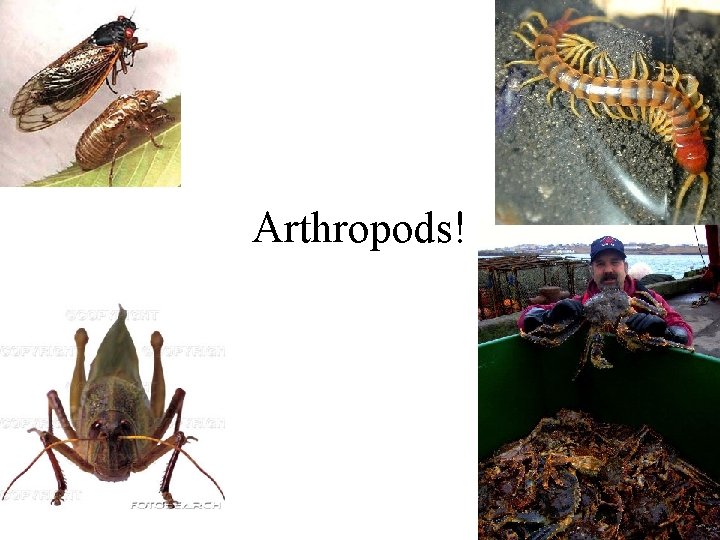
Arthropods!
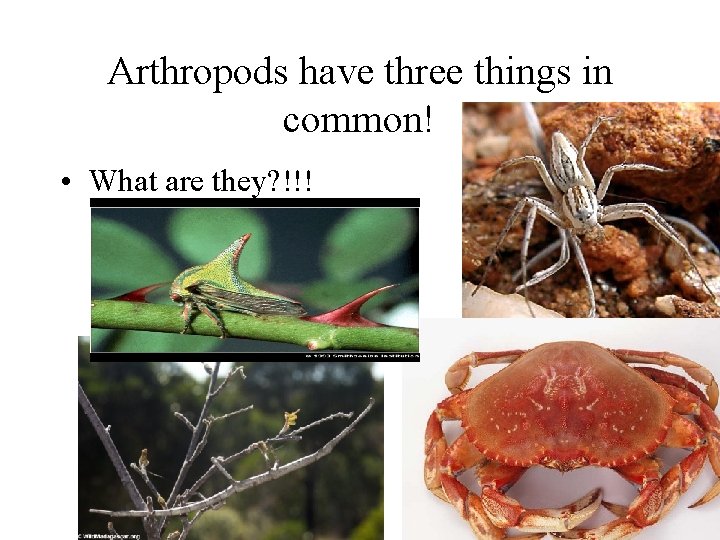
Arthropods have three things in common! • What are they? !!!
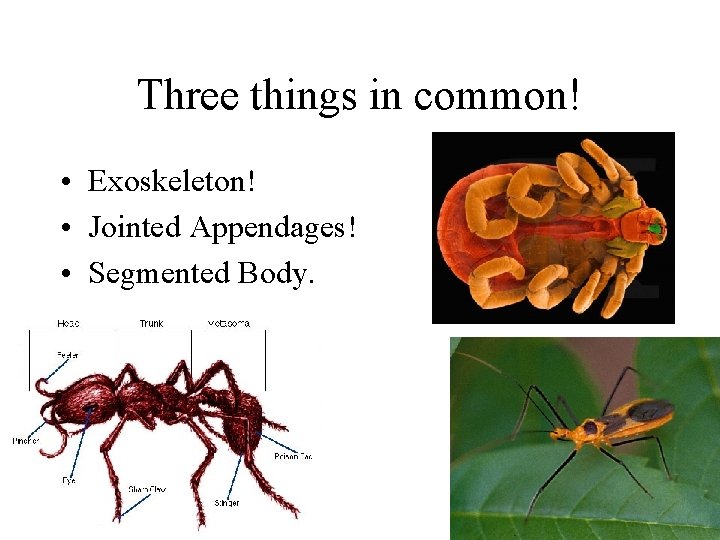
Three things in common! • Exoskeleton! • Jointed Appendages! • Segmented Body.
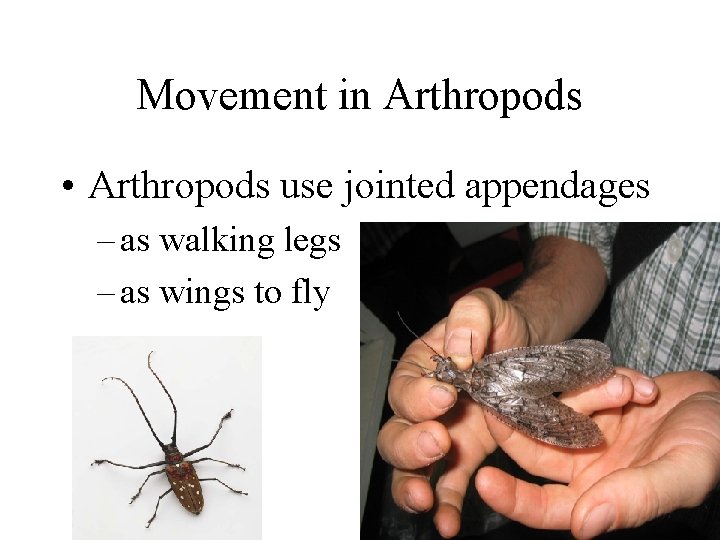
Movement in Arthropods • Arthropods use jointed appendages – as walking legs – as wings to fly
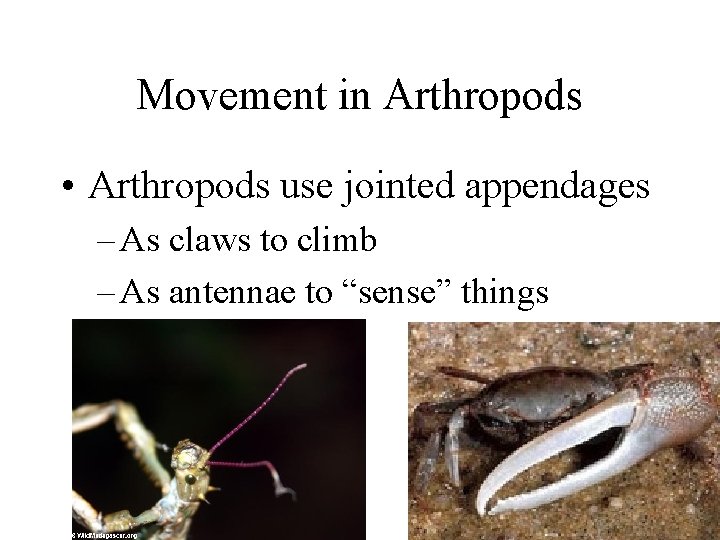
Movement in Arthropods • Arthropods use jointed appendages – As claws to climb – As antennae to “sense” things
Support and Protection • Exoskeleton! – Pros? – Cons?
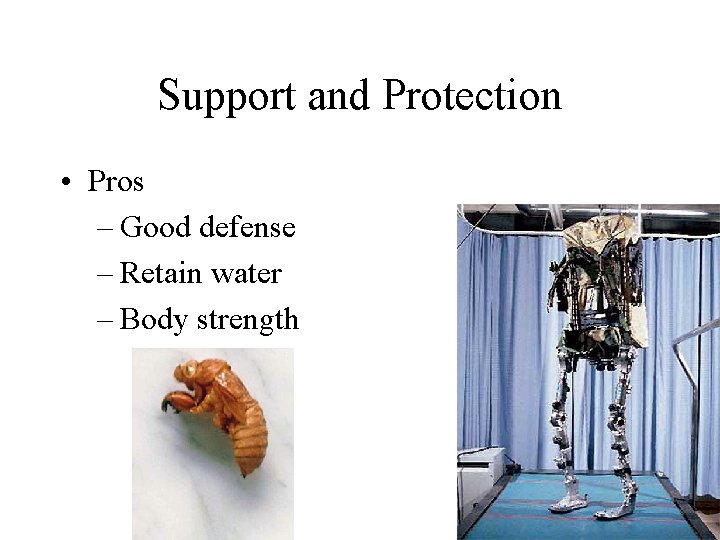
Support and Protection • Pros – Good defense – Retain water – Body strength
Support and Protection • Cons – Limit Body Size – Requires Molting
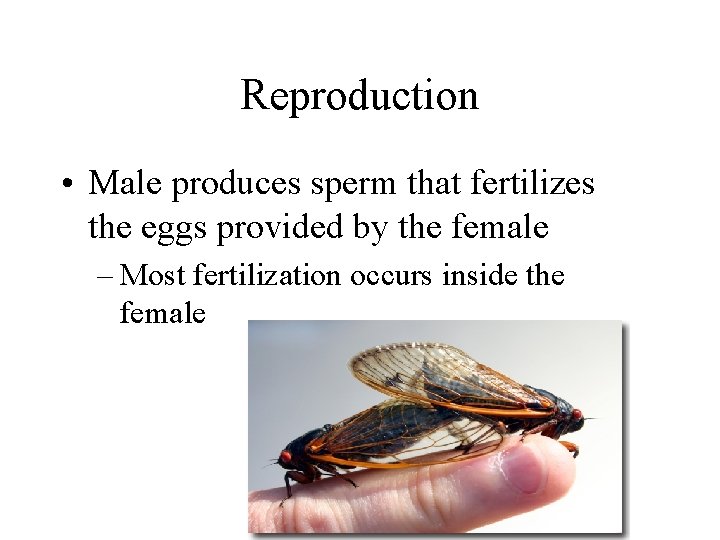
Reproduction • Male produces sperm that fertilizes the eggs provided by the female – Most fertilization occurs inside the female
Transport of Nutrients • Arthropods have an open circulatory system pumped by a heart that fills the spaces in the arthropod’s body
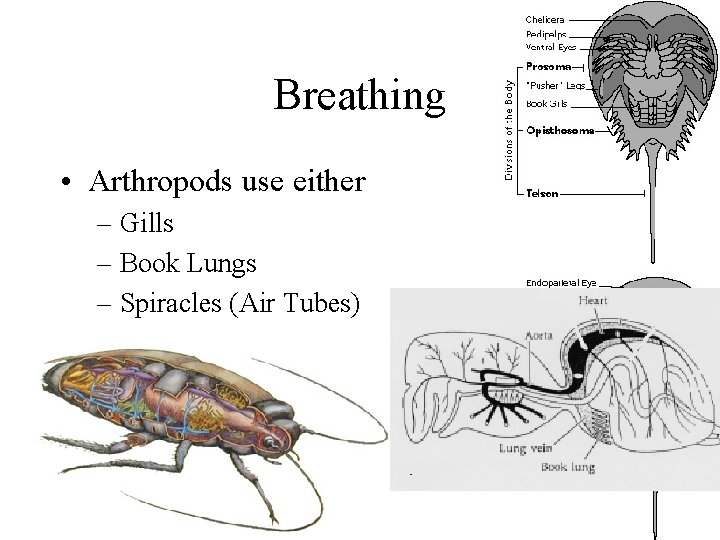
Breathing • Arthropods use either – Gills – Book Lungs – Spiracles (Air Tubes)
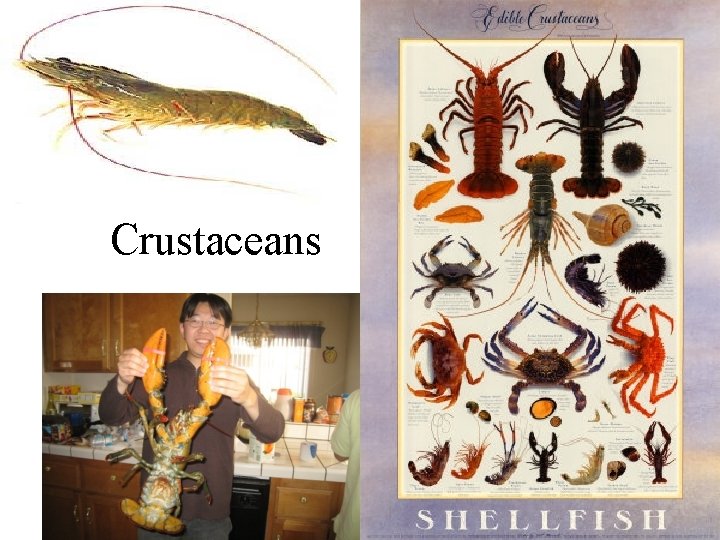
Crustaceans
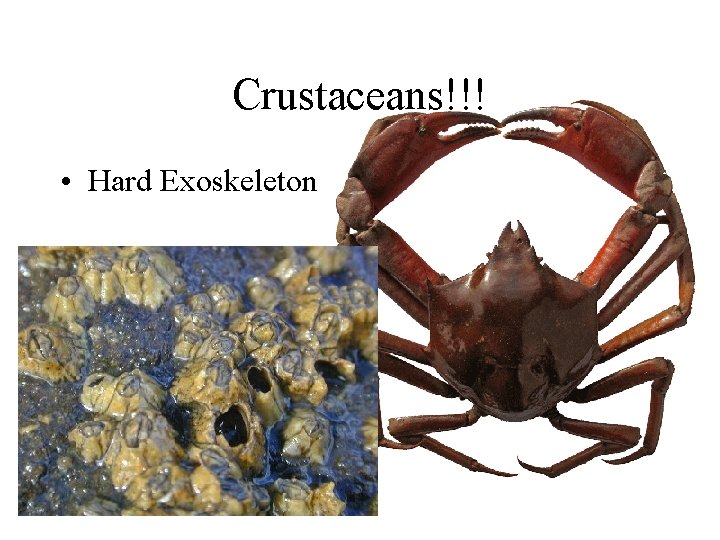
Crustaceans!!! • Hard Exoskeleton
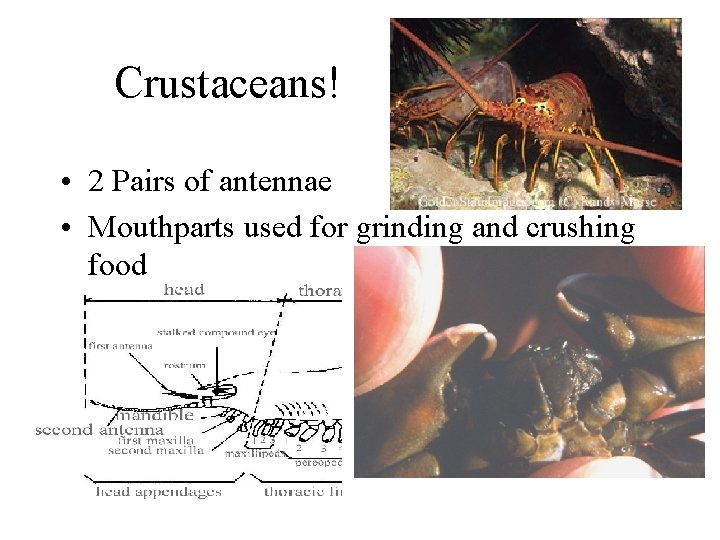
Crustaceans! • 2 Pairs of antennae • Mouthparts used for grinding and crushing food
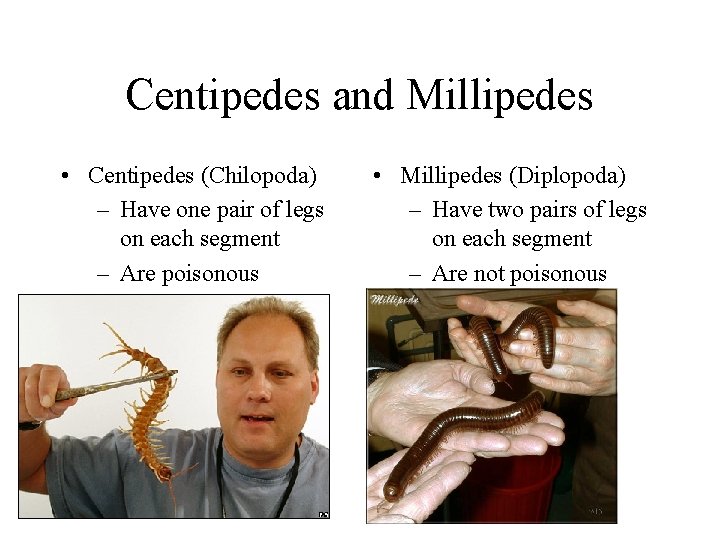
Centipedes and Millipedes • Centipedes (Chilopoda) – Have one pair of legs on each segment – Are poisonous • Millipedes (Diplopoda) – Have two pairs of legs on each segment – Are not poisonous
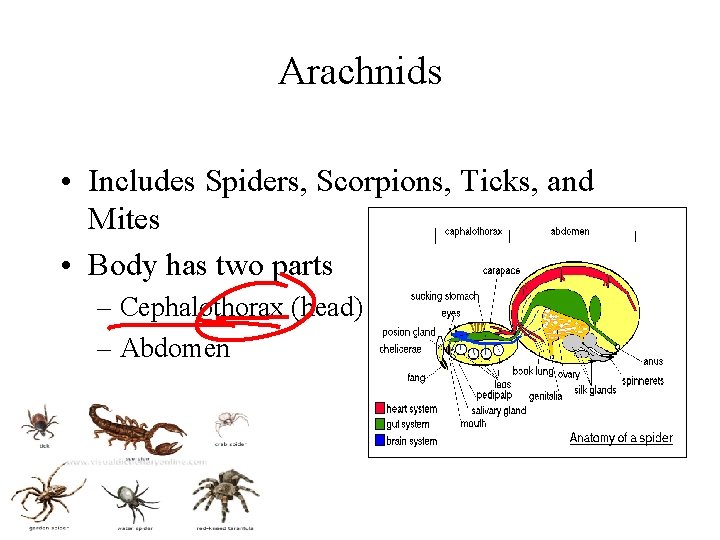
Arachnids • Includes Spiders, Scorpions, Ticks, and Mites • Body has two parts – Cephalothorax (head) – Abdomen
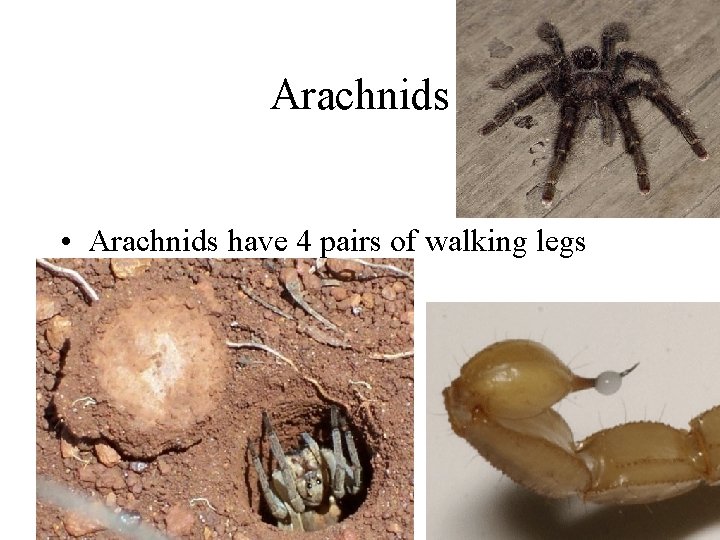
Arachnids • Arachnids have 4 pairs of walking legs
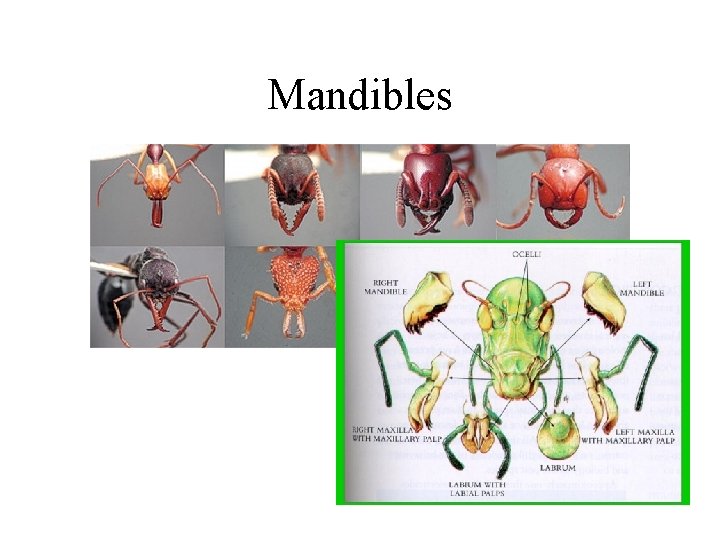
Mandibles