Ch 38 Phylum Arthropoda Characteristics of Arthropods n



- Slides: 42
Ch 38 – Phylum Arthropoda
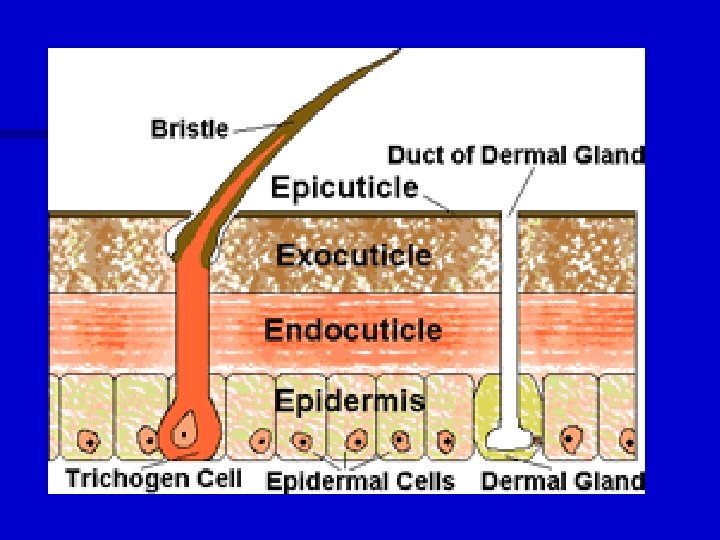
Characteristics of Arthropods n Segmented n (Arthropod means “jointed foot” Body segments have jointed appendages n Exoskeleton Provides protection and support n Made of 3 layers excreted by the epidermis n n Outer layer – waxy, mix of proteins and lipids – Repels water and prevents dessication Middle layer – primary protection, protein and chitin n Inner layer – flexible at joints, protein and chitin n – Muscles attach to move body segments
Characteristics Cont’d True Coelom n Bilateral symmetry n Cephalization n Variety of appendages around mouth n Most have segmented antennae at anterior n Compound eyes n Made of many individual light detectors n Sense light intensity n – Send impulses to brain, then move along ventral nerve cord n Open circulatory system
Molting B/c of exoskeleton, arthropods can’t grow without periodically shedding n In between molts: n Tissues swell to put pressure on exoskeleton n Hormone is released n Epidermis secretes enzymes to digest inner layer n n n Uses this material to build new exoskeleton Outer layer loosens and breaks
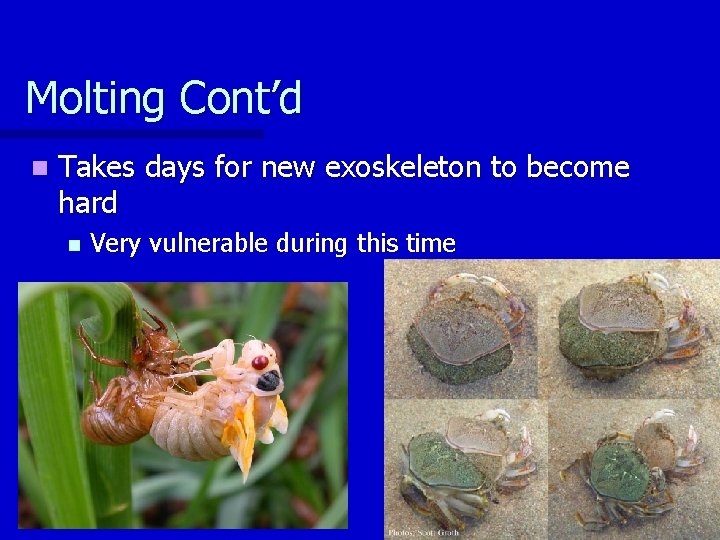
Molting Cont’d n Takes days for new exoskeleton to become hard n Very vulnerable during this time
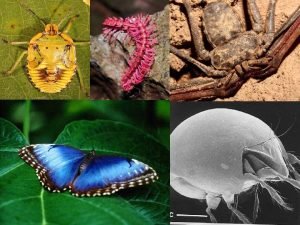
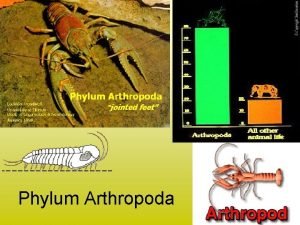
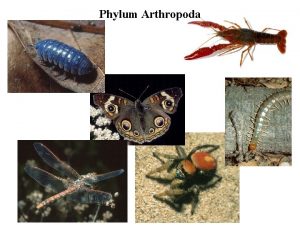
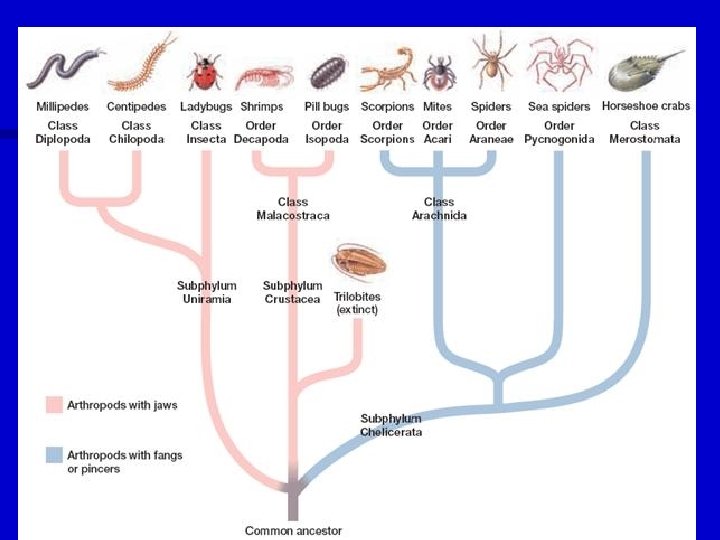
Evolution and Classification ¾ of all animal species belong to this phylum n Extremely diverse n n Lobsters, crabs, spiders, centipedes, insects, etc. First appeared more than 600 mya n Various groups have undergone evolutionary changes n n n Scientists still believe they had a common ancestor Ancestor: body segments identical, Living species: Specialized tagmata
Evolution and Classification Cont’d n Divided in 4 subphyla n Trilobita (extinct animals called trilobites) n Crustacea - Lobsters, crabs, crayfish, etc. n Have pair of chewing mouthparts - mandibles n Chelicerata – spiders, scorpions, ticks, etc. n No antennae, pincerlike mouthparts - chelicerae n Uniramia – centipedes, millipedes, insects n Have antennae and mandibles, appendages are unbranched
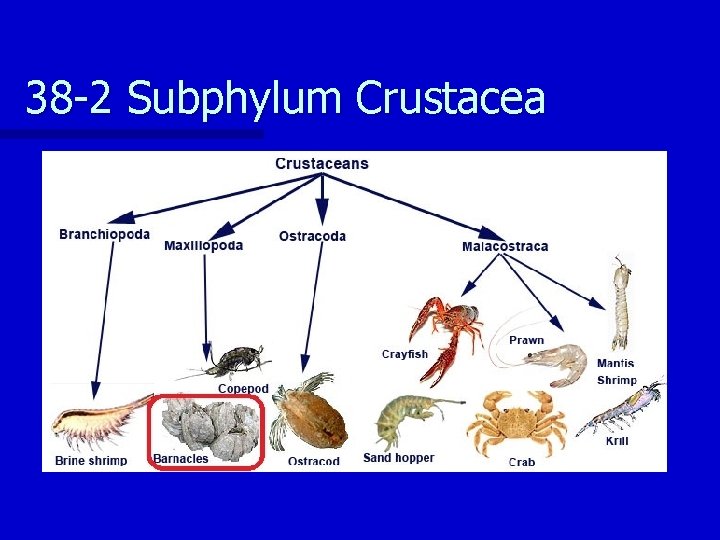
38 -2 Subphylum Crustacea
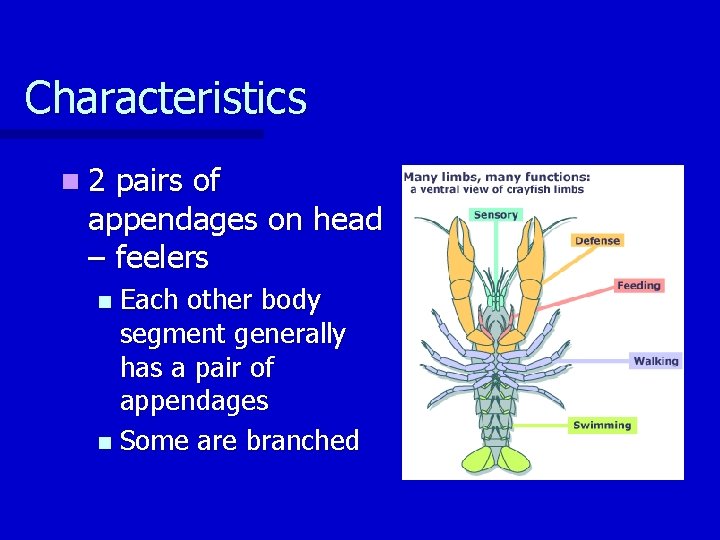
Characteristics n 2 pairs of appendages on head – feelers Each other body segment generally has a pair of appendages n Some are branched n
Characteristics Cont’d n Exoskeletons contain large amounts of Ca. CO 3 n Gas exchange n Some through exoskeleton, some gills n Development Most have free-swimming larva called a nauplius n 3 pair appendages, 1 eye n Takes adult form through series of molts n
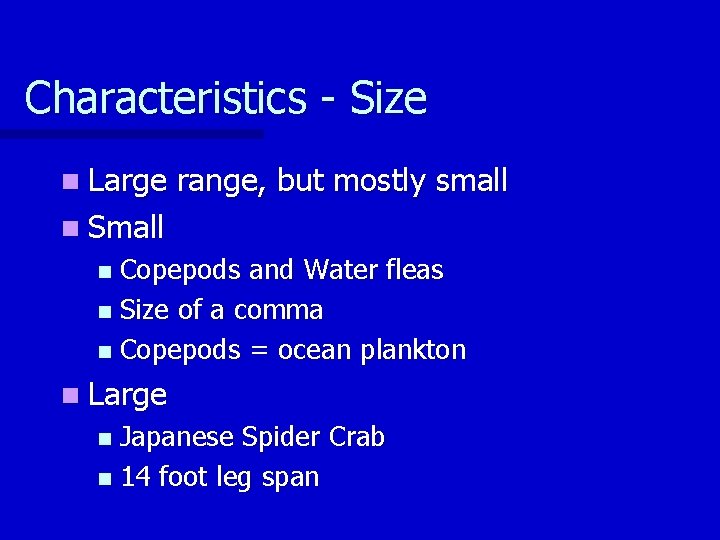
Characteristics - Size n Large range, but mostly small n Small Copepods and Water fleas n Size of a comma n Copepods = ocean plankton n n Large Japanese Spider Crab n 14 foot leg span n
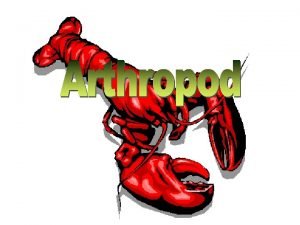
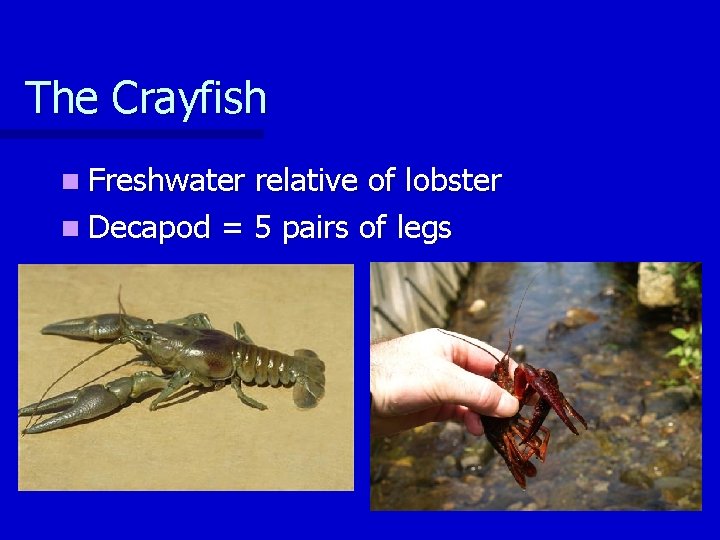
The Crayfish n Freshwater relative of lobster n Decapod = 5 pairs of legs
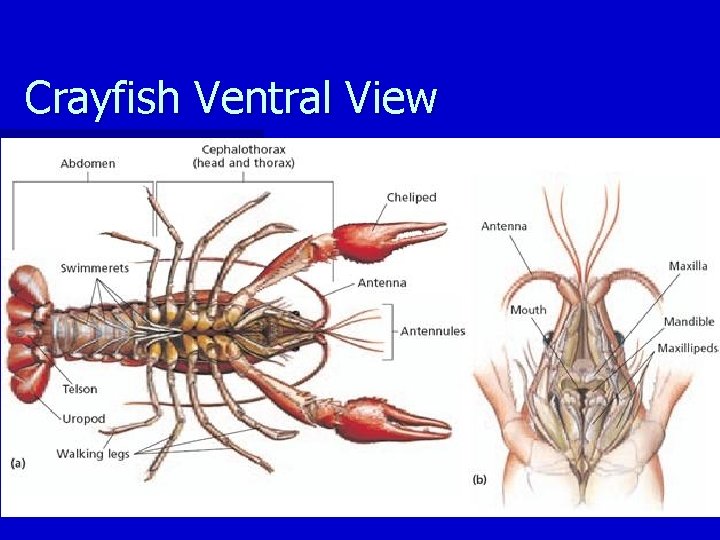
External Structure n Body divided into 2 main parts n Cephalothorax n Consists of 2 tagmata Head – 5 segments n Thorax – 8 segments, posterior to head n n Dorsal exoskeleton fused into the carapace n Abdomen Lies posterior to cephalothorax, 7 segments n 7 th is called the telson, forms flat paddle n
External Structure Cont’d n Pair of app. attached to each segment (except telson) See chart pg. 749 Antennules and Antennae: feelers sensitive to touch, taste n Mandible: Chews food n Maxilla: 2 pairs, manipulate food, assist with respiration n Maxillipeds: 3 pairs, manipulate food, sensitive to touch and taste n
External Structure Cont’d n Chelipeds: Most anterior on thorax, end in large pincers n n Walking leg: 4 pairs, movement over solid surface n n First two pairs end in small pincers for grasping Swimmeret: attached to five abdominal segments n n For capturing food and defense Create water currents and used in reproduction Uropod: On sixth abdominal segment, used for propulsion
Crayfish Ventral View
Crayfish - Digestion n Food passes through esophagus to stomach n Stomach grinds food into fine paste n Uses teeth made of chitin and Ca. CO 3 Paste mixed with enzymes excreted by a digestive gland n Moves through intestine (further digestion and absorption) n Waste leaves body via anus n
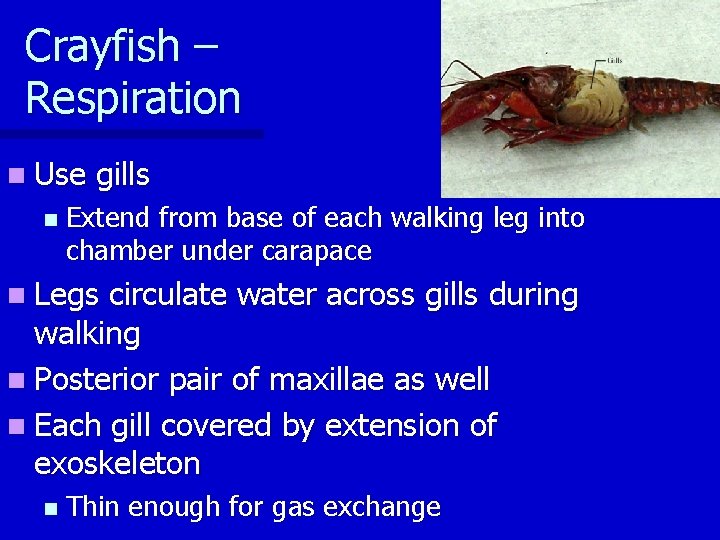
Crayfish – Respiration n Use n gills Extend from base of each walking leg into chamber under carapace n Legs circulate water across gills during walking n Posterior pair of maxillae as well n Each gill covered by extension of exoskeleton n Thin enough for gas exchange
Crayfish - Circulation n Excess water eliminated through organs called green glands Open circulatory system Dorsal heart n n Pumps hemolymph through vessels Hemolymph enters hemocoel, bathing tissues Passes through gills for gas exchange Returns to heart
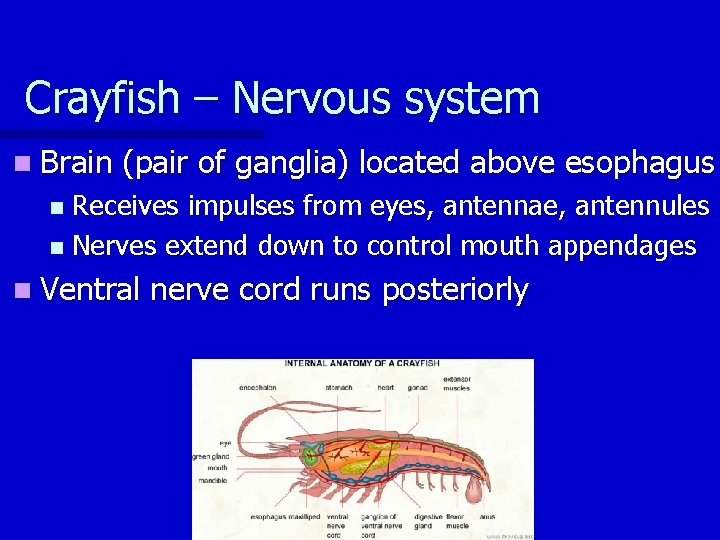
Crayfish – Nervous system n Brain (pair of ganglia) located above esophagus Receives impulses from eyes, antennae, antennules n Nerves extend down to control mouth appendages n n Ventral nerve cord runs posteriorly
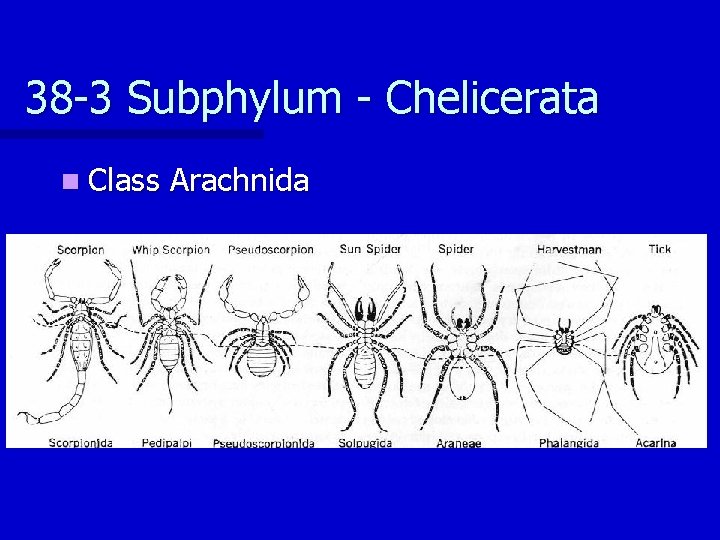
38 -3 Subphylum - Chelicerata n Class Arachnida
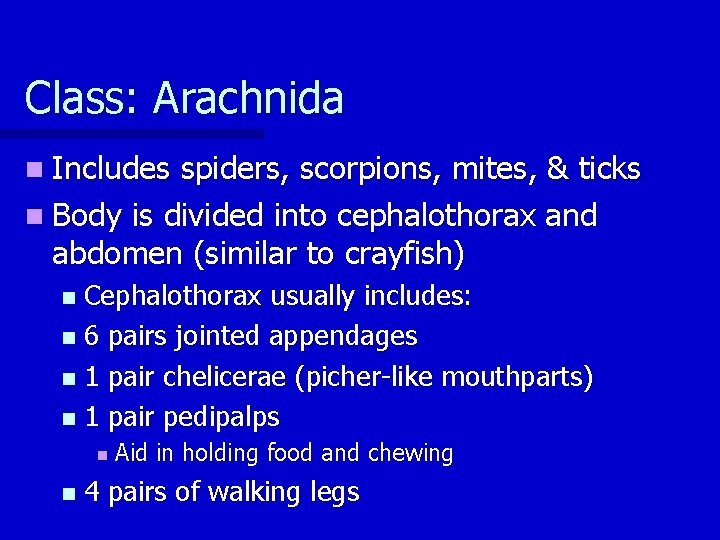
Class: Arachnida n Includes spiders, scorpions, mites, & ticks n Body is divided into cephalothorax and abdomen (similar to crayfish) Cephalothorax usually includes: n 6 pairs jointed appendages n 1 pair chelicerae (picher-like mouthparts) n 1 pair pedipalps n n n Aid in holding food and chewing 4 pairs of walking legs
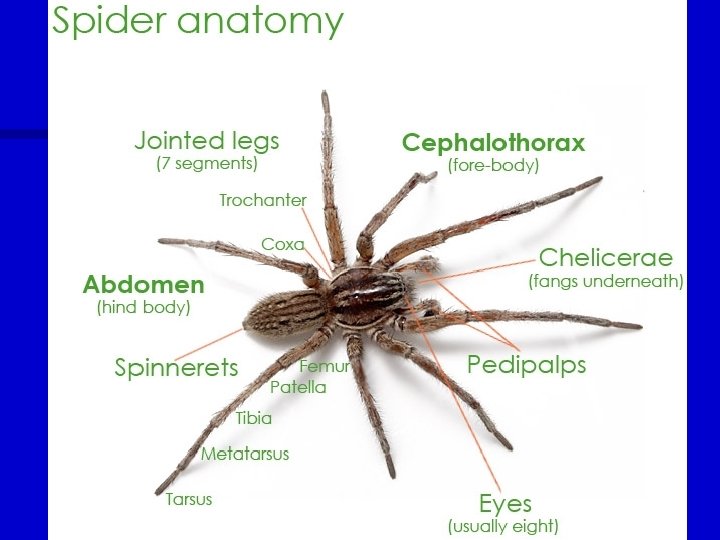
Spider Anatomy n Body is pinched b/t cephalothorax and abdomen n Chelicerae modified as fangs used to inject venom Venom produced by poison glands in the CT n Flows through ducts in chelicerae to tips n n Most have 8 simple eyes
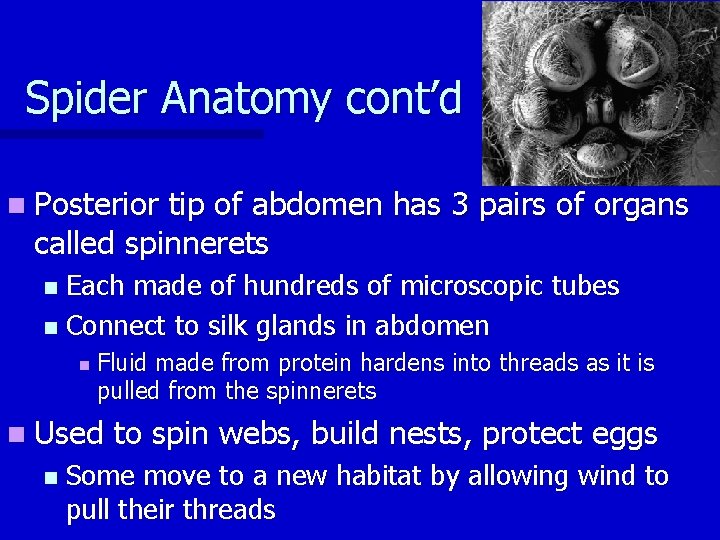
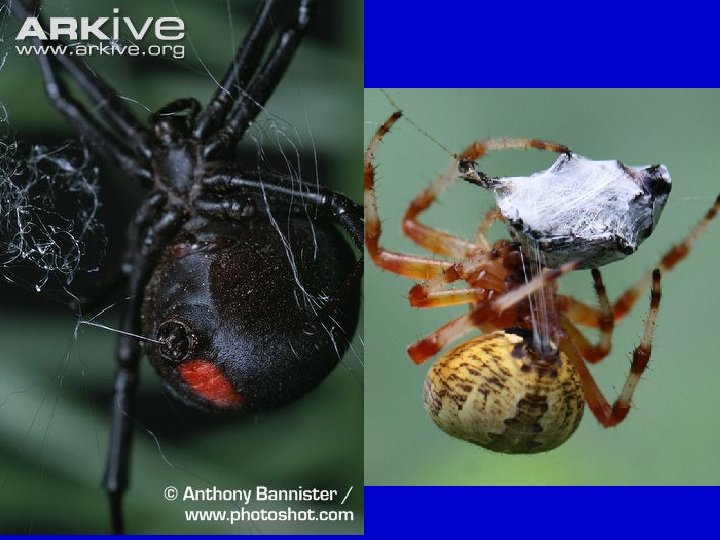
Spider Anatomy cont’d n Posterior tip of abdomen has 3 pairs of organs called spinnerets Each made of hundreds of microscopic tubes n Connect to silk glands in abdomen n n Fluid made from protein hardens into threads as it is pulled from the spinnerets n Used n to spin webs, build nests, protect eggs Some move to a new habitat by allowing wind to pull their threads
Spider Anatomy Cont’d n Nervous, digestive, circulatory systems all very similar to crustaceans n Respiratory system is different (terrestrial!) Book lungs: paired sacs in the abdomen with many folds for gas exhange And/or n Tracheae: system of tubes that carry air directly to tissues n n Through openings in exoskeleton called spiracles
Spider Anatomy Cont’d n Excretory system – modified for land n Malpighian tubules: hollow projections of digestive tract Collect body fluids and waste, carry to intestine n Most water reabsorbed, wastes leave body in solid form n n Coxal n glands Organs that remove wastes and discharge them through openings at the base of some legs
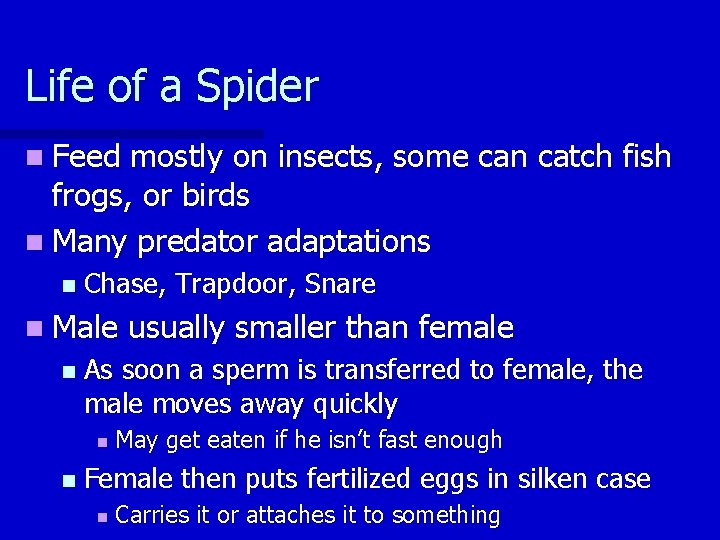
Life of a Spider n Feed mostly on insects, some can catch fish frogs, or birds n Many predator adaptations n Chase, Trapdoor, Snare n Male n As soon a sperm is transferred to female, the male moves away quickly n n usually smaller than female May get eaten if he isn’t fast enough Female then puts fertilized eggs in silken case n Carries it or attaches it to something
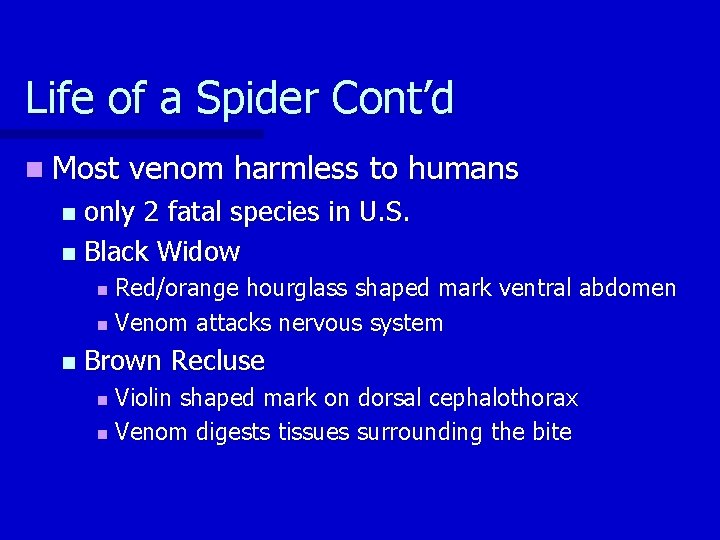
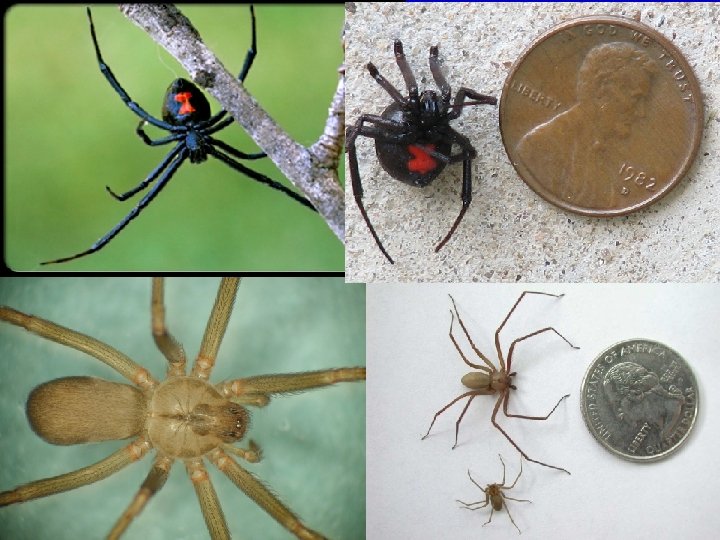
Life of a Spider Cont’d n Most venom harmless to humans only 2 fatal species in U. S. n Black Widow n Red/orange hourglass shaped mark ventral abdomen n Venom attacks nervous system n n Brown Recluse Violin shaped mark on dorsal cephalothorax n Venom digests tissues surrounding the bite n
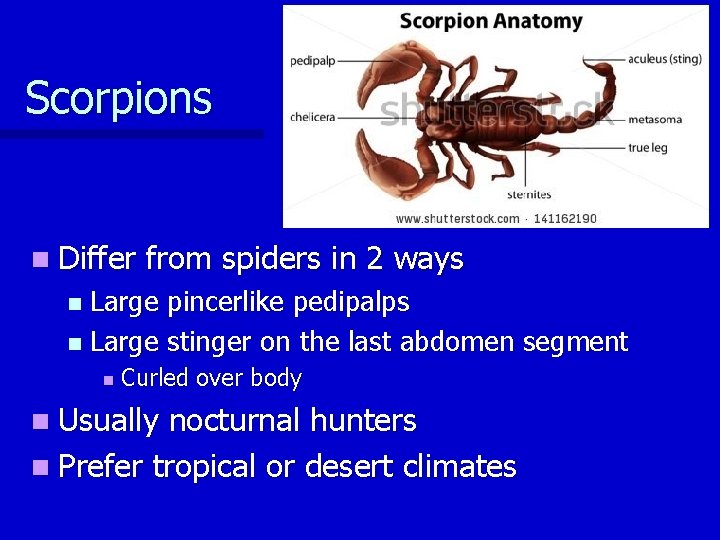
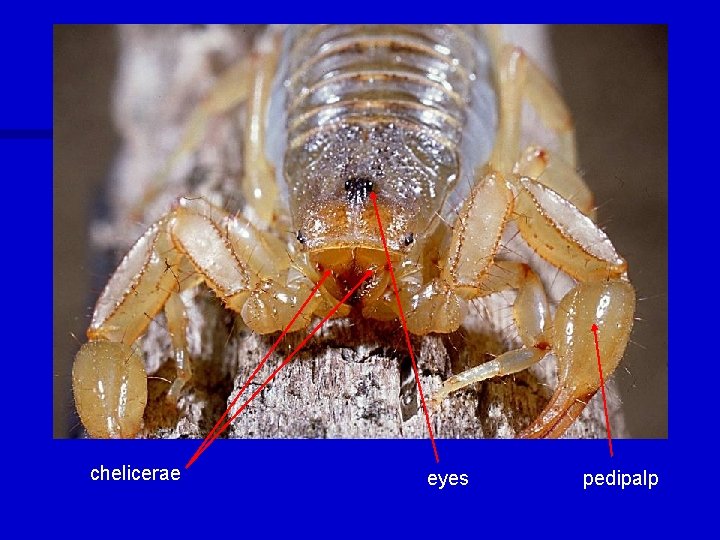
Scorpions n Differ from spiders in 2 ways Large pincerlike pedipalps n Large stinger on the last abdomen segment n n Curled over body n Usually nocturnal hunters n Prefer tropical or desert climates
chelicerae eyes pedipalp
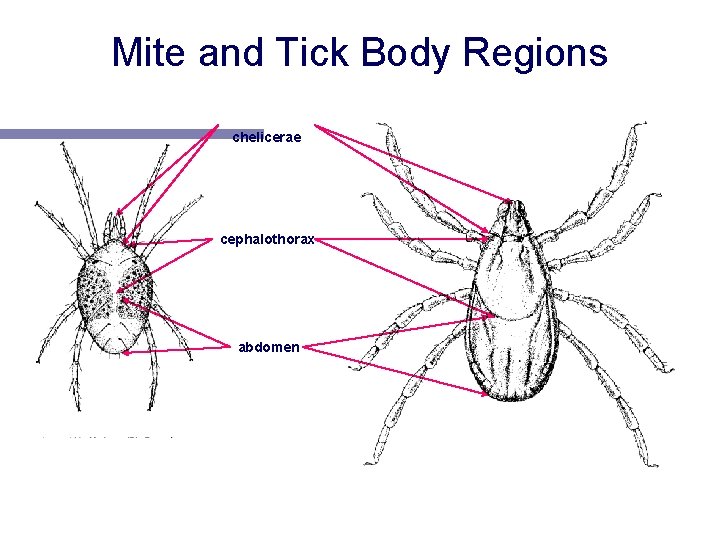
Mites and Ticks n Completely fused CT and abdomen n Mites Most less than 1 mm in length n Both free living and parasitic n n Ticks Range from a few mm to over an inch n Many parasitic n Can transmit Rocky Mountain Spotted Fever and Lyme disease n
Mite and Tick Body Regions pedipalps & chelicerae cephalothorax abdomen
American dog tick male Blacklegged (deer) tick female
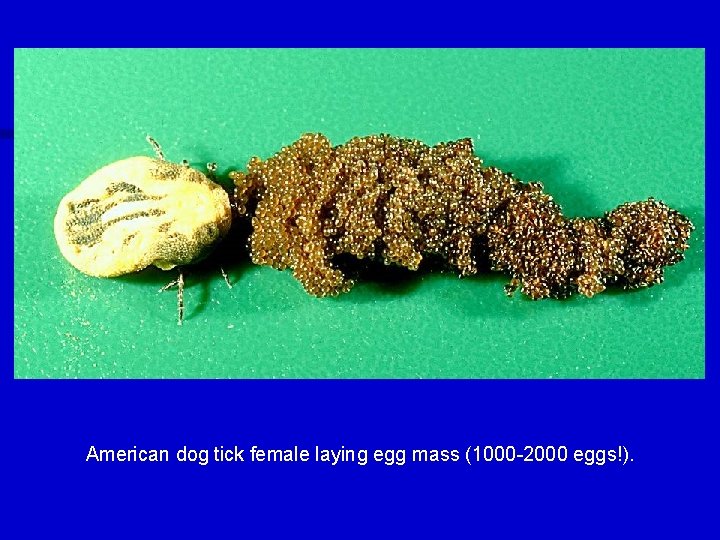
American dog tick female laying egg mass (1000 -2000 eggs!).
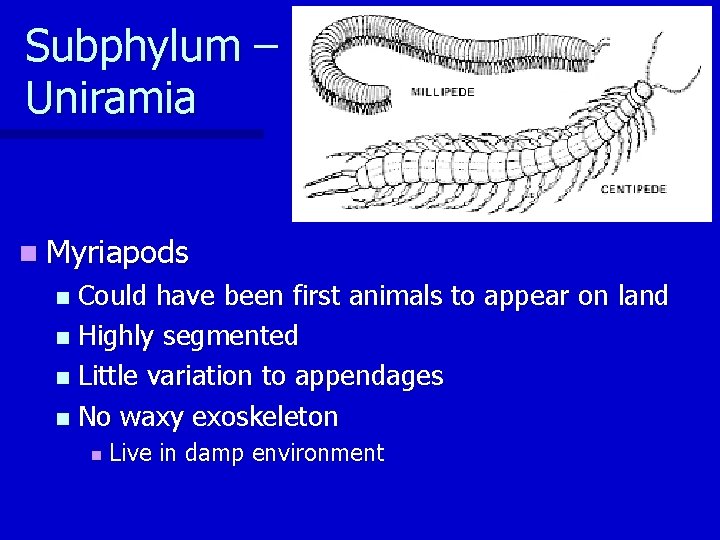
Subphylum – Uniramia n Myriapods Could have been first animals to appear on land n Highly segmented n Little variation to appendages n No waxy exoskeleton n n Live in damp environment
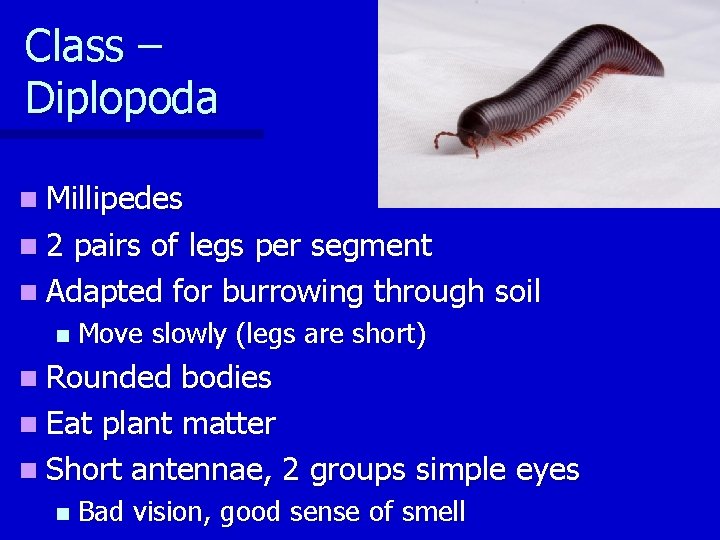
Class – Diplopoda n Millipedes n 2 pairs of legs per segment n Adapted for burrowing through soil n Move slowly (legs are short) n Rounded bodies n Eat plant matter n Short antennae, 2 groups simple eyes n Bad vision, good sense of smell
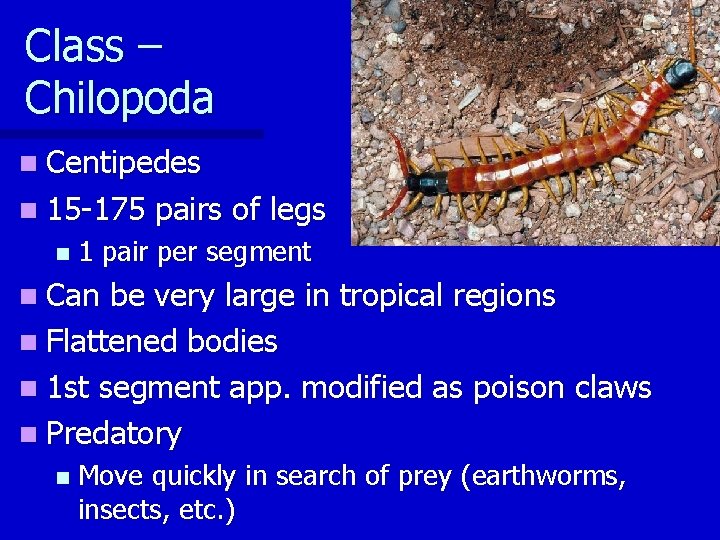
Class – Chilopoda n Centipedes n 15 -175 n pairs of legs 1 pair per segment n Can be very large in tropical regions n Flattened bodies n 1 st segment app. modified as poison claws n Predatory n Move quickly in search of prey (earthworms, insects, etc. )