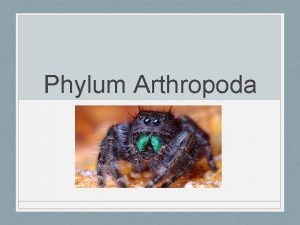
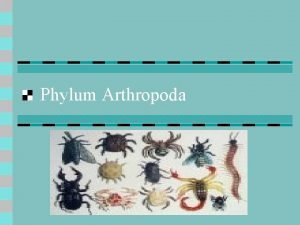
Phylum Arthropoda w Read Chap 31 pgs 681



- Slides: 67
Phylum Arthropoda w Read Chap 31 pgs. 681 -703 w Dichotomous Key
What is Entomology? The study of insects (and their near relatives).
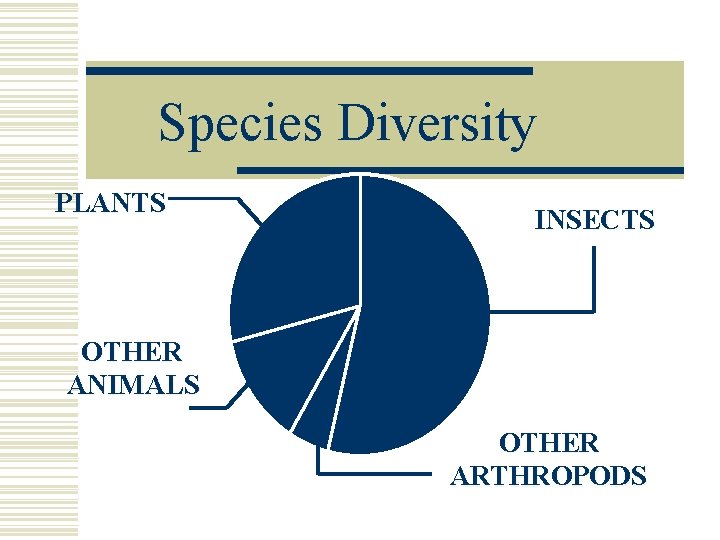
Species Diversity PLANTS INSECTS OTHER ANIMALS OTHER ARTHROPODS
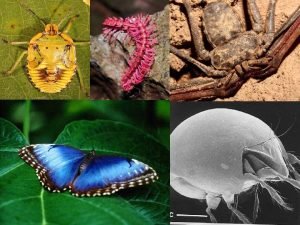
Arthropods Jointed-legged invertebrates
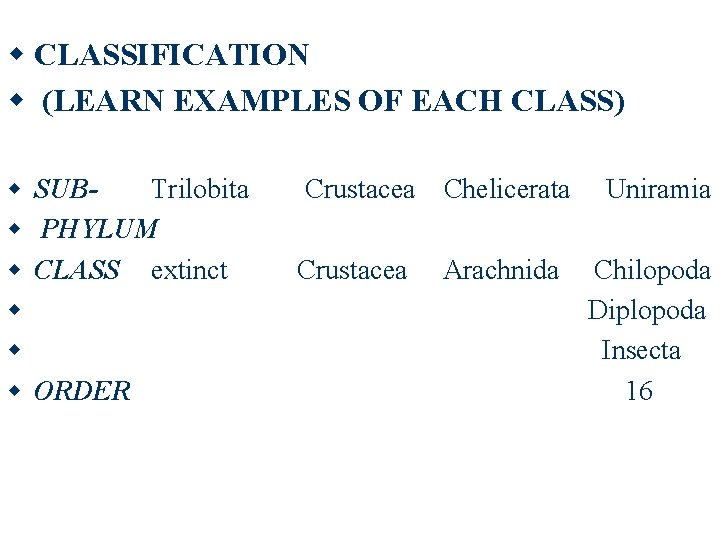
w CLASSIFICATION w (LEARN EXAMPLES OF EACH CLASS) w w w SUBTrilobita PHYLUM CLASS extinct ORDER Crustacea Chelicerata Crustacea Arachnida Uniramia Chilopoda Diplopoda Insecta 16
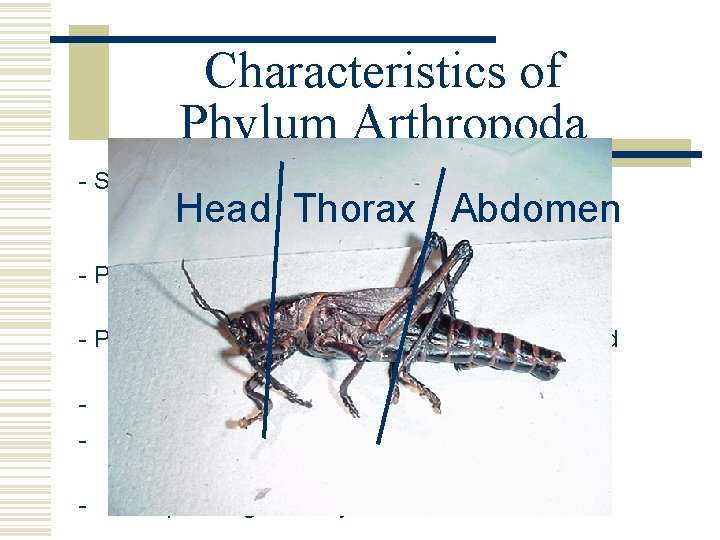
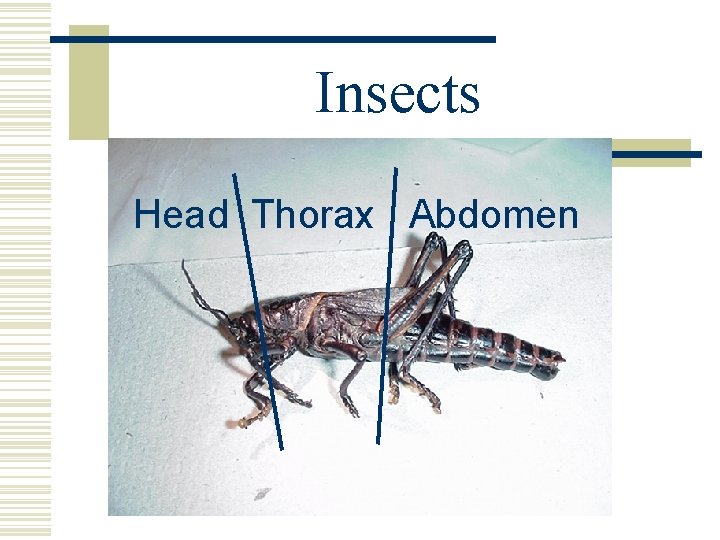
Characteristics of Phylum Arthropoda - Segmented bodies are arranged into regions, called tagmata (in insects = head, thorax, abdomen). - Paired appendages (e. g. , legs, antennae, wings) are jointed. - Possess chitinous exoskeleton that must be shed during growth. - Open circulatory system Head Thorax Abdomen - Nervous system is ventral (belly) and the circulatory system is open and dorsal (back). - Complete digestive system
Exoskeleton w. Major reason for success! w. Provides Support n Protection n Prevention of dehydration n Sites for muscle attachment n
Metamorphosis w Change body form from immature (larval) stages to adult forms w Reduces competition between stages for Food n Living space n
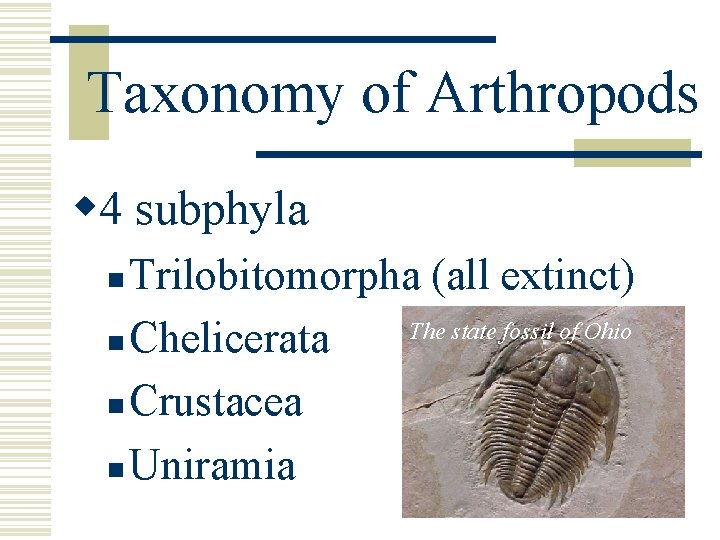
Taxonomy of Arthropods w 4 subphyla Trilobitomorpha (all extinct) The state fossil of Ohio n Chelicerata n Crustacea n Uniramia n
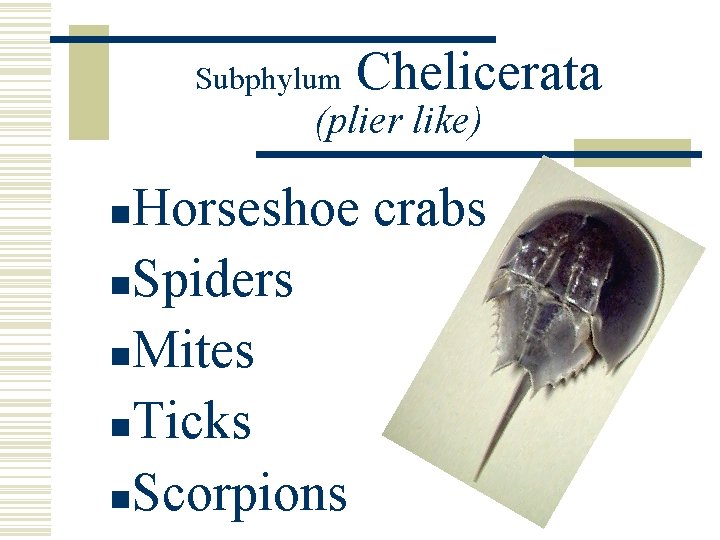
Subphylum Chelicerata (plier like) Horseshoe crabs n. Spiders n. Mites n. Ticks n. Scorpions n
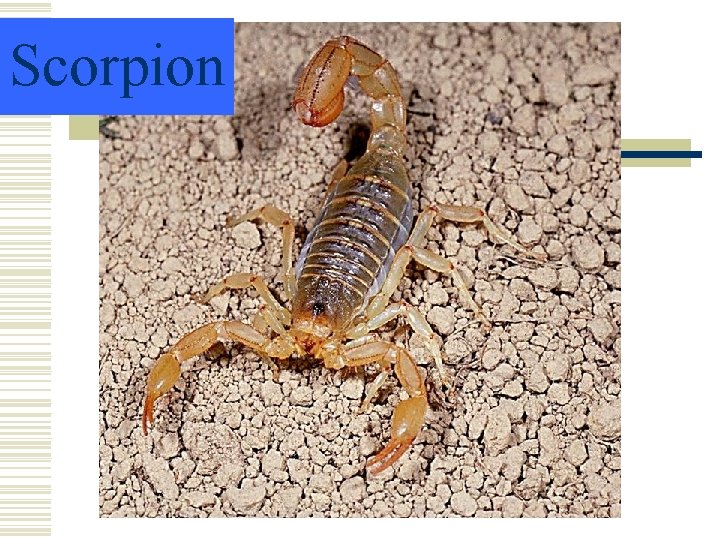
Scorpion
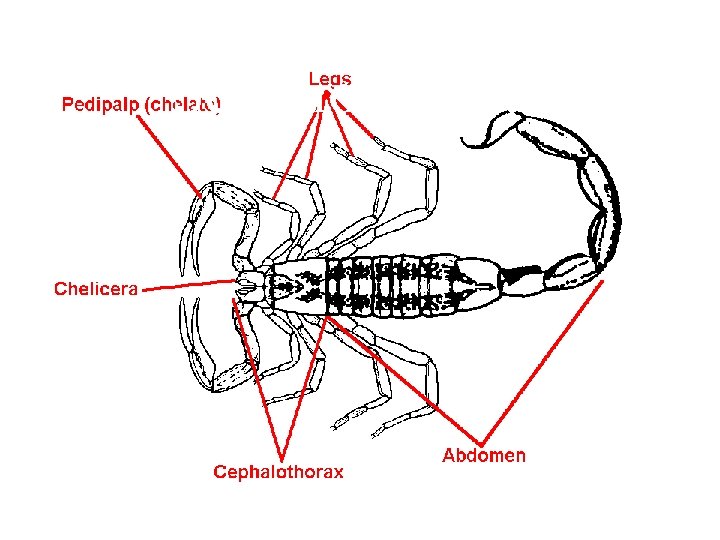
Scorpion Anatomy
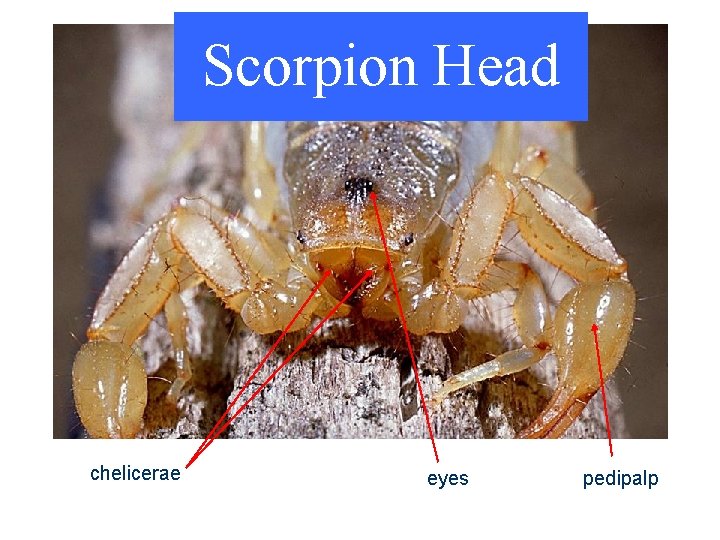
Scorpion Head chelicerae eyes pedipalp
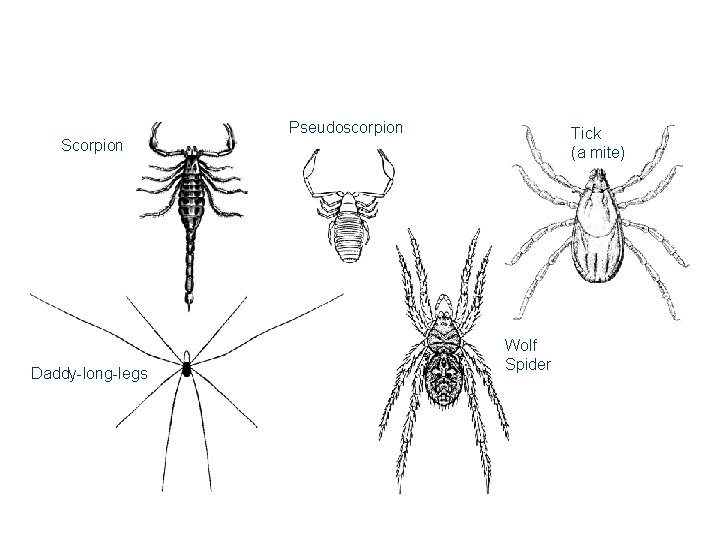
Orders of Arachnids Pseudoscorpion Tick (a mite) Scorpion Daddy-long-legs Wolf Spider
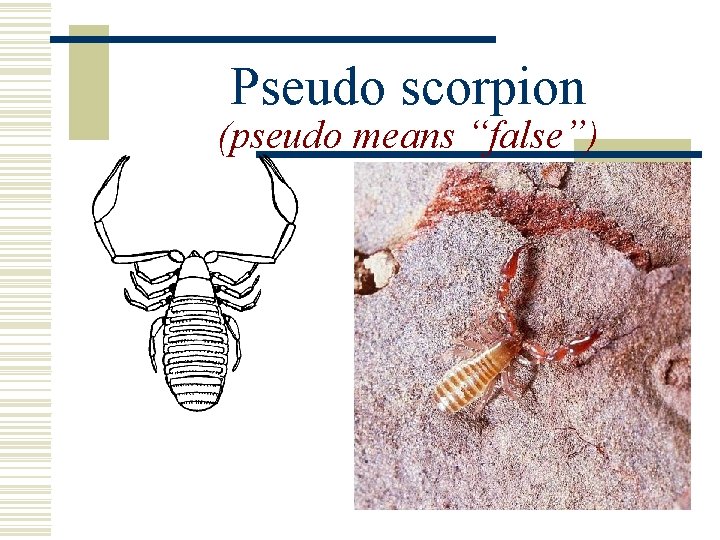
Pseudo scorpion (pseudo means “false”)
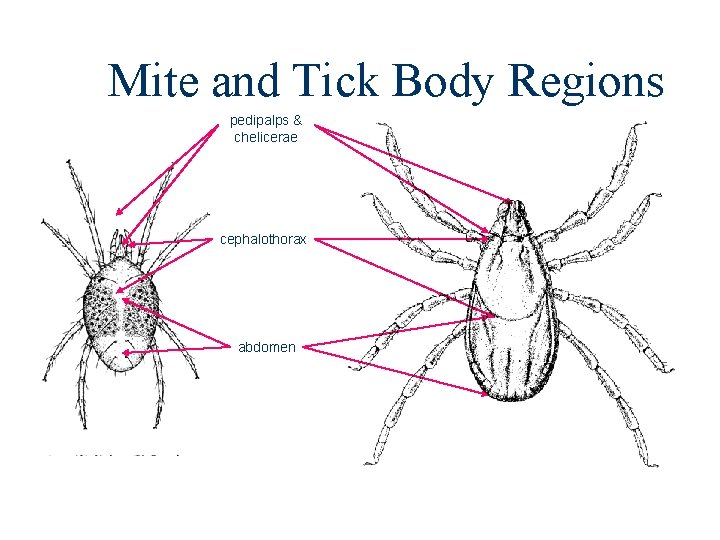
Mite and Tick Body Regions pedipalps & chelicerae cephalothorax abdomen
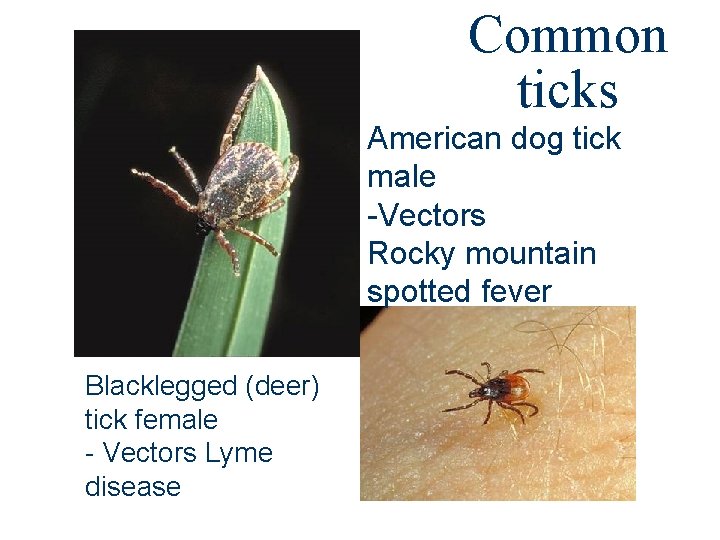
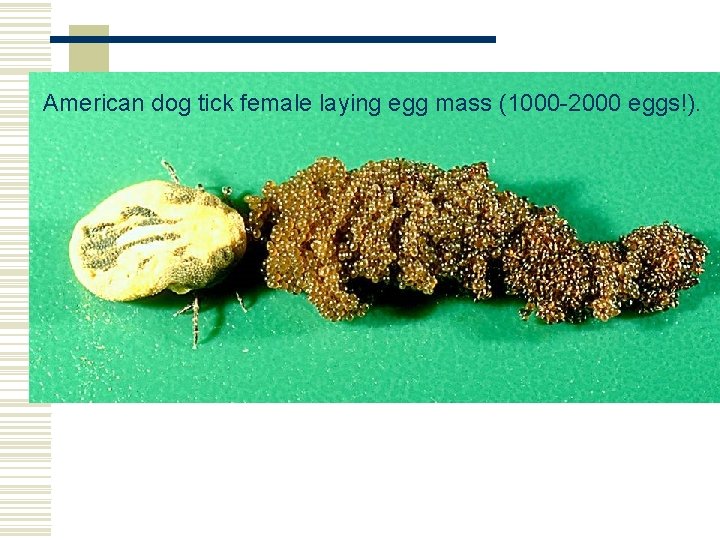
Common ticks American dog tick male -Vectors Rocky mountain spotted fever Blacklegged (deer) tick female - Vectors Lyme disease
American dog tick female laying egg mass (1000 -2000 eggs!).
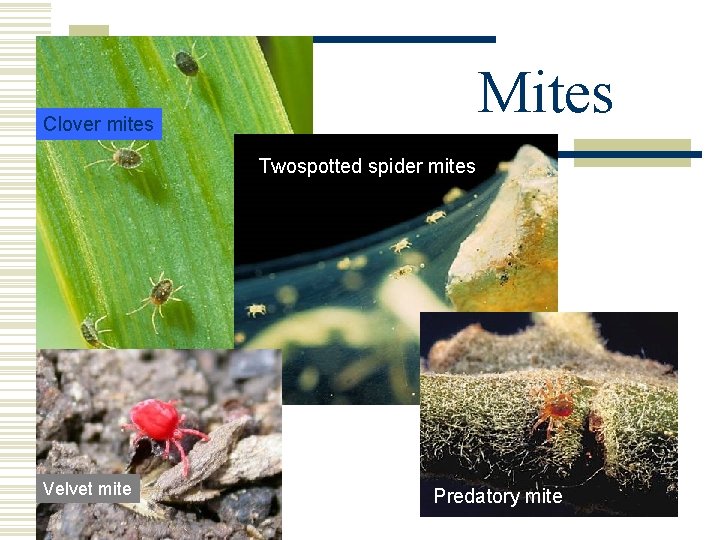
Mites Clover mites Twospotted spider mites Velvet mite Predatory mite
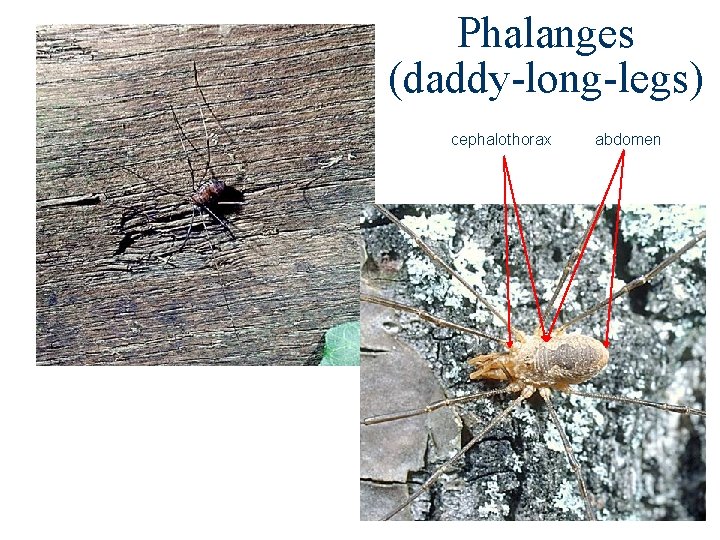
Phalanges (daddy-long-legs) cephalothorax abdomen
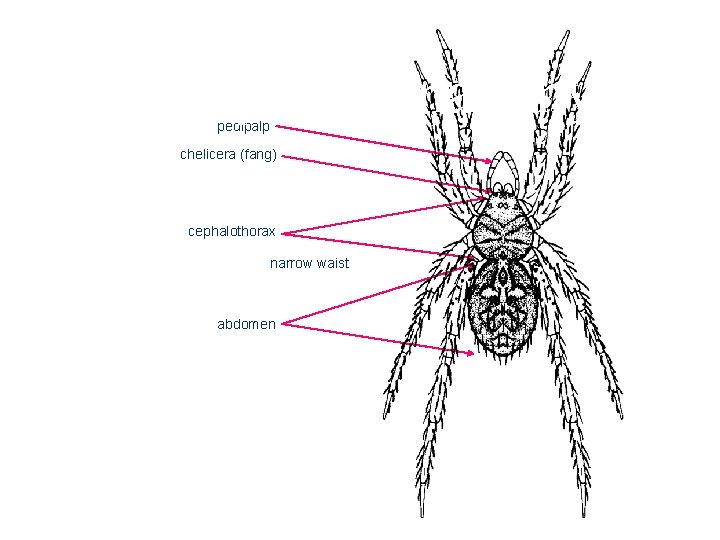
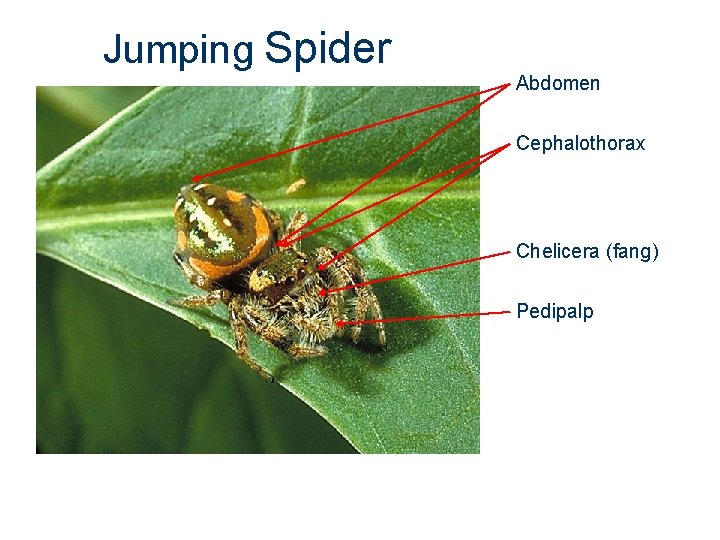
Spider Anatomy pedipalp chelicera (fang) cephalothorax narrow waist abdomen
Jumping Spider Abdomen Cephalothorax Chelicera (fang) Pedipalp
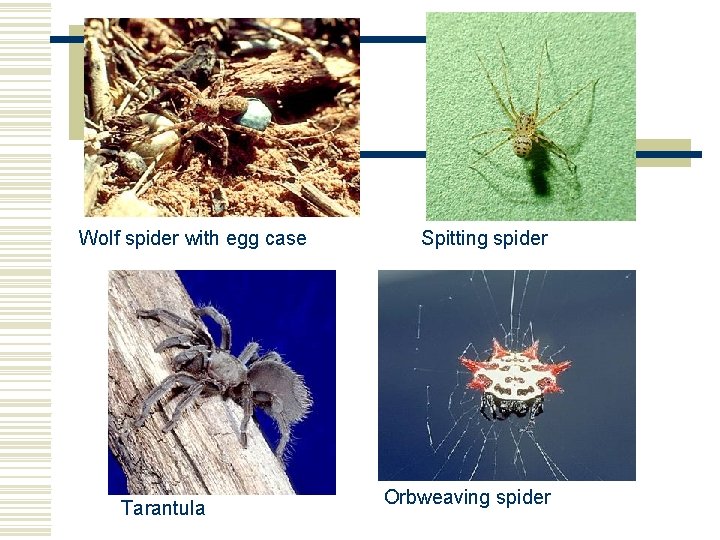
Wolf spider with egg case Tarantula Spitting spider Orbweaving spider
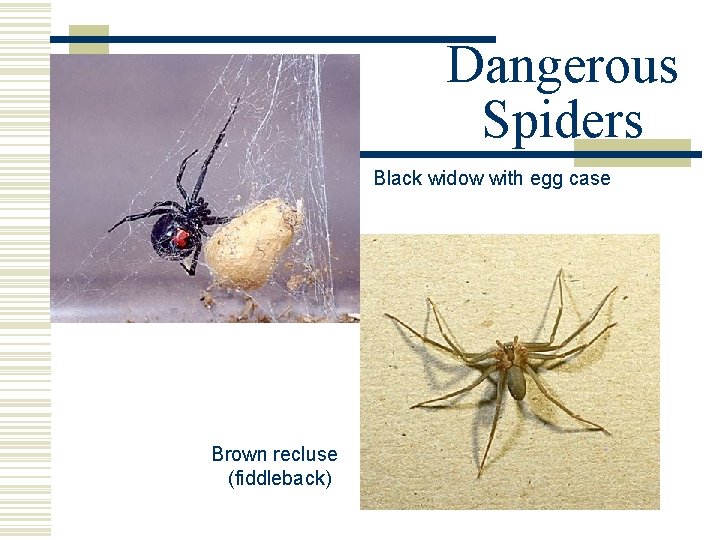
Dangerous Spiders Black widow with egg case Brown recluse (fiddleback)
Interesting modifications w Spinnerets w Malpighian tubules
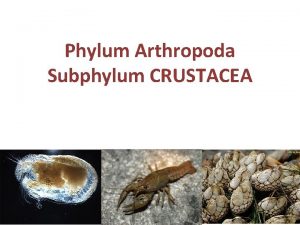
Subphylum Crustacea Shrimp, lobsters, crayfish n Fairy shrimp, brine shrimp n Water fleas n Barnacles n
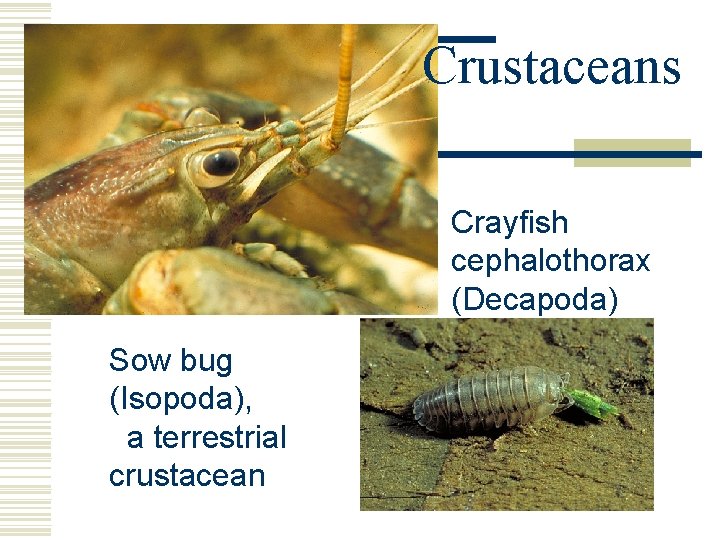
Crustaceans Crayfish cephalothorax (Decapoda) Sow bug (Isopoda), a terrestrial crustacean
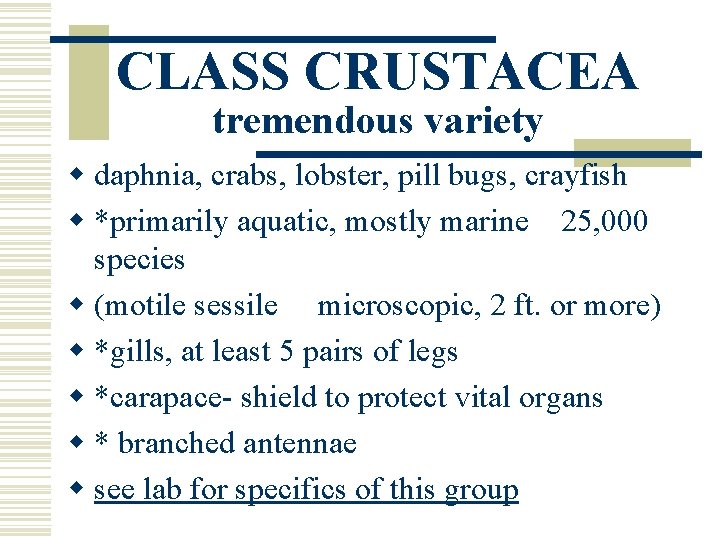
CLASS CRUSTACEA tremendous variety w daphnia, crabs, lobster, pill bugs, crayfish w *primarily aquatic, mostly marine 25, 000 species w (motile sessile microscopic, 2 ft. or more) w *gills, at least 5 pairs of legs w *carapace- shield to protect vital organs w * branched antennae w see lab for specifics of this group
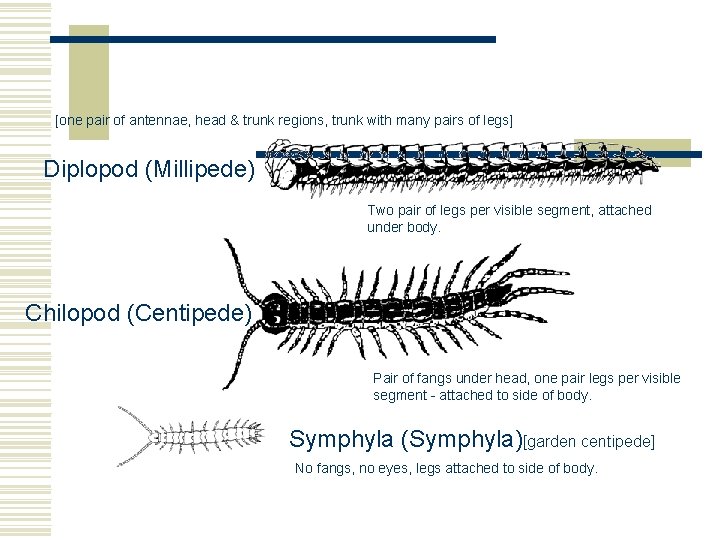
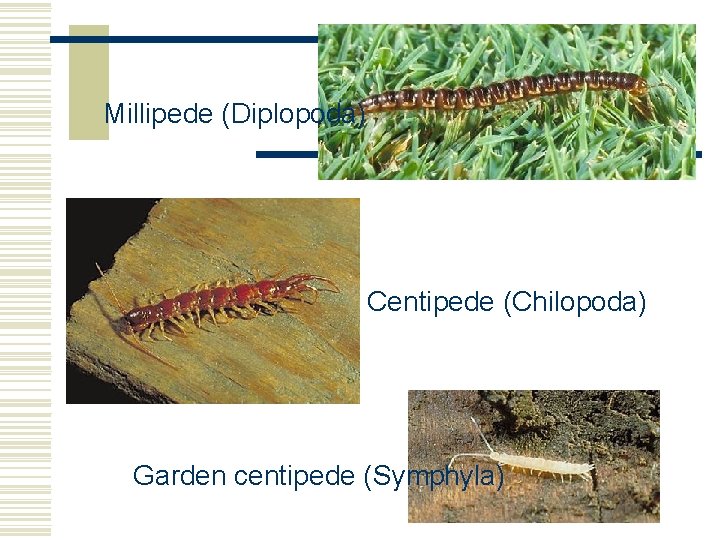
Subphylum Uniramia w. Class Diplopoda (millipedes) w. Class Chilopoda (centipedes) w. Class Hexapoda (insects)
[one pair of antennae, head & trunk regions, trunk with many pairs of legs] Diplopod (Millipede) Two pair of legs per visible segment, attached under body. Chilopod (Centipede) Pair of fangs under head, one pair legs per visible segment - attached to side of body. Symphyla (Symphyla)[garden centipede] No fangs, no eyes, legs attached to side of body.
Millipede (Diplopoda) Centipede (Chilopoda) Garden centipede (Symphyla)
Nervous System w Johnston’s organs (hearing - on antennae) w Tympanic organs (hearing – on legs or body) w Compound eyes (facets – ommatidia – fused) w Simple eyes (ocelli)
Economic Impact of Arthropods 1. Name two effects of each major group has on mankind (good and bad). Crustacea, Millipede, Centipede, Arachnida 2. For insects, list 4 good things that they do and 4 bad things that they are responsible for.
Insects Head Thorax Abdomen
How Many Kinds Insects are there in the world? • 1, 000 species known w Possibly 3, 000 unidentified species
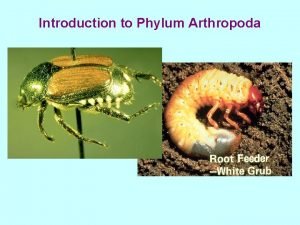
Classification of Japanese Beetle w w w w Kingdom Phylum Class Order Family Genus Species Animalia Arthropoda Insecta Coleoptera Scarabaeidae Popillia japonica
*molting "ecdysiast"w hormone induced changes to create new and larger exoskeleton w desiccation potential w "instars" periods between molts w vulnerable while exchanging skeleton w may continue throughout life or end at a particular point
DIGESTION w foregut w ingestion, mechanical breakdown and storage w midgut w chemical digestion, absorption, enzymatic, w (sounds like our intestines) w hindgut w absorption of water and formation of feces
RESPIRATION (handout in binder ) Open Circulatory System- blood not confined to the vessels w Pericardial sinus- space for gas exchange around the heart (open space) w Gases into the body through the spiracles in the exoskeleton (waxy) w Trachae- tubes from spiracles to vital locations w ***blood is not vital for gas exchange*** rare to find hemoglobin w Tracheoles- branches with membranes at the end fluid tipped perhaps
other possible modifications w *book lungs- look like corrugated cardboard w *coordination between opening and closing of spiracles to pump the air in (think of a tire pump) w *air sacs at the end of the tracheoles for increased surface area w *gills
w BEHAVIOR IN THE PHYLUM ARTHROPODA w (insects mostly) video Swarming Hordes w Communication w Chemical, visual, and auditory
Communication *chemical Pheromones- airborne chemicals are used by males can find females for mating purposes w 1) releasers- immediate behavior change w 2) primers- profound physiological changes Bug’s Life
w humans have exploited this with bug traps (June bugs) w Scent trails can be left on the ground during food foraging trips (A BUG’S Life video) w plants mimic scents to attract pollinators w death pheromones- remove ant from a colony and paint with the chemical, return to colony and is repeatedly carried away. w 0. 00000001 grams silkworm female can be detected 2 miles
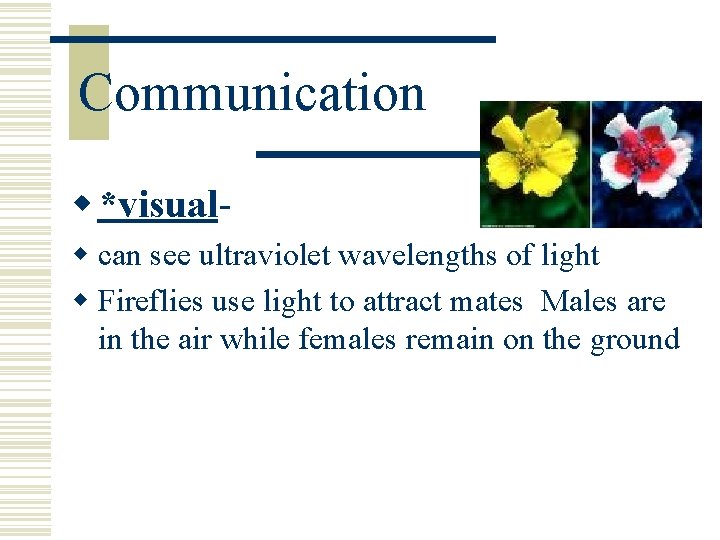
Communication w *visualw can see ultraviolet wavelengths of light w Fireflies use light to attract mates Males are in the air while females remain on the ground
Communication w *Sound w production in grasshoppers, crickets and cicadas w scraping of limbs on the exoskeleton, air vibrations along the exoskeleton caused by muscle movement
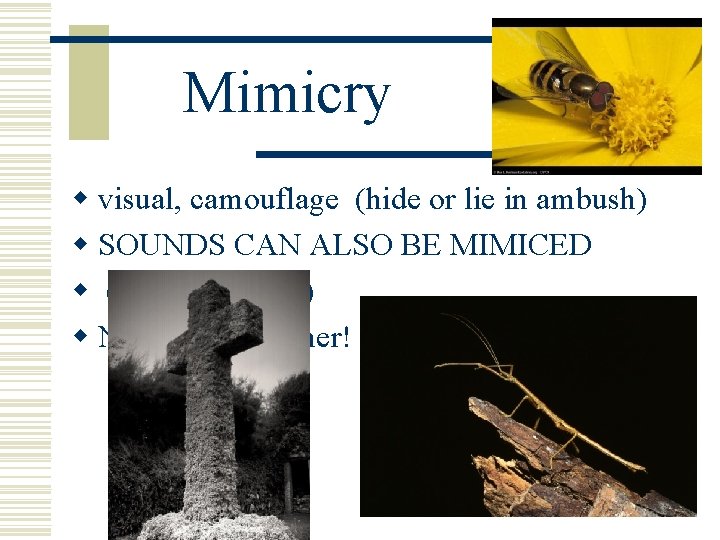
Mimicry w visual, camouflage (hide or lie in ambush) w SOUNDS CAN ALSO BE MIMICED w (faked you out!) w Now you’re dinner!
SOCIAL BEHAVIOR requires communication w A colony can have the same effect as a large single animal w Hey, hey do what I tell you w
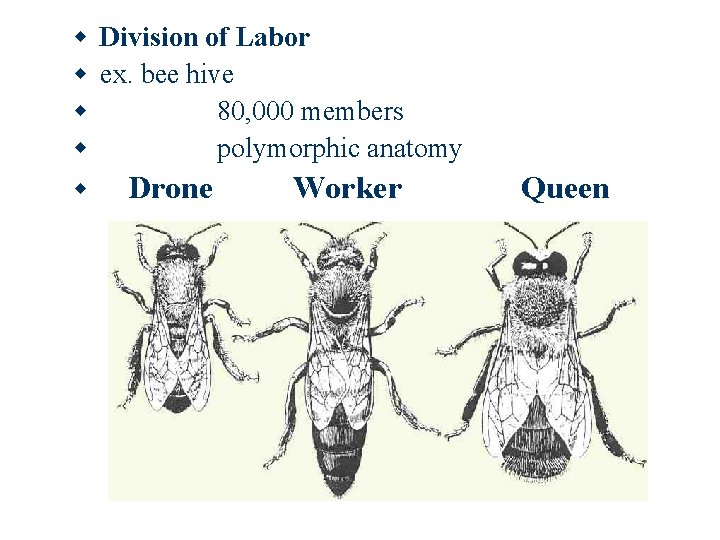
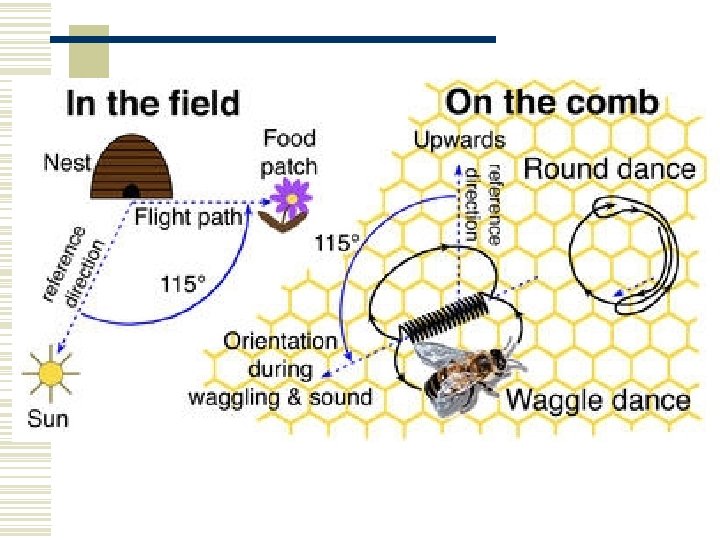
w Division of Labor w ex. bee hive w 80, 000 members w polymorphic anatomy w Drone Worker Queen
What a life? w worker 6 wk. life, sterile female, reproductive organs become stinger, 1, 000 s w drone- (n) reproductive male, only for mating, 100 s, die after mating, killed if food is low w queen bee- reproductive female, 5 -6 year life
worker behavior w week 1 w feed queen, drones, larva, secrete "royal jelly" w weeks 2 -4 w secrete wax, clean, repair hive, guard, w fan in fresh air w weeks 5 -6 w gather pollen and nectar
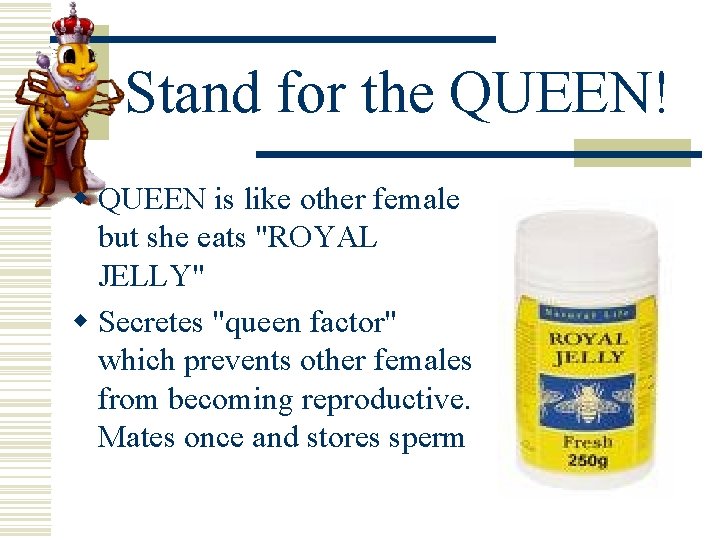
Stand for the QUEEN! w QUEEN is like other female but she eats "ROYAL JELLY" w Secretes "queen factor" which prevents other females from becoming reproductive. Mates once and stores sperm
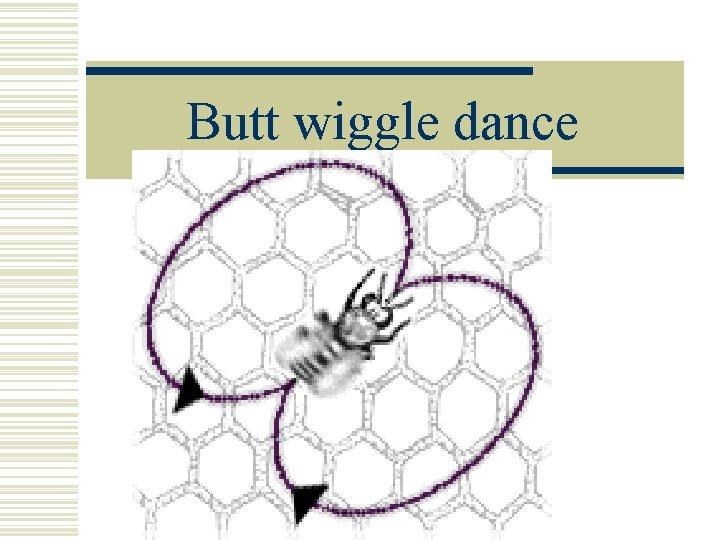
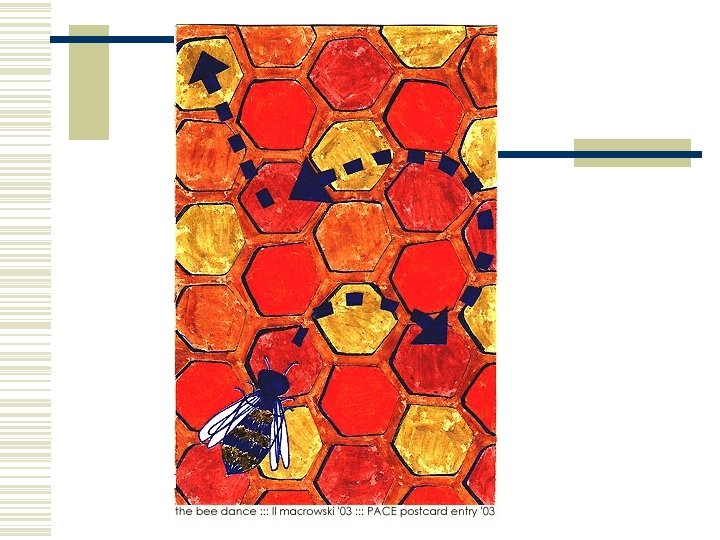
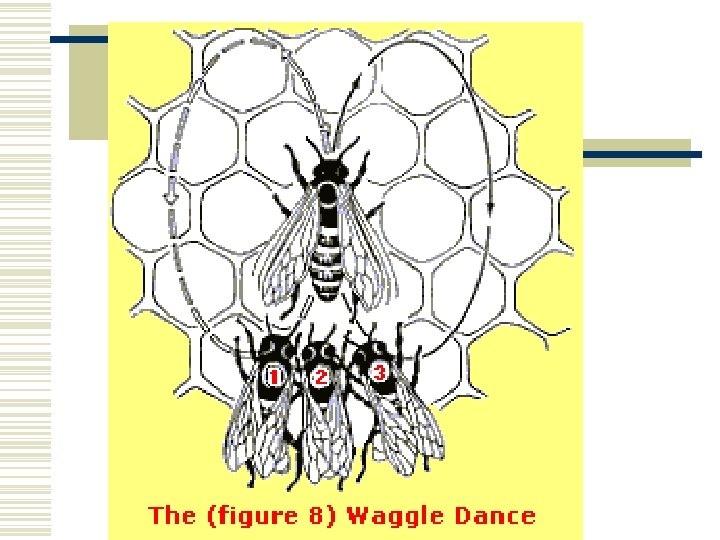
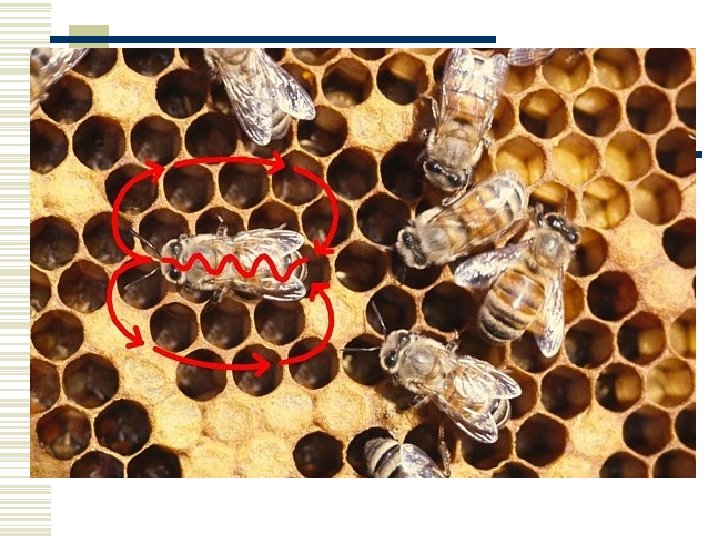
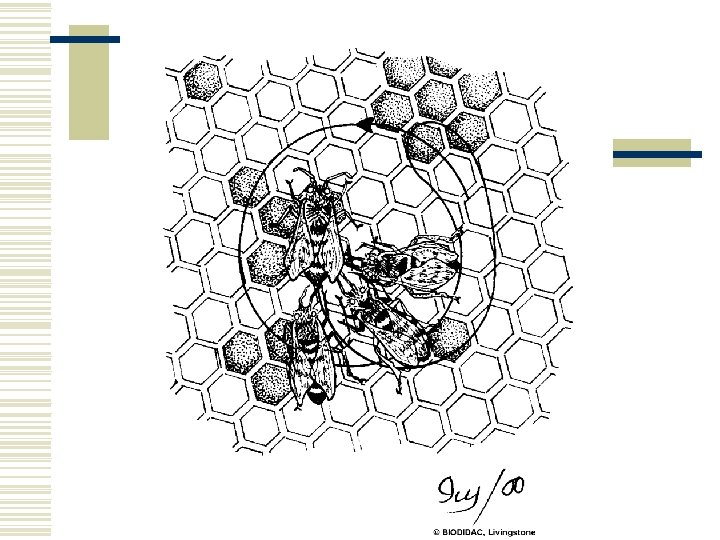
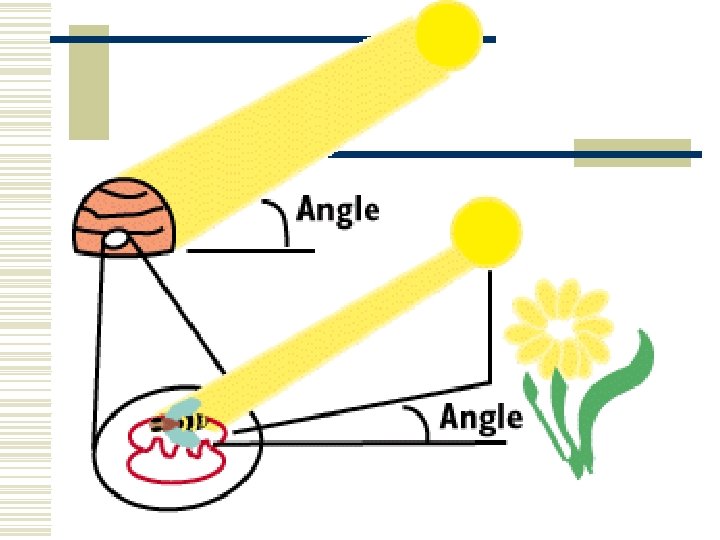
Butt wiggle dance
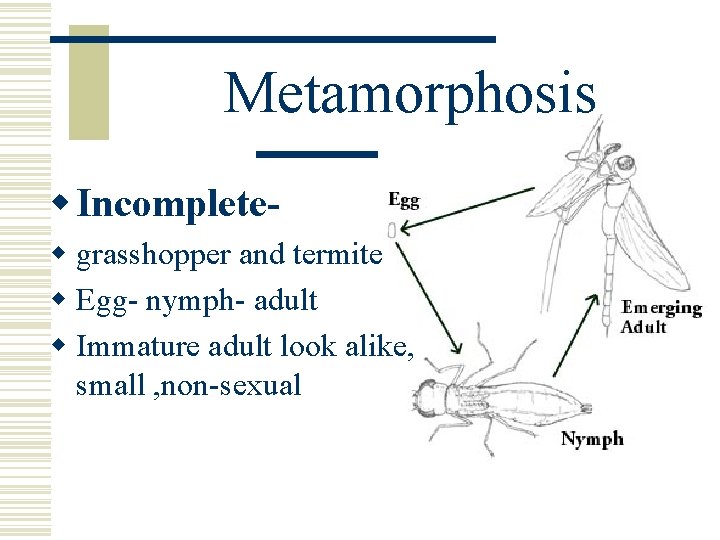
Metamorphosis w Incompletew grasshopper and termite w Egg- nymph- adult w Immature adult look alike, small , non-sexual
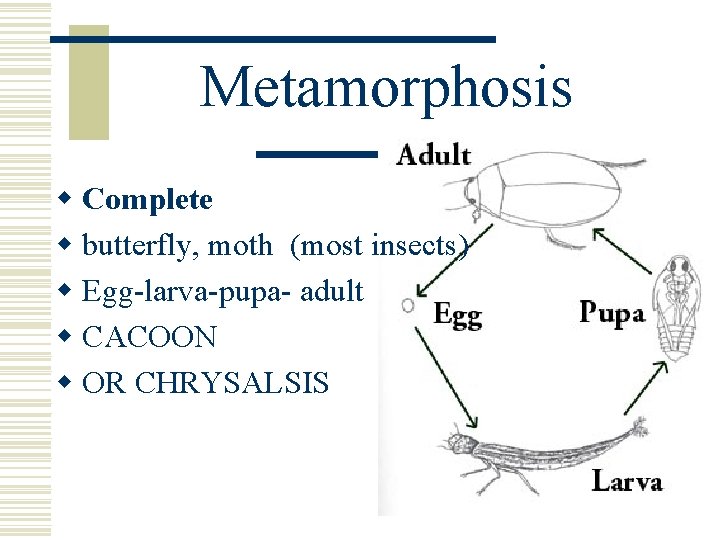
Metamorphosis w Complete w butterfly, moth (most insects) w Egg-larva-pupa- adult w CACOON w OR CHRYSALSIS
w Controlling factors w Sequential expression of genes w Brain hormone stimulates molting hormone in thorax gland
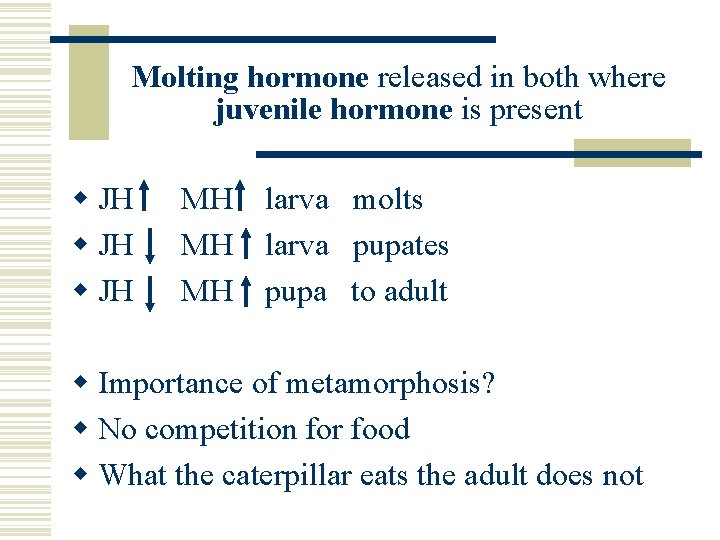
Molting hormone released in both where juvenile hormone is present w JH MH MH MH larva molts larva pupates pupa to adult w Importance of metamorphosis? w No competition for food w What the caterpillar eats the adult does not
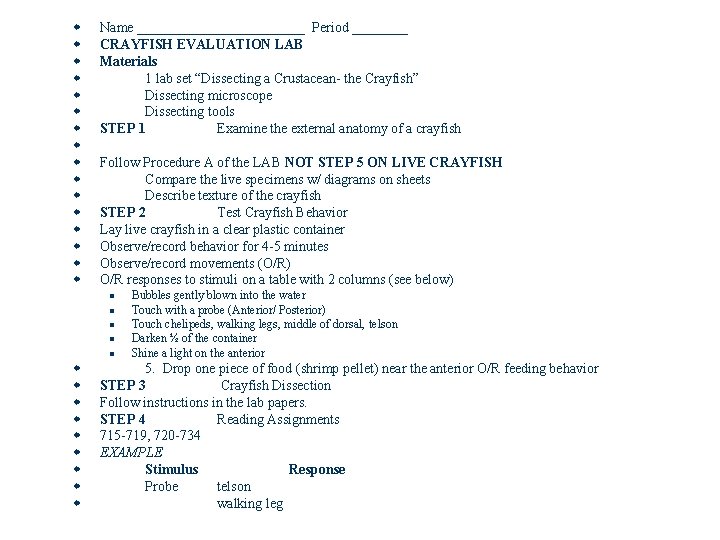
w w w w Name ____________ Period ____ CRAYFISH EVALUATION LAB Materials 1 lab set “Dissecting a Crustacean- the Crayfish” Dissecting microscope Dissecting tools STEP 1 Examine the external anatomy of a crayfish Follow Procedure A of the LAB NOT STEP 5 ON LIVE CRAYFISH Compare the live specimens w/ diagrams on sheets Describe texture of the crayfish STEP 2 Test Crayfish Behavior Lay live crayfish in a clear plastic container Observe/record behavior for 4 -5 minutes Observe/record movements (O/R) O/R responses to stimuli on a table with 2 columns (see below) n n n w w w w w Bubbles gently blown into the water Touch with a probe (Anterior/ Posterior) Touch chelipeds, walking legs, middle of dorsal, telson Darken ½ of the container Shine a light on the anterior 5. Drop one piece of food (shrimp pellet) near the anterior O/R feeding behavior STEP 3 Crayfish Dissection Follow instructions in the lab papers. STEP 4 Reading Assignments 715 -719, 720 -734 EXAMPLE Stimulus Response Probe telson walking leg
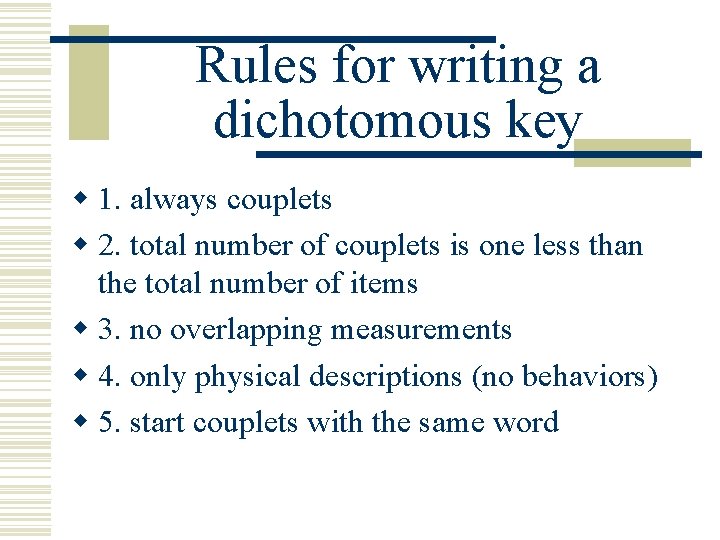
Rules for writing a dichotomous key w 1. always couplets w 2. total number of couplets is one less than the total number of items w 3. no overlapping measurements w 4. only physical descriptions (no behaviors) w 5. start couplets with the same word
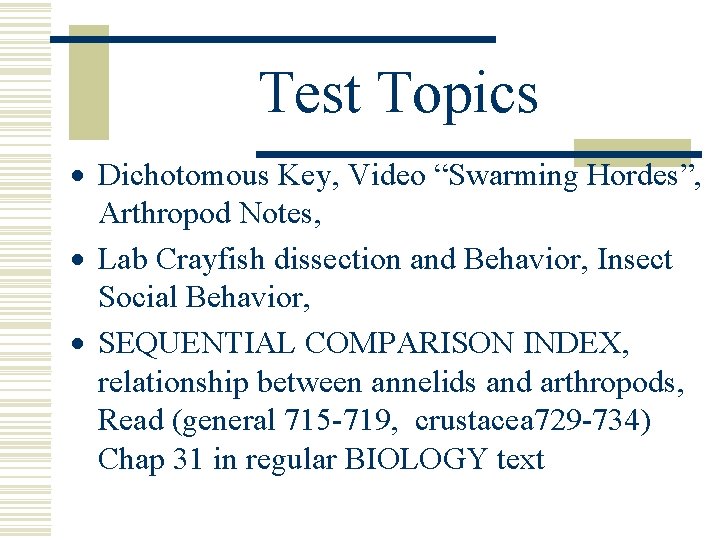
Test Topics Dichotomous Key, Video “Swarming Hordes”, Arthropod Notes, Lab Crayfish dissection and Behavior, Insect Social Behavior, SEQUENTIAL COMPARISON INDEX, relationship between annelids and arthropods, Read (general 715 -719, crustacea 729 -734) Chap 31 in regular BIOLOGY text