
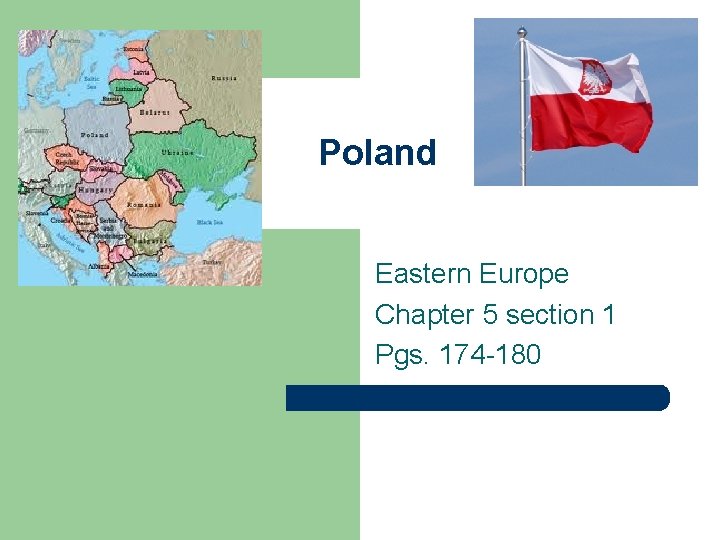
Poland Eastern Europe Chapter 5 section 1 Pgs
- Slides: 15
Poland Eastern Europe Chapter 5 section 1 Pgs. 174 -180
Objectives l l l Find out about Polish traditions. Learn about economic changes that have taken place in Poland since the collapse of communism. Understand the future challenges that Poland faces.
Key Terms l Shrine – l Capitalism – l A holy place An economic system in which businesses are privately owned and operated Entrepreneur – A person who develops original ideas in order to start new businesses
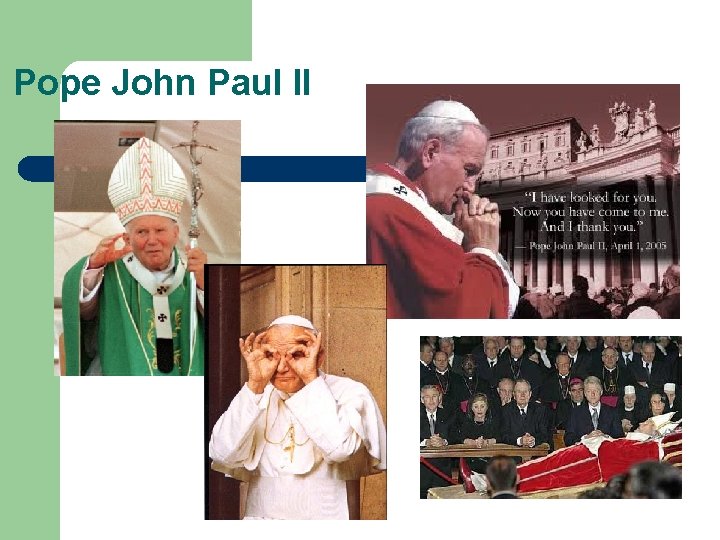
Poland’s Traditions l Catholicism has been a Polish tradition for hundreds of years. – Communist govt. tried to stop/discourage religious beliefs and traditions l l Underestimated the strong faith and belief in the Roman Catholic Church 90% of Poles are Catholic 1978 a Polish priest was selected as Pope John Paul II served until he died in 2005
Pope John Paul II
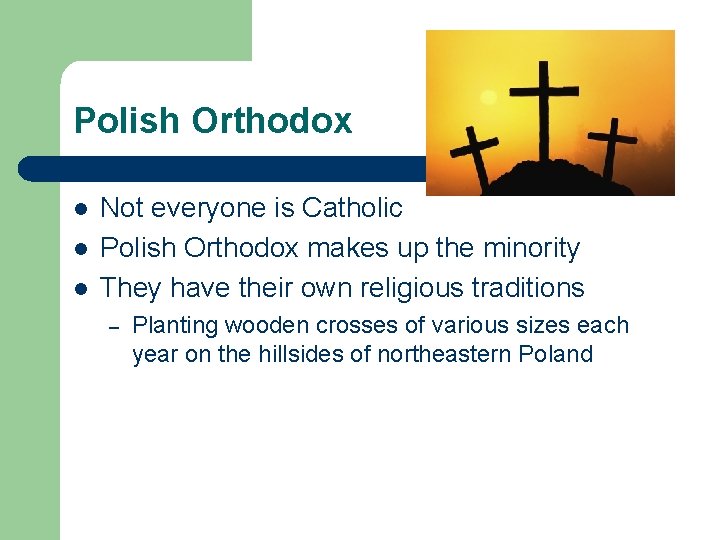
Polish Orthodox l l l Not everyone is Catholic Polish Orthodox makes up the minority They have their own religious traditions – Planting wooden crosses of various sizes each year on the hillsides of northeastern Poland
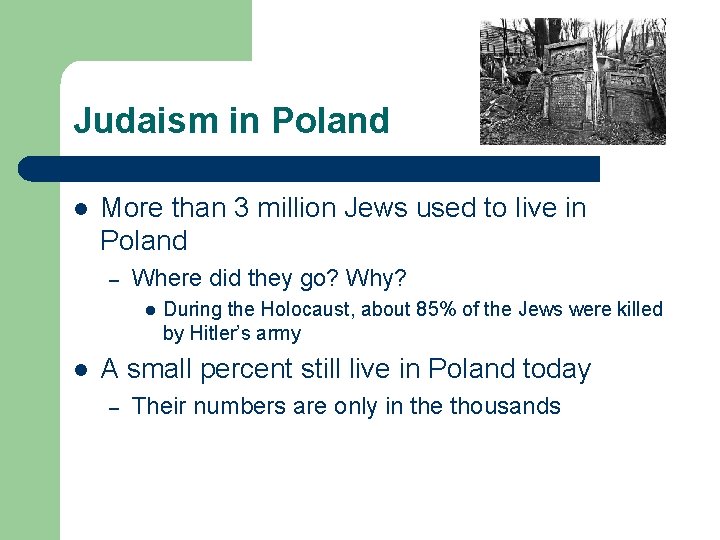
Judaism in Poland l More than 3 million Jews used to live in Poland – Where did they go? Why? l l During the Holocaust, about 85% of the Jews were killed by Hitler’s army A small percent still live in Poland today – Their numbers are only in the thousands
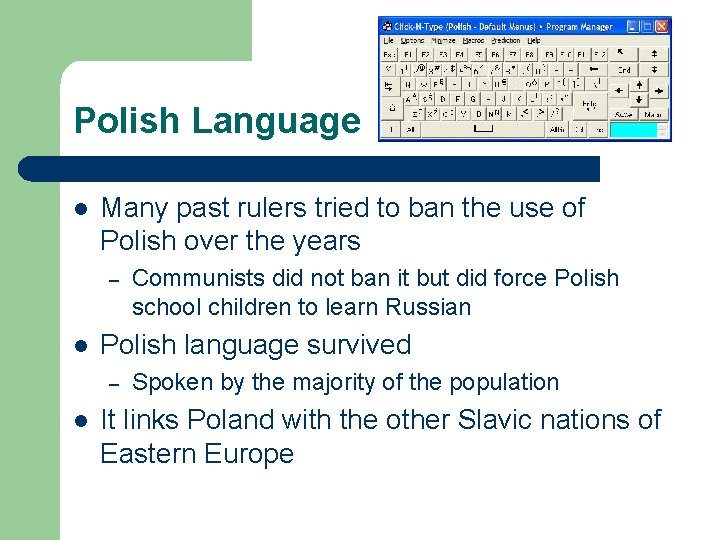
Polish Language l Many past rulers tried to ban the use of Polish over the years – l Polish language survived – l Communists did not ban it but did force Polish school children to learn Russian Spoken by the majority of the population It links Poland with the other Slavic nations of Eastern Europe
Economic Challenges l l Communism ended in 1989 Capitalism adopted – l Economic system where businesses are privately owned Poland went from communism, where everything is owned by the govt. , to capitalism almost overnight.
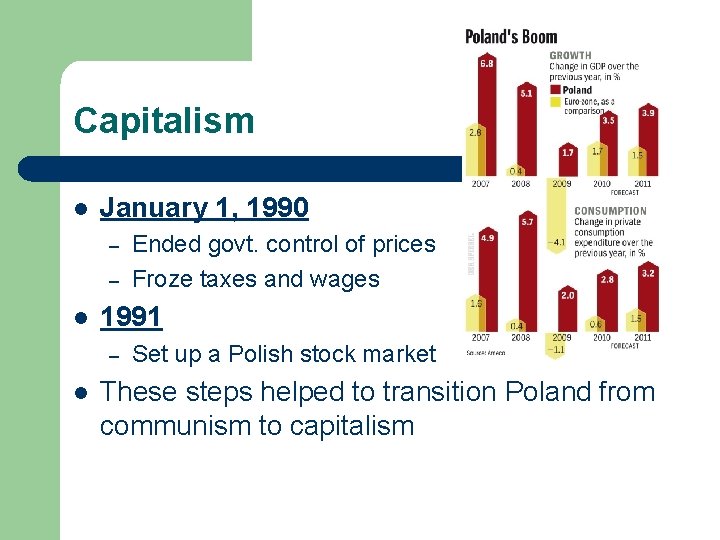
Capitalism l January 1, 1990 – – l 1991 – l Ended govt. control of prices Froze taxes and wages Set up a Polish stock market These steps helped to transition Poland from communism to capitalism
Economy l Foreign Investment – l Many foreign countries began to invest in Poland businesses Privatization – – Private businesses increased and helped the economy Started out selling in booths on the streets Began to by/rent storefronts More than 2 million private businesses in Poland
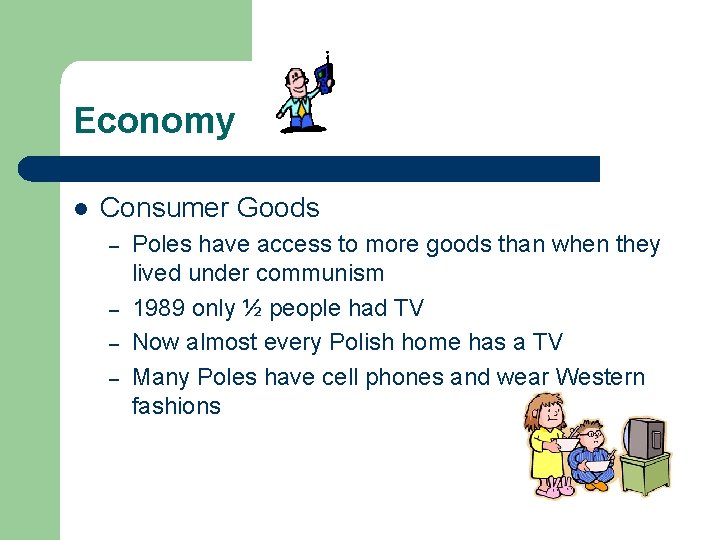
Economy l Consumer Goods – – Poles have access to more goods than when they lived under communism 1989 only ½ people had TV Now almost every Polish home has a TV Many Poles have cell phones and wear Western fashions
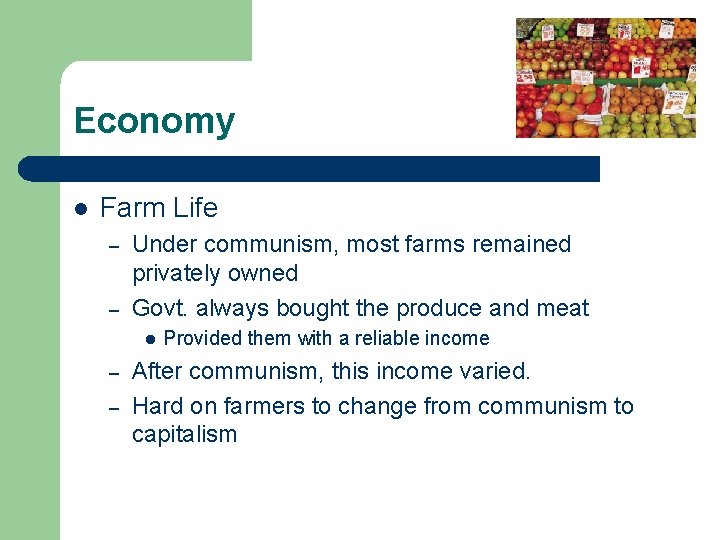
Economy l Farm Life – – Under communism, most farms remained privately owned Govt. always bought the produce and meat l – – Provided them with a reliable income After communism, this income varied. Hard on farmers to change from communism to capitalism
Future Challenges l Pollution – Coal-mining and steel production l – – Destroyed most of the forests in southern Poland Increased cancer rates By 2003, reduced many forms of pollution by 50%
Future Challenges l Unemployment – High unemployment rate l l l Many Poles move to other European countries – l Under communism, people were guaranteed jobs No such guarantee with capitalism About 1/3 Poles emigrate Poles hope that joining the EU will help to create a more stable employment rate