TA 202 A Introduction to Manufacturing Processes 2017

- Slides: 47
TA 202 A: Introduction to Manufacturing Processes (2017 -18, 1 st semester) Instructor-in-Charge Dr. J. Ramkumar Department of Mechanical Engineering IIT Kanpur Email: jrkumar@iitk. ac. in
Course Schedule Ø Lectures: Schedule : Tuesday (8: 00 -9: 00 AM) Venue: L-20 Ø Labs: Schedule: Monday-Friday (2: 00 -5: 00 PM) Venue: TA 202 ME Lab Goal: The course aims to impart the basic knowledge about the fundamental manufacturing techniques employed to convert a raw material into final product.
Course Contents 1. Introduction: Introduction to manufacturing, evolution of manufacturing, classification of manufacturing, Materials in Manufacturing. [2] 2. Conventional Material Removal Processes: Theory of chip formations, generation of surfaces, force and power relationships, cutting tool material and its geometry, tool wear and tool life, fundamentals of machine tools, types of machining operations. [3] 3. Unconventional Material Removal Processes: Introduction, need for advanced machining processes, classifications: mechanical energy processes, thermal energy processes, electro chemical machining etc. [3]
Course Contents 4. Layered/Generative Manufacturing Processes: Fundamentals of layered manufacturing, layered manufacturing technologies, classifications of additive manufacturing processes. [2] 5. Computer Numerical Control and Programming: Basics of numerically controlled machines, programming for NC machines. Programming examples including turning, drilling, milling etc. [1] 7. Engineering Metrology: Dimensions, limit, fit and tolerances, surfaces, structure and properties, surface texture and roughness, engineering metrology and instrumentation. [2]
Reference Books 1. Fundamental of Modern Manufacturing: Materials, Processes and Systems: M. P. Groover (John Wiley). 2. Manufacturing Science: A. Ghosh and A. K. Mallik (East- West Press). 3. Advanced Machining Processes: V. K. Jain (Allied Publishers). 4. Fundamental of Manufacturing Processes: G. K. Lal and S. K. Choudhuary (Narosa). 5. Introduction to Micromachining: Ed. V. K. Jain (Narosa). 6. Micro manufacturing Processed: Ed. : V. K. Jain (CRC Press). 7. Manufacturing Processes for Engineering Materials: S. Kalpakliam and S. R. Schmid (Prentice Hall).
Tutors Name Photograph Day Email Dr. Arvind Kumar Monday arvindkr@iitk. ac. in Dr. J. Ramkumar Tuesday jrkumar@iitk. ac. in Dr. S. K. Chaudhury Wednesday choudhary@iitk. ac. in Dr. Niraj Sinha Thursday nsinha@iitk. ac. in Dr. Shantanu Bhattacharya Friday bhattacs@iitk. ac. in
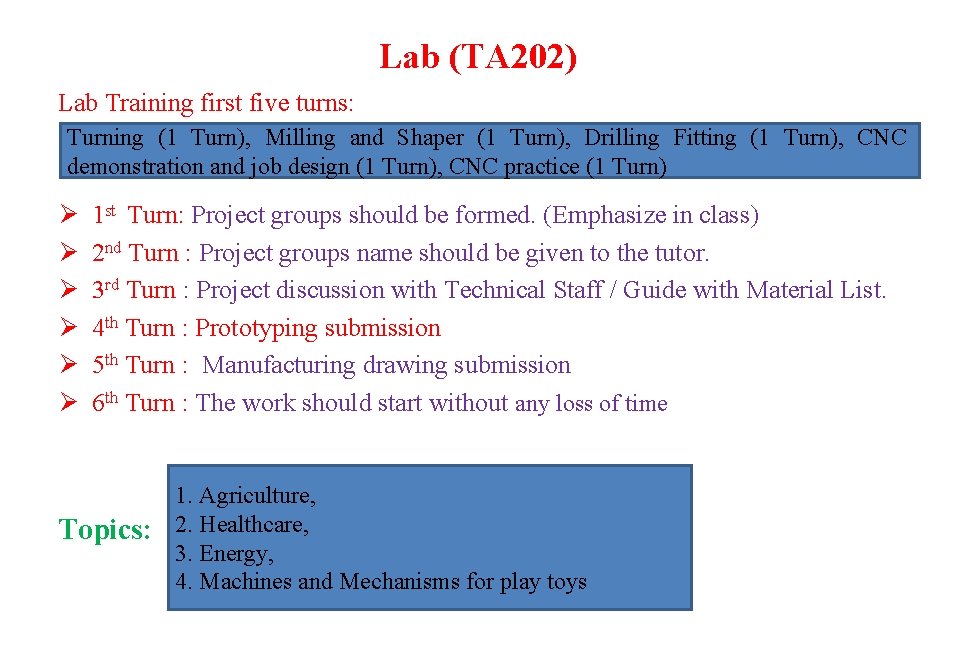
Lab (TA 202) Lab Training first five turns: Turning (1 Turn), Milling and Shaper (1 Turn), Drilling Fitting (1 Turn), CNC demonstration and job design (1 Turn), CNC practice (1 Turn) Ø Ø Ø 1 st Turn: Project groups should be formed. (Emphasize in class) 2 nd Turn : Project groups name should be given to the tutor. 3 rd Turn : Project discussion with Technical Staff / Guide with Material List. 4 th Turn : Prototyping submission 5 th Turn : Manufacturing drawing submission 6 th Turn : The work should start without any loss of time Topics: 1. Agriculture, 2. Healthcare, 3. Energy, 4. Machines and Mechanisms for play toys
Staff Members: TA 202 Lab Ph. No. 7984 P C GOND pcgond@iitk. ac. in LAB INCHARGE AMAN SINGH amans@iitk. ac. in G SREENIVASULU gaddam@iitk. ac. in RAKESH THAPLIYAL trakesh@iitk. ac. in H P SHARMA hpsharma@iitk. ac. in NAFE SINGH nafes@iitk. ac. in ANIL KUMAR JHA anilkjha@iitk. ac. in NAMDEO B MURKHE nbmurkhe@iitk. ac. in
Staff Members : TA 202 Lab KULDEEP VISHWAKARMA ARUN KUMAR DUBEY kvish@iitk. ac. in arunkd@iitk. ac. in RAHUL rahul@iitk. ac. in MAHESH KUMAR mahesh@iitk. ac. in RABINDRA NATH TUDU rntudu@iitk. ac. in KISHAN BABU PRAJAPATI kishan@iitk. ac. in DHEERAJ KUMAR SONI dheerajk@iitk. ac. in GREESH PRATAP CHATURVEDI gpratap@iitk. ac. in
Staff Members : TA 202 Lab PANKAJ KUMAR pankajkm@iitk. ac. in NEERAJ AWASTHI VIPIN KUMAR
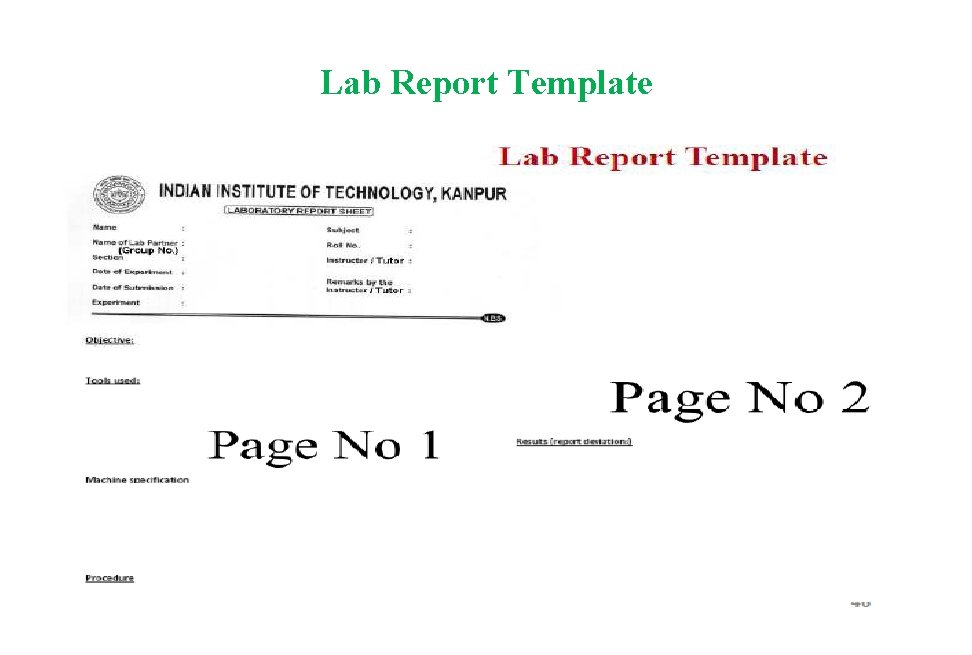
Lab Report Template
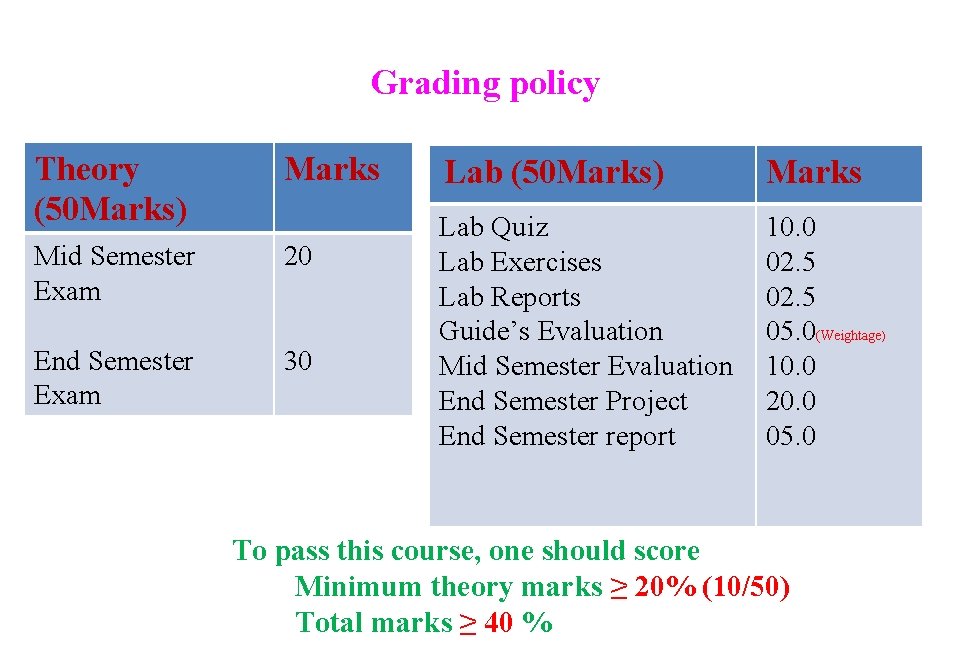
Grading policy Theory (50 Marks) Marks Mid Semester Exam 20 End Semester Exam 30 Lab (50 Marks) Marks Lab Quiz Lab Exercises Lab Reports Guide’s Evaluation Mid Semester Evaluation End Semester Project End Semester report 10. 0 02. 5 05. 0(Weightage) 10. 0 20. 0 05. 0 To pass this course, one should score Minimum theory marks ≥ 20% (10/50) Total marks ≥ 40 %
Information About the Course TA 202 A: Introduction to Manufacturing Processes TA: Technical Arts. Introduction: Latin verb introducere, refers to a beginning. Manufacturing: Something made from raw materials by hand or by machinery. Process: A series of actions that you take in order to achieve a result. Manufacturing (Latin word) : Manus (Made) + factus (Hands) : Made by hands. v Present perspective: Involves making products from raw material by various processes, machinery, & operations following a well organized plan for each activity required.
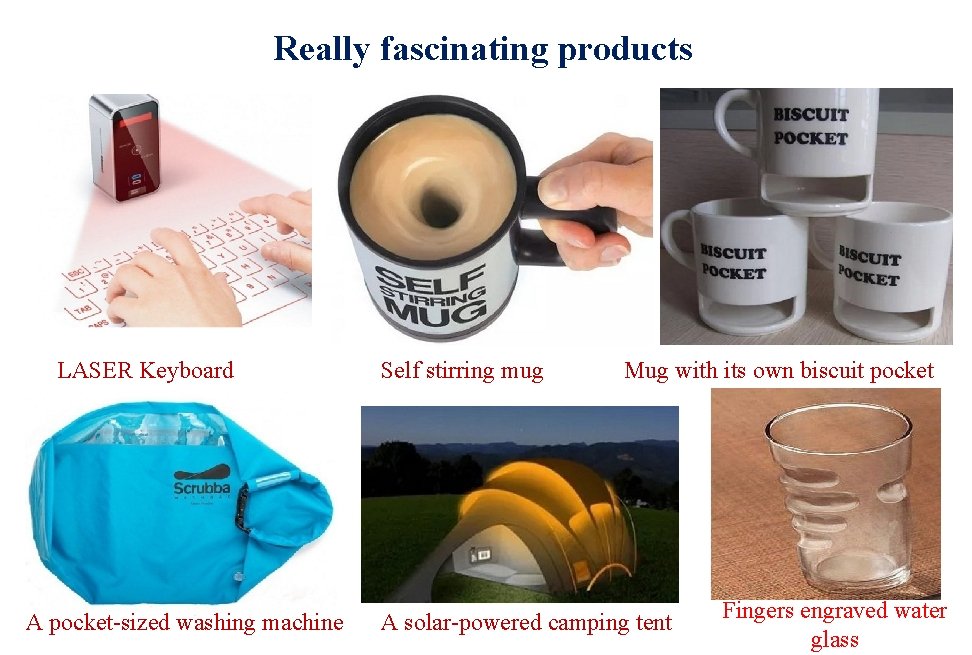
Really fascinating products LASER Keyboard A pocket-sized washing machine Self stirring mug Mug with its own biscuit pocket A solar-powered camping tent Fingers engraved water glass
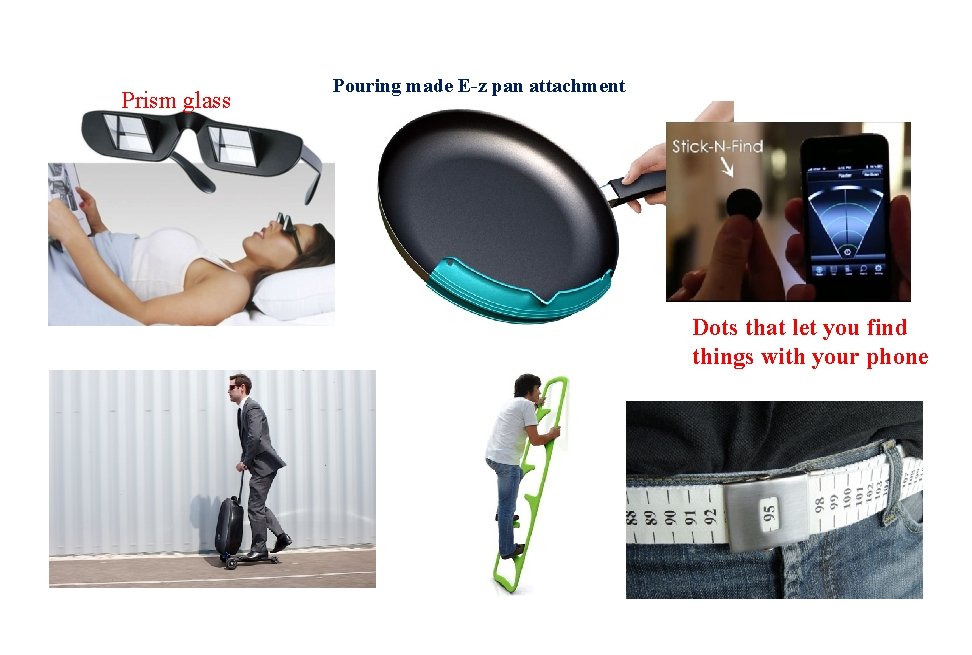
Prism glass Pouring made E-z pan attachment Dots that let you find things with your phone
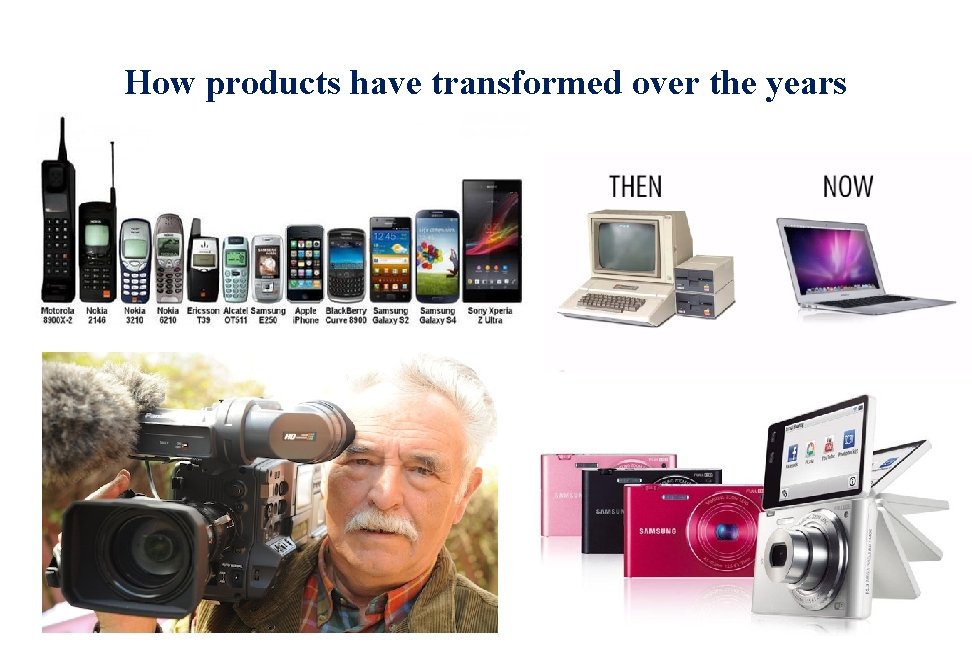
How products have transformed over the years
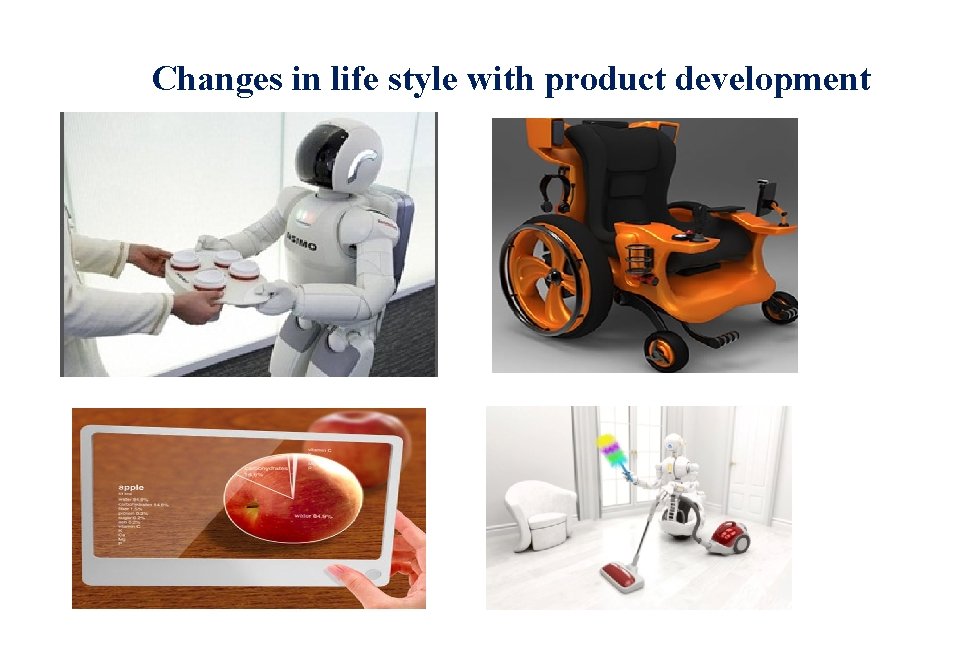
Changes in life style with product development
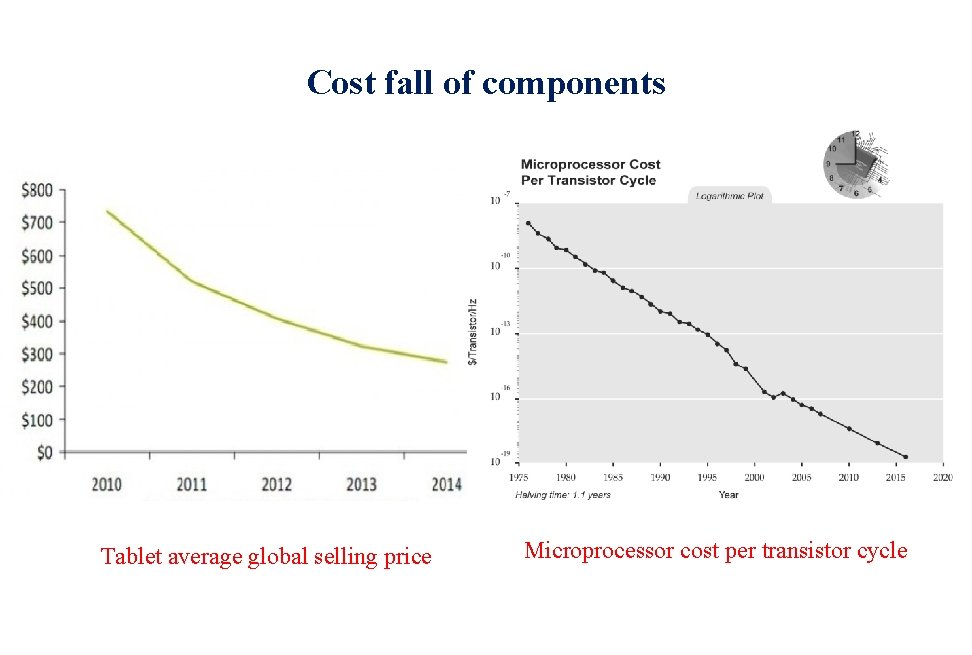
Cost fall of components Tablet average global selling price Microprocessor cost per transistor cycle
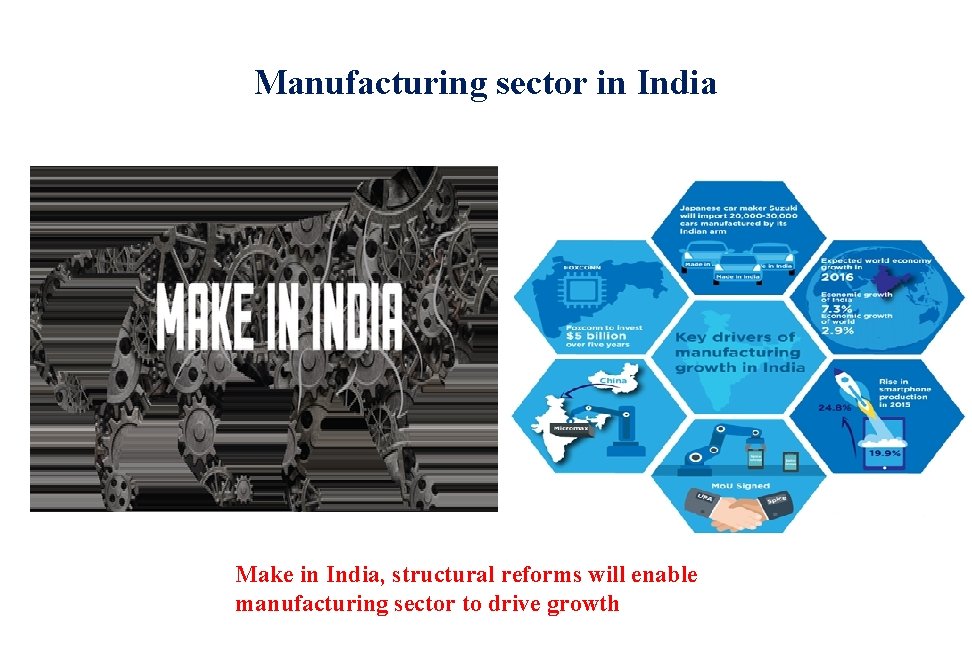
Manufacturing sector in India Make in India, structural reforms will enable manufacturing sector to drive growth
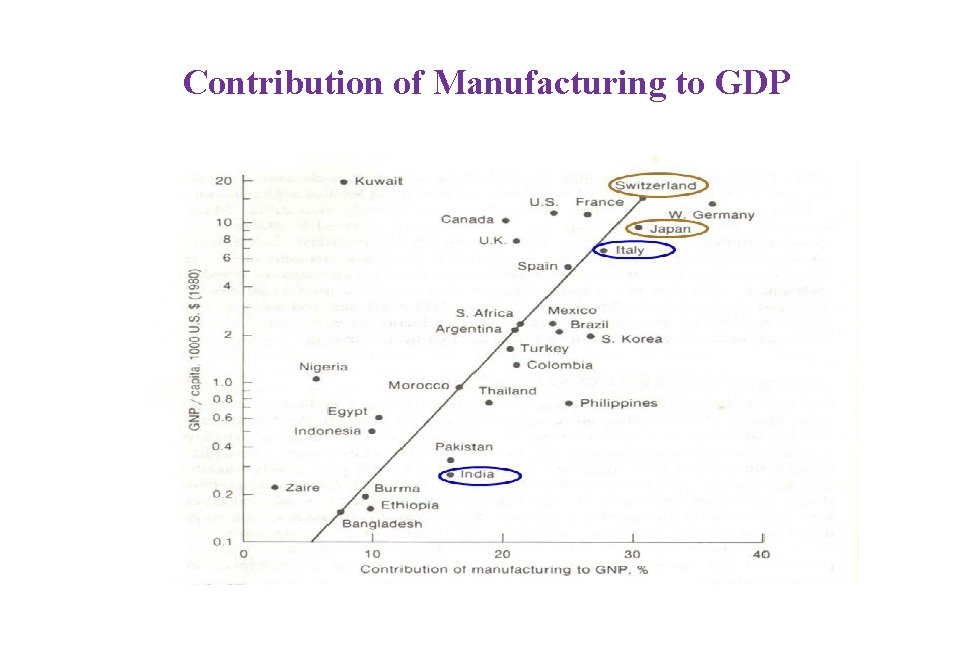
Contribution of Manufacturing to GDP
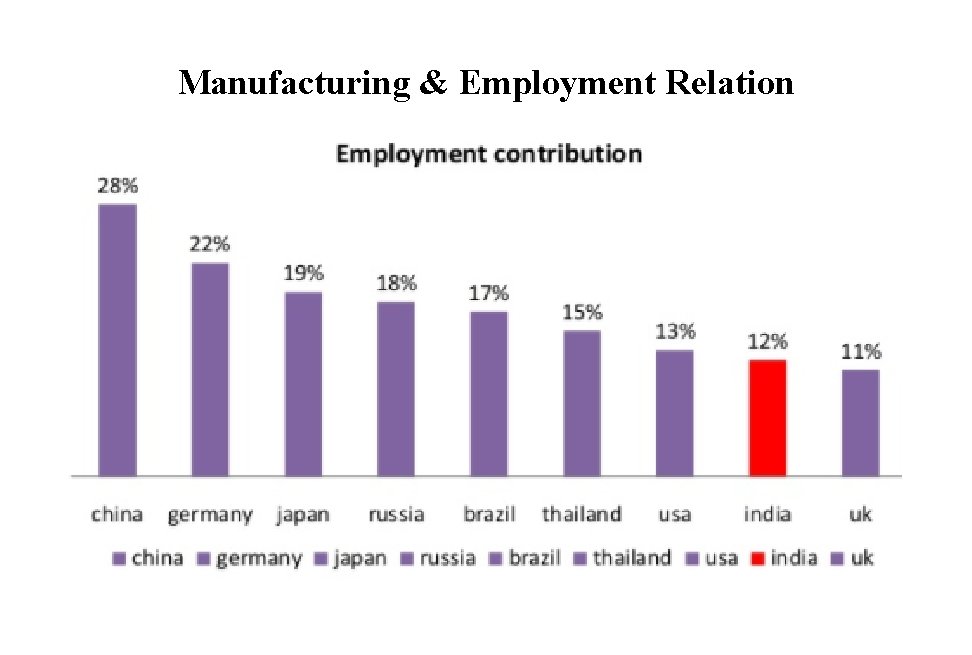
Manufacturing & Employment Relation
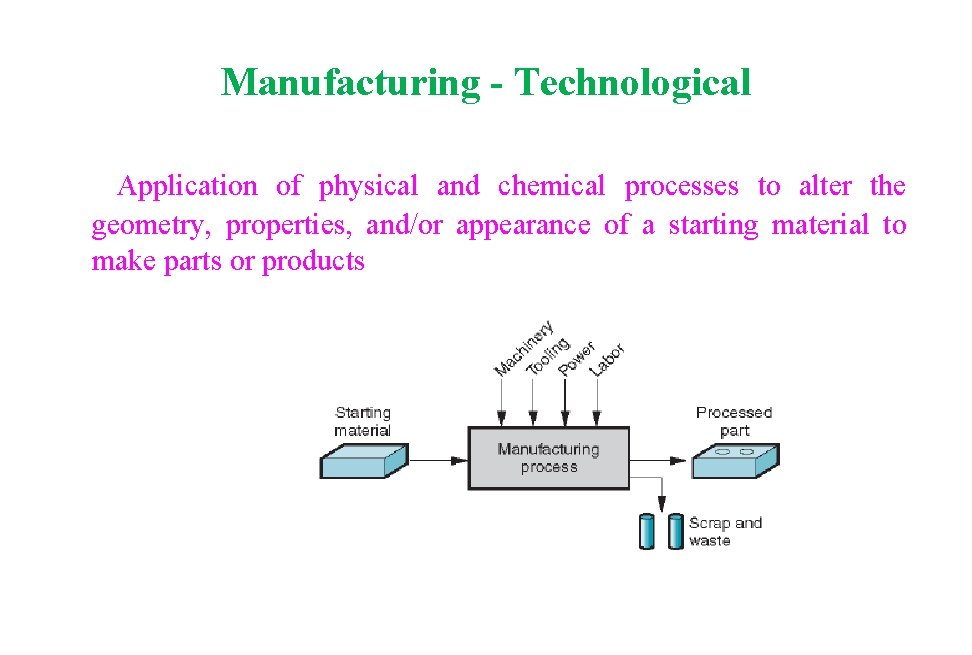
Manufacturing - Technological Application of physical and chemical processes to alter the geometry, properties, and/or appearance of a starting material to make parts or products
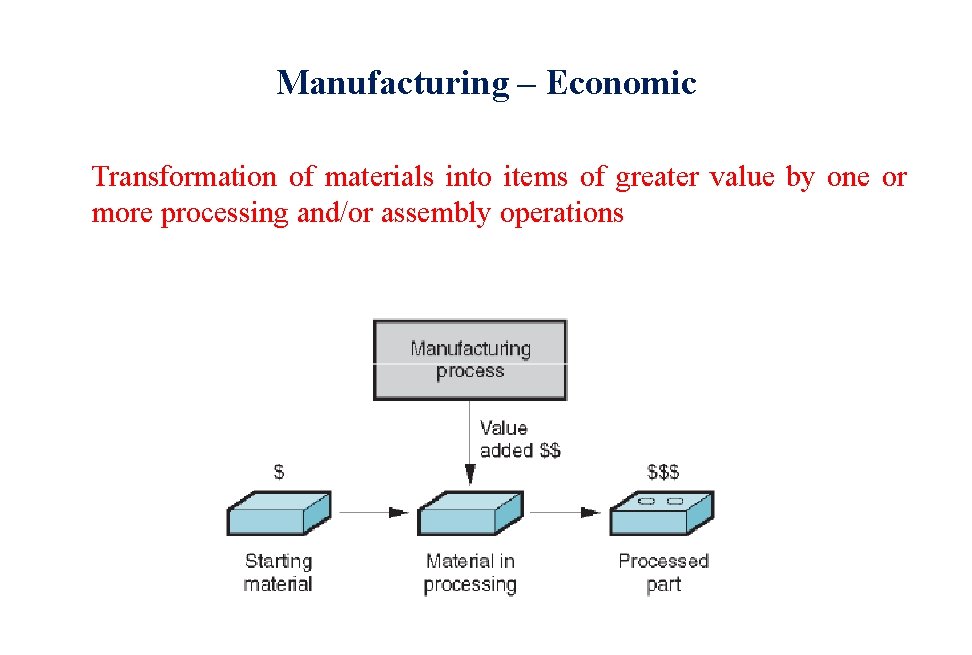
Manufacturing – Economic Transformation of materials into items of greater value by one or more processing and/or assembly operations
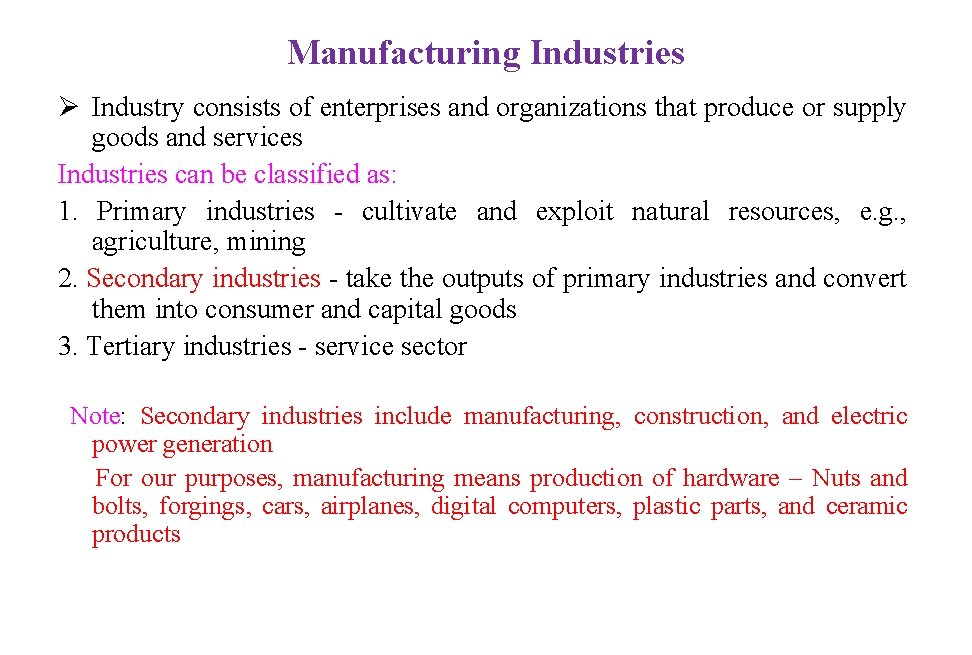
Manufacturing Industries Ø Industry consists of enterprises and organizations that produce or supply goods and services Industries can be classified as: 1. Primary industries - cultivate and exploit natural resources, e. g. , agriculture, mining 2. Secondary industries - take the outputs of primary industries and convert them into consumer and capital goods 3. Tertiary industries - service sector Note: Secondary industries include manufacturing, construction, and electric power generation For our purposes, manufacturing means production of hardware – Nuts and bolts, forgings, cars, airplanes, digital computers, plastic parts, and ceramic products
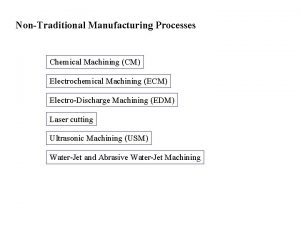
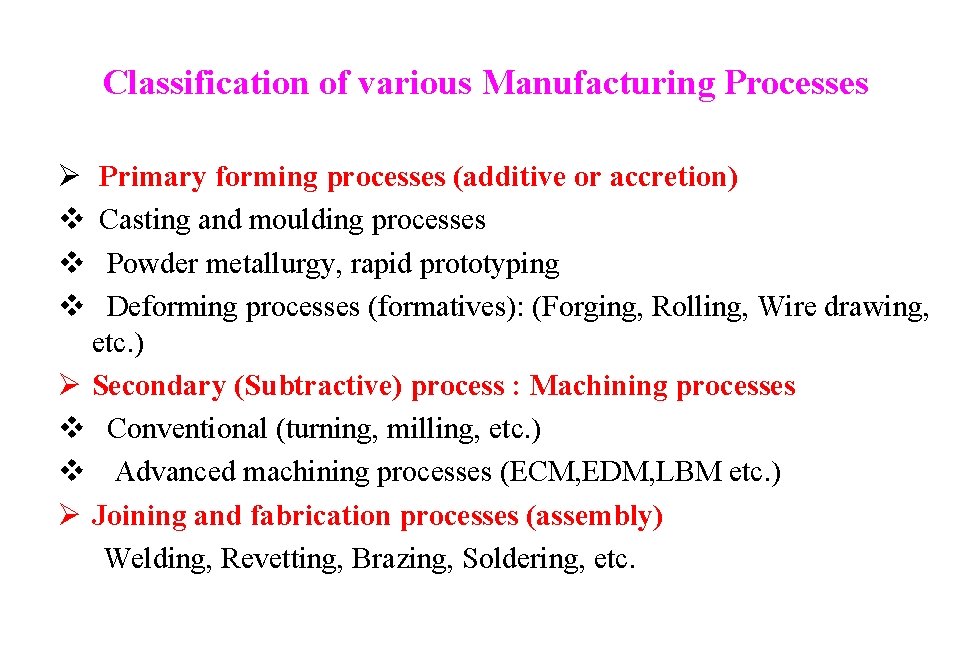
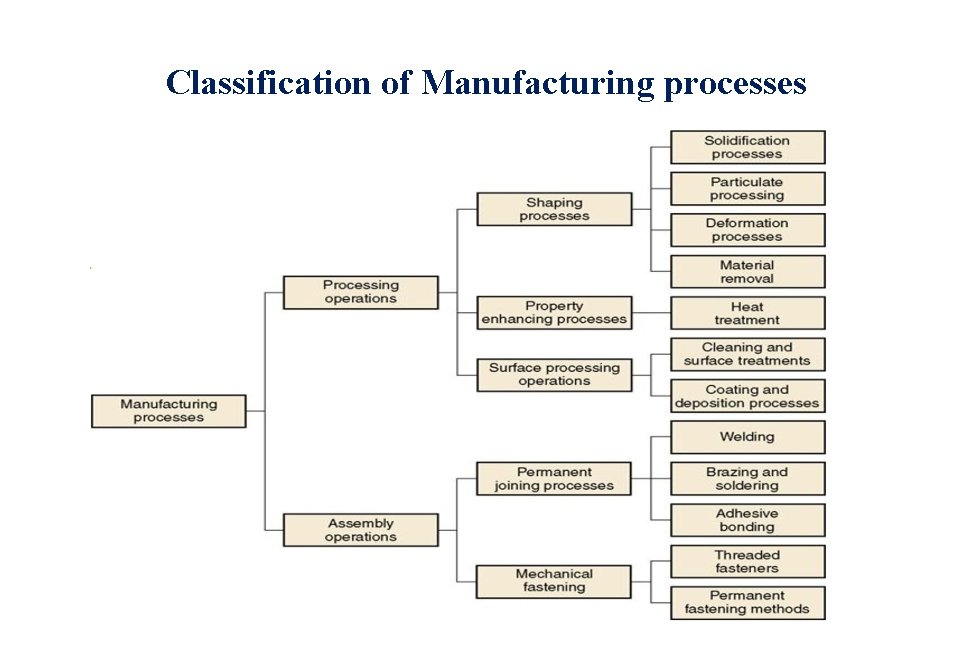
Classification of various Manufacturing Processes Ø Primary forming processes (additive or accretion) v Casting and moulding processes v Powder metallurgy, rapid prototyping v Deforming processes (formatives): (Forging, Rolling, Wire drawing, etc. ) Ø Secondary (Subtractive) process : Machining processes v Conventional (turning, milling, etc. ) v Advanced machining processes (ECM, EDM, LBM etc. ) Ø Joining and fabrication processes (assembly) Welding, Revetting, Brazing, Soldering, etc.
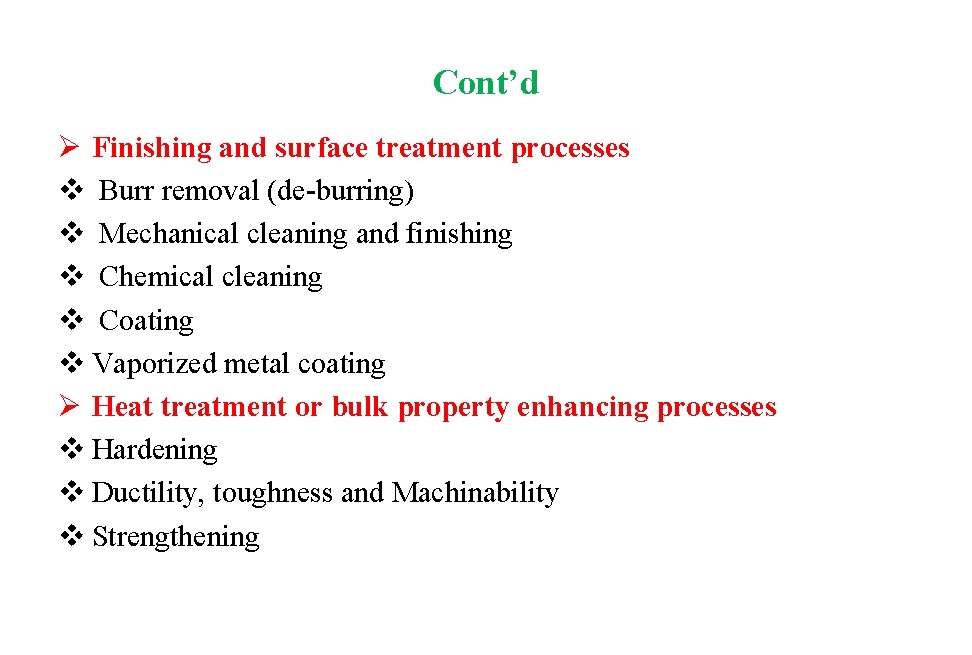
Cont’d Ø Finishing and surface treatment processes v Burr removal (de-burring) v Mechanical cleaning and finishing v Chemical cleaning v Coating v Vaporized metal coating Ø Heat treatment or bulk property enhancing processes v Hardening v Ductility, toughness and Machinability v Strengthening
Classification of Manufacturing processes
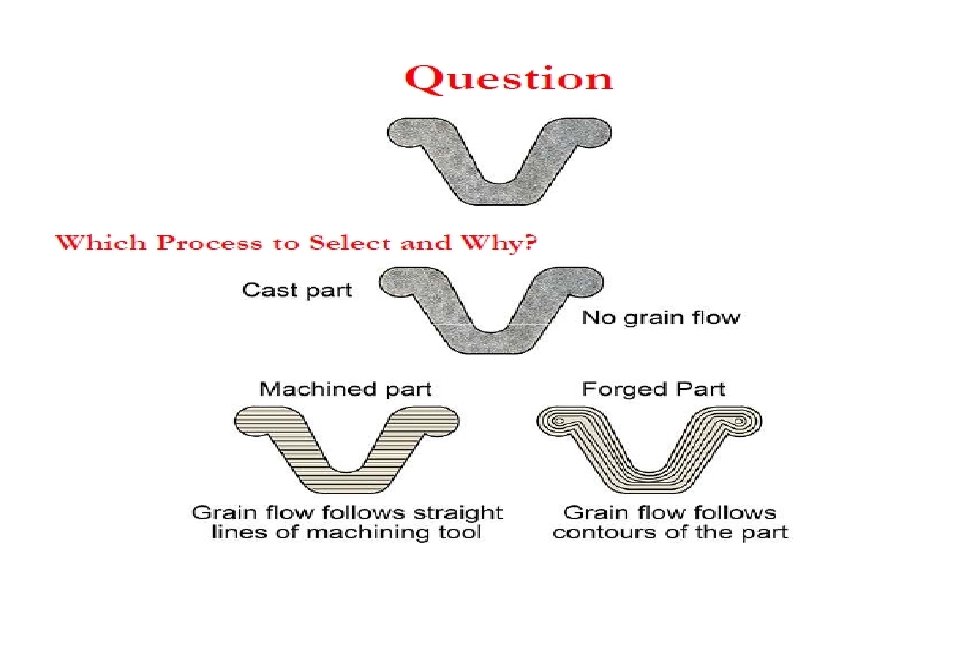
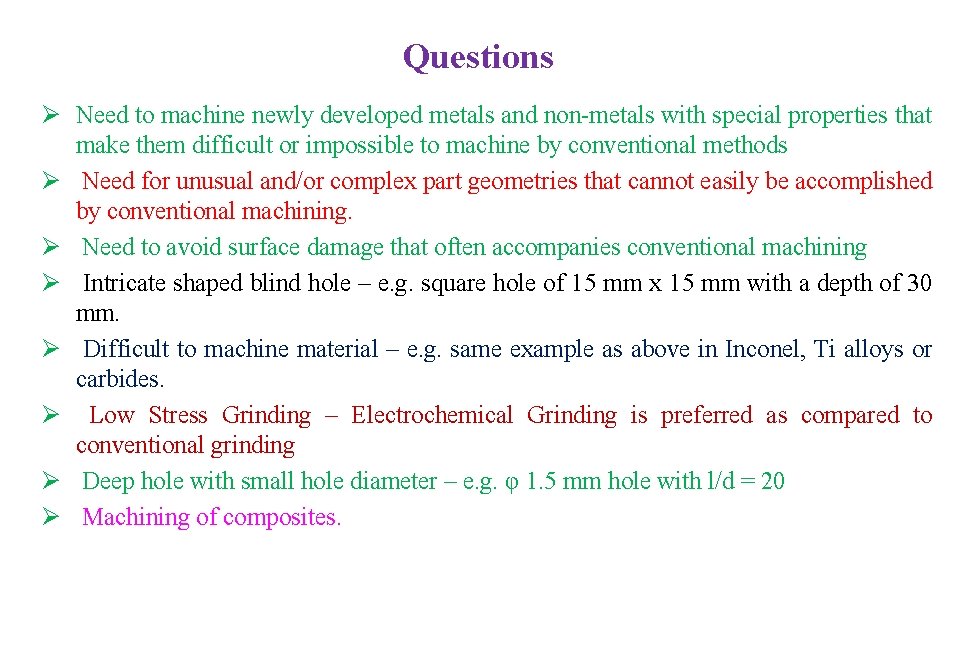
Questions Ø Need to machine newly developed metals and non-metals with special properties that make them difficult or impossible to machine by conventional methods Ø Need for unusual and/or complex part geometries that cannot easily be accomplished by conventional machining. Ø Need to avoid surface damage that often accompanies conventional machining Ø Intricate shaped blind hole – e. g. square hole of 15 mm x 15 mm with a depth of 30 mm. Ø Difficult to machine material – e. g. same example as above in Inconel, Ti alloys or carbides. Ø Low Stress Grinding – Electrochemical Grinding is preferred as compared to conventional grinding Ø Deep hole with small hole diameter – e. g. φ 1. 5 mm hole with l/d = 20 Ø Machining of composites.
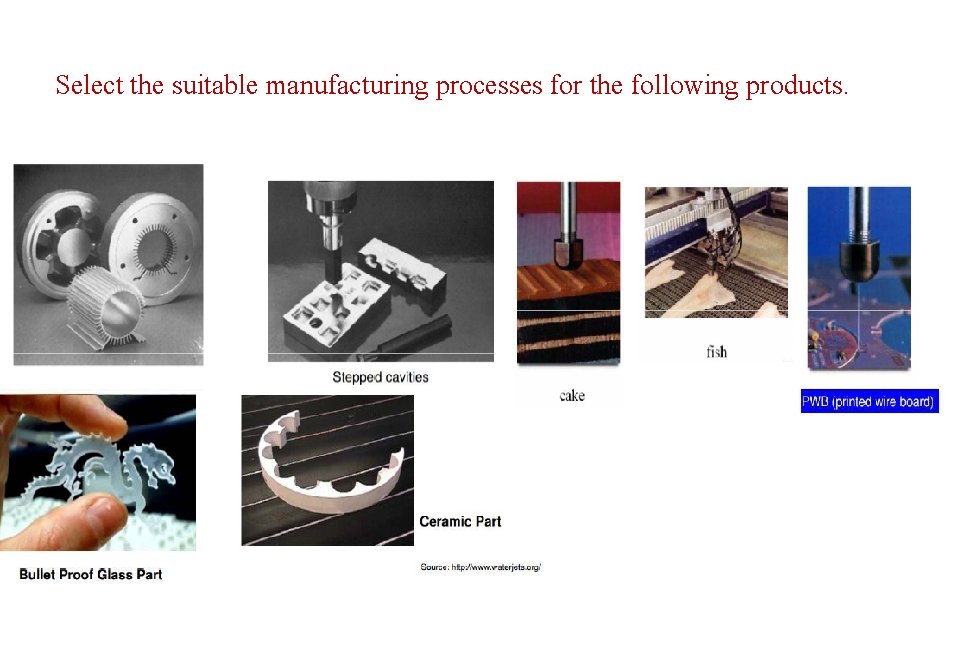
Select the suitable manufacturing processes for the following products.
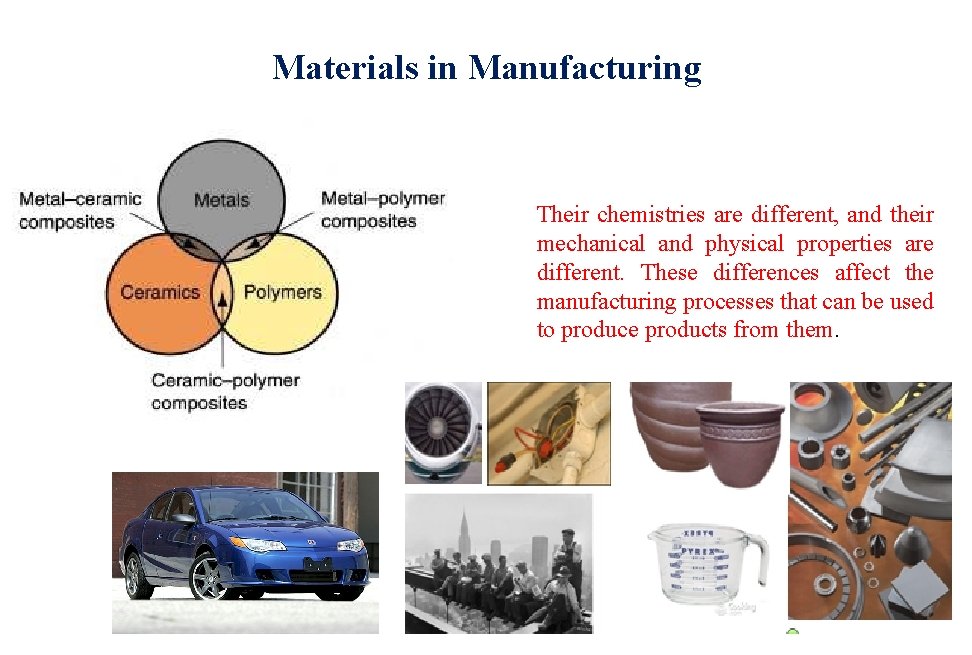
Materials in Manufacturing Their chemistries are different, and their mechanical and physical properties are different. These differences affect the manufacturing processes that can be used to produce products from them.
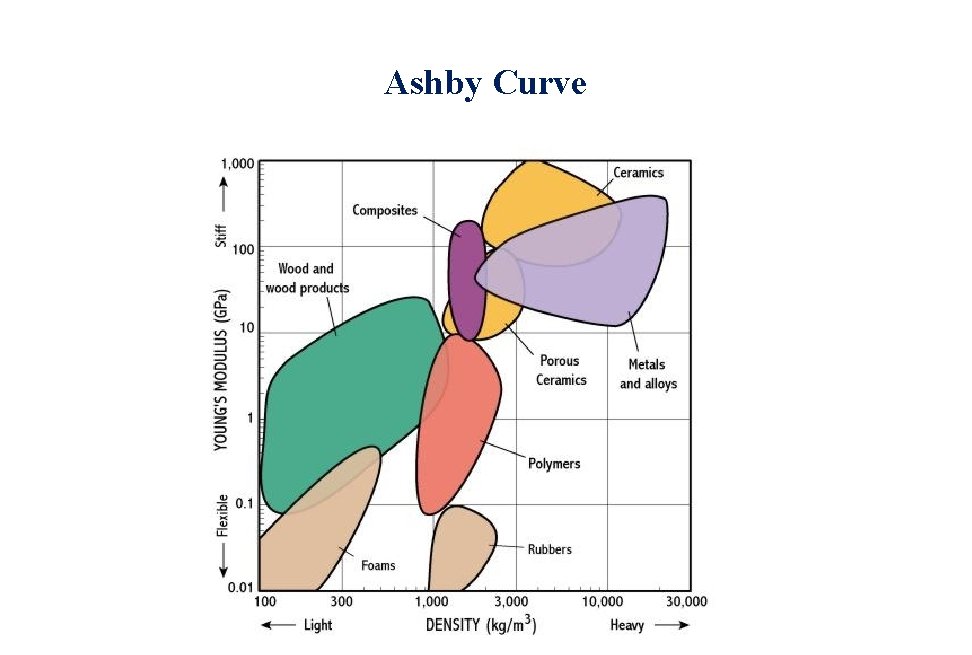
Ashby Curve
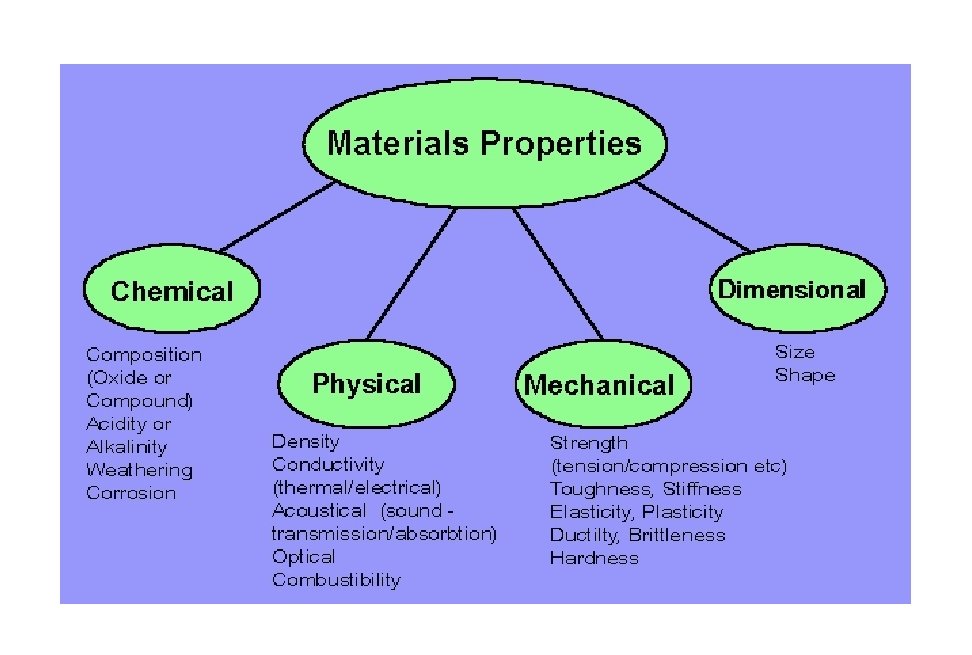
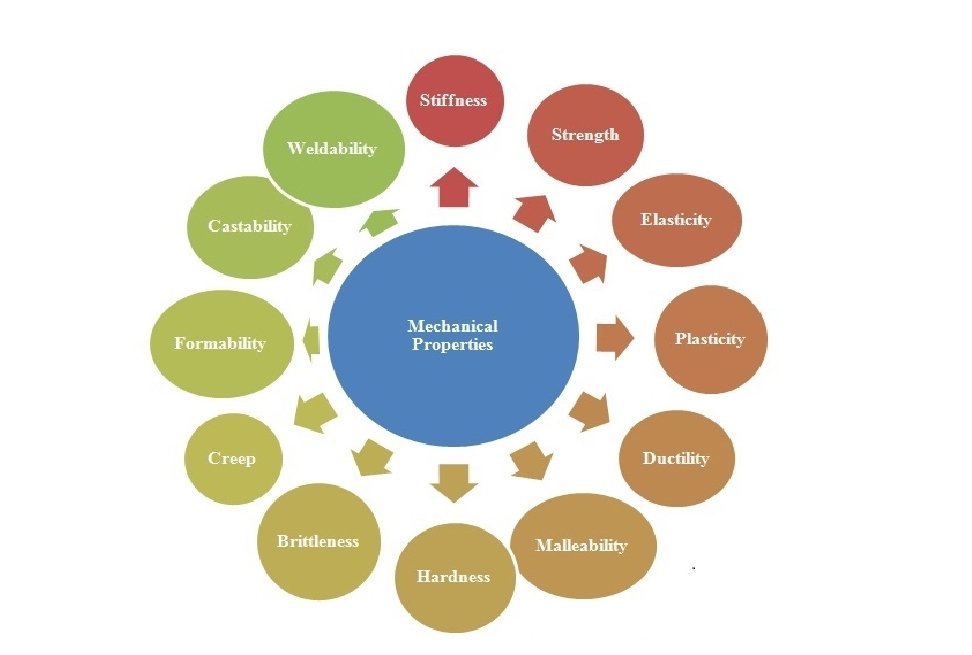
Mechanical properties Tensile strength – Measures the force required to pull something such as rope, wire or a structural beam to the point where it breaks Ductility – A measure of how much strain a material can take before rupturing. Malleability – The pproperty of a material that can be worked or hammered or shaped without breaking Brittleness –Breaking or shattering of a material when subjected to stress (when force is applied to it). Elasticity – The property of a material that returns to its original shape after stress (e. g. external forces) that made it deform or distort is removed Plasticity - The deformation of a material undergoing non-reversible changes of shape in response to applied forces
Mechanical properties Toughness – The ability of a material to absorb energy and plastically deform without fracturing Hardness – The property of being rigid and resistant to pressure; not easily scratched Machinability – The property of a material that can be shaped by hammering, pressing, rolling
Physical properties v Specific heat – The heat required to raise the temperature of one gram of a substance by one degree centigrade (J/kg K) v Density – Mass per unit volume expressed in such units as kg/cm 3 v Thermal conductivity –Rate at which heat flows through a given material (W/m K). v Melting point – A temperature at which a solid begins to liquify v Electrical conductivity – A measure of how strongly a material opposes the flow of electric current (Ω⋅m) v Coefficient of thermal expansion – Degree of expansion divided by the change in temperature (m/°C)
Metals Usually alloys, which are composed of two or more elements, at least one of which is metallic. Two basic groups: 1. Ferrous metals - Based on iron, comprises about 75% of metal tonnage in the world: Steel and cast iron 2. Nonferrous metals - All other metallic elements and their alloys: Aluminum, copper, nickel, silver, tin, etc. Metal properties: v. Good conductors of electricity and heat v. Lustrous appearance v. Susceptible to corrosion v. Strong, but deformable
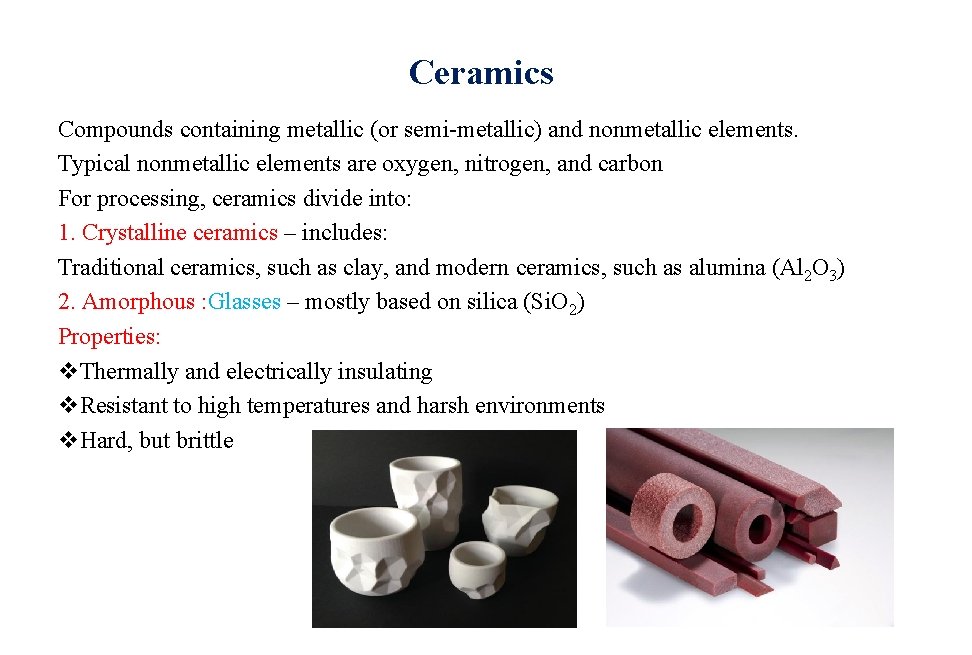
Ceramics Compounds containing metallic (or semi-metallic) and nonmetallic elements. Typical nonmetallic elements are oxygen, nitrogen, and carbon For processing, ceramics divide into: 1. Crystalline ceramics – includes: Traditional ceramics, such as clay, and modern ceramics, such as alumina (Al 2 O 3) 2. Amorphous : Glasses – mostly based on silica (Si. O 2) Properties: v. Thermally and electrically insulating v. Resistant to high temperatures and harsh environments v. Hard, but brittle
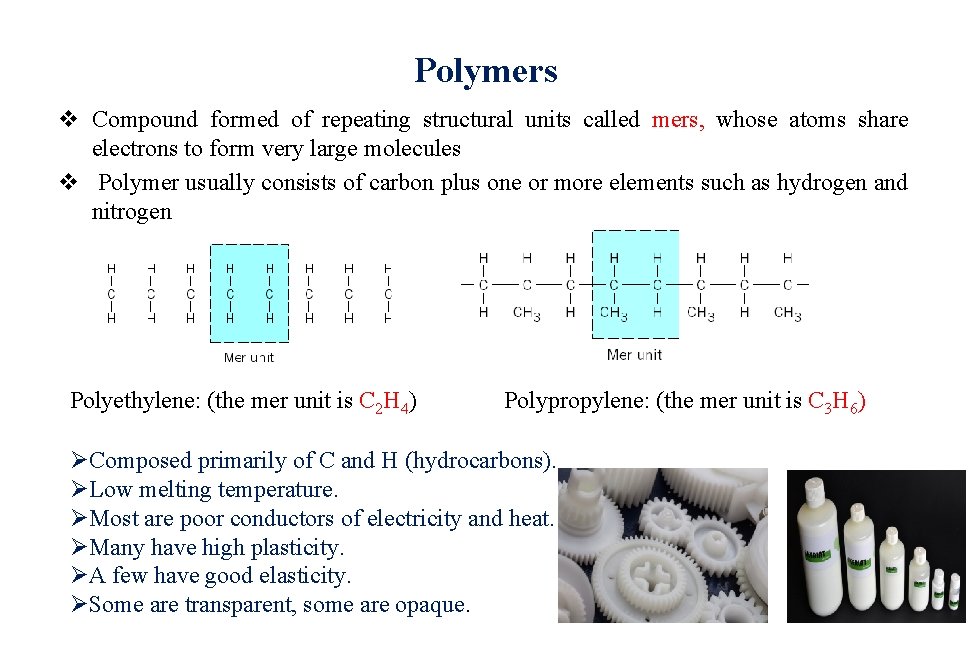
Polymers v Compound formed of repeating structural units called mers, whose atoms share electrons to form very large molecules v Polymer usually consists of carbon plus one or more elements such as hydrogen and nitrogen Polyethylene: (the mer unit is C 2 H 4) Polypropylene: (the mer unit is C 3 H 6) ØComposed primarily of C and H (hydrocarbons). ØLow melting temperature. ØMost are poor conductors of electricity and heat. ØMany have high plasticity. ØA few have good elasticity. ØSome are transparent, some are opaque.
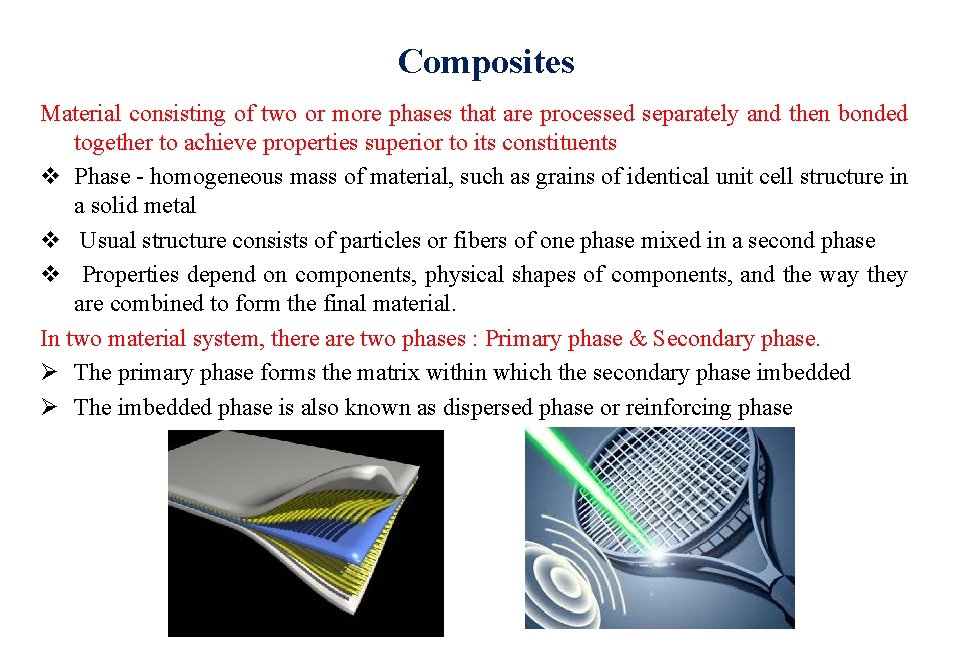
Composites Material consisting of two or more phases that are processed separately and then bonded together to achieve properties superior to its constituents v Phase - homogeneous mass of material, such as grains of identical unit cell structure in a solid metal v Usual structure consists of particles or fibers of one phase mixed in a second phase v Properties depend on components, physical shapes of components, and the way they are combined to form the final material. In two material system, there are two phases : Primary phase & Secondary phase. Ø The primary phase forms the matrix within which the secondary phase imbedded Ø The imbedded phase is also known as dispersed phase or reinforcing phase
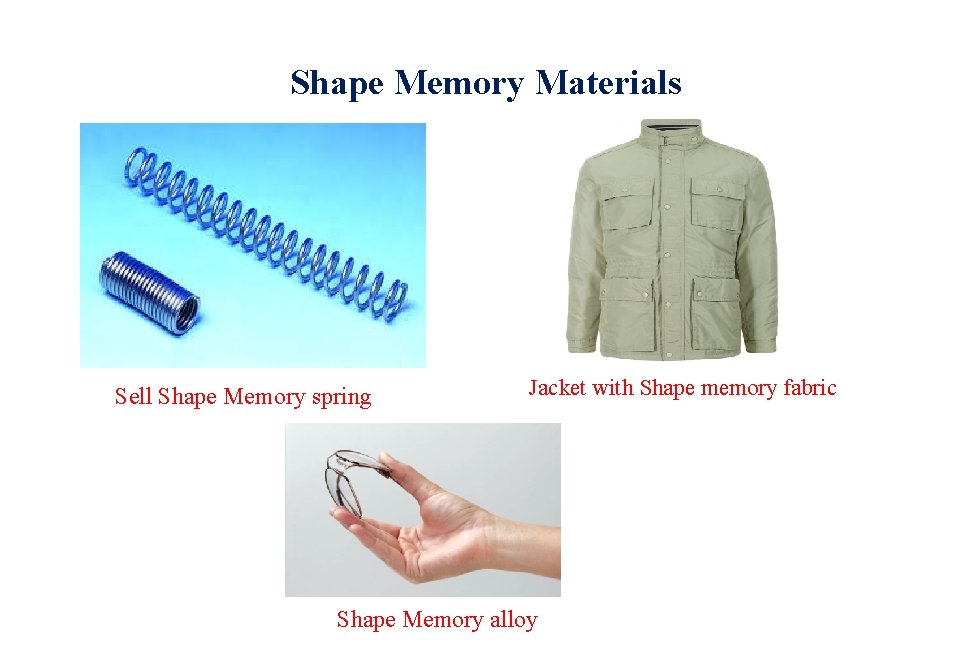
Shape Memory Materials Definition: Shape Memory Materials (SMM) are those materials which, after being deformed plastically (i. e. , permanently) at the room temperature into various shapes, return to their original shapes upon heating. Examples: Typical Shape Memory Alloys are Ø 55% Ni-45%Ti Ø Copper-Aluminum-Nickel Ø Copper-Zinc-Aluminum Ø Iron-Manganese-Silicon Characteristics: v SMM have good ductility, good corrosion resistance, high electrical conductivity v Behavior of SMM can also be reversible, i. e. , shape can switch back and forth upon heating Applications: v Can be used To generate motion and/or force in temperature sensitive actuators v Eyeglass frames, connectors, clamps and fasteners
Shape Memory Materials Sell Shape Memory spring Jacket with Shape memory fabric Shape Memory alloy
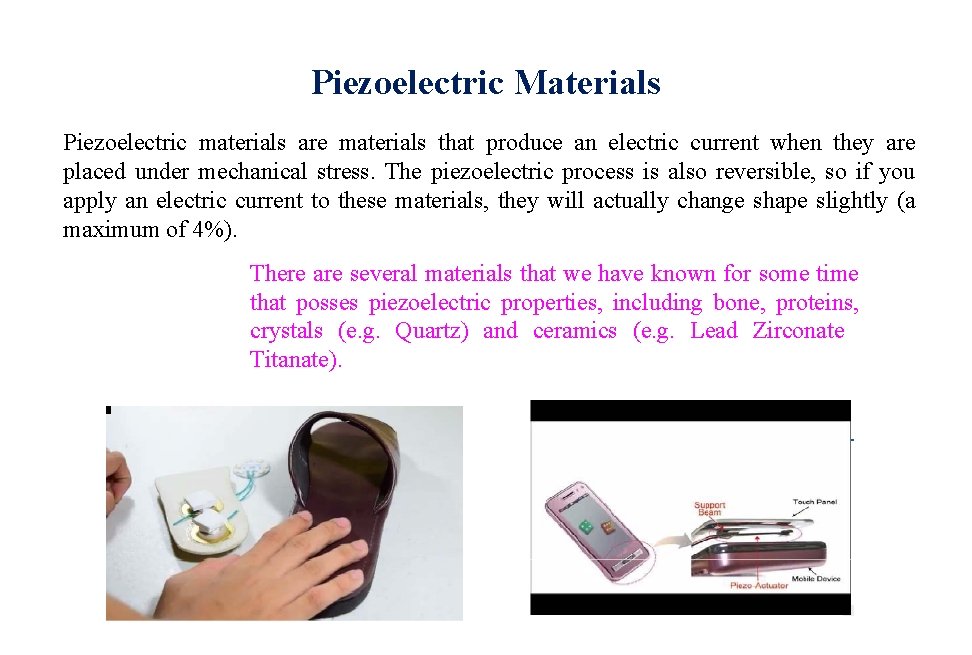
Piezoelectric Materials Piezoelectric materials are materials that produce an electric current when they are placed under mechanical stress. The piezoelectric process is also reversible, so if you apply an electric current to these materials, they will actually change shape slightly (a maximum of 4%). There are several materials that we have known for some time that posses piezoelectric properties, including bone, proteins, crystals (e. g. Quartz) and ceramics (e. g. Lead Zirconate Titanate).
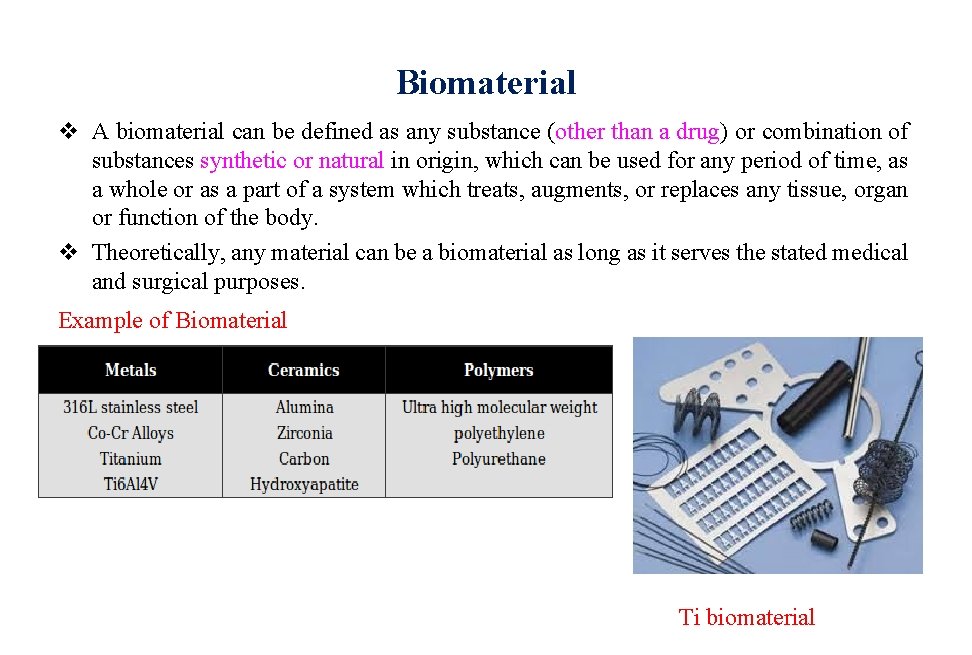
Biomaterial v A biomaterial can be defined as any substance (other than a drug) or combination of substances synthetic or natural in origin, which can be used for any period of time, as a whole or as a part of a system which treats, augments, or replaces any tissue, organ or function of the body. v Theoretically, any material can be a biomaterial as long as it serves the stated medical and surgical purposes. Example of Biomaterial Ti biomaterial
Biomaterial applications Orthopedic Applications: v Metallic materials are normally used for load bearing members such as pins and plates and femoral stems etc. v Ceramics such as alumina and zirconia are used for wear applications in joint replacements. v Polymers such as ultra high molecular weight polyethylene are used as articulating surfaces against ceramic components in joint replacements. Dental Applications: v Metallic biomaterials have been used as pins for anchoring tooth implants and as parts of orthodontic devices. v Ceramics have found uses as tooth implants including alumina and dental porcelains. v Polymers, are also orthodontic devices such as plates and dentures.
Recap v v v Overview of the course Manufacturing: Introduction Classification of Manufacturing Materials in Manufacturing Different Materials in Manufacturing