System Programming Lecture Note 7 IA History and


- Slides: 40
System Programming Lecture Note 7. IA: History and Features November 5, 2019 Jongmoo Choi Dept. of Software Dankook University choijm@dankook. ac. kr http: //embedded. dankook. ac. kr/~choijm
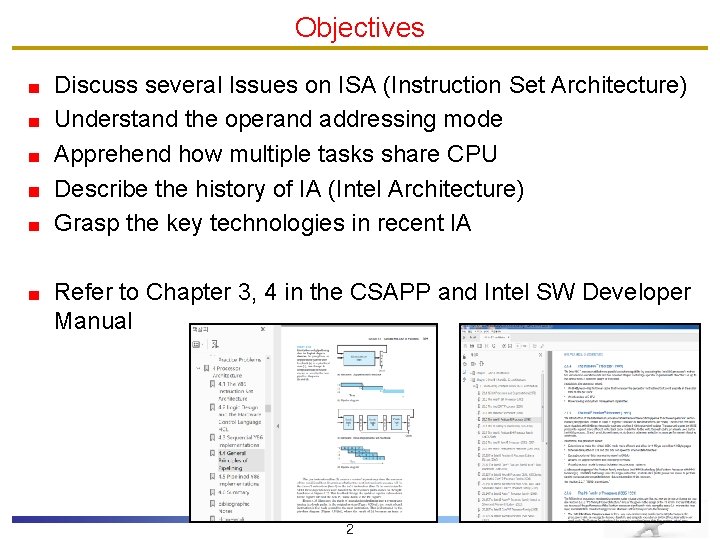
Objectives Discuss several Issues on ISA (Instruction Set Architecture) Understand the operand addressing mode Apprehend how multiple tasks share CPU Describe the history of IA (Intel Architecture) Grasp the key technologies in recent IA Refer to Chapter 3, 4 in the CSAPP and Intel SW Developer Manual 2
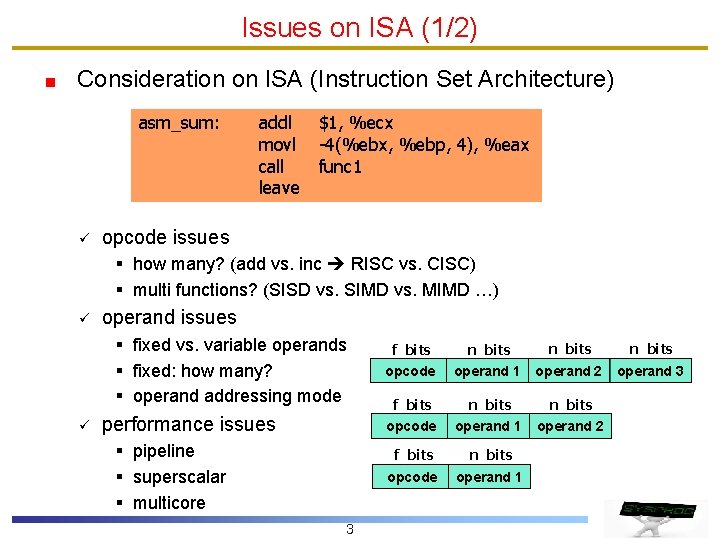
Issues on ISA (1/2) Consideration on ISA (Instruction Set Architecture) asm_sum: ü addl movl call leave $1, %ecx -4(%ebx, %ebp, 4), %eax func 1 opcode issues § how many? (add vs. inc RISC vs. CISC) § multi functions? (SISD vs. SIMD vs. MIMD …) ü operand issues § fixed vs. variable operands § fixed: how many? § operand addressing mode ü performance issues § pipeline § superscalar § multicore 3 f bits n bits opcode operand 1 operand 2 operand 3 f bits n bits opcode operand 1 n bits operand 2 f bits n bits opcode operand 1
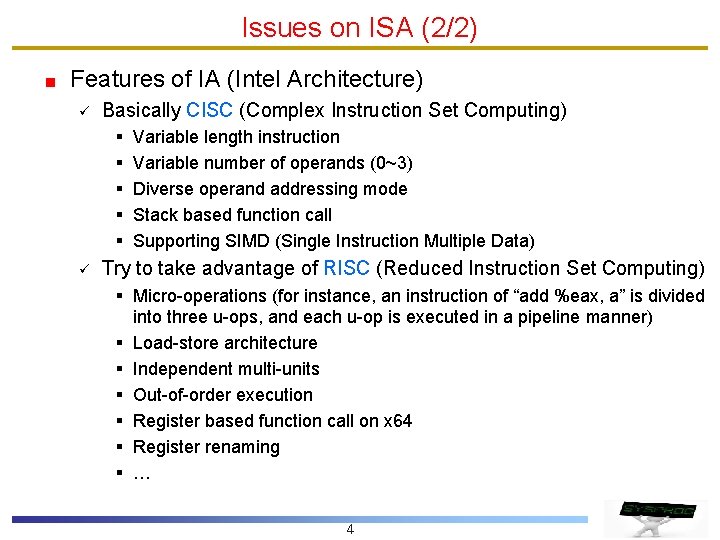
Issues on ISA (2/2) Features of IA (Intel Architecture) ü Basically CISC (Complex Instruction Set Computing) § § § ü Variable length instruction Variable number of operands (0~3) Diverse operand addressing mode Stack based function call Supporting SIMD (Single Instruction Multiple Data) Try to take advantage of RISC (Reduced Instruction Set Computing) § Micro-operations (for instance, an instruction of “add %eax, a” is divided into three u-ops, and each u-op is executed in a pipeline manner) § Load-store architecture § Independent multi-units § Out-of-order execution § Register based function call on x 64 § Register renaming § … 4
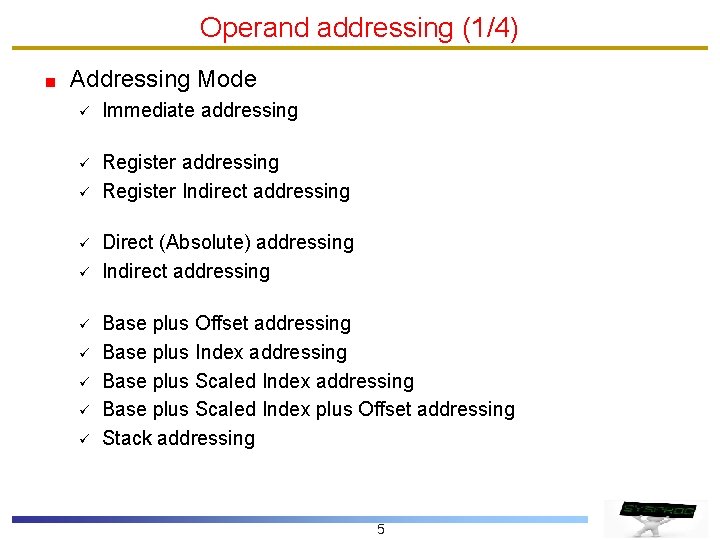
Operand addressing (1/4) Addressing Mode ü Immediate addressing ü Register addressing Register Indirect addressing ü ü ü ü Direct (Absolute) addressing Indirect addressing Base plus Offset addressing Base plus Index addressing Base plus Scaled Index plus Offset addressing Stack addressing 5
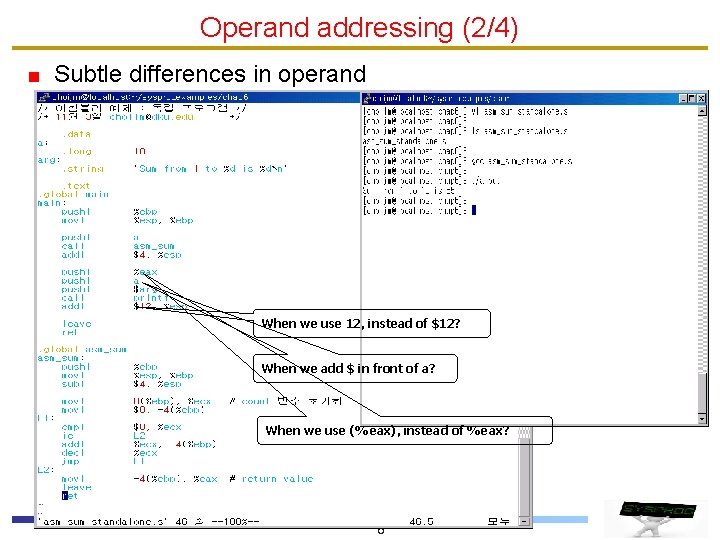
Operand addressing (2/4) Subtle differences in operand When we use 12, instead of $12? When we add $ in front of a? When we use (%eax), instead of %eax? 6
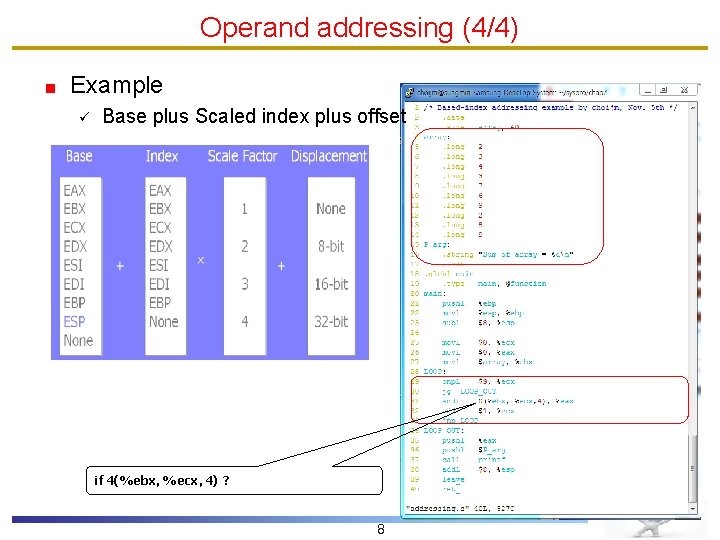
Operand addressing (3/4) Operand Addressing in IA ü immediate operand ü register operand ü Memory operand addl $0 x 12, %eax § direct addressing § register indirect addressing § Base plus offset addressing § Base plus Scaled index plus offset addressing displacement(base, index, scale) 7
Operand addressing (4/4) Example ü Base plus Scaled index plus offset if 4(%ebx, %ecx, 4) ? 8
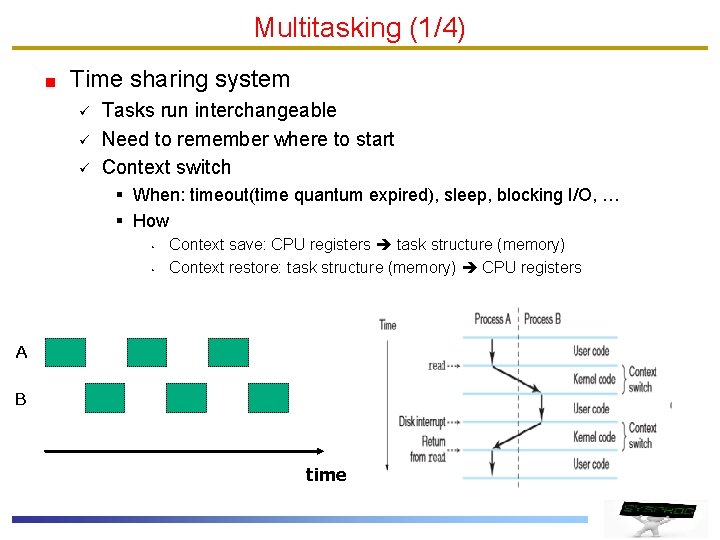
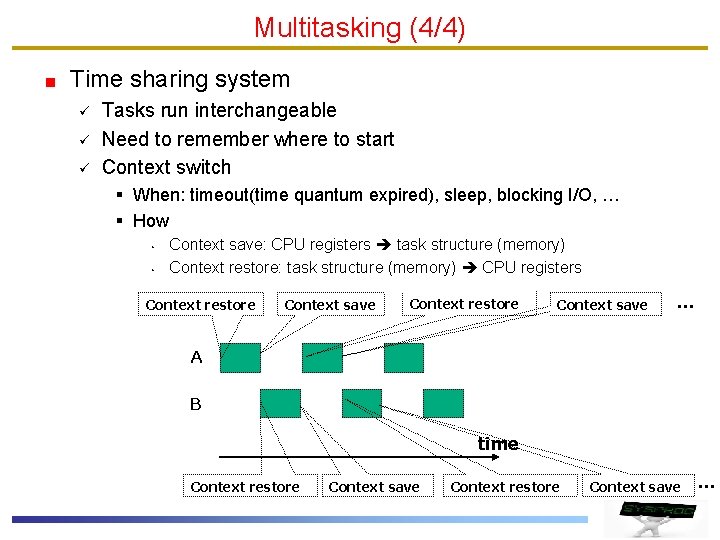
Multitasking (1/4) Time sharing system ü ü ü Tasks run interchangeable Need to remember where to start Context switch § When: timeout(time quantum expired), sleep, blocking I/O, … § How • • Context save: CPU registers task structure (memory) Context restore: task structure (memory) CPU registers A B time
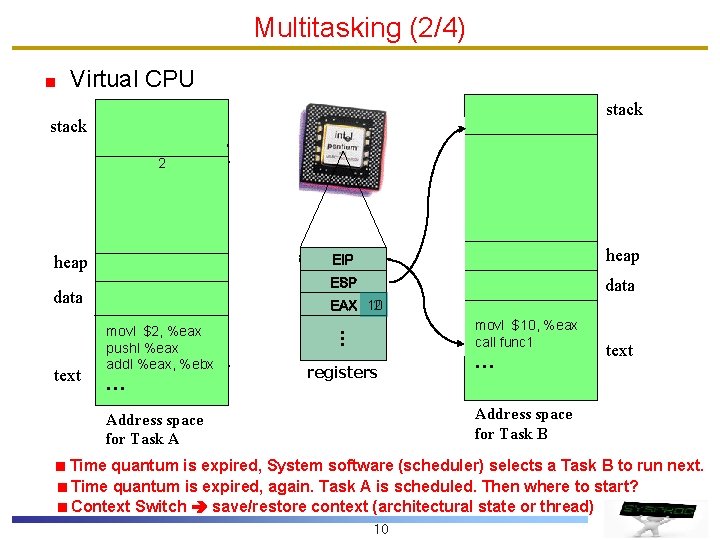
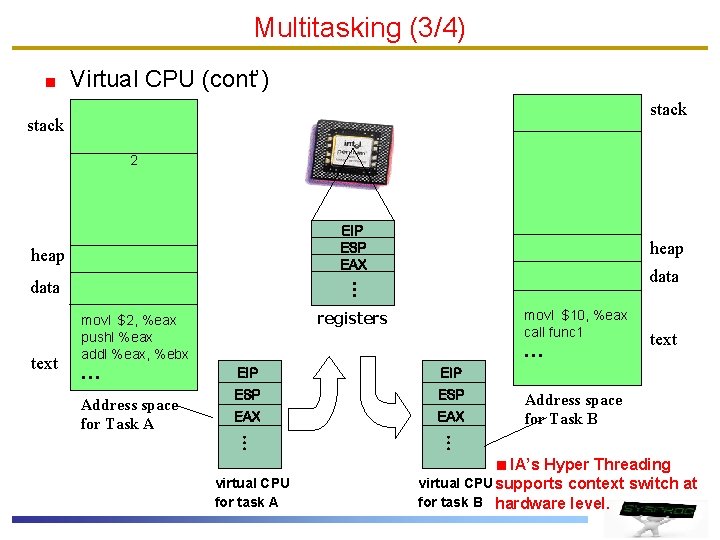
Multitasking (2/4) Virtual CPU stack 2 heap data heap ESP data 2 EAX 10 movl $2, %eax pushl %eax addl %eax, %ebx … movl $10, %eax call func 1 . . . text EIP registers … text Address space for Task B Address space for Task A Time quantum is expired, System software (scheduler) selects a Task B to run next. Time quantum is expired, again. Task A is scheduled. Then where to start? Context Switch save/restore context (architectural state or thread) 10
Multitasking (3/4) Virtual CPU (cont’) stack 2 EIP ESP EAX heap text data . . . data heap … Address space for Task A movl $10, %eax call func 1 registers movl $2, %eax pushl %eax addl %eax, %ebx … EIP ESP EAX Address space for Task B . . . virtual CPU for task A text IA’s Hyper Threading virtual CPU supports context switch at for task B hardware level.
Multitasking (4/4) Time sharing system ü ü ü Tasks run interchangeable Need to remember where to start Context switch § When: timeout(time quantum expired), sleep, blocking I/O, … § How • • Context save: CPU registers task structure (memory) Context restore: task structure (memory) CPU registers Context restore Context save … A B time Context restore Context save …
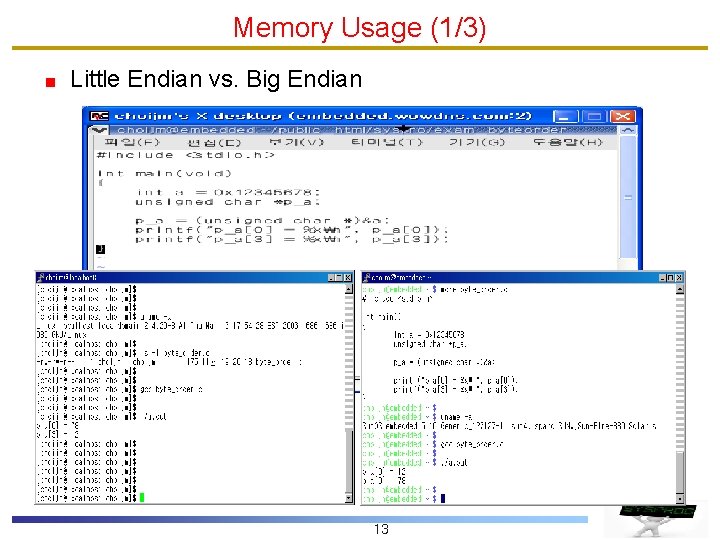
Memory Usage (1/3) Little Endian vs. Big Endian 13
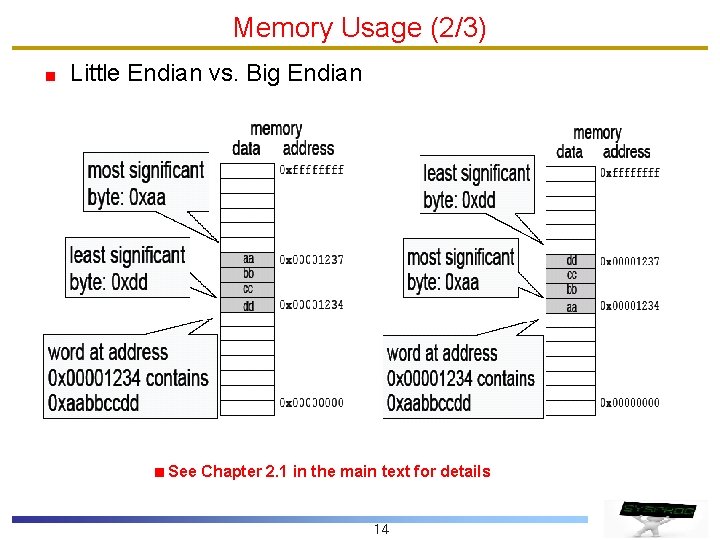
Memory Usage (2/3) Little Endian vs. Big Endian See Chapter 2. 1 in the main text for details 14
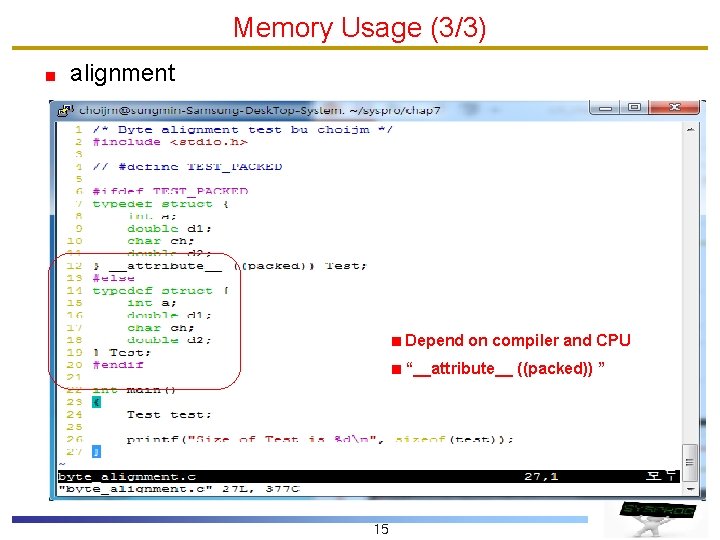
Memory Usage (3/3) alignment Depend on compiler and CPU “__attribute__ ((packed)) ” 15
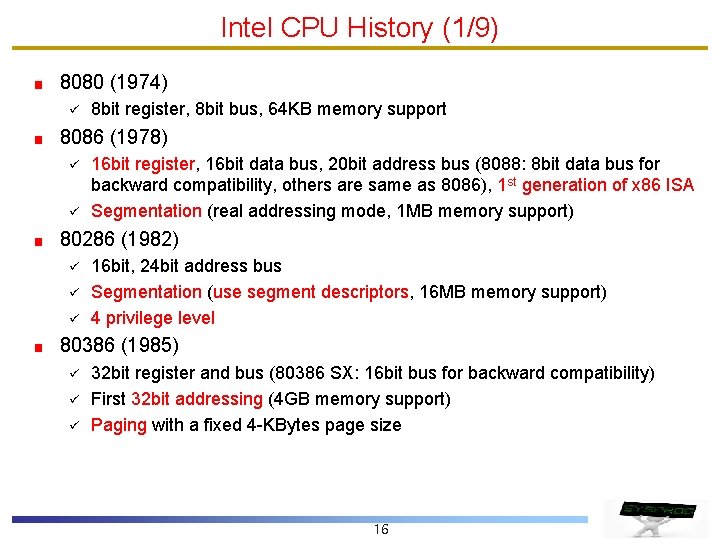
Intel CPU History (1/9) 8080 (1974) ü 8 bit register, 8 bit bus, 64 KB memory support 8086 (1978) ü ü 16 bit register, 16 bit data bus, 20 bit address bus (8088: 8 bit data bus for backward compatibility, others are same as 8086), 1 st generation of x 86 ISA Segmentation (real addressing mode, 1 MB memory support) 80286 (1982) ü ü ü 16 bit, 24 bit address bus Segmentation (use segment descriptors, 16 MB memory support) 4 privilege level 80386 (1985) ü ü ü 32 bit register and bus (80386 SX: 16 bit bus for backward compatibility) First 32 bit addressing (4 GB memory support) Paging with a fixed 4 -KBytes page size 16
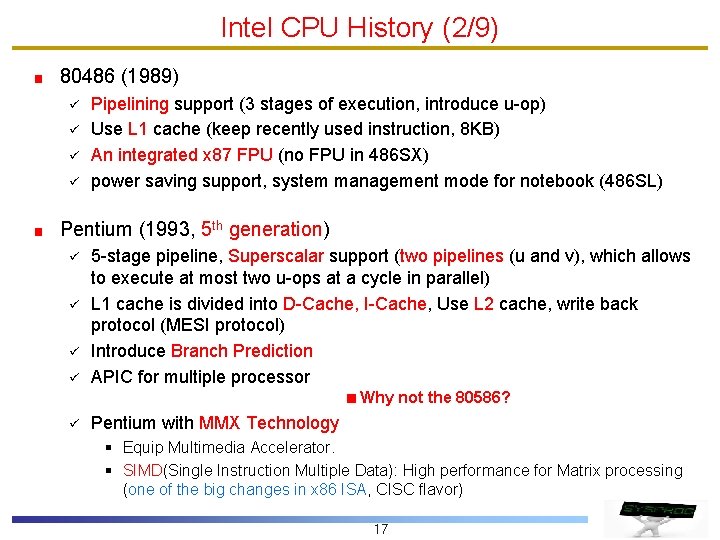
Intel CPU History (2/9) 80486 (1989) ü ü Pipelining support (3 stages of execution, introduce u-op) Use L 1 cache (keep recently used instruction, 8 KB) An integrated x 87 FPU (no FPU in 486 SX) power saving support, system management mode for notebook (486 SL) Pentium (1993, 5 th generation) ü ü 5 -stage pipeline, Superscalar support (two pipelines (u and v), which allows to execute at most two u-ops at a cycle in parallel) L 1 cache is divided into D-Cache, I-Cache, Use L 2 cache, write back protocol (MESI protocol) Introduce Branch Prediction APIC for multiple processor Why not the 80586? ü Pentium with MMX Technology § Equip Multimedia Accelerator. § SIMD(Single Instruction Multiple Data): High performance for Matrix processing (one of the big changes in x 86 ISA, CISC flavor) 17
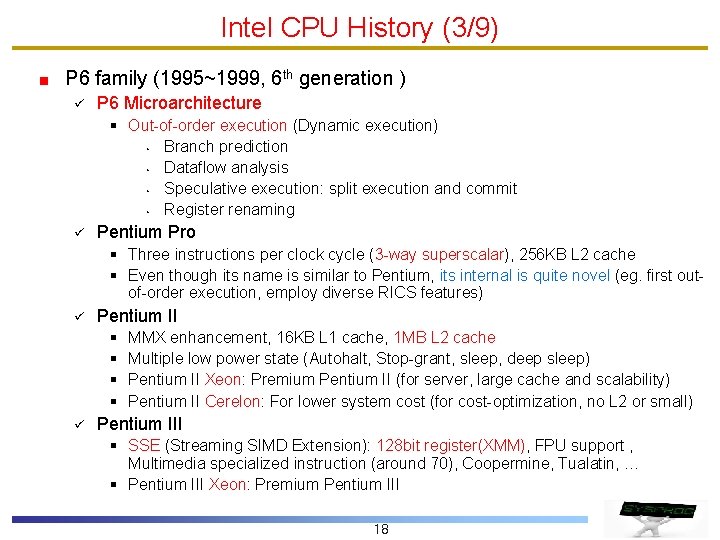
Intel CPU History (3/9) P 6 family (1995~1999, 6 th generation ) ü P 6 Microarchitecture § Out-of-order execution (Dynamic execution) • Branch prediction • Dataflow analysis • Speculative execution: split execution and commit • Register renaming ü Pentium Pro § Three instructions per clock cycle (3 -way superscalar), 256 KB L 2 cache § Even though its name is similar to Pentium, its internal is quite novel (eg. first outof-order execution, employ diverse RICS features) ü Pentium II § § ü MMX enhancement, 16 KB L 1 cache, 1 MB L 2 cache Multiple low power state (Autohalt, Stop-grant, sleep, deep sleep) Pentium II Xeon: Premium Pentium II (for server, large cache and scalability) Pentium II Cerelon: For lower system cost (for cost-optimization, no L 2 or small) Pentium III § SSE (Streaming SIMD Extension): 128 bit register(XMM), FPU support , Multimedia specialized instruction (around 70), Coopermine, Tualatin, … § Pentium III Xeon: Premium Pentium III 18
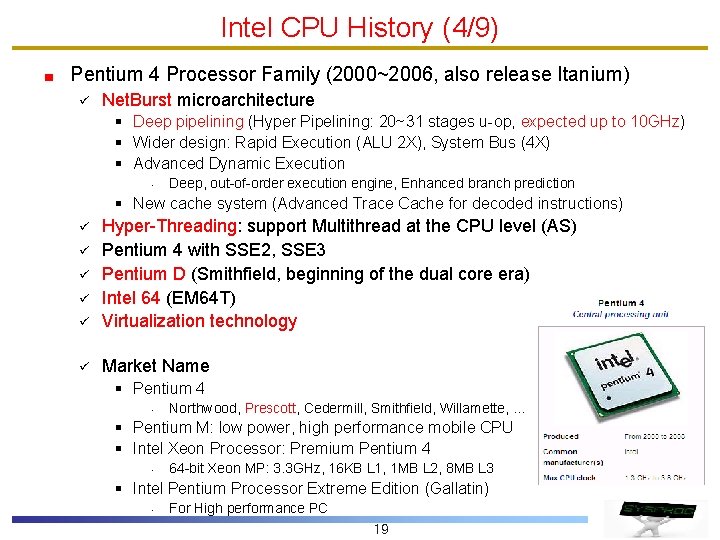
Intel CPU History (4/9) Pentium 4 Processor Family (2000~2006, also release Itanium) ü Net. Burst microarchitecture § Deep pipelining (Hyper Pipelining: 20~31 stages u-op, expected up to 10 GHz) § Wider design: Rapid Execution (ALU 2 X), System Bus (4 X) § Advanced Dynamic Execution • Deep, out-of-order execution engine, Enhanced branch prediction § New cache system (Advanced Trace Cache for decoded instructions) ü Hyper-Threading: support Multithread at the CPU level (AS) Pentium 4 with SSE 2, SSE 3 Pentium D (Smithfield, beginning of the dual core era) Intel 64 (EM 64 T) Virtualization technology ü Market Name ü ü § Pentium 4 • Northwood, Prescott, Cedermill, Smithfield, Willamette, … § Pentium M: low power, high performance mobile CPU § Intel Xeon Processor: Premium Pentium 4 • 64 -bit Xeon MP: 3. 3 GHz, 16 KB L 1, 1 MB L 2, 8 MB L 3 § Intel Pentium Processor Extreme Edition (Gallatin) • For High performance PC 19
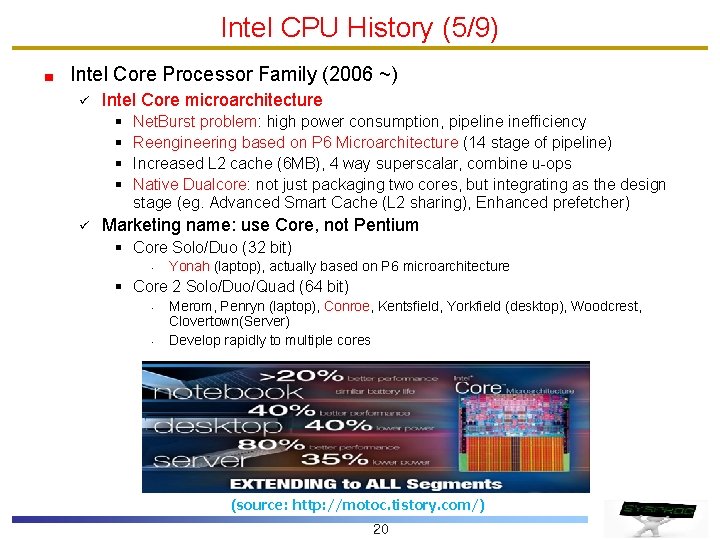
Intel CPU History (5/9) Intel Core Processor Family (2006 ~) ü Intel Core microarchitecture § § ü Net. Burst problem: high power consumption, pipeline inefficiency Reengineering based on P 6 Microarchitecture (14 stage of pipeline) Increased L 2 cache (6 MB), 4 way superscalar, combine u-ops Native Dualcore: not just packaging two cores, but integrating as the design stage (eg. Advanced Smart Cache (L 2 sharing), Enhanced prefetcher) Marketing name: use Core, not Pentium § Core Solo/Duo (32 bit) • Yonah (laptop), actually based on P 6 microarchitecture § Core 2 Solo/Duo/Quad (64 bit) • • Merom, Penryn (laptop), Conroe, Kentsfield, Yorkfield (desktop), Woodcrest, Clovertown(Server) Develop rapidly to multiple cores (source: http: //motoc. tistory. com/) 20
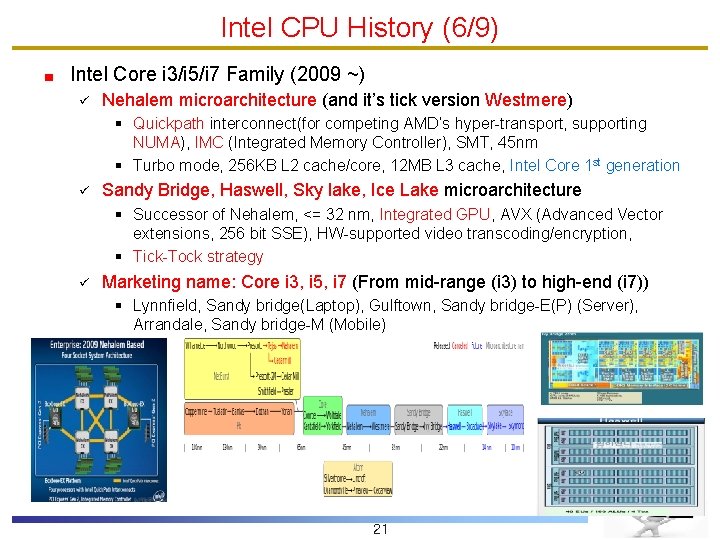
Intel CPU History (6/9) Intel Core i 3/i 5/i 7 Family (2009 ~) ü Nehalem microarchitecture (and it’s tick version Westmere) § Quickpath interconnect(for competing AMD’s hyper-transport, supporting NUMA), IMC (Integrated Memory Controller), SMT, 45 nm § Turbo mode, 256 KB L 2 cache/core, 12 MB L 3 cache, Intel Core 1 st generation ü Sandy Bridge, Haswell, Sky lake, Ice Lake microarchitecture § Successor of Nehalem, <= 32 nm, Integrated GPU, AVX (Advanced Vector extensions, 256 bit SSE), HW-supported video transcoding/encryption, § Tick-Tock strategy ü Marketing name: Core i 3, i 5, i 7 (From mid-range (i 3) to high-end (i 7)) § Lynnfield, Sandy bridge(Laptop), Gulftown, Sandy bridge-E(P) (Server), Arrandale, Sandy bridge-M (Mobile) 21
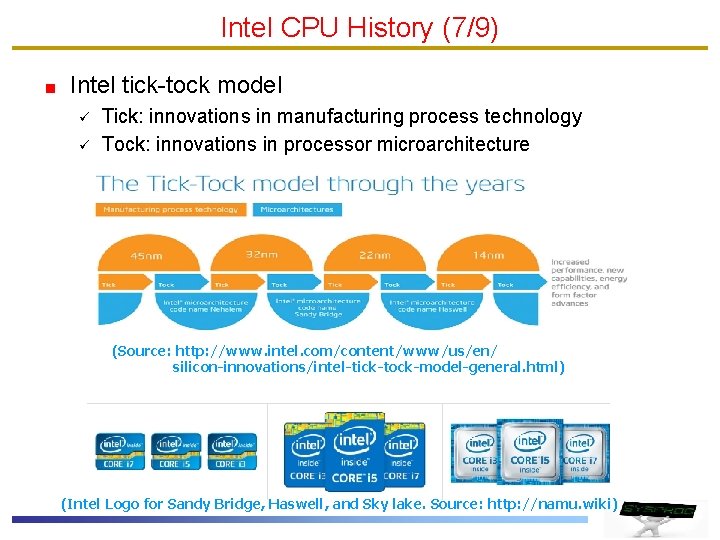
Intel CPU History (7/9) Intel tick-tock model ü ü Tick: innovations in manufacturing process technology Tock: innovations in processor microarchitecture (Source: http: //www. intel. com/content/www/us/en/ silicon-innovations/intel-tick-tock-model-general. html) (Intel Logo for Sandy Bridge, Haswell, and Sky lake. Source: http: //namu. wiki)
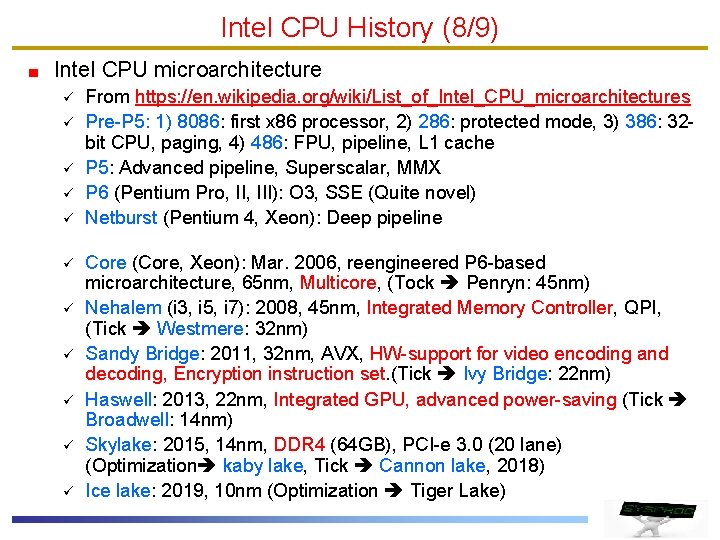
Intel CPU History (8/9) Intel CPU microarchitecture ü ü ü From https: //en. wikipedia. org/wiki/List_of_Intel_CPU_microarchitectures Pre-P 5: 1) 8086: first x 86 processor, 2) 286: protected mode, 3) 386: 32 bit CPU, paging, 4) 486: FPU, pipeline, L 1 cache P 5: Advanced pipeline, Superscalar, MMX P 6 (Pentium Pro, III): O 3, SSE (Quite novel) Netburst (Pentium 4, Xeon): Deep pipeline Core (Core, Xeon): Mar. 2006, reengineered P 6 -based microarchitecture, 65 nm, Multicore, (Tock Penryn: 45 nm) Nehalem (i 3, i 5, i 7): 2008, 45 nm, Integrated Memory Controller, QPI, (Tick Westmere: 32 nm) Sandy Bridge: 2011, 32 nm, AVX, HW-support for video encoding and decoding, Encryption instruction set. (Tick Ivy Bridge: 22 nm) Haswell: 2013, 22 nm, Integrated GPU, advanced power-saving (Tick Broadwell: 14 nm) Skylake: 2015, 14 nm, DDR 4 (64 GB), PCI-e 3. 0 (20 lane) (Optimization kaby lake, Tick Cannon lake, 2018) Ice lake: 2019, 10 nm (Optimization Tiger Lake)
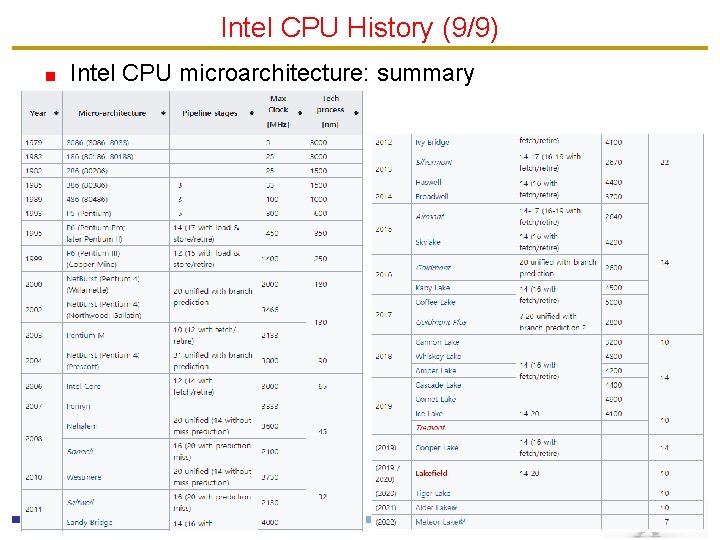
Intel CPU History (9/9) Intel CPU microarchitecture: summary
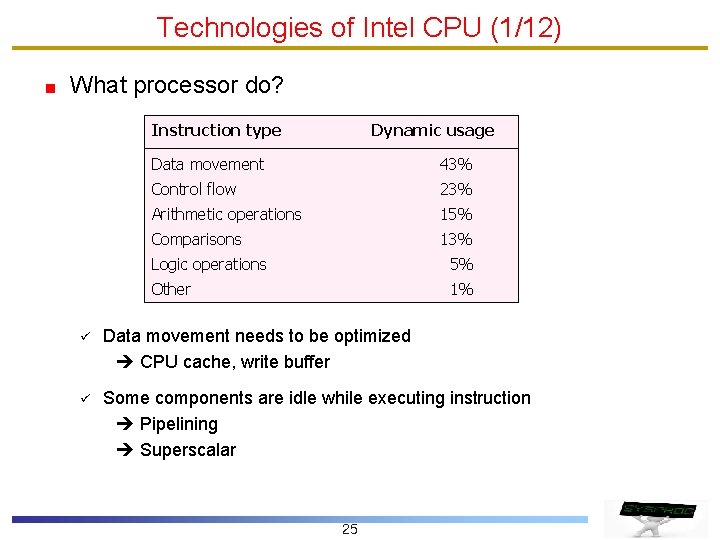
Technologies of Intel CPU (1/12) What processor do? Instruction type Dynamic usage Data movement 43% Control flow 23% Arithmetic operations 15% Comparisons 13% Logic operations 5% Other 1% ü Data movement needs to be optimized CPU cache, write buffer ü Some components are idle while executing instruction Pipelining Superscalar 25
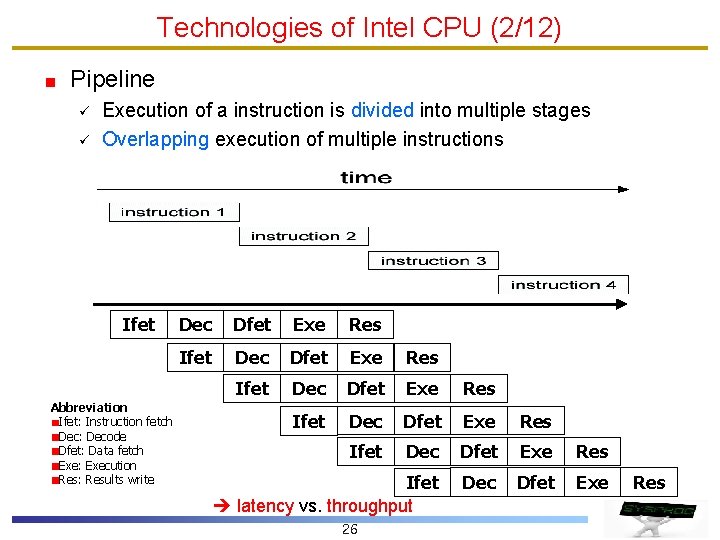
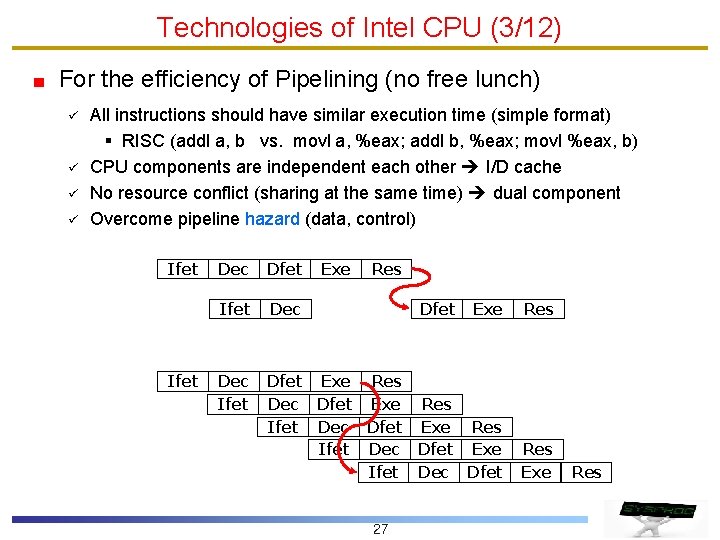
Technologies of Intel CPU (2/12) Pipeline ü ü Execution of a instruction is divided into multiple stages Overlapping execution of multiple instructions Ifet Abbreviation Ifet: Instruction fetch Dec: Decode Dfet: Data fetch Exe: Execution Res: Results write Dec Dfet Exe Res Ifet Dec Dfet Exe Res Ifet latency vs. throughput Dec Dfet Exe 26 Res
Technologies of Intel CPU (3/12) For the efficiency of Pipelining (no free lunch) ü ü All instructions should have similar execution time (simple format) § RISC (addl a, b vs. movl a, %eax; addl b, %eax; movl %eax, b) CPU components are independent each other I/D cache No resource conflict (sharing at the same time) dual component Overcome pipeline hazard (data, control) Ifet Dec Dfet Exe Res Dec Ifet Dfet Exe Res Dec Dfet Exe Ifet Dec Dfet Ifet Dec Ifet Res Exe Res Dfet Exe Dec Dfet Res Exe 27 Res
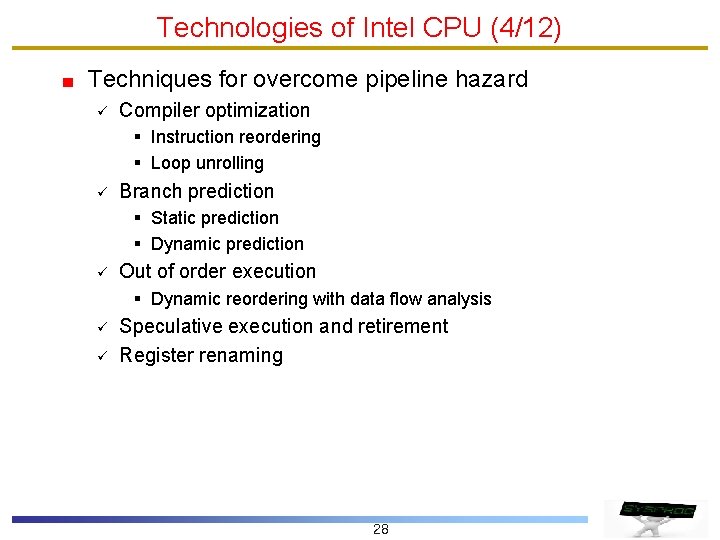
Technologies of Intel CPU (4/12) Techniques for overcome pipeline hazard ü Compiler optimization § Instruction reordering § Loop unrolling ü Branch prediction § Static prediction § Dynamic prediction ü Out of order execution § Dynamic reordering with data flow analysis ü ü Speculative execution and retirement Register renaming 28
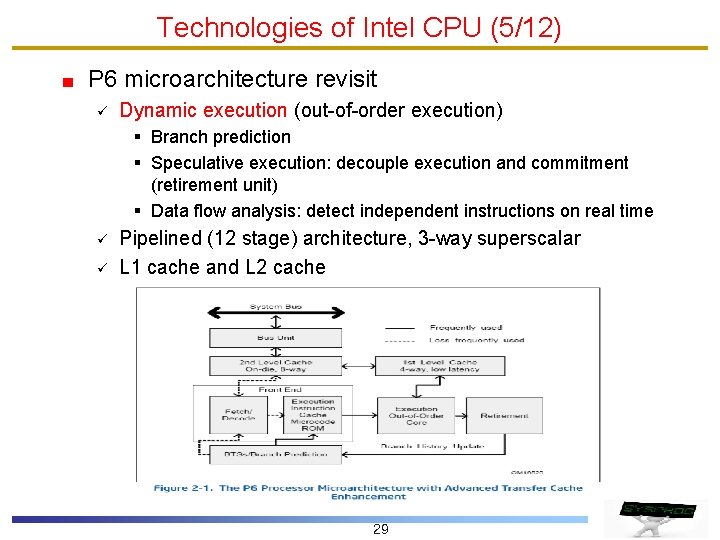
Technologies of Intel CPU (5/12) P 6 microarchitecture revisit ü Dynamic execution (out-of-order execution) § Branch prediction § Speculative execution: decouple execution and commitment (retirement unit) § Data flow analysis: detect independent instructions on real time ü ü Pipelined (12 stage) architecture, 3 -way superscalar L 1 cache and L 2 cache 29
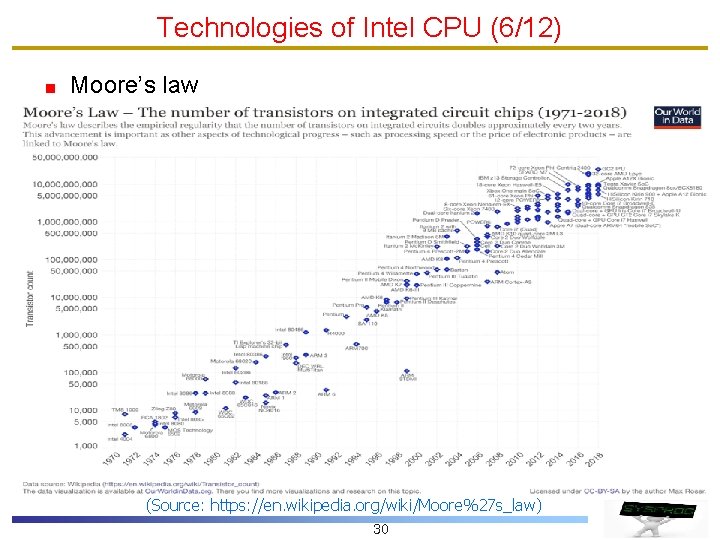
Technologies of Intel CPU (6/12) Moore’s law (Source: https: //en. wikipedia. org/wiki/Moore%27 s_law) 30
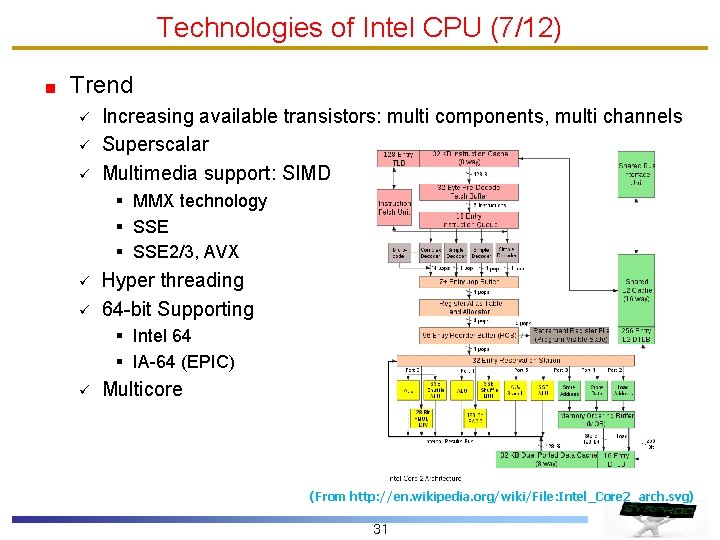
Technologies of Intel CPU (7/12) Trend ü ü ü Increasing available transistors: multi components, multi channels Superscalar Multimedia support: SIMD § MMX technology § SSE 2/3, AVX ü ü Hyper threading 64 -bit Supporting § Intel 64 § IA-64 (EPIC) ü Multicore (From http: //en. wikipedia. org/wiki/File: Intel_Core 2_arch. svg) 31
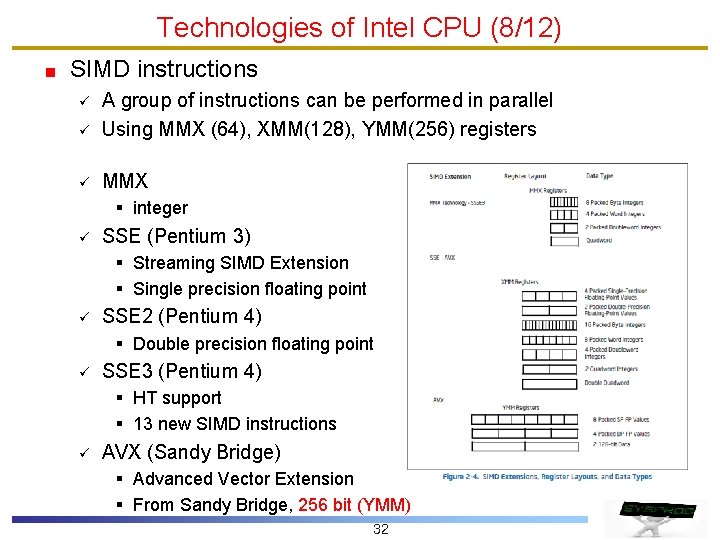
Technologies of Intel CPU (8/12) SIMD instructions ü A group of instructions can be performed in parallel Using MMX (64), XMM(128), YMM(256) registers ü MMX ü § integer ü SSE (Pentium 3) § Streaming SIMD Extension § Single precision floating point ü SSE 2 (Pentium 4) § Double precision floating point ü SSE 3 (Pentium 4) § HT support § 13 new SIMD instructions ü AVX (Sandy Bridge) § Advanced Vector Extension § From Sandy Bridge, 256 bit (YMM) 32
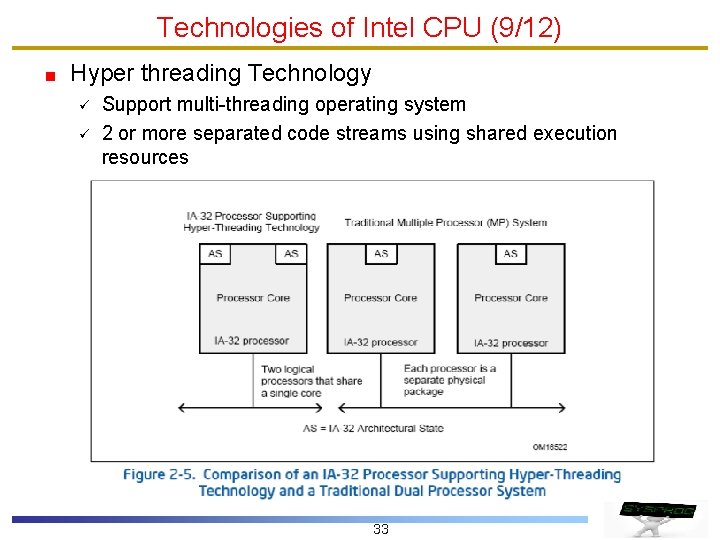
Technologies of Intel CPU (9/12) Hyper threading Technology ü ü Support multi-threading operating system 2 or more separated code streams using shared execution resources 33
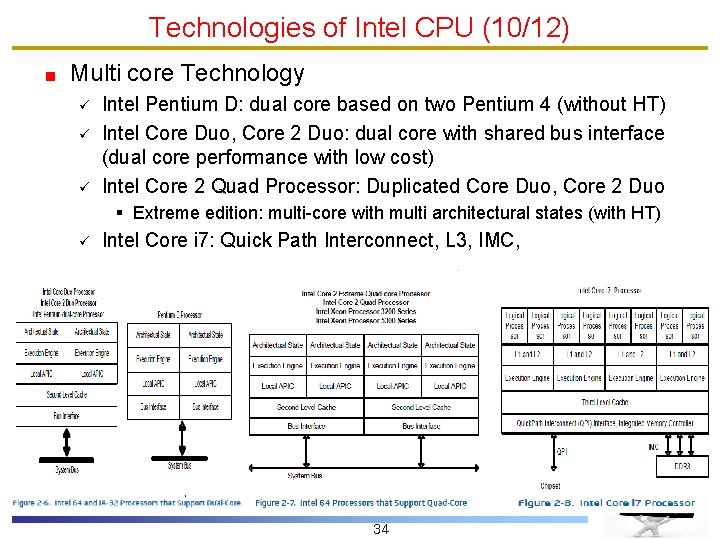
Technologies of Intel CPU (10/12) Multi core Technology ü ü ü Intel Pentium D: dual core based on two Pentium 4 (without HT) Intel Core Duo, Core 2 Duo: dual core with shared bus interface (dual core performance with low cost) Intel Core 2 Quad Processor: Duplicated Core Duo, Core 2 Duo § Extreme edition: multi-core with multi architectural states (with HT) ü Intel Core i 7: Quick Path Interconnect, L 3, IMC, 34
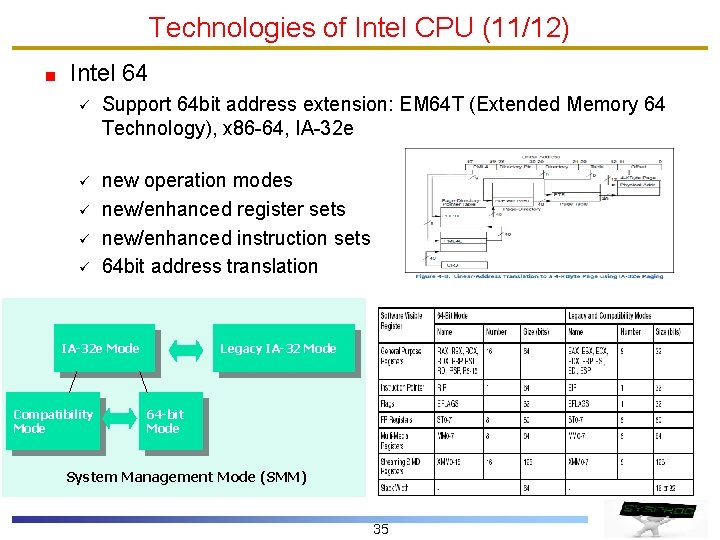
Technologies of Intel CPU (11/12) Intel 64 ü Support 64 bit address extension: EM 64 T (Extended Memory 64 Technology), x 86 -64, IA-32 e ü new operation modes new/enhanced register sets new/enhanced instruction sets 64 bit address translation ü ü ü IA-32 e Mode Compatibility Mode Legacy IA-32 Mode 64 -bit Mode System Management Mode (SMM) 35
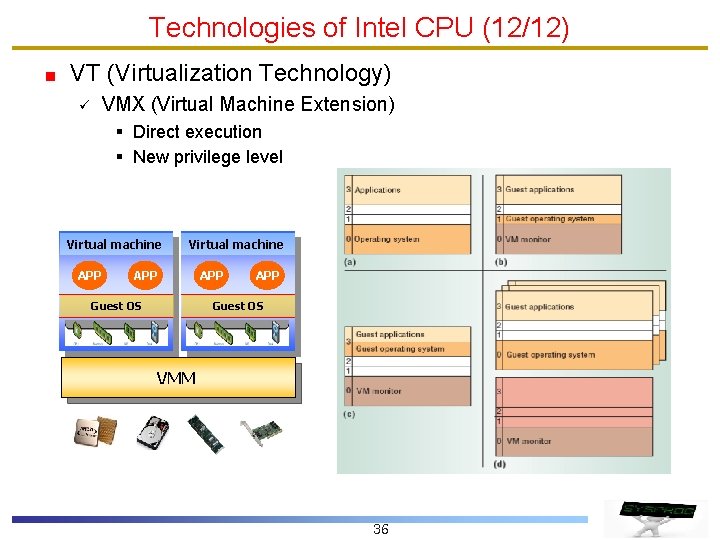
Technologies of Intel CPU (12/12) VT (Virtualization Technology) ü VMX (Virtual Machine Extension) § Direct execution § New privilege level Virtual machine APP Guest OS VMM 36
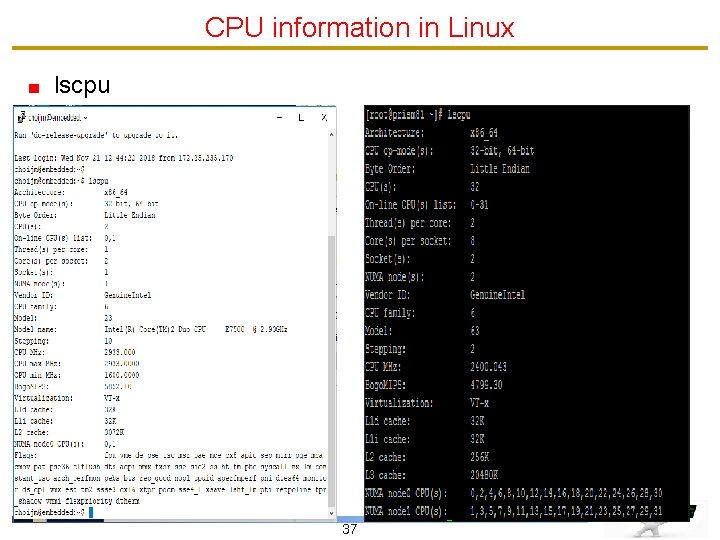
CPU information in Linux lscpu 37
Summary Discuss the issues of ISA Grasp several operand addressing modes Understand how the context switch works Apprehend the technologies of IA ü ü ü ü ü Pipelining Dynamic execution Cache (L 1, L 2, L 3) Superscalar MMX Hyper-threading Multi core Intel 64 Virtualization Technology 38
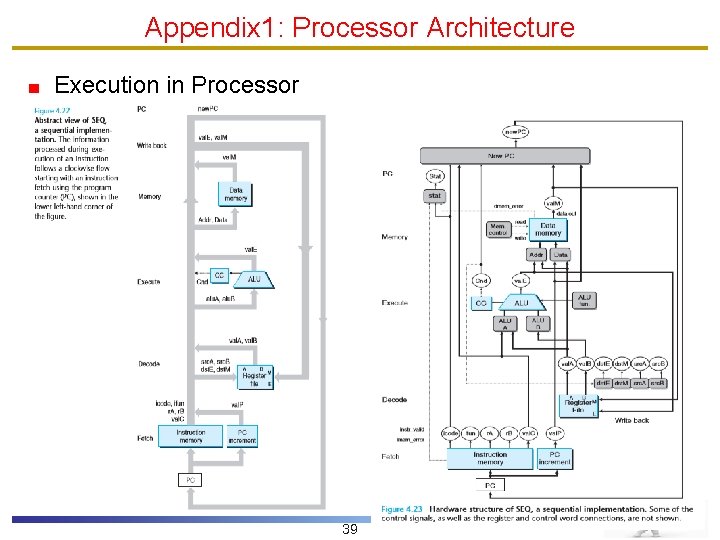
Appendix 1: Processor Architecture Execution in Processor 39
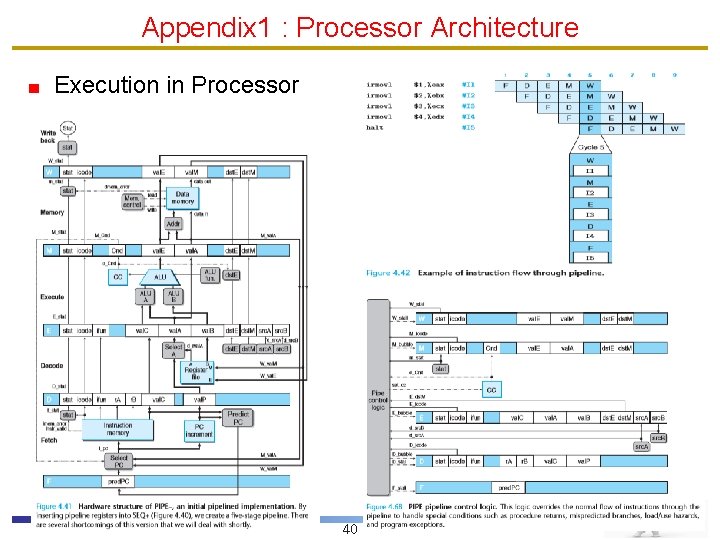
Appendix 1 : Processor Architecture Execution in Processor 40