Status report Detector team Dirk Weihaar IKP Kln



- Slides: 21
Status report Detector team Dirk Weißhaar IKP Köln • Acceptance test of three symmetric AGATA-detectors - energy resolution with standard analogue electronics - cross-talk with digital coincidence electronics (XIA) • In-beam test: position resolution for Doppler correction - analysis is ongoing
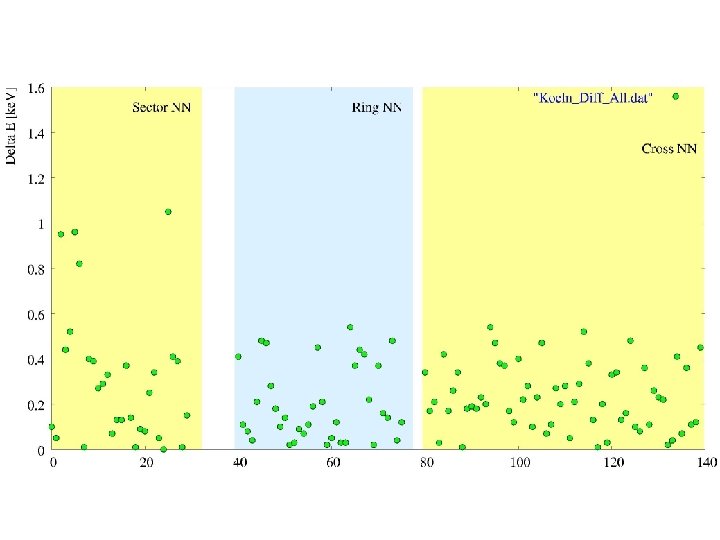
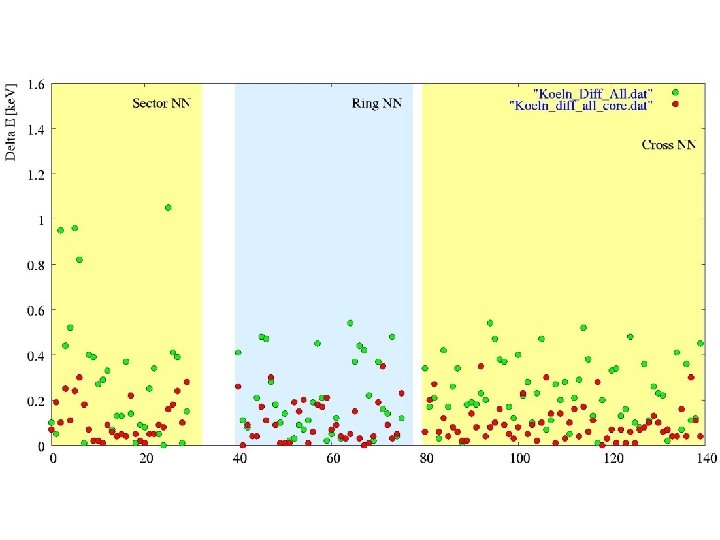
Questions: • Fold dependent shift of add-back energies • Negative and positive outliers (>0. 5 ke. V) of add-back energies
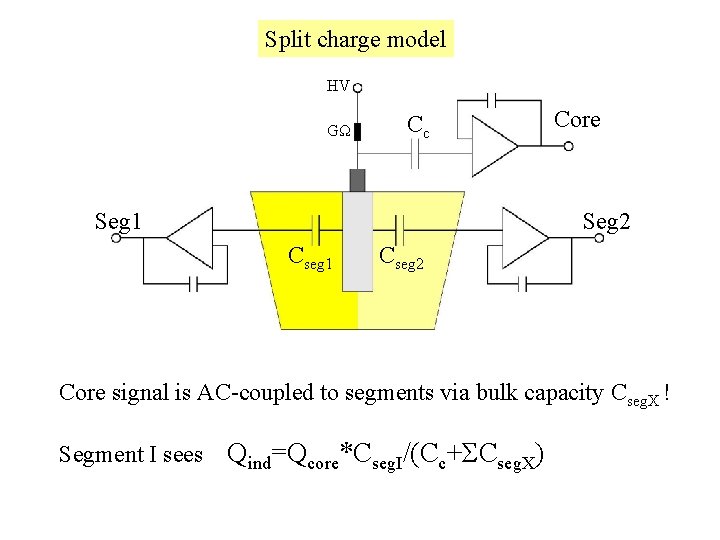
Split charge model HV Split charge GΩ Cc Seg 1 Core Seg 2 Cseg 1 Cseg 2 Core signal is AC-coupled to segments via bulk capacity Cseg. X ! Segment I sees Qind=Qcore*Cseg. I/(Cc+ΣCseg. X)
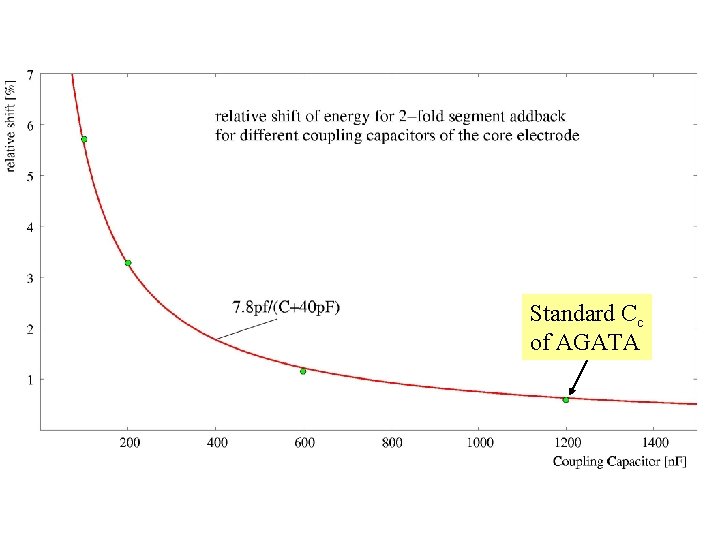
Standard Cc of AGATA
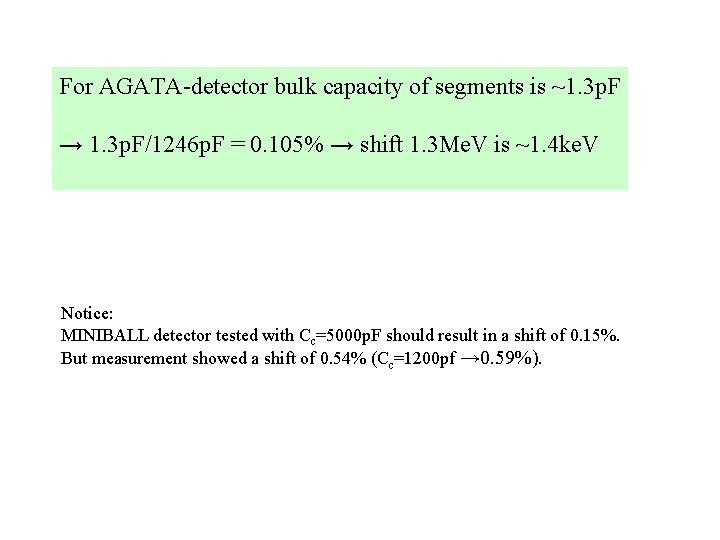
For AGATA-detector bulk capacity of segments is ~1. 3 p. F → 1. 3 p. F/1246 p. F = 0. 105% → shift 1. 3 Me. V is ~1. 4 ke. V Notice: MINIBALL detector tested with Cc=5000 p. F should result in a shift of 0. 15%. But measurement showed a shift of 0. 54% (Cc=1200 pf → 0. 59%).
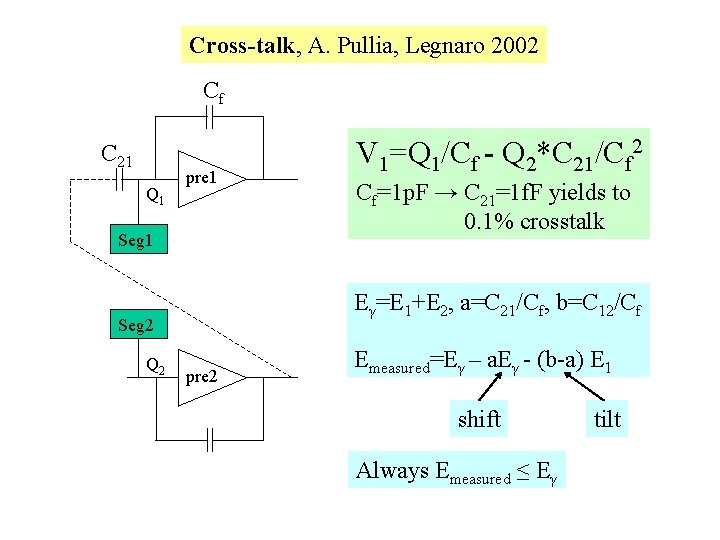
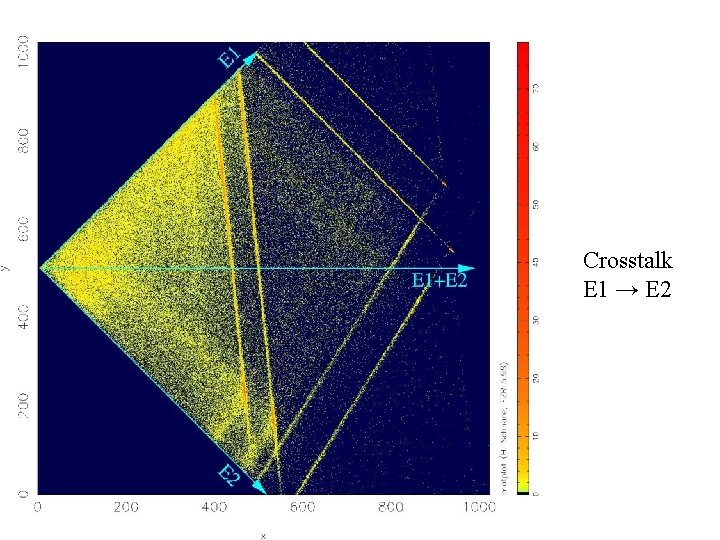
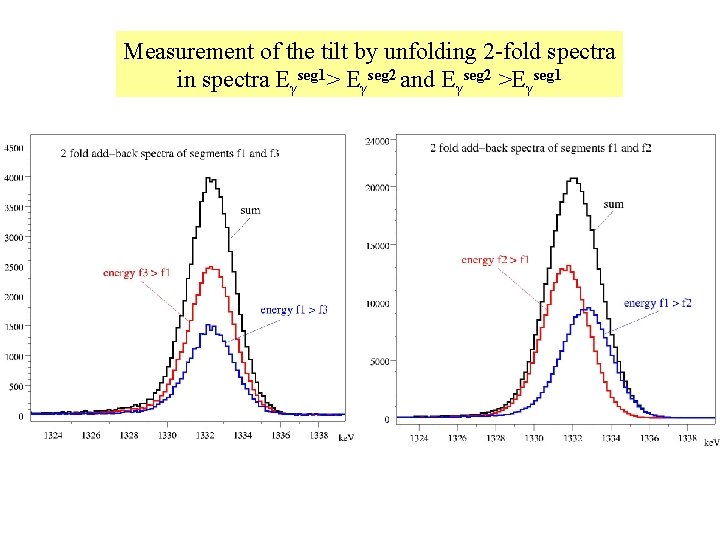
Cross-talk, A. Pullia, Legnaro 2002 Cf C 21 Q 1 pre 1 Seg 1 Cf=1 p. F → C 21=1 f. F yields to 0. 1% crosstalk Eγ=E 1+E 2, a=C 21/Cf, b=C 12/Cf Seg 2 Q 2 V 1=Q 1/Cf - Q 2*C 21/Cf 2 pre 2 Emeasured=Eγ – a. Eγ - (b-a) E 1 shift Always Emeasured ≤ Eγ tilt
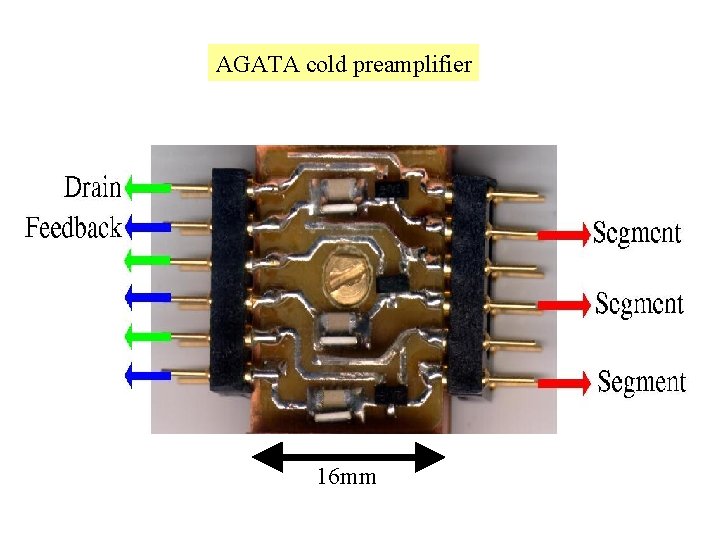
AGATA cold preamplifier 16 mm
Crosstalk E 1 → E 2
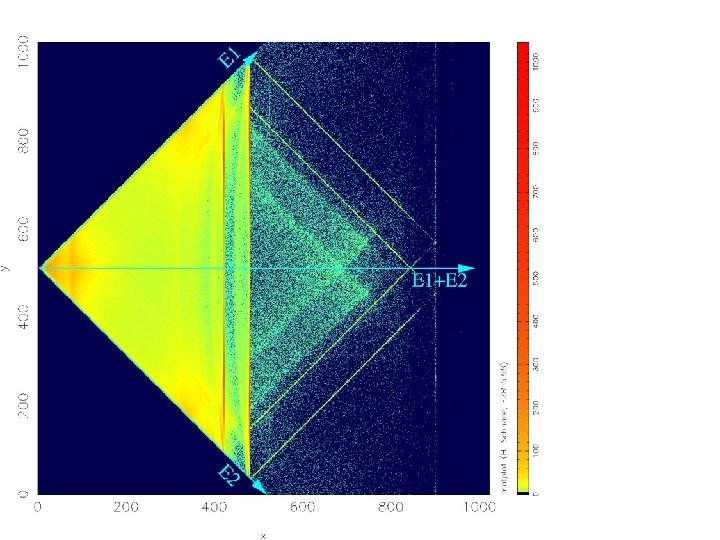
Measurement of the tilt by unfolding 2 -fold spectra in spectra Eγseg 1> Eγseg 2 and Eγseg 2 >Eγseg 1
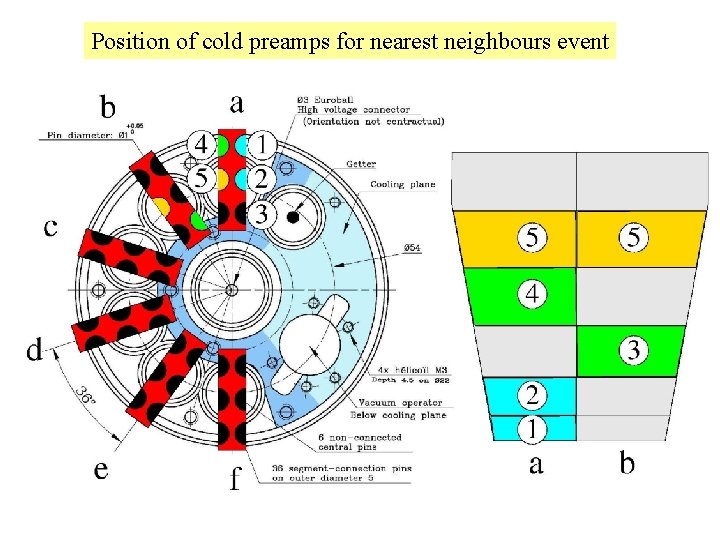
Position of cold preamps for nearest neighbours event
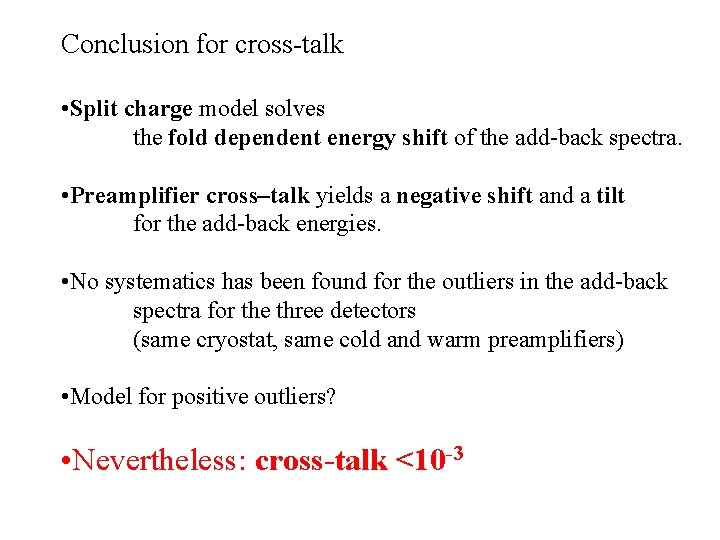
Conclusion for cross-talk • Split charge model solves the fold dependent energy shift of the add-back spectra. • Preamplifier cross–talk yields a negative shift and a tilt for the add-back energies. • No systematics has been found for the outliers in the add-back spectra for the three detectors (same cryostat, same cold and warm preamplifiers) • Model for positive outliers? • Nevertheless: cross-talk <10 -3
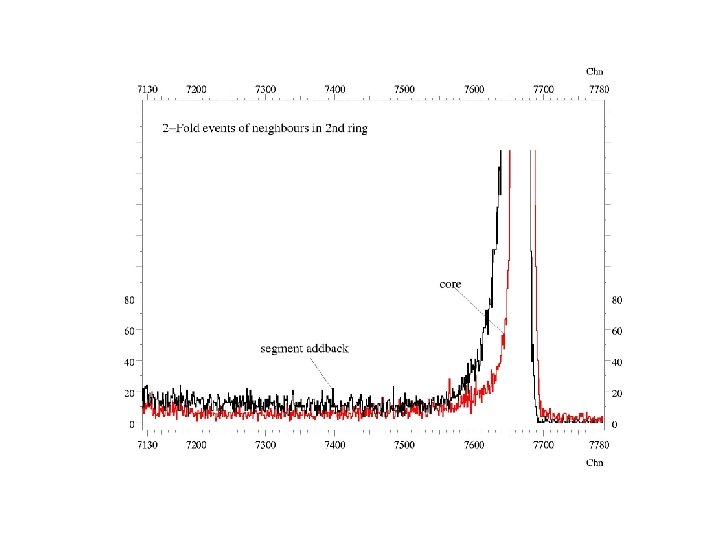
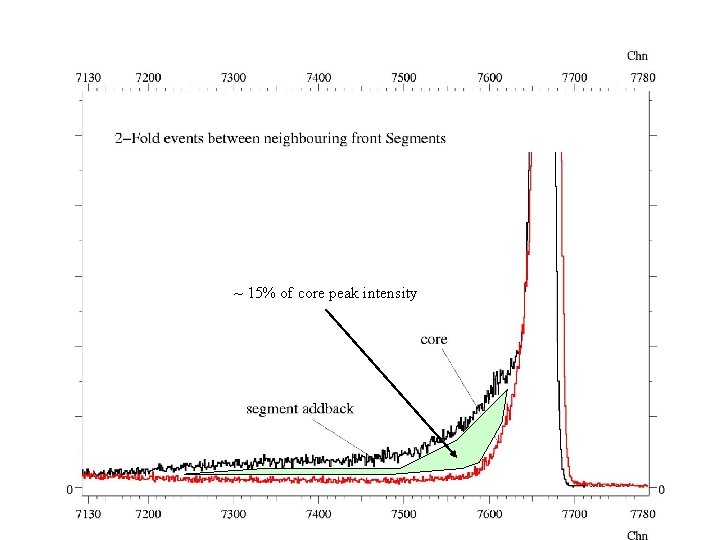
~ 15% of core peak intensity
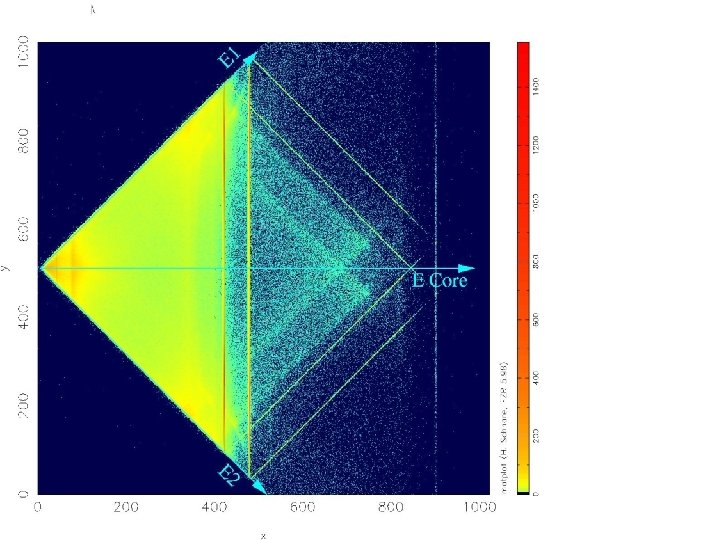
The ‘bow’-effect only occurs in nearest neighbour add-back of front segments The ‘bow’-effect not occurs in any other 2 -fold combination (also between not neighbouring front segments !)