
Southern Africa Chapter 24 Countries of Southern Africa


- Slides: 24
Southern Africa Chapter 24
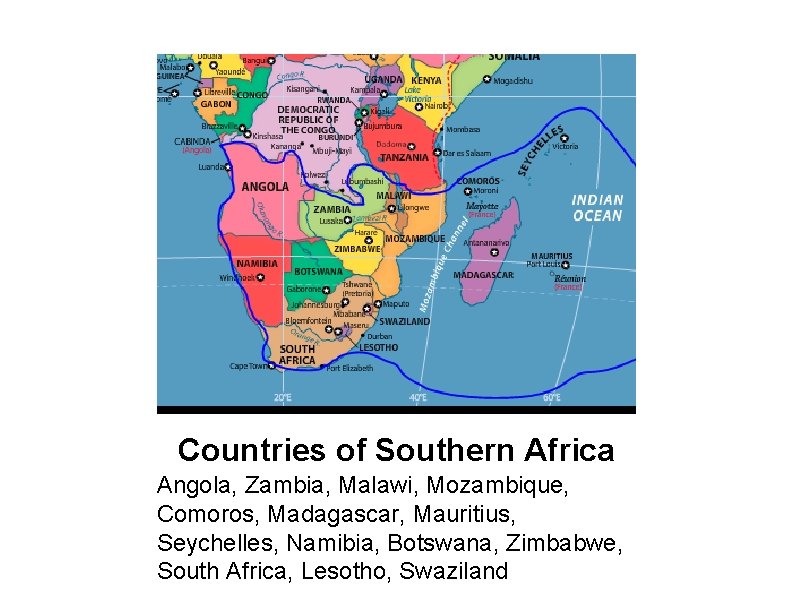
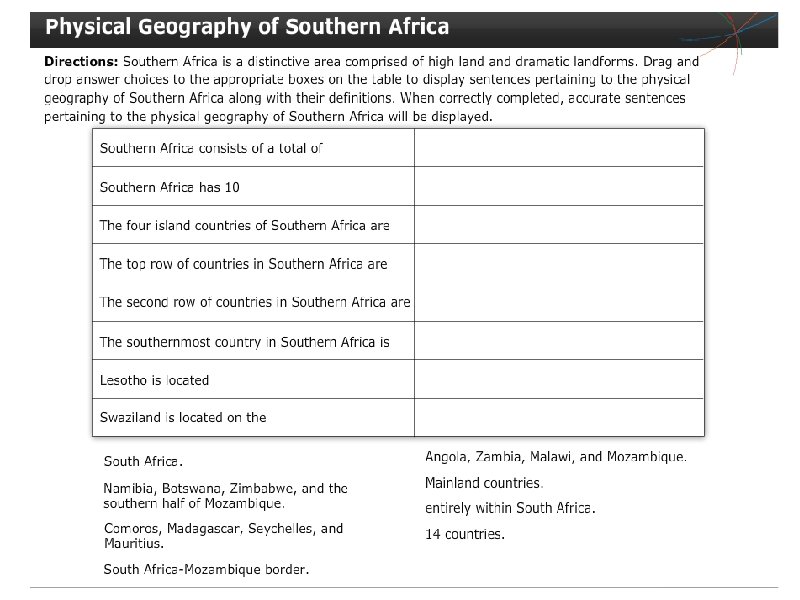
Countries of Southern Africa Angola, Zambia, Malawi, Mozambique, Comoros, Madagascar, Mauritius, Seychelles, Namibia, Botswana, Zimbabwe, South Africa, Lesotho, Swaziland
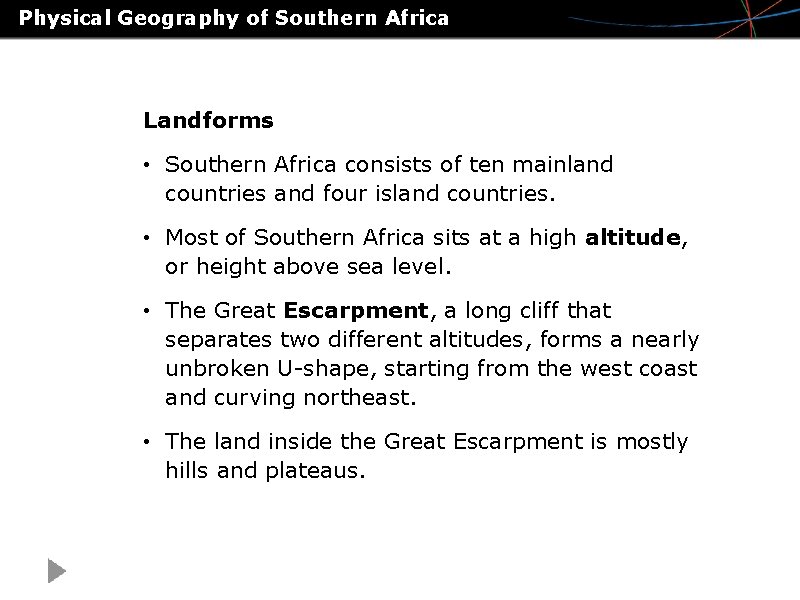
Physical Geography of Southern Africa Landforms • Southern Africa consists of ten mainland countries and four island countries. • Most of Southern Africa sits at a high altitude, or height above sea level. • The Great Escarpment, a long cliff that separates two different altitudes, forms a nearly unbroken U-shape, starting from the west coast and curving northeast. • The land inside the Great Escarpment is mostly hills and plateaus.
Physical Geography of Southern Africa Water Systems • Several rivers run through the area, the Okavango, the Orange, and the Zambezi Rivers, although none are fully navigable. • Although the rivers are not useful for transportation, they are useful for generating electricity. • The rivers support aquatic wildlife such as hippopotamuses and crocodiles.
Physical Geography of Southern Africa Climate, Biomes, and Resources • The coastal areas of Southern Africa have marine climates that are greatly affected by the open ocean. • The Cape of Good Hope and surrounding areas have a Mediterranean climate, with warm, dry summers and cool, rainy winters. • The northern and eastern regions are covered by the savanna, vast grasslands dotted with small trees, which is home to the Big Five: lions, leopards, elephants, Cape buffalo, and rhinoceroses.
Botswana Video Answer the Questions on the Video Sheet
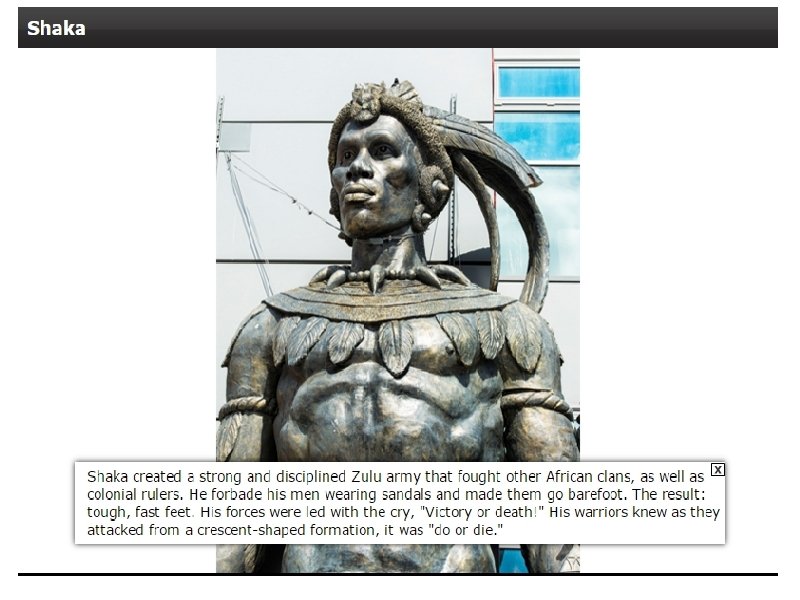
Human Geography of Southern Africa History and Government • The Bantu people settled Southern Africa about 3, 500 years ago and eventually established the influential city of Great Zimbabwe. • European colonization varied from colony to colony. • The Dutch established colonies in the 1600 s and, after a few generations, referred to themselves as Afrikaners, meaning “Africans. ” • Shaka was an important Zulu leader in African history, known for his military might and strength as a leader.
Human Geography of Southern Africa Population Patterns • The population increases as one moves from the Atlantic to the Indian Ocean because of the physical geography. • Natural resources also affect the population distribution, with people settling near resources. • Urbanization, or the migration of people from rural areas to urban areas, continues to affect the subregion as people search for a better quality of life.
Human Geography of Southern Africa Society and Culture Today • The effects of European colonialism still permeate life in Southern Africa, including the main languages used for communication. • Christianity is the most common religion as a result of Christian missionaries in the subregion. • Poverty is prevalent and affects all aspects of life, even shortening life spans and sometimes inciting riots. • Traditional laws often prohibit women from owning or inheriting property.
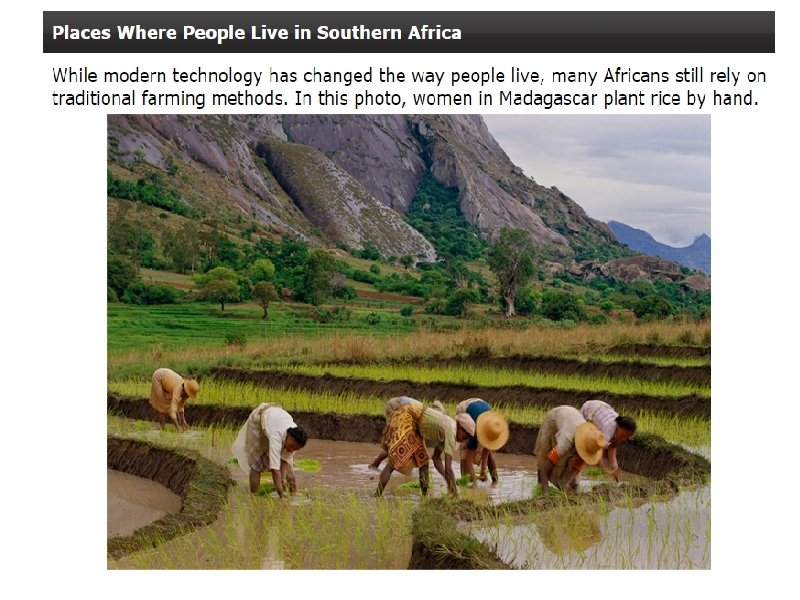
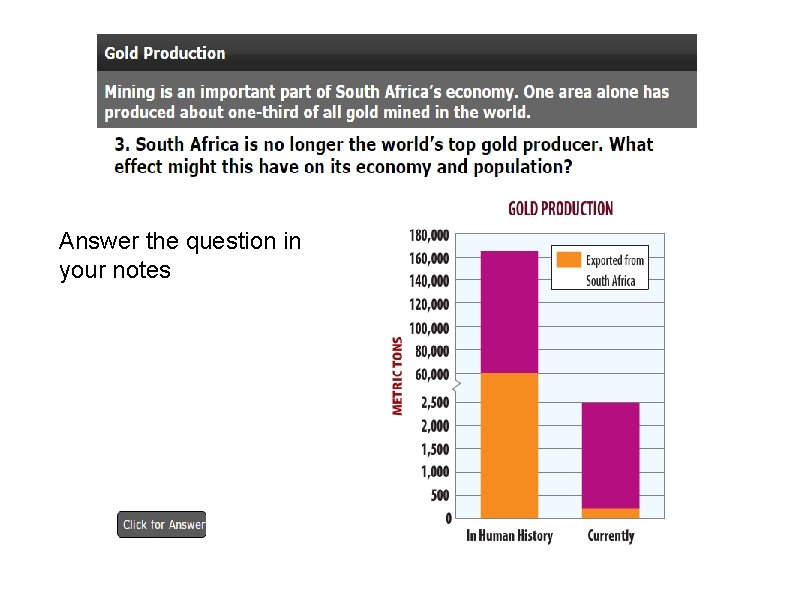
Human Geography of Southern Africa Economic Activities • The majority of people are farmers, with most participating in subsistence farming, or smallscale agriculture that provides for the needs of a family but little more. • Commercial farming, or growing large quantities of crops in order to sell them, has gained importance with the increased influence of global markets. • Mining is also important, with minerals and diamonds being major exports.
Answer the question in your notes
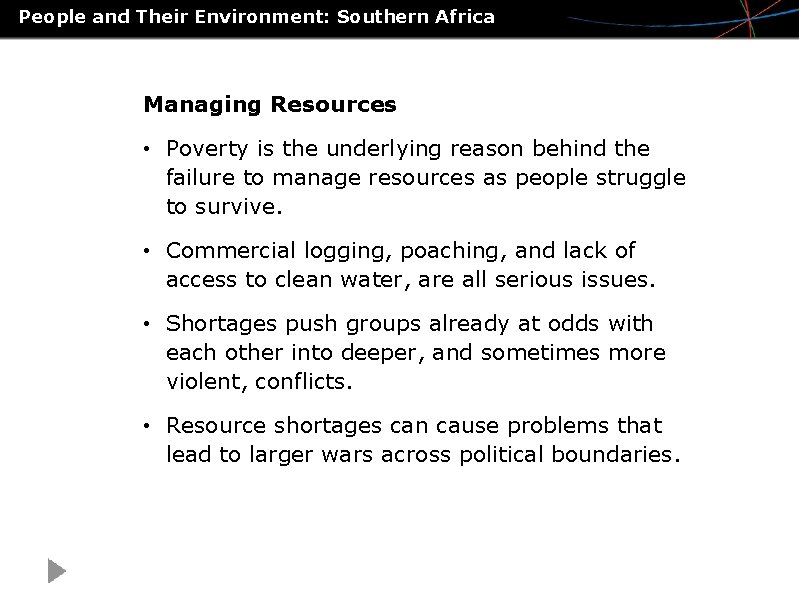
People and Their Environment: Southern Africa Managing Resources • Poverty is the underlying reason behind the failure to manage resources as people struggle to survive. • Commercial logging, poaching, and lack of access to clean water, are all serious issues. • Shortages push groups already at odds with each other into deeper, and sometimes more violent, conflicts. • Resource shortages can cause problems that lead to larger wars across political boundaries.
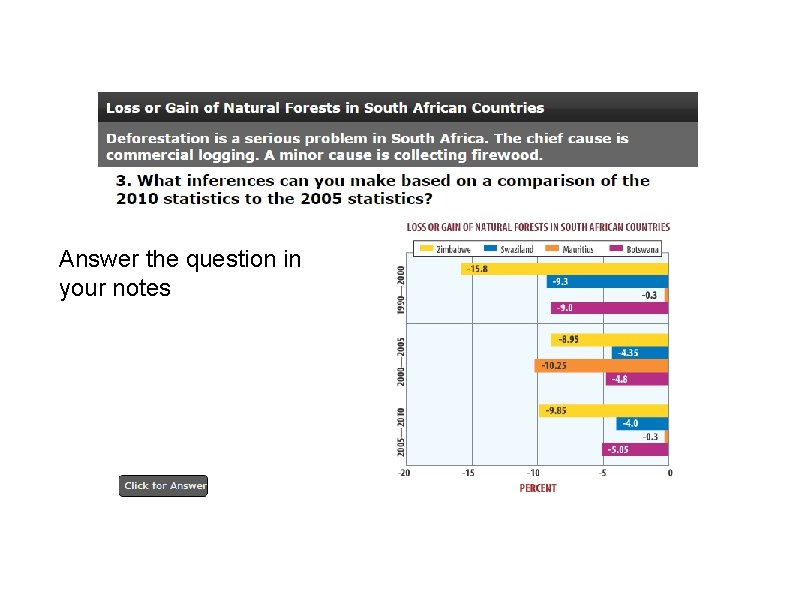
Answer the question in your notes
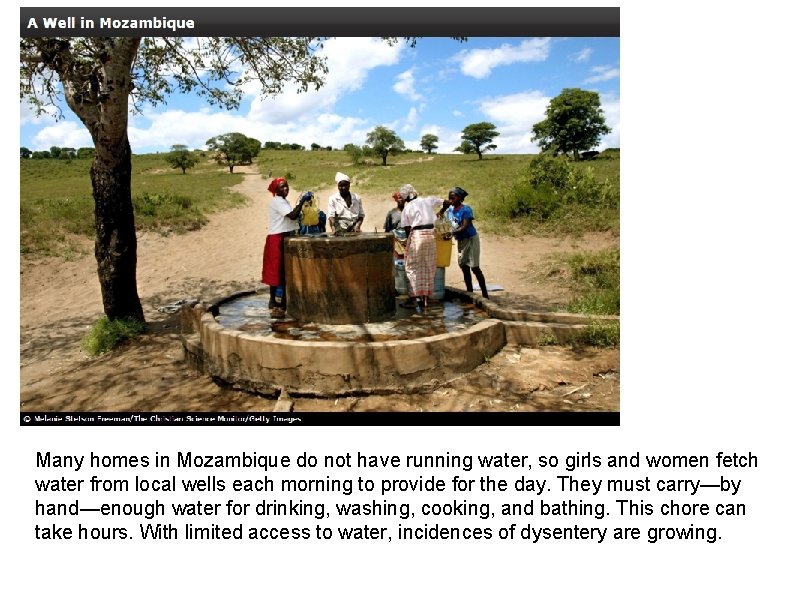
Many homes in Mozambique do not have running water, so girls and women fetch water from local wells each morning to provide for the day. They must carry—by hand—enough water for drinking, washing, cooking, and bathing. This chore can take hours. With limited access to water, incidences of dysentery are growing.
Life. Straw
People and Their Environment: Southern Africa Human Impact • Farmers’ policy of shifting cultivation, or planting a field for several years then abandoning it to clear a new field, begins to fail when the population begins to increase dramatically. • Richer, more powerful groups often hoard natural resources, leaving less available to the poor. • Most cities have not been able to handle the rapid population growth, leading to widespread disease as clean water and sanitation are often unavailable.
People and Their Environment: Southern Africa Addressing the Issues • Many countries are working to combat the problems of the region. • South Africa is one of only a few countries that built environmental rights into its constitution, showing its commitment to the cause. • Governments have also adopted action plans and laws designed to increase sustainable resources and reduce pollution. • Nongovernmental organizations are working directly with people to bypass corrupt officials.
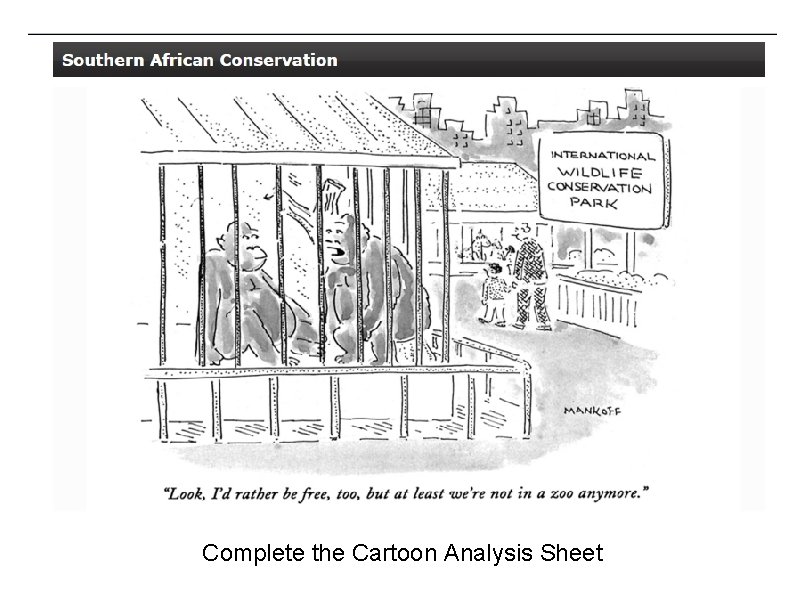
Complete the Cartoon Analysis Sheet