
Units and Conversions How do we measure time

- Slides: 34
Units and Conversions
How do we measure time? • Time can be measured in seconds, minutes, hours, days, months, years, decades and so on.
What are ‘units’ of measurement? • Units of measurements are just the way we define an amount of something. • Here are some examples. In each example the unit is underlined. • I am 33 years old. • The movie was 2 hours and 13 minutes long. • I have a mass of 75 kilograms. • The chief needs 4 dozen eggs for tomorrow.
So if I were to ask you to measure time you would need to use your judgment when choosing the correct units. You would pick your units based off of how much time you are measuring and who will be looking at your measurement.
What measuring system do we use in America?
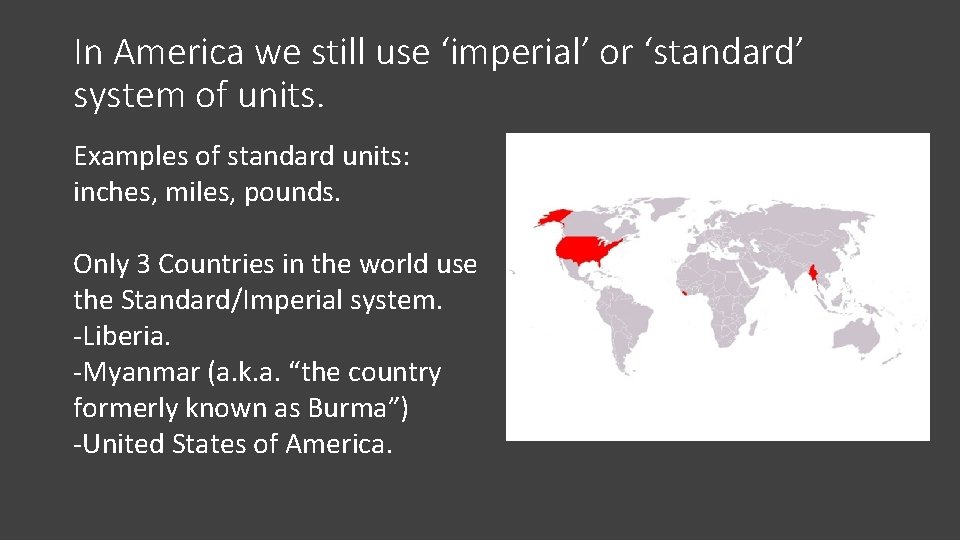
In America we still use ‘imperial’ or ‘standard’ system of units. Examples of standard units: inches, miles, pounds. Only 3 Countries in the world use the Standard/Imperial system. -Liberia. -Myanmar (a. k. a. “the country formerly known as Burma”) -United States of America.
What measurement system does the rest of the world use? S. I. Units International system of units. French: Système international d'unites Examples of SI units: meters, grams
Now we are going to cover typically things we measure and the units we use to measure them.
- In science there are many symbols and abbreviations. - In these slides I will write the symbol or abbreviation in parenthesis next to the word. - Example: The standard unit for mass is pounds (lbs). I weight 155 pounds (lbs).
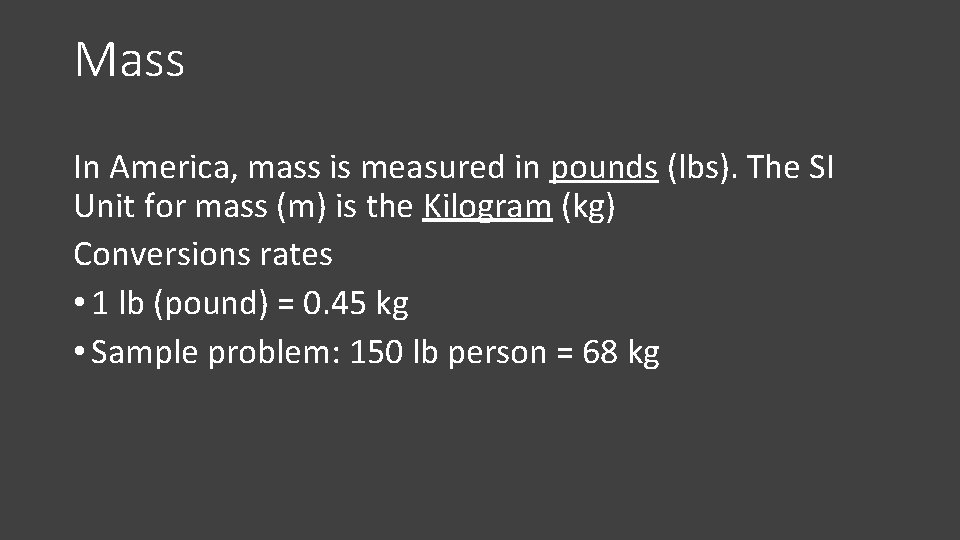
Mass In America, mass is measured in pounds (lbs). The SI Unit for mass (m) is the Kilogram (kg) Conversions rates • 1 lb (pound) = 0. 45 kg • Sample problem: 150 lb person = 68 kg
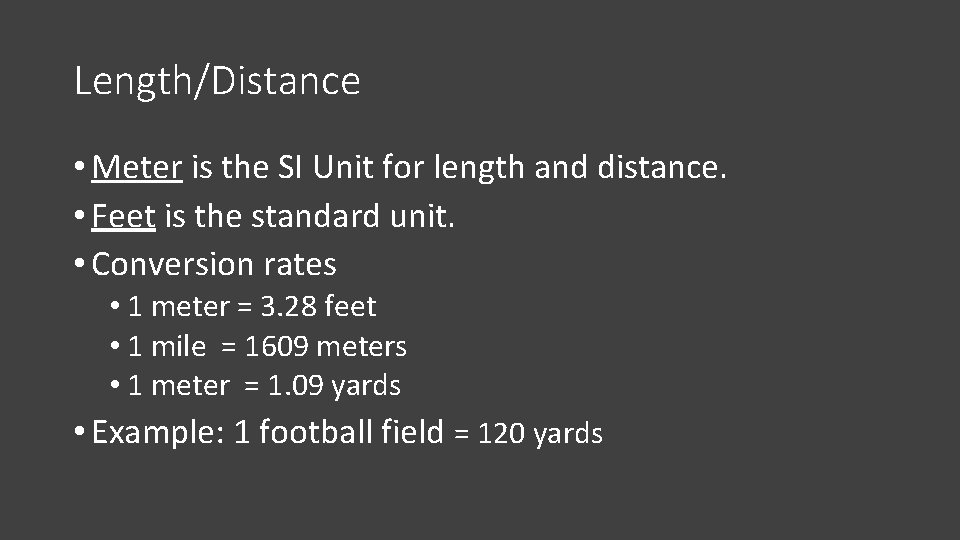
Length/Distance • Meter is the SI Unit for length and distance. • Feet is the standard unit. • Conversion rates • 1 meter = 3. 28 feet • 1 mile = 1609 meters • 1 meter = 1. 09 yards • Example: 1 football field = 120 yards
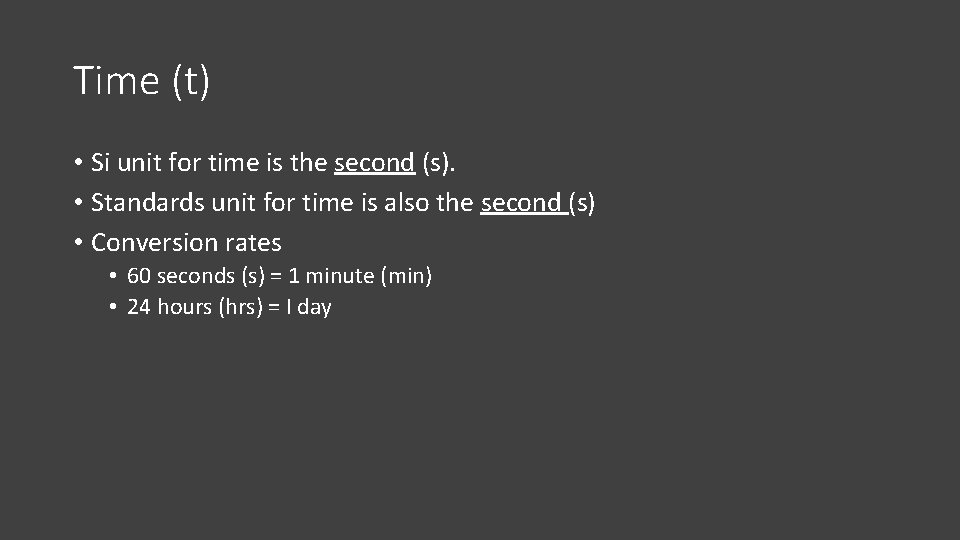
Time (t) • Si unit for time is the second (s). • Standards unit for time is also the second (s) • Conversion rates • 60 seconds (s) = 1 minute (min) • 24 hours (hrs) = I day
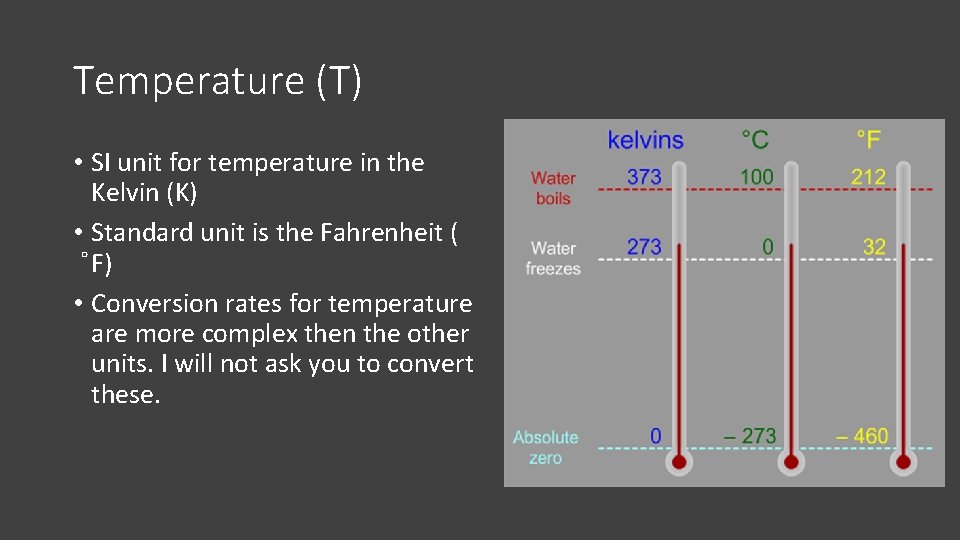
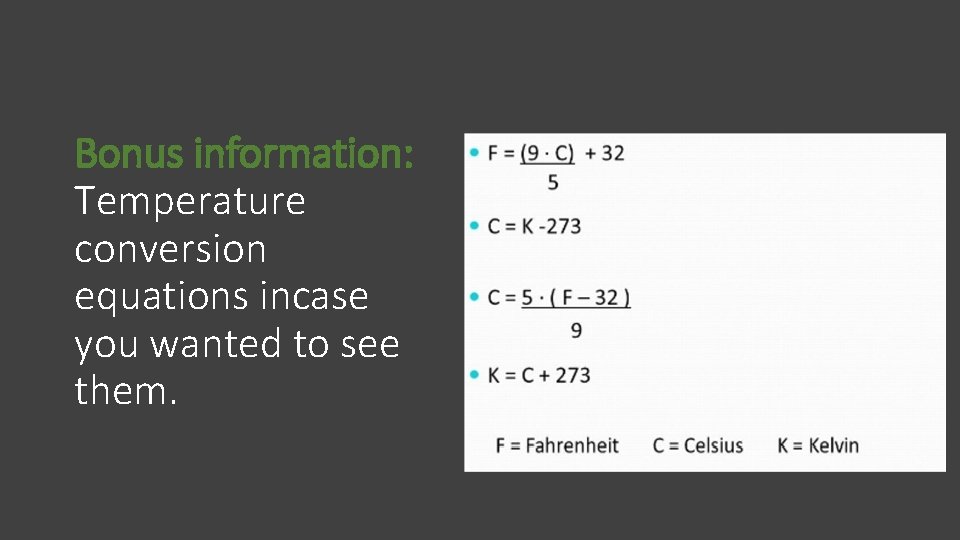
Temperature (T) • SI unit for temperature in the Kelvin (K) • Standard unit is the Fahrenheit ( F) • Conversion rates for temperature are more complex then the other units. I will not ask you to convert these.
Bonus information: Temperature conversion equations incase you wanted to see them.
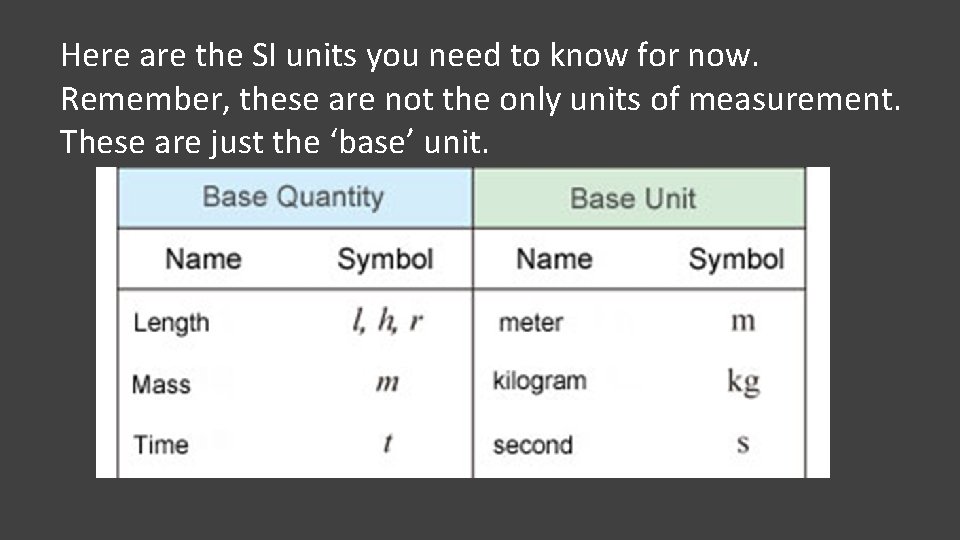
Here are the SI units you need to know for now. Remember, these are not the only units of measurement. These are just the ‘base’ unit.
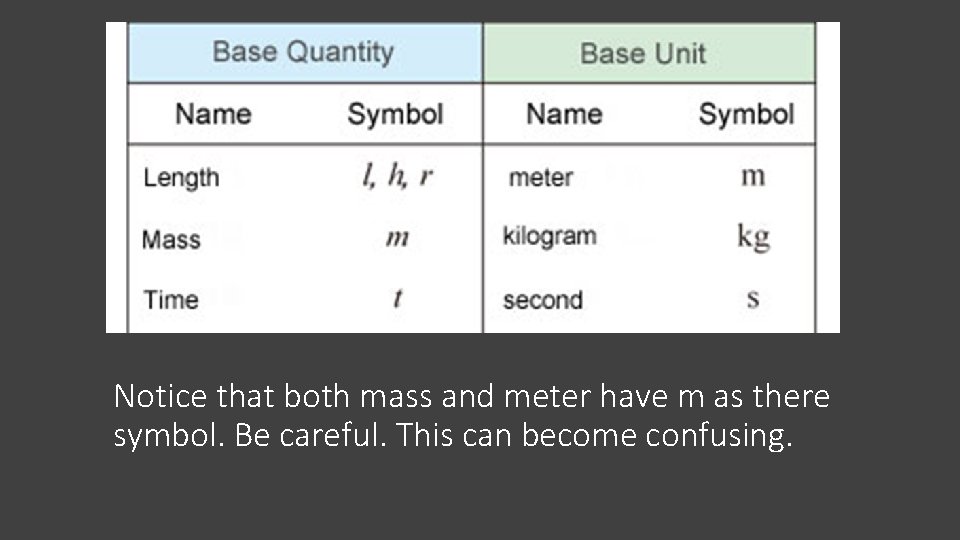
Notice that both mass and meter have m as there symbol. Be careful. This can become confusing.
How do we define a ‘good’ measurement • When taking measurement there are bound to be mistakes. • When is a mistake ok? When do we need to remeasure? • These questions do not have simple answers.
Precision vs. accuracy • Accuracy refers to the closeness of a measured value to a standard or known value. For example, if in lab you obtain a weight measurement of 3. 2 kg for a given substance, but the actual or known weight is 10 kg, then your measurement is not accurate. In this case, your measurement is not close to the known value.
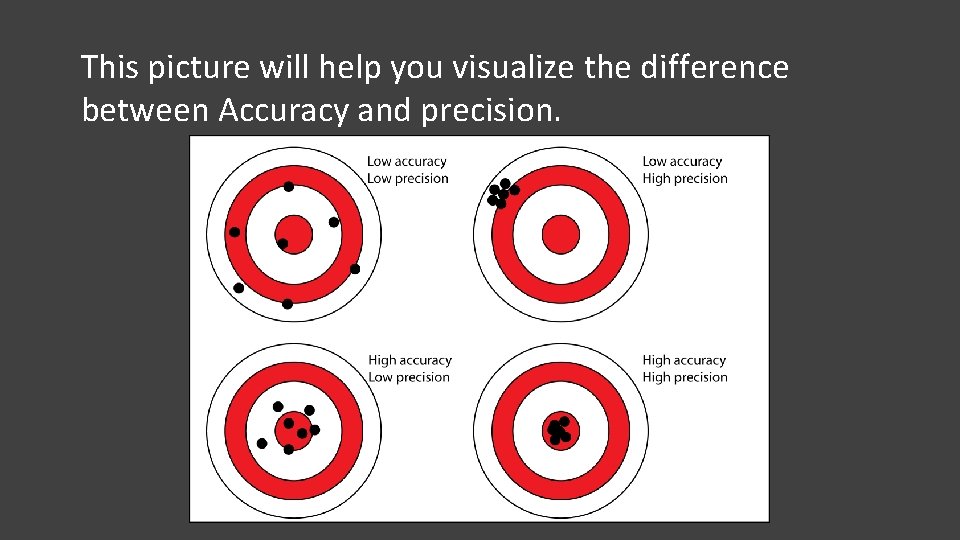
• Precision refers to the closeness of two or more measurements to each other. Using the previous example, if you weigh a given substance five times, and get 3. 2 kg each time, then your measurement is very precise. • Precision is independent of accuracy. You can be very precise but inaccurate, as described above. You can also be accurate but imprecise. • For example, if on average, your measurements for a given substance are close to the known value, but the measurements are far from each other, then you have accuracy without precision.
This picture will help you visualize the difference between Accuracy and precision.
What does ‘error’ mean in science? • Error is not a mistake • Error is the unavoidable difference between a measurement and the true value. • Example: If I were going to just my hand a stop watch to measure how long you are airborne when you jump off the ground my measurement would have unavoidable error because there is a delay in my reaction time. I can minimize this error by focusing and trying to be quick but I can not eliminate the error completely.
How do we define a ‘good’ measurement • These questions do not have simple answers. • Scientist must make this determination on a case by case basis. • Example: if your measurement is 2 inches off is that ‘ok? ’ • If you are measuring the length of North Carolina and you are only 2 inches off than that is an acceptable difference. • If you are measuring a table then 2 inches is a significant difference and the table should be remeasured.
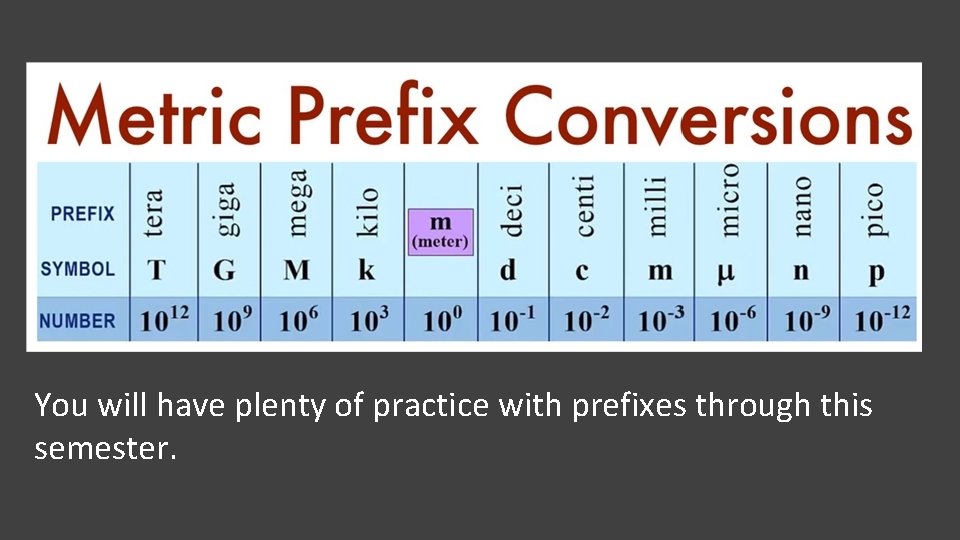
Prefixes • Prefixes are put onto base units to increase or decrease the unit be a power of 10. • Example: centi- is put onto meter to make centimeter (cm) • Conversion rate: 100 centimeters (cm) = 1 meter (m)
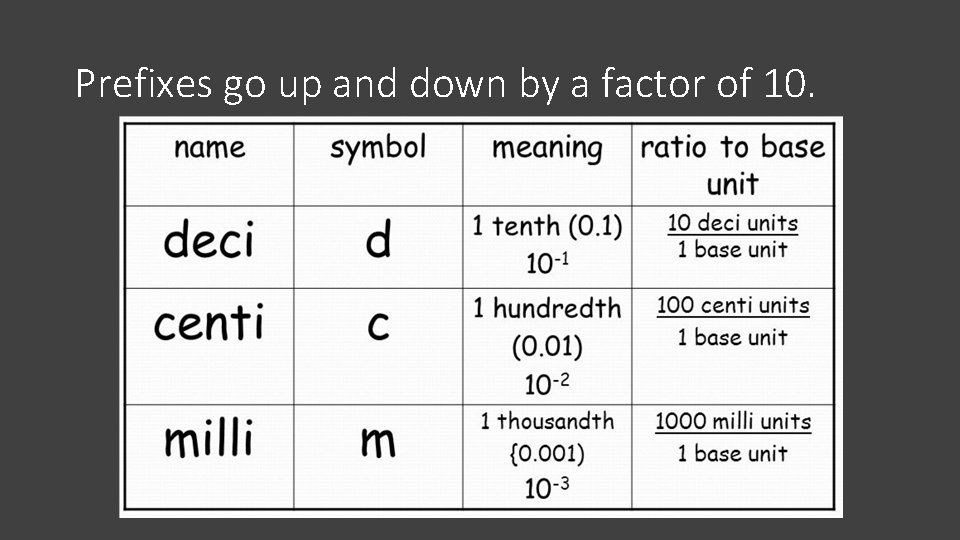
Prefixes go up and down by a factor of 10.
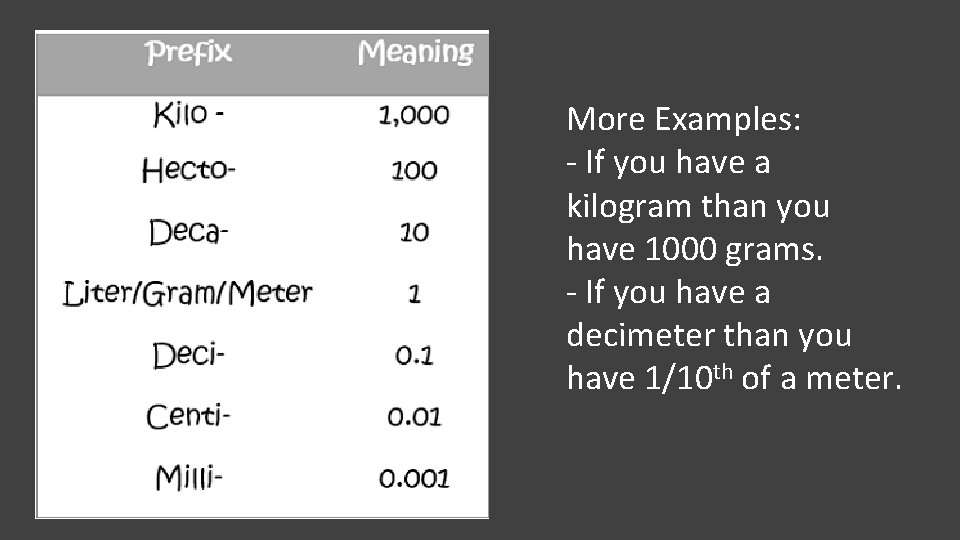
More Examples: - If you have a kilogram than you have 1000 grams. - If you have a decimeter than you have 1/10 th of a meter.
You will have plenty of practice with prefixes through this semester.
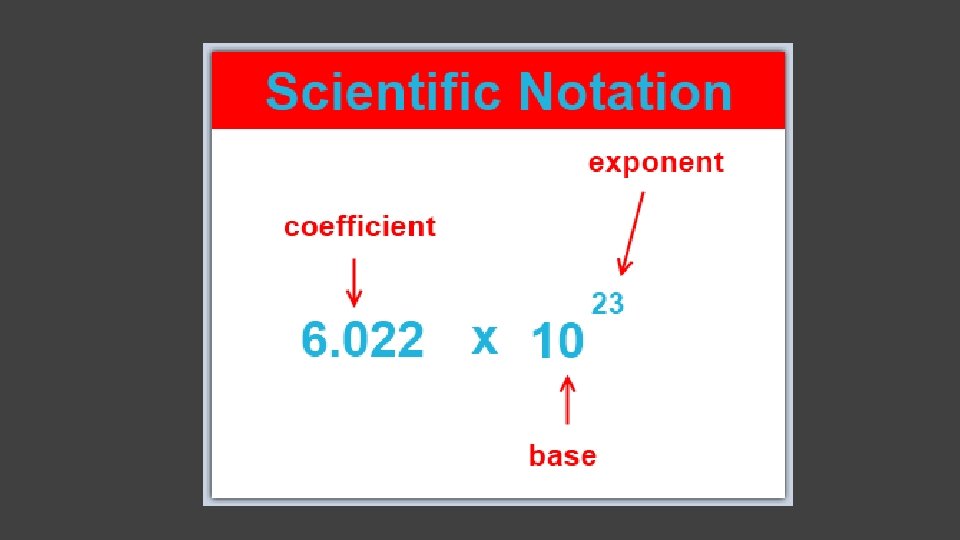
Scientific notation • In science we deal with very large and very small numbers. • Writing them out can be time consuming and can lead to error. • Scientific notation is a way of writing very large and very small numbers in a way that is easier to understand.
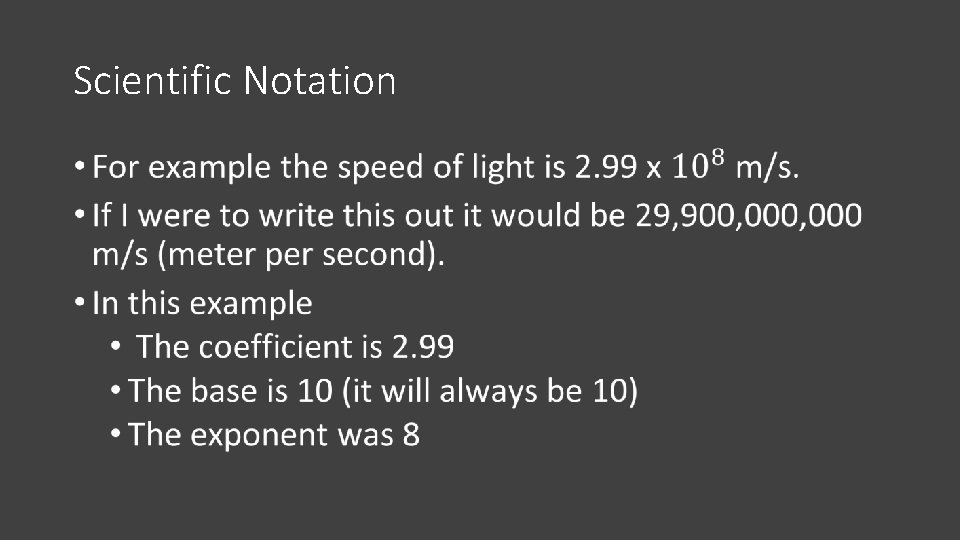
Scientific Notation •
Scientific Notation • When converting a number to scientific notation you keep only the significant figures. • Significant figures of a number are digits that carry meaning contributing to its measurement resolution.
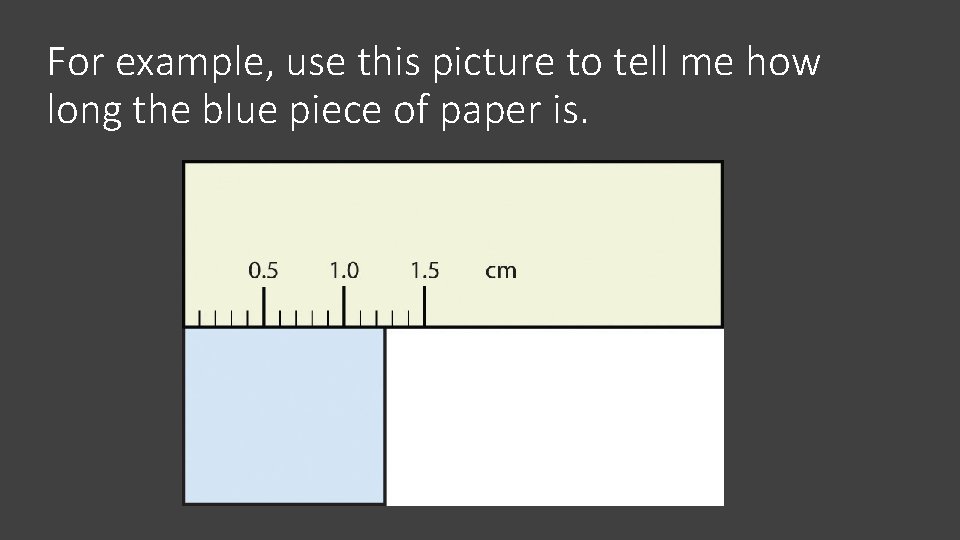
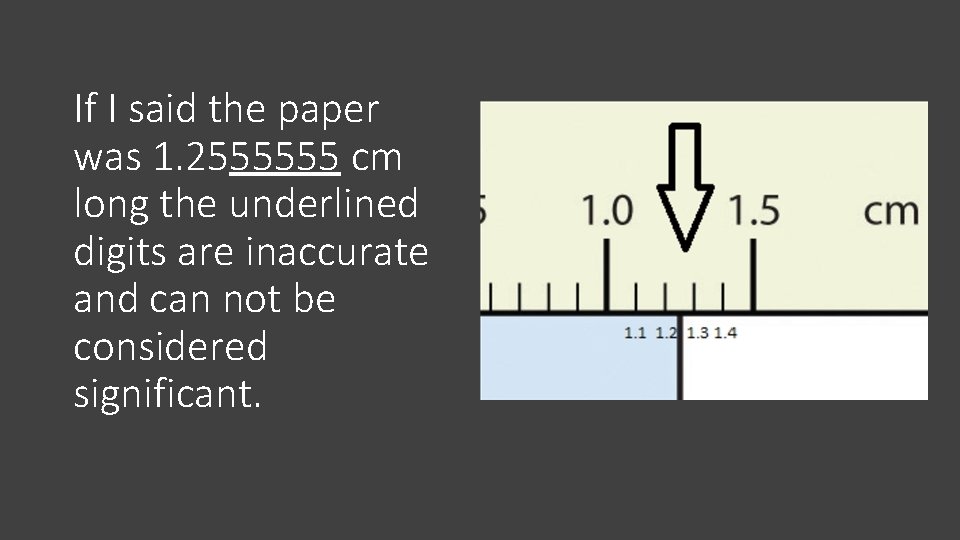
For example, use this picture to tell me how long the blue piece of paper is.
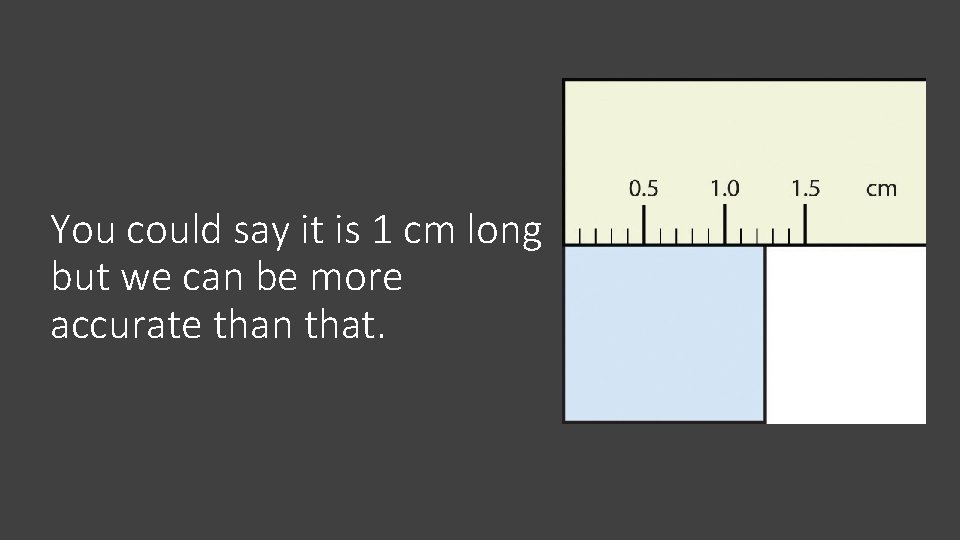
You could say it is 1 cm long but we can be more accurate than that.
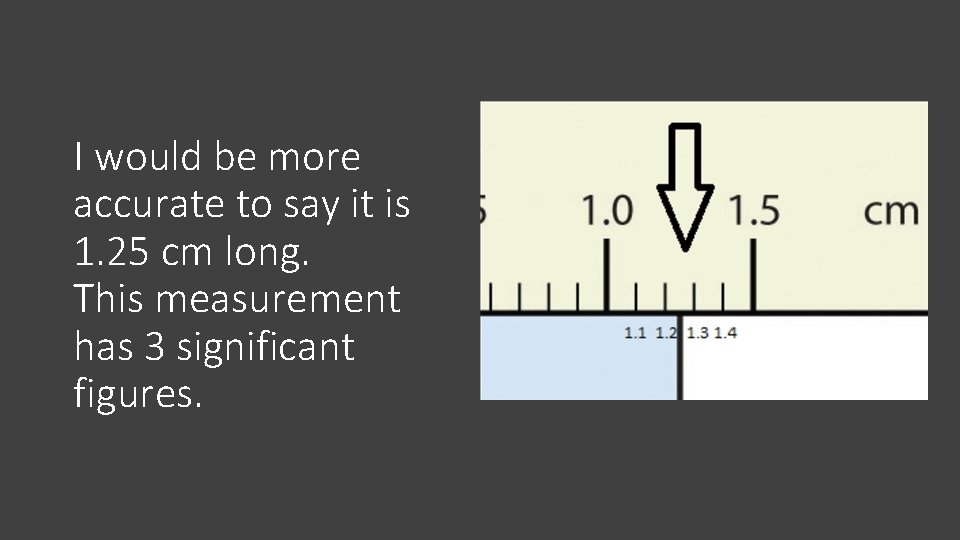
I would be more accurate to say it is 1. 25 cm long. This measurement has 3 significant figures.
If I said the paper was 1. 2555555 cm long the underlined digits are inaccurate and can not be considered significant.