Southeast Asian tonogenesis how and why JanOlof Svantesson


- Slides: 33
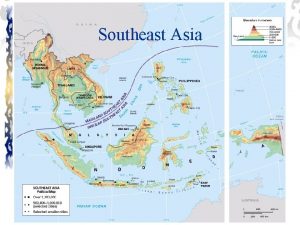
Southeast Asian tonogenesis: how and why? Jan-Olof Svantesson Lund University, Sweden
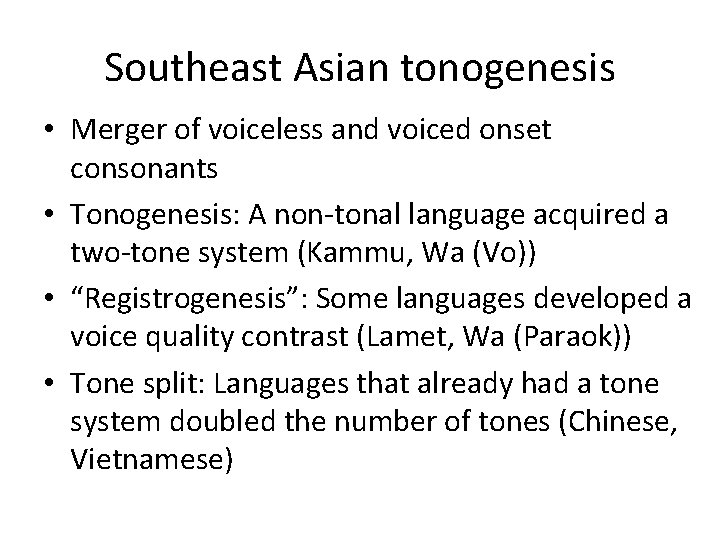
Southeast Asian tonogenesis • Merger of voiceless and voiced onset consonants • Tonogenesis: A non-tonal language acquired a two-tone system (Kammu, Wa (Vo)) • “Registrogenesis”: Some languages developed a voice quality contrast (Lamet, Wa (Paraok)) • Tone split: Languages that already had a tone system doubled the number of tones (Chinese, Vietnamese)
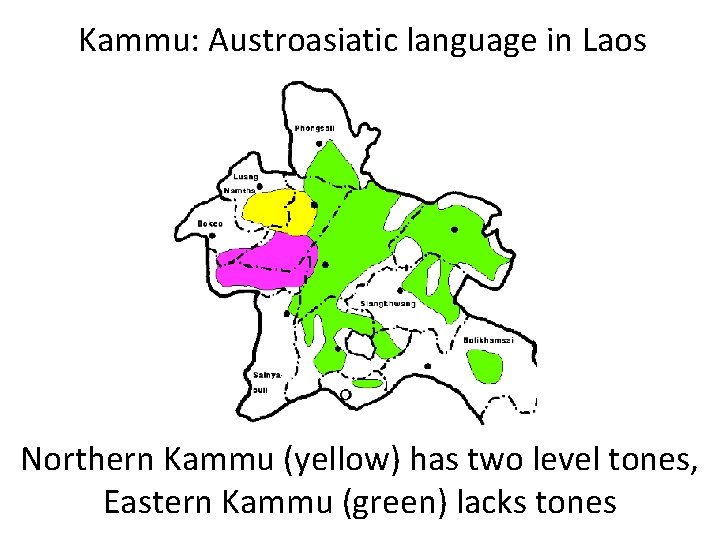
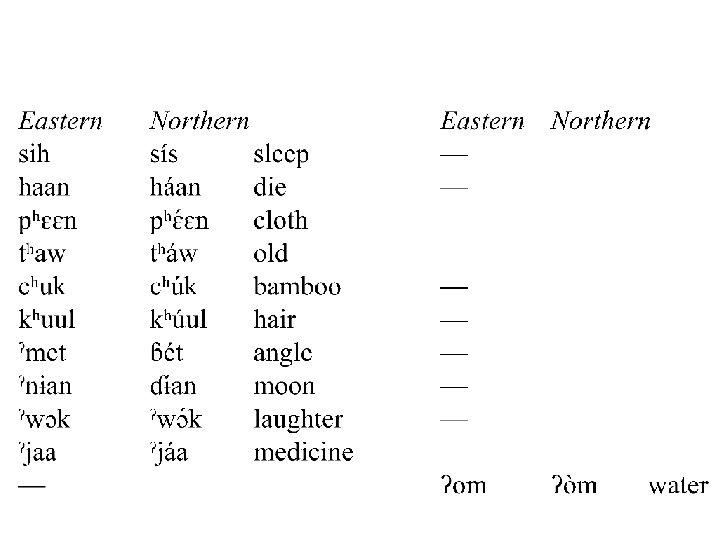
Kammu: Austroasiatic language in Laos Northern Kammu (yellow) has two level tones, Eastern Kammu (green) lacks tones
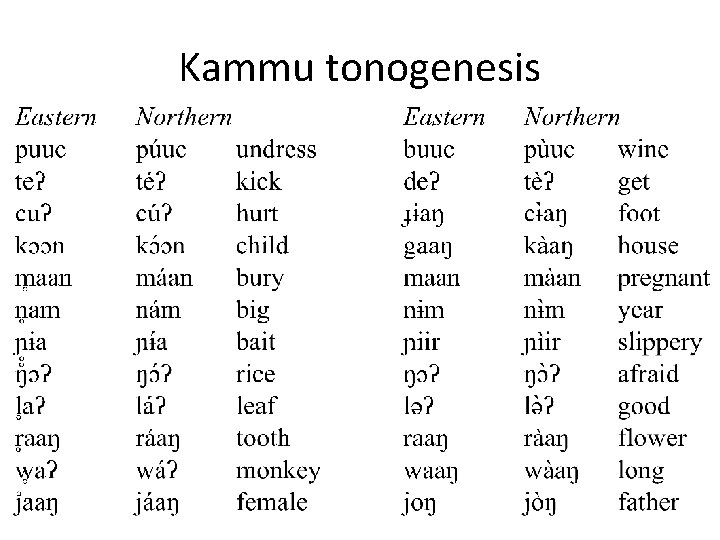
Kammu tonogenesis
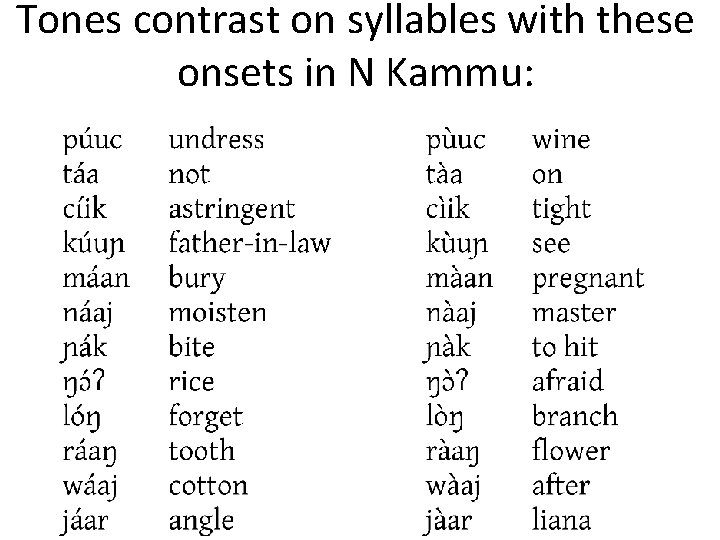
Tones contrast on syllables with these onsets in N Kammu:
but not on these:
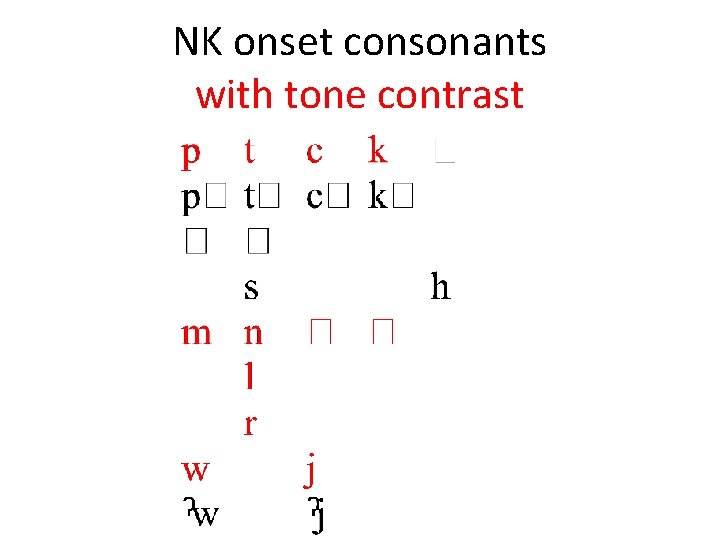
NK onset consonants with tone contrast
Evidence that the Northern Kammu tones are features of the onset consonants • Distribution of tones and onset consonants • Tonal morphophonology • Word play
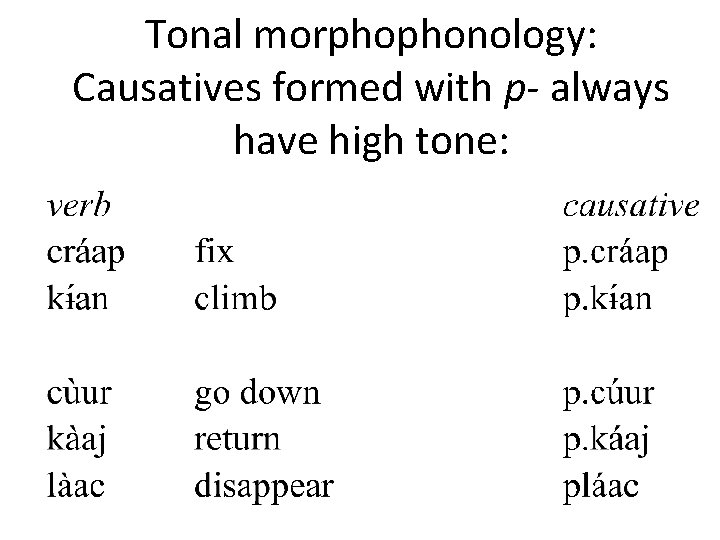
Tonal morphophonology: Causatives formed with p- always have high tone:
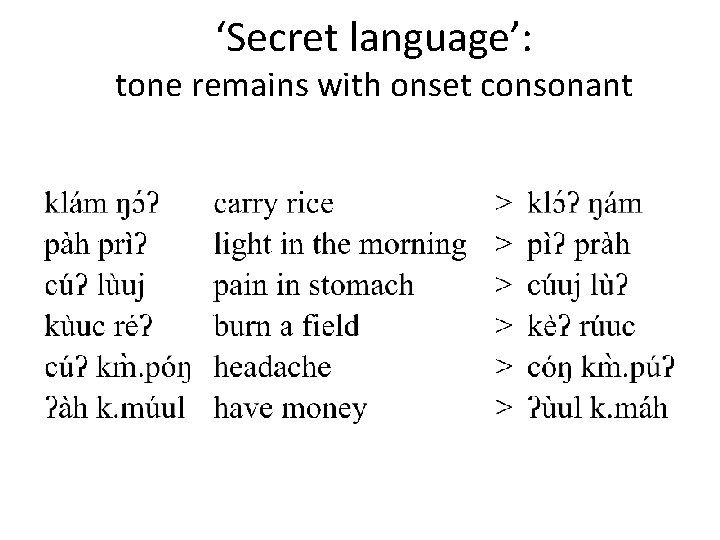
‘Secret language’: tone remains with onset consonant
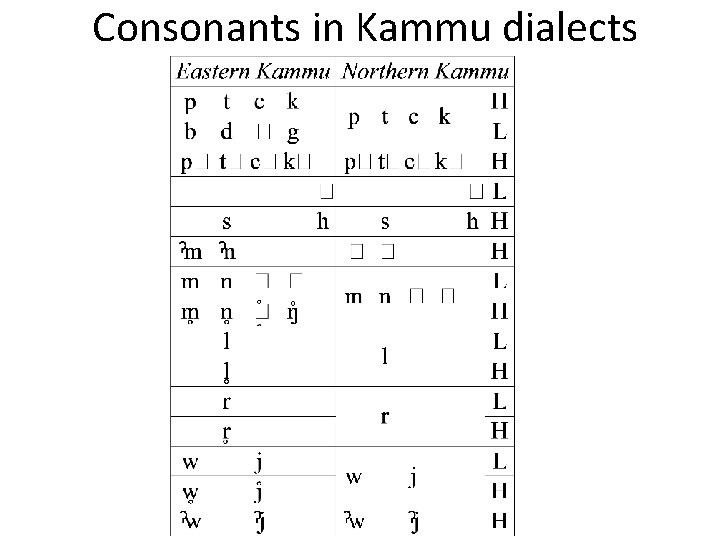
Consonants in Kammu dialects
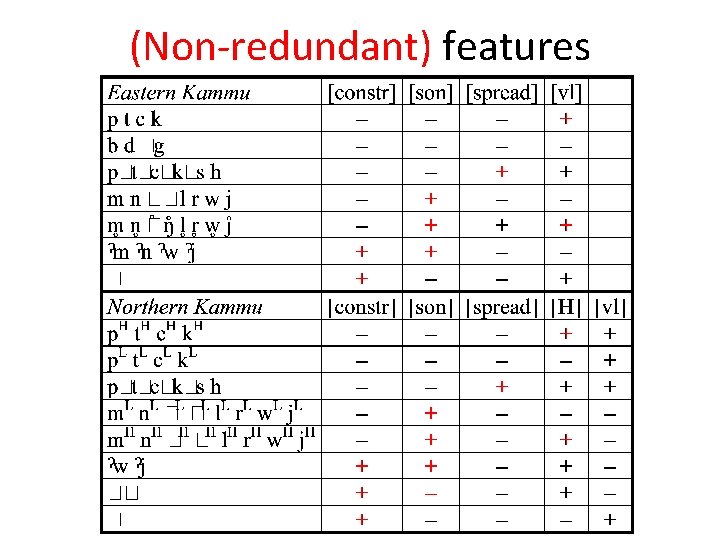
(Non-redundant) features
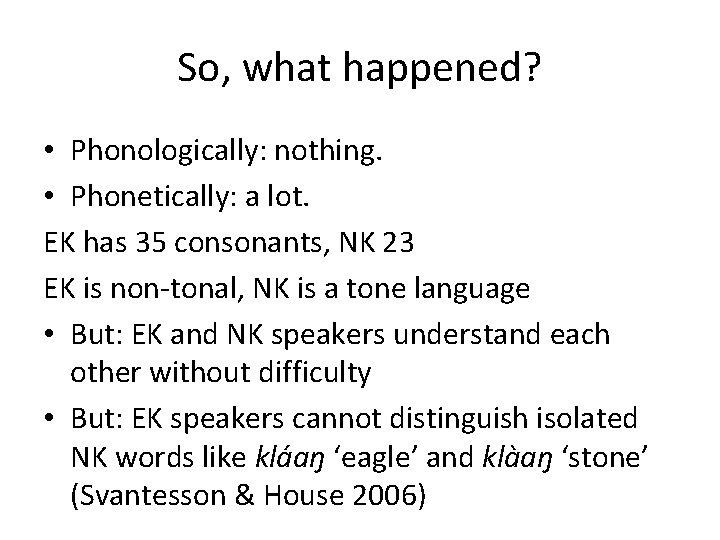
So, what happened? • Phonologically: nothing. • Phonetically: a lot. EK has 35 consonants, NK 23 EK is non-tonal, NK is a tone language • But: EK and NK speakers understand each other without difficulty • But: EK speakers cannot distinguish isolated NK words like kláaŋ ‘eagle’ and klàaŋ ‘stone’ (Svantesson & House 2006)
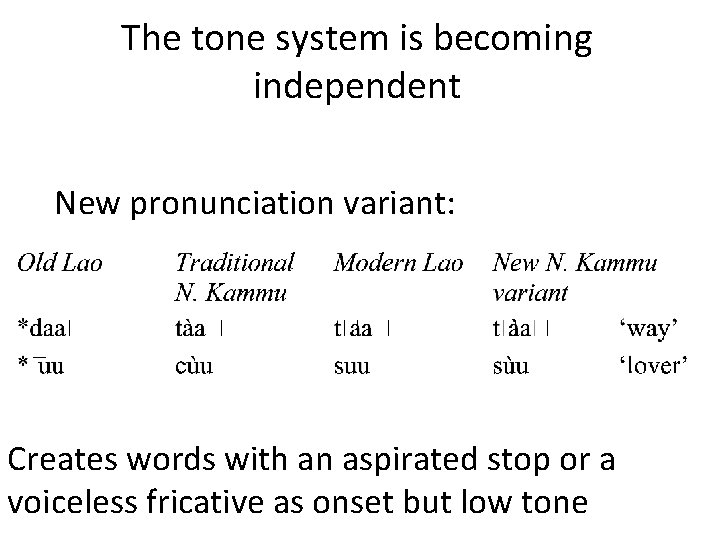
The tone system is becoming independent New pronunciation variant: Creates words with an aspirated stop or a voiceless fricative as onset but low tone
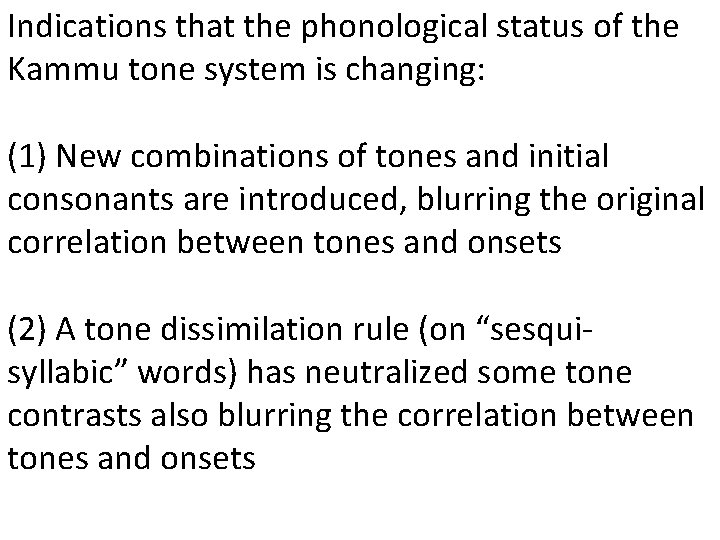
Indications that the phonological status of the Kammu tone system is changing: (1) New combinations of tones and initial consonants are introduced, blurring the original correlation between tones and onsets (2) A tone dissimilation rule (on “sesquisyllabic” words) has neutralized some tone contrasts also blurring the correlation between tones and onsets
Southeast Asian tonogenesis / tone split • Recently created tones are phonologically features of the onset consonants • Being phonetically realized on the rhyme and no longer phonetically dependent on the onset consonants the tones are free to change
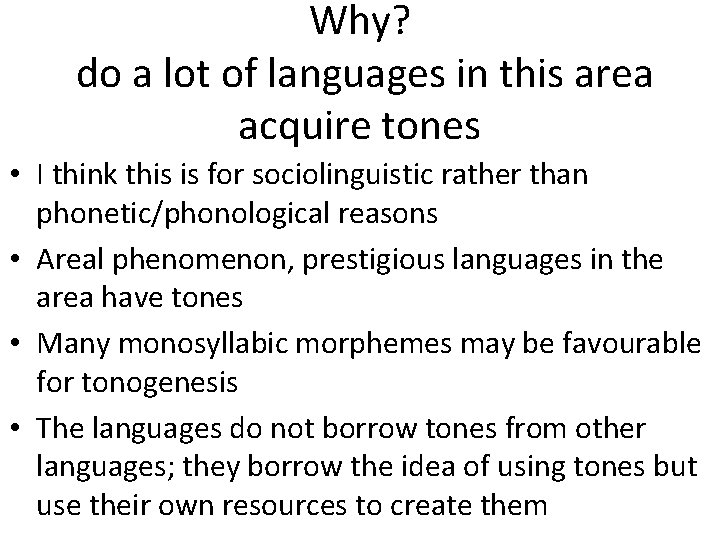
Why? do a lot of languages in this area acquire tones • I think this is for sociolinguistic rather than phonetic/phonological reasons • Areal phenomenon, prestigious languages in the area have tones • Many monosyllabic morphemes may be favourable for tonogenesis • The languages do not borrow tones from other languages; they borrow the idea of using tones but use their own resources to create them
Angkuic langugages Small Austroasiatic (Palaungic) subgroup spoken in SW China • Angku • Mok • U • Hu • . . .
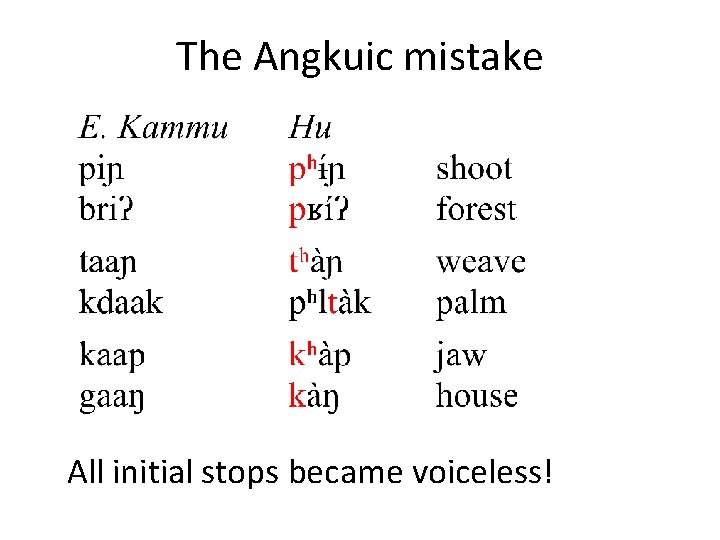
The Angkuic mistake All initial stops became voiceless!
The Hu solution
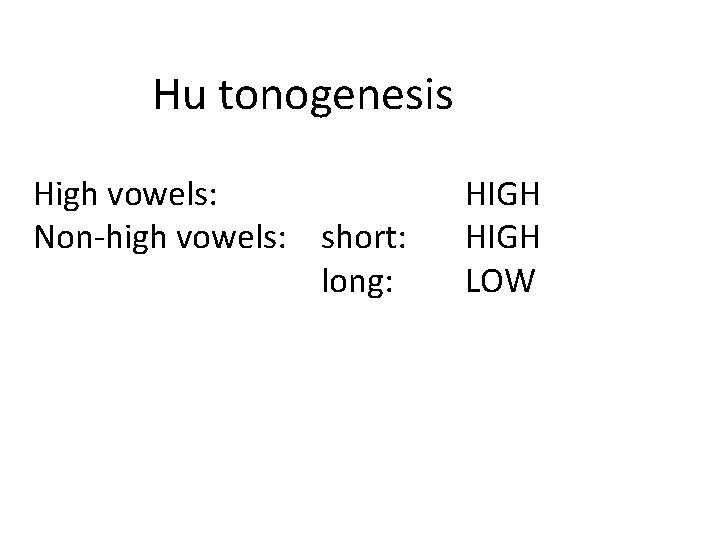
Hu tonogenesis High vowels: Non-high vowels: short: long: HIGH LOW
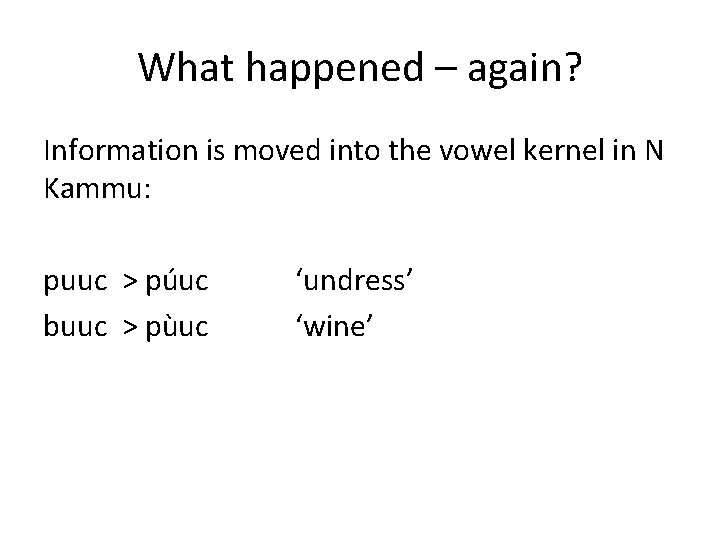
What happened – again? Information is moved into the vowel kernel in N Kammu: puuc > púuc buuc > pùuc ‘undress’ ‘wine’
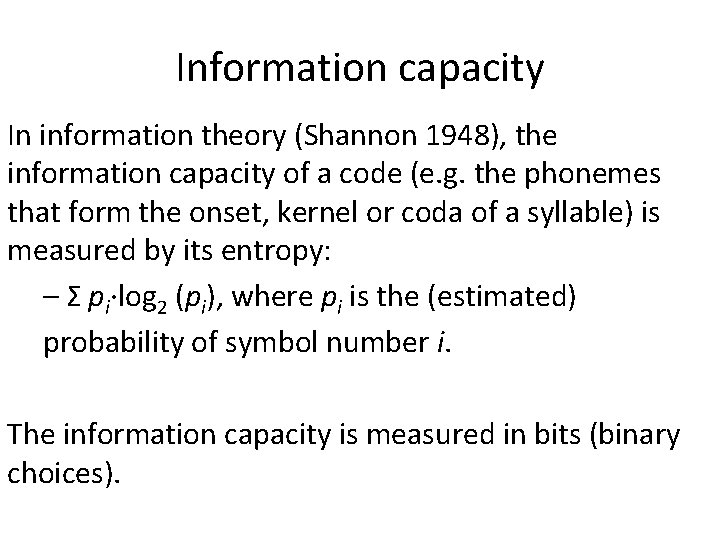
Information capacity In information theory (Shannon 1948), the information capacity of a code (e. g. the phonemes that form the onset, kernel or coda of a syllable) is measured by its entropy: – Σ pi·log 2 (pi), where pi is the (estimated) probability of symbol number i. The information capacity is measured in bits (binary choices).
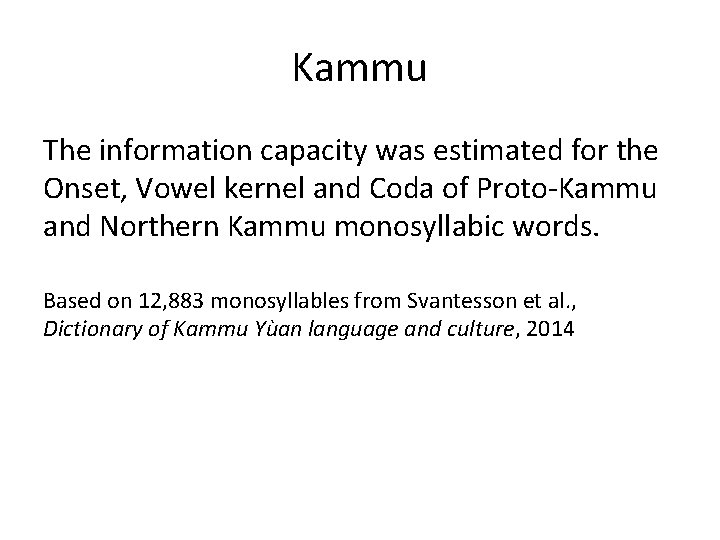
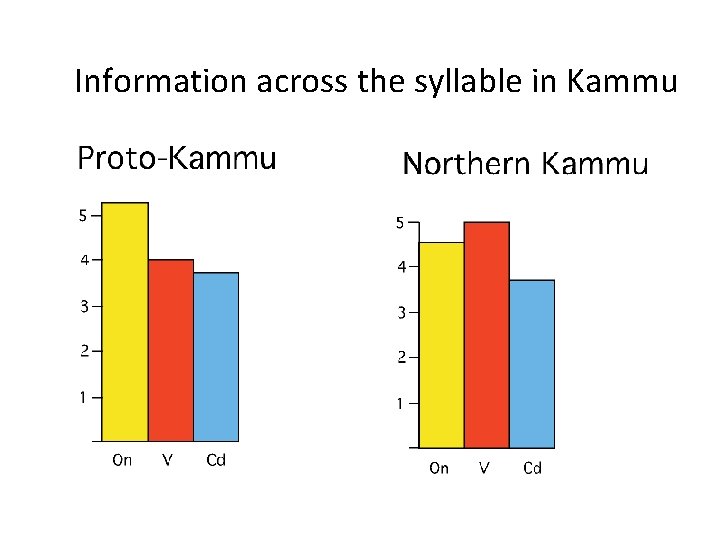
Kammu The information capacity was estimated for the Onset, Vowel kernel and Coda of Proto-Kammu and Northern Kammu monosyllabic words. Based on 12, 883 monosyllables from Svantesson et al. , Dictionary of Kammu Yùan language and culture, 2014
Information across the syllable in Kammu
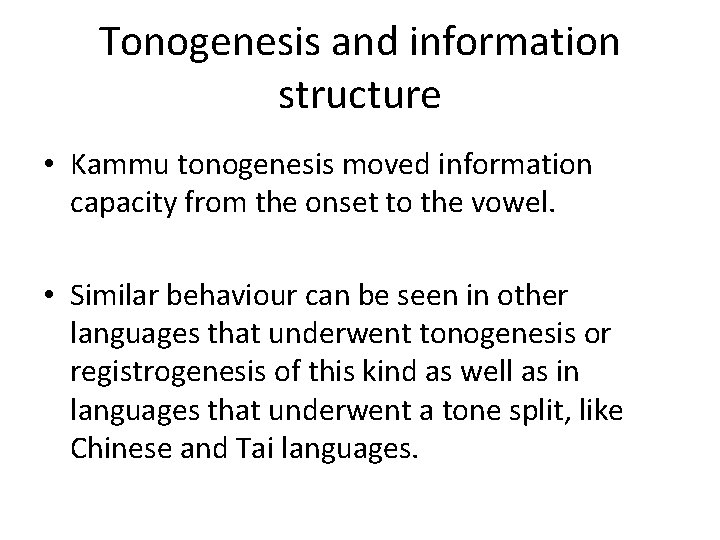
Tonogenesis and information structure • Kammu tonogenesis moved information capacity from the onset to the vowel. • Similar behaviour can be seen in other languages that underwent tonogenesis or registrogenesis of this kind as well as in languages that underwent a tone split, like Chinese and Tai languages.
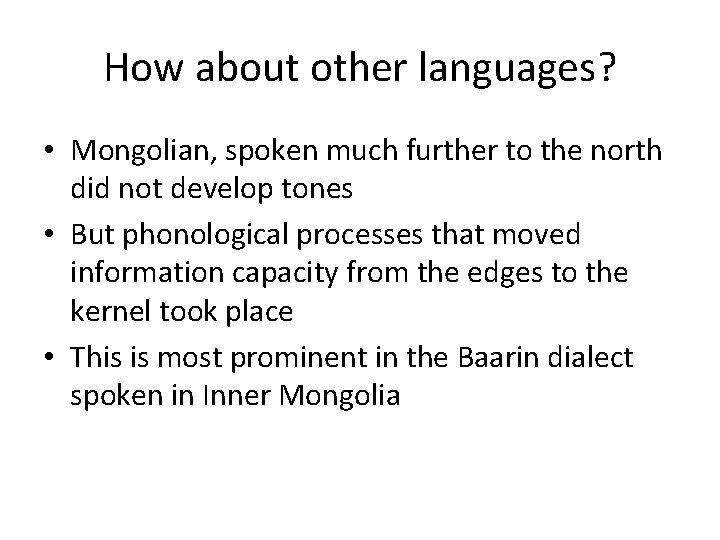
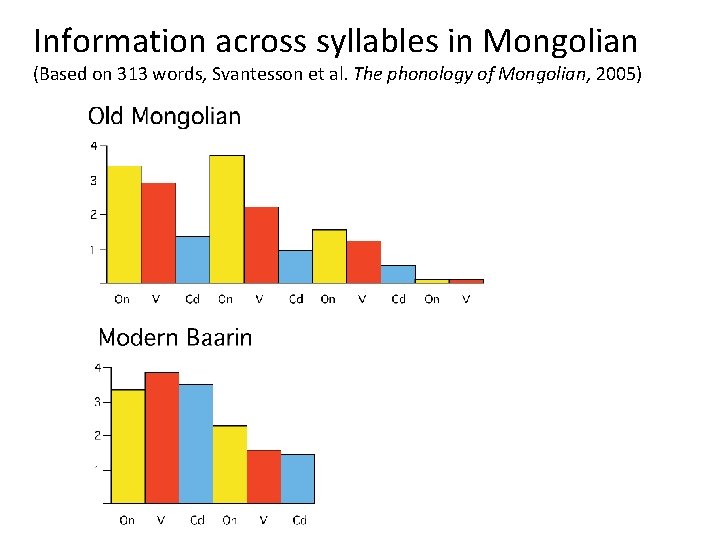
How about other languages? • Mongolian, spoken much further to the north did not develop tones • But phonological processes that moved information capacity from the edges to the kernel took place • This is most prominent in the Baarin dialect spoken in Inner Mongolia
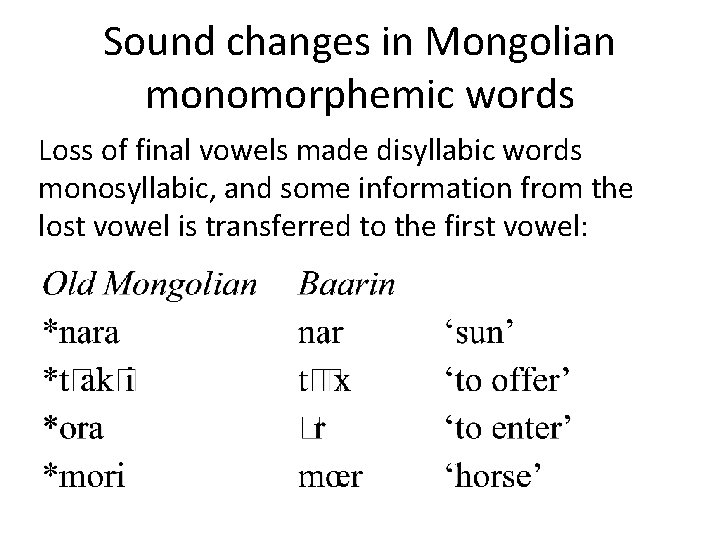
Sound changes in Mongolian monomorphemic words Loss of final vowels made disyllabic words monosyllabic, and some information from the lost vowel is transferred to the first vowel:
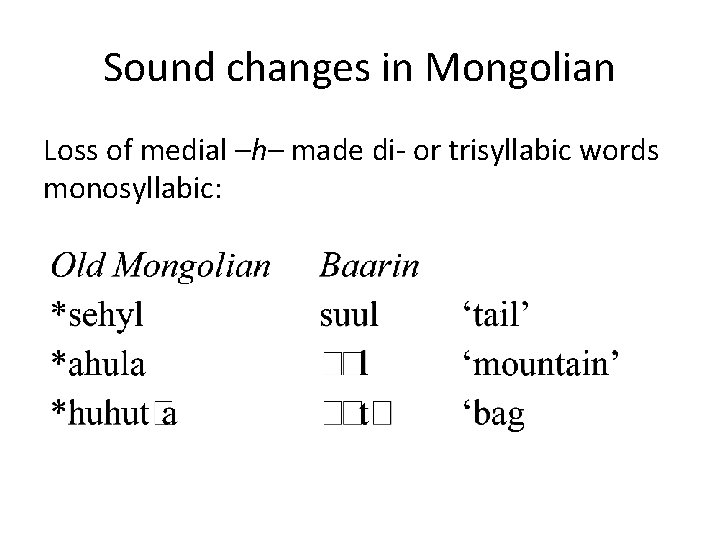
Sound changes in Mongolian Loss of medial –h– made di- or trisyllabic words monosyllabic:
Information across syllables in Mongolian (Based on 313 words, Svantesson et al. The phonology of Mongolian, 2005)
Conclusion • The development from Old Mongolian to modern dialects has something in common with the development in the tonogenesis/tone split languages • SEA tonogenesis is part of an areal tendency to cram more and more information capacity into the vowel kernel of the (first) syllable
Thank you!