SASS SelfAdaptation using Stochastic Search Zack Coker David

- Slides: 20
SASS: Self-Adaptation using Stochastic Search Zack Coker, David Garlan, Claire Le Goues School of Computer Science Carnegie Mellon University 1/20
Smart Grids Smart Traffic Systems Smart Buildings Smart Farms 2/20
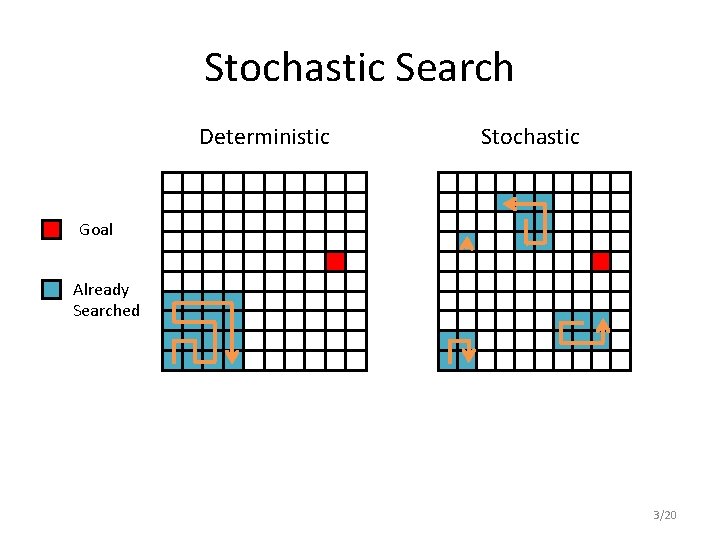
Stochastic Search Deterministic Stochastic Goal Already Searched 3/20
Stochastic Search 4/20
Stochastic Search • B. H. C. Cheng, A. J. Ramirez, and P. K. Mc. Kinley, “Harnessing evolutionary computation to enable dynamically adaptive systems to manage uncertainty” • G. G. Pascual, M. Pinto, and L. Fuentes, “Run-time adaptation of mobile applications using genetic algorithms” • P. Zoghi, M. Shtern, and M. Litoiu, “Designing search based adaptive systems: A quantitative approach” • M. Harman, Y. Jia, W. B. Langdon, J. Petke, I. H. Moghadam, S. Yoo, and F. Wu, “Genetic improvement for adaptive software engineering (keynote)” 5/20
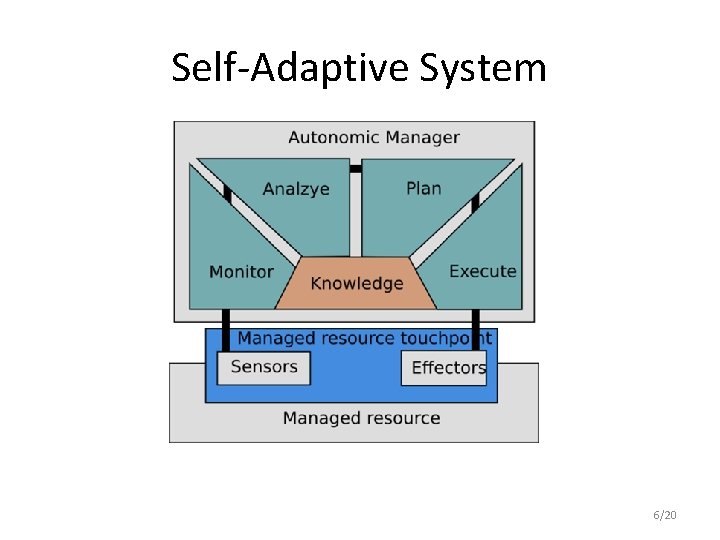
Self-Adaptive System 6/20
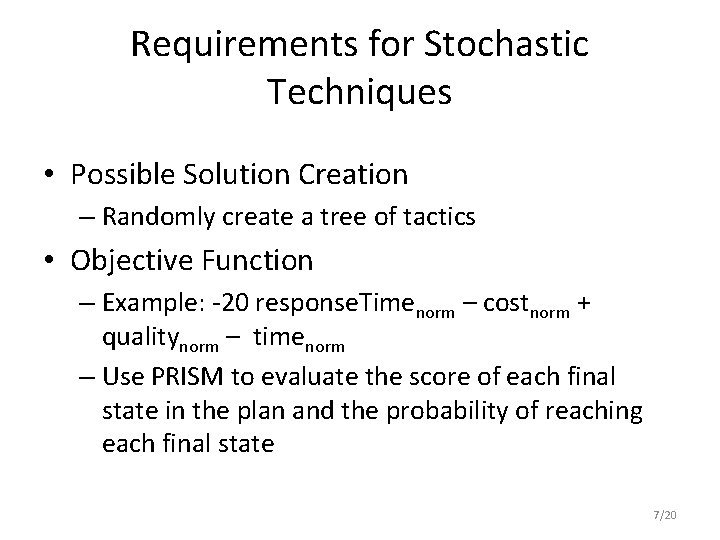
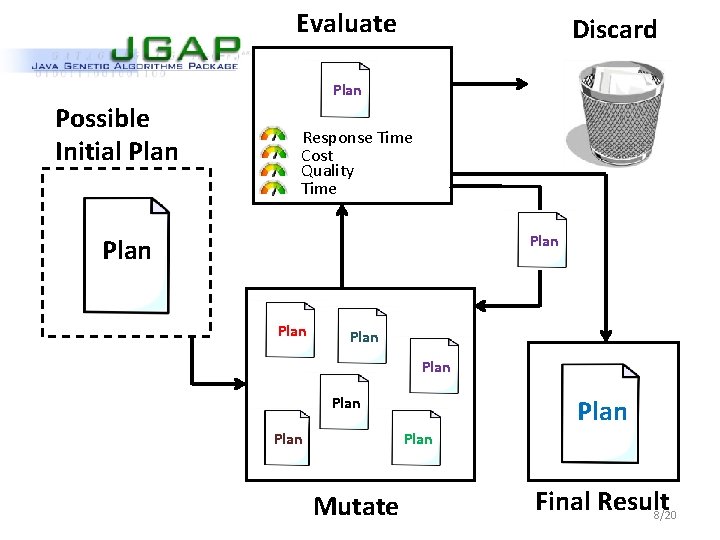
Requirements for Stochastic Techniques • Possible Solution Creation – Randomly create a tree of tactics • Objective Function – Example: -20 response. Timenorm – costnorm + qualitynorm – timenorm – Use PRISM to evaluate the score of each final state in the plan and the probability of reaching each final state 7/20
Evaluate Discard Plan Possible Initial Plan Response Time Cost Quality Time Plan Plan Plan Mutate Final Result 8/20
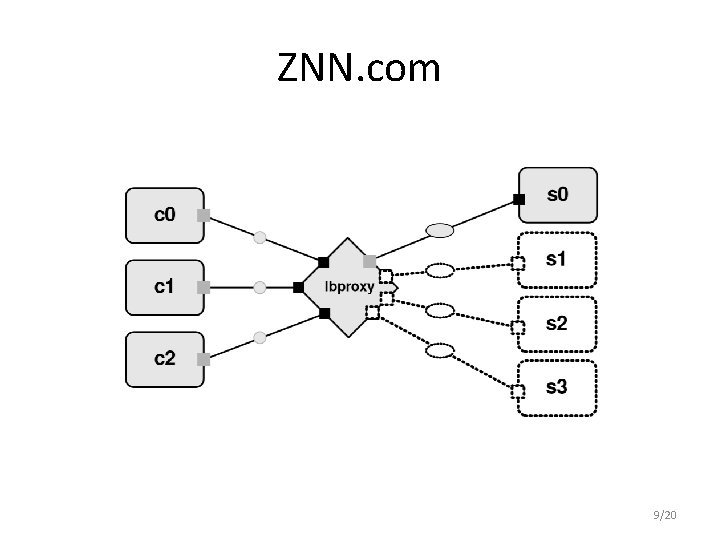
ZNN. com 9/20
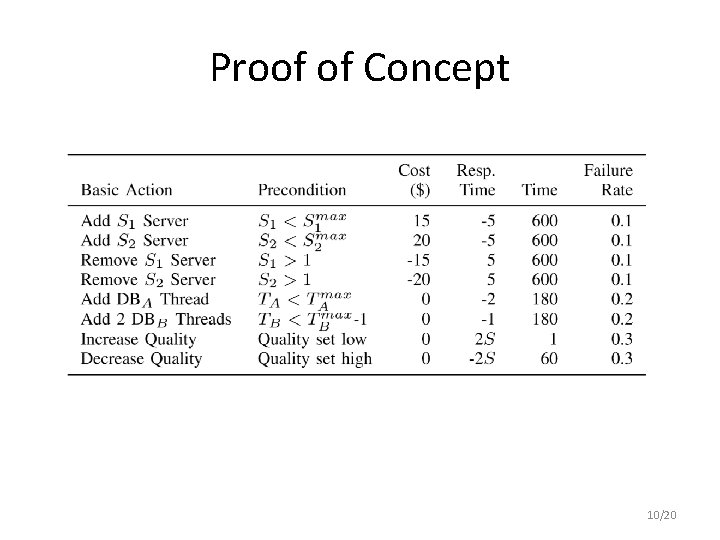
Proof of Concept 10/20
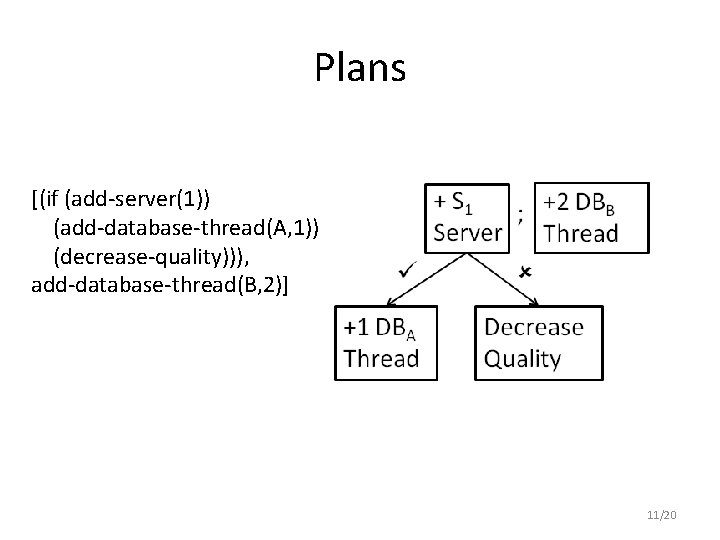
Plans [(if (add-server(1)) (add-database-thread(A, 1)) (decrease-quality))), add-database-thread(B, 2)] 11/20
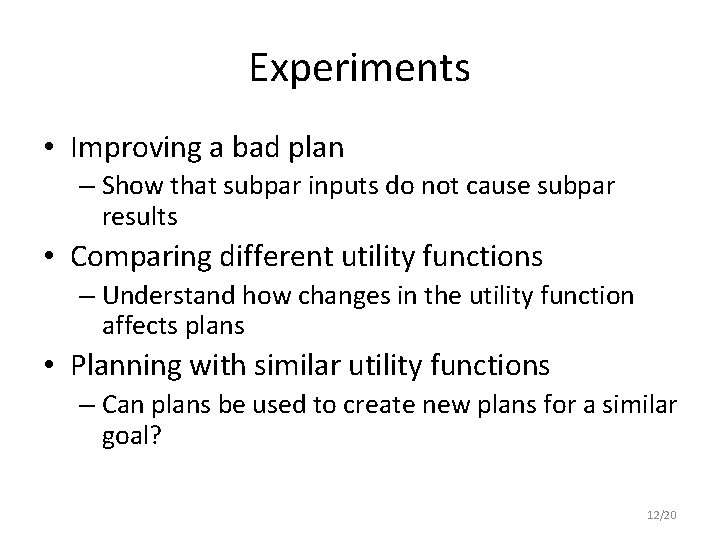
Experiments • Improving a bad plan – Show that subpar inputs do not cause subpar results • Comparing different utility functions – Understand how changes in the utility function affects plans • Planning with similar utility functions – Can plans be used to create new plans for a similar goal? 12/20
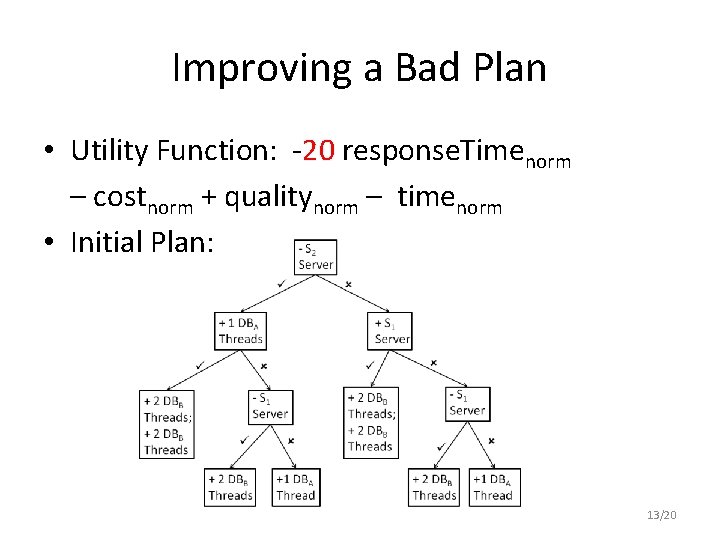
Improving a Bad Plan • Utility Function: -20 response. Timenorm – costnorm + qualitynorm – timenorm • Initial Plan: 13/20
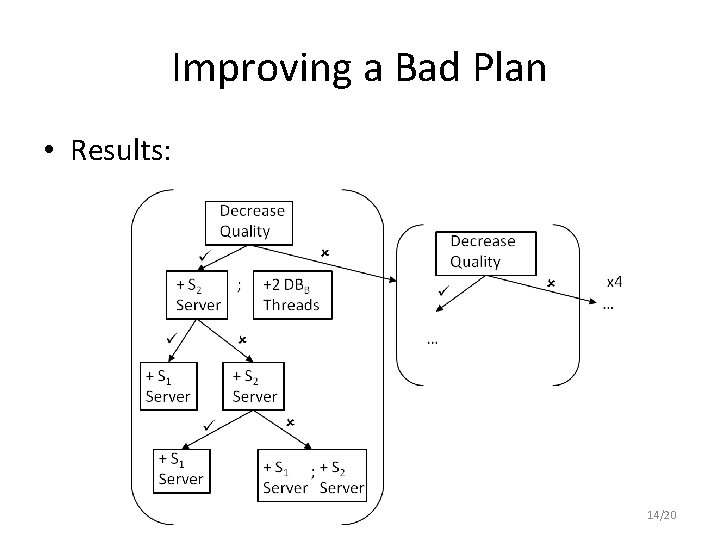
Improving a Bad Plan • Results: 14/20
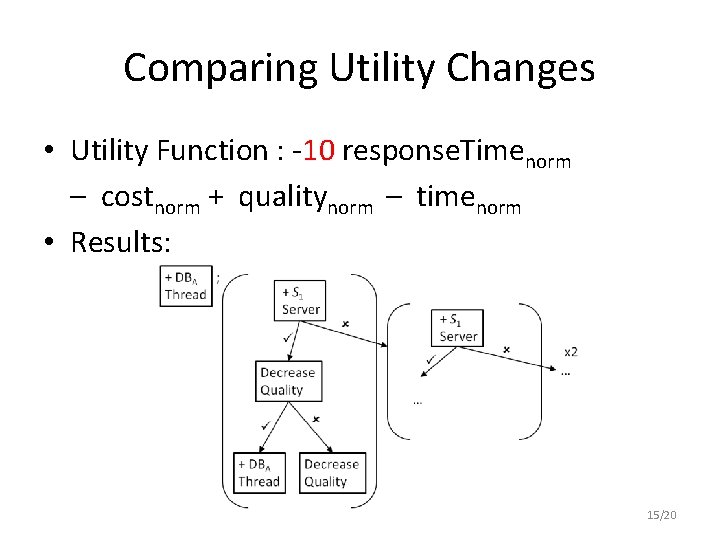
Comparing Utility Changes • Utility Function : -10 response. Timenorm – costnorm + qualitynorm – timenorm • Results: 15/20
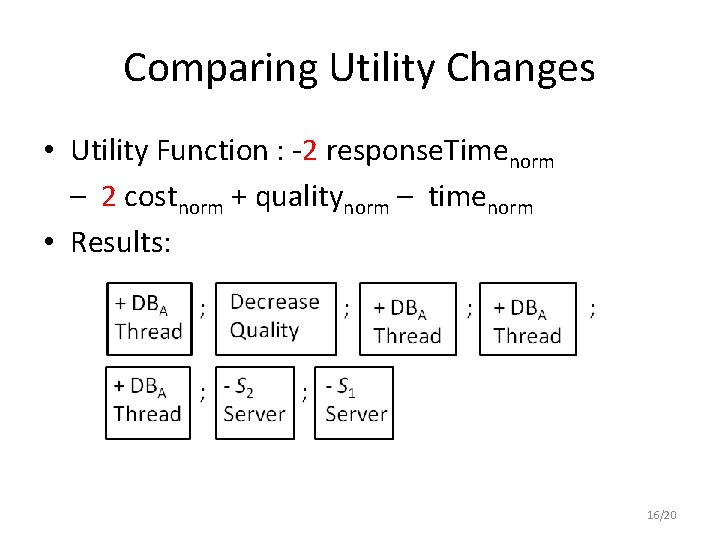
Comparing Utility Changes • Utility Function : -2 response. Timenorm – 2 costnorm + qualitynorm – timenorm • Results: 16/20
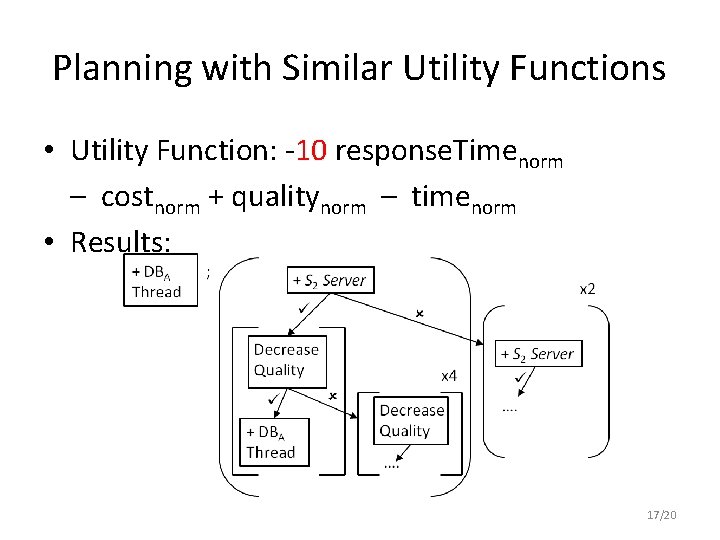
Planning with Similar Utility Functions • Utility Function: -10 response. Timenorm – costnorm + qualitynorm – timenorm • Results: 17/20
Experiment Conclusions • The planner can handle erroneous user provided plans • The planner can handle multiple objectives • The planner can provide unexpected knowledge about the search space • The planner can use information from previously generated plans to make new plans 18/20
Future Ideas • Test the planner on a system with more tactics – Compare to deterministic planners • Incorporate feedback from the system monitor – If adaption fails, is it likely to fail again? – Partially effective adaptations – timing issues • Adapting similar plans to a new situation • Catalogue when stochastic techniques are effective • Improve human trust in plans/ stochastically generated plans 19/20
Summary • Stochastic search shows promise for handling the future complexity of self-adaptive systems • Demonstrate the benefits of stochastic search with a proof of concept genetic programming planner • 3 experiments demonstrate the potential of our planner • There are many research problems for applying stochastic search to self adaptive systems 20/20