San Luis Valley Gifted Education Network March 30
- Slides: 21
San Luis Valley Gifted Education Network March 30, 2017 https: //hoichigenchem. wikispaces. com/Thinking+Interdependently
Goals for Today • Refine identification in the talent areas • Confirm dates and actions for the rest of this year • Plan for next year by reviewing needs and setting dates • Look at materials for programming • Learn about the characteristics and needs of twice exceptional students
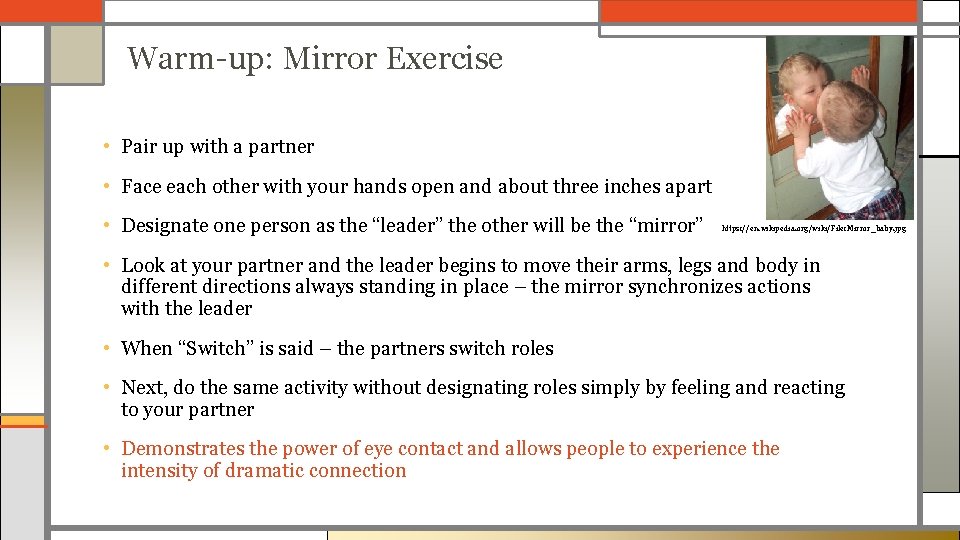
Warm-up: Mirror Exercise • Pair up with a partner • Face each other with your hands open and about three inches apart • Designate one person as the “leader” the other will be the “mirror” https: //en. wikipedia. org/wiki/File: Mirror_baby. jpg • Look at your partner and the leader begins to move their arms, legs and body in different directions always standing in place – the mirror synchronizes actions with the leader • When “Switch” is said – the partners switch roles • Next, do the same activity without designating roles simply by feeling and reacting to your partner • Demonstrates the power of eye contact and allows people to experience the intensity of dramatic connection
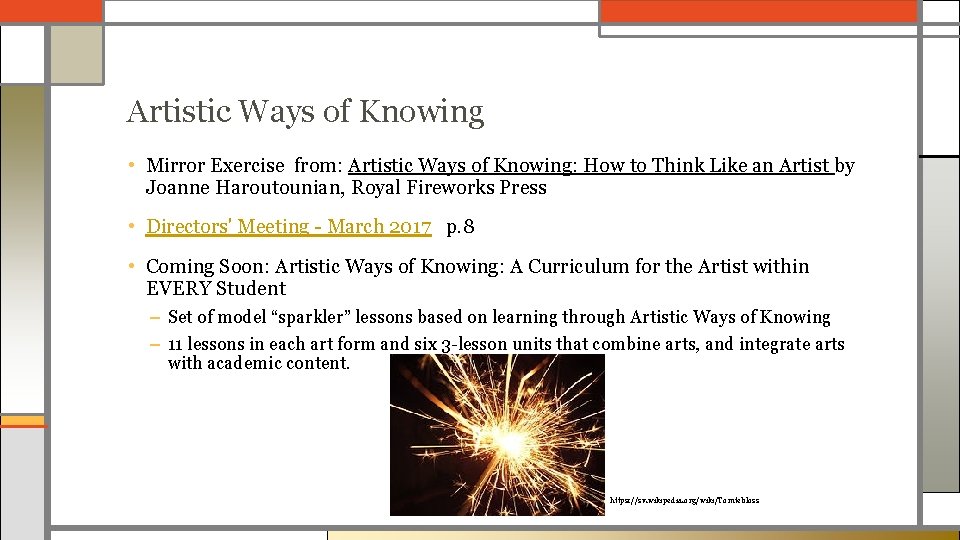
Artistic Ways of Knowing • Mirror Exercise from: Artistic Ways of Knowing: How to Think Like an Artist by Joanne Haroutounian, Royal Fireworks Press • Directors' Meeting - March 2017 p. 8 • Coming Soon: Artistic Ways of Knowing: A Curriculum for the Artist within EVERY Student – Set of model “sparkler” lessons based on learning through Artistic Ways of Knowing – 11 lessons in each art form and six 3 -lesson units that combine arts, and integrate arts with academic content. https: //sv. wikipedia. org/wiki/Tomtebloss
Events for the Rest of this School Year • April 1 – 8: 45 -4: 00 – Creative Explorations at Ortega Middle School, Alamosa • April 17 – Universal Screening Grant will be submitted • May 9 -11 – C-GER – update websites, visits/focus groups? • June 10 – Reimbursements due to BOCES – wish lists due • June TBD– Meetings with talents specialists groups
Planning for 2017 -2018 • Depth and Complexity Framework August 10 th – R 4 R Workshop 2 – Learning Experiences 3 and 4 Level 1 presentation Implementation in schools Anticipated needs for next year • Network Dates • Special Speakers • Creative Explorations • New Comprehensive Program Plan – October, 2017 http: //aldanity. wikispaces. com/
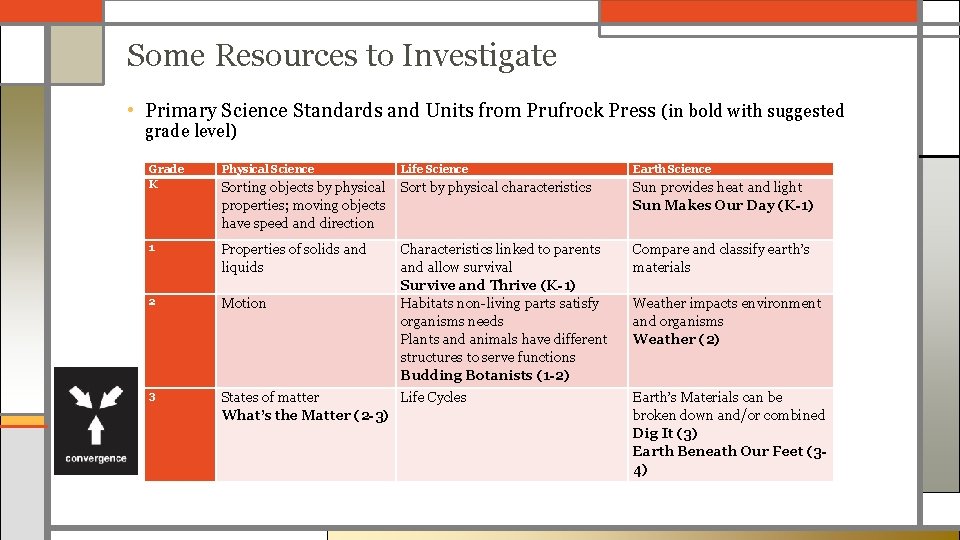
Some Resources to Investigate • Primary Science Standards and Units from Prufrock Press (in bold with suggested grade level) Grade K Physical Science Life Science Sorting objects by physical Sort by physical characteristics properties; moving objects have speed and direction Sun provides heat and light Sun Makes Our Day (K-1) 1 Properties of solids and liquids Compare and classify earth’s materials 2 Motion 3 States of matter Life Cycles What’s the Matter (2 -3) Characteristics linked to parents and allow survival Survive and Thrive (K-1) Habitats non-living parts satisfy organisms needs Plants and animals have different structures to serve functions Budding Botanists (1 -2) Earth Science Weather impacts environment and organisms Weather (2) Earth’s Materials can be broken down and/or combined Dig It (3) Earth Beneath Our Feet (34)
More Resources • Royal Fireworks Press – units on philosophy • ASCD Quick Reference Guide – Giving Students Effective Feedback • CAGT scholarships
https: //commons. wikimedia. org/wiki/File: Painting_by_children. jpg https: //hallstars. wikispaces. com/Wish+List Identification http: //mrmrscase. wikispaces. com/ https: //exploringartinthecity. wordpress. com/tag/action-for-childrens-arts/
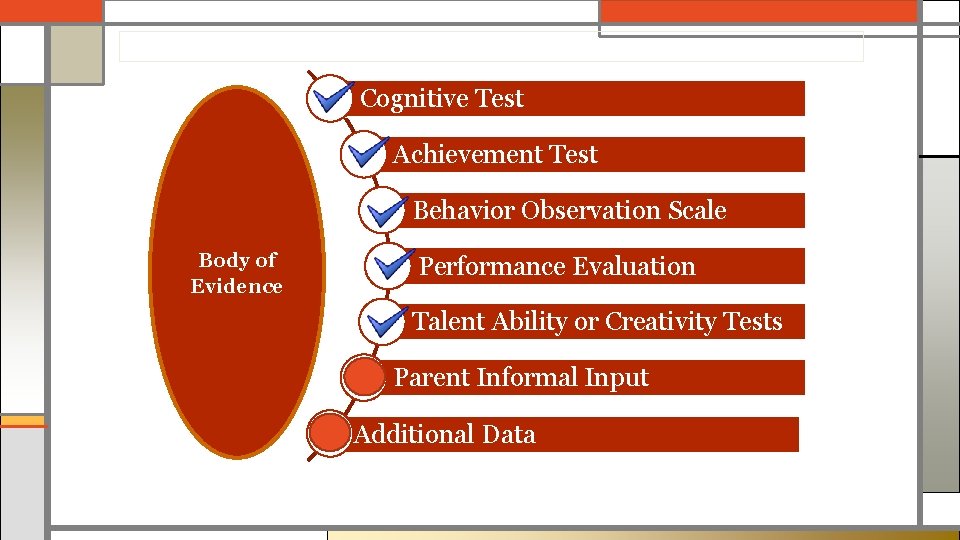
Cognitive Test Achievement Test Behavior Observation Scale Body of Evidence Performance Evaluation Talent Ability or Creativity Tests Parent Informal Input Additional Data
Clarification on Use of Parental Input • A norm-referenced behavioral observation scale for parents (e. g. SIGS) can be used as a qualifying piece of evidence for identification • Parents may need instruction about how to complete the scale • If being used with a non-English speaking parent a translator may be needed • Informal parental input is not qualifying evidence but is very useful for determining programming and creating the Advanced Learning Plan (ALP)
Area of Giftedness: Specific Talent Aptitude • Performing Arts • Music • Visual Arts • Dance • Psychomotor • Creative or Productive Thinking • Leadership
What is Leadership? • Work in small groups of 2 -3 people • List the characteristics of a leader on your chart paper • Create a definition of leadership from your characteristics
Definitions of Leadership • Colorado Rules for Exceptional Children’s Education Act (ECEA) p. 101 – 12. 01(16)(d) Leadership Abilities • 12. 01(16)(d)(i) Definition – Leadership is the exceptional capability or potential to influence and empower people (e. g. , social perceptiveness, visionary ability, communication skills, problem solving, inter and intra-personal skills and a sense of responsibility, etc. ). • Setting a goal and developing a plan to work with others to reach it. Leadership is about making things happen. Julia Link Roberts, WKU, Gifted Child Today, Sage Publications
Giftedness and Leadership • In your small group list specific traits of gifted students that could contribute to successful leadership. • Write your ideas on your chart paper.
Characteristics of Successful Leadership • "Five well-researched personality factors associated with successful leadership are sociability, cooperativeness or diplomacy, integrity, emotional stability, and intelligence. The trait of intelligence has helped establish leadership as a type of giftedness. The challenge for educators and parents is to figure out how best to encourage and nurture leadership at an early age. All children, intellectually gifted or not, can improve their leadership skills. . . " Creating Opportunities to Develop Leadership Ability in Duke Gifted Letter retrieved from http: //www. hoagiesgifted. org/leadership. htm
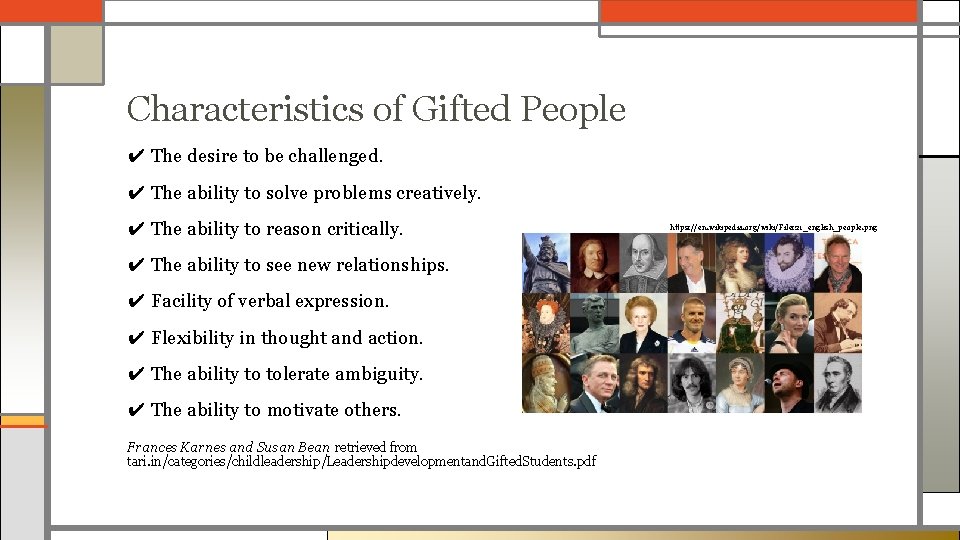
Characteristics of Gifted People ✔ The desire to be challenged. ✔ The ability to solve problems creatively. ✔ The ability to reason critically. ✔ The ability to see new relationships. ✔ Facility of verbal expression. ✔ Flexibility in thought and action. ✔ The ability to tolerate ambiguity. ✔ The ability to motivate others. Frances Karnes and Susan Bean retrieved from tari. in/categories/childleadership/Leadershipdevelopmentand. Gifted. Students. pdf https: //en. wikipedia. org/wiki/File: 21_english_people. png
Observing and Programming for Leadership • Work in grade level groups – elementary, middle and high school • Label your chart paper with the grade level • Record answers to the following questions • What would leadership look like in students at your grade level? • How does/could your district program for leadership at your grade level?
Specific Talent Aptitude: Leadership - Rubric • https: //www. cde. state. co. us/gt/performancerubric_leadership
Next Steps • Create a subcommittee to work on Leadership Identification • Develop – leadership portfolio contents and review process • Solicit local specialists on leadership to assist with portfolio review process
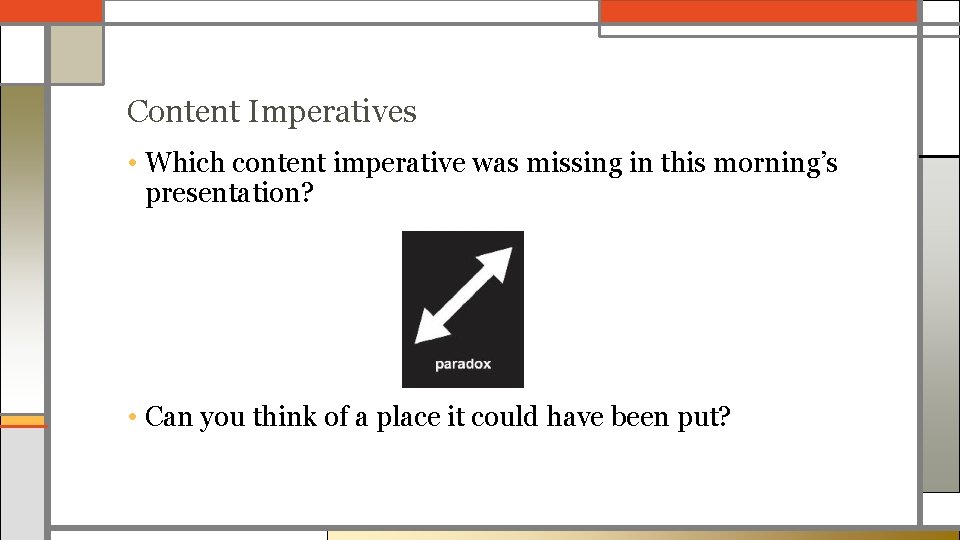
Content Imperatives • Which content imperative was missing in this morning’s presentation? • Can you think of a place it could have been put?