RY 57 PRODUCT DEVELOPMENT PDT 330 3 DESIGN
- Slides: 31
RY 57 PRODUCT DEVELOPMENT PDT 330 / 3 DESIGN STUDIO II MODELS, APPROACHES AND PERSPECTIVE Prepared by : Wan Nur A’tiqah Wan Draman
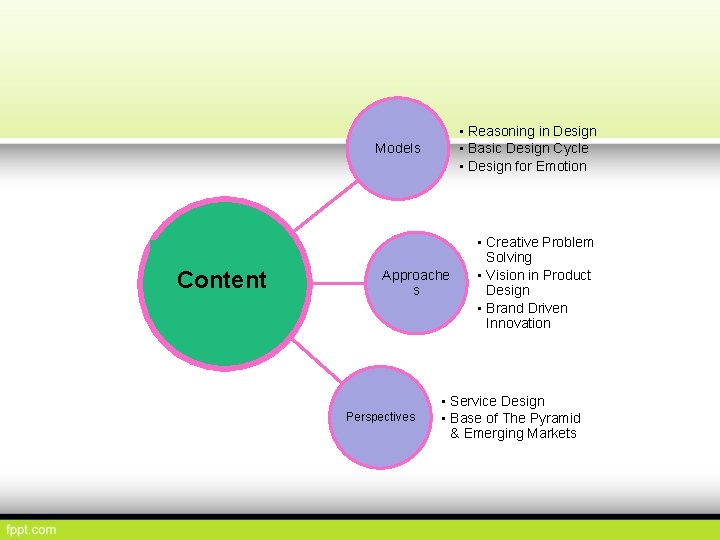
• Reasoning in Design • Basic Design Cycle • Design for Emotion Models Content Approache s Perspectives • Creative Problem Solving • Vision in Product Design • Brand Driven Innovation • Service Design • Base of The Pyramid & Emerging Markets
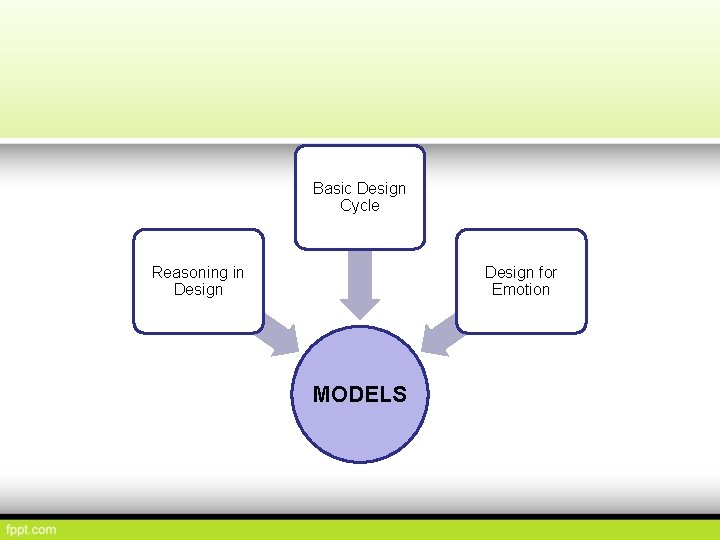
Basic Design Cycle Reasoning in Design for Emotion MODELS
REASONING IN DESIGN The reasoning in design model is a generic representation of how designers reason when designing. The model is primarily based on the design of tangible products. The model help us to be aware of and reflect on the different levels of our reasoning.
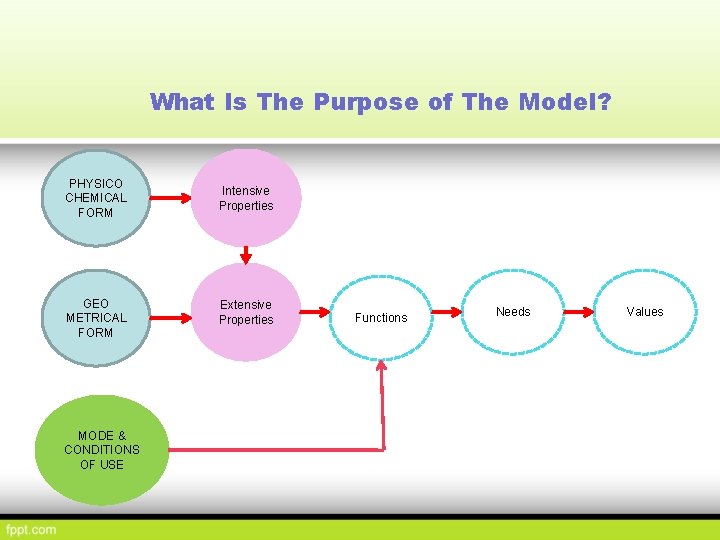
What Is The Purpose of The Model? PHYSICO CHEMICAL FORM GEO METRICAL FORM MODE & CONDITIONS OF USE Intensive Properties Extensive Properties Functions Needs Values
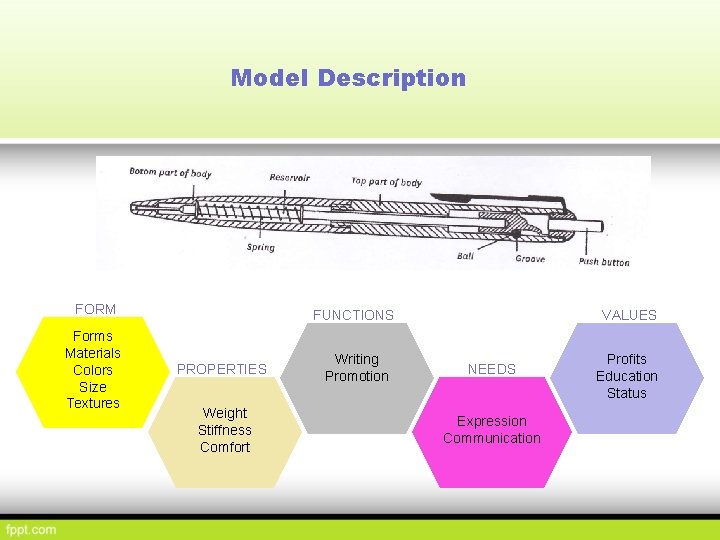
Model Description FORM Forms Materials Colors Size Textures FUNCTIONS PROPERTIES Weight Stiffness Comfort Writing Promotion VALUES NEEDS Expression Communication Profits Education Status
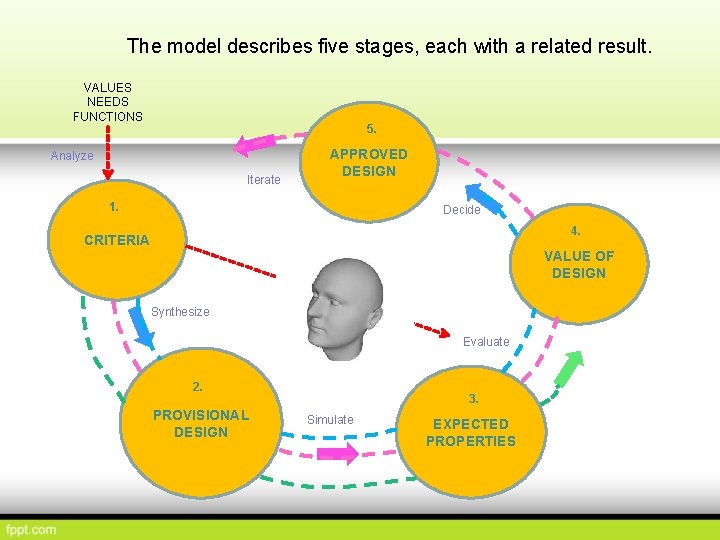
BASIC DESIGN CYCLE The Basic Design Cycle is a model that represents the trialand-error process of design. It consists of a sequence of empirical cycles. The knowledge of both the problem and the solution increase with each cycle.
The model describes five stages, each with a related result. VALUES NEEDS FUNCTIONS 5. Analyze Iterate APPROVED DESIGN 1. Decide 4. CRITERIA VALUE OF DESIGN Synthesize Evaluate 2. PROVISIONAL DESIGN 3. Simulate EXPECTED PROPERTIES
DESIGN FOR EMOTION Design for emotion is an approach that enables you to take the intended emotional impact as the landing priciple in the design process.
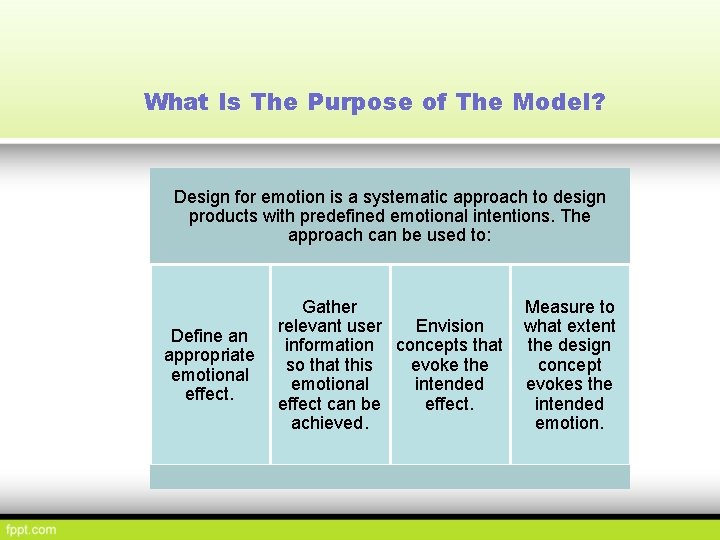
What Is The Purpose of The Model? Design for emotion is a systematic approach to design products with predefined emotional intentions. The approach can be used to: Define an appropriate emotional effect. Gather relevant user Envision information concepts that so that this evoke the emotional intended effect can be effect. achieved. Measure to what extent the design concept evokes the intended emotion.
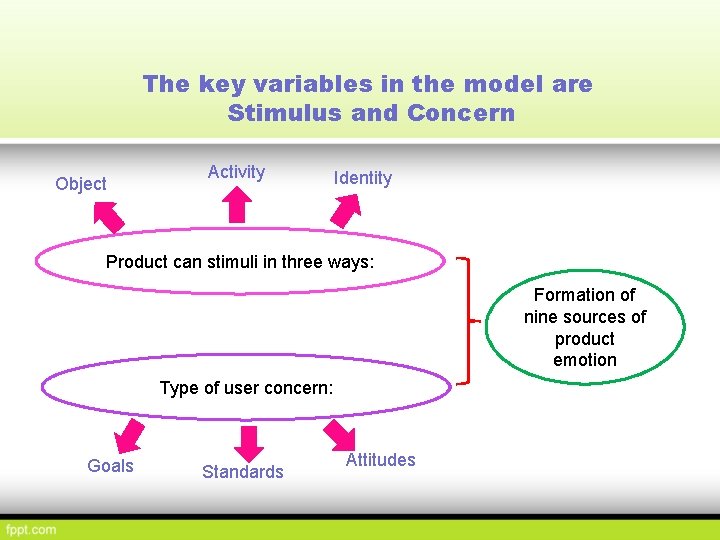
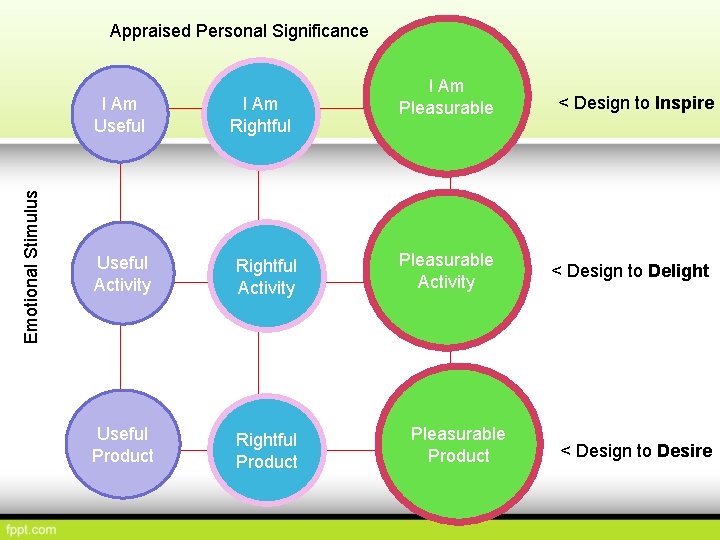
The key variables in the model are Stimulus and Concern Object Activity Identity Product can stimuli in three ways: Formation of nine sources of product emotion Type of user concern: Goals Standards Attitudes
Appraised Personal Significance Emotional Stimulus I Am Useful I Am Rightful Useful Activity Rightful Activity Useful Product Rightful Product I Am Pleasurable < Design to Inspire Pleasurable Activity < Design to Delight Pleasurable Product < Design to Desire
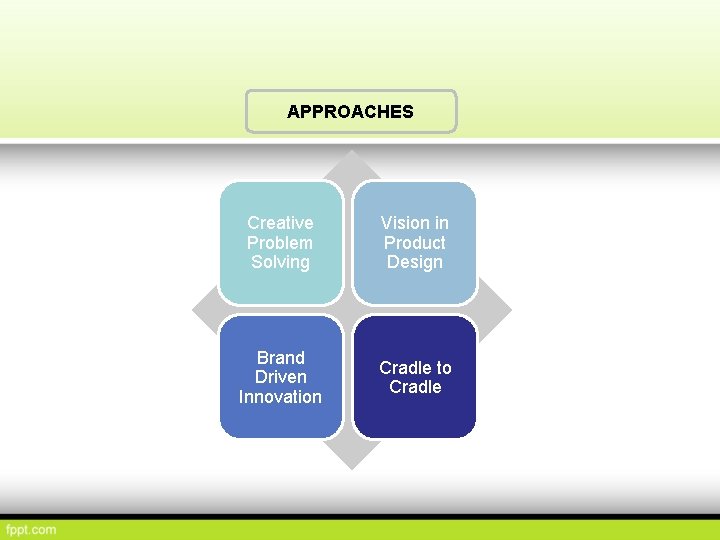
APPROACHES Creative Problem Solving Vision in Product Design Brand Driven Innovation Cradle to Cradle
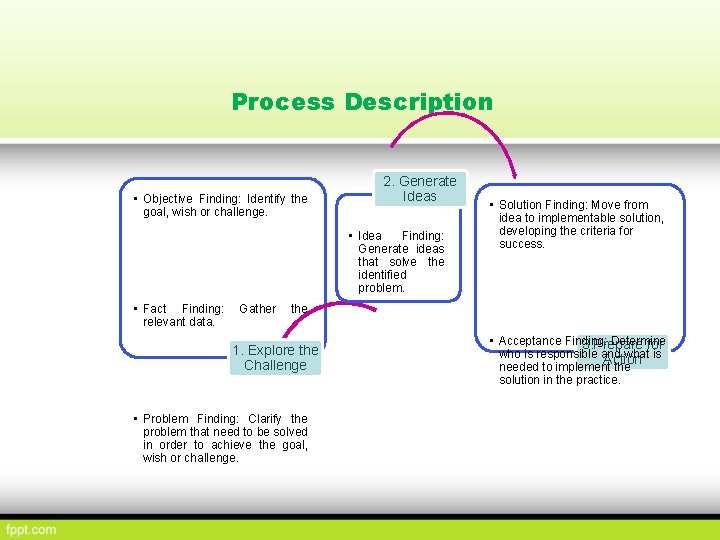
CREATIVE PROBLEM SOLVING Creative Problem Solving (CPS) is a structured approach for generating novel and useful solutions to problems. The approach helps you redefine our design problems, come up with breakthrough ideas and then act on these new ideas.
What Is The Purpose of The Approach? The purpose of CPS is to help us to unleash our creativity by freeing our mind of limitations. CPS stimulates us to find ‘out-of-box’ solution through free association and free idea generation. The ideas we come up with do not have to logically connect to the given problem or situation.
Process Description • Objective Finding: Identify the goal, wish or challenge. 2. Generate Ideas • Idea Finding: Generate ideas that solve the identified problem. • Fact Finding: relevant data. Gather • Solution Finding: Move from idea to implementable solution, developing the criteria for success. the 1. Explore the Challenge • Problem Finding: Clarify the problem that need to be solved in order to achieve the goal, wish or challenge. • Acceptance Finding: Determine 3. Prepare for who is responsible and what is Action needed to implement the solution in the practice.
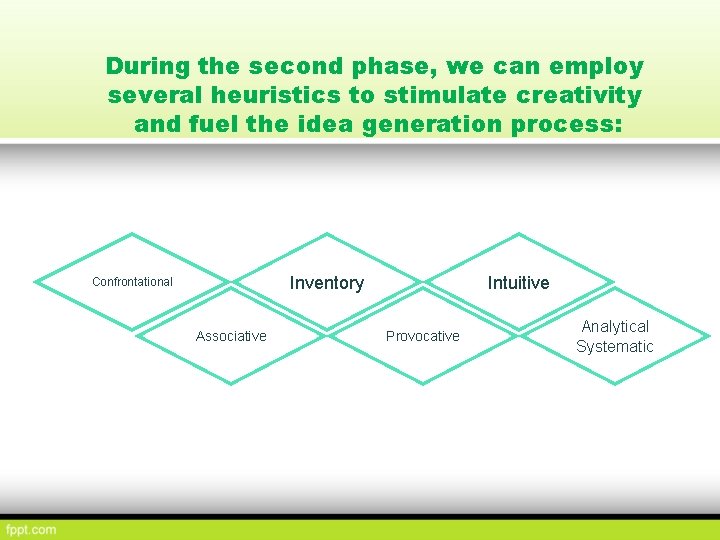
During the second phase, we can employ several heuristics to stimulate creativity and fuel the idea generation process: Inventory Confrontational Associative Intuitive Provocative Analytical Systematic
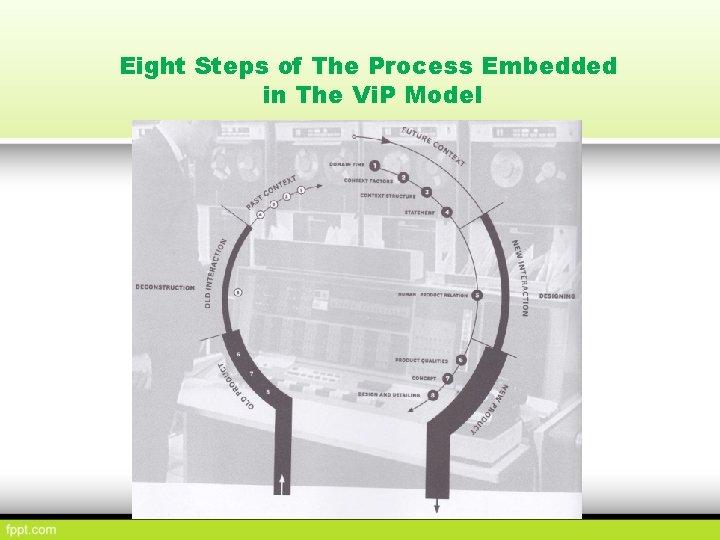
VISION IN PRODUCT DESIGN Vision in Product Design (Vi. P) is an approach that supports innovators of any kind to ‘design’ the vision underlying their design or intervention.
What Is The Purpose of The Approach? Vi. P is a context driven and interaction-centered approach that offer you a way to come up with product that give people value/meaning. Vi. P provides you with a perspective on your role as coshaper of society and step by step approach to develop a responsible and authentic design vision that will steer the conceptualisation.
Eight Steps of The Process Embedded in The Vi. P Model
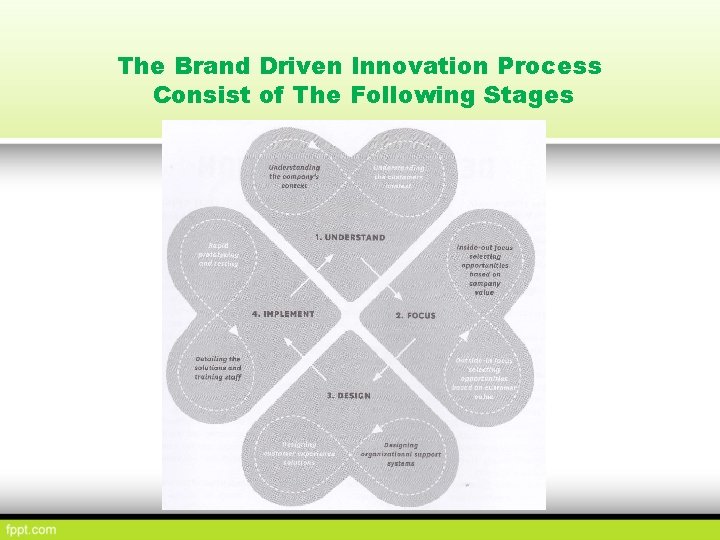
BRAND DRIVEN INNOVATION Brand Driven Innovation supports innovation processes by combining three factors: a) The central focus of an organization - Vision b) What the organization wants to achieve – Ambition c) Its possibilities – Resources and Capabilities The brand as an overarching concept helps you to combine as below: User/Client-centredness/: Outside-in thinking + Organization-centredness/: Inside-out thinking
What Is The Purpose of The Approach? A brand is a holistic framework that combines the various qualities and contextual attributes that are required for meaningful innovation. By using brand driven innovation, you can decomposed the brand of an organization. A brand perspective on innovation from the outside in helps you to understand that an organization cannot please every customer and adopt every new technology. A brand perspective on innovation from the inside out helps you to understand that not everything the organization knows its customers
The Brand Driven Innovation Process Consist of The Following Stages
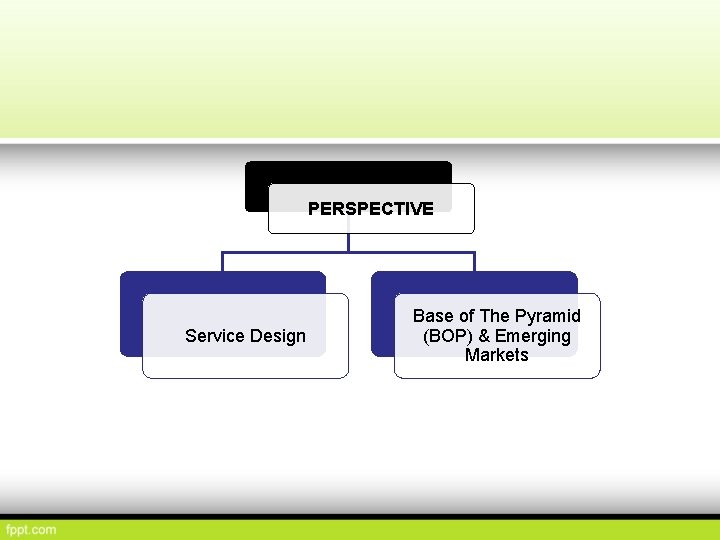
PERSPECTIVE Service Design Base of The Pyramid (BOP) & Emerging Markets
SERVICE DESIGN Service Design stresses a long term view. Under this perspective, the design process does not have to end with the sale of a mass-produced, physical object. It may involve designing longer-lasting interactions between provider and consumer, possibly supported with IT, intangible components and services provided by people.
What Is The Purpose of The Perspective? Service Design attempts to develop the entire system that provides a service to a user. Service Design builds on and integrates earlier design fields such as experience design, interaction design, product design, architectural design and transformation design. In order to understand services, you have to examine them over a longer period of time.
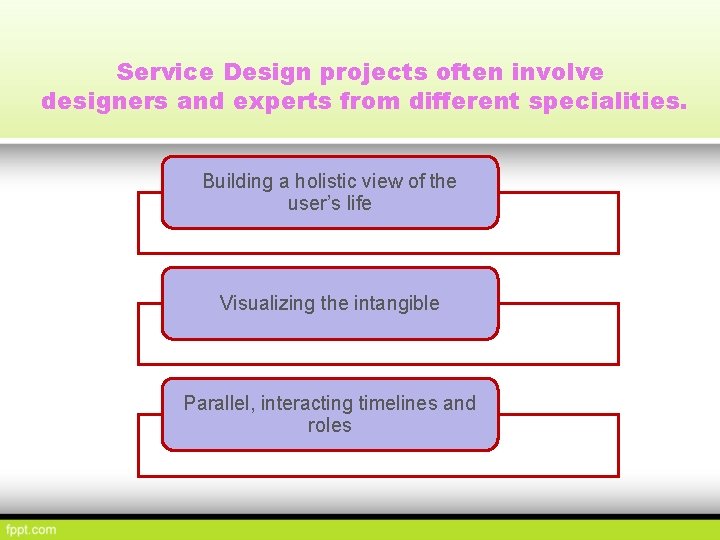
Service Design projects often involve designers and experts from different specialities. Building a holistic view of the user’s life Visualizing the intangible Parallel, interacting timelines and roles
BASE OF THE PYRAMID (BOP) & EMERGING MARKETS Designing for BOP means designing products and product service systems for the world’s less fortunate people. Often these people live in nations with emerging markets characterized by rapidly growing production and consumption.
What Is The Purpose of The Perspective? Most of products are designed for the top of world’s economic pyramid (To. P). These products are unsuitable for the majority of the world’s population, who belong to Bo. P. To. P products are typically too expensive, unavailable to the Bo. P and are not adapted to local possibilities. Most designers are not familiar with socioeconomic context of Bo. P population. So, contextual research is needed. Another challenge is to cope with multiple stakeholders. In the case of emerging economies, there is a clear need for knowledge about sustainability and new product innovation but the resources are limited.
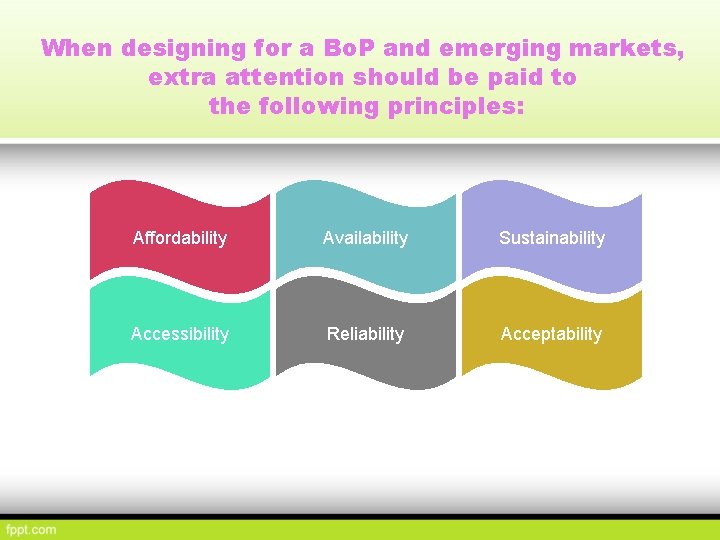
When designing for a Bo. P and emerging markets, extra attention should be paid to the following principles: Affordability Availability Sustainability Accessibility Reliability Acceptability
Thank You