Roundup Revealed Glyphosate in our Food System Lead

- Slides: 26
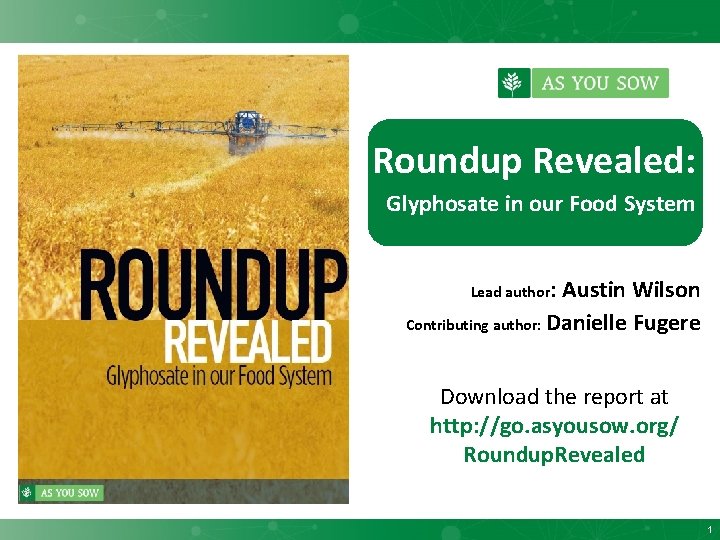
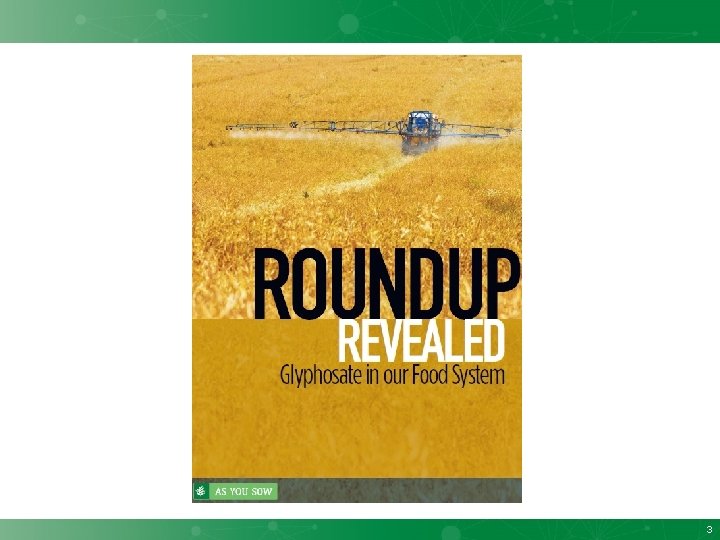
Roundup Revealed: Glyphosate in our Food System Lead author: Austin Wilson Contributing author: Danielle Fugere Download the report at http: //go. asyousow. org/ Roundup. Revealed 1
General Information • For technical support call 510 -735 -8157 or email tarhamsadr@asyousow. org • Use the Q&A window to send us your questions • Webinar recording and report will be available for download after the webinar asyousow. org Q&A Window 2
3
Moderator & Featured Speakers Danielle Fugere Report Contributing Author and President and Chief Counsel at As You Sow Austin Wilson Report Author and Environmental Health Program Manager at As You Sow Bill Freese Science Policy Analyst Center for Food Safety Dr. Charles Benbrook Visiting Professor, Newcastle University and Benbrook Consulting Services 4
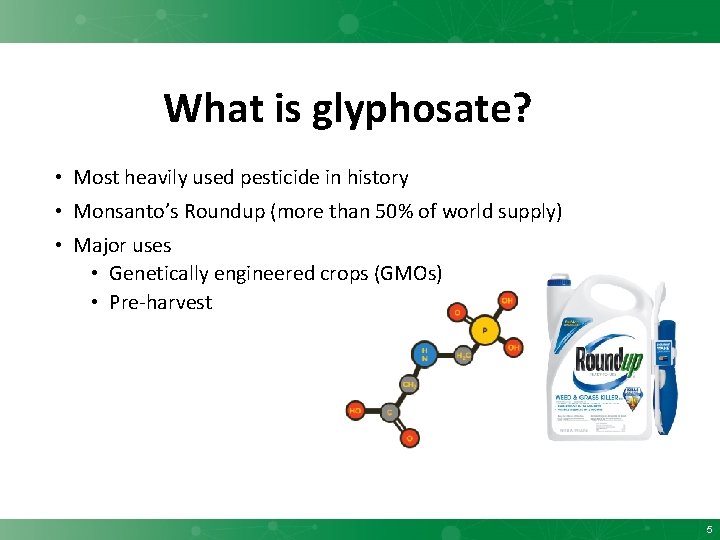
What is glyphosate? • Most heavily used pesticide in history • Monsanto’s Roundup (more than 50% of world supply) • Major uses • Genetically engineered crops (GMOs) • Pre-harvest 5
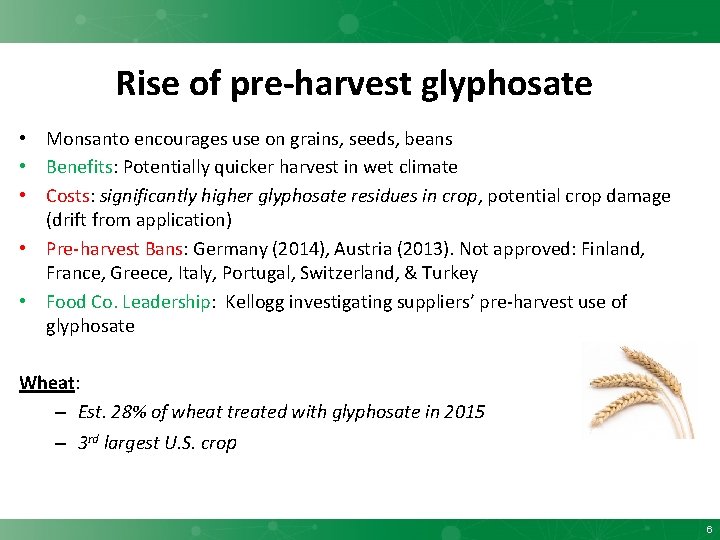
Rise of pre-harvest glyphosate • Monsanto encourages use on grains, seeds, beans • Benefits: Potentially quicker harvest in wet climate • Costs: significantly higher glyphosate residues in crop, potential crop damage (drift from application) • Pre-harvest Bans: Germany (2014), Austria (2013). Not approved: Finland, France, Greece, Italy, Portugal, Switzerland, & Turkey • Food Co. Leadership: Kellogg investigating suppliers’ pre-harvest use of glyphosate Wheat: – Est. 28% of wheat treated with glyphosate in 2015 – 3 rd largest U. S. crop 6
Health Impacts • Classified by IARC as probable carcinogen • Other effects: disruption of endocrine system, other biological processes. Potential impacts on gut bacteria. • “Inert” ingredients in Roundup formulation increase toxicity – Example: POEA banned in herbicide in EU, no ban in U. S. • Disadvantaged communities face greatest risk 7
Glyphosate Everywhere • In Human Bodies – UCSF Study – Present in 93% of 131 individuals tested – U. S. Allowed Daily Intake: 3 x higher than EU, 17 x higher than independent scientists recommend 1 • In the Environment – Persists up to 1 year in water and soil • USGS finds glyphosate residue in 60% of surface waters in Midwest – Drifts off-target to damage crops, harm communities – Contributes to Monarch decline by killing milkweed plants in farm fields 1 Antoniou M, Habib MEM, Howard CV, Jennings RC, Leifert C, et al, “Teratogenic Effects of Glyphosate-Based Herbicides: Divergence of Regulatory Decisions from Scientific Evidence, ” Journal of Environmental and Analytical Toxicology (2012), doi: 10. 4172/2161 -0525. S 4 -006 8
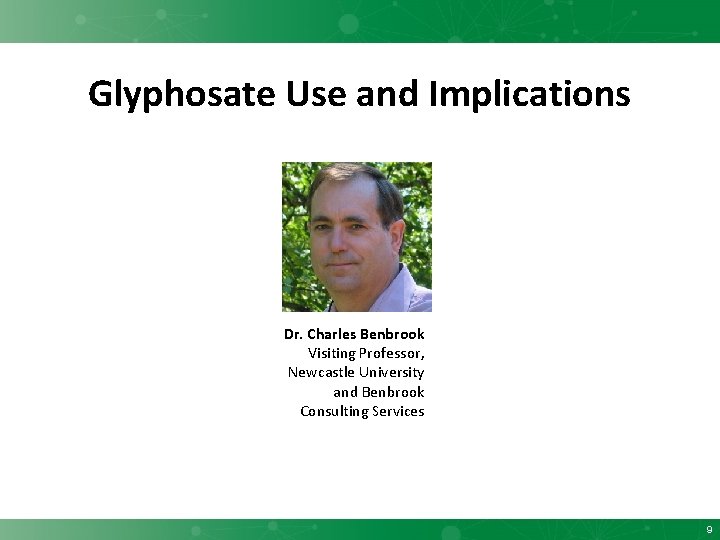
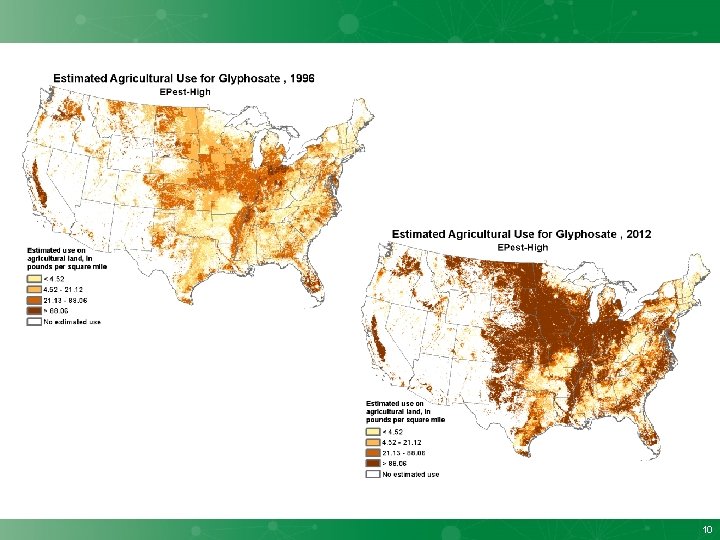
Glyphosate Use and Implications Dr. Charles Benbrook Visiting Professor, Newcastle University and Benbrook Consulting Services 9
10
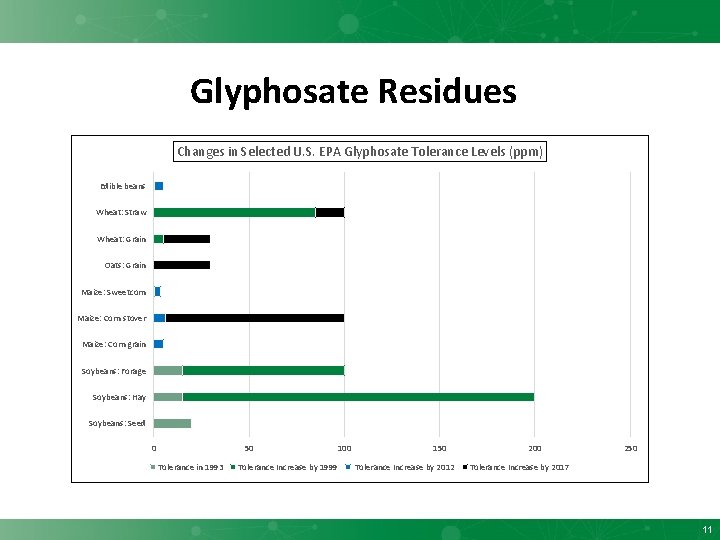
Glyphosate Residues Changes in Selected U. S. EPA Glyphosate Tolerance Levels (ppm) Edible beans Wheat: Straw Wheat: Grain Oats: Grain Maize: Sweetcorn Maize: Corn stover Maize: Corn grain Soybeans: Forage Soybeans: Hay Soybeans: Seed 0 50 Tolerance in 1993 100 Tolerance Increase by 1999 150 Tolerance Increase by 2012 200 250 Tolerance Increase by 2017 11
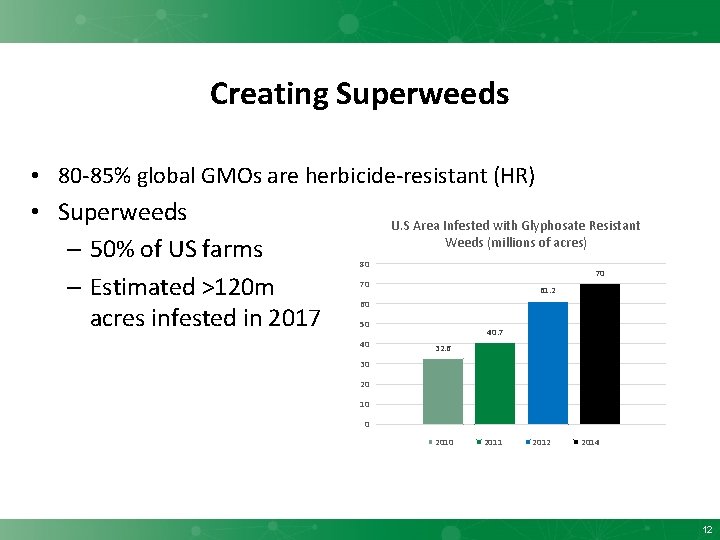
Creating Superweeds • 80 -85% global GMOs are herbicide-resistant (HR) • Superweeds – 50% of US farms – Estimated >120 m acres infested in 2017 U. S Area Infested with Glyphosate Resistant Weeds (millions of acres) 80 70 70 61. 2 60 50 40 40. 7 32. 6 30 20 10 0 2011 2012 2014 12
Next Generation of HR Crops • Monsanto – Roundup Ready Xtend (tolerates both glyphosate and dicamba) – Dicamba • Associated with non-Hodgkin lymphoma (NHL) • Greater volatility & drift damage potential • Dow Chemical – Enlist Duo (tolerates both glyphosate and 2, 4 -D) – 2, 4 -D • Agent Orange component, IARC “possible carcinogen”, also associated with NHL • Greater volatility & drift damage potential • Bayer, Du. Pont, Syngenta & BASF also have new HR crops 13
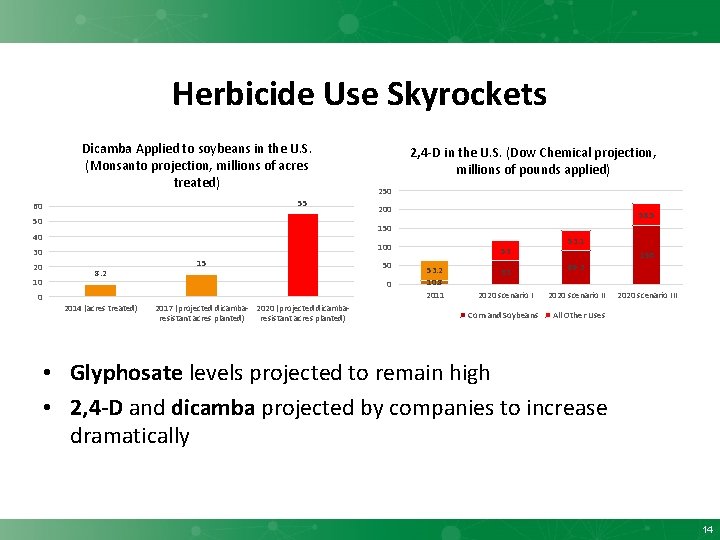
Herbicide Use Skyrockets Dicamba Applied to soybeans in the U. S. (Monsanto projection, millions of acres treated) 55 60 50 0 200 58. 5 100 30 10 250 150 40 20 2, 4 -D in the U. S. (Dow Chemical projection, millions of pounds applied) 8. 2 2014 (acres treated) 15 50 0 2017 (projected dicamba- 2020 (projected dicambaresistant acres planted) 53 53. 2 10. 8 2011 63 53. 1 156 89. 3 2020 scenario II Corn and Soybeans All Other Uses 2020 scenario III • Glyphosate levels projected to remain high • 2, 4 -D and dicamba projected by companies to increase dramatically 14
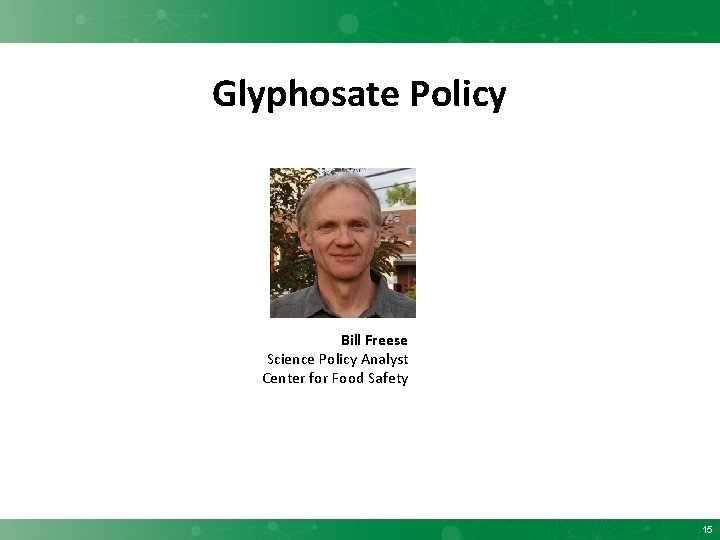
Glyphosate Policy Bill Freese Science Policy Analyst Center for Food Safety 15
Flaws in Regulation of Glyphosate & GMOs • USDA does not test foods for glyphosate residues, and allows many new GMOs to escape regulation altogether (e. g. , CRISPR) • EPA relies primarily on animal studies conducted by industry, discounts human epidemiology & other peer-reviewed literature • EPA ignores co-exposure to additional often toxic ingredients in glyphosate formulations, and to other pesticides 16
Glyphosate’s Carefully Crafted Image • Monsanto found guilty of false/misleading advertising by NY State AG in 1996 and 1998 – “Practically non-toxic” – based on amount required to kill rats, nothing to do with human risk – “Biodegrades into natural materials” – persists long enough for substantial human exposure • EPA found glyphosate a “possible carcinogen” in 1985 – reversed only after heavy intervention by Monsanto 17
Glyphosate and Cancer - Science • WHO’s IARC: “probably carcinogenic to humans” – World’s leading cancer authority – Working Group chaired by Aaron Blair, eminent epidemiologist recently retired from U. S. National Cancer Institute • 94 leading medical scientists support IARC (Portier et al. 2016) • EPA Scientific Advisory Panel (March 2017): – EPA failed to follow its own cancer guidelines – Suggestive evidence of carcinogenicity – Lymphomas in animals match non-Hodgkin lymphoma in farmers • State of CA: glyphosate carcinogenic under Prop. 65 18
Glyphosate and Cancer - Politics • Deputy Director of EPA’s Office of Pesticide Programs (Jess Rowlands) was a Monsanto ally: – Tipped off Monsanto to IARC decision months before release – Killed a review of glyphosate by NIH agency, reportedly saying: “If I can kill this, I should get a medal” • Monsanto officials suggest “ghostwriting” glyphosate articles for academics; EPA/EU rely on industry summaries of animal cancer studies • EPA removes scientist from Scientific Advisory Panel at behest of Crop. Life (pesticide industry trade group) 19
Policy Developments • California’s Office of Environmental Health Hazard Assessment (OEHHA) has listed glyphosate as carcinogenic under Prop. 65 – Court rejected a Monsanto lawsuit against CA seeking to overturn Prop. 65 listing – OEHHA now determining “safe harbor” level for warning/labeling purposes • EU conditional approval for 18 months 20
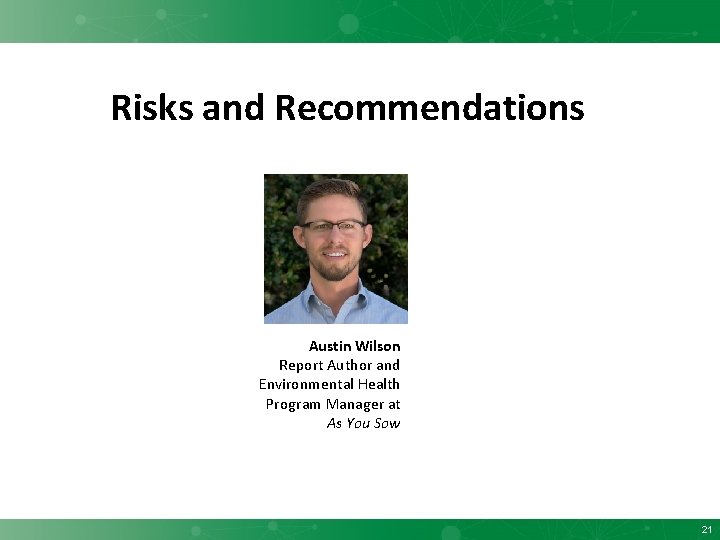
Risks and Recommendations Austin Wilson Report Author and Environmental Health Program Manager at As You Sow 21
Financial Risks of Glyphosate • Legal liability – Farmers suing, alleging non-Hodgkin lymphoma & that Monsanto covered up risks – False advertising lawsuits (Pepsi. Co Quaker Oats, Post Shredded Wheat) over glyphosate in “all-natural” • Reputational Damage – Petitions, actions • The “pesticides are necessary myth” is debunked 22
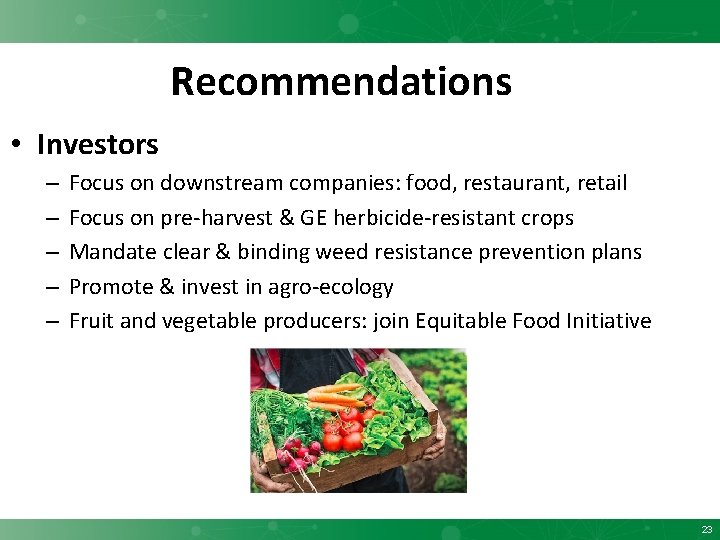
Recommendations • Investors – – – Focus on downstream companies: food, restaurant, retail Focus on pre-harvest & GE herbicide-resistant crops Mandate clear & binding weed resistance prevention plans Promote & invest in agro-ecology Fruit and vegetable producers: join Equitable Food Initiative 23
Recommendations • Communities – Promote Integrated Pest Management (IPM) in cities, business, homes – Buy products sustainably produced (organic & others) – Support strong regulations 24
Questions? • Use the Q&A window to send us your questions 25
Thank you! Webinar recording and report: http: //go. asyousow. org/Roundup. Revealed 26