Erasmus JEAN MONNET NETWORK GOVERNANCE PLURALISM TRANSNATIONALISATION IN
- Slides: 6
Erasmus+ JEAN MONNET NETWORK “GOVERNANCE, PLURALISM & TRANS-NATIONALISATION IN EUROPE” Place: University of Luxembourg, Limpertsberg Campus Title: Academic Sessions (Workshop) “Governance and Sovereignty in Europe” Doctoral Winter School 16/12/2017 Decision-making procedure et legitimation Professor: Foteini Asderaki Team members: Andreas Gkolfinopoulos, University of Siegen Eleftheria Terzoudi, University of the Aegean Fréderic Albert, University of Luxembourg Maria Geroulia, University of the Aegean
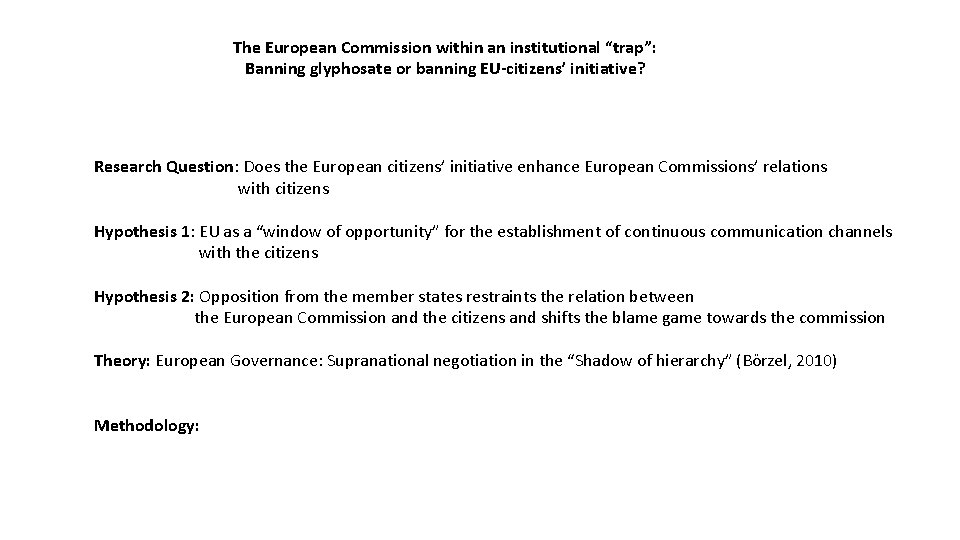
The European Commission within an institutional “trap”: Banning glyphosate or banning EU-citizens’ initiative? Research Question: Does the European citizens’ initiative enhance European Commissions’ relations with citizens Hypothesis 1: EU as a “window of opportunity” for the establishment of continuous communication channels with the citizens Hypothesis 2: Opposition from the member states restraints the relation between the European Commission and the citizens and shifts the blame game towards the commission Theory: European Governance: Supranational negotiation in the “Shadow of hierarchy” (Börzel, 2010) Methodology:
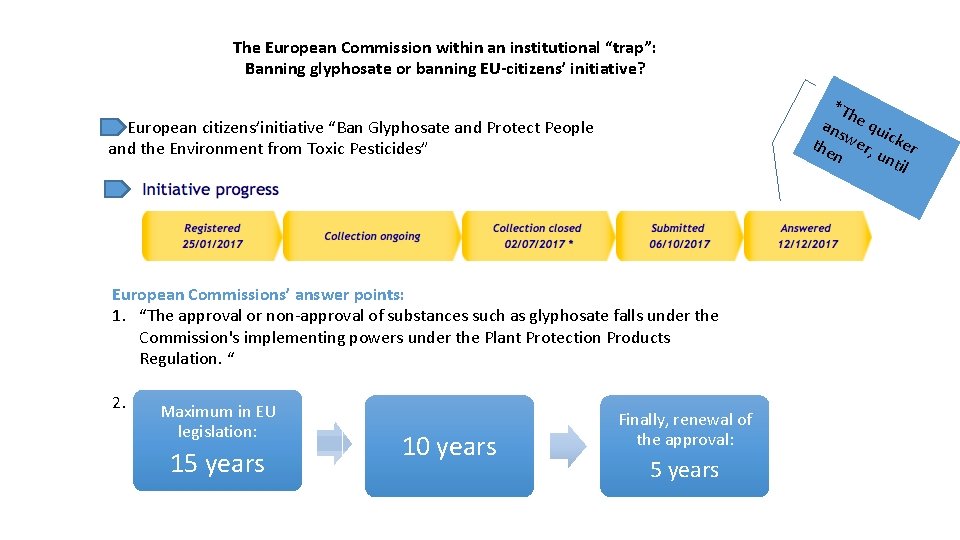
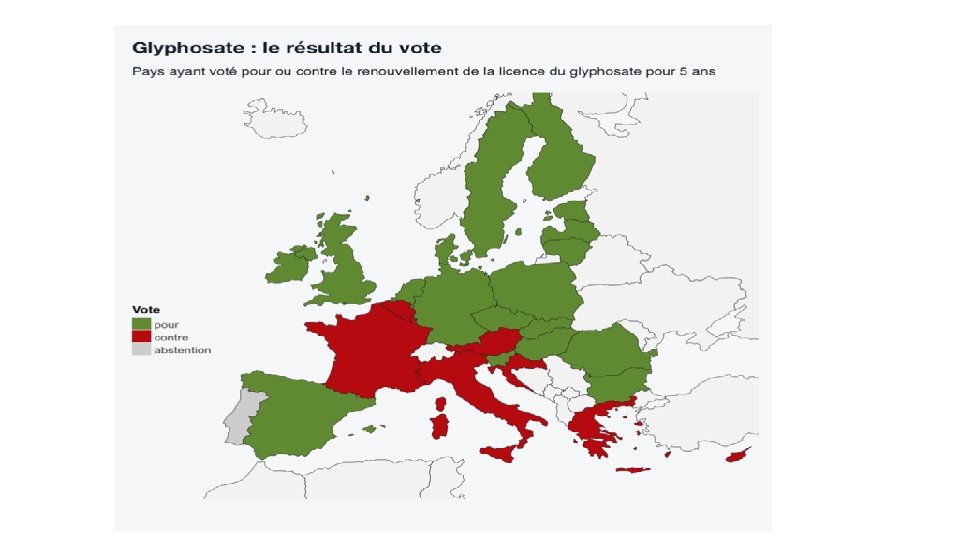
The European Commission within an institutional “trap”: Banning glyphosate or banning EU-citizens’ initiative? *Th ans e qui the wer, cker unt n il -> European citizens’initiative “Ban Glyphosate and Protect People and the Environment from Toxic Pesticides” European Commissions’ answer points: 1. “The approval or non-approval of substances such as glyphosate falls under the Commission's implementing powers under the Plant Protection Products Regulation. “ 2. o Maximum in EU legislation: 15 years 10 years Finally, renewal of the approval: 5 years
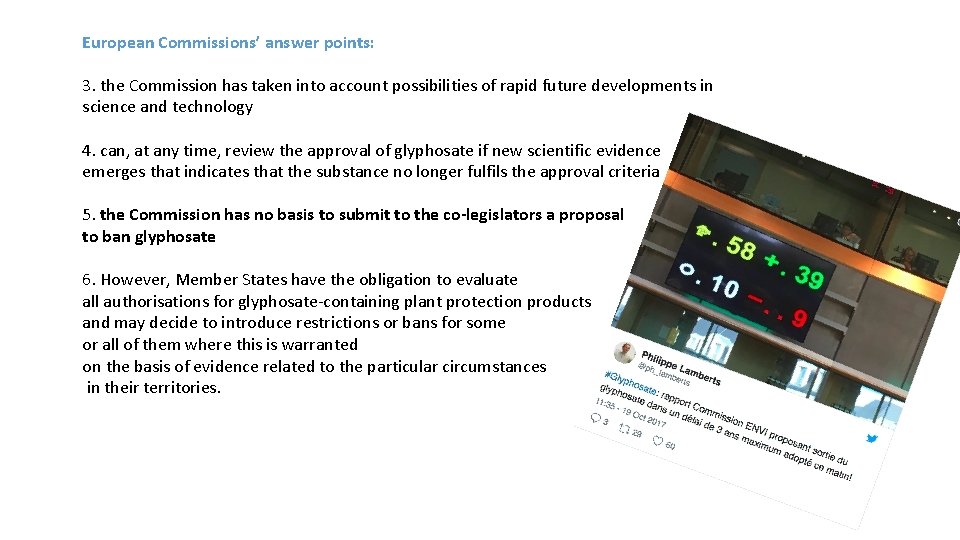
European Commissions’ answer points: 3. the Commission has taken into account possibilities of rapid future developments in science and technology 4. can, at any time, review the approval of glyphosate if new scientific evidence emerges that indicates that the substance no longer fulfils the approval criteria 5. the Commission has no basis to submit to the co-legislators a proposal to ban glyphosate 6. However, Member States have the obligation to evaluate all authorisations for glyphosate-containing plant protection products and may decide to introduce restrictions or bans for some or all of them where this is warranted on the basis of evidence related to the particular circumstances in their territories.
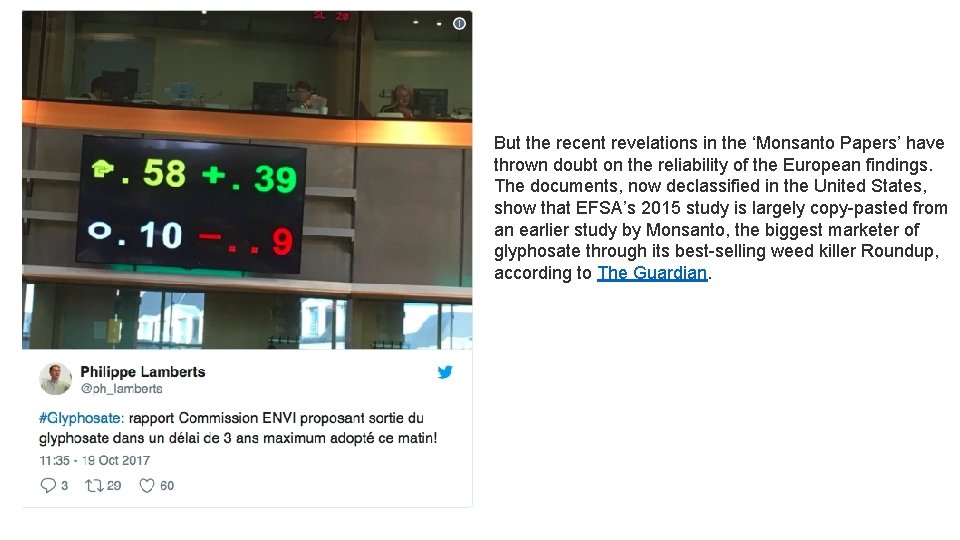
But the recent revelations in the ‘Monsanto Papers’ have thrown doubt on the reliability of the European findings. The documents, now declassified in the United States, show that EFSA’s 2015 study is largely copy-pasted from an earlier study by Monsanto, the biggest marketer of glyphosate through its best-selling weed killer Roundup, according to The Guardian.