Rooftop Solar Rishi Agarwal Zonal Head NE AGENDA
- Slides: 24
Rooftop Solar Rishi Agarwal – Zonal Head, N&E
AGENDA q. Types of Systems q. Rooftop Operational Models q. Indian Scenario q. Major Bottlenecks q. Global Scenario q Initiatives by GOI q. Way Forward q. Key Projects Undertaken 2
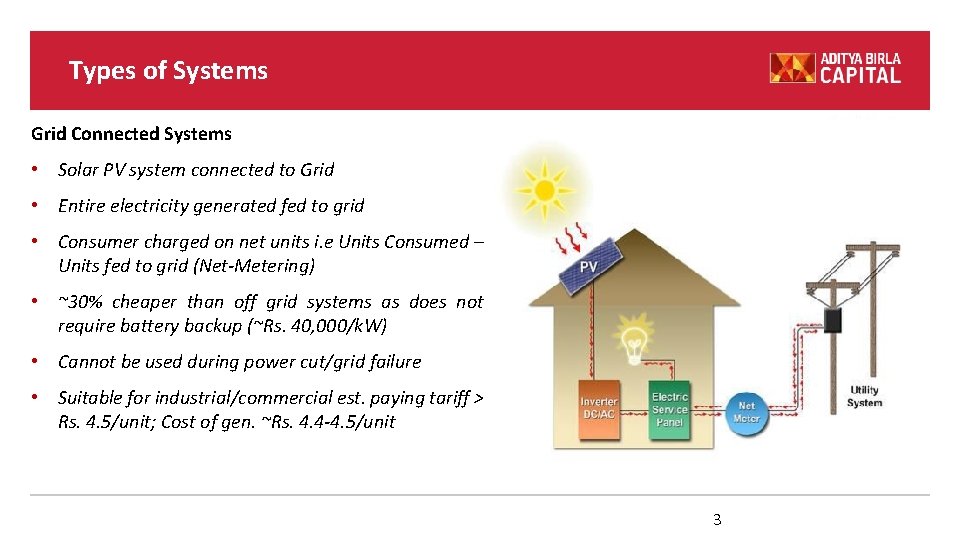
Types of Systems Grid Connected Systems • Solar PV system connected to Grid • Entire electricity generated fed to grid • Consumer charged on net units i. e Units Consumed – Units fed to grid (Net-Metering) • ~30% cheaper than off grid systems as does not require battery backup (~Rs. 40, 000/k. W) • Cannot be used during power cut/grid failure • Suitable for industrial/commercial est. paying tariff > Rs. 4. 5/unit; Cost of gen. ~Rs. 4. 4 -4. 5/unit 3
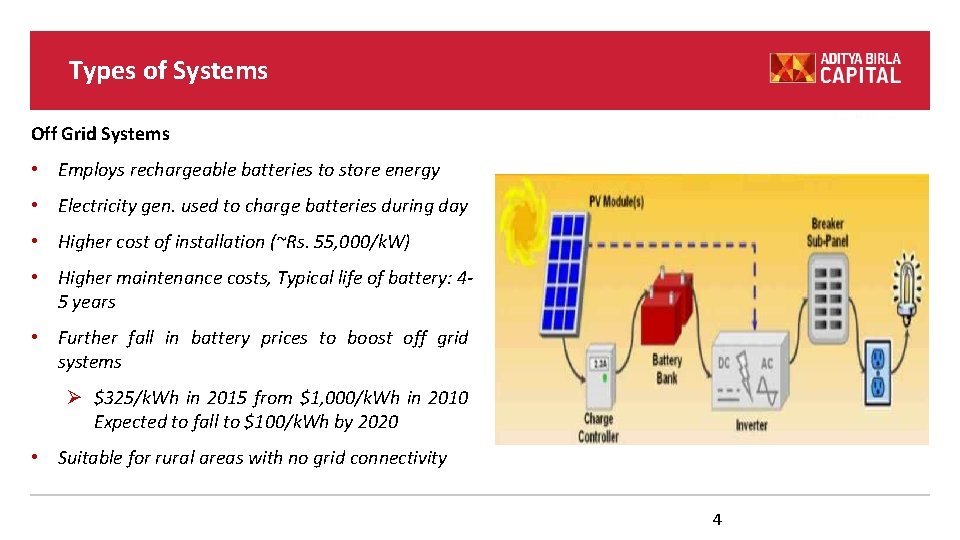
Types of Systems Off Grid Systems • Employs rechargeable batteries to store energy • Electricity gen. used to charge batteries during day • Higher cost of installation (~Rs. 55, 000/k. W) • Higher maintenance costs, Typical life of battery: 45 years • Further fall in battery prices to boost off grid systems Ø $325/k. Wh in 2015 from $1, 000/k. Wh in 2010 Expected to fall to $100/k. Wh by 2020 • Suitable for rural areas with no grid connectivity 4
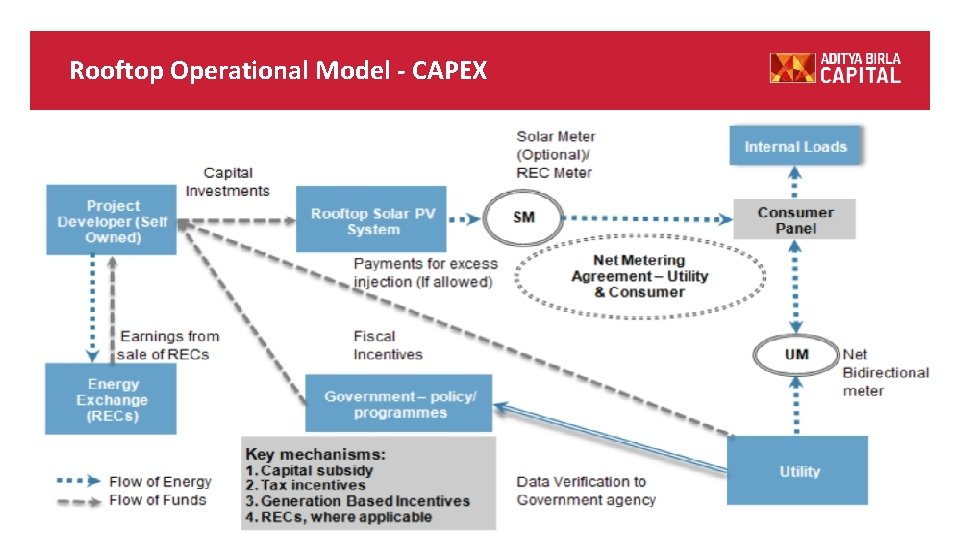
Rooftop Operational Model - CAPEX 5
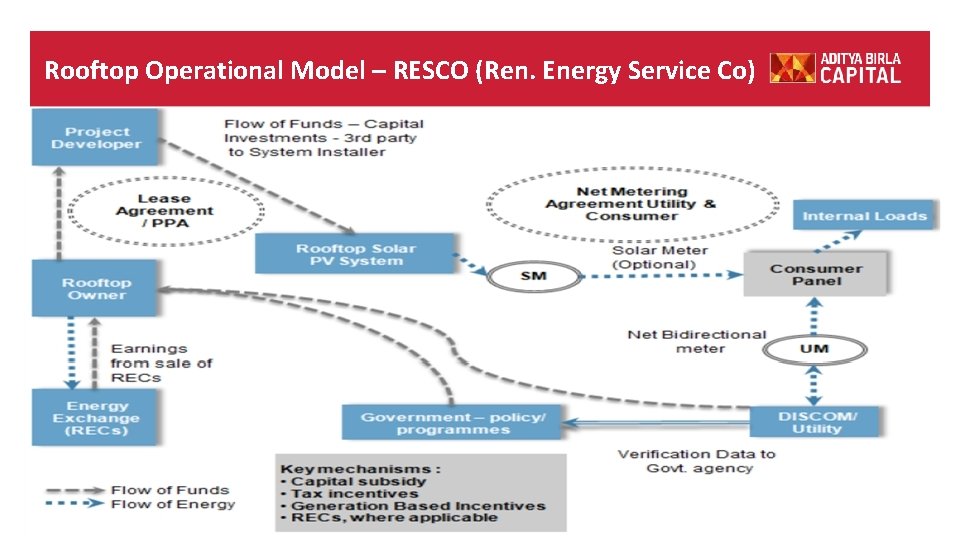
Rooftop Operational Model – RESCO (Ren. Energy Service Co) 6
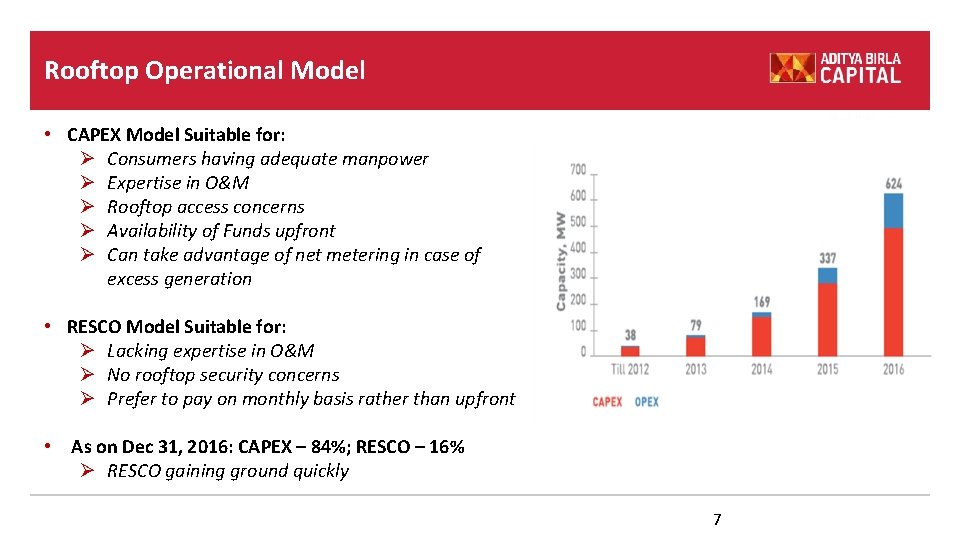
Rooftop Operational Model • CAPEX Model Suitable for: Ø Consumers having adequate manpower Ø Expertise in O&M Ø Rooftop access concerns Ø Availability of Funds upfront Ø Can take advantage of net metering in case of excess generation • RESCO Model Suitable for: Ø Lacking expertise in O&M Ø No rooftop security concerns Ø Prefer to pay on monthly basis rather than upfront • As on Dec 31, 2016: CAPEX – 84%; RESCO – 16% Ø RESCO gaining ground quickly 7
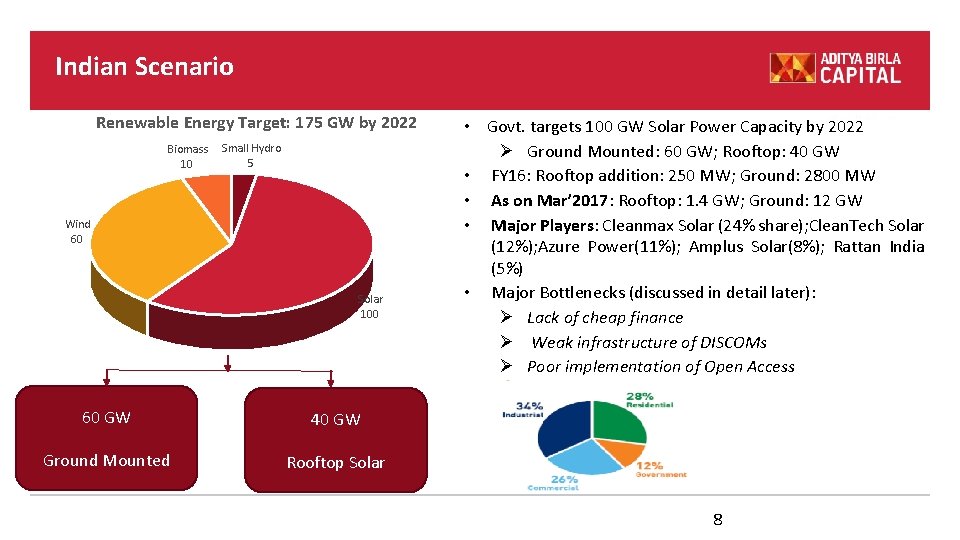
Indian Scenario Renewable Energy Target: 175 GW by 2022 Biomass 10 Small Hydro 5 Wind 60 Solar 100 60 GW 40 GW Ground Mounted Rooftop Solar • Govt. targets 100 GW Solar Power Capacity by 2022 Ø Ground Mounted: 60 GW; Rooftop: 40 GW • FY 16: Rooftop addition: 250 MW; Ground: 2800 MW • As on Mar’ 2017: Rooftop: 1. 4 GW; Ground: 12 GW • Major Players: Cleanmax Solar (24% share); Clean. Tech Solar (12%); Azure Power(11%); Amplus Solar(8%); Rattan India (5%) • Major Bottlenecks (discussed in detail later): Ø Lack of cheap finance Ø Weak infrastructure of DISCOMs Ø Poor implementation of Open Access 8
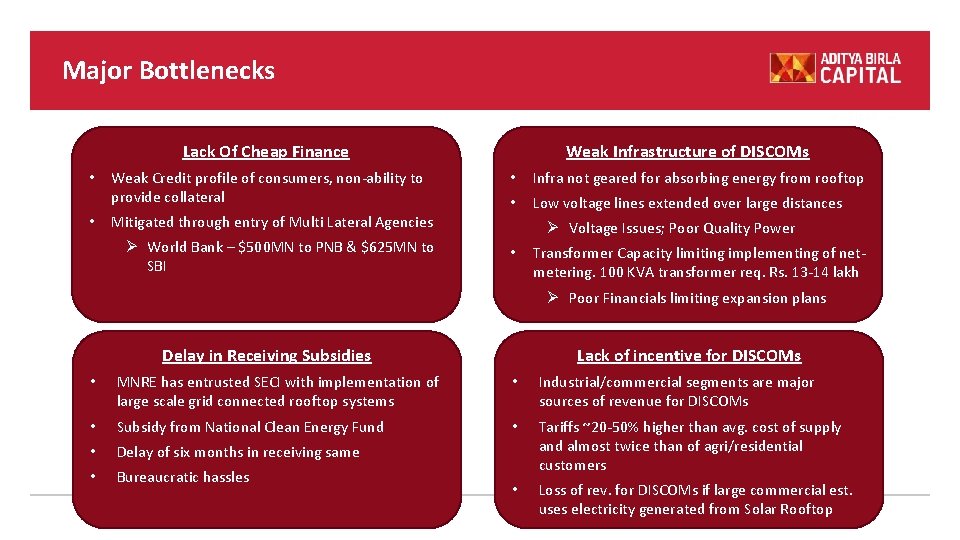
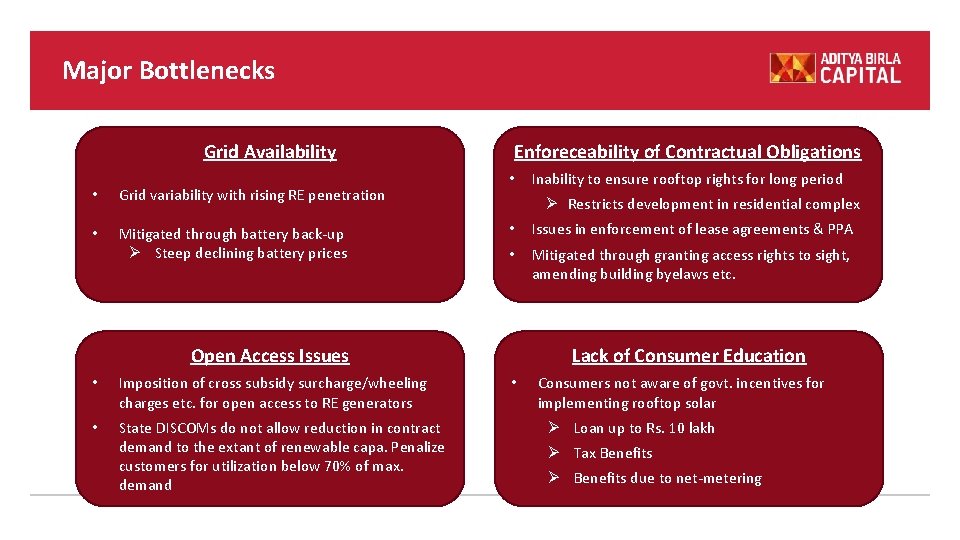
Major Bottlenecks Lack Of Cheap Finance • • Weak Credit profile of consumers, non-ability to provide collateral Weak Infrastructure of DISCOMs • Infra not geared for absorbing energy from rooftop • Low voltage lines extended over large distances Mitigated through entry of Multi Lateral Agencies Ø World Bank – $500 MN to PNB & $625 MN to SBI Ø Voltage Issues; Poor Quality Power • Transformer Capacity limiting implementing of netmetering. 100 KVA transformer req. Rs. 13 -14 lakh Ø Poor Financials limiting expansion plans Delay in Receiving Subsidies Lack of incentive for DISCOMs • MNRE has entrusted SECI with implementation of large scale grid connected rooftop systems • Industrial/commercial segments are major sources of revenue for DISCOMs • Subsidy from National Clean Energy Fund • • Delay of six months in receiving same • Bureaucratic hassles Tariffs ~20 -50% higher than avg. cost of supply and almost twice than of agri/residential customers • Loss of rev. for DISCOMs if large commercial est. uses electricity generated from Solar Rooftop
Major Bottlenecks Grid Availability • Grid variability with rising RE penetration • Mitigated through battery back-up Ø Steep declining battery prices Enforeceability of Contractual Obligations • Ø Restricts development in residential complex • Issues in enforcement of lease agreements & PPA • Mitigated through granting access rights to sight, amending building byelaws etc. Open Access Issues • Imposition of cross subsidy surcharge/wheeling charges etc. for open access to RE generators • State DISCOMs do not allow reduction in contract demand to the extant of renewable capa. Penalize customers for utilization below 70% of max. demand Inability to ensure rooftop rights for long period Lack of Consumer Education • Consumers not aware of govt. incentives for implementing rooftop solar Ø Loan up to Rs. 10 lakh Ø Tax Benefits Ø Benefits due to net-metering
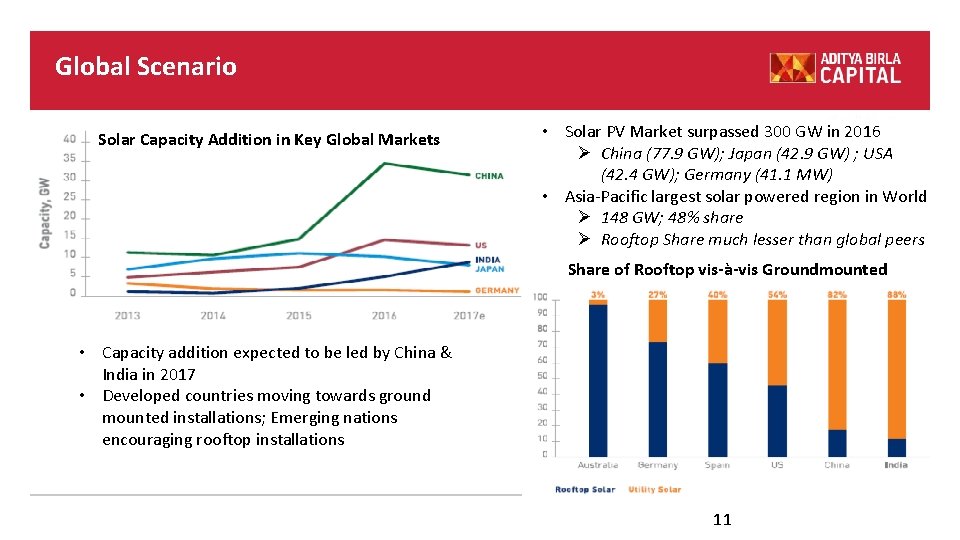
Global Scenario Solar Capacity Addition in Key Global Markets • Solar PV Market surpassed 300 GW in 2016 Ø China (77. 9 GW); Japan (42. 9 GW) ; USA (42. 4 GW); Germany (41. 1 MW) • Asia-Pacific largest solar powered region in World Ø 148 GW; 48% share Ø Rooftop Share much lesser than global peers Share of Rooftop vis-à-vis Groundmounted • Capacity addition expected to be led by China & India in 2017 • Developed countries moving towards ground mounted installations; Emerging nations encouraging rooftop installations 11
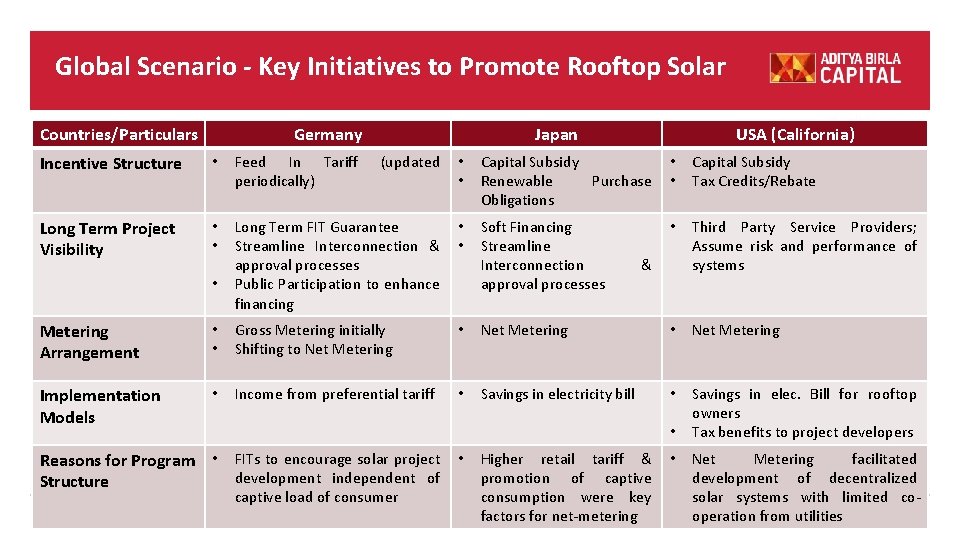
Global Scenario - Key Initiatives to Promote Rooftop Solar Countries/Particulars Germany Japan USA (California) Incentive Structure • Feed In Tariff periodically) (updated • • Capital Subsidy Renewable Purchase Obligations • • Capital Subsidy Tax Credits/Rebate Long Term Project Visibility • • Long Term FIT Guarantee Streamline Interconnection & approval processes Public Participation to enhance financing • • Soft Financing Streamline Interconnection approval processes • Third Party Service Providers; Assume risk and performance of systems • & Metering Arrangement • • Gross Metering initially Shifting to Net Metering • Net Metering Implementation Models • Income from preferential tariff • Savings in electricity bill • Savings in elec. Bill for rooftop owners Tax benefits to project developers • Reasons for Program • FITs to encourage solar project development independent of Structure captive load of consumer • Higher retail tariff & promotion of captive consumption were key factors for net-metering • Net Metering facilitated development of decentralized solar systems with limited cooperation from utilities 12
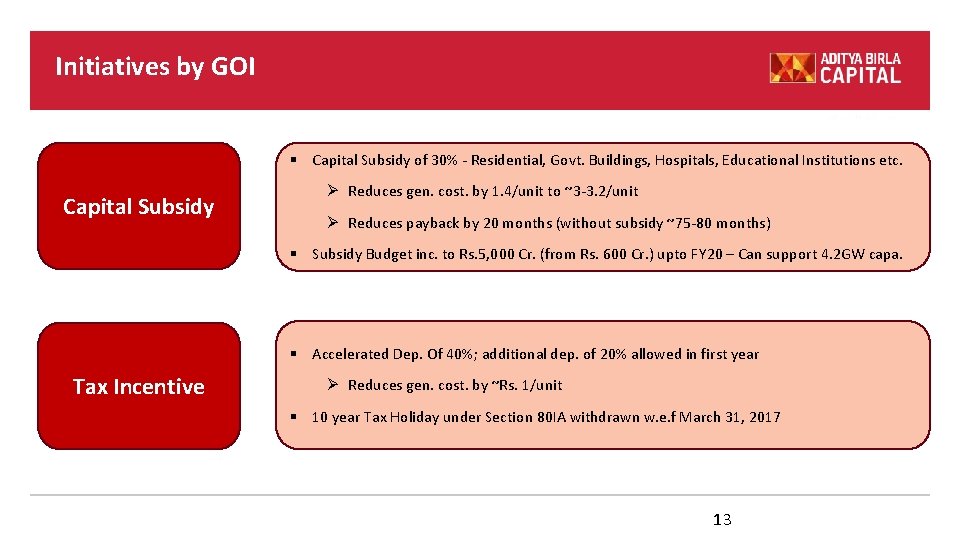
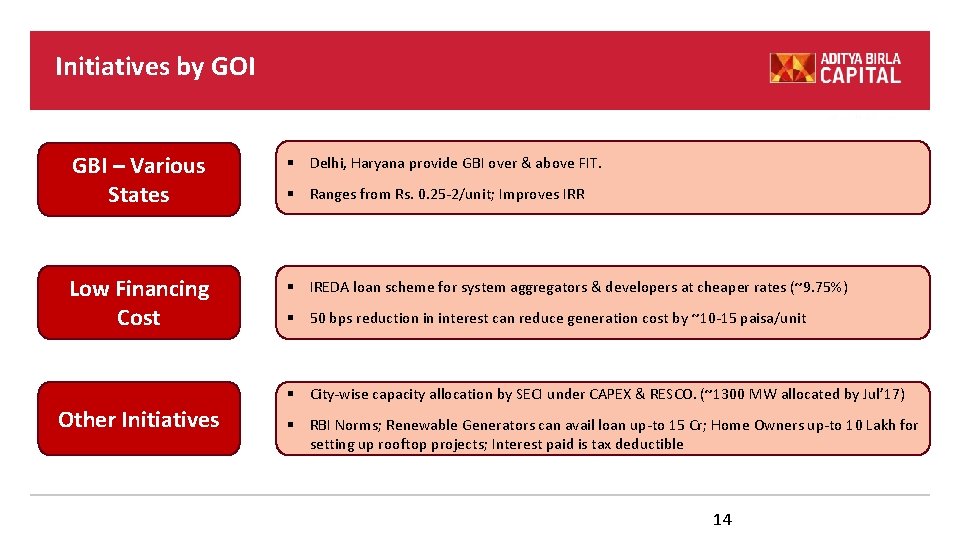
Initiatives by GOI § Capital Subsidy of 30% - Residential, Govt. Buildings, Hospitals, Educational Institutions etc. Capital Subsidy Ø Reduces gen. cost. by 1. 4/unit to ~3 -3. 2/unit Ø Reduces payback by 20 months (without subsidy ~75 -80 months) § Subsidy Budget inc. to Rs. 5, 000 Cr. (from Rs. 600 Cr. ) upto FY 20 – Can support 4. 2 GW capa. § Accelerated Dep. Of 40%; additional dep. of 20% allowed in first year Tax Incentive Ø Reduces gen. cost. by ~Rs. 1/unit § 10 year Tax Holiday under Section 80 IA withdrawn w. e. f March 31, 2017 13
Initiatives by GOI GBI – Various States § Delhi, Haryana provide GBI over & above FIT. Low Financing Cost § IREDA loan scheme for system aggregators & developers at cheaper rates (~9. 75%) § Ranges from Rs. 0. 25 -2/unit; Improves IRR § 50 bps reduction in interest can reduce generation cost by ~10 -15 paisa/unit § City-wise capacity allocation by SECI under CAPEX & RESCO. (~1300 MW allocated by Jul’ 17) Other Initiatives § RBI Norms; Renewable Generators can avail loan up-to 15 Cr; Home Owners up-to 10 Lakh for setting up rooftop projects; Interest paid is tax deductible 14
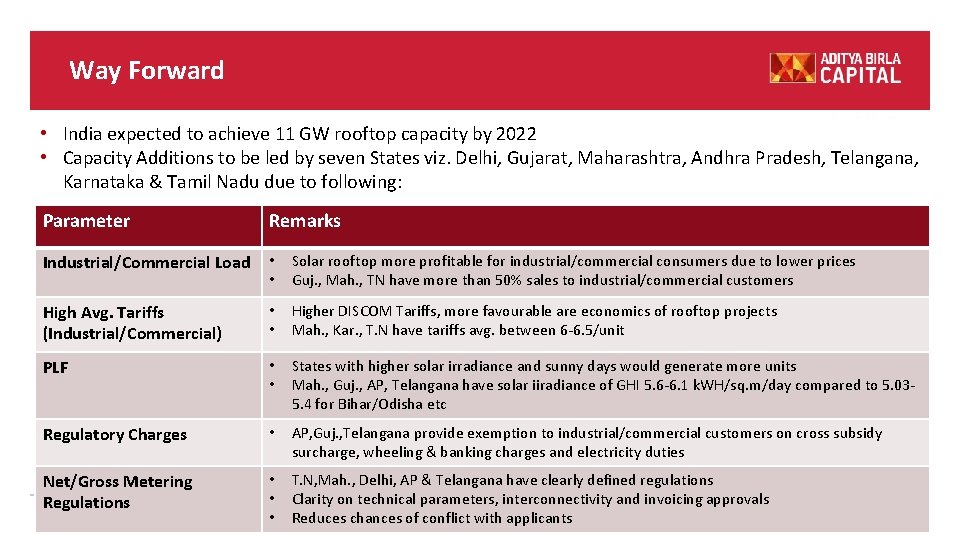
Way Forward • India expected to achieve 11 GW rooftop capacity by 2022 • Capacity Additions to be led by seven States viz. Delhi, Gujarat, Maharashtra, Andhra Pradesh, Telangana, Karnataka & Tamil Nadu due to following: Parameter Remarks Industrial/Commercial Load • • Solar rooftop more profitable for industrial/commercial consumers due to lower prices Guj. , Mah. , TN have more than 50% sales to industrial/commercial customers High Avg. Tariffs (Industrial/Commercial) • • Higher DISCOM Tariffs, more favourable are economics of rooftop projects Mah. , Kar. , T. N have tariffs avg. between 6 -6. 5/unit PLF • • States with higher solar irradiance and sunny days would generate more units Mah. , Guj. , AP, Telangana have solar iiradiance of GHI 5. 6 -6. 1 k. WH/sq. m/day compared to 5. 035. 4 for Bihar/Odisha etc Regulatory Charges • AP, Guj. , Telangana provide exemption to industrial/commercial customers on cross subsidy surcharge, wheeling & banking charges and electricity duties Net/Gross Metering Regulations • • • T. N, Mah. , Delhi, AP & Telangana have clearly defined regulations Clarity on technical parameters, interconnectivity and invoicing approvals Reduces chances of conflict with applicants 15
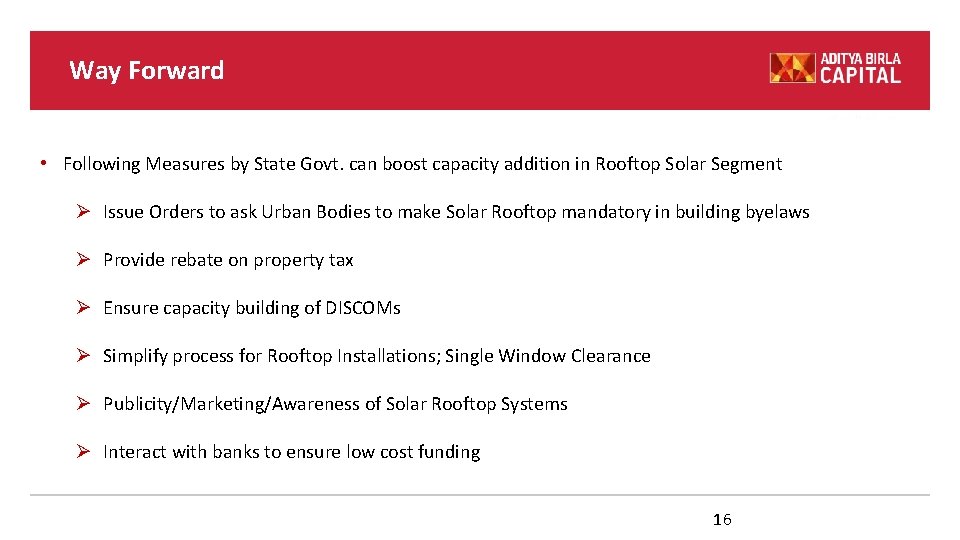
Way Forward • Following Measures by State Govt. can boost capacity addition in Rooftop Solar Segment Ø Issue Orders to ask Urban Bodies to make Solar Rooftop mandatory in building byelaws Ø Provide rebate on property tax Ø Ensure capacity building of DISCOMs Ø Simplify process for Rooftop Installations; Single Window Clearance Ø Publicity/Marketing/Awareness of Solar Rooftop Systems Ø Interact with banks to ensure low cost funding 16
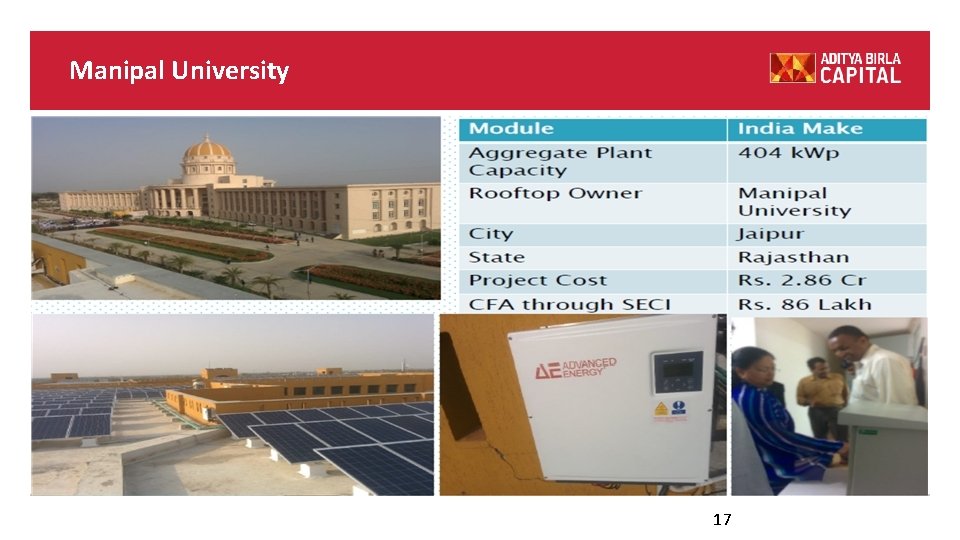
Manipal University 17
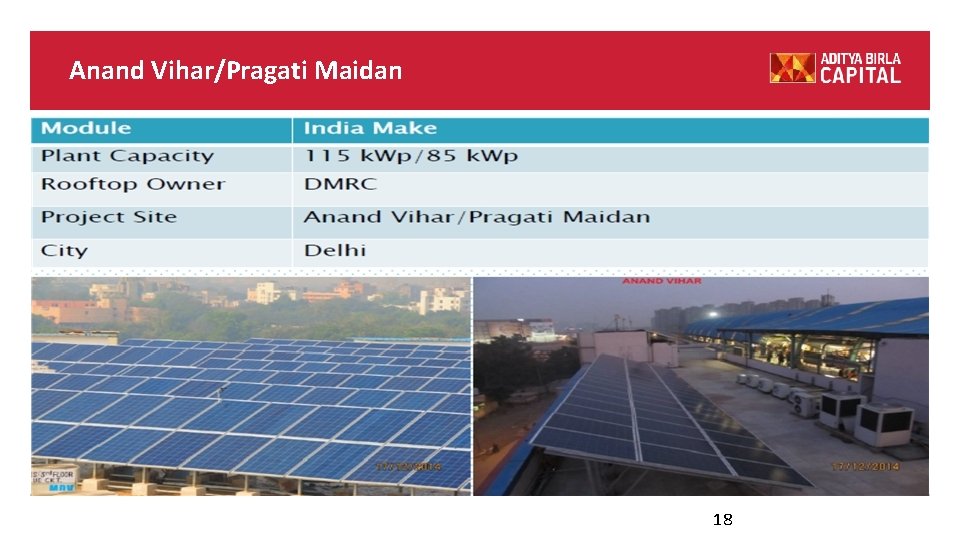
Anand Vihar/Pragati Maidan 18
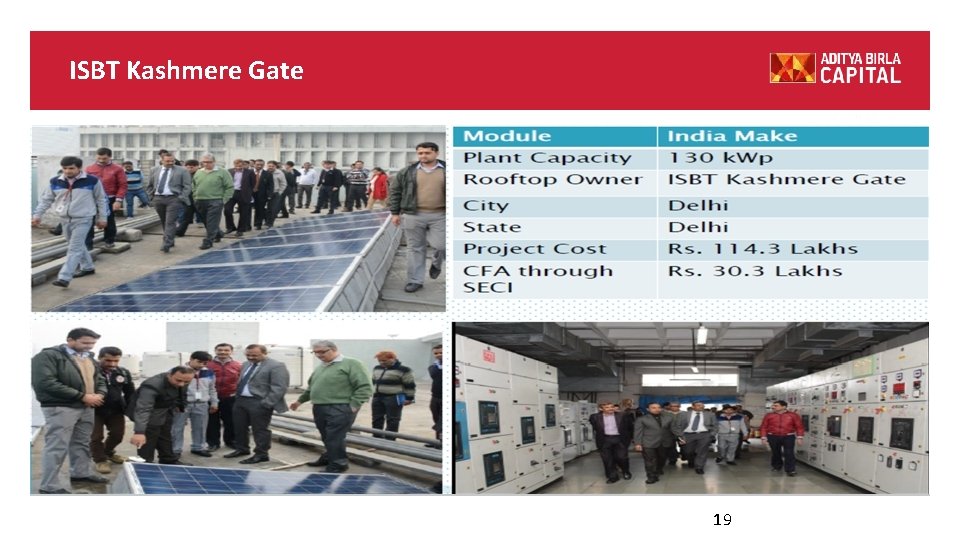
ISBT Kashmere Gate 19
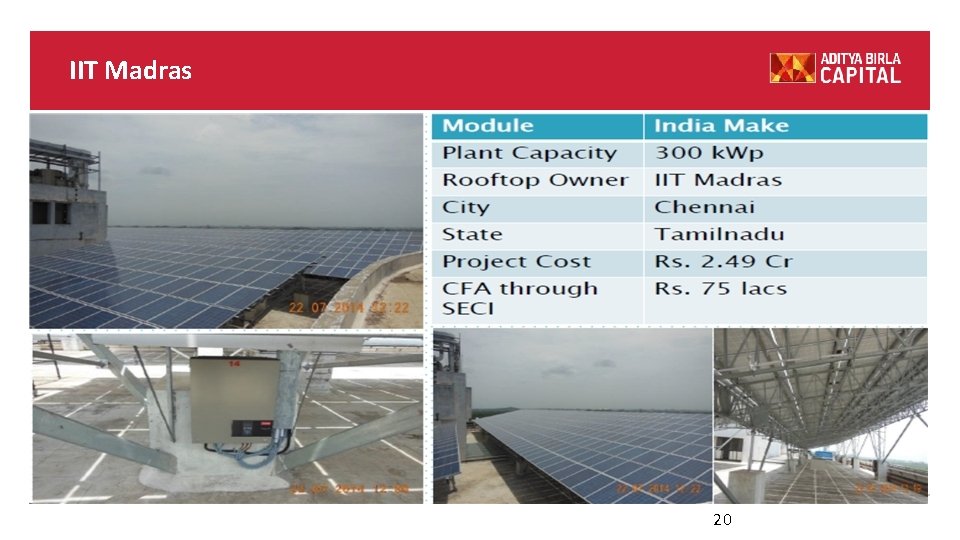
IIT Madras 20
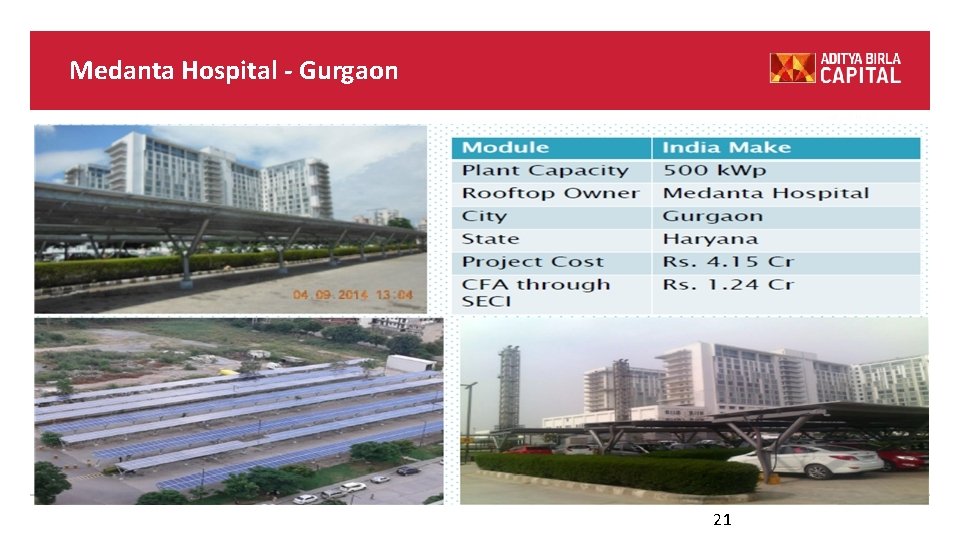
Medanta Hospital - Gurgaon 21
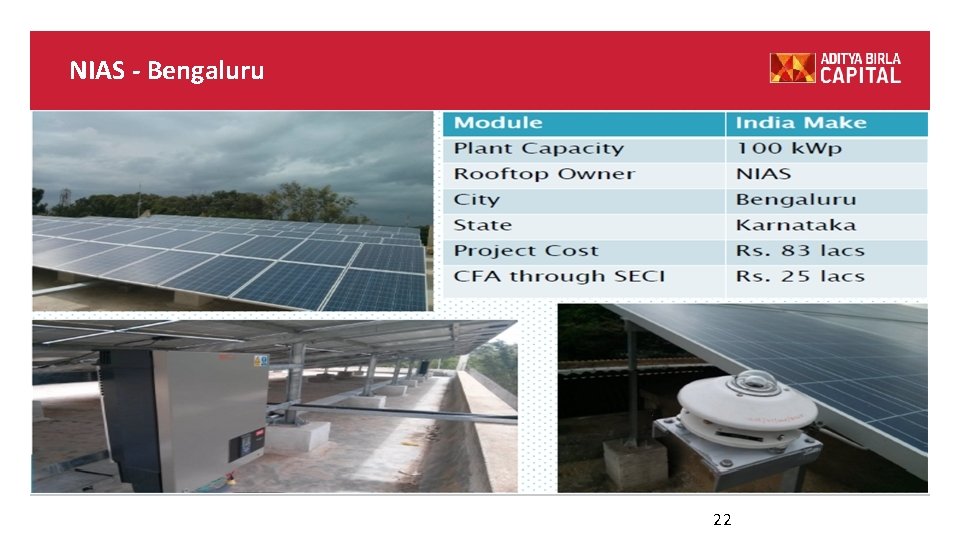
NIAS - Bengaluru 22
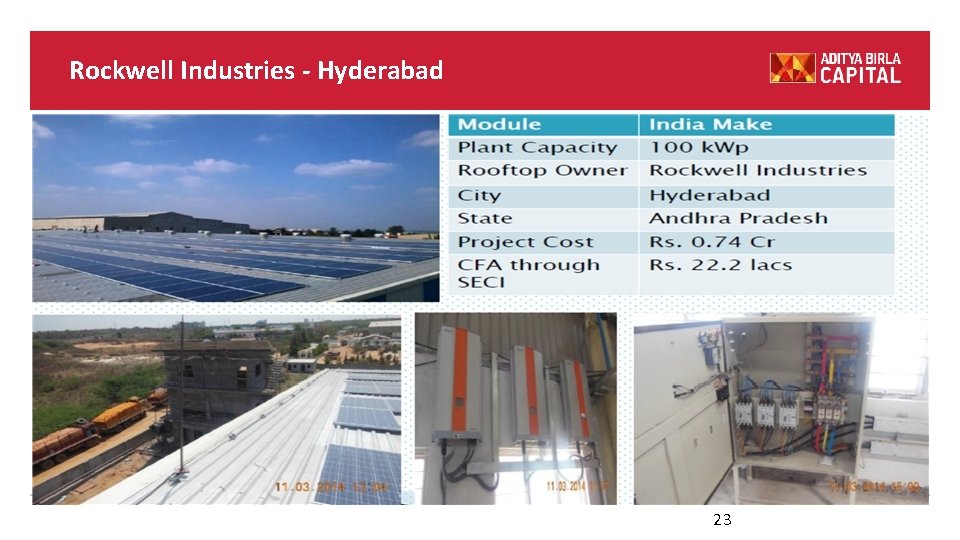
Rockwell Industries - Hyderabad 23
THANK YOU