Nuclear Fusion Energy Rishi Gohil Ch E 379

- Slides: 12
Nuclear Fusion Energy Rishi Gohil Ch. E 379: Energy Technology and Policy Dr. Thomas Edgar Fall 2007
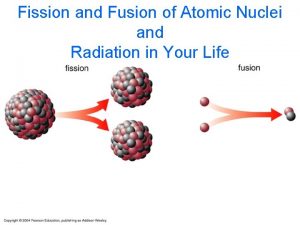
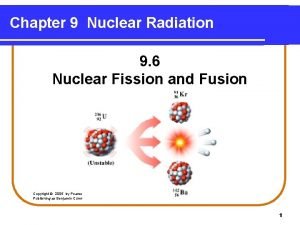
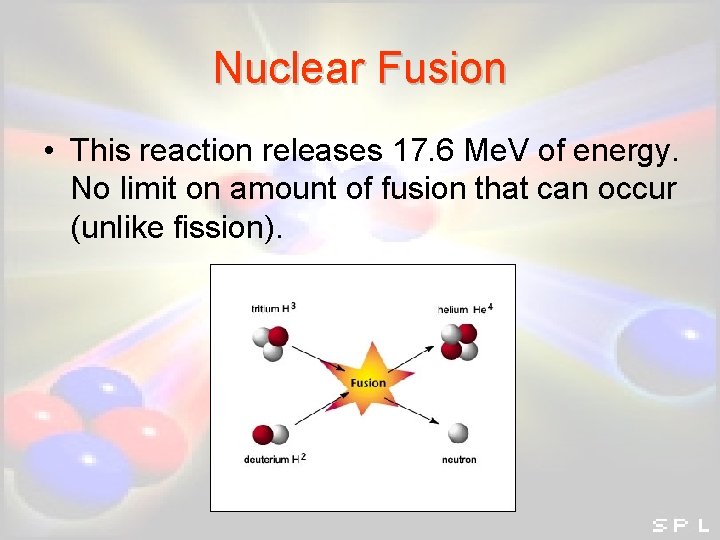
Nuclear Fusion Principle • Energy generated by joining two elements with low atomic numbers. • Most efficient reaction known is fusion of Hydrogen isotopes, Deuterium and Tritium, to form Helium. • Fusion is source of energy for stars and the Sun. • High temperatures > 100 million degrees Kelvin needed for fusion on earth • At high temperature, the gas mixture forms a plasma (hot, electrically charged gas)
Nuclear Fusion • This reaction releases 17. 6 Me. V of energy. No limit on amount of fusion that can occur (unlike fission).
Requirements for Fusion Reaction • Plasma Temperature: 100 -200 million Kelvin – Needed to overcome natural positive repulsive forces of plasma ions • Energy Confinement Time: 4 -6 seconds – The Energy Confinement Time is a measure of how long the energy in the plasma is retained before being lost. 20 particles m • Central Density in Plasma: 1 -2 x 10 3 – Large density needed because number of fusion reactions per unit volume is roughly proportional to the square of the density
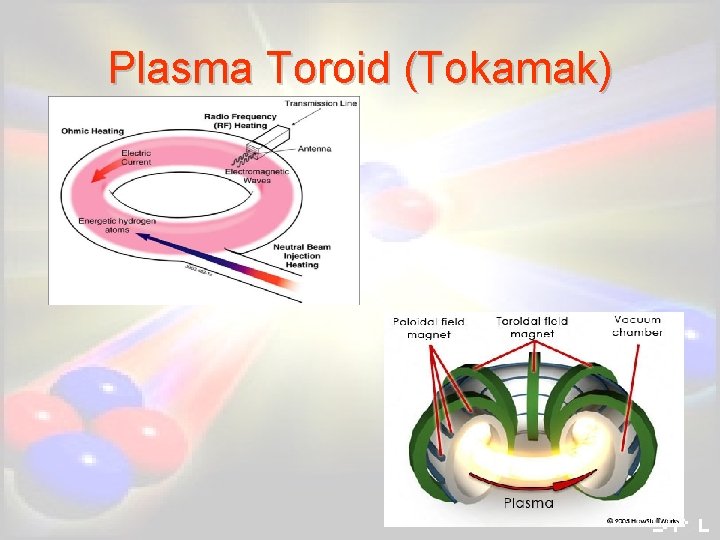
Plasma Toroid (Tokamak)
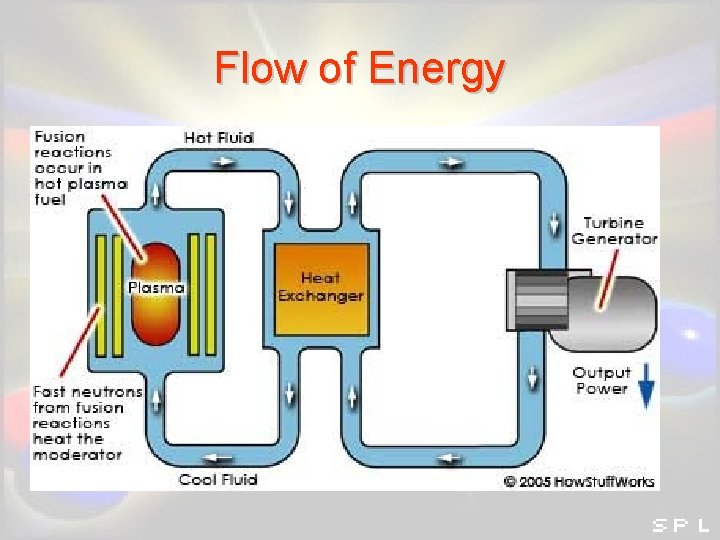
Flow of Energy
Challenges • Current research in controlling high temperature plasma – How to heat plasma to >100 million deg C. – How to confine such a plasma – How to sustain the reactions.
Advantages • Abundant fuels: Deuterium (from water), Tritium (from Lithium) and Lithium (plentiful on Earth’s crust). • Inherently safe: Because conditions for reaction are stringent and small amounts of fuel used • Environmentally safe: No greenhouse gas emissions and byproduct of reaction is Helium.
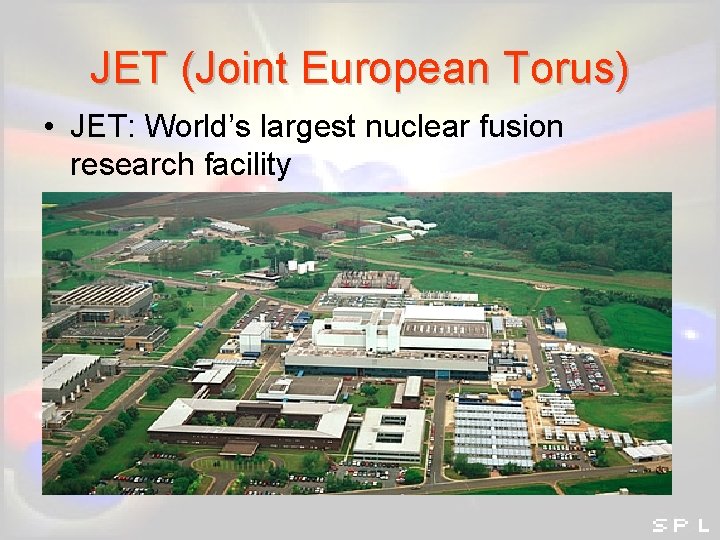
JET (Joint European Torus) • JET: World’s largest nuclear fusion research facility
Fusion Reactor • EU to build pilot fusion reactor, Iter. – – – – Cost: 4. 57 Billion EURO (2000 prices) over 10 yrs Life: 35 years Countries Involved: 7 Design: reactions occur in 100 million degree gas (plasma) suspended in donut shaped magnetic field. Problems: Sustained and stable reactions Potential: 500 MW output from 70 MW power input during pulses of at least 400 secs. If technology works commercial reactor, Demo, will be built. Advantages: No greenhouse emissions, inherently safe due to malfunction shutdown systems, no high-level long-lived radioactive waste produced.
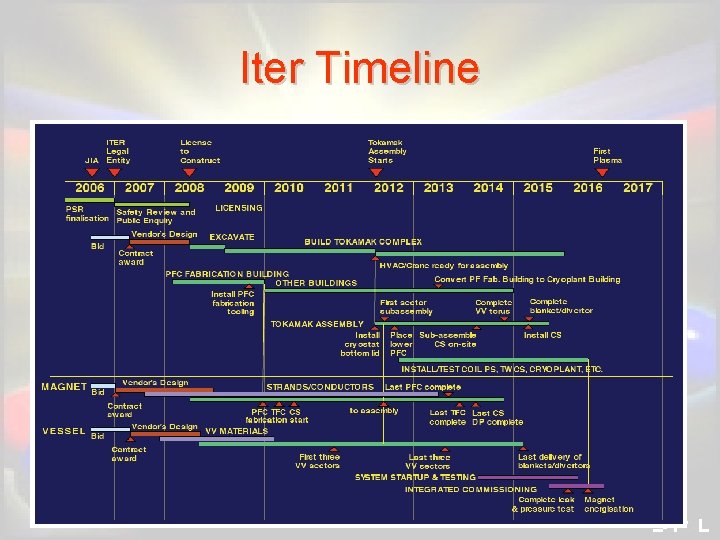
Iter Timeline
References • "Nuclear Fusion 'Put to the Test'" BBC NEWS 17 Feb. 2005. 19 Nov. 2007 <http: //news. bbc. co. uk/2/low/science/nature/4270297. stm>. • “Fusion Power. " United Kingdom Atomic Energy Authority. 20 Nov. 2007. <http: //www. fusion. org. uk/>. • • "JET. " EFDA. 20 Nov. 2007. <http: //www. jet. efda. org/index. html>. “Nuclear Fusion” howstuffworks. 19 Nov 2007. Craig Freudenrich, Ph. D. <http: //science. howstuffworks. com/fusion-reactor 3. htm>