RATIO ANALYSIS Ratios are simply a means of
- Slides: 31
RATIO ANALYSIS Ratios are simply a means of highlighting in arithmetical terms the relationship between figures drawn from financial statements.
FORMS OF EXPRESSING RATIOS ► Proportion ► Percentage ► Quotient
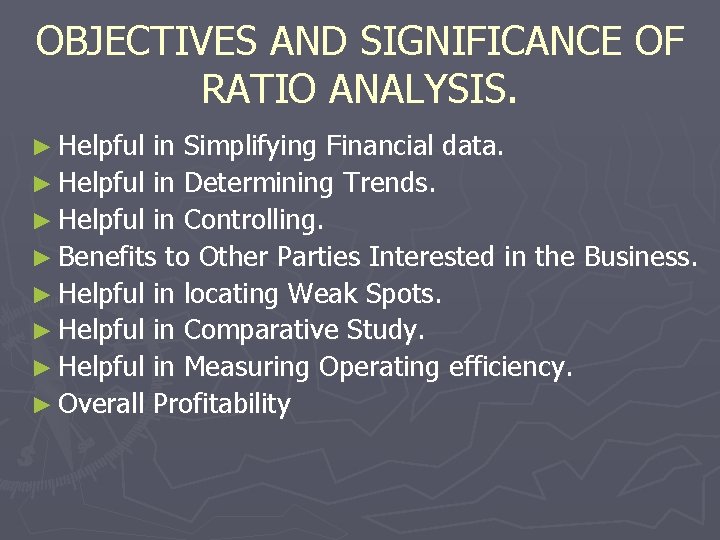
OBJECTIVES AND SIGNIFICANCE OF RATIO ANALYSIS. ► Helpful in Simplifying Financial data. ► Helpful in Determining Trends. ► Helpful in Controlling. ► Benefits to Other Parties Interested in the Business. ► Helpful in locating Weak Spots. ► Helpful in Comparative Study. ► Helpful in Measuring Operating efficiency. ► Overall Profitability
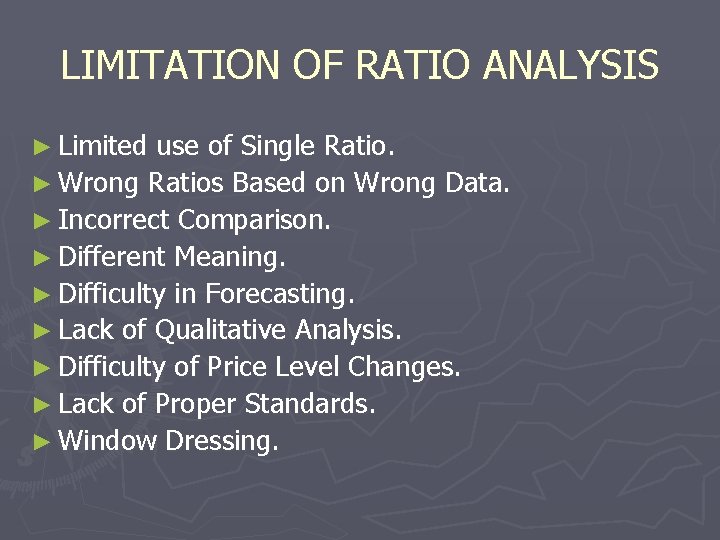
LIMITATION OF RATIO ANALYSIS ► Limited use of Single Ratio. ► Wrong Ratios Based on Wrong Data. ► Incorrect Comparison. ► Different Meaning. ► Difficulty in Forecasting. ► Lack of Qualitative Analysis. ► Difficulty of Price Level Changes. ► Lack of Proper Standards. ► Window Dressing.
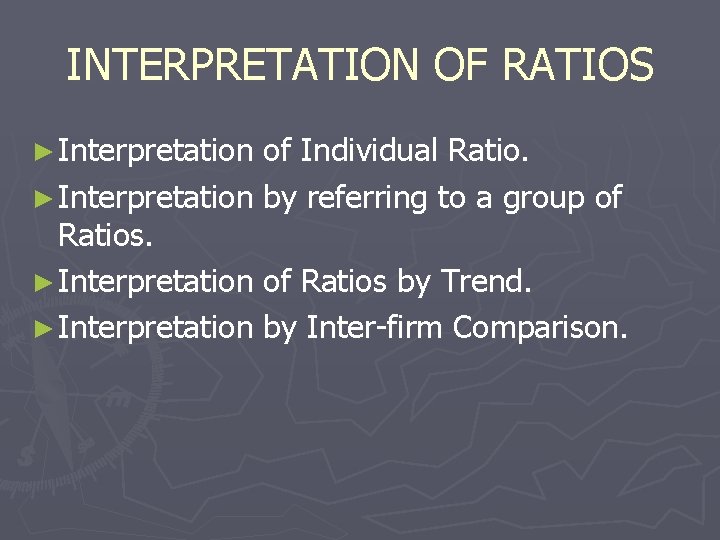
INTERPRETATION OF RATIOS ► Interpretation of Individual Ratio. ► Interpretation by referring to a group of Ratios. ► Interpretation of Ratios by Trend. ► Interpretation by Inter-firm Comparison.
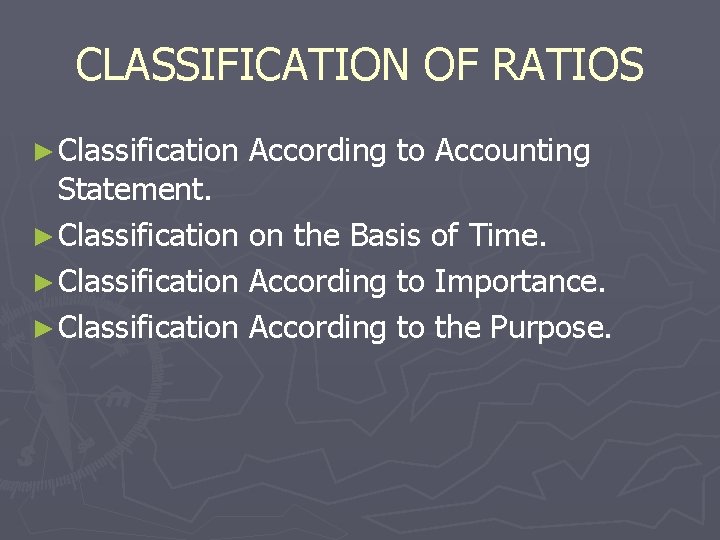
CLASSIFICATION OF RATIOS ► Classification According to Accounting Statement. ► Classification on the Basis of Time. ► Classification According to Importance. ► Classification According to the Purpose.
CLASSIFICATION ACCORDING TO ACCOUNTING STATEMENT. ► Profit and Loss Account Ratios. ► Balance Sheet Ratios. ► Profit and Loss Account and Balance Sheet Ratios.
CLASSIFICATION ON THE BASIS OF TIME. ► Structural Ratios. ► Trend Ratio
CLASSIFICATION ACCORDING TO IMPORTANCE ► Primary Ratios. ► Secondary Ratios.
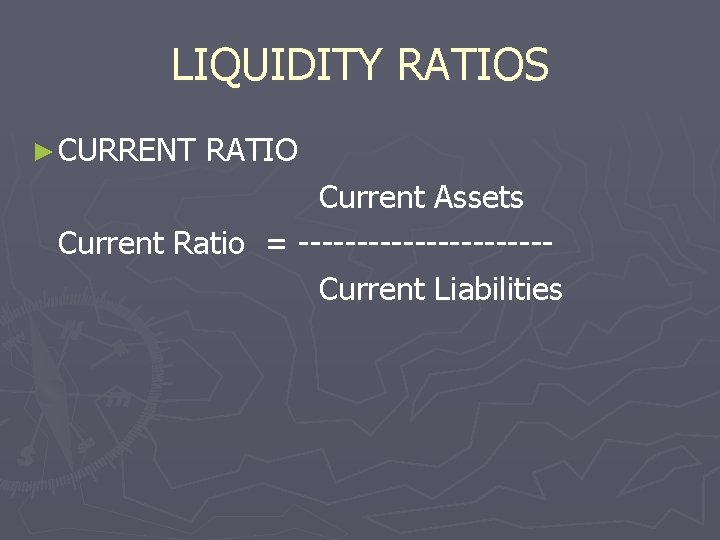
LIQUIDITY RATIOS ► CURRENT RATIO Current Assets Current Ratio = -----------Current Liabilities
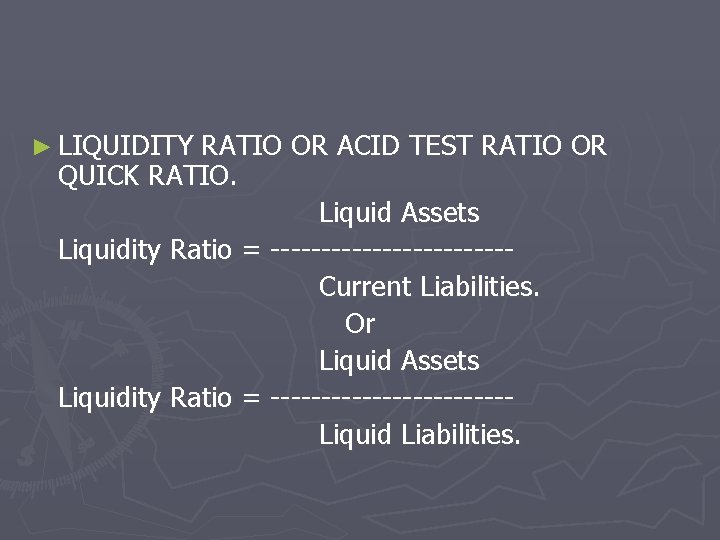
► LIQUIDITY RATIO OR ACID TEST RATIO OR QUICK RATIO. Liquid Assets Liquidity Ratio = ------------Current Liabilities. Or Liquid Assets Liquidity Ratio = ------------Liquid Liabilities.
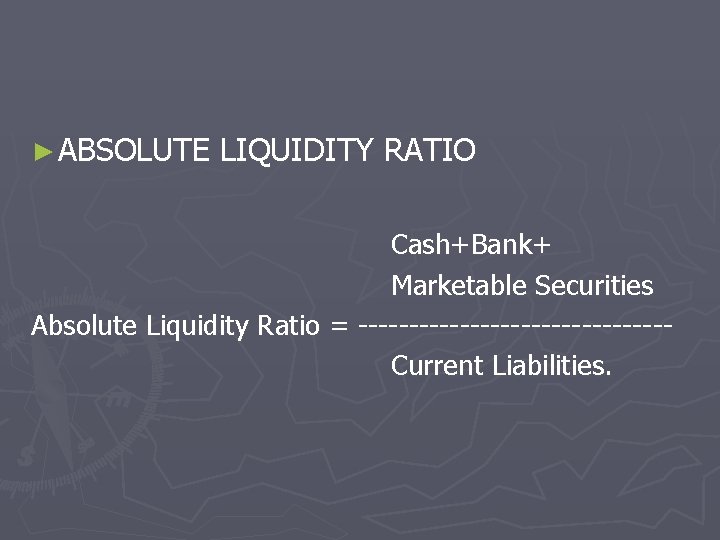
► ABSOLUTE LIQUIDITY RATIO Cash+Bank+ Marketable Securities Absolute Liquidity Ratio = ---------------Current Liabilities.
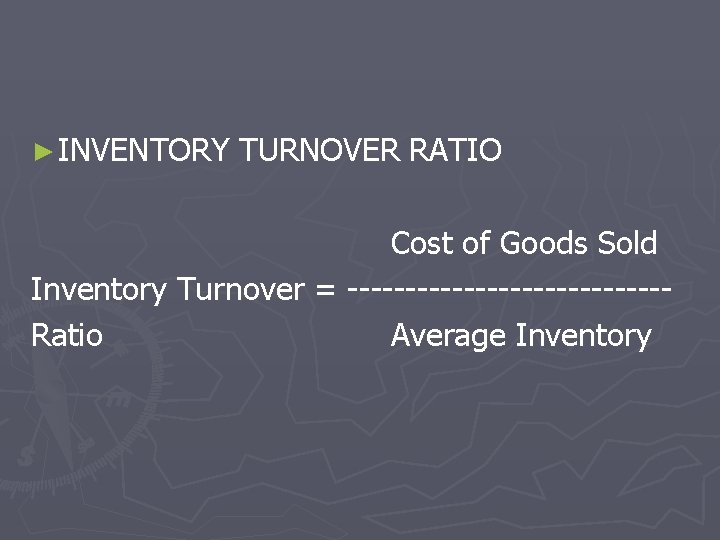
► INVENTORY TURNOVER RATIO Cost of Goods Sold Inventory Turnover = --------------Ratio Average Inventory
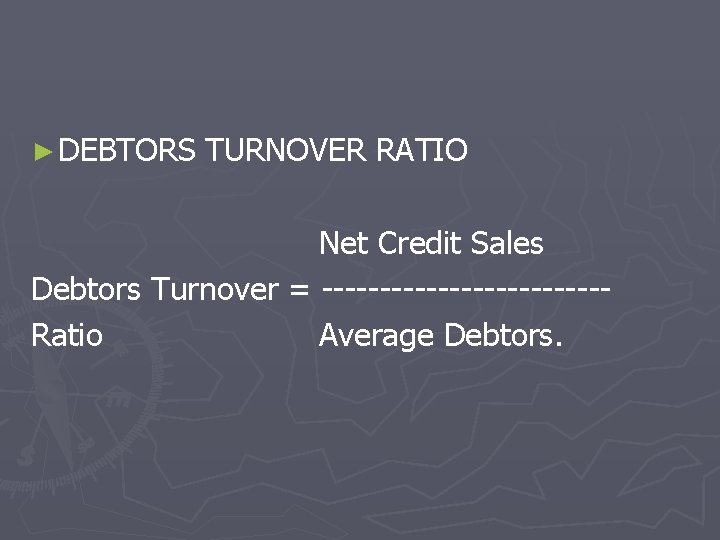
► DEBTORS TURNOVER RATIO Net Credit Sales Debtors Turnover = ------------Ratio Average Debtors.
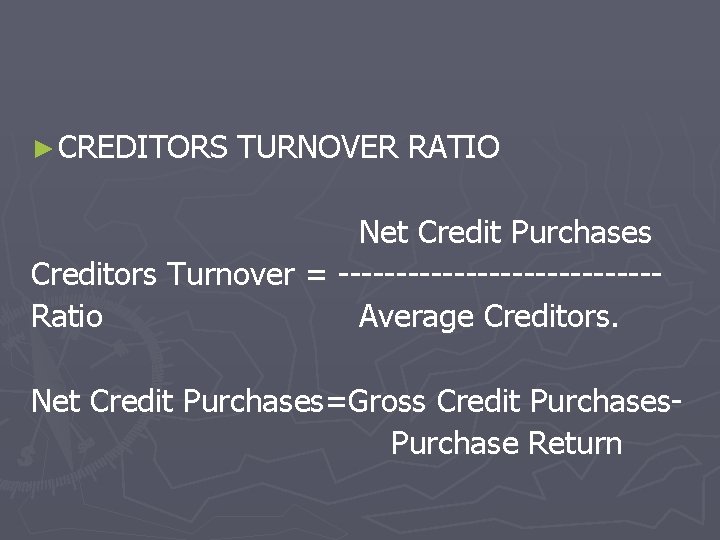
► CREDITORS TURNOVER RATIO Net Credit Purchases Creditors Turnover = --------------Ratio Average Creditors. Net Credit Purchases=Gross Credit Purchases. Purchase Return
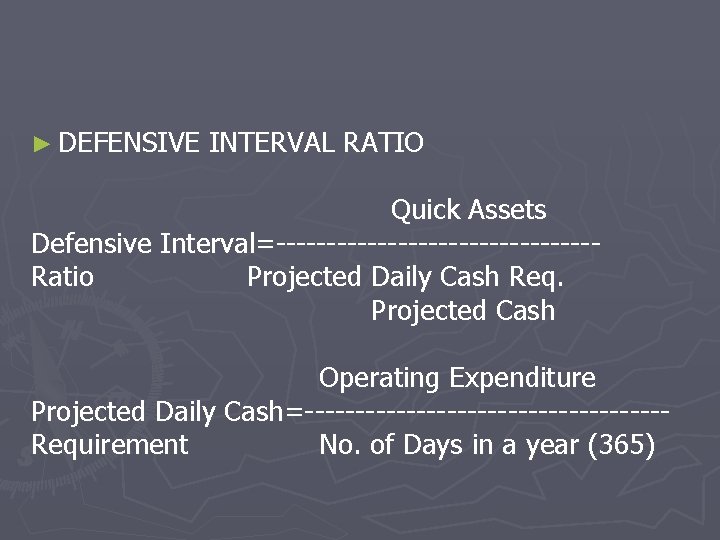
► DEFENSIVE INTERVAL RATIO Quick Assets Defensive Interval=----------------Ratio Projected Daily Cash Req. Projected Cash Operating Expenditure Projected Daily Cash=------------------Requirement No. of Days in a year (365)
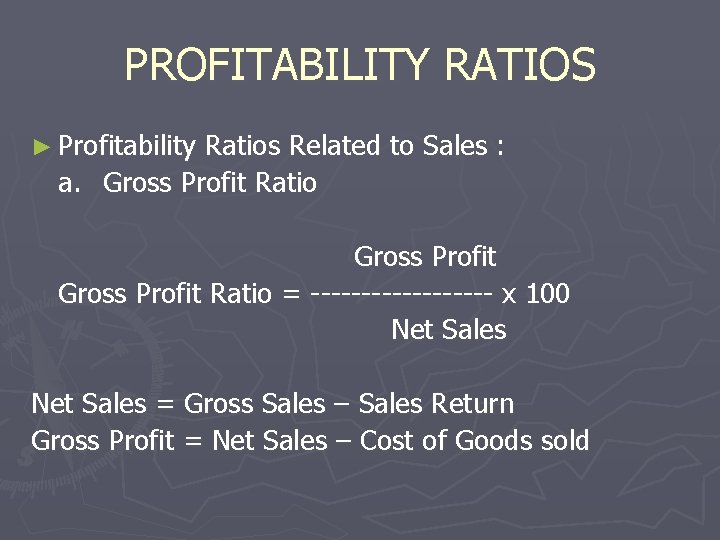
PROFITABILITY RATIOS ► Profitability Ratios Related to Sales : a. Gross Profit Ratio = --------- x 100 Net Sales = Gross Sales – Sales Return Gross Profit = Net Sales – Cost of Goods sold
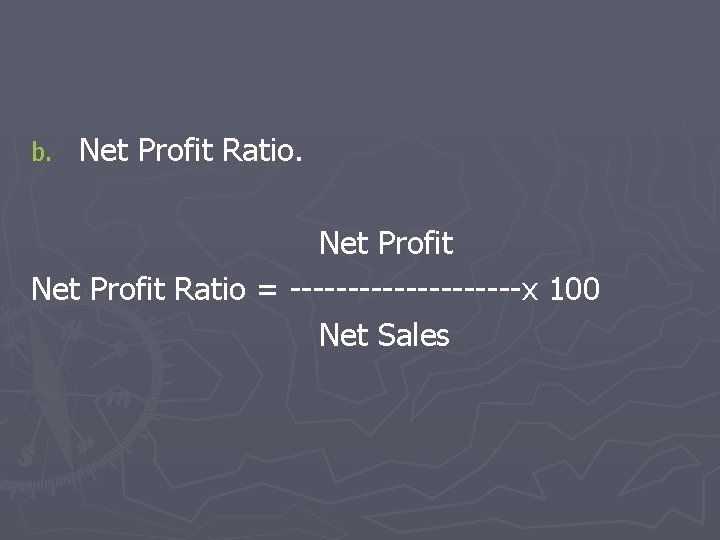
b. Net Profit Ratio = ----------x 100 Net Sales
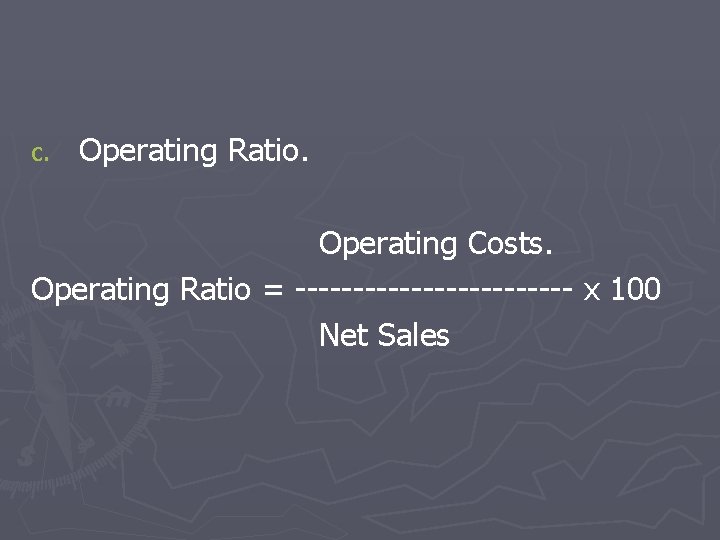
c. Operating Ratio. Operating Costs. Operating Ratio = ------------ x 100 Net Sales
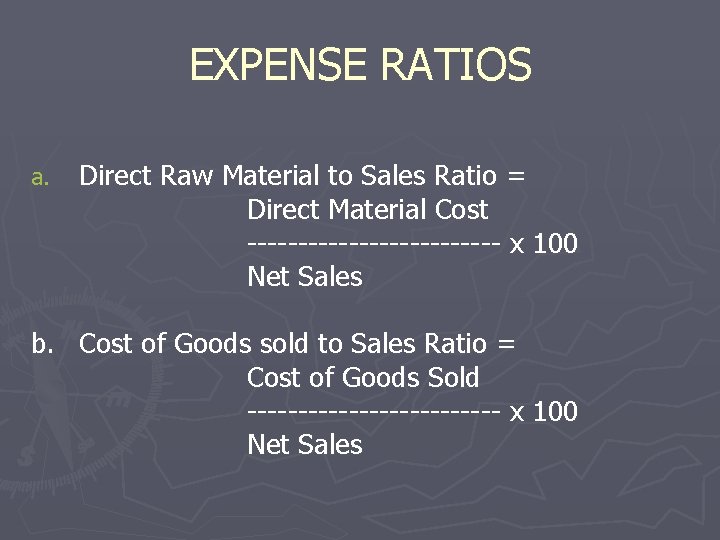
EXPENSE RATIOS a. Direct Raw Material to Sales Ratio = Direct Material Cost ------------- x 100 Net Sales b. Cost of Goods sold to Sales Ratio = Cost of Goods Sold ------------- x 100 Net Sales
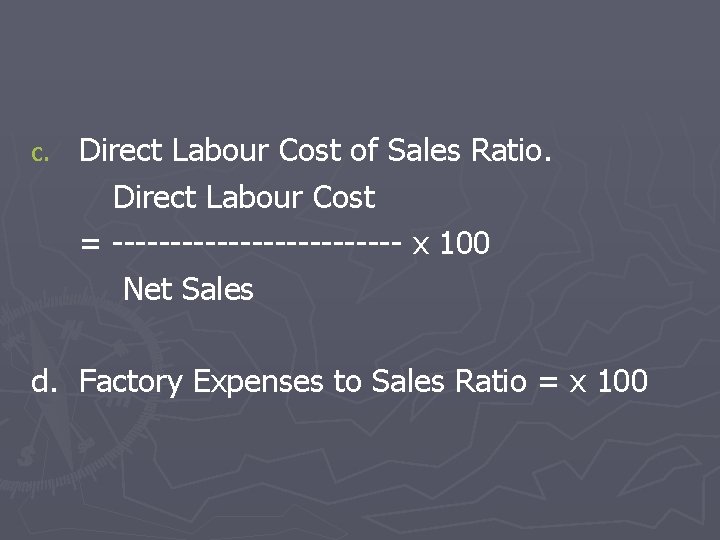
c. Direct Labour Cost of Sales Ratio. Direct Labour Cost = ------------- x 100 Net Sales d. Factory Expenses to Sales Ratio = x 100
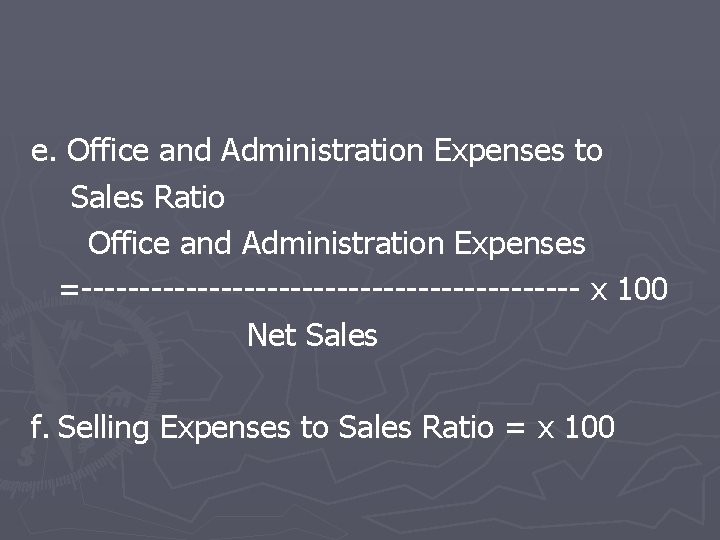
e. Office and Administration Expenses to Sales Ratio Office and Administration Expenses =---------------------- x 100 Net Sales f. Selling Expenses to Sales Ratio = x 100
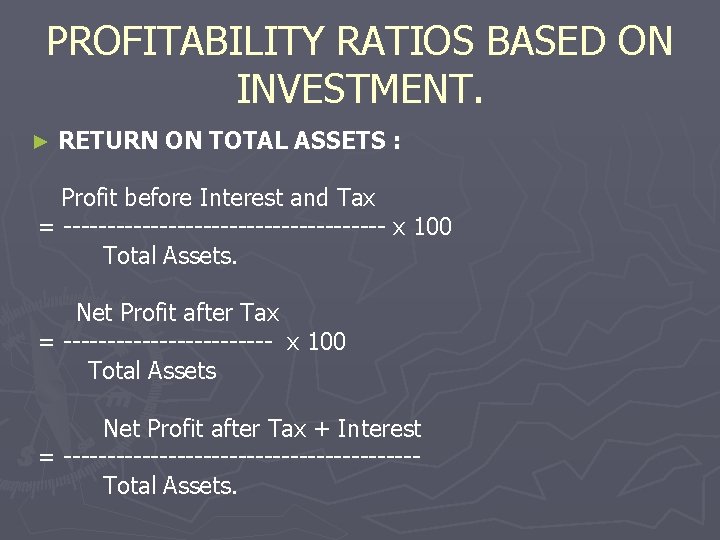
PROFITABILITY RATIOS BASED ON INVESTMENT. ► RETURN ON TOTAL ASSETS : Profit before Interest and Tax = ------------------- x 100 Total Assets. Net Profit after Tax = ------------ x 100 Total Assets Net Profit after Tax + Interest = --------------------Total Assets.
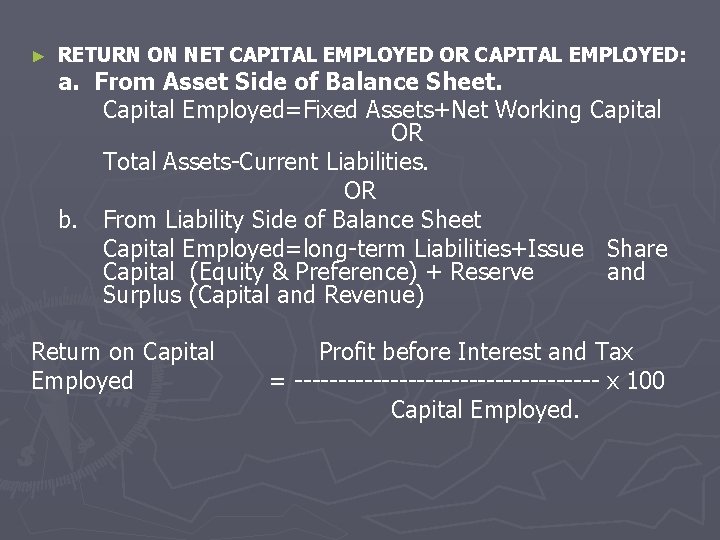
► RETURN ON NET CAPITAL EMPLOYED OR CAPITAL EMPLOYED: a. From Asset Side of Balance Sheet. Capital Employed=Fixed Assets+Net Working Capital OR Total Assets-Current Liabilities. OR b. From Liability Side of Balance Sheet Capital Employed=long-term Liabilities+Issue Share Capital (Equity & Preference) + Reserve and Surplus (Capital and Revenue) Return on Capital Employed Profit before Interest and Tax = ------------------ x 100 Capital Employed.
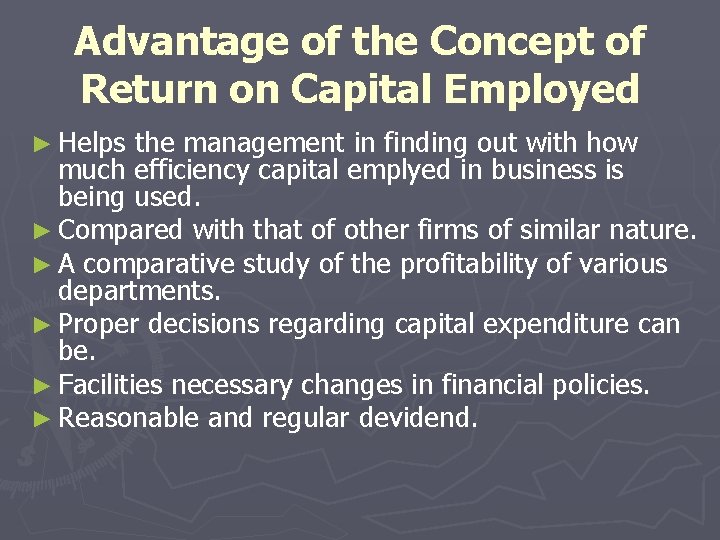
Advantage of the Concept of Return on Capital Employed ► Helps the management in finding out with how much efficiency capital emplyed in business is being used. ► Compared with that of other firms of similar nature. ► A comparative study of the profitability of various departments. ► Proper decisions regarding capital expenditure can be. ► Facilities necessary changes in financial policies. ► Reasonable and regular devidend.
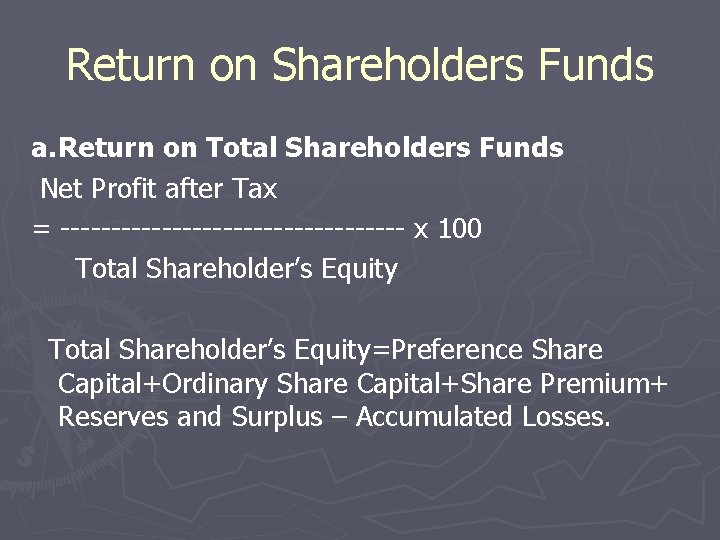
Return on Shareholders Funds a. Return on Total Shareholders Funds Net Profit after Tax = ----------------- x 100 Total Shareholder’s Equity=Preference Share Capital+Ordinary Share Capital+Share Premium+ Reserves and Surplus – Accumulated Losses.
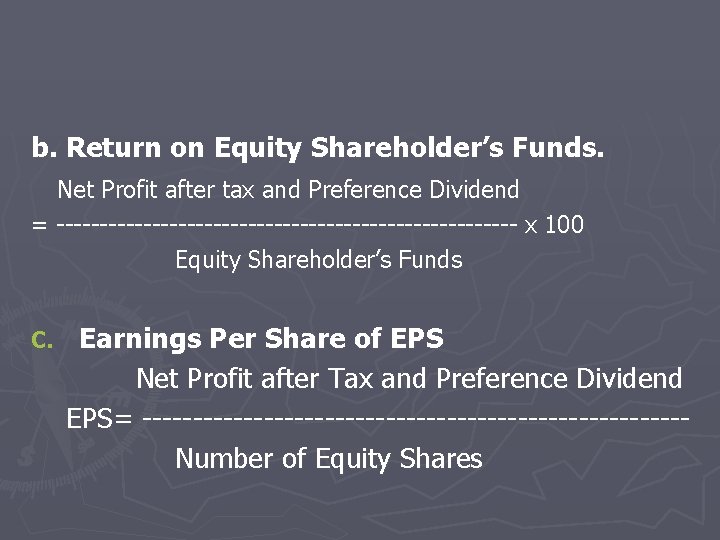
b. Return on Equity Shareholder’s Funds. Net Profit after tax and Preference Dividend = --------------------------- x 100 Equity Shareholder’s Funds C. Earnings Per Share of EPS Net Profit after Tax and Preference Dividend EPS= ---------------------------Number of Equity Shares
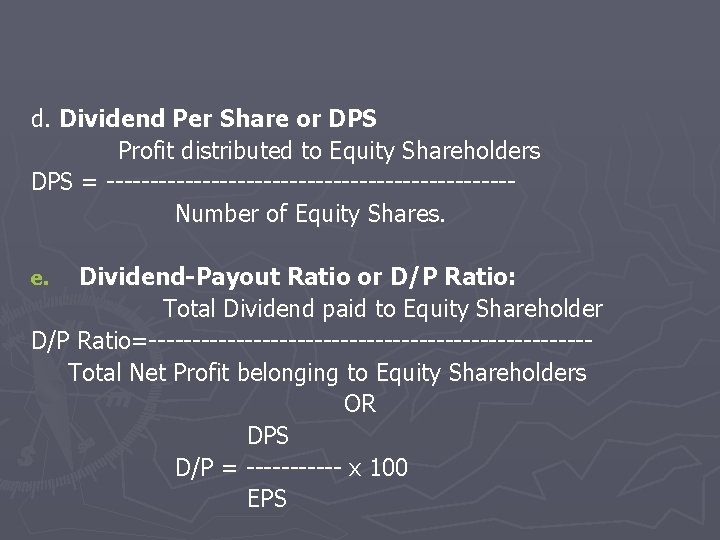
d. Dividend Per Share or DPS Profit distributed to Equity Shareholders DPS = -----------------------Number of Equity Shares. Dividend-Payout Ratio or D/P Ratio: Total Dividend paid to Equity Shareholder D/P Ratio=-------------------------Total Net Profit belonging to Equity Shareholders OR DPS D/P = ------ x 100 EPS e.
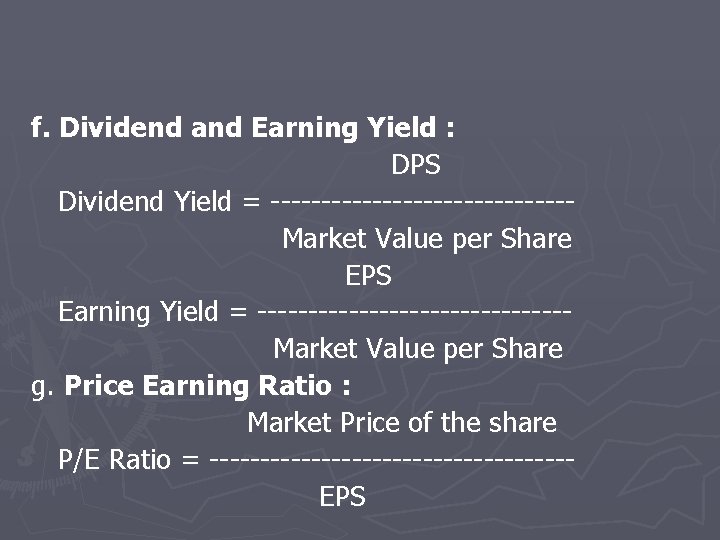
f. Dividend and Earning Yield : DPS Dividend Yield = ---------------Market Value per Share EPS Earning Yield = ---------------Market Value per Share g. Price Earning Ratio : Market Price of the share P/E Ratio = ------------------EPS
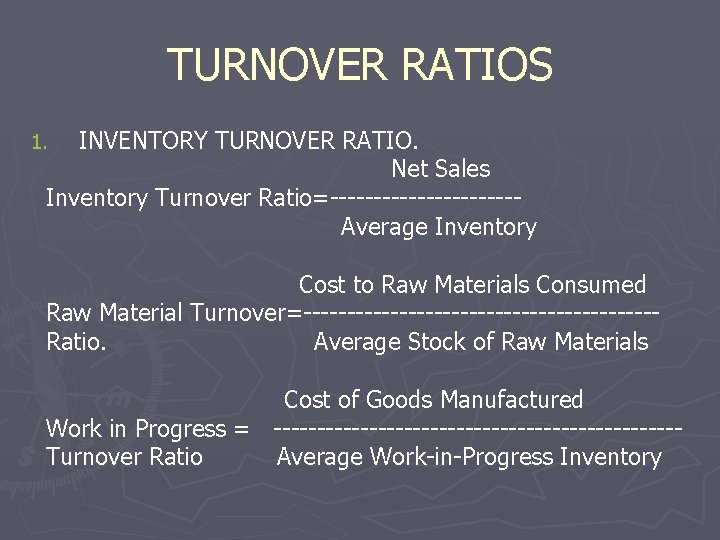
TURNOVER RATIOS INVENTORY TURNOVER RATIO. Net Sales Inventory Turnover Ratio=-----------Average Inventory 1. Cost to Raw Materials Consumed Raw Material Turnover=--------------------Ratio. Average Stock of Raw Materials Cost of Goods Manufactured Work in Progress = -----------------------Turnover Ratio Average Work-in-Progress Inventory
► Debtors Turnover Ratio and Average Collection Period.