Radio Cherenkov Radiation from High Energy Shower in

- Slides: 34
Radio Cherenkov Radiation from High Energy Shower in Time Domain w/o Far‐Field approx. Mr. Chih‐Ching Chen Le. Cos. PA & National Taiwan University
Outline • The shower source size and detecting region. • How much percent events we need consider? – Hadronic/EM shower from Neutrino interaction – lepton signal (e , μ, τ ) • Behavior of Cherenkov signal – Assumtion – Finite Difference Time Domain (FDTD) method – Time domain current integral method • Conclusion
I. Shower Size and Detection Region
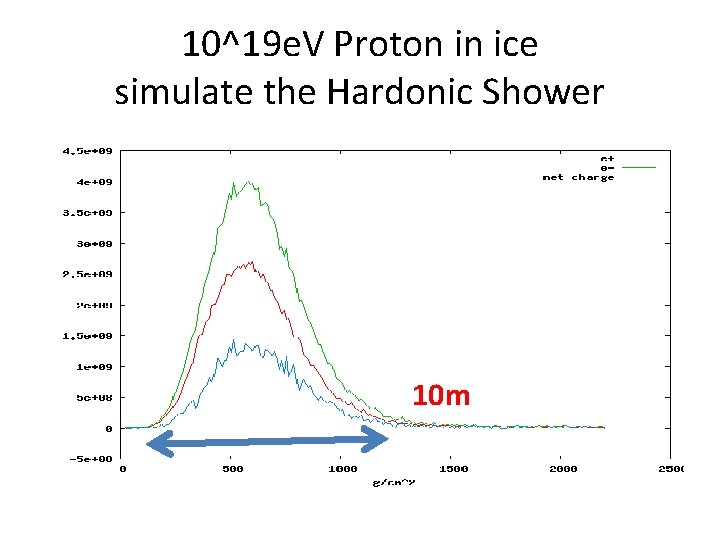
10^19 e. V Proton in ice simulate the Hardonic Shower 10 m
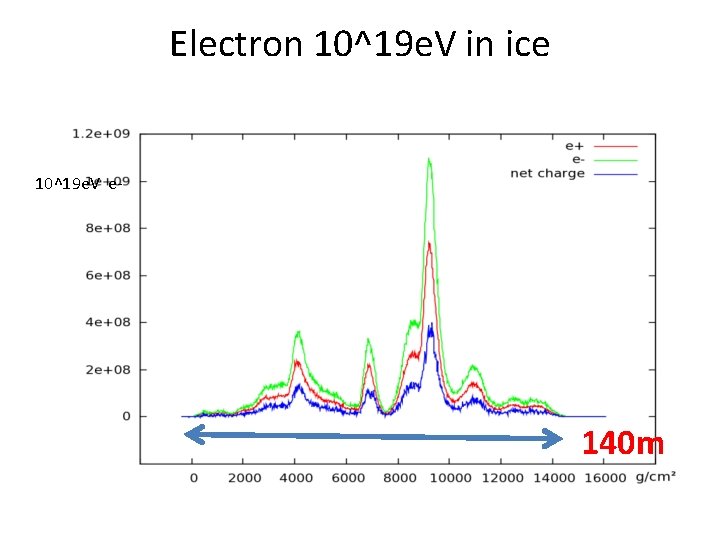
Electron 10^19 e. V in ice 10^19 e. V e‐ 140 m
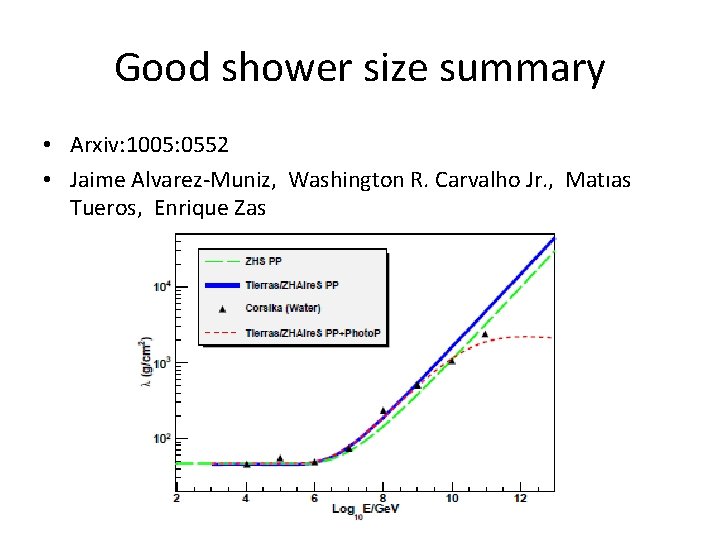
Good shower size summary • Arxiv: 1005: 0552 • Jaime Alvarez‐Muniz, Washington R. Carvalho Jr. , Matıas Tueros, Enrique Zas
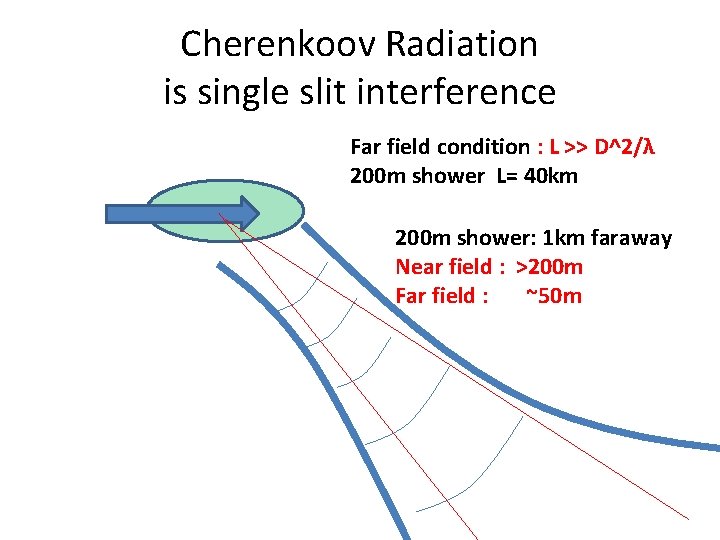
Cherenkoov Radiation is single slit interference Far field condition : L >> D^2/λ 200 m shower L= 40 km 200 m shower: 1 km faraway Near field : >200 m Far field : ~50 m
II. How much percent events we need consider?
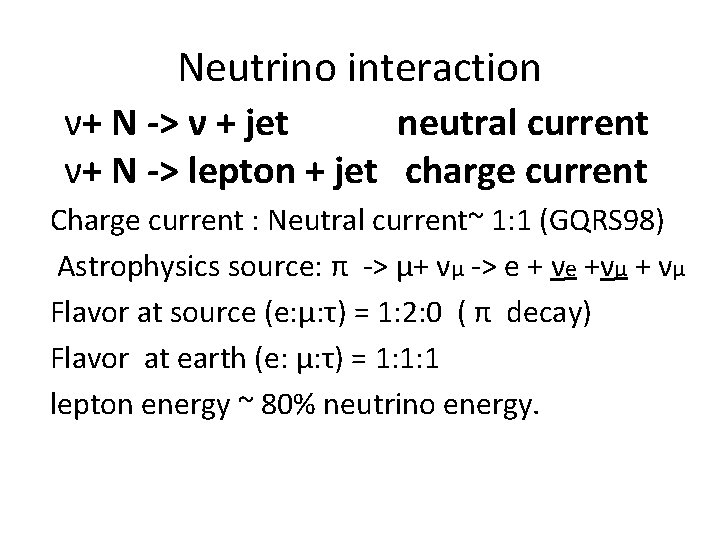
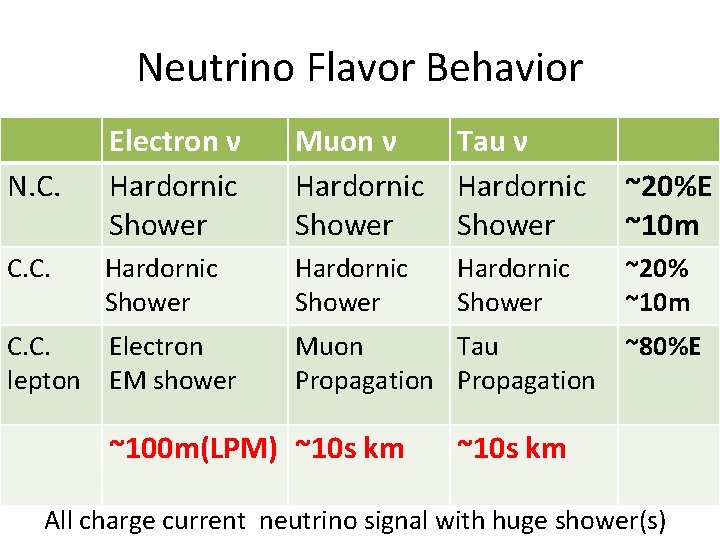
Neutrino interaction ν+ N -> ν + jet neutral current ν+ N -> lepton + jet charge current Charge current : Neutral current~ 1: 1 (GQRS 98) Astrophysics source: π ‐> μ+ νμ ‐> e + νe +νμ + νμ Flavor at source (e: μ: τ) = 1: 2: 0 ( π decay) Flavor at earth (e: μ: τ) = 1: 1: 1 lepton energy ~ 80% neutrino energy.
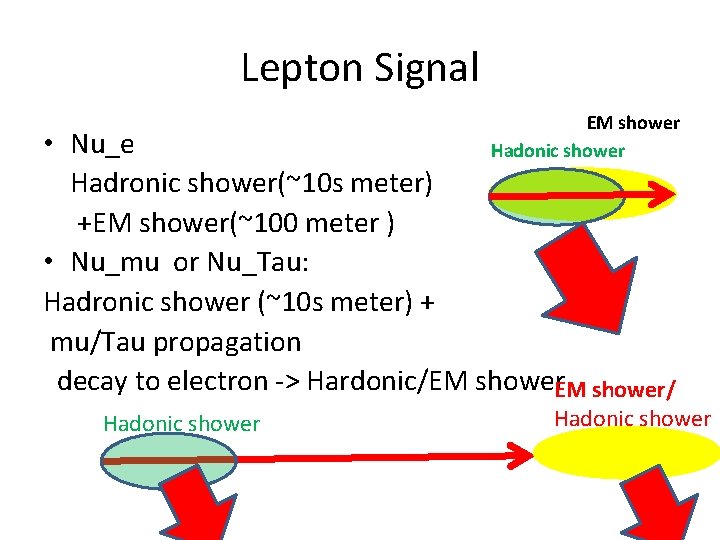
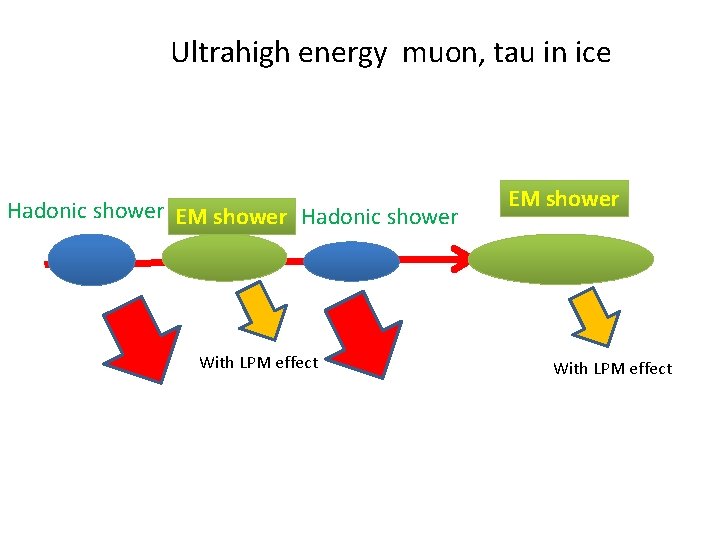
Lepton Signal EM shower Hadonic shower • Nu_e Hadronic shower(~10 s meter) +EM shower(~100 meter ) • Nu_mu or Nu_Tau: Hadronic shower (~10 s meter) + mu/Tau propagation decay to electron ‐> Hardonic/EM shower/ Hadonic shower
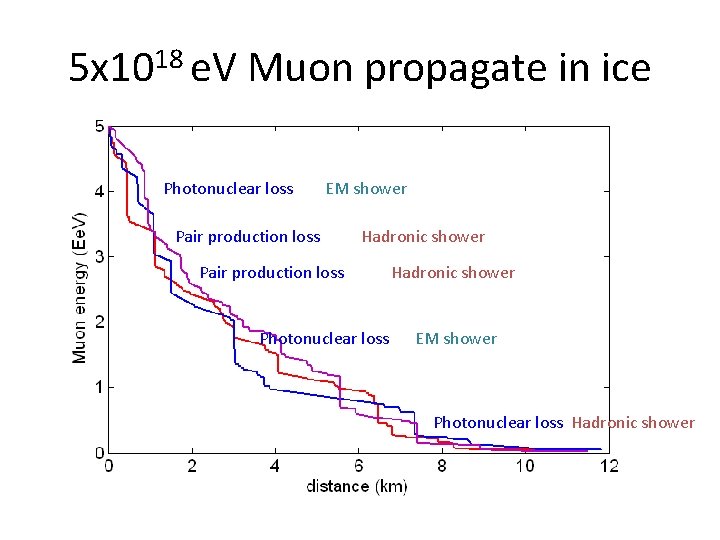
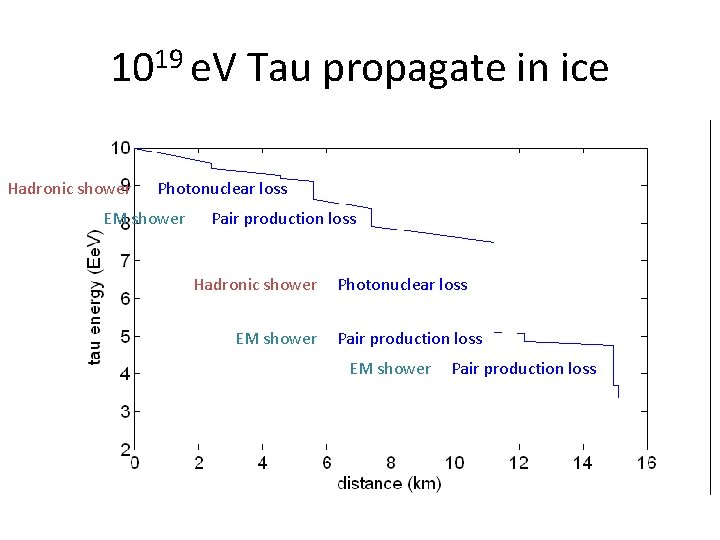
Muon, Tau Propagation • μ, τ energy loss in medium (GQRS, Dutta, Bugaev…. . ) • Bremsstrahlung processes • e+ e−‐pair production processes • Photonuclear processes • Stocastic caustic energy loss
5 x 10¹⁸ e. V Muon propagate in ice Photonuclear loss EM shower Pair production loss Hadronic shower Pair production loss Photonuclear loss Hadronic shower EM shower Photonuclear loss Hadronic shower
1019 e. V Tau propagate in ice Hadronic shower Photonuclear loss EM shower Pair production loss Hadronic shower EM shower Photonuclear loss Pair production loss EM shower Pair production loss
Ultrahigh energy muon, tau in ice Hadonic shower EM shower Hadonic shower With LPM effect EM shower With LPM effect
Neutrino Flavor Behavior Electron ν Hardornic Shower Muon ν Tau ν Hardornic ~20%E Shower ~10 m C. C. Hardornic Shower C. C. lepton Electron EM shower Muon Tau Propagation N. C. ~100 m(LPM) ~10 s km Hardornic Shower ~20% ~10 m ~80%E ~10 s km All charge current neutrino signal with huge shower(s)
III. Behavior of Cherenkov Signal
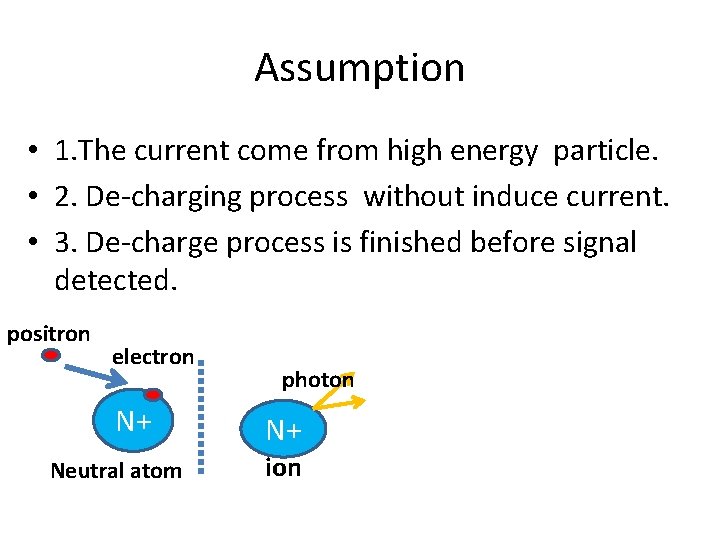
Assumption • 1. The current come from high energy particle. • 2. De‐charging process without induce current. • 3. De‐charge process is finished before signal detected. positron electron N+ Neutral atom photon N+ ion
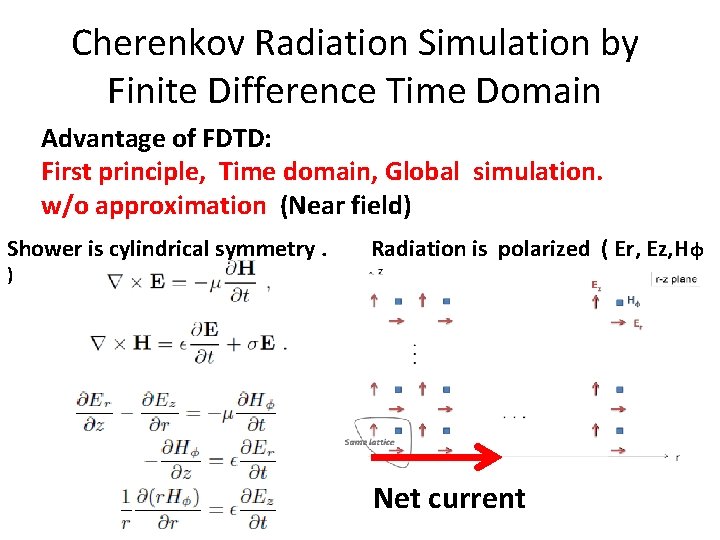
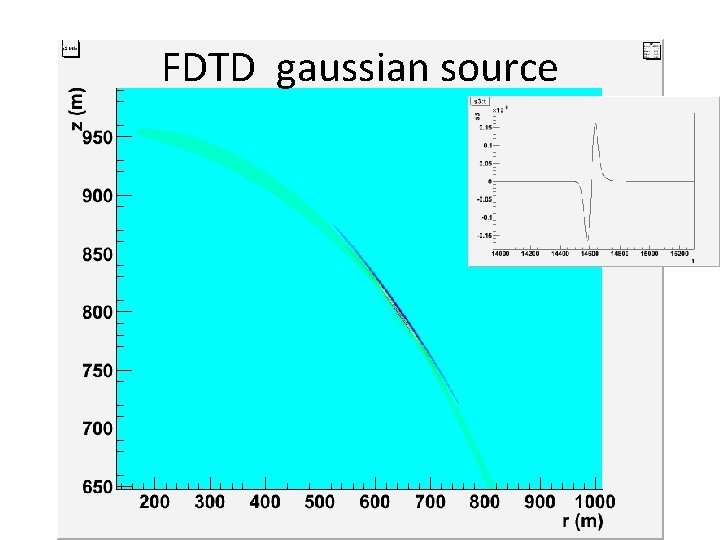
Cherenkov Radiation Simulation by Finite Difference Time Domain Advantage of FDTD: First principle, Time domain, Global simulation. w/o approximation (Near field) Shower is cylindrical symmetry. ) Radiation is polarized ( Er, Ez, H φ Net current
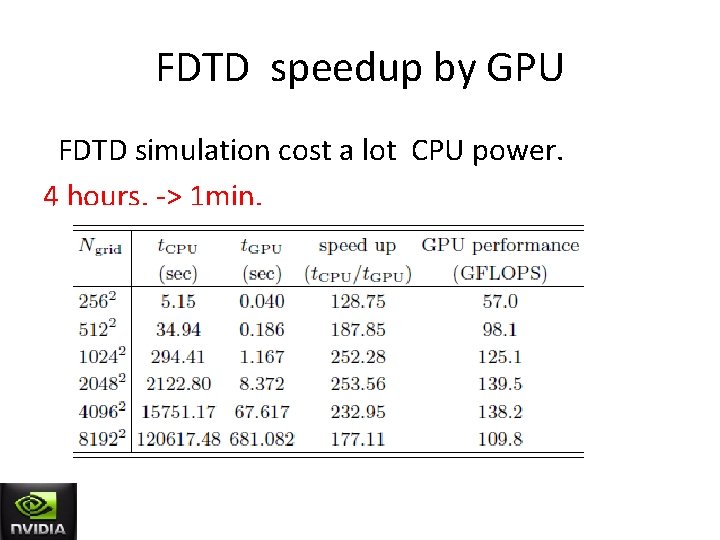
FDTD speedup by GPU FDTD simulation cost a lot CPU power. 4 hours. ‐> 1 min.
FDTD gaussian source
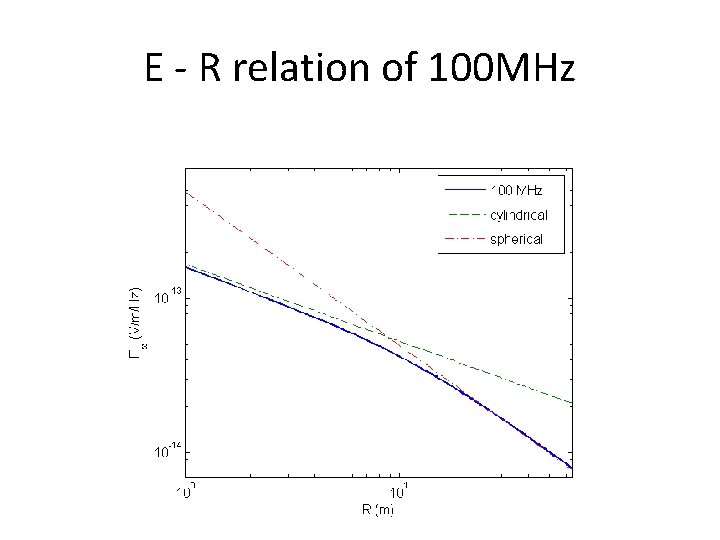
E ‐ R relation of 100 MHz speed up
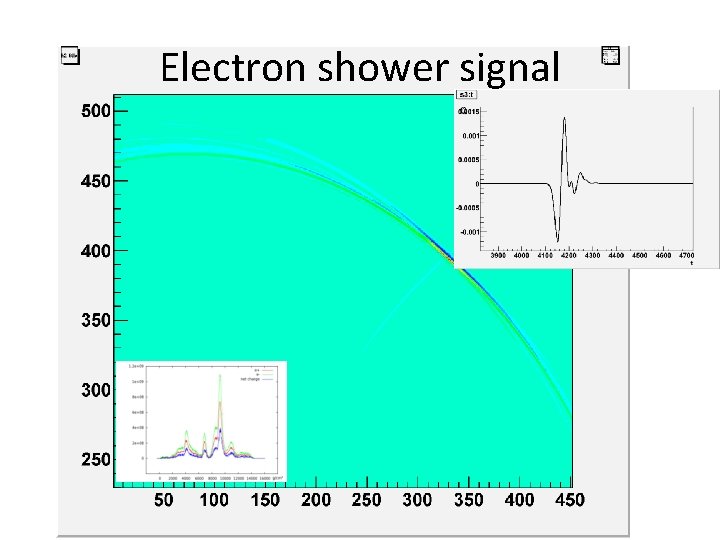
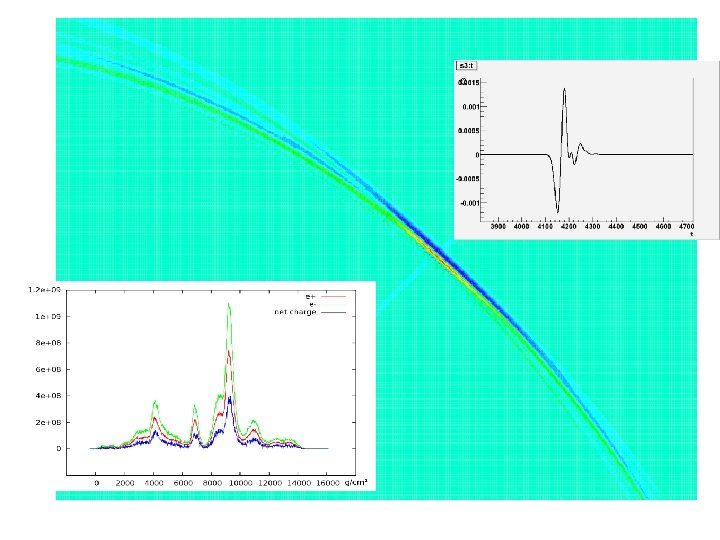
Electron shower signal
III. Behavior of Cherenkov Signal Time‐ domain integral
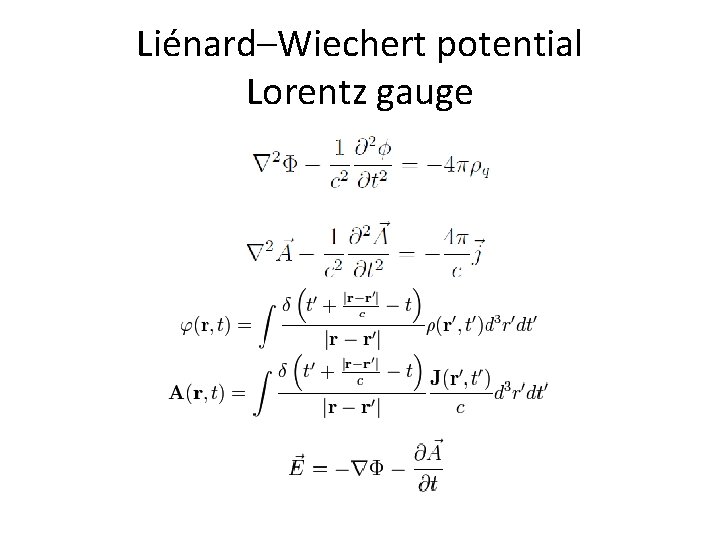
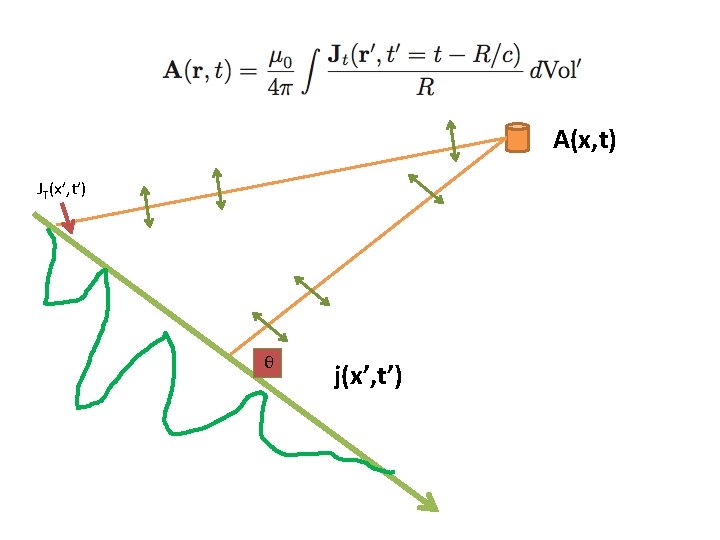
Liénard–Wiechert potential Lorentz gauge
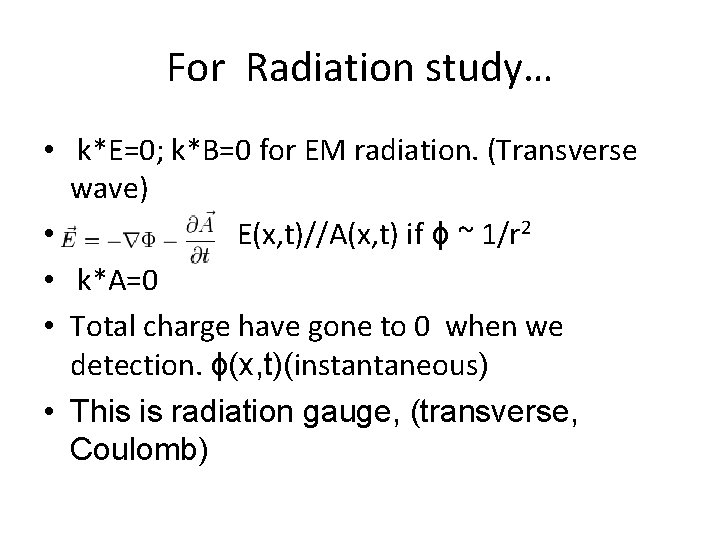
For Radiation study… • k*E=0; k*B=0 for EM radiation. (Transverse wave) • E(x, t)//A(x, t) if ϕ ~ 1/r 2 • k*A=0 • Total charge have gone to 0 when we detection. ϕ(x, t)(instantaneous) • This is radiation gauge, (transverse, Coulomb)
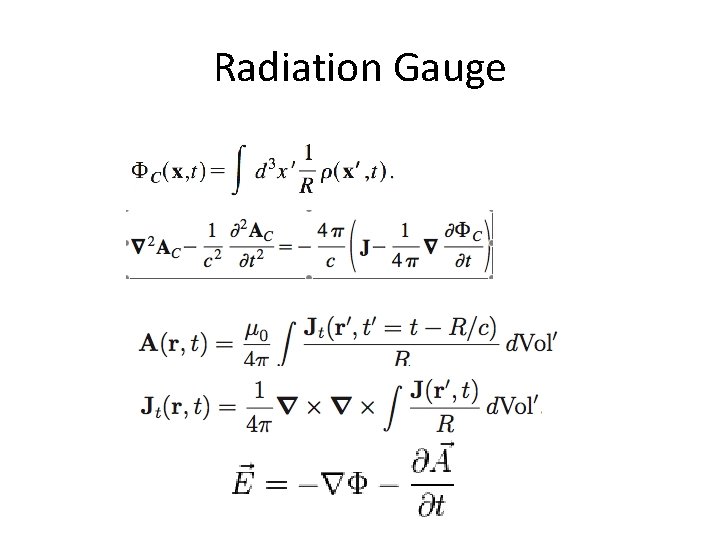
Radiation Gauge
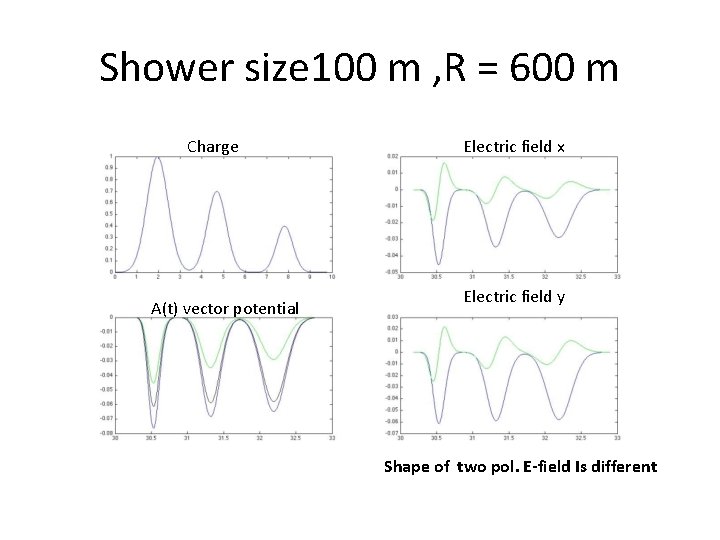
Shower size 100 m , R = 600 m Charge A(t) vector potential Electric field x Electric field y Shape of two pol. E-field Is different
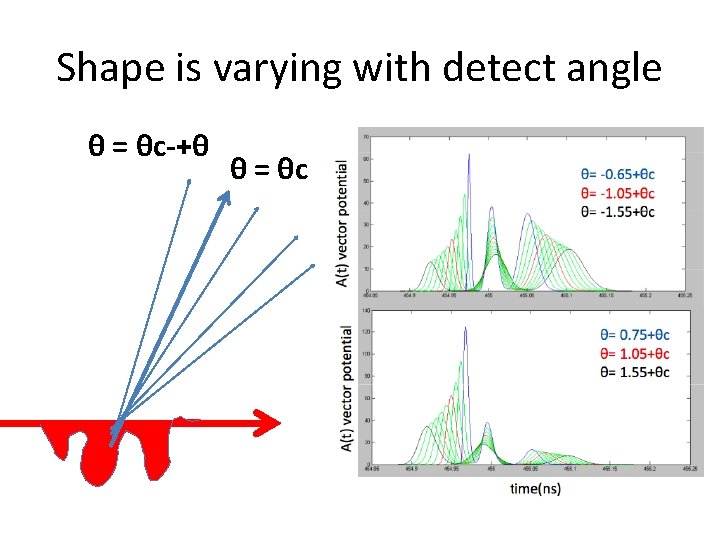
Shape is varying with detect angle θ = θc-+θ θ = θc
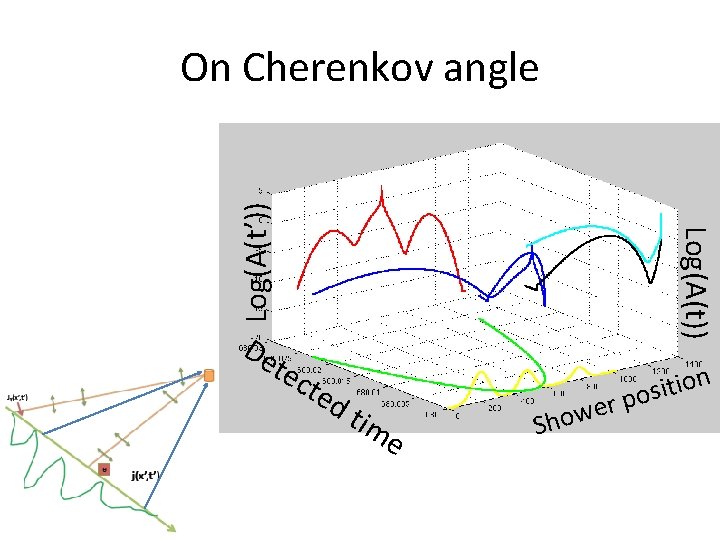
De tec Log(A(t)) Log(A(t’)) On Cherenkov angle ted tim e er w o Sh n o i t i pos
Conclusion • The shower size from c. c. UHE ν inter. is huge • The signal from UHE moun, tau is multi –bang • Cherenkov signal in time domain is studied.
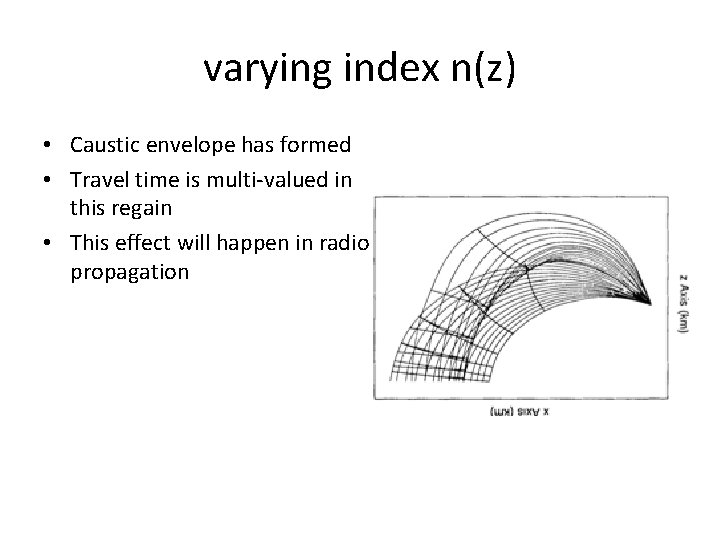
varying index n(z) • Caustic envelope has formed • Travel time is multi‐valued in this regain • This effect will happen in radio propagation
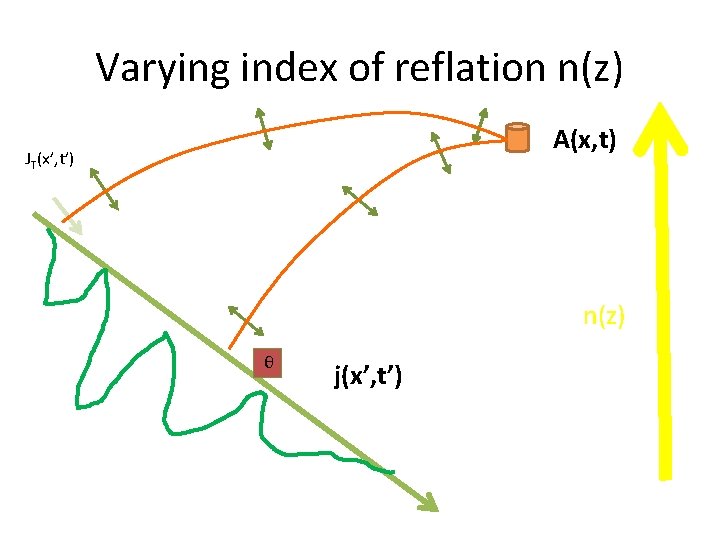
Varying index of reflation n(z) A(x, t) JT(x’, t’) n(z) θ j(x’, t’)