
Extreme Astrophysics icecube wisc eduhalzen the sky 10
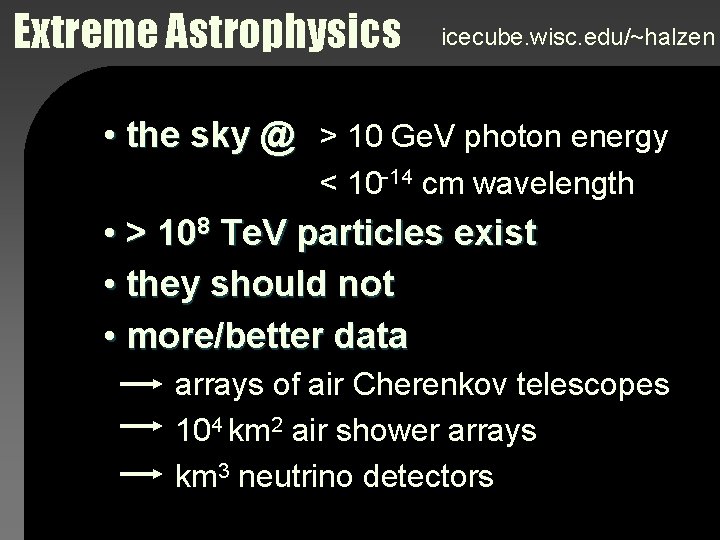
Extreme Astrophysics icecube. wisc. edu/~halzen • the sky @ > 10 Ge. V photon energy < 10 -14 cm wavelength • > 108 Te. V particles exist • they should not • more/better data arrays of air Cherenkov telescopes 104 km 2 air shower arrays km 3 neutrino detectors
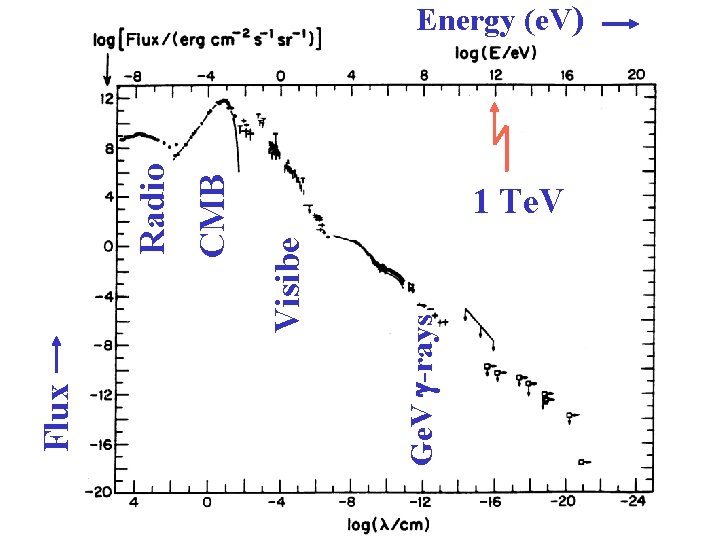
CMB Radio Visibe Ge. V g-rays Flux Energy (e. V) 1 Te. V
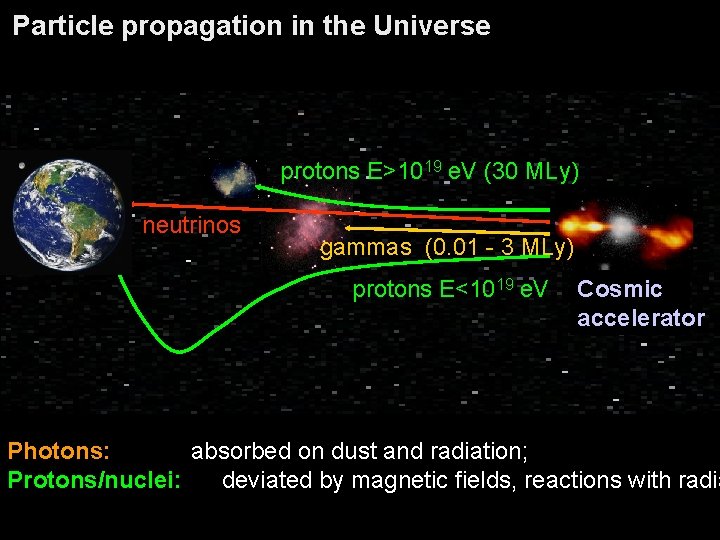
Particle propagation in the Universe protons E>1019 e. V (30 MLy) neutrinos gammas (0. 01 - 3 MLy) protons E<1019 e. V Cosmic accelerator Photons: absorbed on dust and radiation; Protons/nuclei: deviated by magnetic fields, reactions with radia
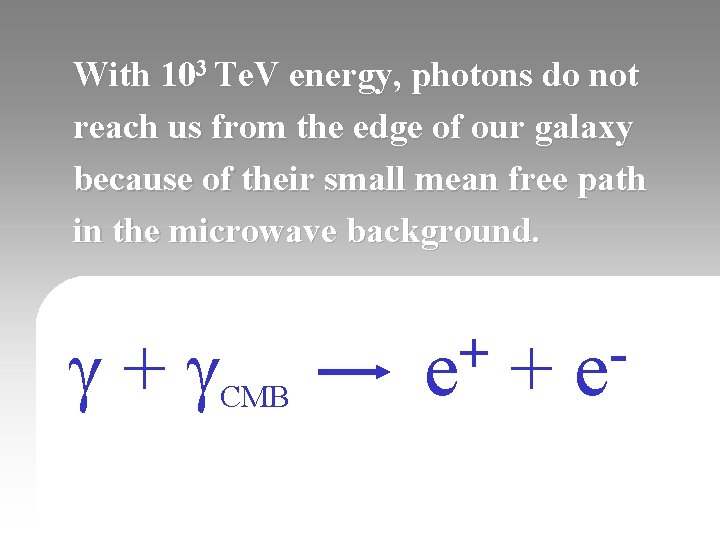
With 103 Te. V energy, photons do not reach us from the edge of our galaxy because of their small mean free path in the microwave background. g + g CMB + e + e
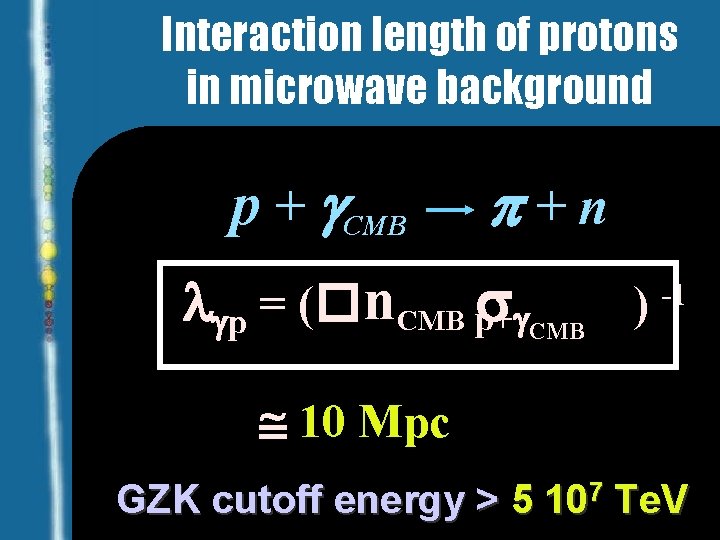
Interaction length of protons in microwave background p + g. CMB p+n -1 lgp = (�n. CMB p+g s ) CMB @ 10 Mpc GZK cutoff energy > 5 107 Te. V
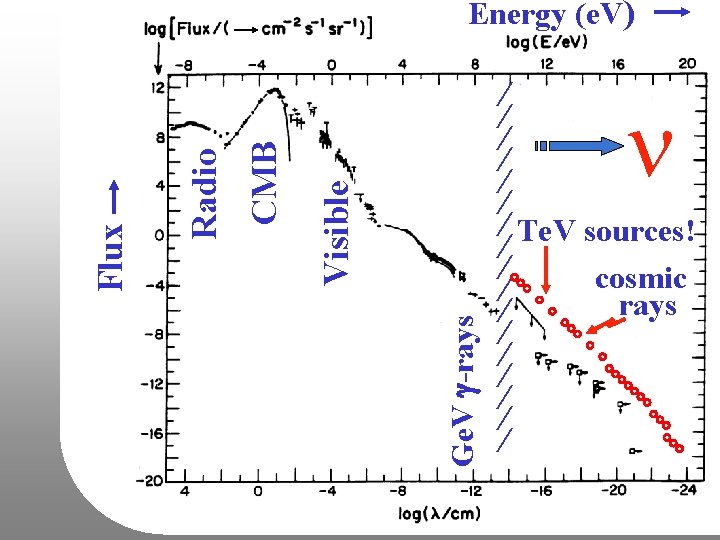
/ / / / Te. V sources! / / cosmic / rays / / / / n Ge. V g-rays Visible CMB Radio Flux Energy (e. V)
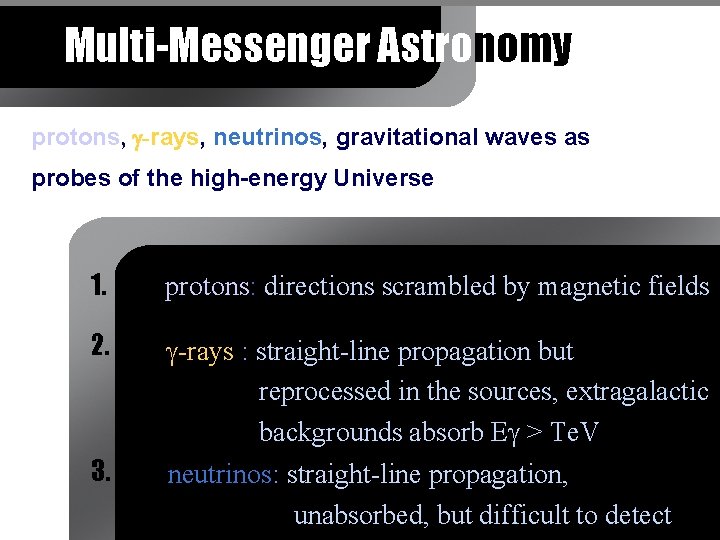
Multi-Messenger Astronomy protons, g-rays, neutrinos, gravitational waves as probes of the high-energy Universe 1. protons: directions scrambled by magnetic fields 2. g-rays : straight-line propagation but reprocessed in the sources, extragalactic backgrounds absorb Eg > Te. V 3. neutrinos: straight-line propagation, unabsorbed, but difficult to detect
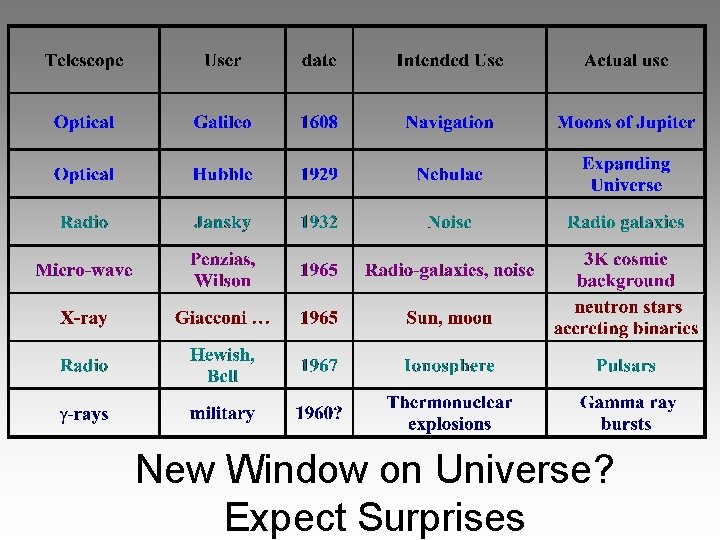
New Window on Universe? Expect Surprises
the accelerators
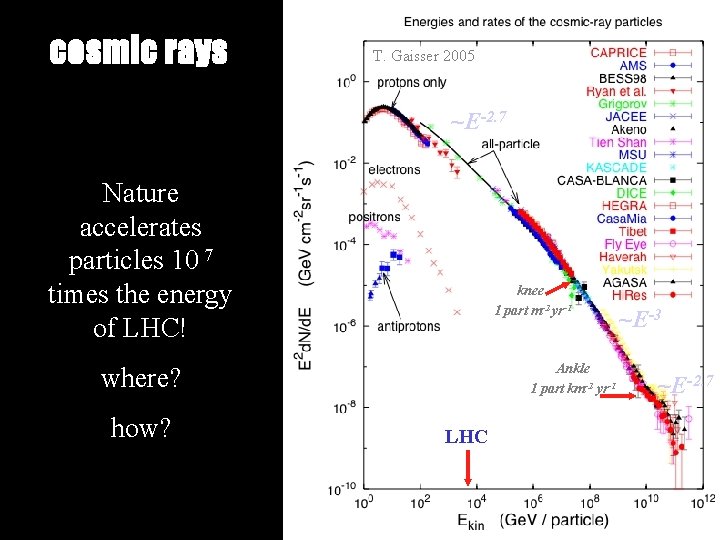
cosmic rays T. Gaisser 2005 ~E-2. 7 Nature accelerates particles 10 7 times the energy of LHC! knee 1 part m-2 yr-1 Ankle 1 part km-2 yr-1 where? how? LHC ~E-3 ~E-2. 7
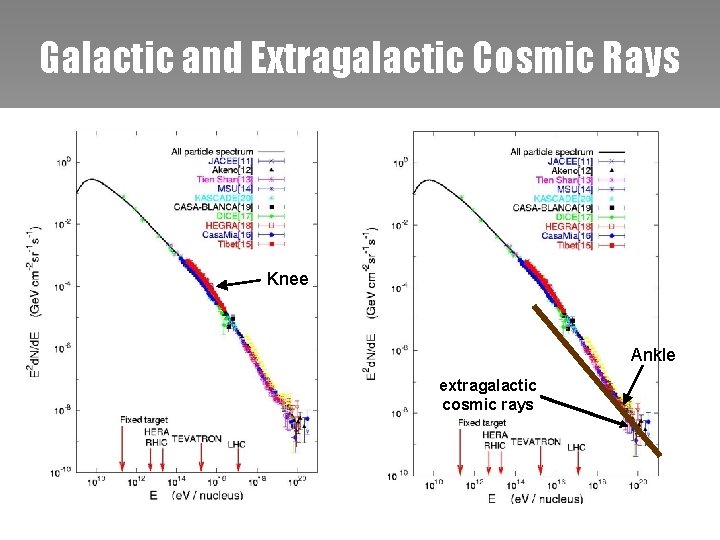
Galactic and Extragalactic Cosmic Rays Knee Ankle extragalactic cosmic rays
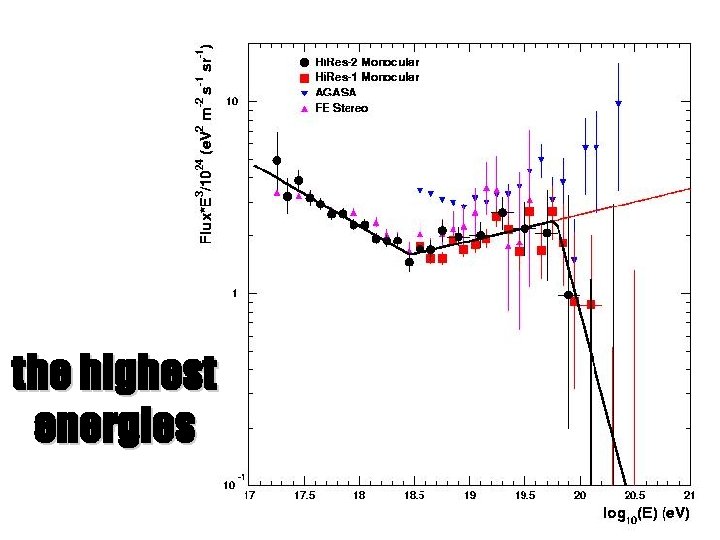
the highest energies
Acceleration to 1021 e. V ? 2 ~10 Joules ~ 0. 01 MGUT dense regions with exceptional gravitational force creating relativistic flows of charged particles, e. g. • dense cores of exploding stars • supermassive black holes • merging galaxies
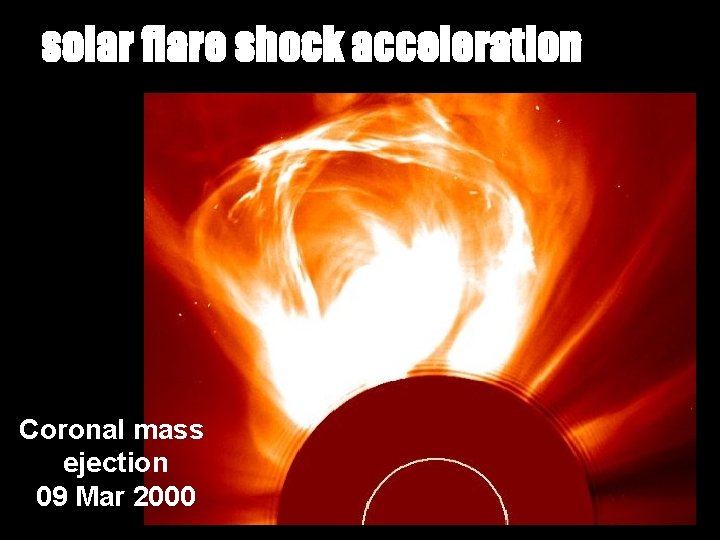
solar flare shock acceleration Coronal mass ejection 09 Mar 2000
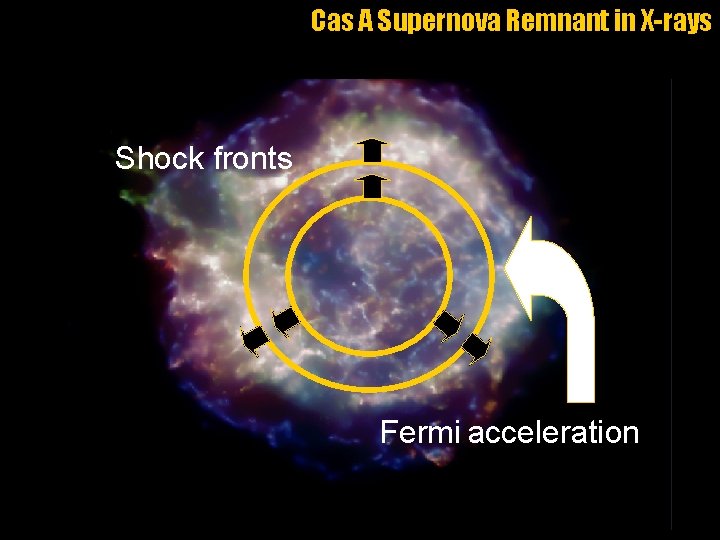
Cas A Supernova Remnant in X-rays Shock fronts Fermi acceleration John Hughes, Rutgers, NASA
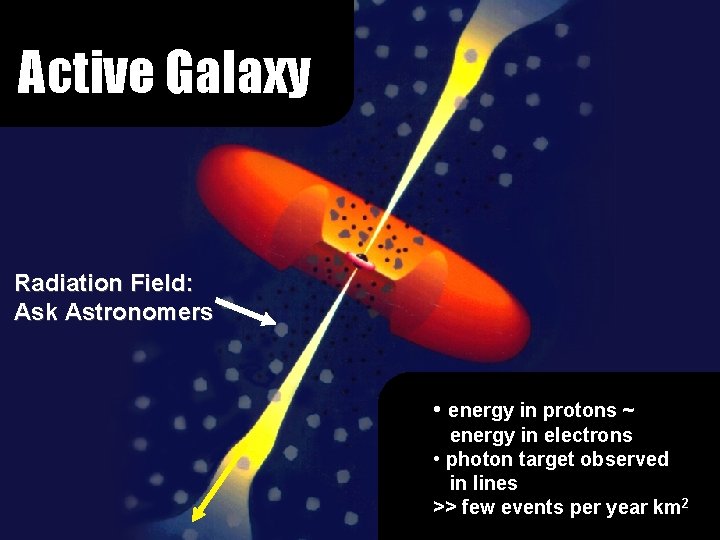
Active Galaxy Radiation Field: Ask Astronomers • energy in protons ~ energy in electrons • photon target observed in lines >> few events per year km 2
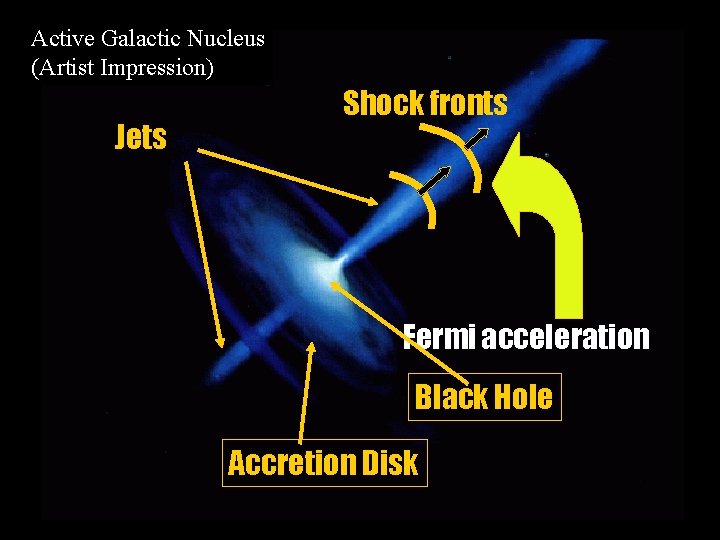
Active Galactic Nucleus (Artist Impression) Jets Shock fronts Fermi acceleration Black Hole Accretion Disk
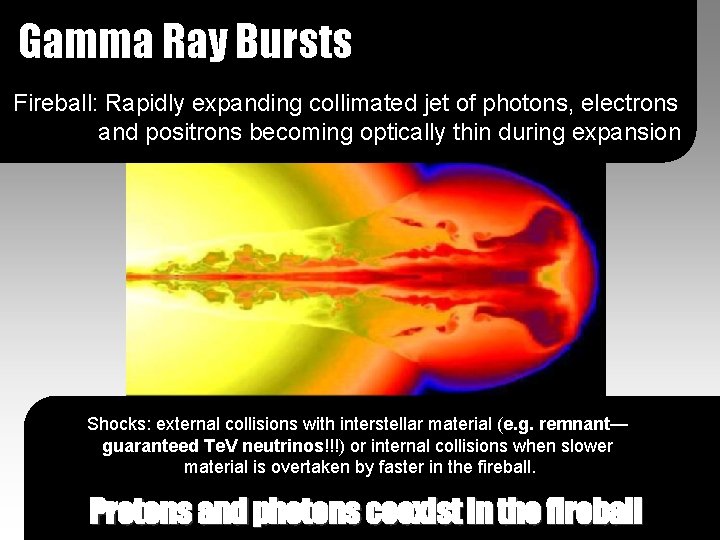
Gamma Ray Bursts Fireball: Rapidly expanding collimated jet of photons, electrons and positrons becoming optically thin during expansion Shocks: external collisions with interstellar material (e. g. remnant— guaranteed Te. V neutrinos!!!) or internal collisions when slower material is overtaken by faster in the fireball. Protons and photons coexist in the fireball
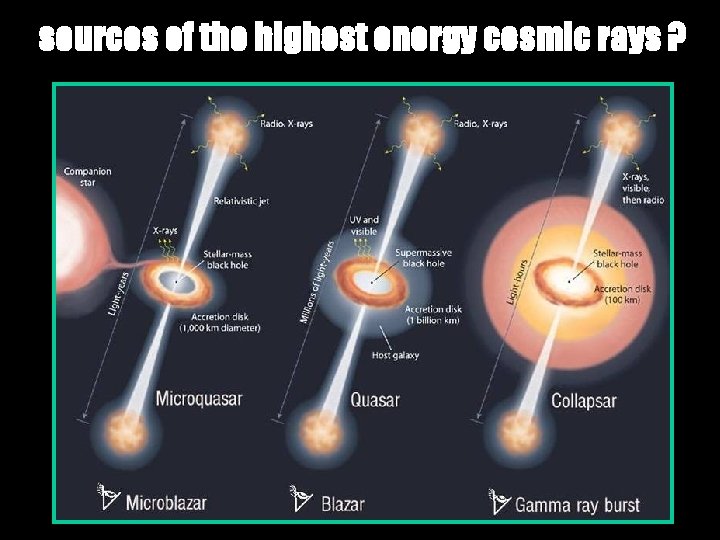
sources of the highest energy cosmic rays ?
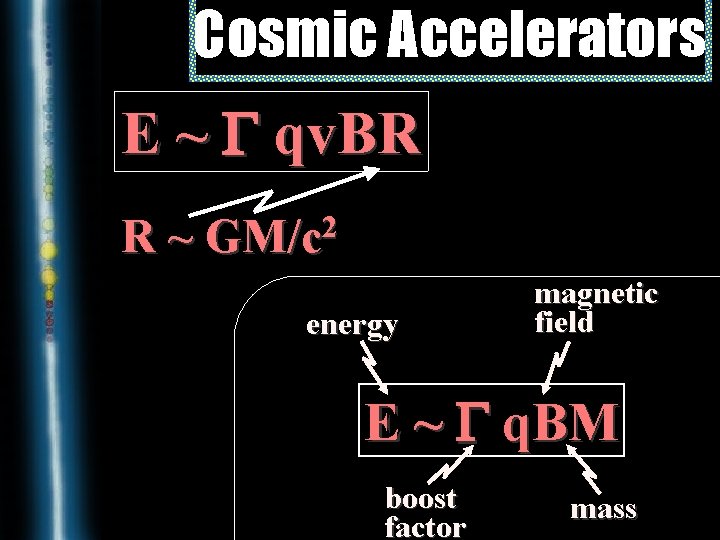
Cosmic Accelerators E ~ G qv. BR R ~ GM/c 2 energy magnetic field E ~ G q. BM boost factor mass
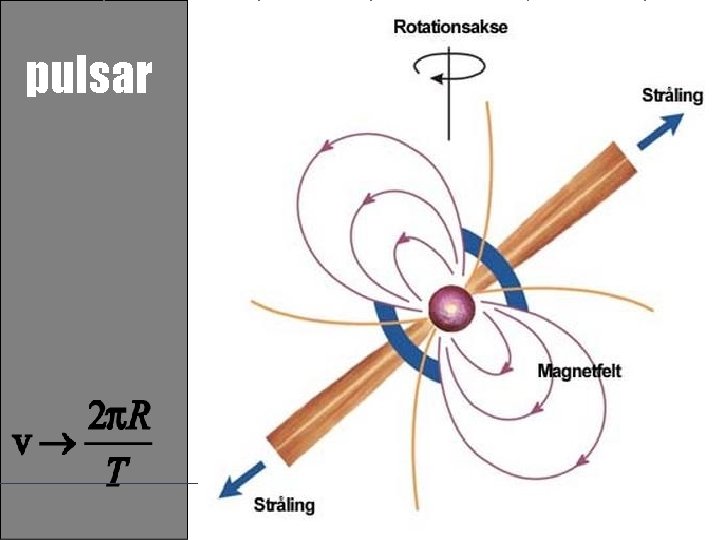
pulsar
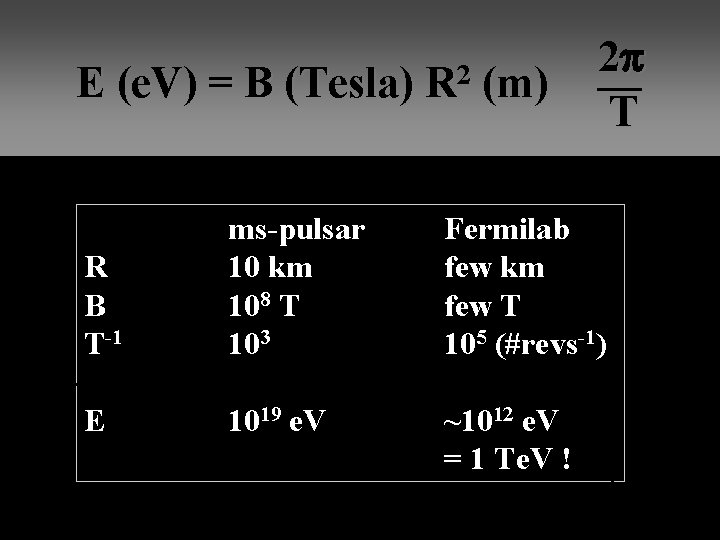
E (e. V) = B (Tesla) 2 R (m) 2__p T R B T-1 ms-pulsar 10 km 108 T 103 Fermilab few km few T 105 (#revs-1) E 1019 e. V ~1012 e. V = 1 Te. V !
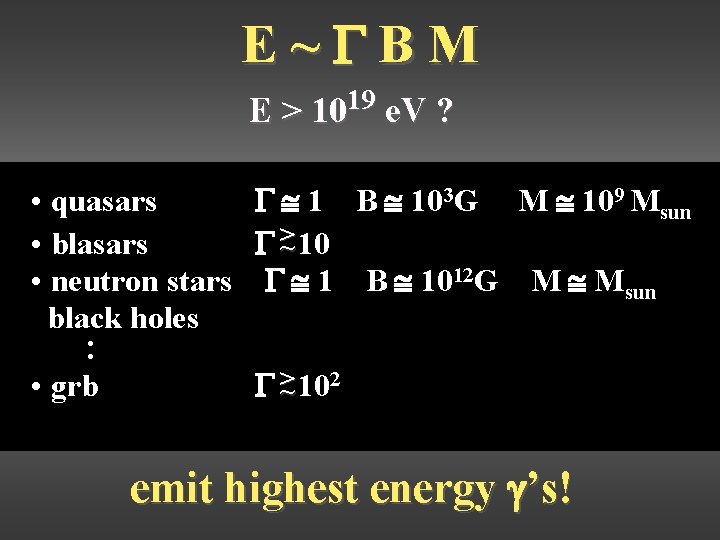
E ~ G B M E > 1019 e. V ? • quasars • blasars • neutron stars black holes. . • grb G @ 1 B @ 103 G M @ 109 Msun G >~ 10 G @ 1 B @ 1012 G M @ Msun G >~ 102 emit highest energy g’s!
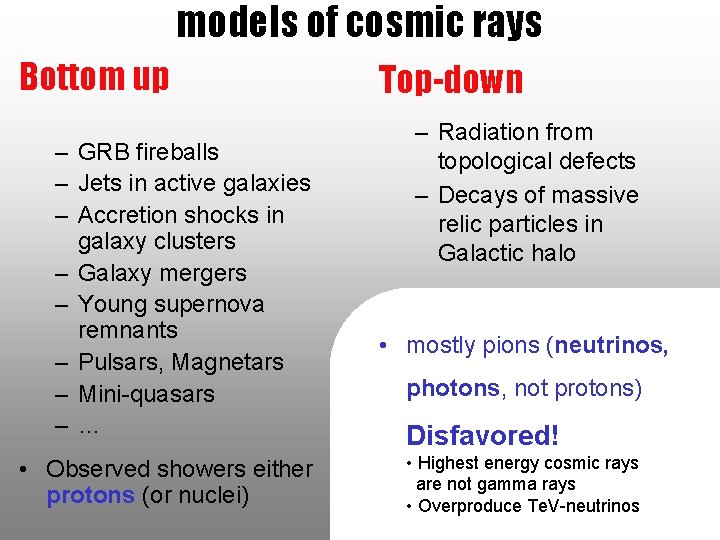
models of cosmic rays Bottom up – GRB fireballs – Jets in active galaxies – Accretion shocks in galaxy clusters – Galaxy mergers – Young supernova remnants – Pulsars, Magnetars – Mini-quasars –… • Observed showers either protons (or nuclei) Top-down – Radiation from topological defects – Decays of massive relic particles in Galactic halo • mostly pions (neutrinos, photons, not protons) Disfavored! • Highest energy cosmic rays are not gamma rays • Overproduce Te. V-neutrinos
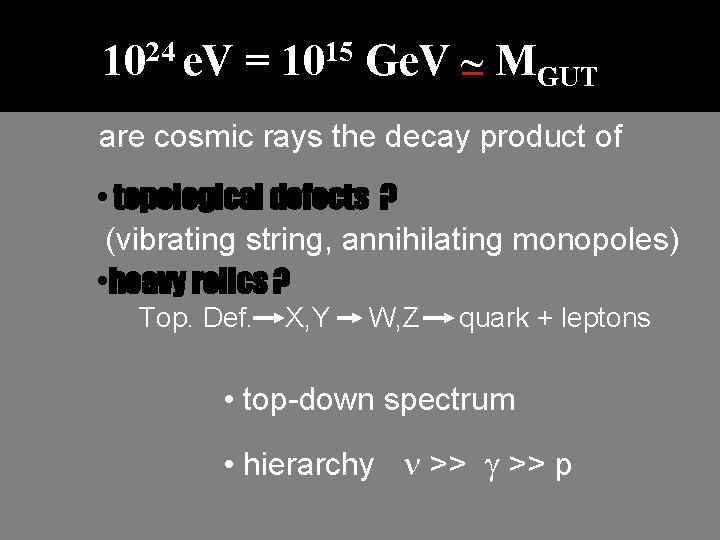
1024 e. V = 1015 Ge. V ~_ MGUT are cosmic rays the decay product of • topological defects ? (vibrating string, annihilating monopoles) • heavy relics ? Top. Def. X, Y W, Z quark + leptons • top-down spectrum • hierarchy n >> g >> p
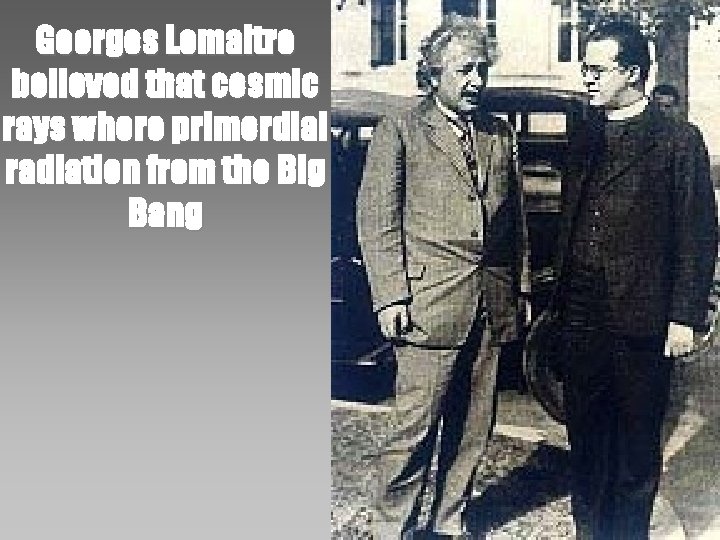
Georges Lemaitre believed that cosmic rays where primordial radiation from the Big Bang
detection of cosmic rays
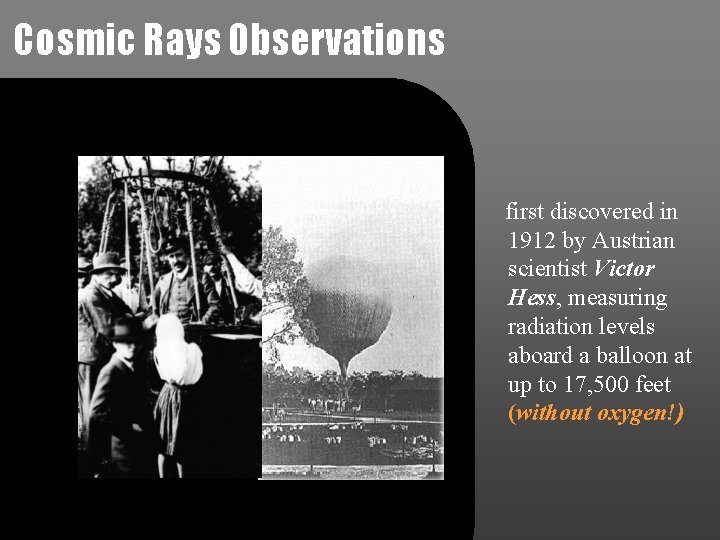
Cosmic Rays Observations first discovered in 1912 by Austrian scientist Victor Hess, measuring radiation levels aboard a balloon at up to 17, 500 feet (without oxygen!)
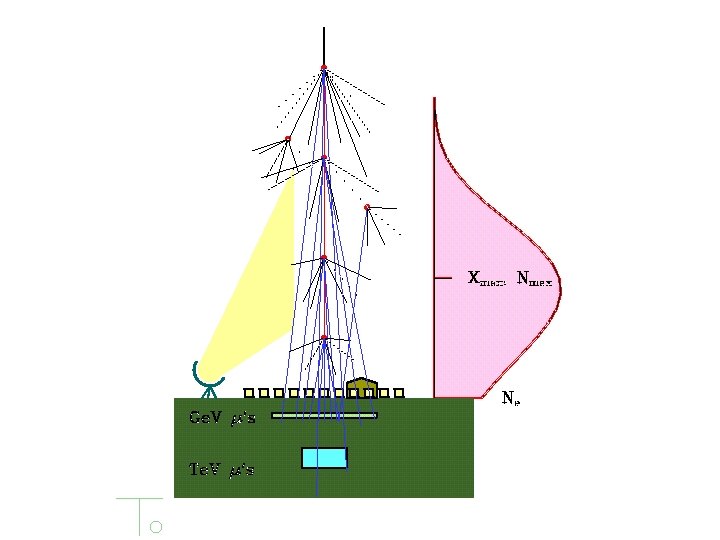
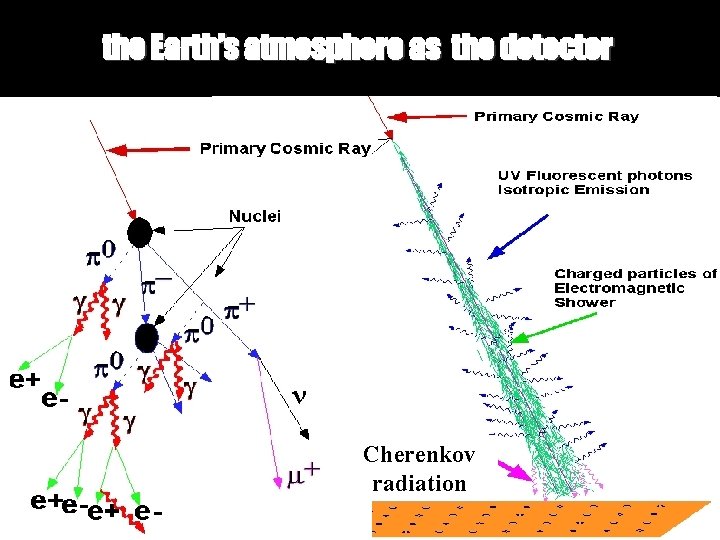
the Earth’s atmosphere as the detector Cherenkov radiation
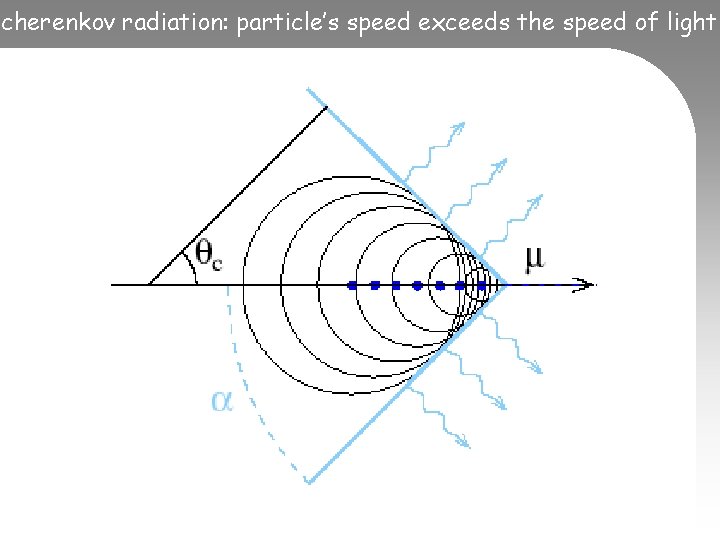
cherenkov radiation: particle’s speed exceeds the speed of light
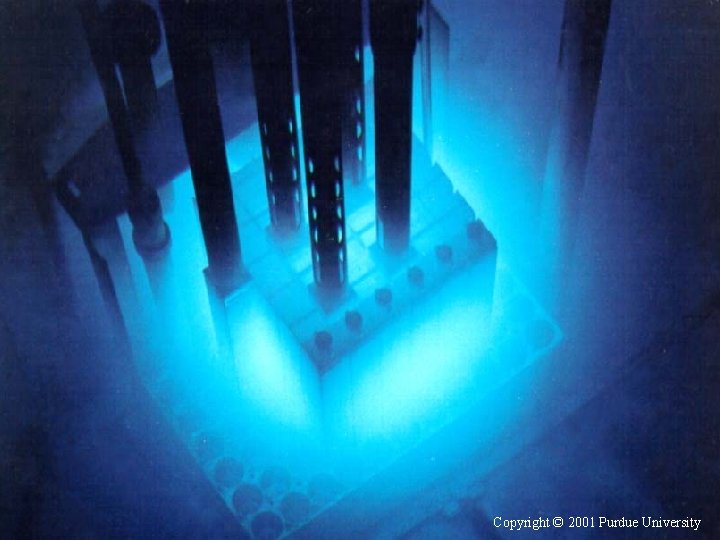
Copyright © 2001 Purdue University
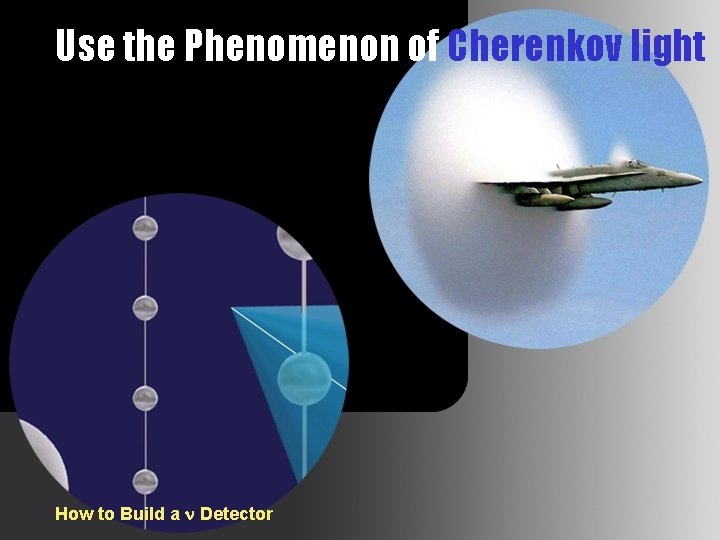
Use the Phenomenon of Cherenkov light How to Build a n Detector
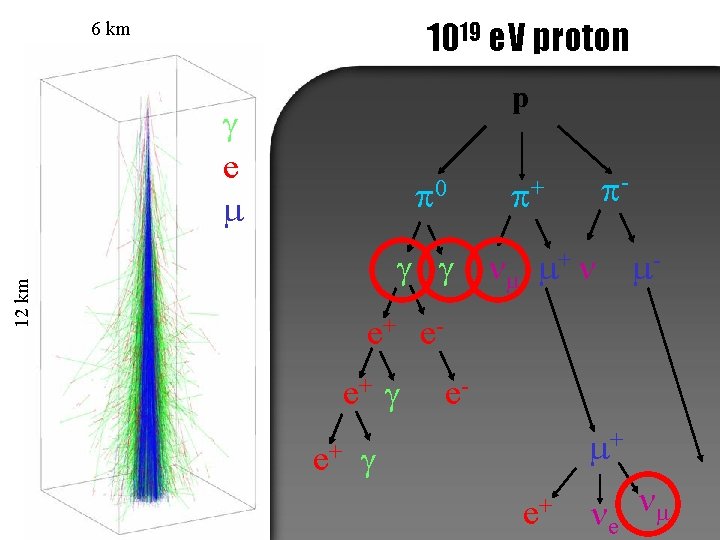
1019 e. V proton 6 km p g e p 0 p+ p- 12 km g g n + n e+ ee+ g e+ e + g e+ n ne
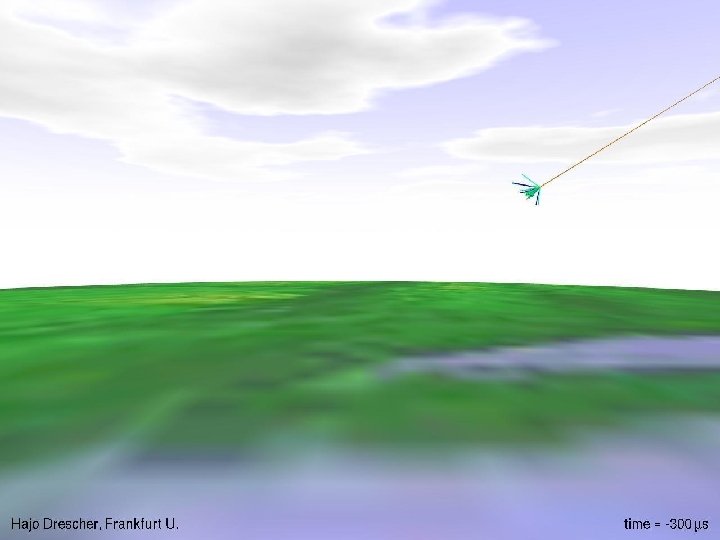
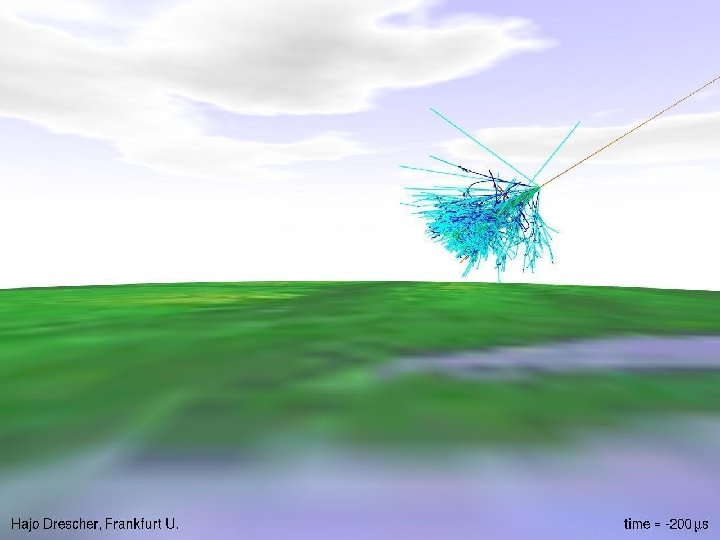
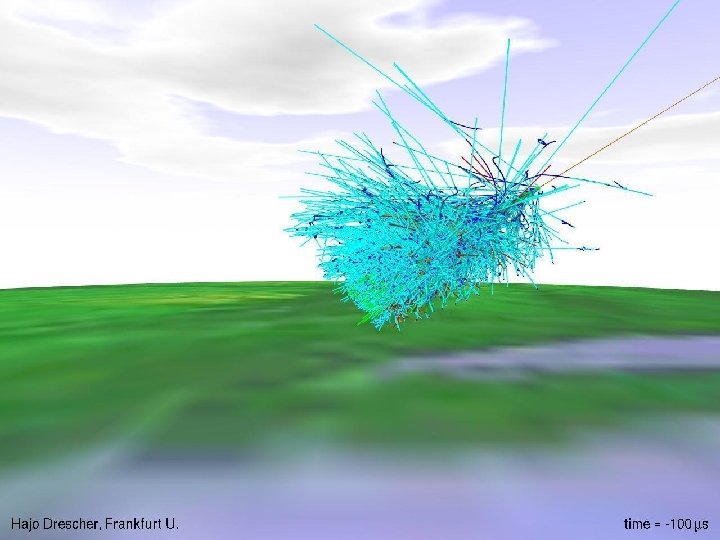
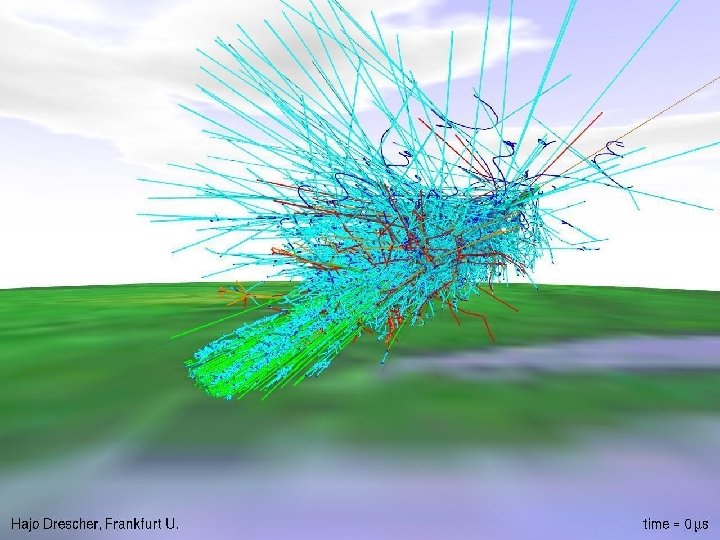
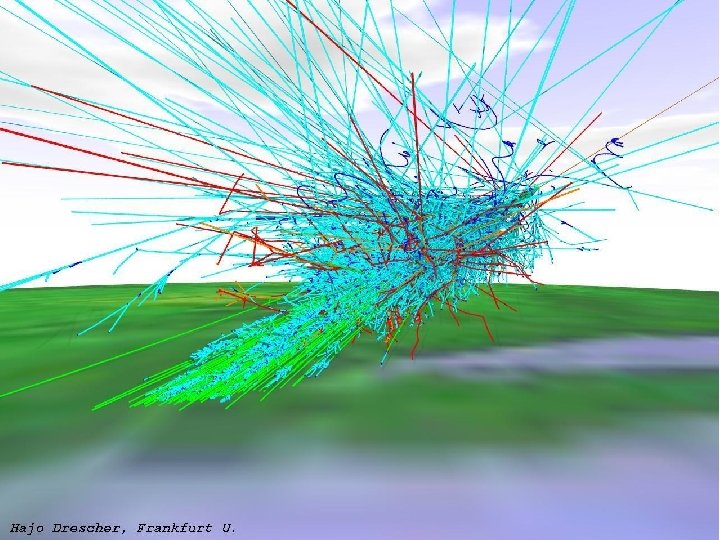
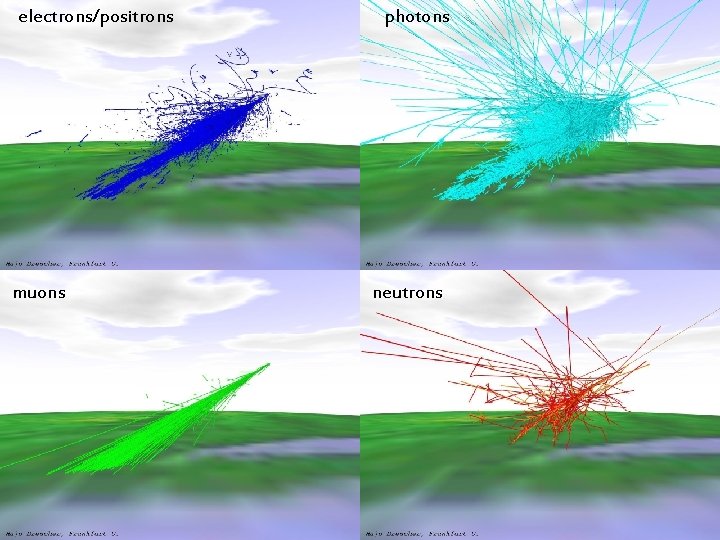
electrons/positrons muons photons neutrons

Akeno giant air Shower array AGASA ~ 100 km 2
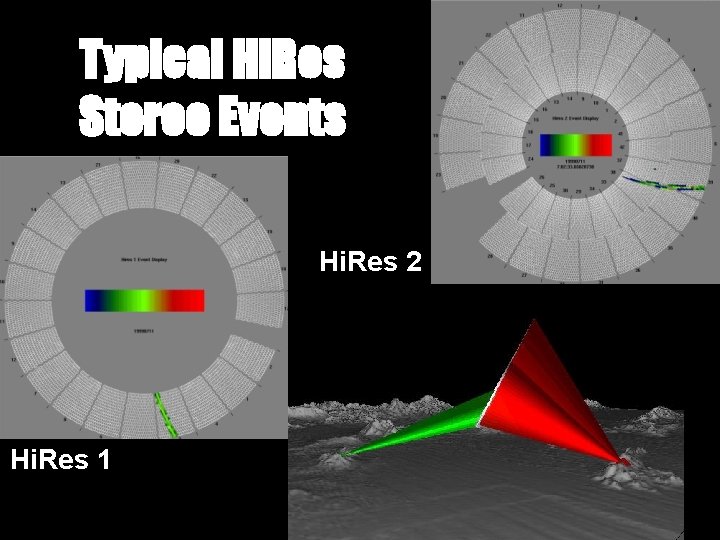
Typical Hi. Res Stereo Events Hi. Res 2 Hi. Res 1
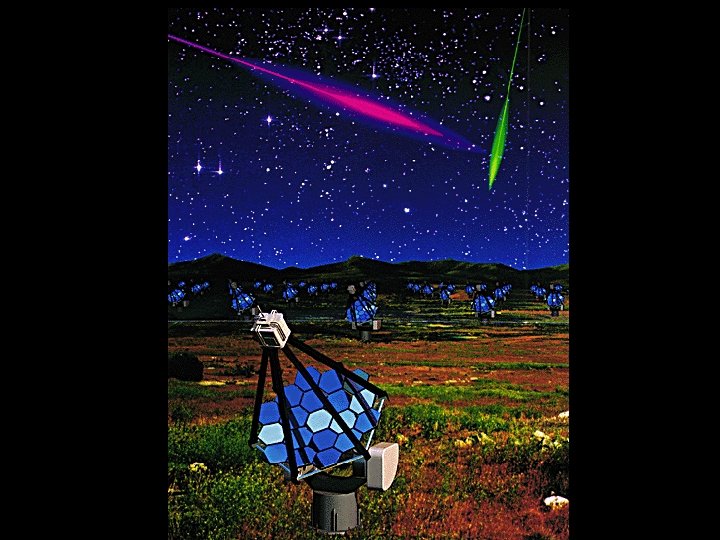
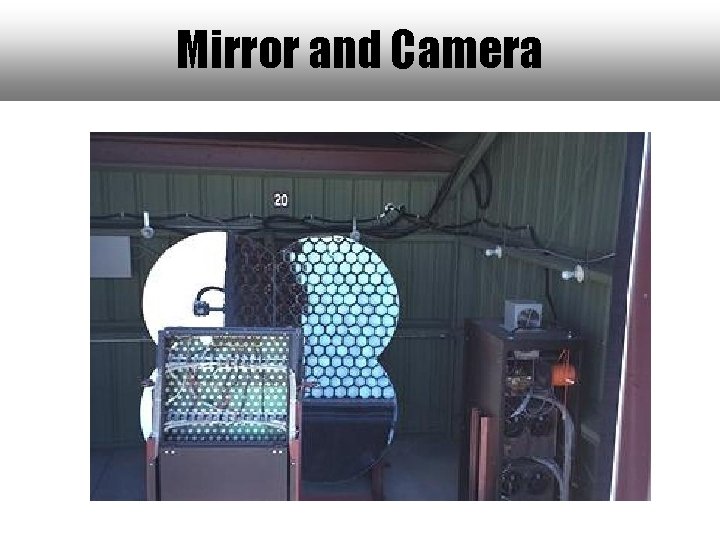
Mirror and Camera
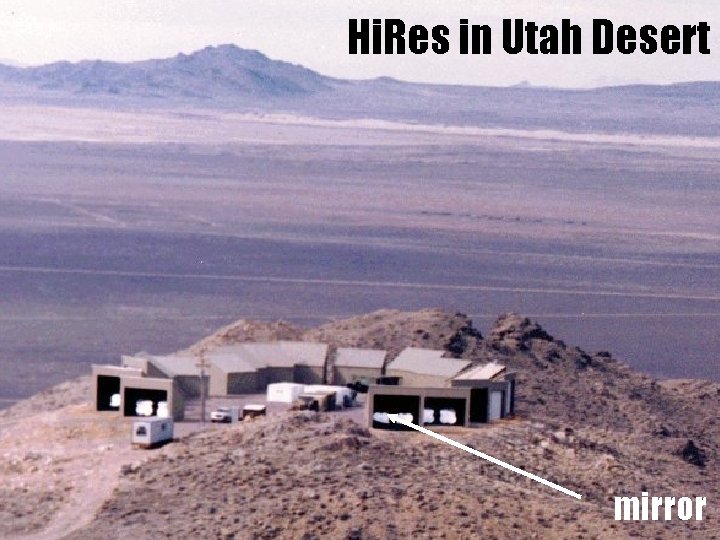
Hi. Res in Utah Desert mirror
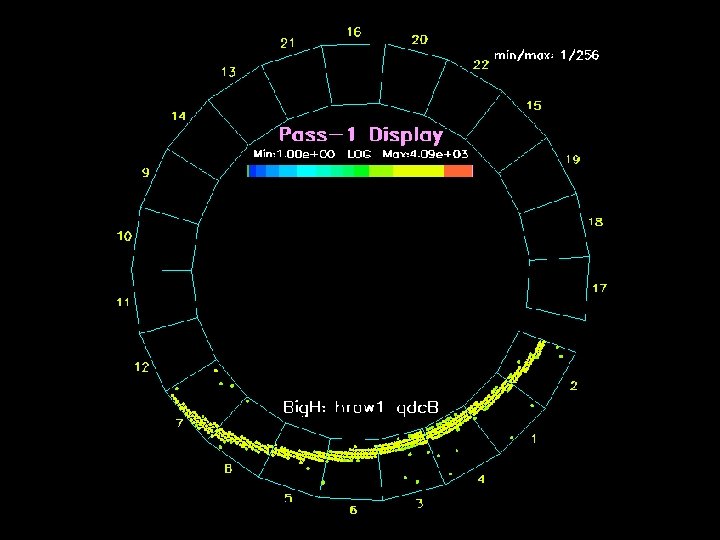
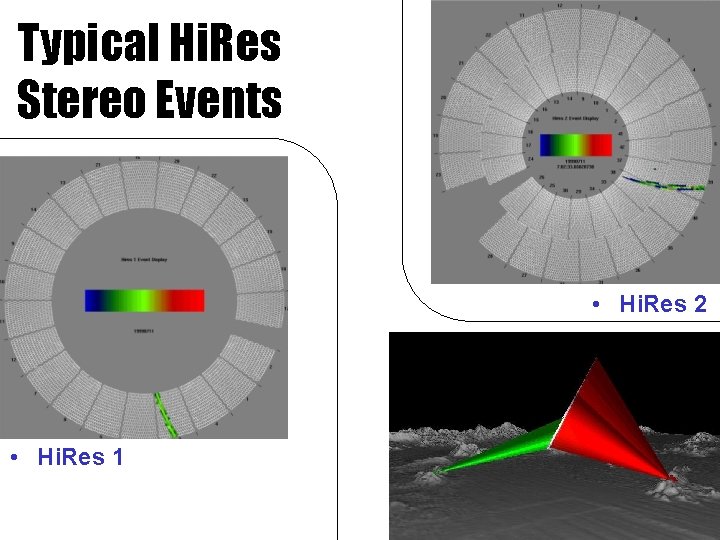
Typical Hi. Res Stereo Events • Hi. Res 2 • Hi. Res 1
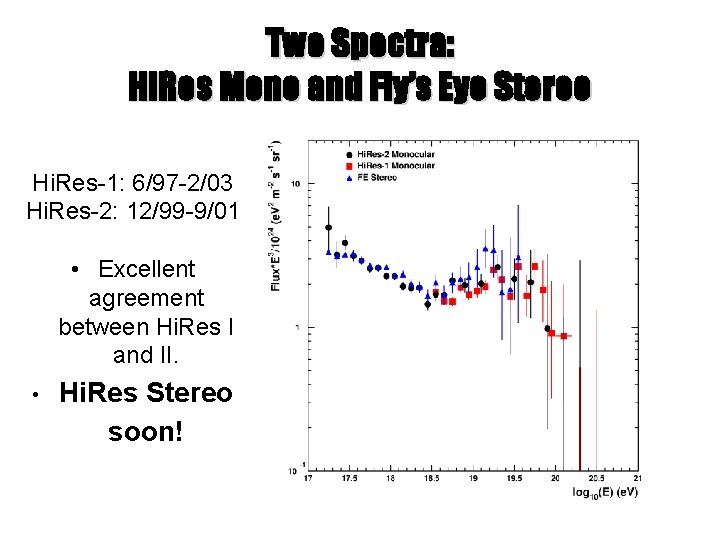
Two Spectra: Hi. Res Mono and Fly’s Eye Stereo Hi. Res-1: 6/97 -2/03 Hi. Res-2: 12/99 -9/01 • Excellent agreement between Hi. Res I and II. • Hi. Res Stereo soon!
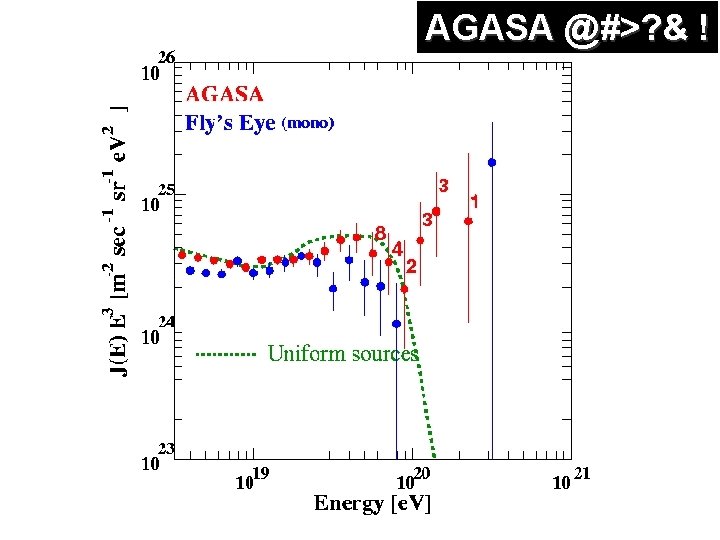
AGASA @#>? & !
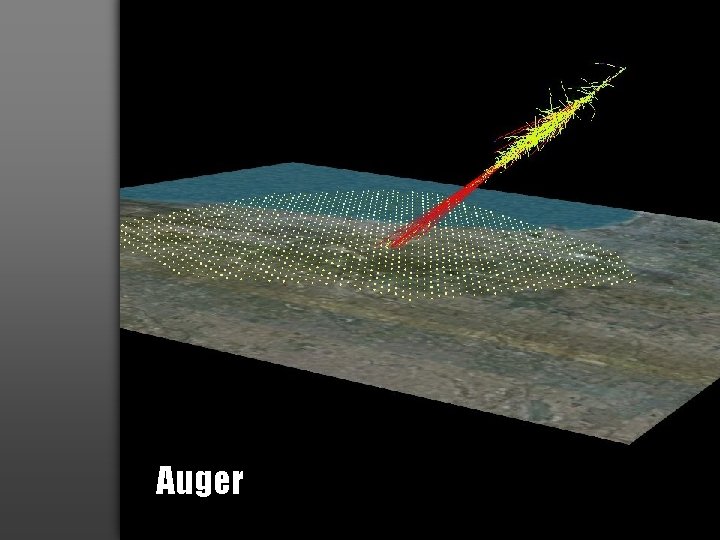
Auger
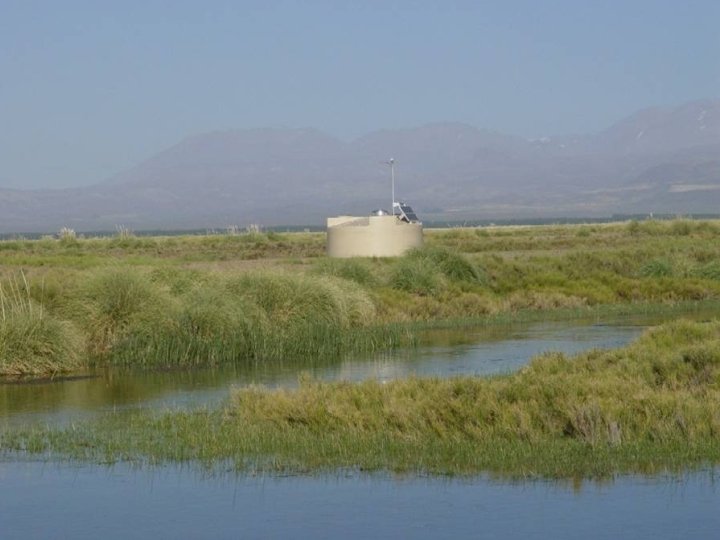
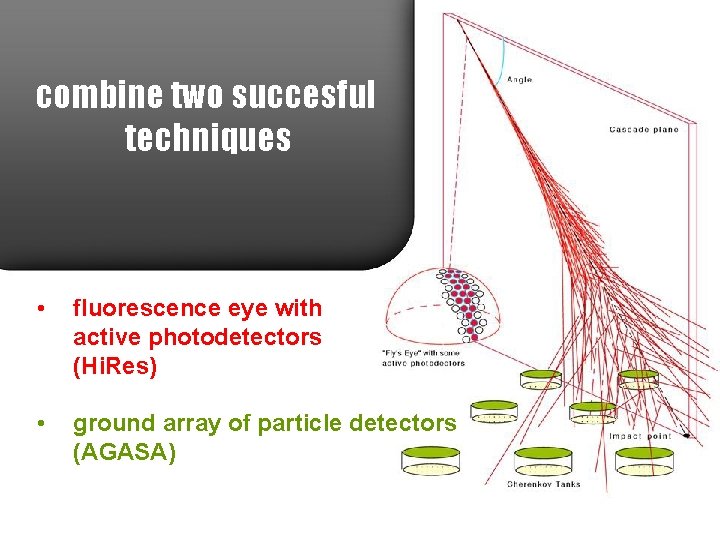
combine two succesful techniques • fluorescence eye with active photodetectors (Hi. Res) • ground array of particle detectors (AGASA)
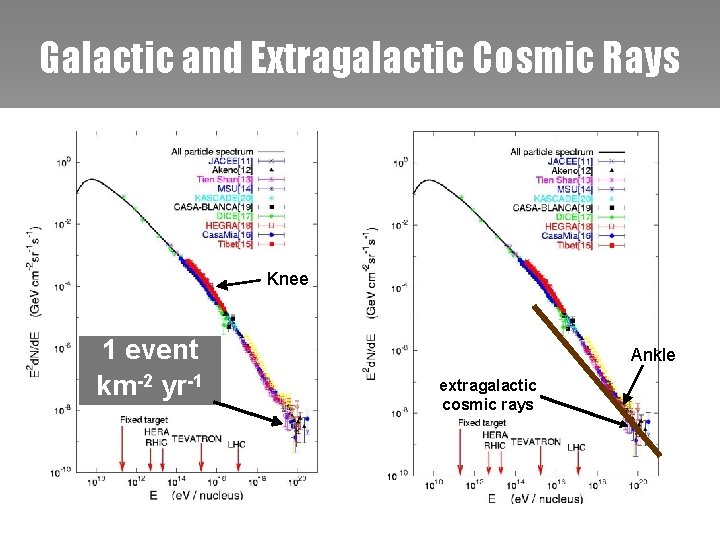
Galactic and Extragalactic Cosmic Rays Knee 1 event km-2 yr-1 Ankle extragalactic cosmic rays
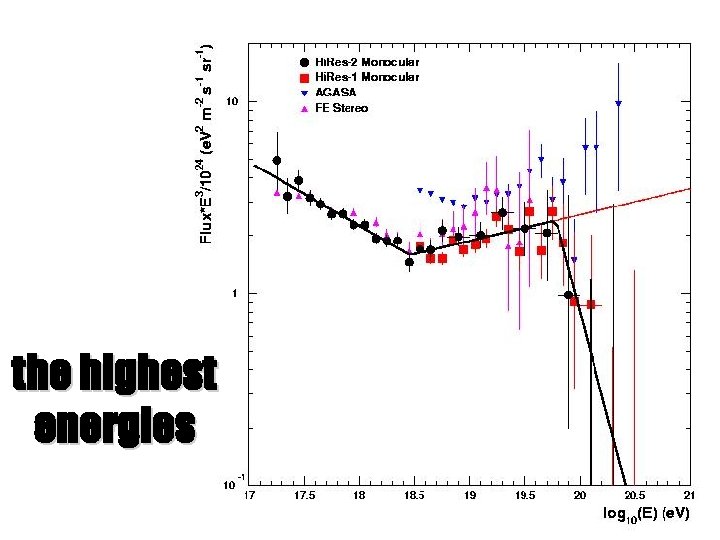
the highest energies
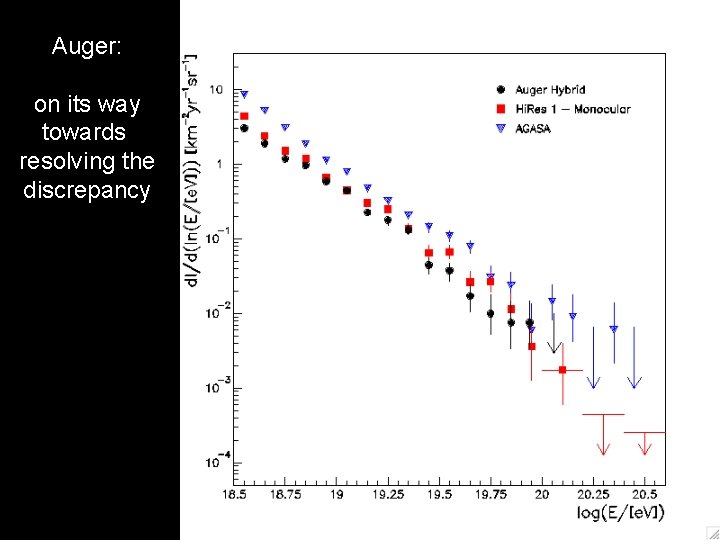
Auger: on its way towards resolving the discrepancy
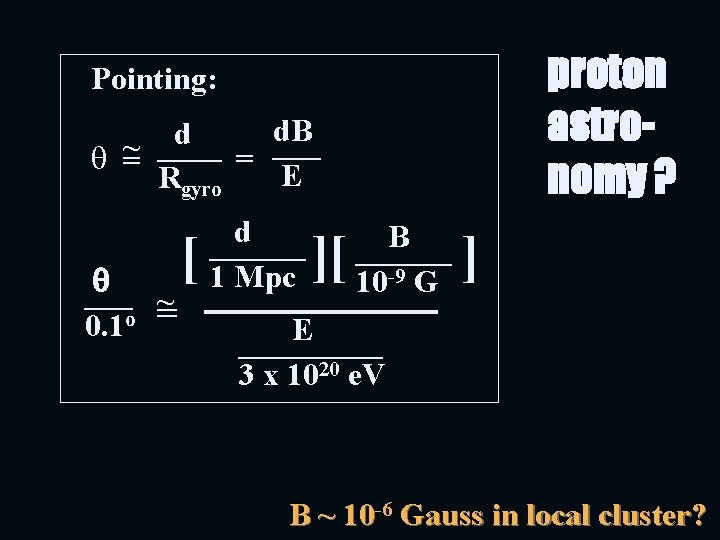
proton astronomy ? Pointing: d. B d ____ ~ q = = E Rgyro ___ ~ 0. 1 o = [ d ______ 1 Mpc ][ B ______ 10 -9 G ] E _____ 3 x 10²⁰ e. V B ~ 10 -6 Gauss in local cluster?
- Slides: 58