Pursuing Profit With Honor Michael Josephson Institute of

- Slides: 45
Pursuing Profit With Honor Michael Josephson Institute of Ethics © 2005 Josephson Institute
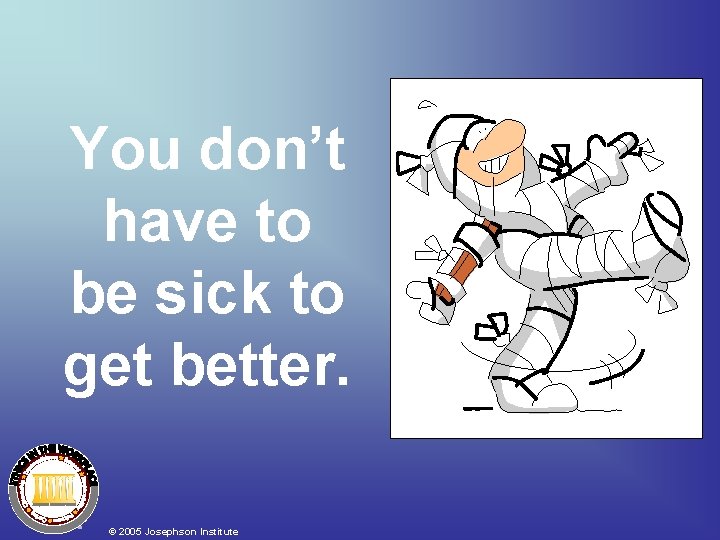
You don’t have to be sick to get better. © 2005 Josephson Institute
u u It’s easier to make a good person better than to make a bad person good. It’s easier to make a good organization better than to make a bad organization good. © 2005 Josephson Institute
Values § Our brand is the most valuable thing we own § Personal honesty and integrity are the foundation of our success § Customer service is our way of life § Enterprise is a fun and friendly place, where teamwork rules § We work hard. . . and we reward hard work § Great things happen when we listen to our customers and to each other § We strengthen our communities, one neighborhood at a time § Our doors are open © 2005 Josephson Institute 5
What does corporate citizenship mean to us? § Contributing to a community's economic vitality by buying goods and services locally § Hiring men and women who reflect the diversity of the communities in which we operate. § Contributing millions of dollars to a variety of efforts and organizations each year while encouraging our employees to involve themselves in the communities that support our business. Simply put: it means making it our business to do the right thing. © 2005 Josephson Institute 6
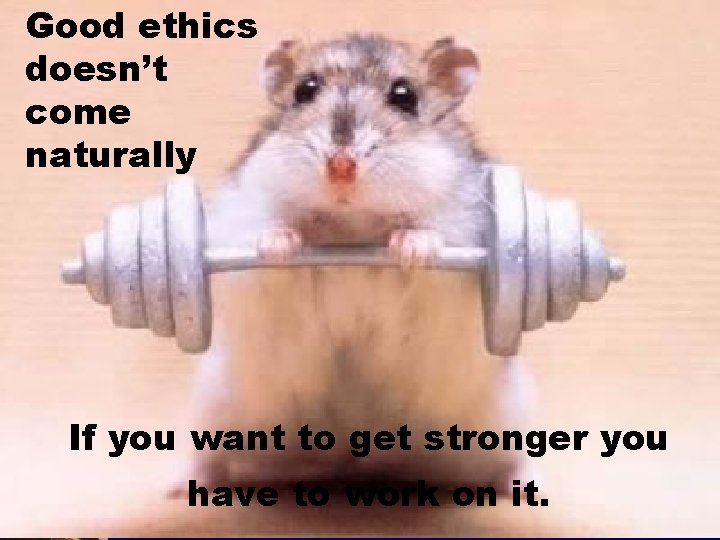
Good ethics doesn’t come naturally If you want to get stronger you have to work on it. © 2005 Josephson Institute 7
JOSEPHSON INSTITUTE OF ETHICS WHAT IS ETHICS? © 2005 Josephson Institute 8
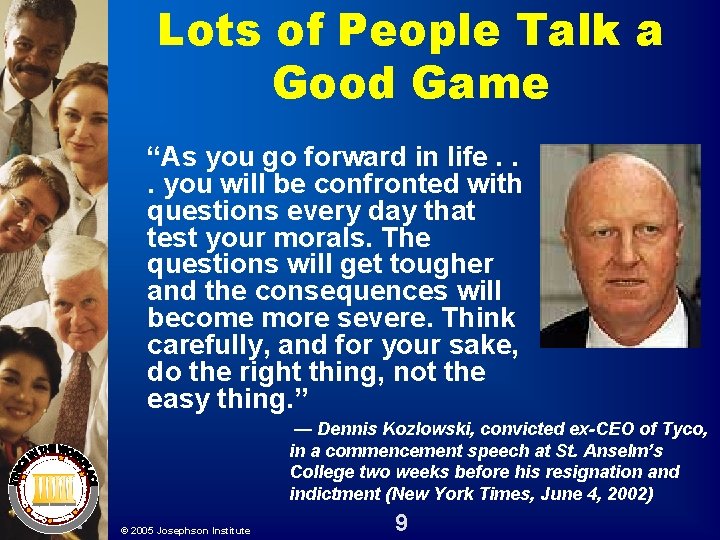
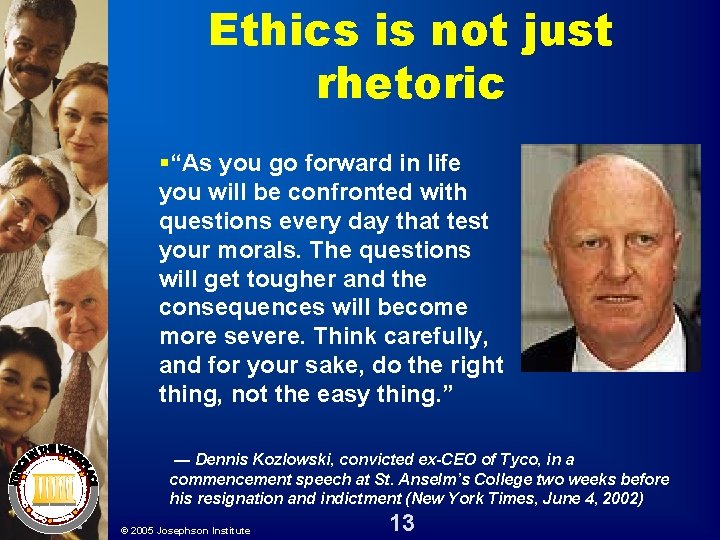
Lots of People Talk a Good Game “As you go forward in life. . . you will be confronted with questions every day that test your morals. The questions will get tougher and the consequences will become more severe. Think carefully, and for your sake, do the right thing, not the easy thing. ” — Dennis Kozlowski, convicted ex-CEO of Tyco, in a commencement speech at St. Anselm’s College two weeks before his resignation and indictment (New York Times, June 4, 2002) © 2005 Josephson Institute 9
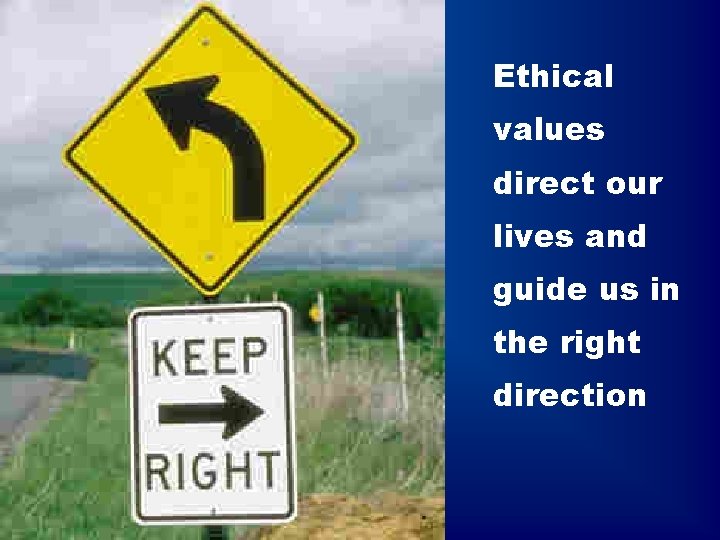
Ethical values direct our lives and guide us in the right direction © 2005 Josephson Institute 10
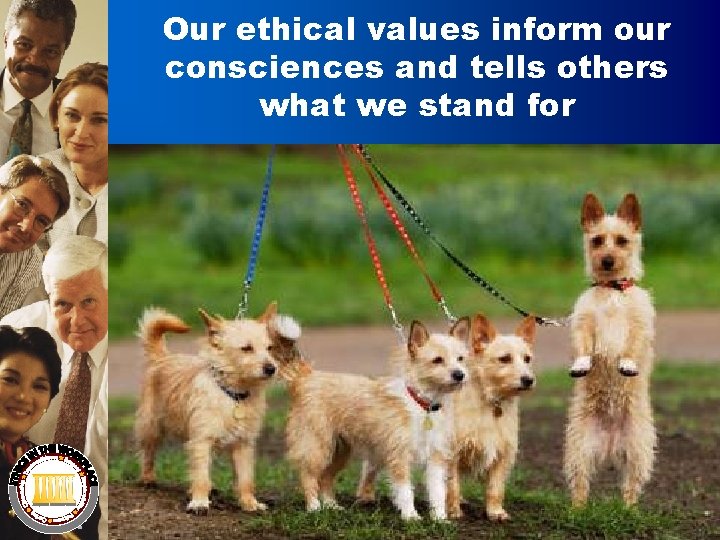
Our ethical values inform our consciences and tells others what we stand for © 2005 Josephson Institute 11
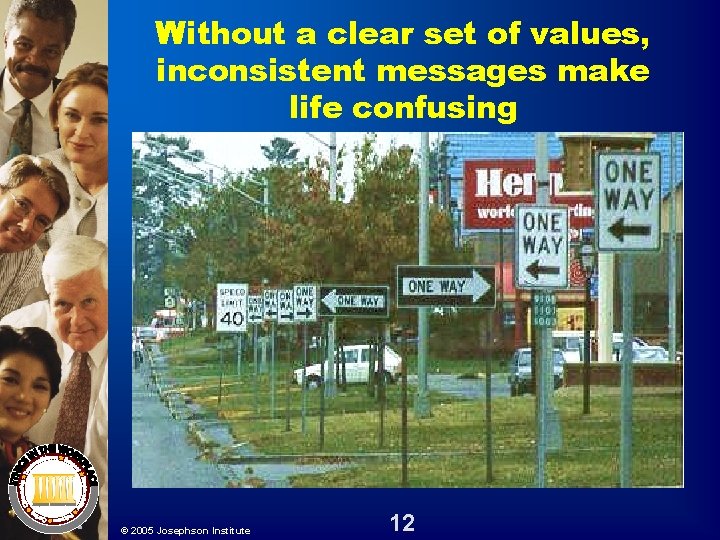
Without a clear set of values, inconsistent messages make life confusing © 2005 Josephson Institute 12
Ethics is not just rhetoric §“As you go forward in life you will be confronted with questions every day that test your morals. The questions will get tougher and the consequences will become more severe. Think carefully, and for your sake, do the right thing, not the easy thing. ” — Dennis Kozlowski, convicted ex-CEO of Tyco, in a commencement speech at St. Anselm’s College two weeks before his resignation and indictment (New York Times, June 4, 2002) © 2005 Josephson Institute 13
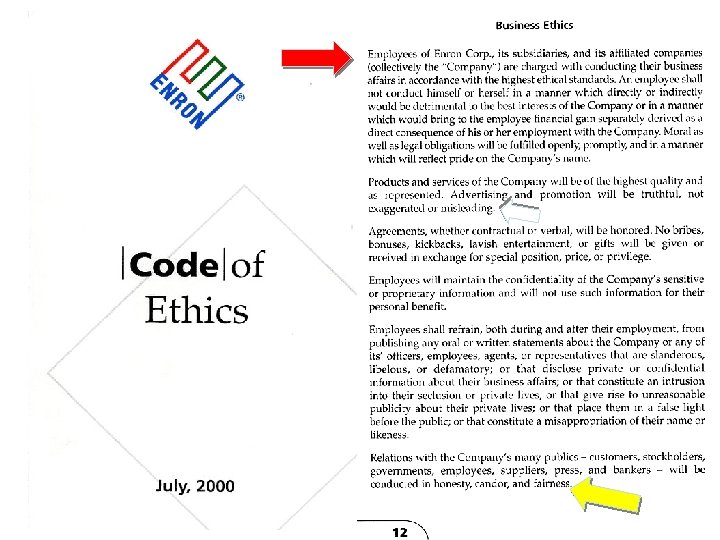
© 2005 Josephson Institute 14
But what do you mean when you use the term ethics? © 2005 Josephson Institute 15
Ethics is not just a factor to consider – it’s a ground rule © 2005 Josephson Institute
You can’t avoid ethical responsibilities by ignoring them © 2005 Josephson Institute
If you could interview the people your children would date or marry, what are the most essential characteristics you’d look for? © 2005 Josephson Institute
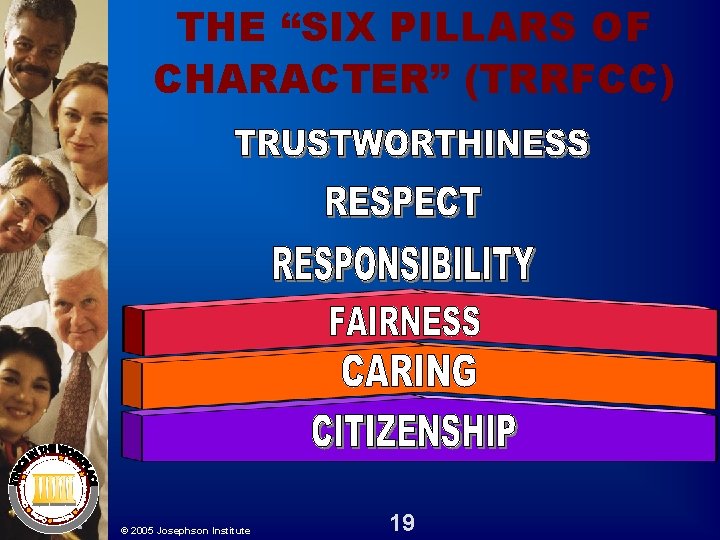
THE “SIX PILLARS OF CHARACTER” (TRRFCC) © 2005 Josephson Institute 19
But ethics are personal – what does this have to do with business? § What do you want and expect from your employees and associates? § What do your associates want and expect from their managers? § What do customers expect? © 2005 Josephson Institute 20
How do you teach ethics? It’s TEAMwork: § Teach § Enforce § Advocate § Model © 2005 Josephson Institute 21
Two Aspects of Ethics DISCERNMENT Ability to discern right from wrong, good from evil and propriety from impropriety © 2005 Josephson Institute WILL POWER Commitment to do what is right, regardless of temptations and pressures to do otherwise
Two Reasons to be Concerned About Ethics Prudence Virtue It’s the smart thing to do (self-interest) It’s the right thing to do © 2005 Josephson Institute
Ethics Is Not an Option. . . It’s a ground rule. © 2005 Josephson Institute
Ethics Includes But Is Bigger Than Compliance § COMPLIANCE – doing what you are legally required to do, what you must do. § ETHICS – doing what you are morally obligated to do, what you should do. © 2005 Josephson Institute 25
Legalistic Loopholes § If it’s legal, it’s ethical. § If it’s permissible, it’s proper. © 2005 Josephson Institute 26
Ethics Transcends Laws § An act is not proper simply because it is permissible, nor is it ethical just because it is legal. © 2005 Josephson Institute 27
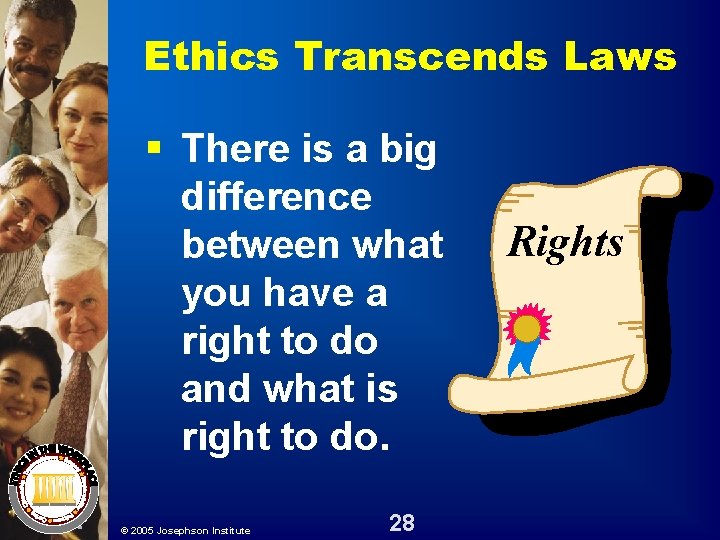
Ethics Transcends Laws § There is a big difference between what you have a right to do and what is right to do. © 2005 Josephson Institute 28 Rights
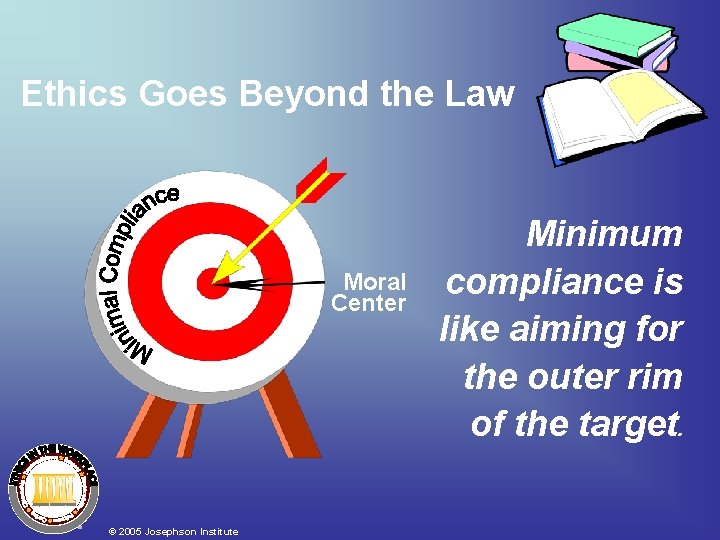
Ethics Goes Beyond the Law Moral Center © 2005 Josephson Institute Minimum compliance is like aiming for the outer rim of the target.
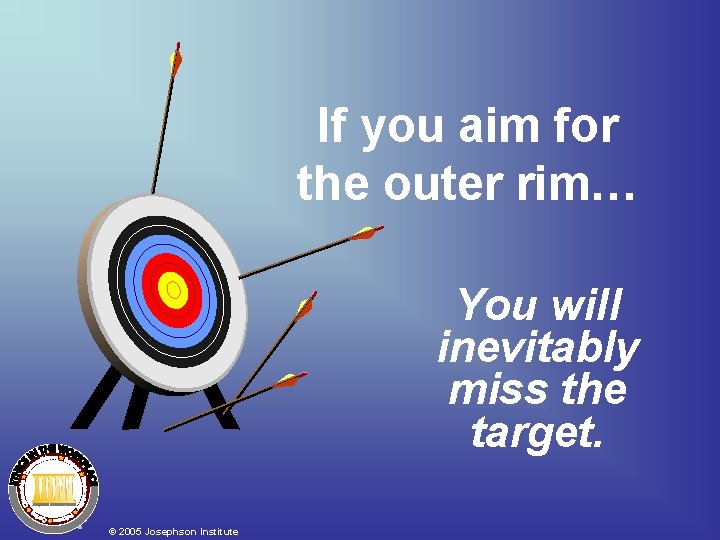
If you aim for the outer rim… You will inevitably miss the target. © 2005 Josephson Institute
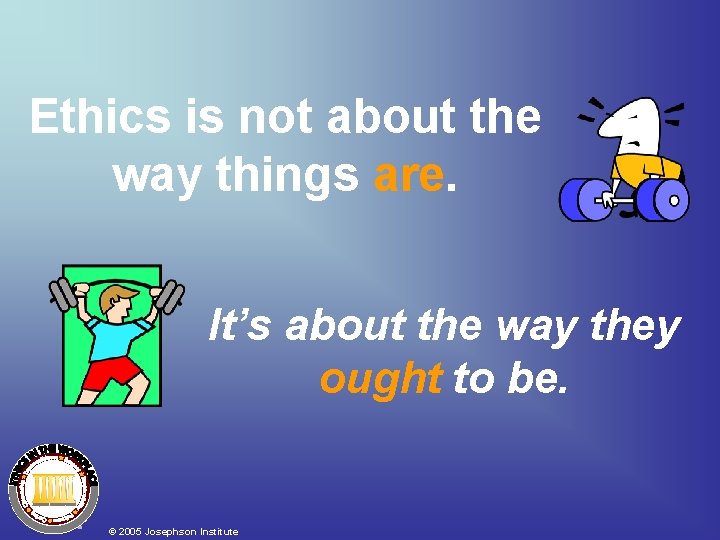
Ethics is not about the way things are. It’s about the way they ought to be. © 2005 Josephson Institute
The Practical Dimension of Ethics © 2005 Josephson Institute
It’s the Smart Thing to Do § ADVANTAGES: Good things tend to happen to companies and individuals that consistently do the right thing. § DISADVANTAGES: Bad things tend to happen to companies and individuals that even occasionally do the wrong thing. © 2005 Josephson Institute 33
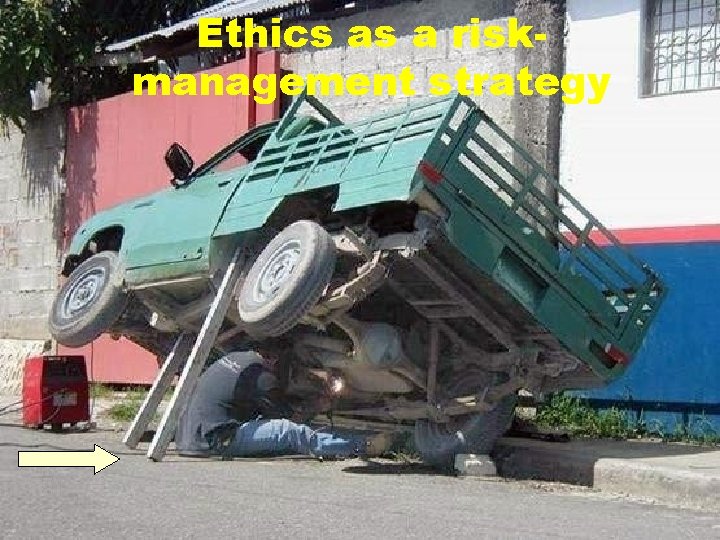
Ethics as a riskmanagement strategy © 2005 Josephson Institute 34
Ethics as a Risk. Management Strategy § In today’s cynical environment, the risks of budget-breaking lawsuits as well as costly and crippling scandals often driven by hyper aggressive media coverage are ever-present. § Developing an ethical culture is not only a way of assuring that your company develops a good reputation and solid relationships; it is a vital and effective risk management strategy. © 2005 Josephson Institute 35
Identifying Risks § To effectively “manage” a risk is to reduce the likelihood that the harmful event will occur and/or the amount of harm it will cause if it does occur. § Identifiable risks are manageable risks. § Thus, the first step in effective riskmanagement is to identify significant risks. 36 © 2005 Josephson Institute
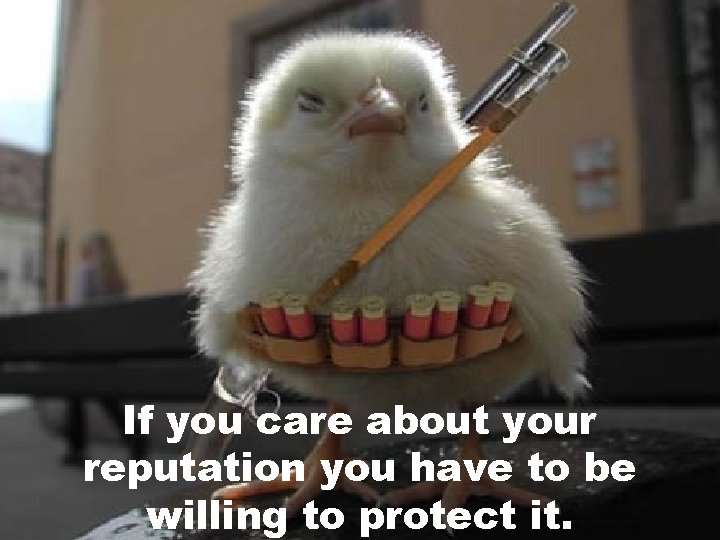
If you care about your reputation you have to be willing to protect it. 37 © 2005 Josephson Institute
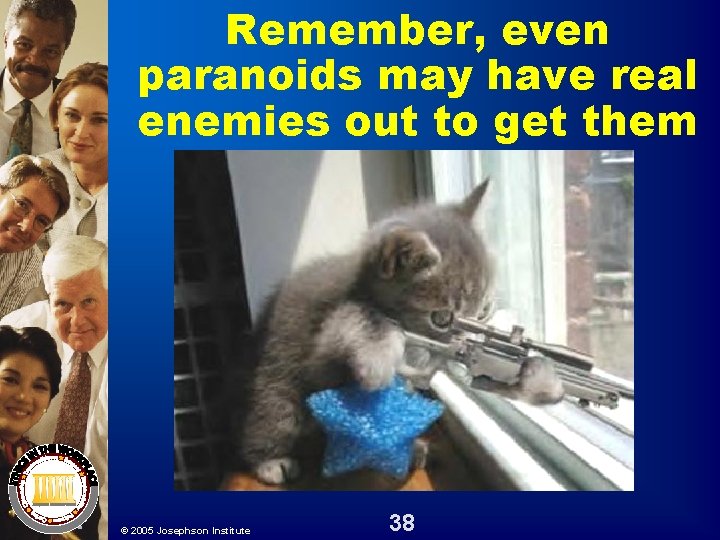
Remember, even paranoids may have real enemies out to get them © 2005 Josephson Institute 38
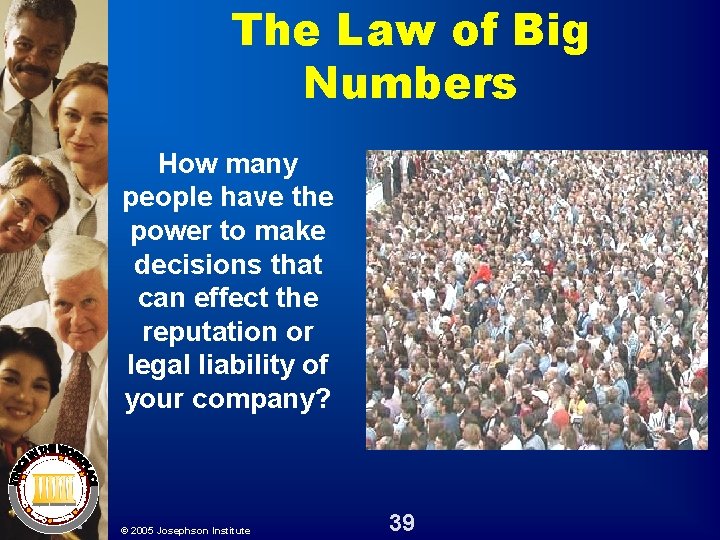
The Law of Big Numbers How many people have the power to make decisions that can effect the reputation or legal liability of your company? © 2005 Josephson Institute 39
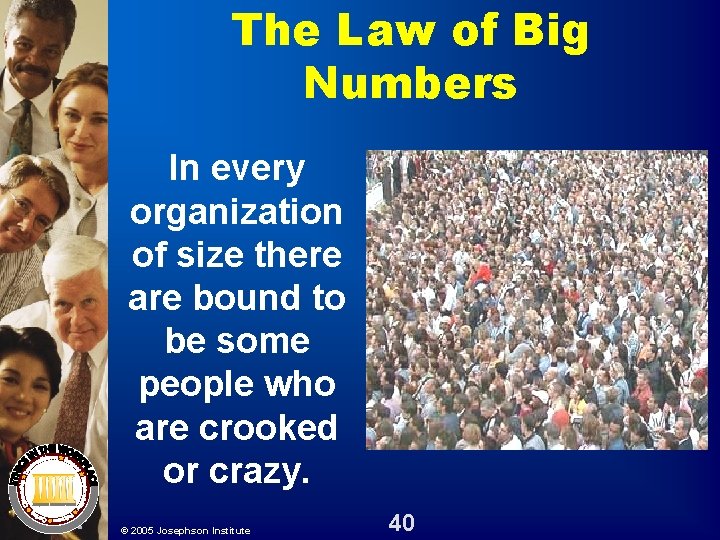
The Law of Big Numbers In every organization of size there are bound to be some people who are crooked or crazy. © 2005 Josephson Institute 40
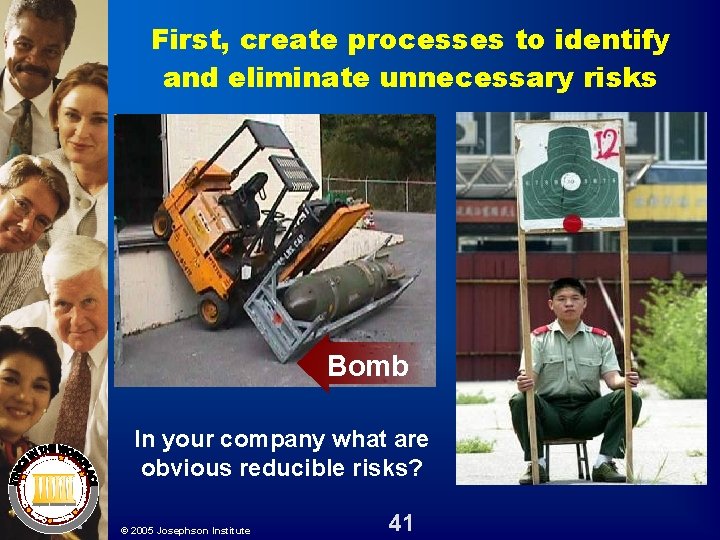
First, create processes to identify and eliminate unnecessary risks Bomb In your company what are obvious reducible risks? © 2005 Josephson Institute 41
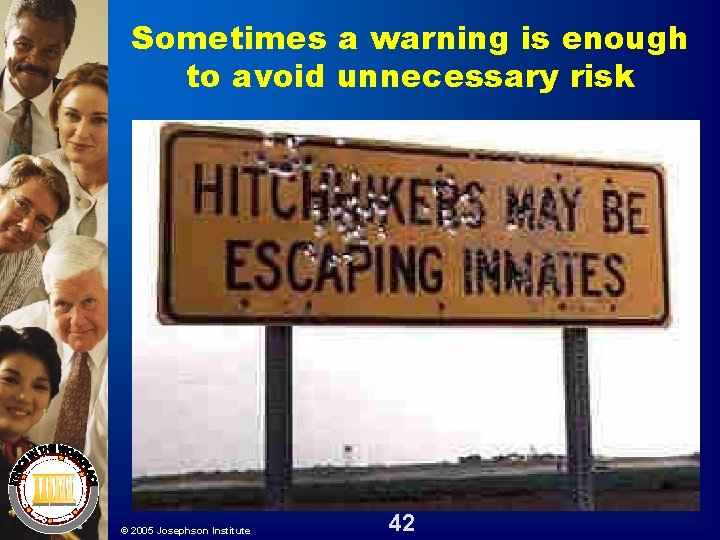
Sometimes a warning is enough to avoid unnecessary risk © 2005 Josephson Institute 42
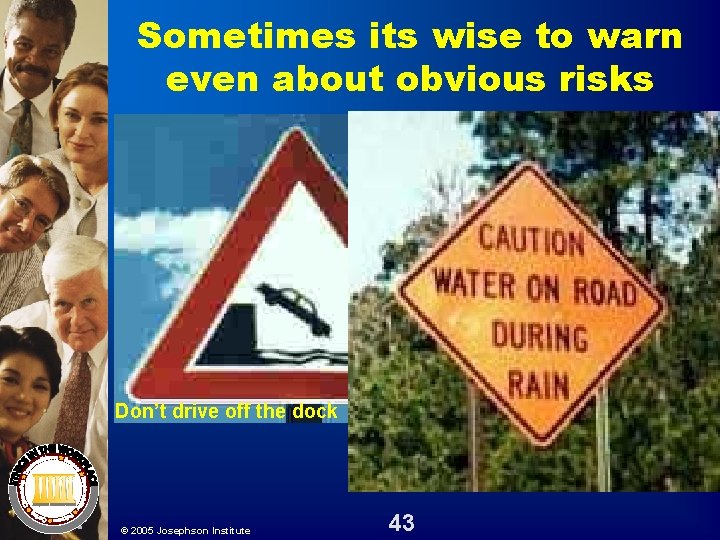
Sometimes its wise to warn even about obvious risks Don’t drive off the dock © 2005 Josephson Institute 43
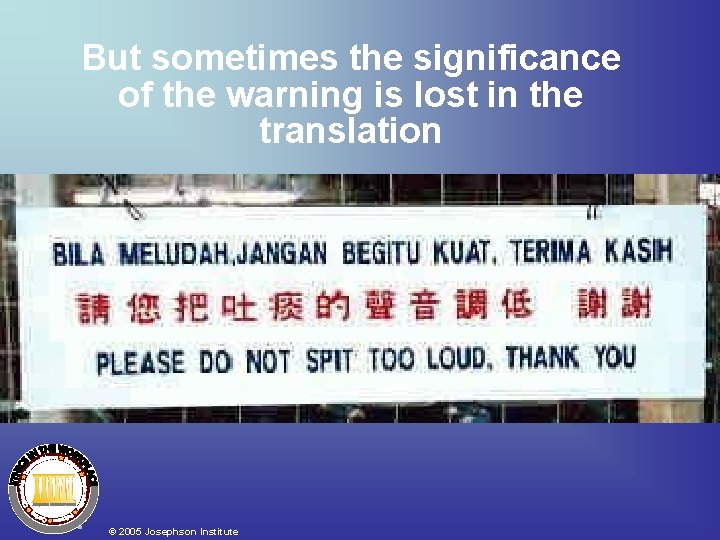
But sometimes the significance of the warning is lost in the translation © 2005 Josephson Institute
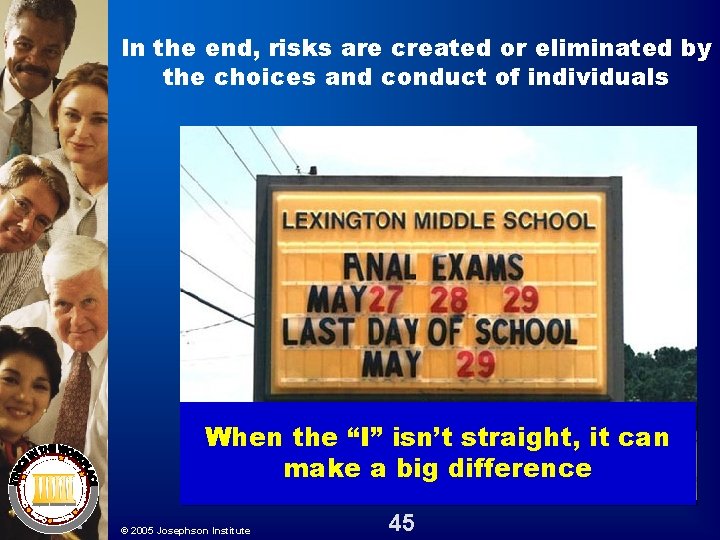
In the end, risks are created or eliminated by the choices and conduct of individuals When the “I” isn’t straight, it can make a big difference © 2005 Josephson Institute 45
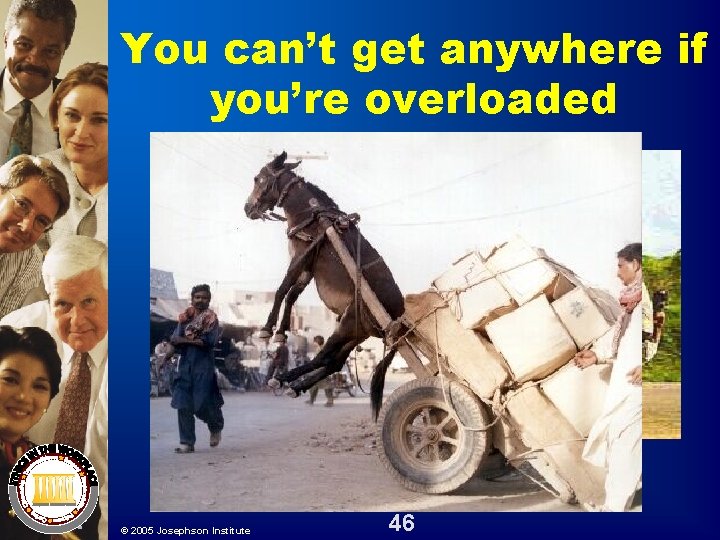
You can’t get anywhere if you’re overloaded © 2005 Josephson Institute 46