
Making Ethical Decisions Michael Josephson What is Ethics

- Slides: 16
Making Ethical Decisions Michael Josephson
What is Ethics refers to principles that define behavior as right, good, and proper. Such principles do not always dictate a single “moral” course of action, but provide a means of evaluating and deciding among competing interests.
The Six Pillars of Character (Source: Josephson, Making Ethical Decisions) 1. Trustworthiness 4. Fairness 2. Respect 5. Caring 3. Responsibility 6. Citizenship
The Six Pillars of Character Trustworthiness • Honesty in Conduct • Truthfulness • Integrity • Sincerity • Reliability • Candor • Loyalty
The Six Pillars of Character Respect • Civility, courtesy, and decency • Dignity and autonomy • Tolerance and acceptance
The Six Pillars of Character Responsibility • Accountability • Pursuit of Excellence • Self Restraint
The Six Pillars of Character Fairness • Process • Impartiality • Equity
The Six Pillars of Character Caring • Kindness • Benevolence • Altruism
The Six Pillars of Character Citizenship • Rights • Responsibilities • Authority (to govern) • Salvation of the community
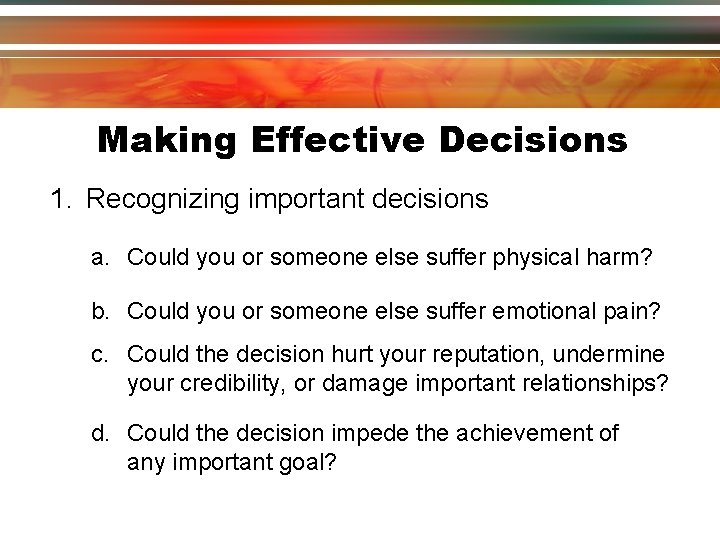
Making Effective Decisions 1. Recognizing important decisions a. Could you or someone else suffer physical harm? b. Could you or someone else suffer emotional pain? c. Could the decision hurt your reputation, undermine your credibility, or damage important relationships? d. Could the decision impede the achievement of any important goal?
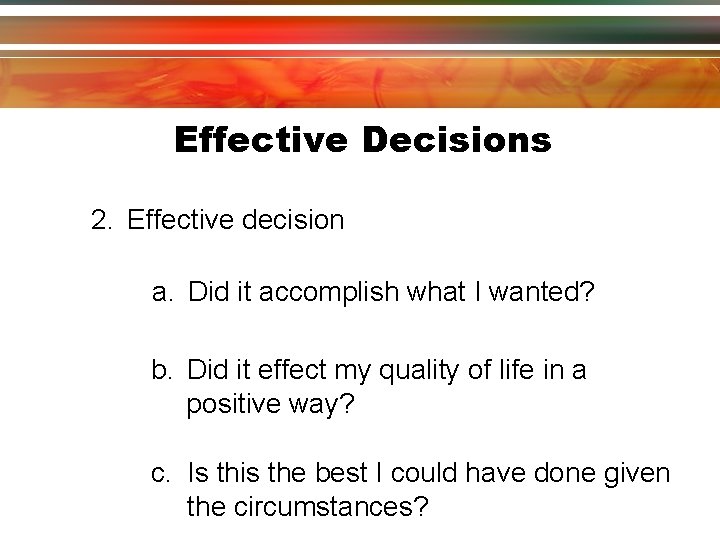
Effective Decisions 2. Effective decision a. Did it accomplish what I wanted? b. Did it effect my quality of life in a positive way? c. Is this the best I could have done given the circumstances?
Effective Decisions 3. Discernment and discipline a. Discernment b. Discipline 4. Stakeholders
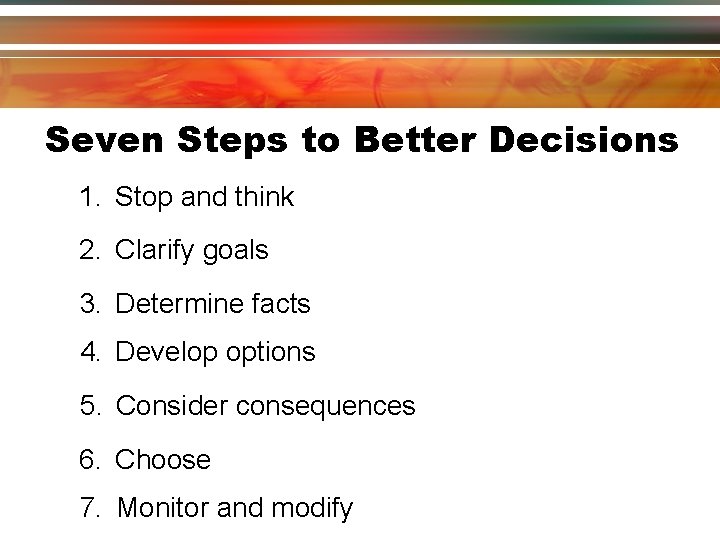
Seven Steps to Better Decisions 1. Stop and think 2. Clarify goals 3. Determine facts 4. Develop options 5. Consider consequences 6. Choose 7. Monitor and modify
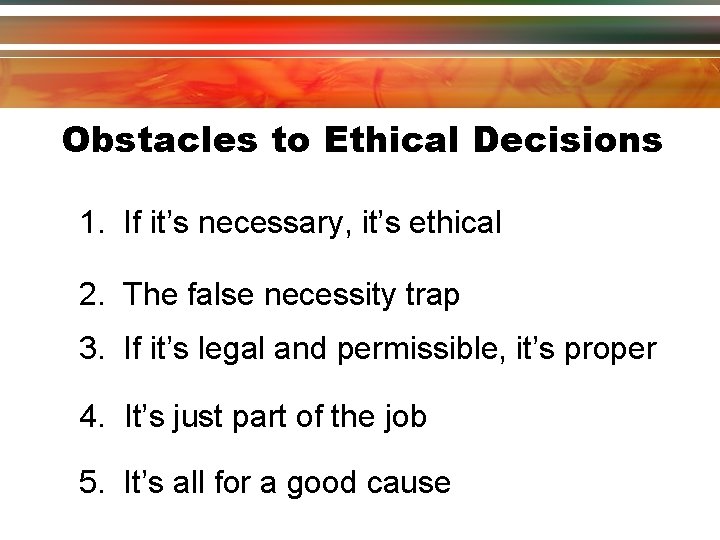
Obstacles to Ethical Decisions 1. If it’s necessary, it’s ethical 2. The false necessity trap 3. If it’s legal and permissible, it’s proper 4. It’s just part of the job 5. It’s all for a good cause
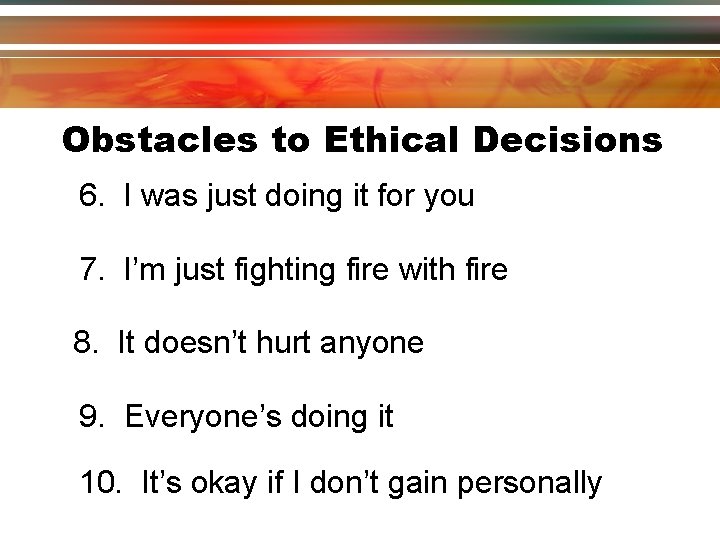
Obstacles to Ethical Decisions 6. I was just doing it for you 7. I’m just fighting fire with fire 8. It doesn’t hurt anyone 9. Everyone’s doing it 10. It’s okay if I don’t gain personally
Obstacles to Ethical Decisions 11. I’ve got it coming