Prospects of Molecular Diagnostics of Insect Pest in

- Slides: 22
Prospects of Molecular Diagnostics of Insect Pest in ITPs in the Philippines Dianne Joy D. Aguilon, Asst. Professor Dept. Forest Biological Sciences College of Forestry and Natural Resources UP Los Banos
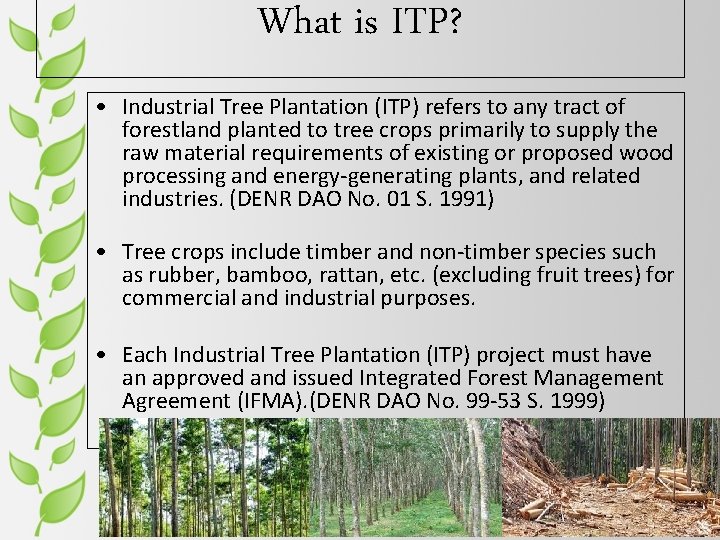
What is ITP? • Industrial Tree Plantation (ITP) refers to any tract of forestland planted to tree crops primarily to supply the raw material requirements of existing or proposed wood processing and energy-generating plants, and related industries. (DENR DAO No. 01 S. 1991) • Tree crops include timber and non-timber species such as rubber, bamboo, rattan, etc. (excluding fruit trees) for commercial and industrial purposes. • Each Industrial Tree Plantation (ITP) project must have an approved and issued Integrated Forest Management Agreement (IFMA). (DENR DAO No. 99 -53 S. 1999)
Plantation Species • • • Mangium, Acacia mangium Bagras, Eucalyptus deglupta Yemane, Gmelina arborea Falcata, Paraserianthes falcataria Benguet Pine, Pinus kesiya Mahogany, Swietenia macrophylla Teak, Tectona grandis Para rubber, Hevea brasiliensis Ipil-ipil, Leucaena leucocephala
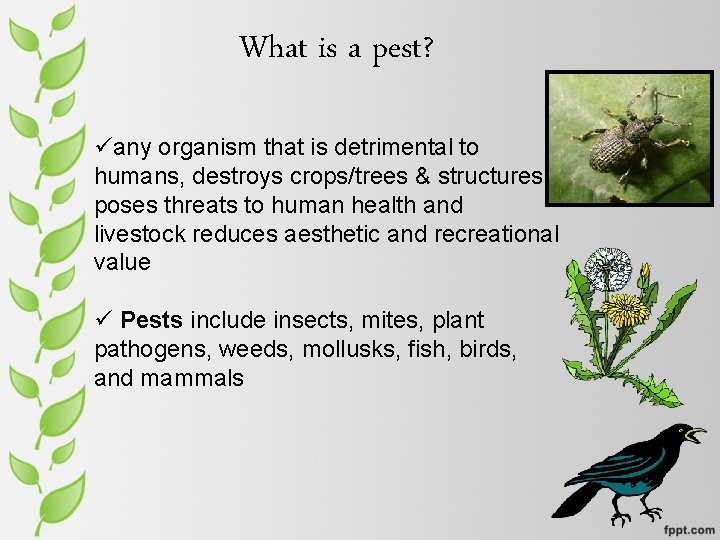
What is a pest? üany organism that is detrimental to humans, destroys crops/trees & structures, poses threats to human health and livestock reduces aesthetic and recreational value ü Pests include insects, mites, plant pathogens, weeds, mollusks, fish, birds, and mammals
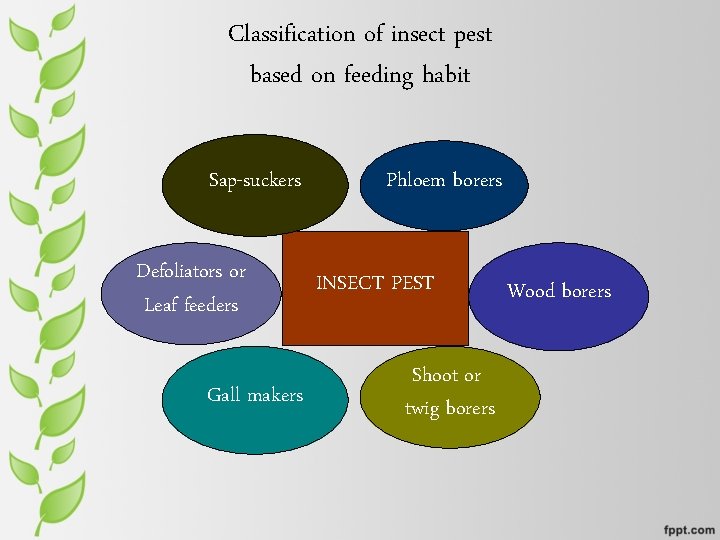
Classification of insect pest based on feeding habit Sap-suckers Defoliators or Leaf feeders Gall makers Phloem borers INSECT PEST Shoot or twig borers Wood borers
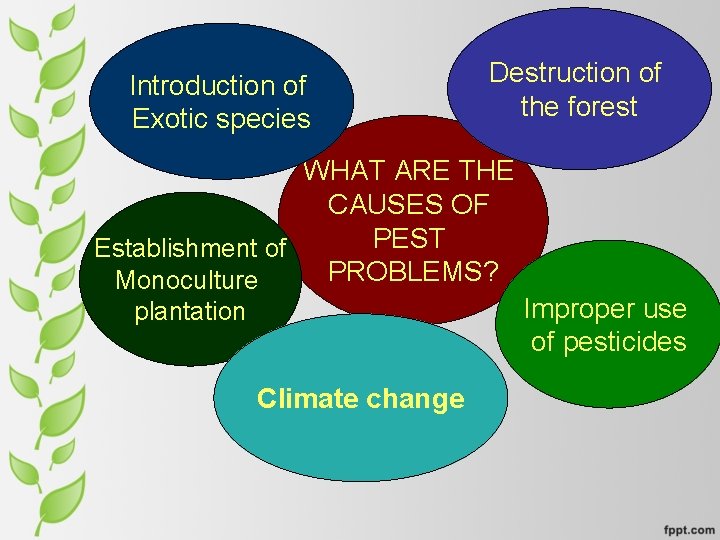
Introduction of Exotic species Destruction of the forest WHAT ARE THE CAUSES OF PEST Establishment of PROBLEMS? Monoculture plantation Climate change Improper use of pesticides
Pest and Plantation Forest • Plantation forests are more vulnerable to damage by pests than are natural forests. • Inadequate plantation management of either exotic or indigenous species such as poor species-site matching, planting stock with low genetic variability, failure to maintain tree vigour through intermediate cuttings, and reliance on one or two species in a national plantation programme will increase the susceptibility of plantations to pests damage. • Plantation forests have a history of periodic outbreaks of bark beetles, defoliators and other insect pests.
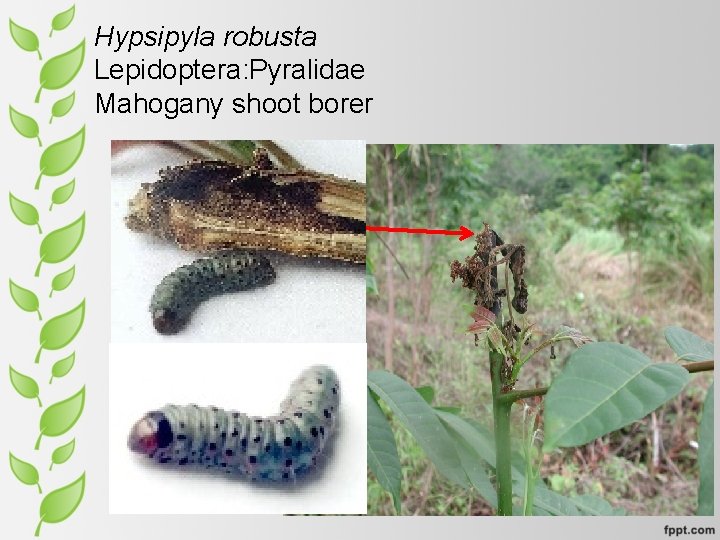
Hypsipyla robusta Lepidoptera: Pyralidae Mahogany shoot borer
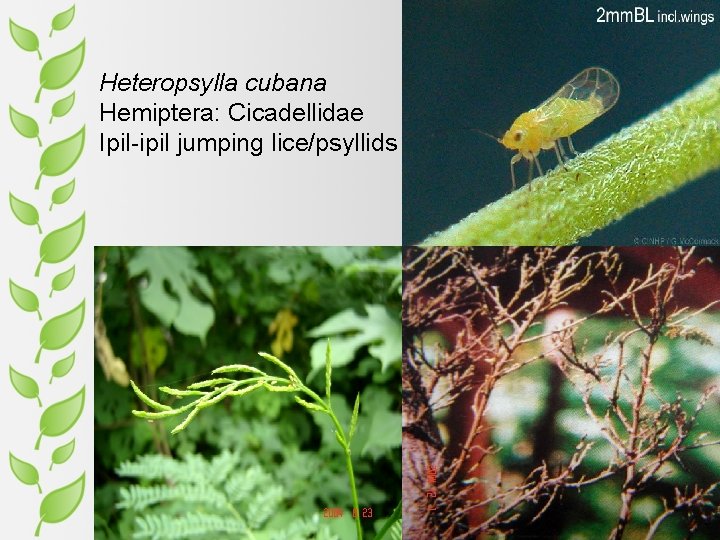
Heteropsylla cubana Hemiptera: Cicadellidae Ipil-ipil jumping lice/psyllids
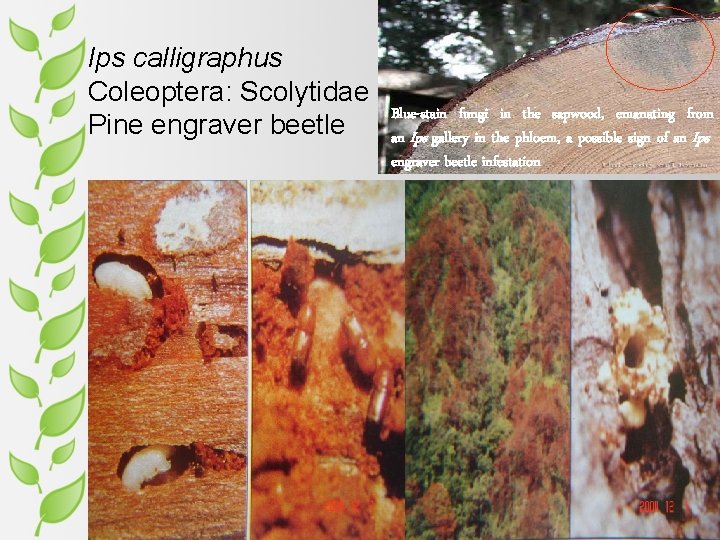
Ips calligraphus Coleoptera: Scolytidae Pine engraver beetle Blue-stain fungi in the sapwood, emanating from an Ips gallery in the phloem, a possible sign of an Ips engraver beetle infestation
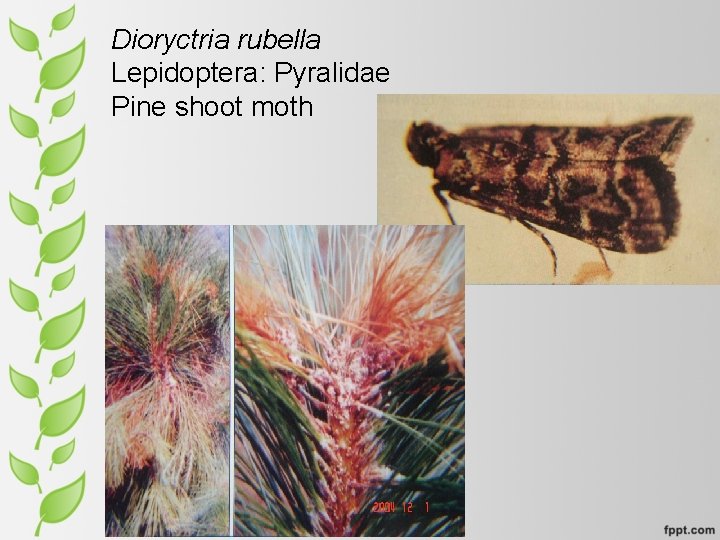
Dioryctria rubella Lepidoptera: Pyralidae Pine shoot moth
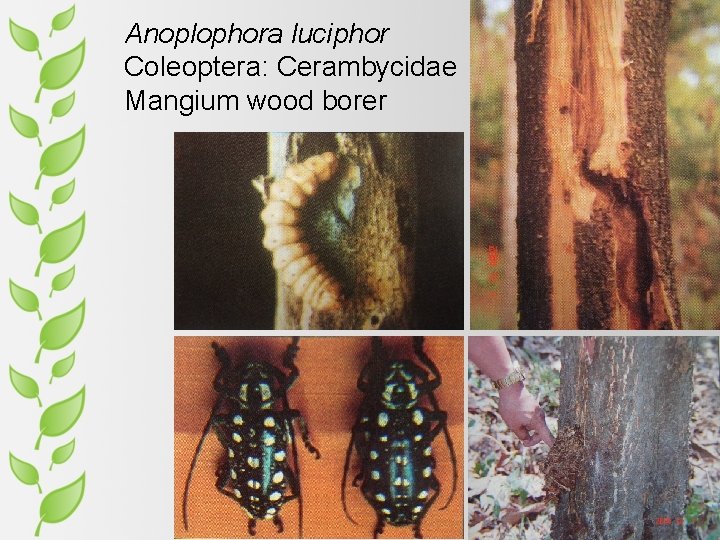
Anoplophora luciphor Coleoptera: Cerambycidae Mangium wood borer
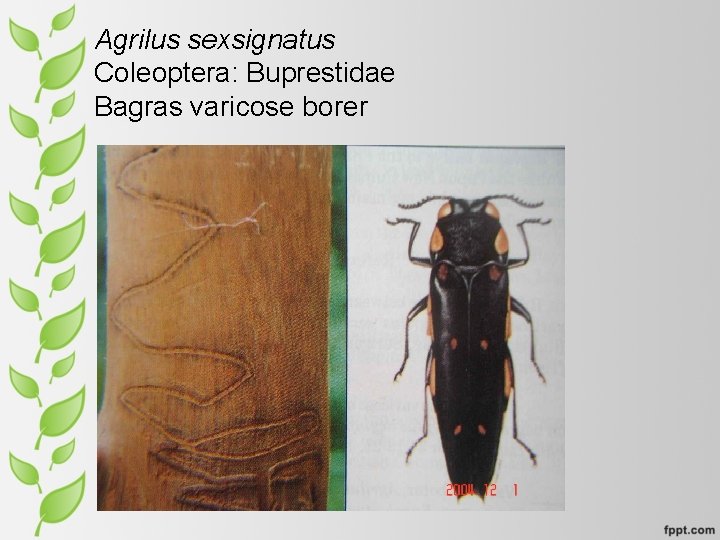
Agrilus sexsignatus Coleoptera: Buprestidae Bagras varicose borer
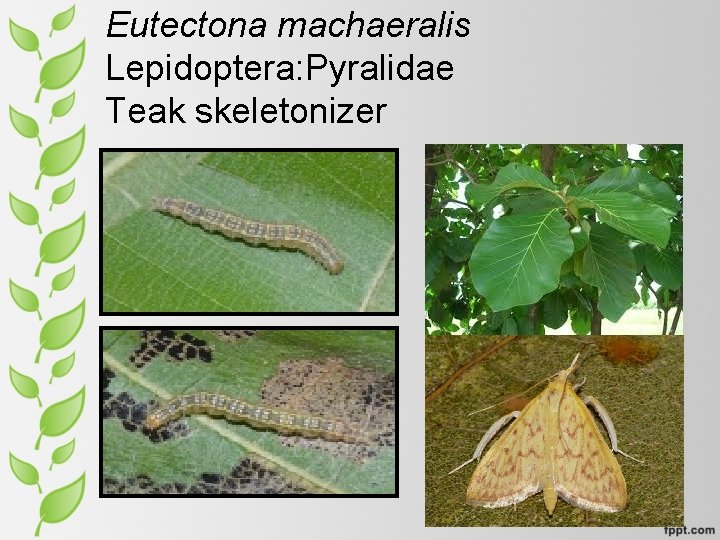
Eutectona machaeralis Lepidoptera: Pyralidae Teak skeletonizer
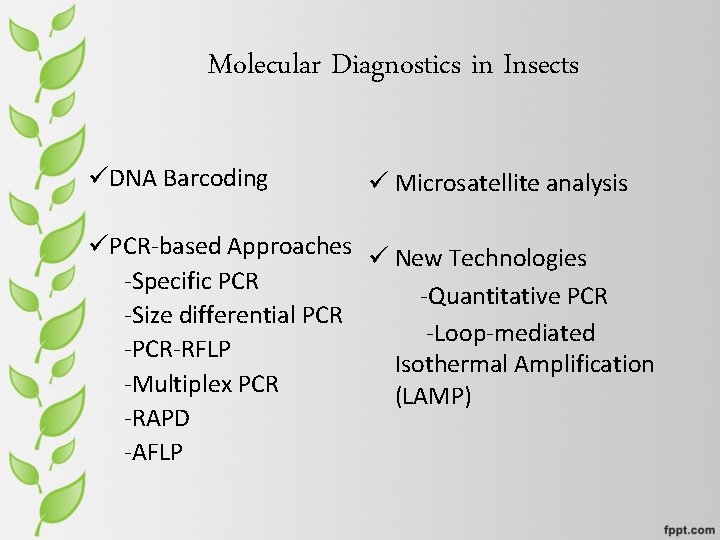
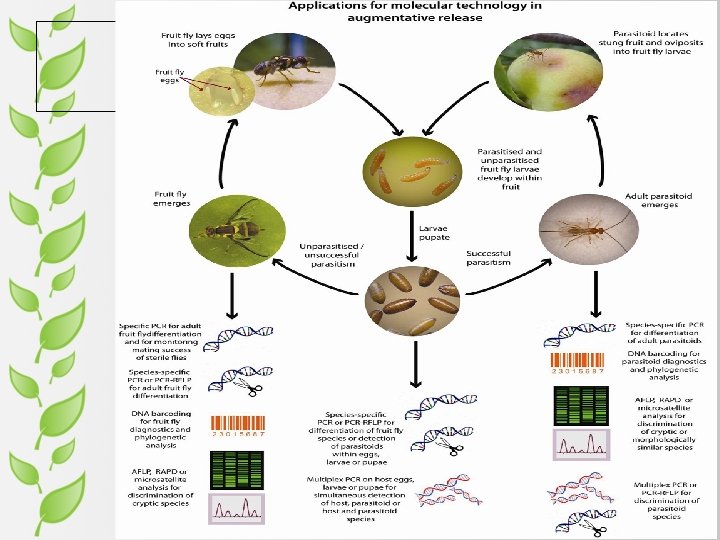
Molecular Diagnostics in Insects üDNA Barcoding ü Microsatellite analysis üPCR-based Approaches ü New Technologies -Specific PCR -Quantitative PCR -Size differential PCR -Loop-mediated -PCR-RFLP Isothermal Amplification -Multiplex PCR (LAMP) -RAPD -AFLP
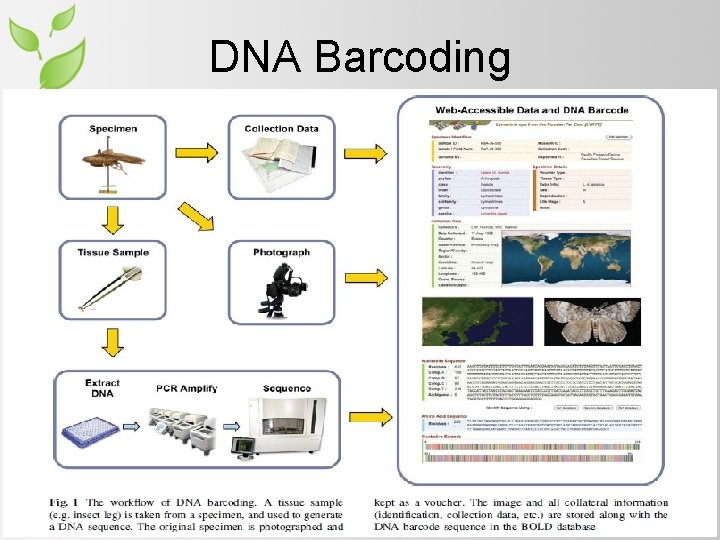
DNA Barcoding
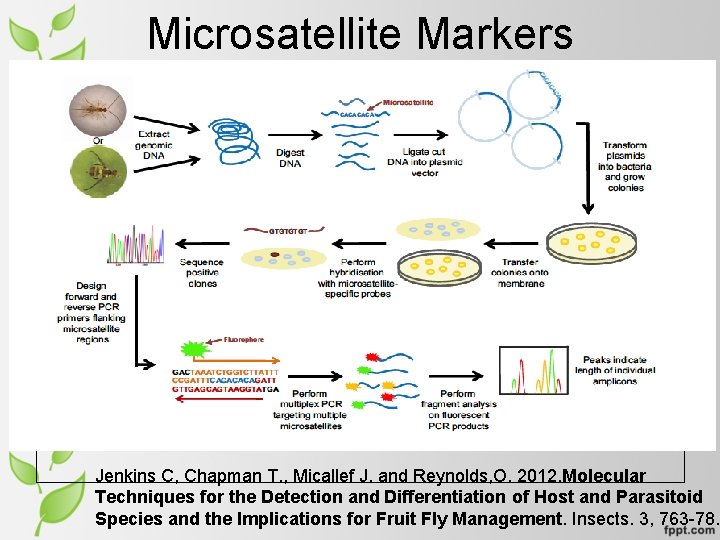
Microsatellite Markers Jenkins C, Chapman T. , Micallef J. and Reynolds, O. 2012. Molecular Techniques for the Detection and Differentiation of Host and Parasitoid Species and the Implications for Fruit Fly Management. Insects. 3, 763 -78.
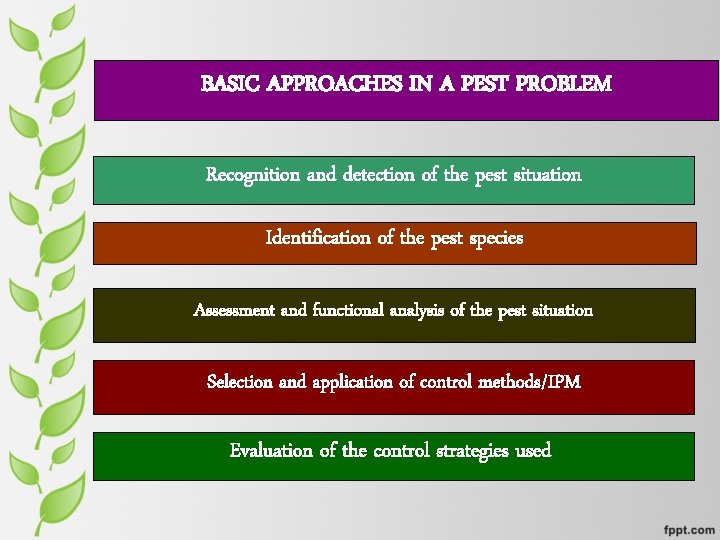
BASIC APPROACHES IN A PEST PROBLEM Recognition and detection of the pest situation Identification of the pest species Assessment and functional analysis of the pest situation Selection and application of control methods/IPM Evaluation of the control strategies used
Philippine Situationer • Comprehensive research works on pests and IPM in Industrial Tree Plantations are lacking in the Philippines. • There were a few published accounts on the plantation pests in the Philippines and information need to be updated/revised. �Pest and Diseases of Forest Plantation in the Philippines: A Guidebook, PCAARRD and DENR (1995) �Forest Pest and Diseases Research in the Philippines: An Overview by Segundino V. Forondo and Marcelino U. Siladan (1993 or 1994? ) Ø Molecular studies on forest pests are very scarce.
What's next ? • Anchor the study to DOST-PCAARRD S&T Priority in ITPs for funding • Collaborate with PGC and DENR • Updated Guidebook of Pest in Forest Plantation in the Philippines • Molecular characterization of plantation pests/molecular diagnostic tools for ID • Diagnostic Protocols for Regulated Pests • Insect Molecular Diagnostic Lab in FBS-CFNR open to public, private plantation owners, students, researchers etc.
Thank you!