Properties of Water Structure of Water n n

- Slides: 19
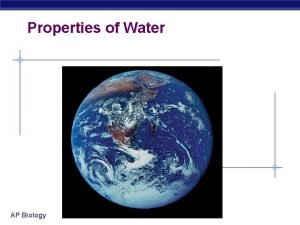
Properties of Water
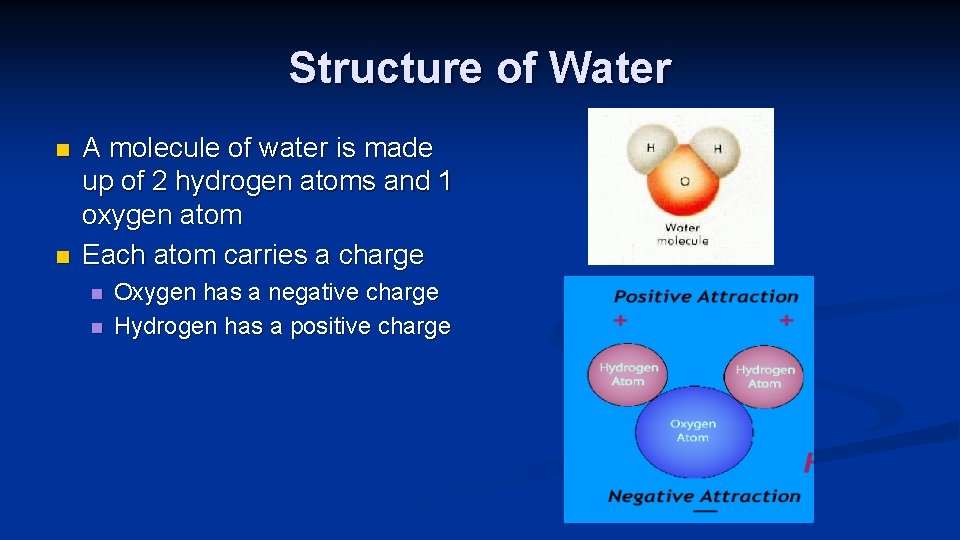
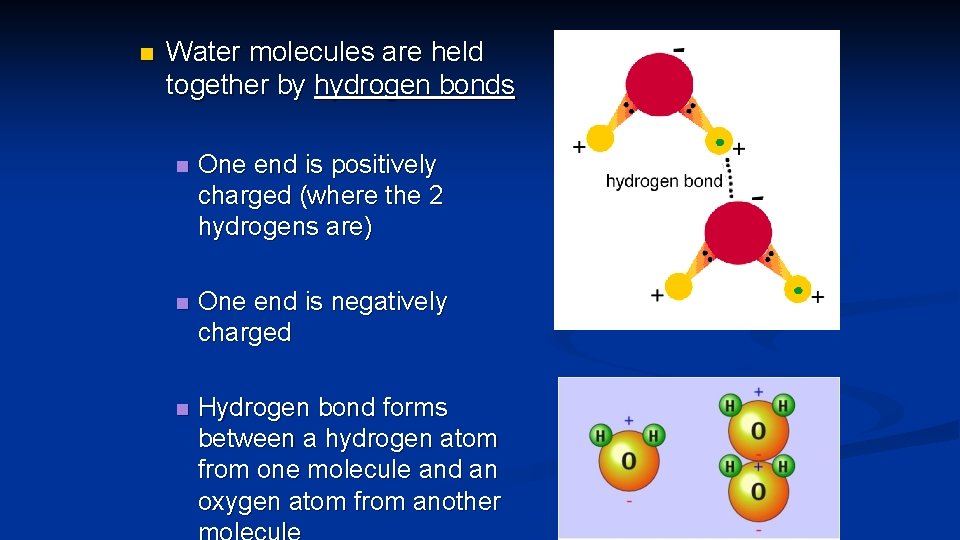
Structure of Water n n A molecule of water is made up of 2 hydrogen atoms and 1 oxygen atom Each atom carries a charge n n Oxygen has a negative charge Hydrogen has a positive charge
n Water molecules are held together by hydrogen bonds n One end is positively charged (where the 2 hydrogens are) n One end is negatively charged n Hydrogen bond forms between a hydrogen atom from one molecule and an oxygen atom from another
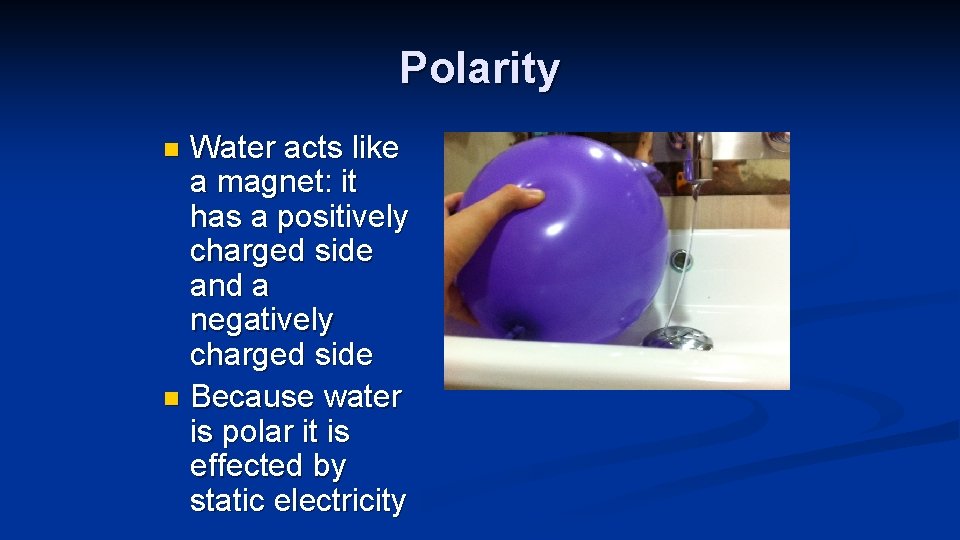
Polarity Water acts like a magnet: it has a positively charged side and a negatively charged side n Because water is polar it is effected by static electricity n
Water can form Drops n 1 water molecule attaches to another water molecule and so on; the attraction is due to the hydrogen bonding. More water molecules causes the water droplets to grow in size!!
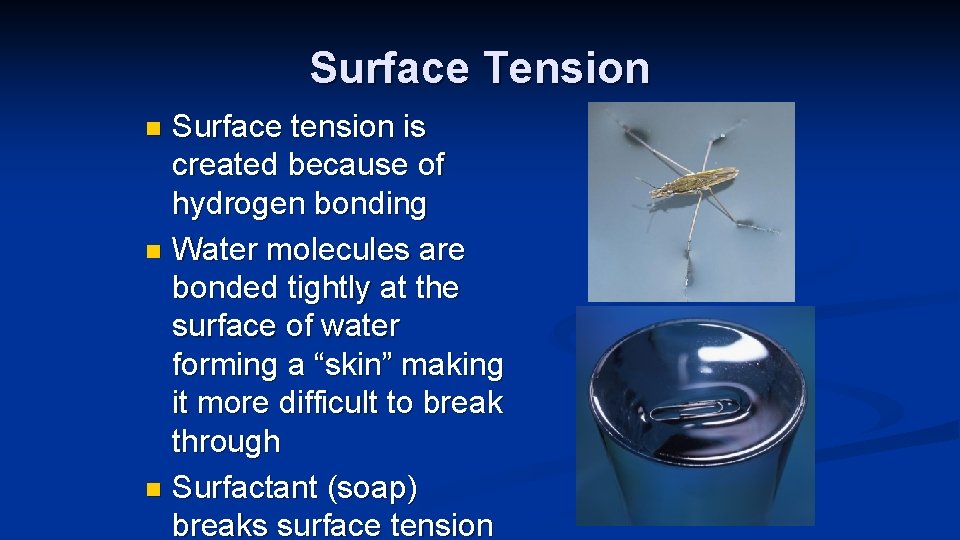
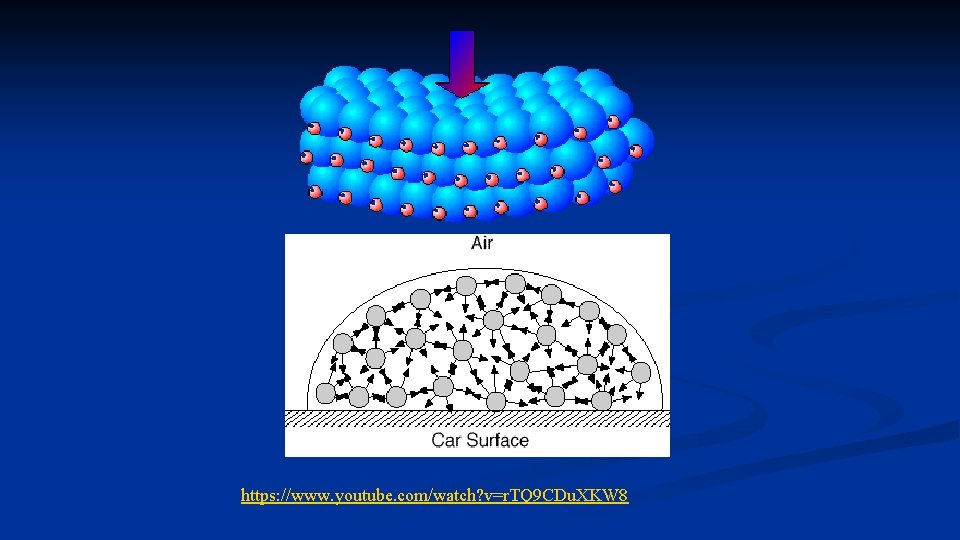
Surface Tension Surface tension is created because of hydrogen bonding n Water molecules are bonded tightly at the surface of water forming a “skin” making it more difficult to break through n Surfactant (soap) breaks surface tension n
https: //www. youtube. com/watch? v=r. TQ 9 CDu. XKW 8
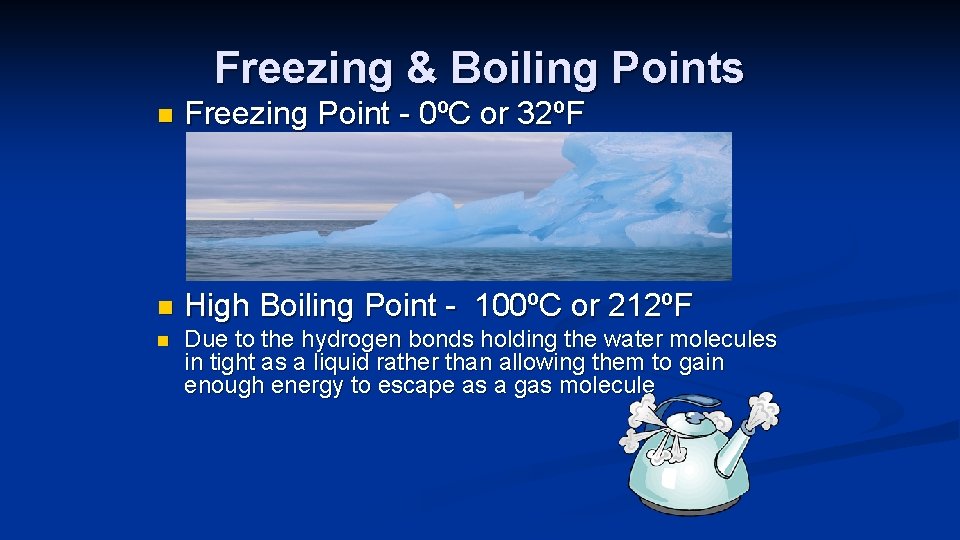
Freezing & Boiling Points n Freezing Point - 0ºC or 32ºF n High Boiling Point - 100ºC or 212ºF n Due to the hydrogen bonds holding the water molecules in tight as a liquid rather than allowing them to gain enough energy to escape as a gas molecule
Low Vapor Pressure – The pressure directly above a liquid as it evaporates n Water has a low vapor pressure because it does not evaporate very easily due to the hydrogen bonds…the +/attraction holds the molecules together n
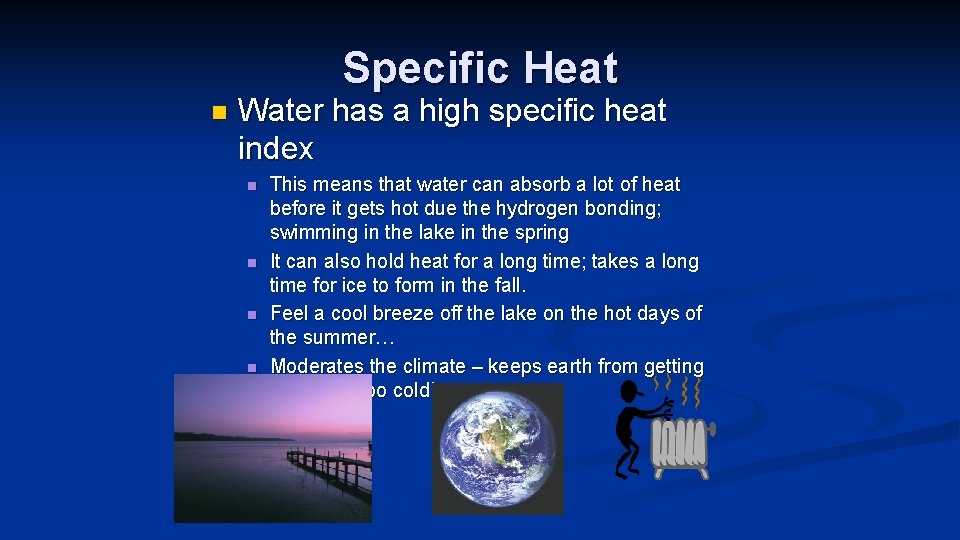
Specific Heat n Water has a high specific heat index n n This means that water can absorb a lot of heat before it gets hot due the hydrogen bonding; swimming in the lake in the spring It can also hold heat for a long time; takes a long time for ice to form in the fall. Feel a cool breeze off the lake on the hot days of the summer… Moderates the climate – keeps earth from getting too hot or too cold!
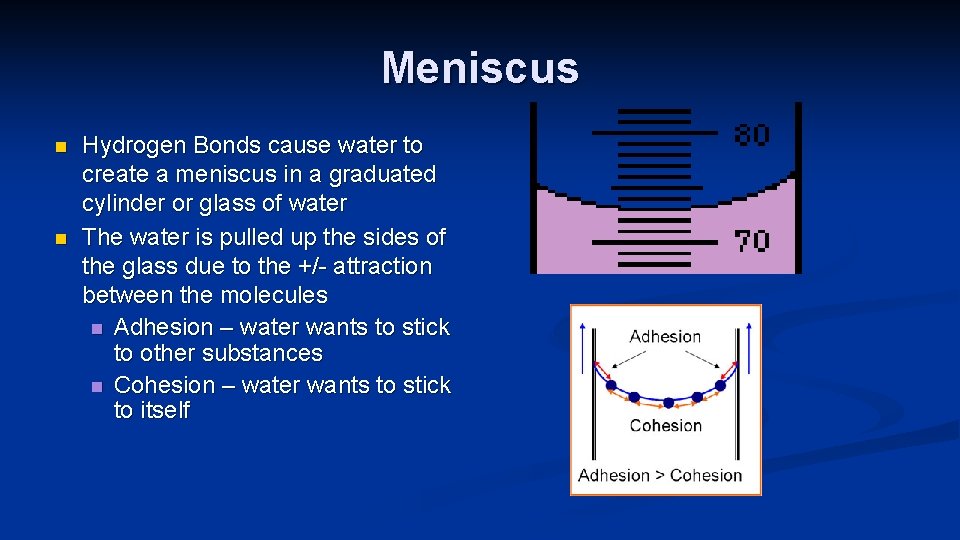
Meniscus n n Hydrogen Bonds cause water to create a meniscus in a graduated cylinder or glass of water The water is pulled up the sides of the glass due to the +/- attraction between the molecules n Adhesion – water wants to stick to other substances n Cohesion – water wants to stick to itself
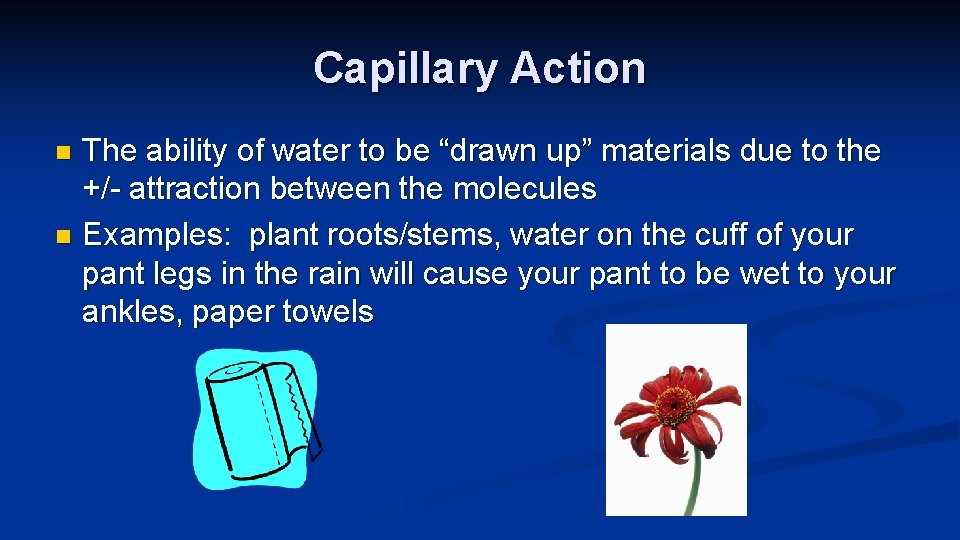
Capillary Action The ability of water to be “drawn up” materials due to the +/- attraction between the molecules n Examples: plant roots/stems, water on the cuff of your pant legs in the rain will cause your pant to be wet to your ankles, paper towels n
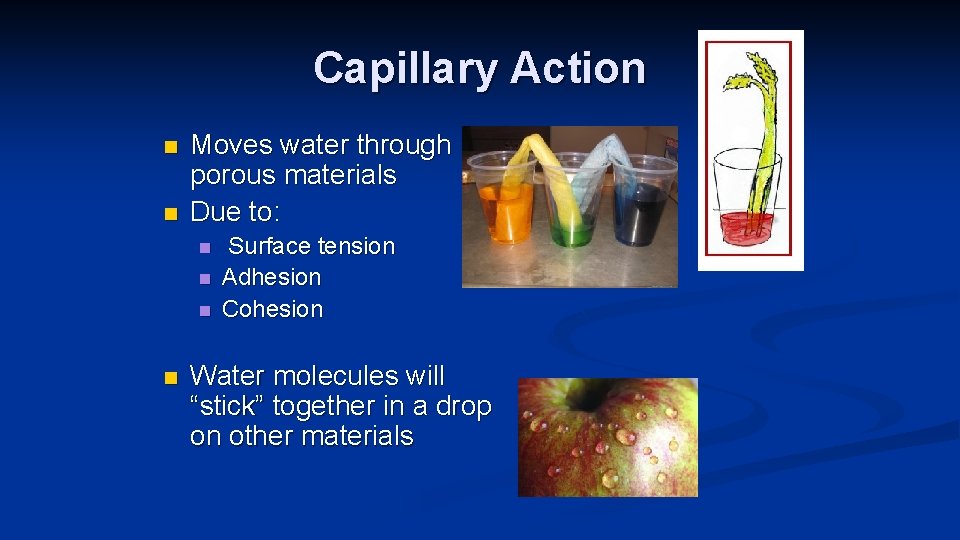
Capillary Action n n Moves water through porous materials Due to: n n Surface tension Adhesion Cohesion Water molecules will “stick” together in a drop on other materials
Low Molar Mass Water as a liquid has a low molar mass compared to other liquids due to the hydrogen bonding (+/- attraction) compared to other materials that do not have hydrogen bonding. n Materials without hydrogen bonding tend to exist as gases. n
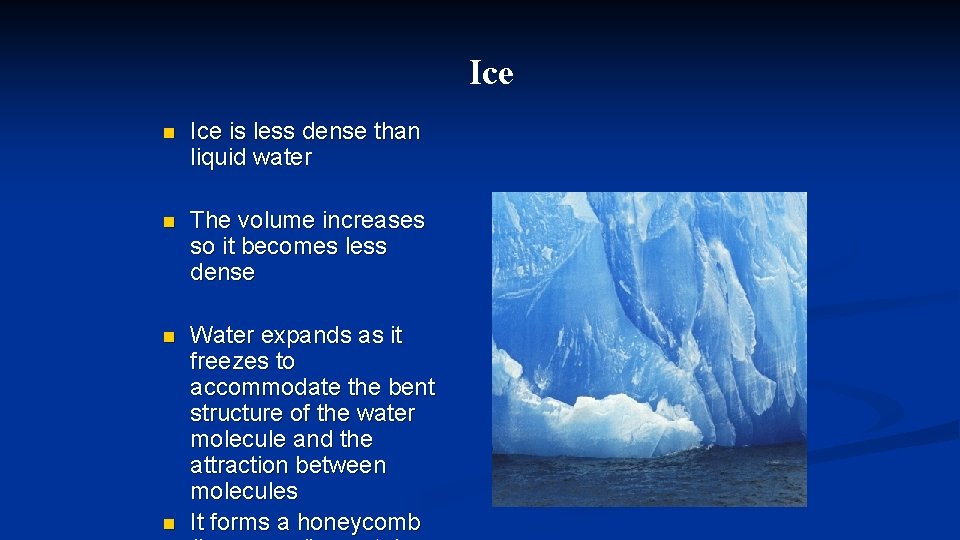
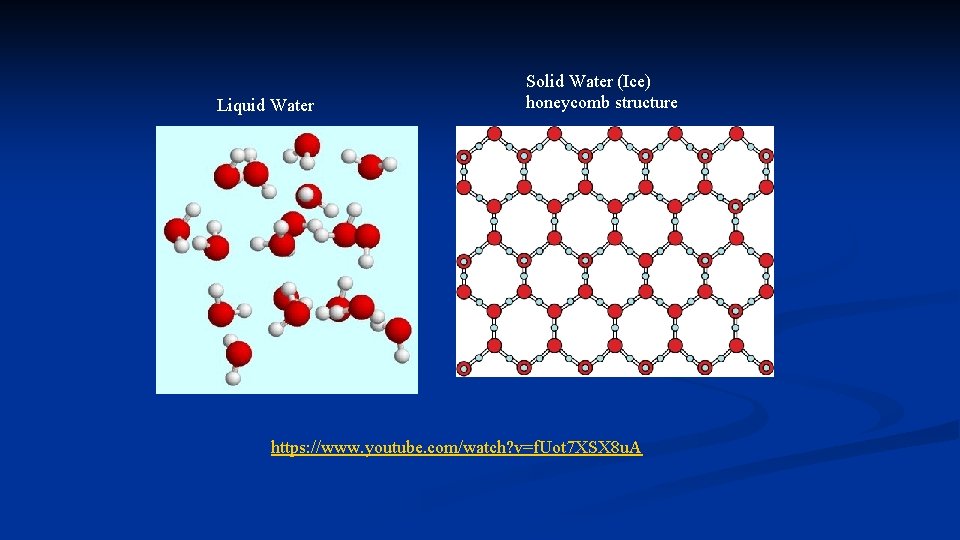
Ice n Ice is less dense than liquid water n The volume increases so it becomes less dense n Water expands as it freezes to accommodate the bent structure of the water molecule and the attraction between molecules It forms a honeycomb n
Liquid Water Solid Water (Ice) honeycomb structure https: //www. youtube. com/watch? v=f. Uot 7 XSX 8 u. A
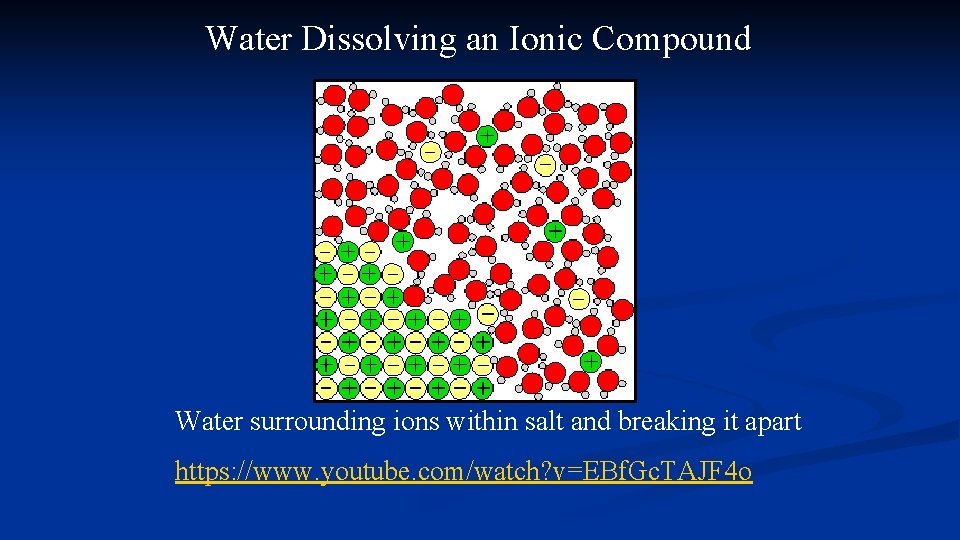
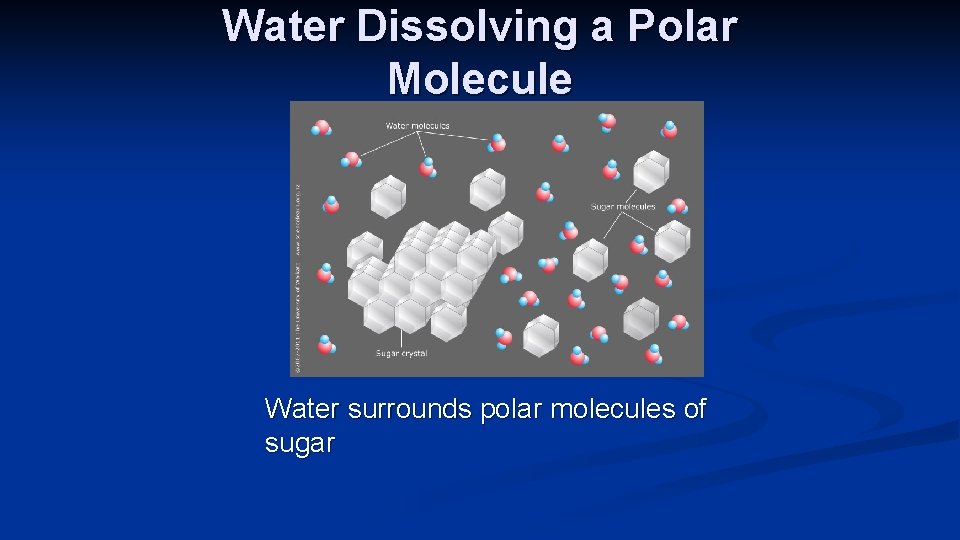
Solvent n Water is the universal solvent because it dissolves more substances than anything else This is due to the polarity (molecule that has a positive and negative side) of water n Like Dissolves Like – water tends to dissolve other polar or ionic substances due to attraction between particles n n Water surrounds other polar molecules and breaks the molecule apart – dissolving
Water Dissolving an Ionic Compound Water surrounding ions within salt and breaking it apart https: //www. youtube. com/watch? v=EBf. Gc. TAJF 4 o
Water Dissolving a Polar Molecule Water surrounds polar molecules of sugar