Principles of Information Systems Seventh Edition Good decisionmaking


- Slides: 49
Principles of Information Systems, Seventh Edition
• Good decision-making and problem-solving skills are the key to developing effective information and decision support systems • Define the stages of decision making • Discuss the importance of implementation and monitoring in problem solving Principles of Information Systems, Seventh Edition 2
• The management information system (MIS) must provide the right information to the right person in the right fashion at the right time • Explain the uses of MISs and describe their inputs and outputs • Discuss information systems in the functional areas of business organizations Principles of Information Systems, Seventh Edition 3
• Decision support systems (DSSs) are used when the problems are unstructured • List and discuss important characteristics of DSSs that give them the potential to be effective management support tools • Identify and describe the basic components of a DSS Principles of Information Systems, Seventh Edition 4
• Specialized support systems, such as group support systems (GSSs) and executive support systems (ESSs), use the overall approach of a DSS in situations such as group and executive decision making • State the goals of a GSS and identify the characteristics that distinguish it from a DSS • Identify the fundamental uses of an ESS and list the characteristics of such a system Principles of Information Systems, Seventh Edition 5
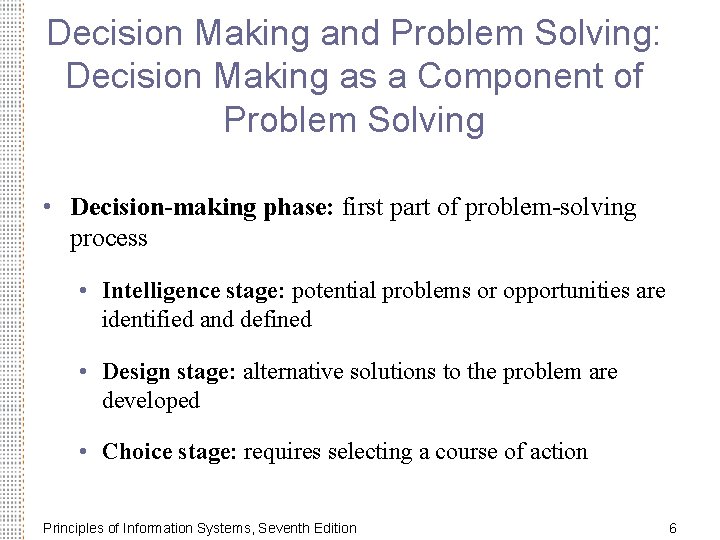
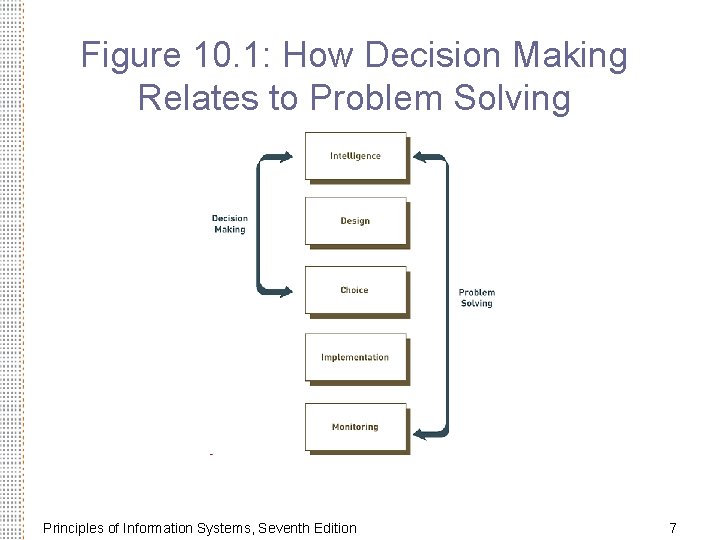
Decision Making and Problem Solving: Decision Making as a Component of Problem Solving • Decision-making phase: first part of problem-solving process • Intelligence stage: potential problems or opportunities are identified and defined • Design stage: alternative solutions to the problem are developed • Choice stage: requires selecting a course of action Principles of Information Systems, Seventh Edition 6
Figure 10. 1: How Decision Making Relates to Problem Solving Principles of Information Systems, Seventh Edition 7
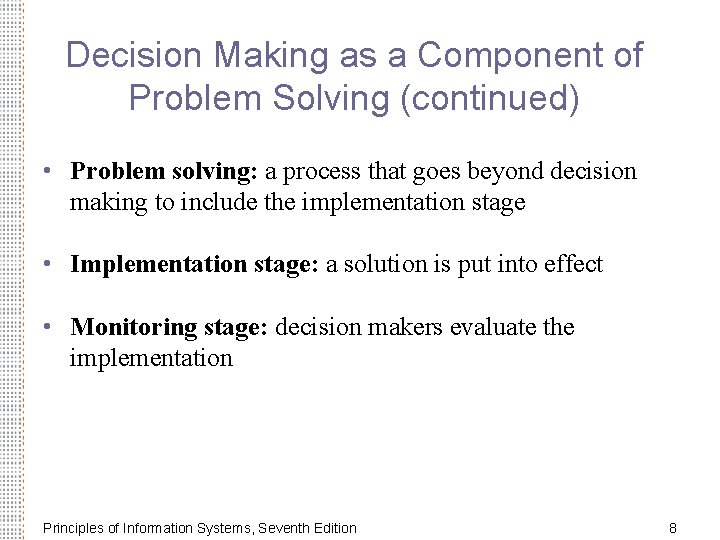
Decision Making as a Component of Problem Solving (continued) • Problem solving: a process that goes beyond decision making to include the implementation stage • Implementation stage: a solution is put into effect • Monitoring stage: decision makers evaluate the implementation Principles of Information Systems, Seventh Edition 8
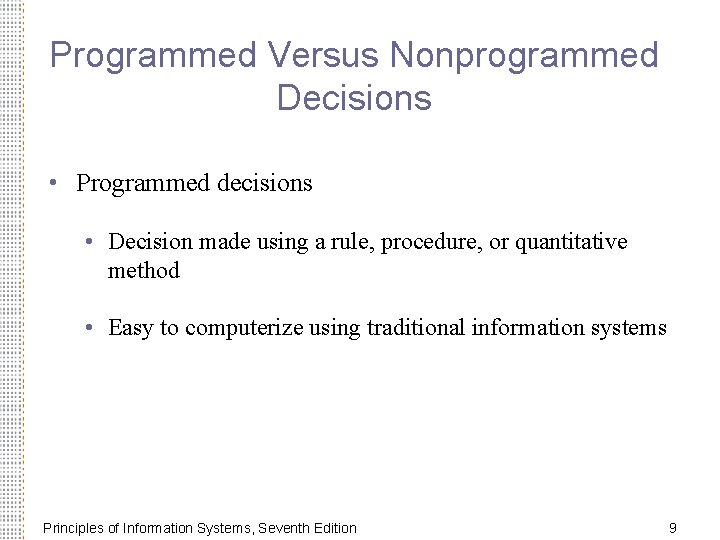
Programmed Versus Nonprogrammed Decisions • Programmed decisions • Decision made using a rule, procedure, or quantitative method • Easy to computerize using traditional information systems Principles of Information Systems, Seventh Edition 9
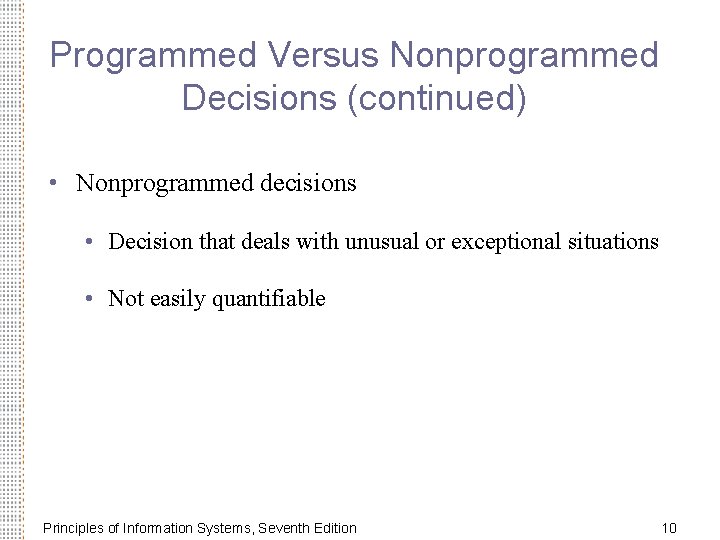
Programmed Versus Nonprogrammed Decisions (continued) • Nonprogrammed decisions • Decision that deals with unusual or exceptional situations • Not easily quantifiable Principles of Information Systems, Seventh Edition 10
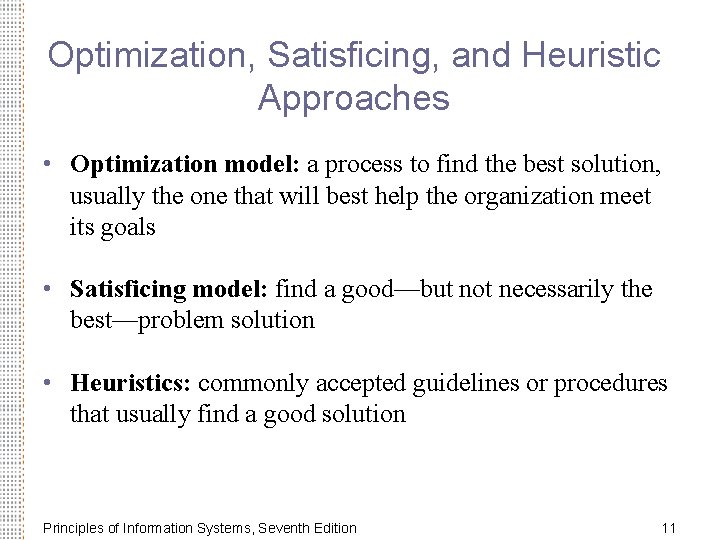
Optimization, Satisficing, and Heuristic Approaches • Optimization model: a process to find the best solution, usually the one that will best help the organization meet its goals • Satisficing model: find a good—but not necessarily the best—problem solution • Heuristics: commonly accepted guidelines or procedures that usually find a good solution Principles of Information Systems, Seventh Edition 11
An Overview of Management Information Systems: Management Information Systems in Perspective • A management information system (MIS) provides managers with information that supports effective decision making and provides feedback on daily operations • The use of MISs spans all levels of management Principles of Information Systems, Seventh Edition 12
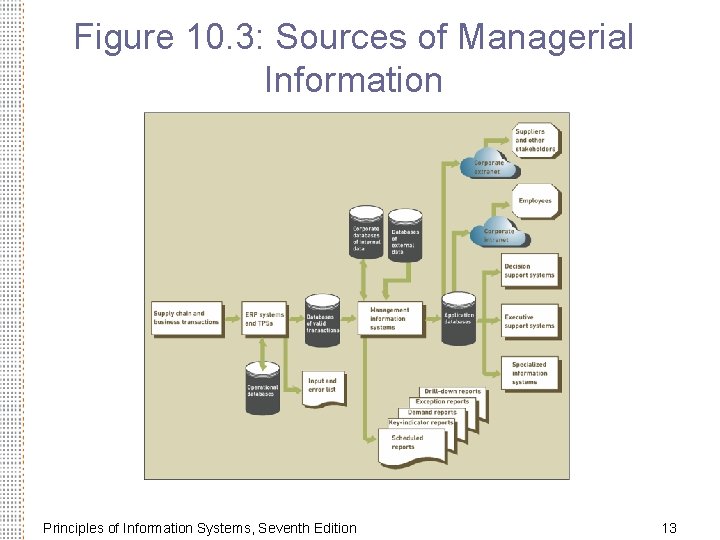
Figure 10. 3: Sources of Managerial Information Principles of Information Systems, Seventh Edition 13
Inputs to a Management Information System • Internal data sources (TPSs and ERP systems and related databases; data warehouses and data marts; specific functional areas throughout the firm) • External data sources (Customers, suppliers, competitors, and stockholders whose data is not already captured by the TPS; the Internet; extranets) Principles of Information Systems, Seventh Edition 14
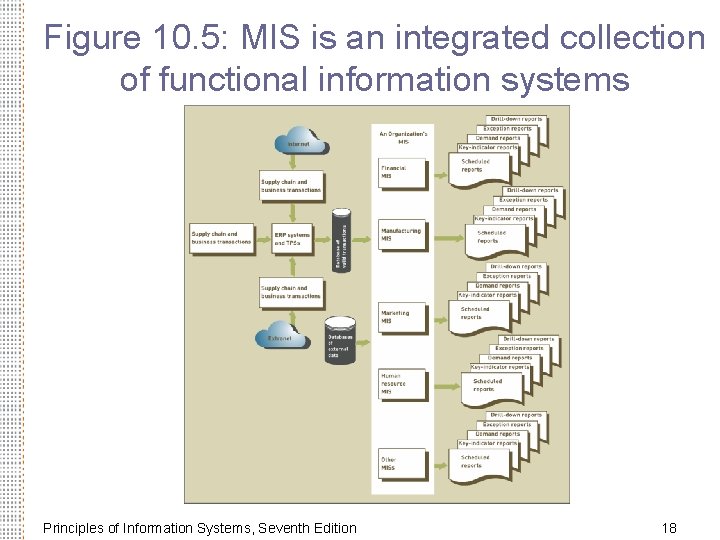
Outputs of a Management Information System • Scheduled report: produced periodically, or on a schedule • Key-indicator report: summary of the previous day’s critical activities • Demand report: developed to give certain information at someone’s request • Exception report: automatically produced when a situation is unusual or requires management action • Drill-down reports: provide increasingly detailed data about a situation Principles of Information Systems, Seventh Edition 15
Characteristics of a Management Information System • Fixed format, standard reports • Hard-copy and soft-copy reports • Uses internal data • User-developed reports • Users must request formal reports from IS department Principles of Information Systems, Seventh Edition 16
Functional Aspects of the MIS • Most organizations are structured along functional lines or areas • MIS can be divided along functional lines to produce reports tailored to individual functions Principles of Information Systems, Seventh Edition 17
Figure 10. 5: MIS is an integrated collection of functional information systems Principles of Information Systems, Seventh Edition 18
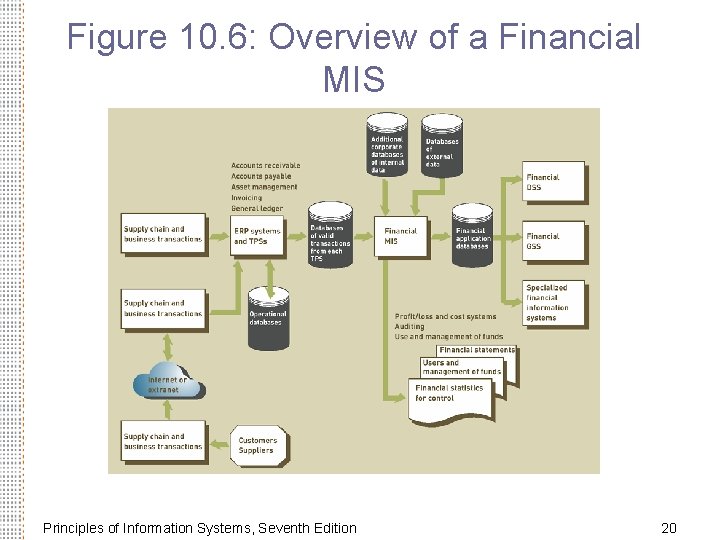
Financial Management Information Systems • Financial MIS: provides financial information to all financial managers within an organization • Profit/loss and cost systems • Auditing • Uses and management of funds Principles of Information Systems, Seventh Edition 19
Figure 10. 6: Overview of a Financial MIS Principles of Information Systems, Seventh Edition 20
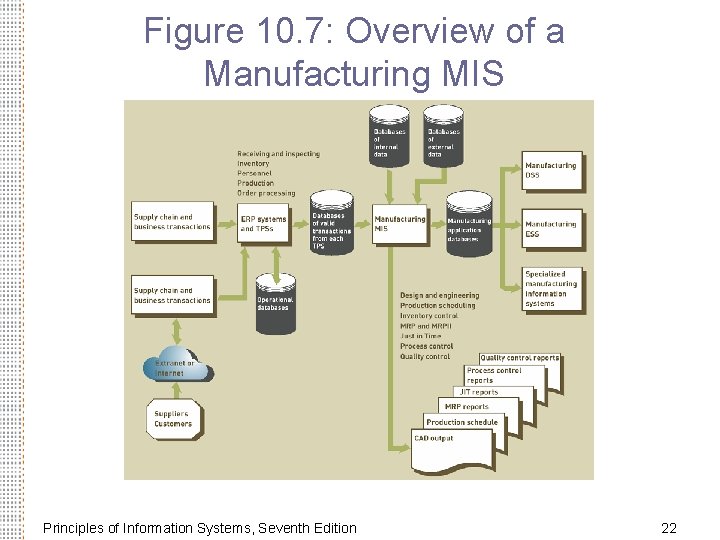
Manufacturing Management Information Systems • The manufacturing MIS subsystems and outputs monitor and control the flow of materials, products, and services through the organization • Design and engineering • Master production scheduling and inventory control • Process control • Quality control and testing Principles of Information Systems, Seventh Edition 21
Figure 10. 7: Overview of a Manufacturing MIS Principles of Information Systems, Seventh Edition 22
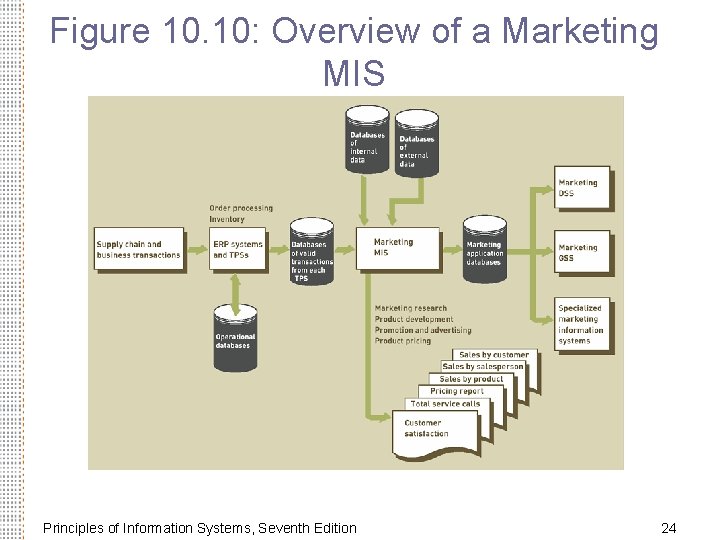
Marketing Management Information Systems • Marketing MIS: supports managerial activities in product development, distribution, pricing decisions, and promotional effectiveness • Marketing research • Product development • Promotion and advertising • Product pricing Principles of Information Systems, Seventh Edition 23
Figure 10. 10: Overview of a Marketing MIS Principles of Information Systems, Seventh Edition 24
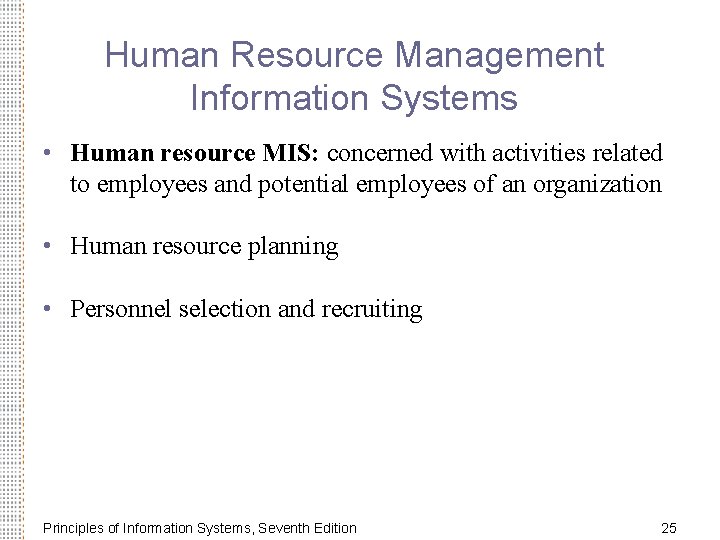
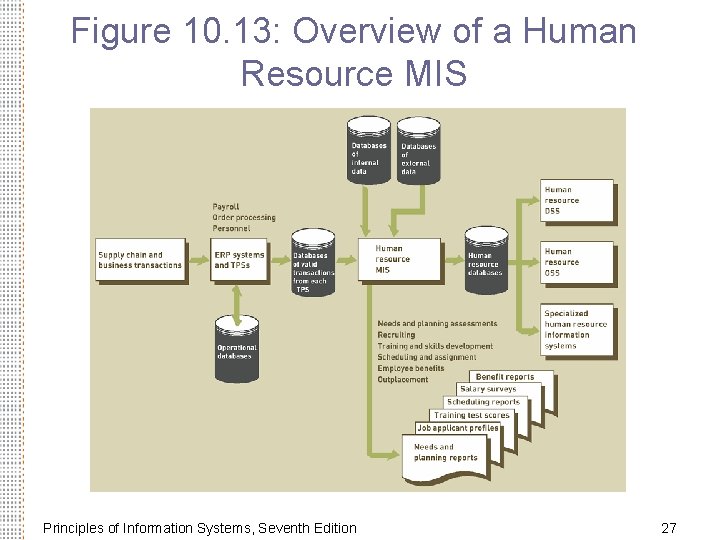
Human Resource Management Information Systems • Human resource MIS: concerned with activities related to employees and potential employees of an organization • Human resource planning • Personnel selection and recruiting Principles of Information Systems, Seventh Edition 25
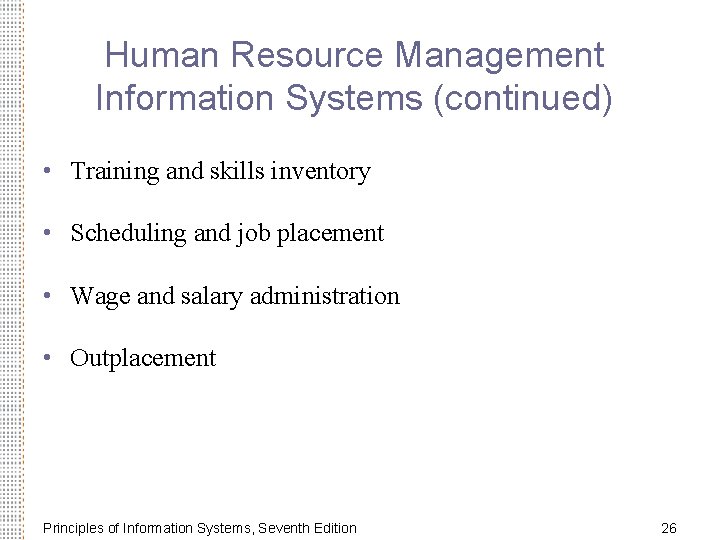
Human Resource Management Information Systems (continued) • Training and skills inventory • Scheduling and job placement • Wage and salary administration • Outplacement Principles of Information Systems, Seventh Edition 26
Figure 10. 13: Overview of a Human Resource MIS Principles of Information Systems, Seventh Edition 27
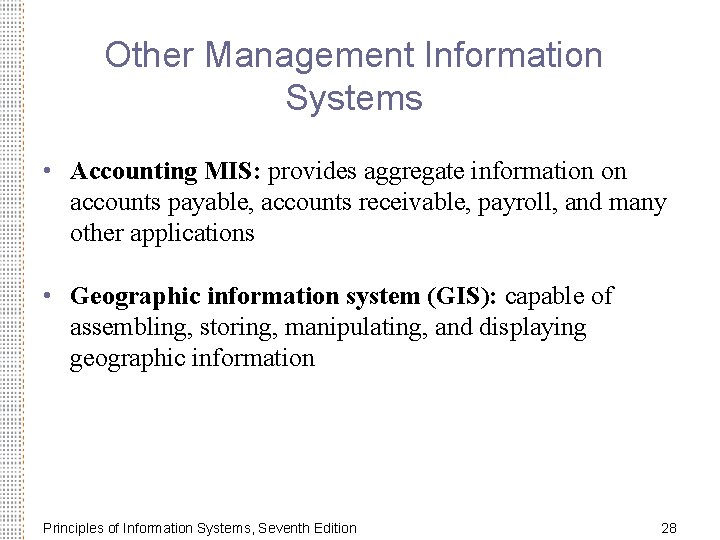
Other Management Information Systems • Accounting MIS: provides aggregate information on accounts payable, accounts receivable, payroll, and many other applications • Geographic information system (GIS): capable of assembling, storing, manipulating, and displaying geographic information Principles of Information Systems, Seventh Edition 28
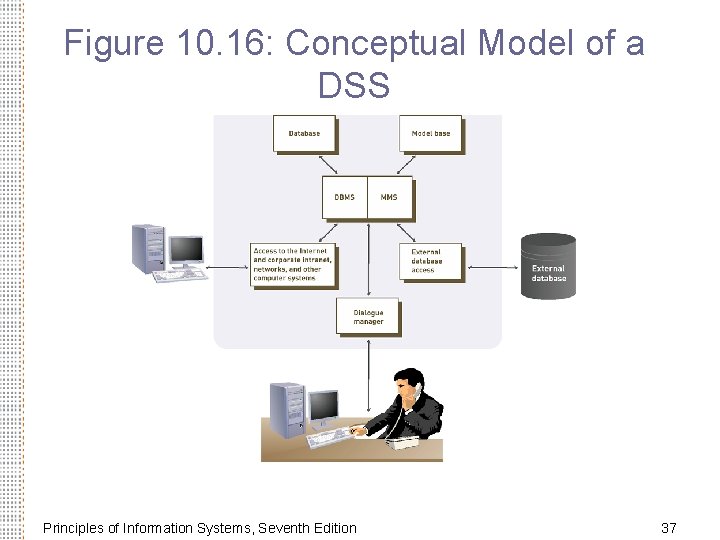
An Overview Of Decision Support Systems • A DSS is an organized collection of people, procedures, software, databases, and devices used to support problemspecific decision making and problem solving • The focus of a DSS is on decision-making effectiveness when faced with unstructured or semistructured business problems Principles of Information Systems, Seventh Edition 29
Characteristics of Decision Support Systems • Handle large amounts of data from different sources • Provide report and presentation flexibility • Offer both textual and graphical orientation • Support drill-down analysis Principles of Information Systems, Seventh Edition 30
Characteristics of Decision Support Systems (continued) • Perform complex, sophisticated analysis and comparisons using advanced software packages • Support optimization, satisficing, and heuristic approaches • Simulation • What-if analysis • Goal-seeking analysis Principles of Information Systems, Seventh Edition 31
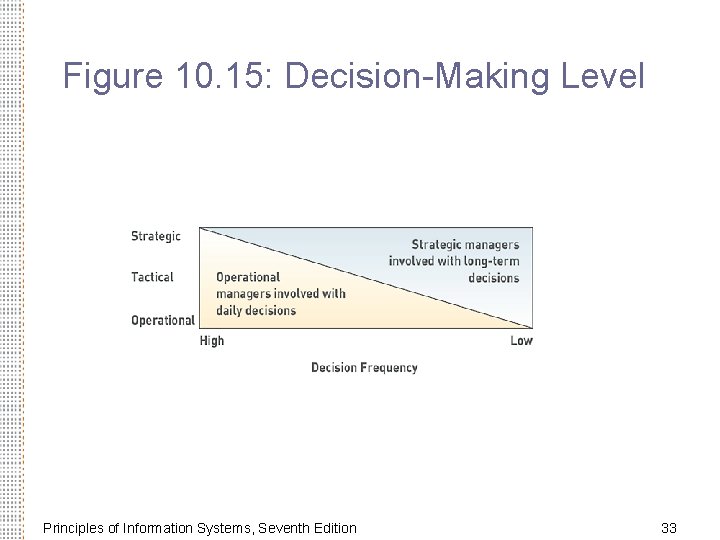
Capabilities of a Decision Support System • Support all problem-solving phases • Support different decision frequencies • Support different problem structures • Support various decision-making levels Principles of Information Systems, Seventh Edition 32
Figure 10. 15: Decision-Making Level Principles of Information Systems, Seventh Edition 33
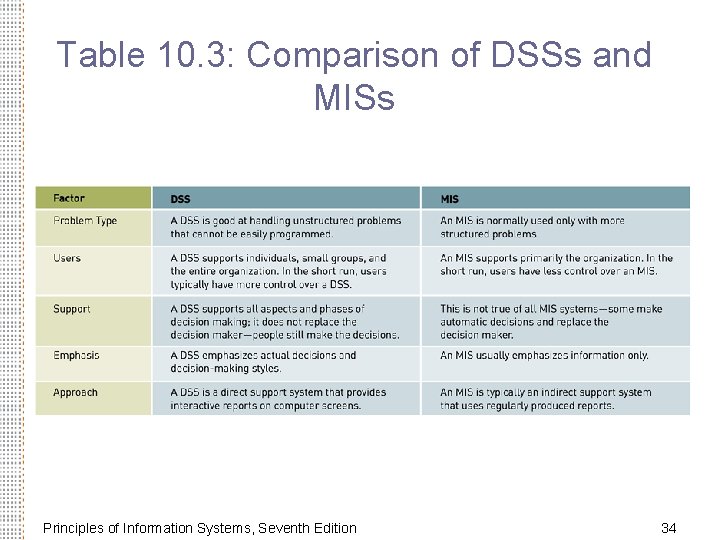
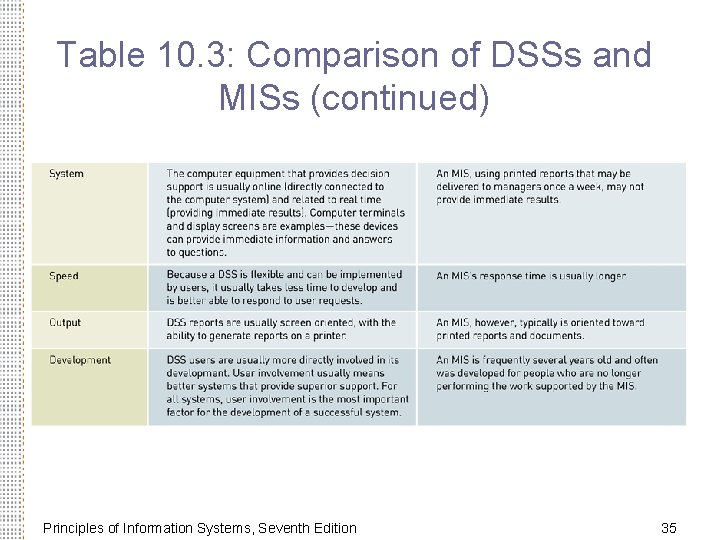
Table 10. 3: Comparison of DSSs and MISs Principles of Information Systems, Seventh Edition 34
Table 10. 3: Comparison of DSSs and MISs (continued) Principles of Information Systems, Seventh Edition 35
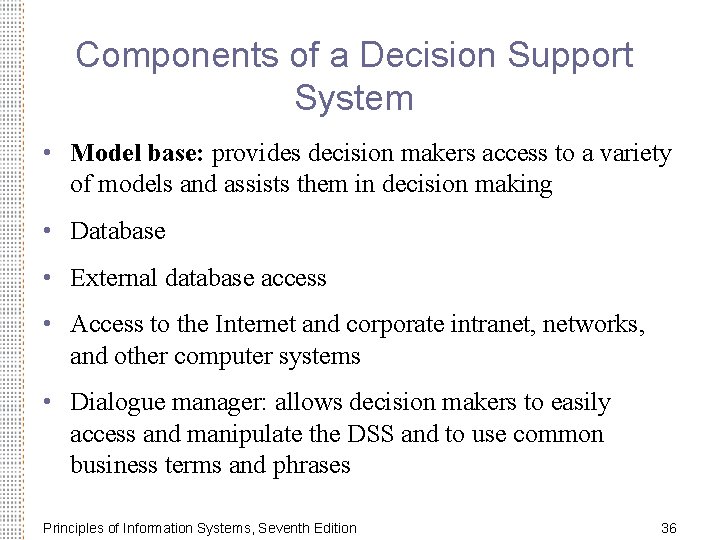
Components of a Decision Support System • Model base: provides decision makers access to a variety of models and assists them in decision making • Database • External database access • Access to the Internet and corporate intranet, networks, and other computer systems • Dialogue manager: allows decision makers to easily access and manipulate the DSS and to use common business terms and phrases Principles of Information Systems, Seventh Edition 36
Figure 10. 16: Conceptual Model of a DSS Principles of Information Systems, Seventh Edition 37
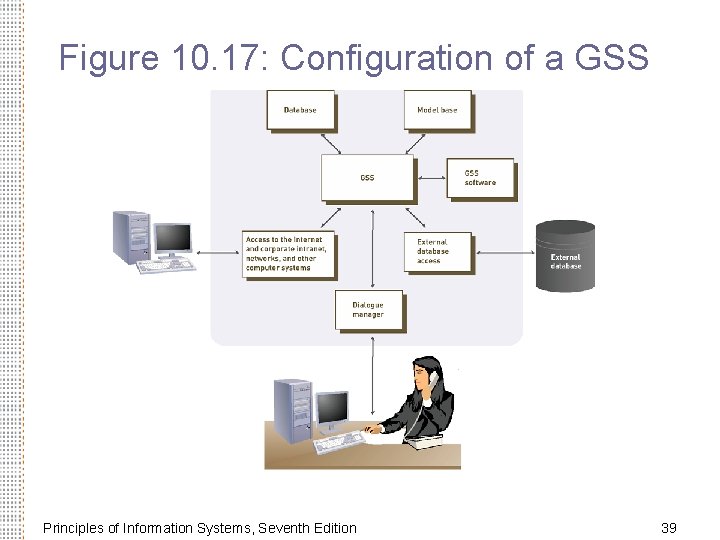
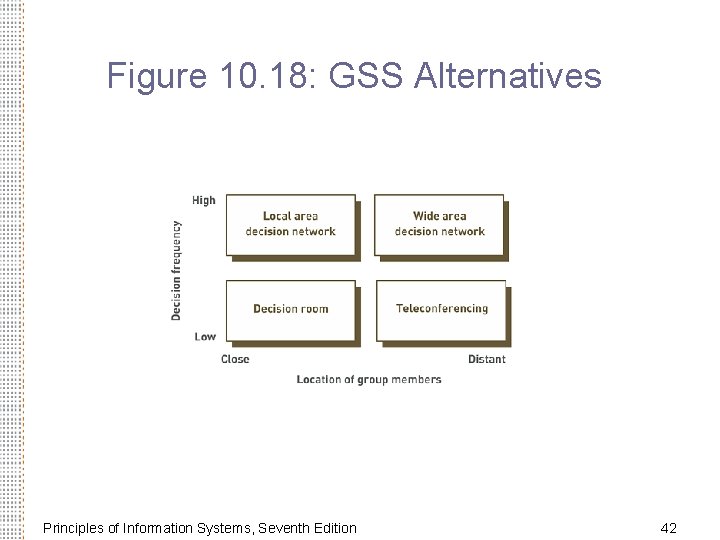
Group Support Systems • Group support system (GSS) • Consists of most elements in a DSS, plus software to provide effective support in group decision making • Also called group support system or computerized collaborative work system Principles of Information Systems, Seventh Edition 38
Figure 10. 17: Configuration of a GSS Principles of Information Systems, Seventh Edition 39
Characteristics of a GSS That Enhance Decision Making • Special design • Ease of use • Flexibility • Decision-making support Principles of Information Systems, Seventh Edition 40
Characteristics of a GSS That Enhance Decision Making (continued) • Anonymous input • Reduction of negative group behavior • Parallel communication • Automated record keeping Principles of Information Systems, Seventh Edition 41
Figure 10. 18: GSS Alternatives Principles of Information Systems, Seventh Edition 42
Executive Support Systems • Executive support system (ESS): specialized DSS that includes all hardware, software, data, procedures, and people used to assist senior-level executives within the organization Principles of Information Systems, Seventh Edition 43
Executive Support Systems in Perspective • Tailored to individual executives • Easy to use • Drill-down capabilities • Support need for external data Principles of Information Systems, Seventh Edition 44
Executive Support Systems in Perspective (continued) • Can help when uncertainty is high • Future-oriented • Linked to value-added processes Principles of Information Systems, Seventh Edition 45
Capabilities of Executive Support Systems • Support for defining an overall vision • Support for strategic planning • Support for strategic organizing and staffing • Support for strategic control • Support for crisis management Principles of Information Systems, Seventh Edition 46
Summary • The decision-making phase of the problem-solving process includes three stages: intelligence, design, and choice • A management information system (MIS) provides managers with information that supports effective decision making and provides feedback on daily operations • A financial MIS provides financial information to all financial managers within an organization Principles of Information Systems, Seventh Edition 47
Summary (continued) • The manufacturing MIS subsystems and outputs monitor and control the flow of materials, products, and services through the organization • A marketing MIS supports managerial activities in product development, distribution, pricing decisions, and promotional effectiveness • A human resource MIS is concerned with activities related to employees and potential employees of an organization Principles of Information Systems, Seventh Edition 48
Summary (continued) • A DSS is an organized collection of people, procedures, software, databases, and devices used to support decision making and problem solving • A group support system (GSS) consists of most elements in a DSS, plus software to provide effective support in group decision making • An executive support system (ESS) is a specialized DSS that includes all hardware, software, data, procedures, and people used to assist senior-level executives within the organization Principles of Information Systems, Seventh Edition 49