Precipitation refers to any product of the condensation
- Slides: 17
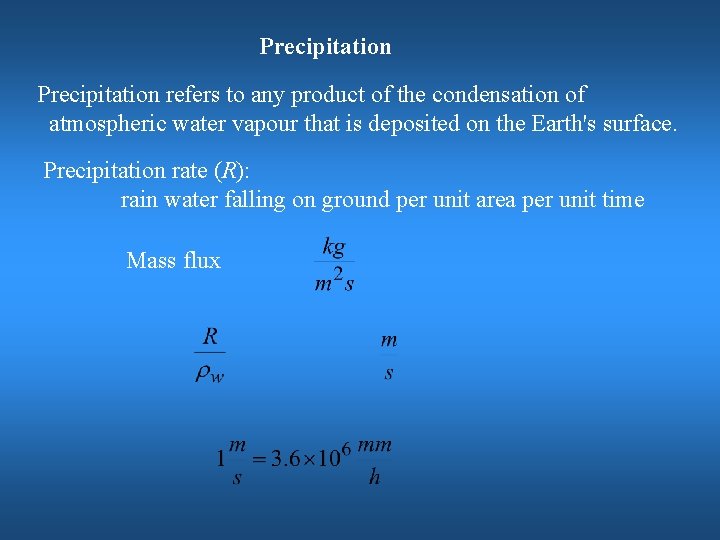
Precipitation refers to any product of the condensation of atmospheric water vapour that is deposited on the Earth's surface. Precipitation rate (R): rain water falling on ground per unit area per unit time Mass flux
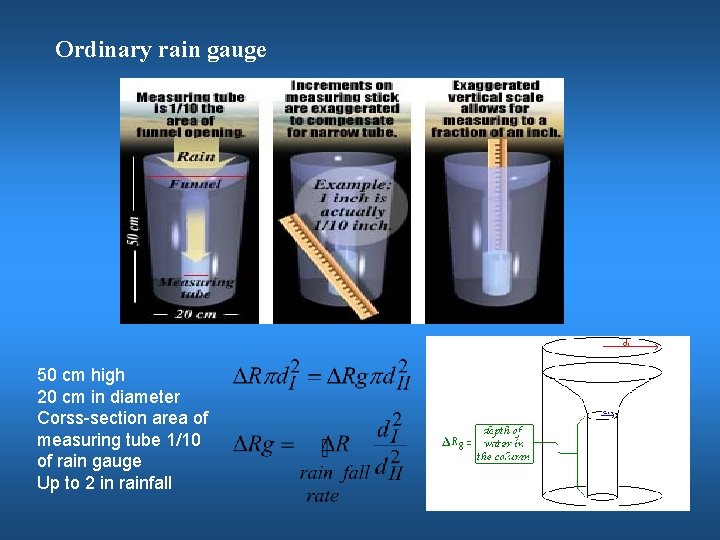
Ordinary rain gauge 50 cm high 20 cm in diameter Corss-section area of measuring tube 1/10 of rain gauge Up to 2 in rainfall
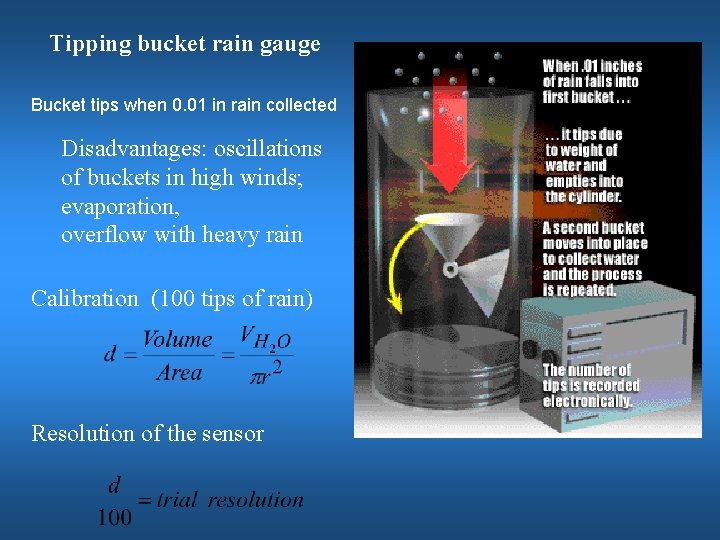
Tipping bucket rain gauge Bucket tips when 0. 01 in rain collected Disadvantages: oscillations of buckets in high winds; evaporation, overflow with heavy rain Calibration (100 tips of rain) Resolution of the sensor
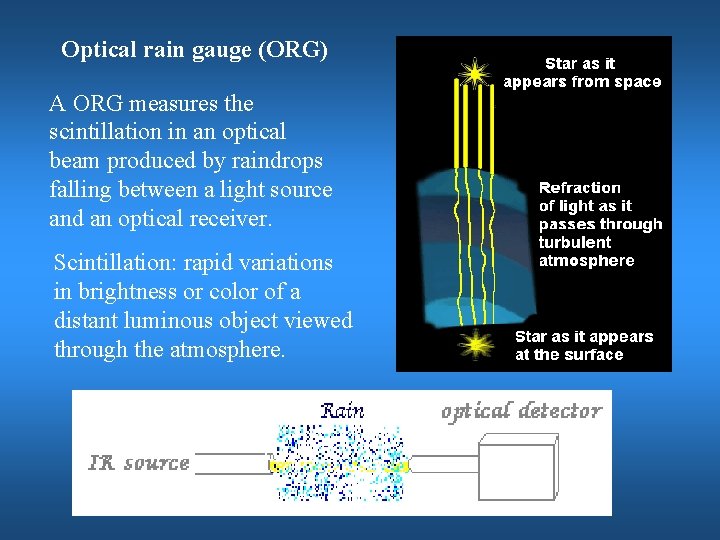
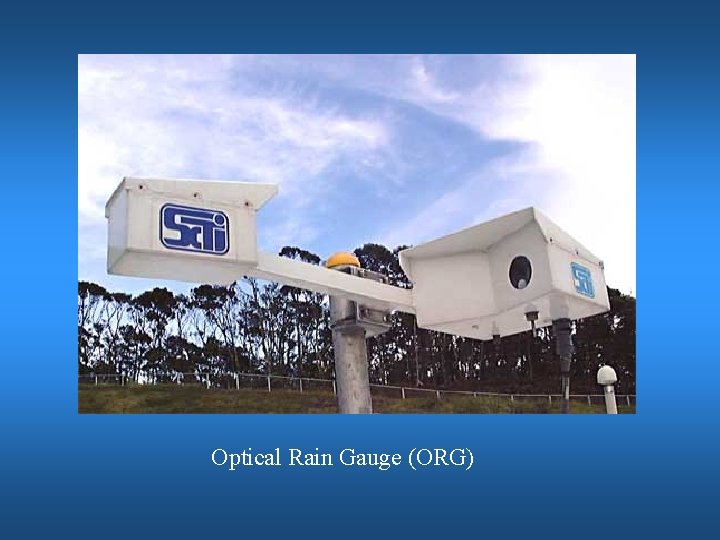
Optical rain gauge (ORG) A ORG measures the scintillation in an optical beam produced by raindrops falling between a light source and an optical receiver. Scintillation: rapid variations in brightness or color of a distant luminous object viewed through the atmosphere.
Optical Rain Gauge (ORG)
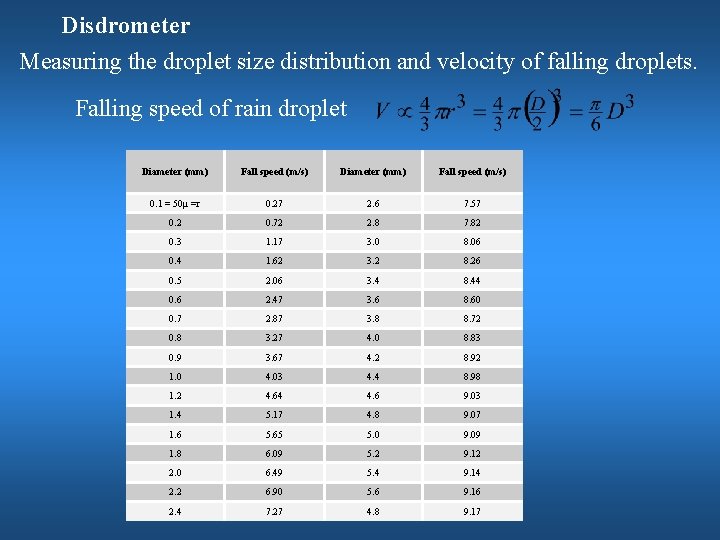
Disdrometer Measuring the droplet size distribution and velocity of falling droplets. Falling speed of rain droplet Diameter (mm) Fall speed (m/s) 0. 1 = 50μ =r 0. 27 2. 6 7. 57 0. 2 0. 72 2. 8 7. 82 0. 3 1. 17 3. 0 8. 06 0. 4 1. 62 3. 2 8. 26 0. 5 2. 06 3. 4 8. 44 0. 6 2. 47 3. 6 8. 60 0. 7 2. 87 3. 8 8. 72 0. 8 3. 27 4. 0 8. 83 0. 9 3. 67 4. 2 8. 92 1. 0 4. 03 4. 4 8. 98 1. 2 4. 64 4. 6 9. 03 1. 4 5. 17 4. 8 9. 07 1. 6 5. 65 5. 0 9. 09 1. 8 6. 09 5. 2 9. 12 2. 0 6. 49 5. 4 9. 14 2. 2 6. 90 5. 6 9. 16 2. 4 7. 27 4. 8 9. 17
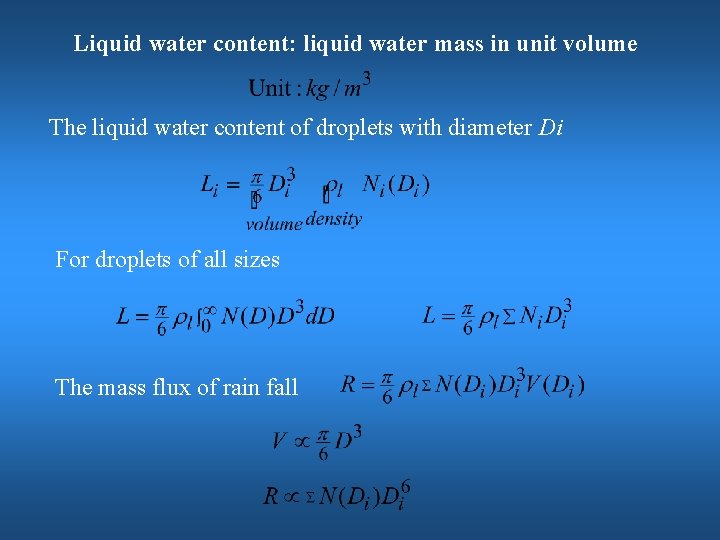
Liquid water content: liquid water mass in unit volume The liquid water content of droplets with diameter Di For droplets of all sizes The mass flux of rain fall
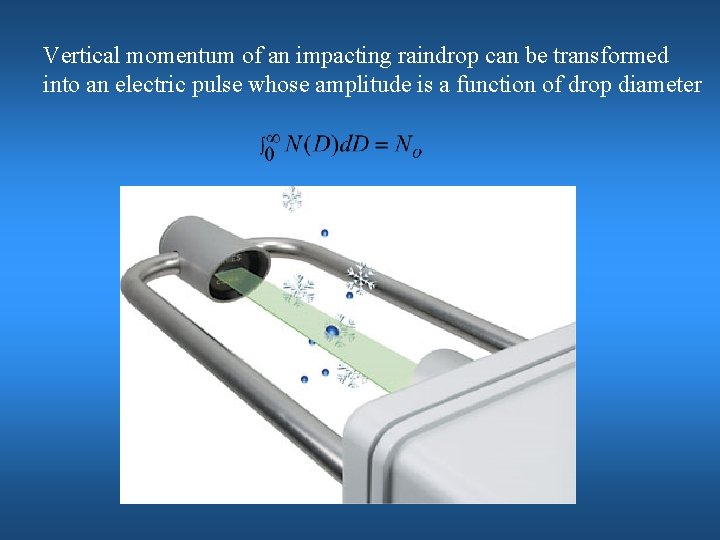
Vertical momentum of an impacting raindrop can be transformed into an electric pulse whose amplitude is a function of drop diameter
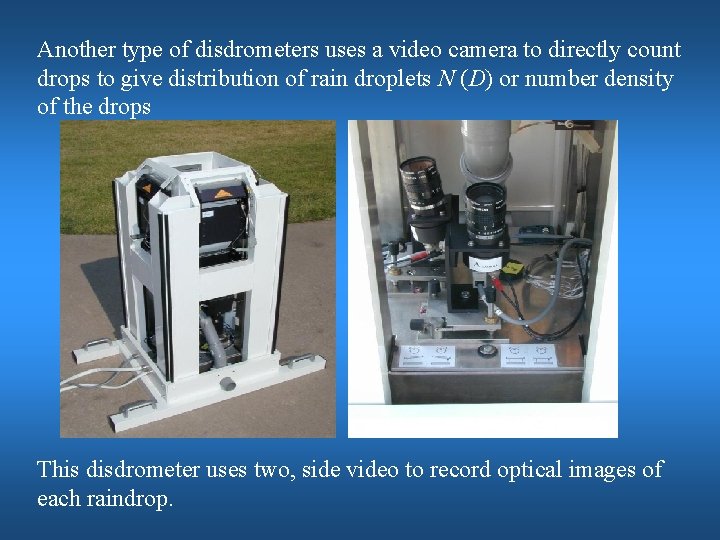
Another type of disdrometers uses a video camera to directly count drops to give distribution of rain droplets N (D) or number density of the drops This disdrometer uses two, side video to record optical images of each raindrop.
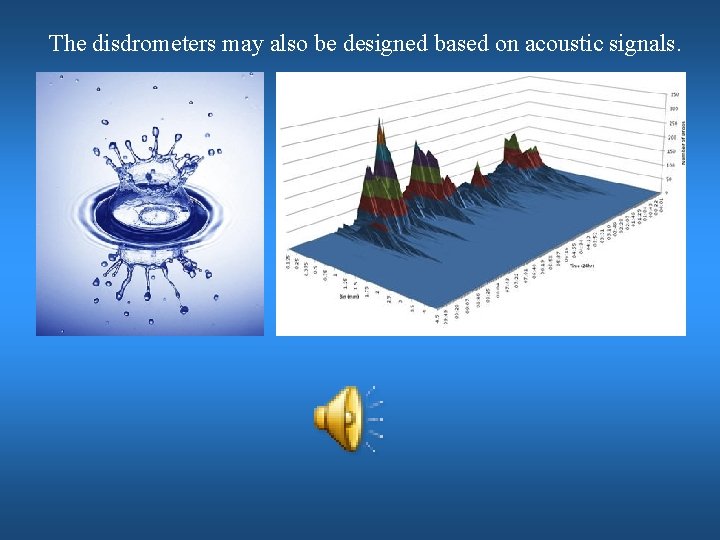
The disdrometers may also be designed based on acoustic signals.
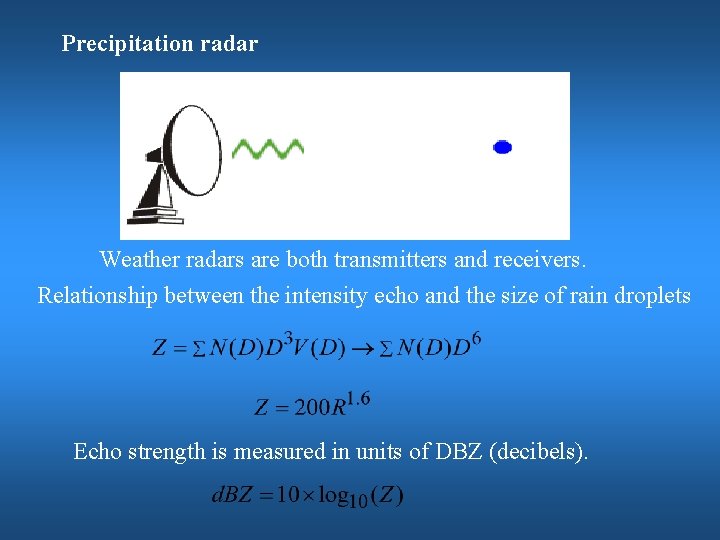
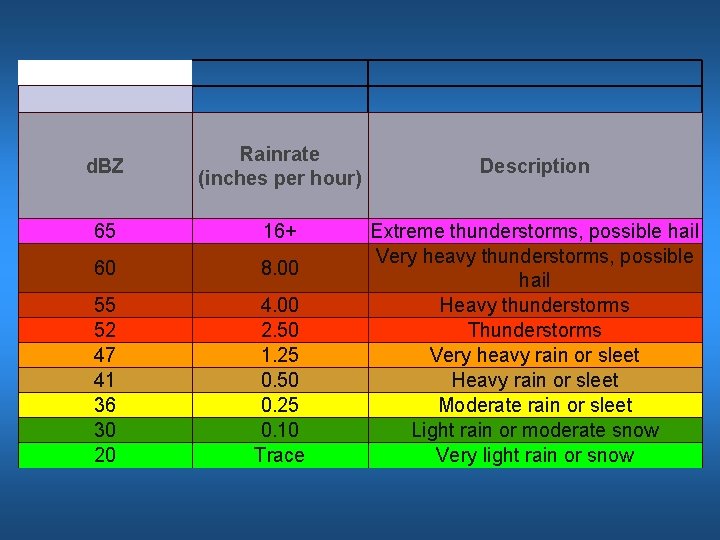
Precipitation radar Weather radars are both transmitters and receivers. Relationship between the intensity echo and the size of rain droplets Echo strength is measured in units of DBZ (decibels).
d. BZ Rainrate (inches per hour) 65 16+ 60 8. 00 55 52 47 41 36 30 20 4. 00 2. 50 1. 25 0. 50 0. 25 0. 10 Trace Description Extreme thunderstorms, possible hail Very heavy thunderstorms, possible hail Heavy thunderstorms Thunderstorms Very heavy rain or sleet Heavy rain or sleet Moderate rain or sleet Light rain or moderate snow Very light rain or snow
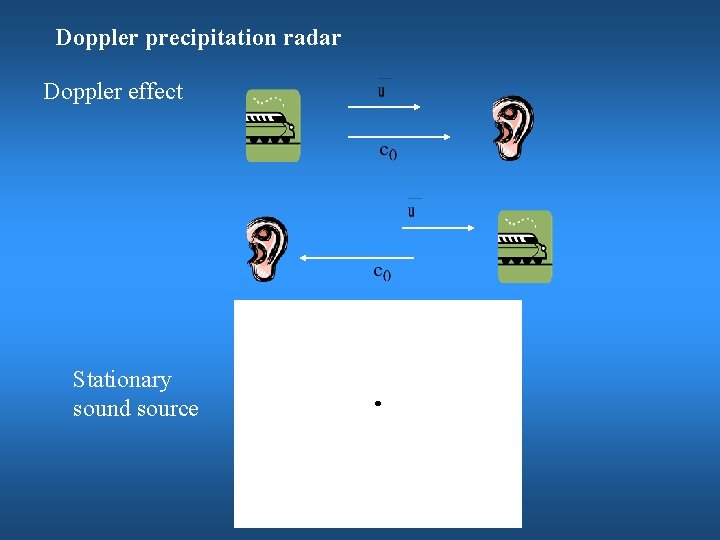
Doppler precipitation radar Doppler effect Stationary sound source
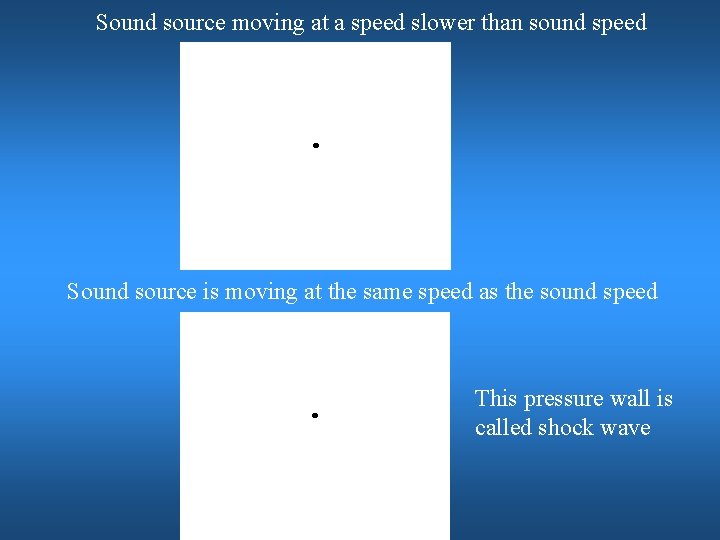
Sound source moving at a speed slower than sound speed Sound source is moving at the same speed as the sound speed This pressure wall is called shock wave
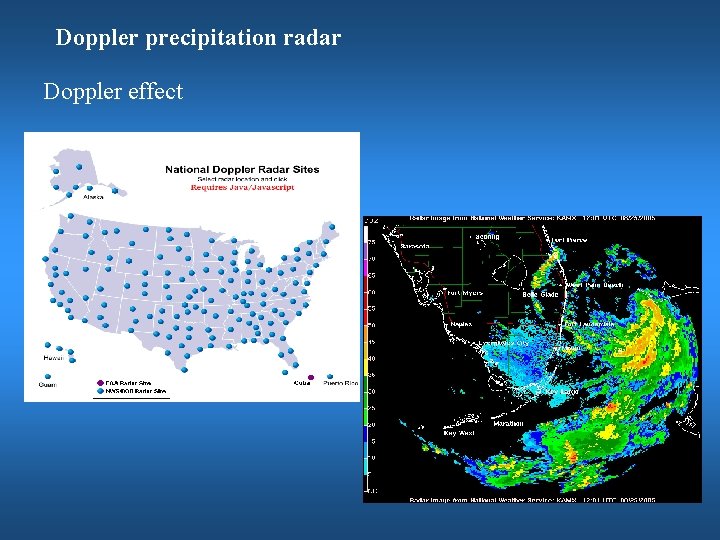
Doppler precipitation radar Doppler effect
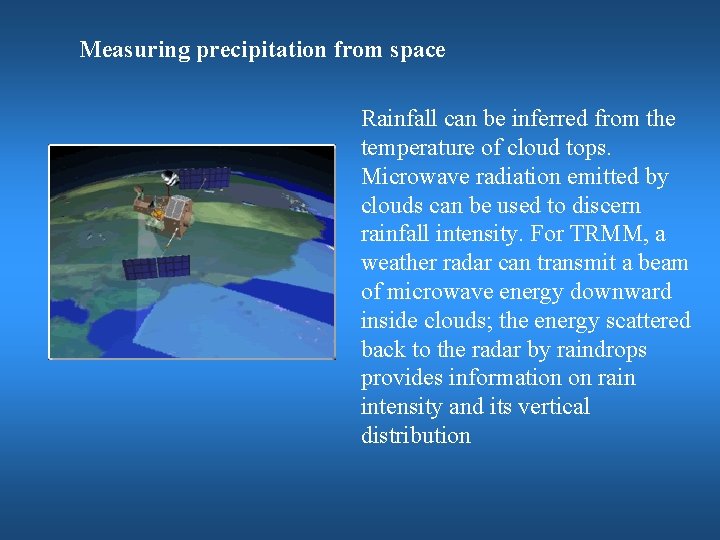
Measuring precipitation from space Rainfall can be inferred from the temperature of cloud tops. Microwave radiation emitted by clouds can be used to discern rainfall intensity. For TRMM, a weather radar can transmit a beam of microwave energy downward inside clouds; the energy scattered back to the radar by raindrops provides information on rain intensity and its vertical distribution
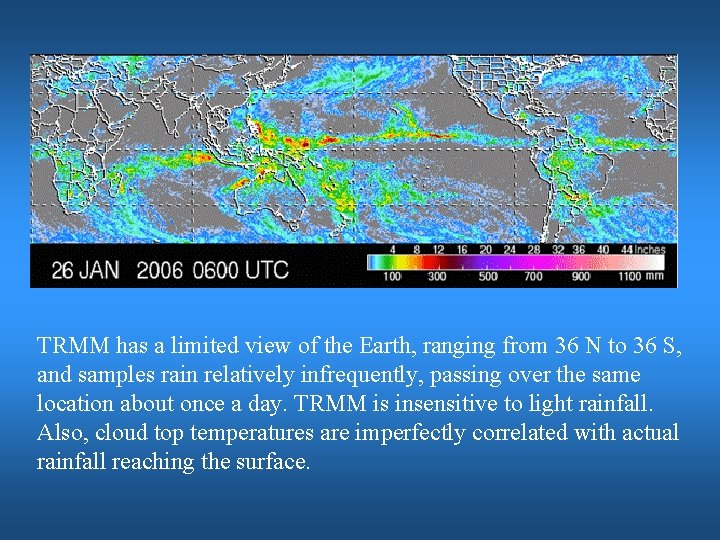
TRMM has a limited view of the Earth, ranging from 36 N to 36 S, and samples rain relatively infrequently, passing over the same location about once a day. TRMM is insensitive to light rainfall. Also, cloud top temperatures are imperfectly correlated with actual rainfall reaching the surface.