Mind Stretcher 9 18 17 Evaporation 1 using






- Slides: 45
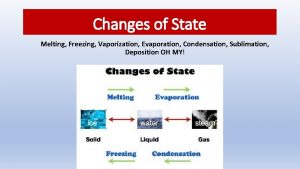
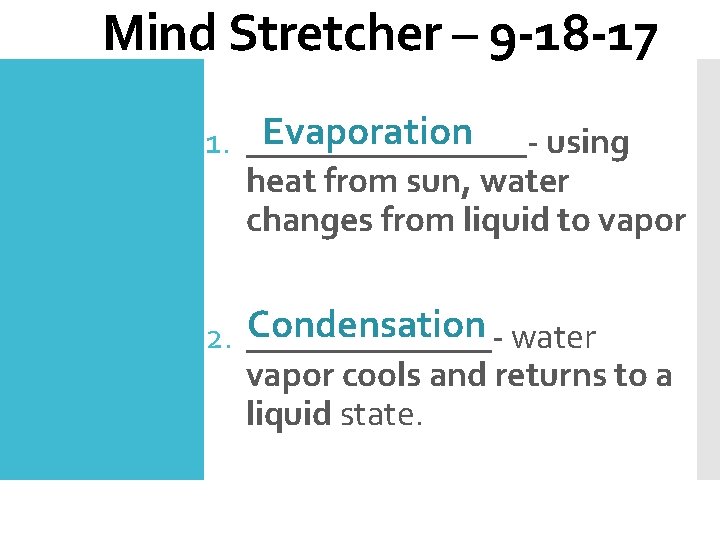
Mind Stretcher – 9 -18 -17 Evaporation 1. ________using heat from sun, water changes from liquid to vapor Condensation water 2. _______vapor cools and returns to a liquid state.
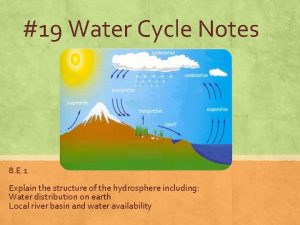
The Water Cycle (from Ch. 19 -1)
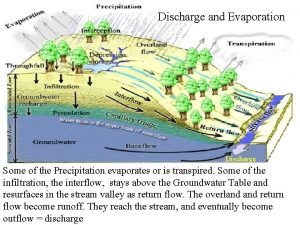
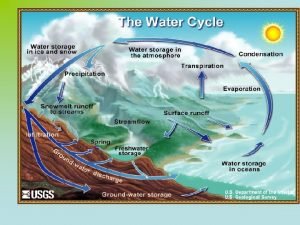
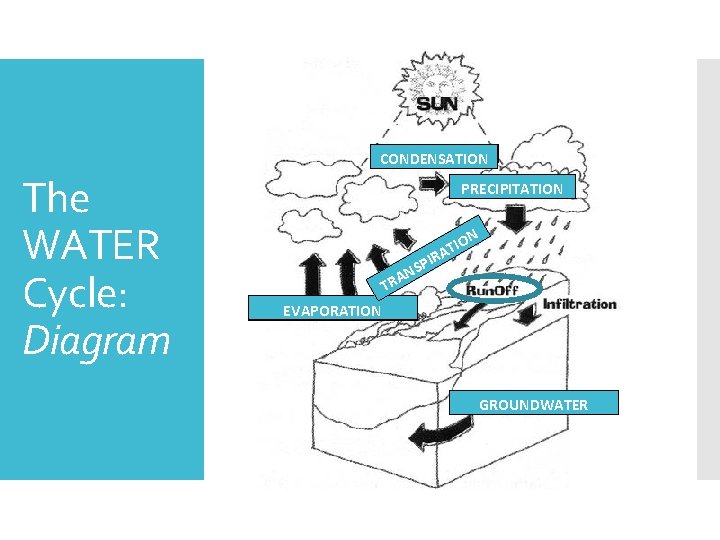
CONDENSATION The WATER Cycle: Diagram PRECIPITATION N P NS TRA TIO A IR EVAPORATION GROUNDWATER
National Science Foundation video clip https: //youtu. be/al-do-HGu. Ik
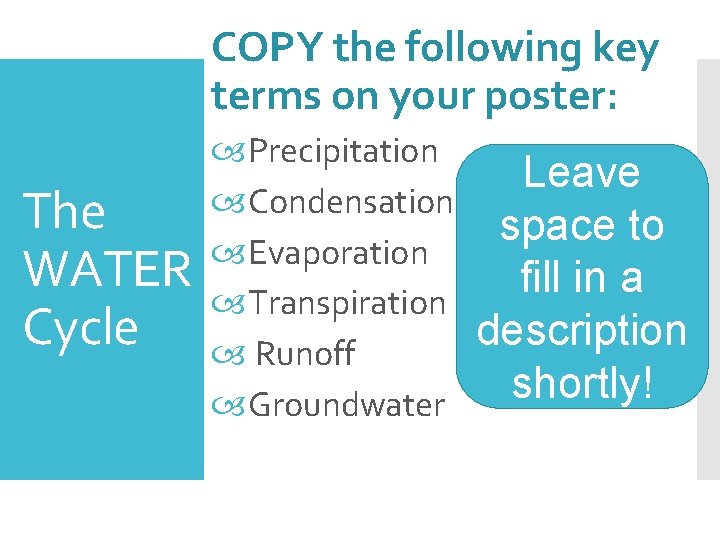
COPY the following key terms on your poster: The WATER Cycle Precipitation Condensation Evaporation Transpiration Runoff Groundwater Leave space to fill in a description shortly!
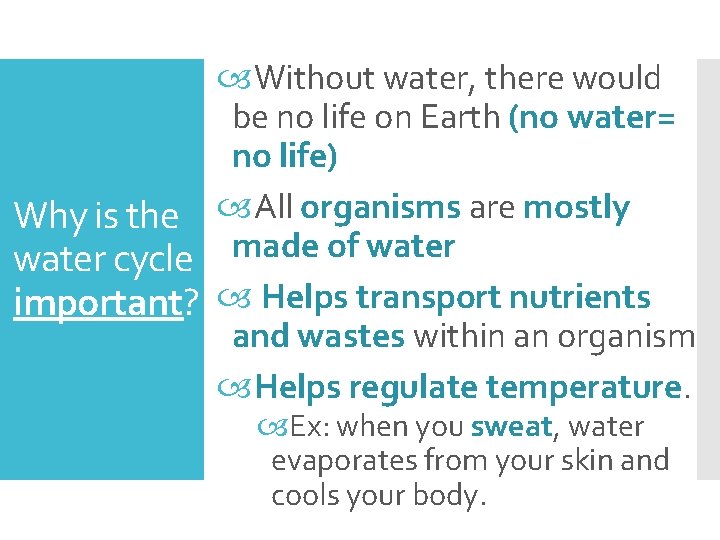
Without water, there would be no life on Earth (no water= no life) Why is the All organisms are mostly water cycle made of water important? Helps transport nutrients and wastes within an organism Helps regulate temperature. Ex: when you sweat, water evaporates from your skin and cools your body.
The WATER Cycle DESCRIBE the following key terms on your poster: Precipitation Condensation Evaporation Transpiration Runoff Groundwater Use Ch. 19 section 1
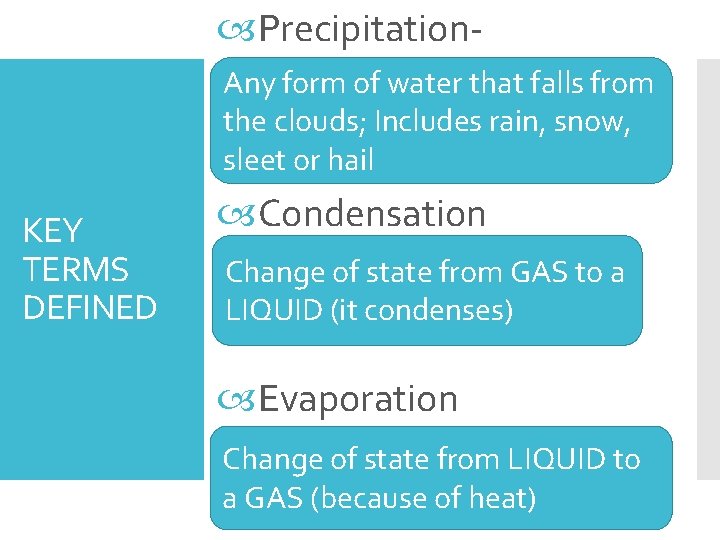
Precipitation. Any form of water that falls from the clouds; Includes rain, snow, sleet or hail KEY TERMS DEFINED Condensation Change of state from GAS to a LIQUID (it condenses) Evaporation Change of state from LIQUID to a GAS (because of heat)
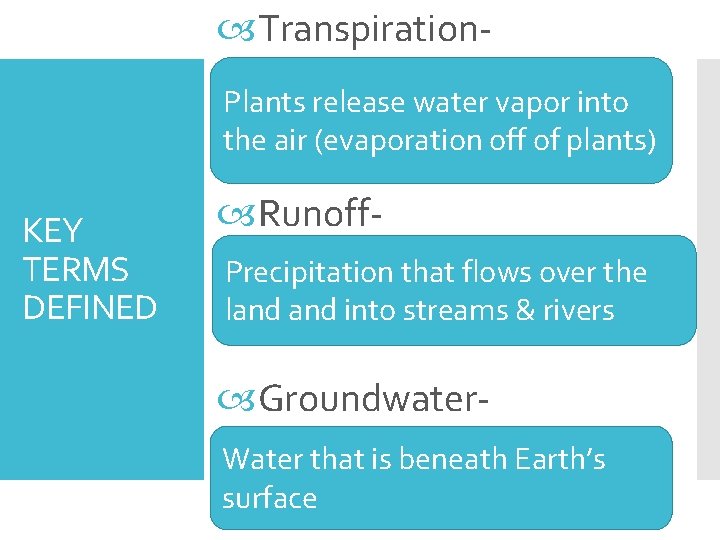
Transpiration. Plants release water vapor into the air (evaporation off of plants) KEY TERMS DEFINED Runoff. Precipitation that flows over the land into streams & rivers Groundwater. Water that is beneath Earth’s surface
Where do we get our fresh water? Ted. Ed video clip https: //youtu. be/Pz 6 AQXQGup. Q
Read the passage Answer the questions Ed. Helper: Tip: Underline/highlight support from the passage The for each question (add # next to it) Water Cycle Turn in to me & FINISH 19 -1 directed reading OR color cycles on big concept map
Waterour most precious resource. https: //youtu. be/VIaw 5 m. Cj. HPI
What would happen if you didn’t drink water? Ted. Ed video clip https: //youtu. be/9 i. MGFq. Mm. UFs
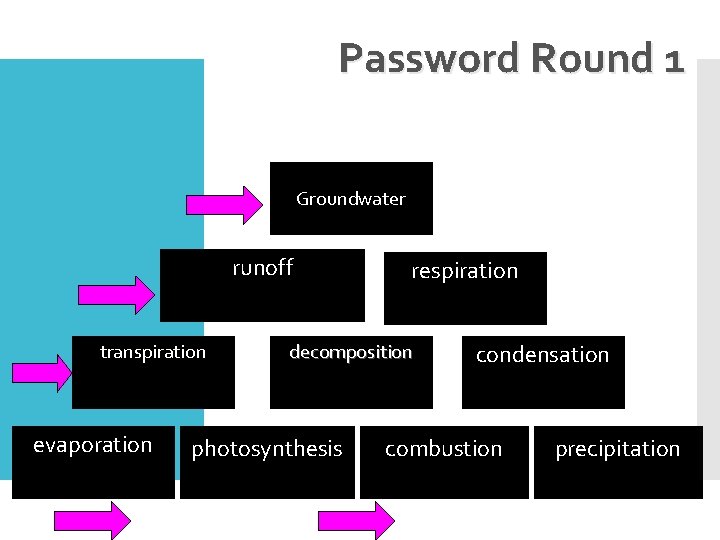
Password Round 1 Groundwater runoff transpiration evaporation respiration decomposition photosynthesis condensation combustion precipitation
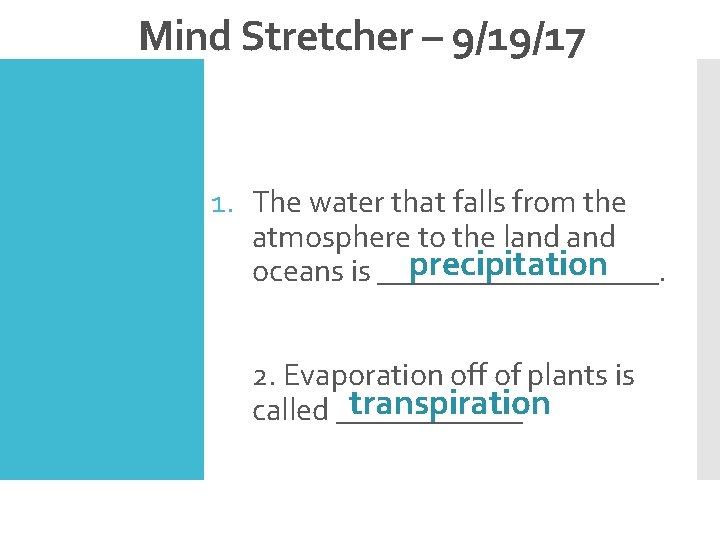
Mind Stretcher – 9/19/17 1. The water that falls from the atmosphere to the land precipitation oceans is _________. 2. Evaporation off of plants is transpiration called ______
The Carbon Cycle
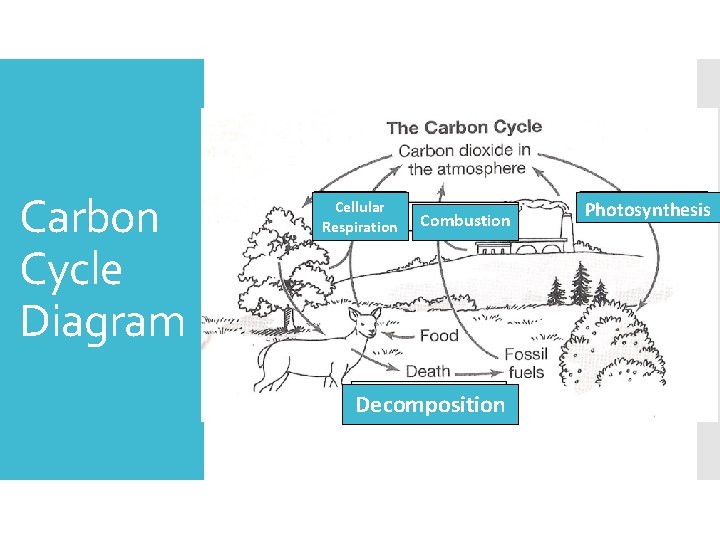
Carbon Cycle Diagram Cellular Respiration Combustion Decomposition Photosynthesis
Copy the following key terms on your poster in the middle box: The CARBON Cycle (leave space to answer them as we go along. ) photosynthesis respiration decomposition combustion Include: How do consumers get the carbon they need?
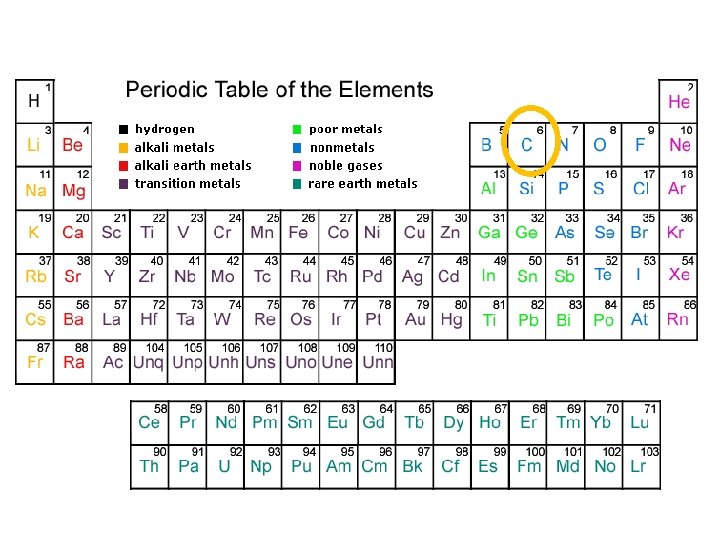
What is a carbon atom? #6 on the periodic table. It’s symbol is “C”. All living organisms are based on the carbon atom. Carbon atoms continually move through living organisms, the oceans, the atmosphere, and the crust of the planet.
The CARBON Cycle https: //youtu. be/3 XIywe. Zg 6 Sw
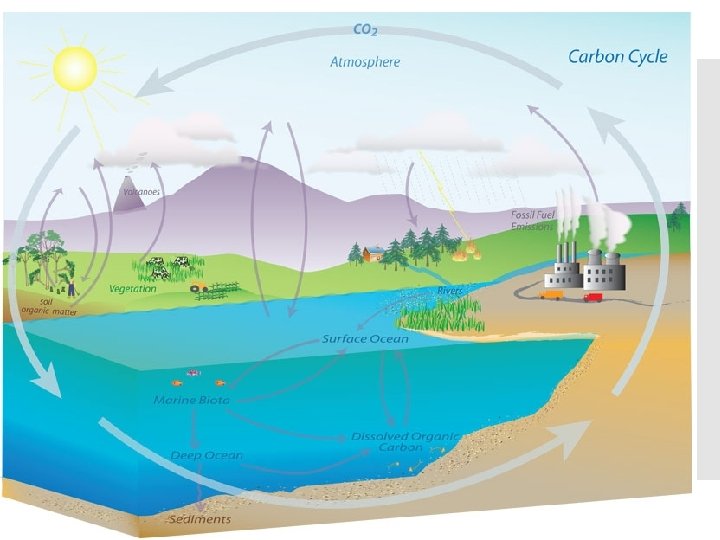
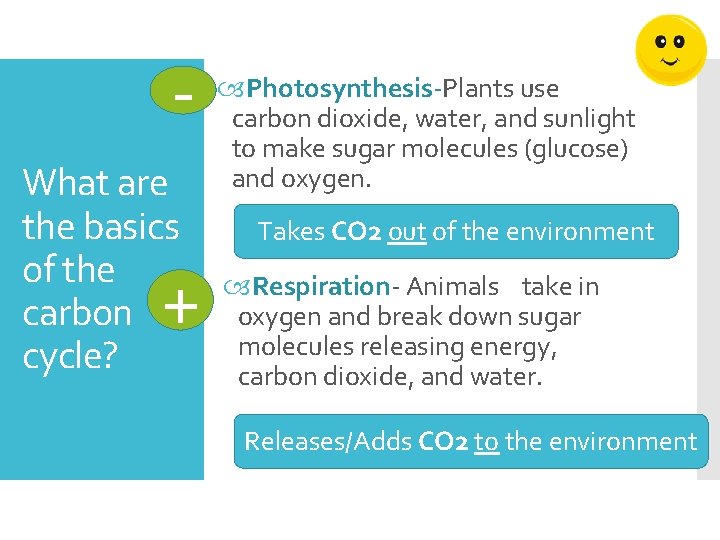
What are the basics of the carbon cycle? + Photosynthesis-Plants use carbon dioxide, water, and sunlight to make sugar molecules (glucose) and oxygen. Takes CO 2 out of the environment Respiration- Animals take in oxygen and break down sugar molecules releasing energy, carbon dioxide, and water. Releases/Adds CO 2 to the environment
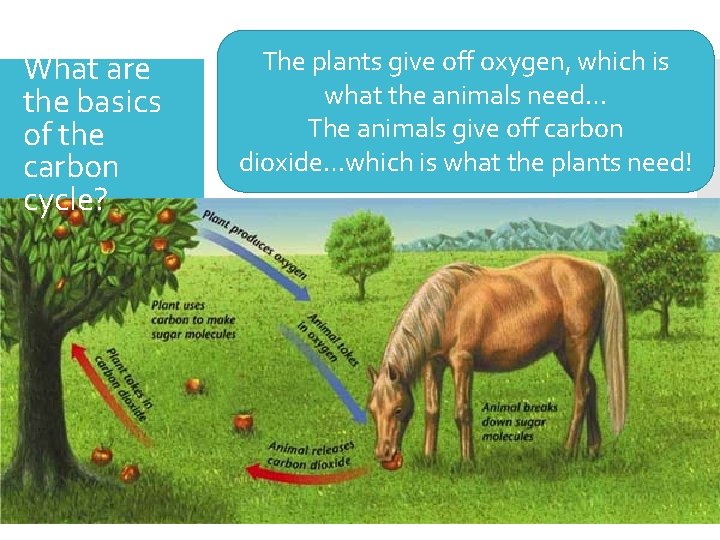
What are the basics of the carbon cycle? Simple picture The plants give off oxygen, which is what the animals need… The animals give off carbon dioxide…which is what the plants need!
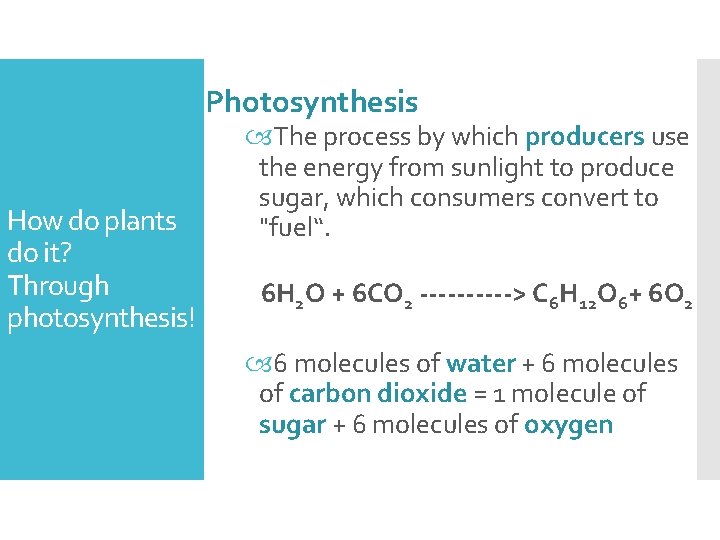
Photosynthesis How do plants do it? Through photosynthesis! The process by which producers use the energy from sunlight to produce sugar, which consumers convert to "fuel“. 6 H 2 O + 6 CO 2 -----> C 6 H 12 O 6+ 6 O 2 6 molecules of water + 6 molecules of carbon dioxide = 1 molecule of sugar + 6 molecules of oxygen
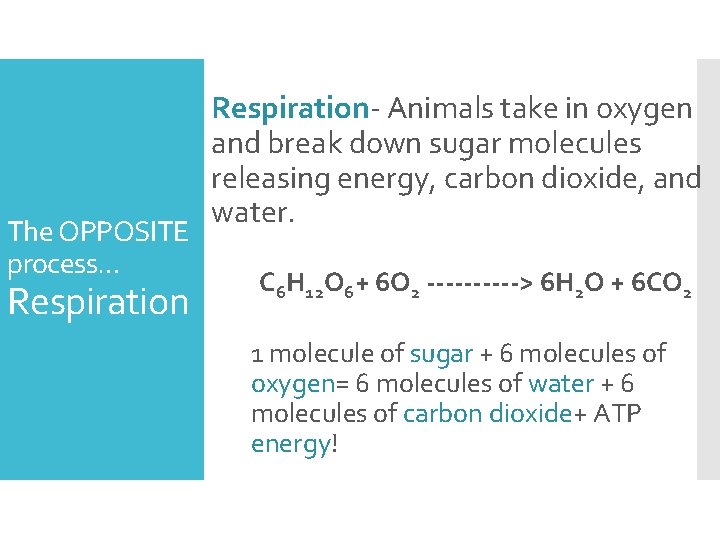
The OPPOSITE process… Respiration- Animals take in oxygen and break down sugar molecules releasing energy, carbon dioxide, and water. C 6 H 12 O 6+ 6 O 2 -----> 6 H 2 O + 6 CO 2 1 molecule of sugar + 6 molecules of oxygen= 6 molecules of water + 6 molecules of carbon dioxide+ ATP energy!
Photosynthesis & Food Ted. Ed Video clip https: //youtu. be/eo 5 Xnd. Jaz-Y
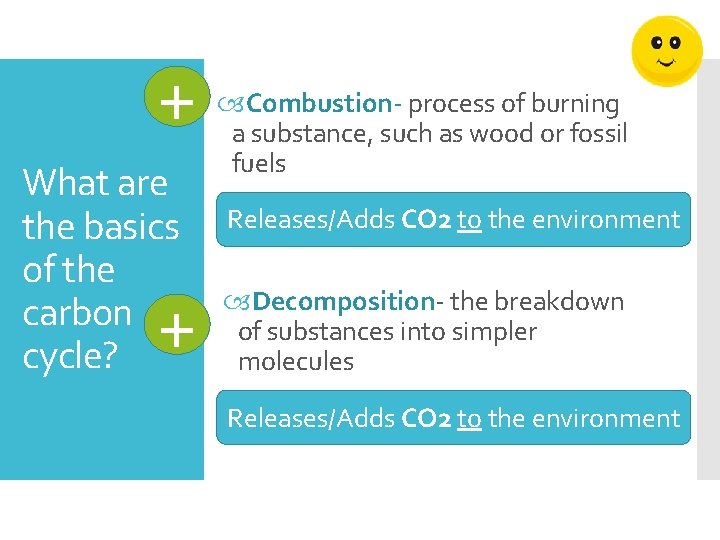
+ What are the basics of the carbon cycle? + Combustion- process of burning a substance, such as wood or fossil fuels Releases/Adds CO 2 to the environment Decomposition- the breakdown of substances into simpler molecules Releases/Adds CO 2 to the environment
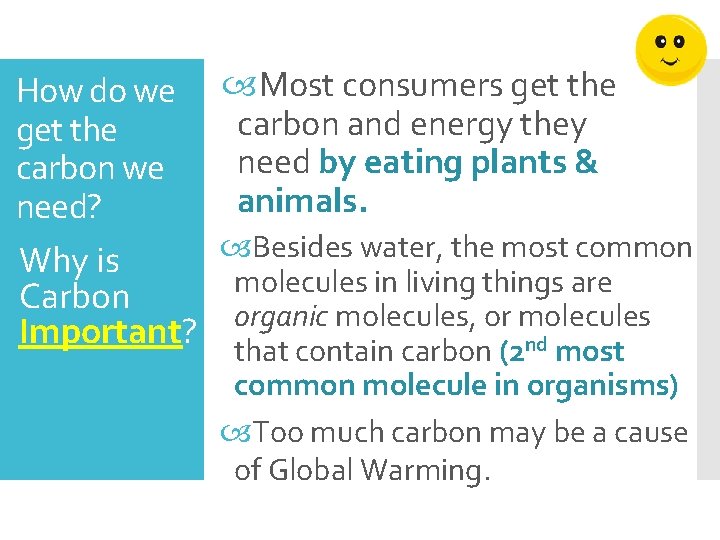
How do we get the carbon we need? Most consumers get the carbon and energy they need by eating plants & animals. Besides water, the most common Why is molecules in living things are Carbon organic molecules, or molecules Important? that contain carbon (2 nd most common molecule in organisms) Too much carbon may be a cause of Global Warming.
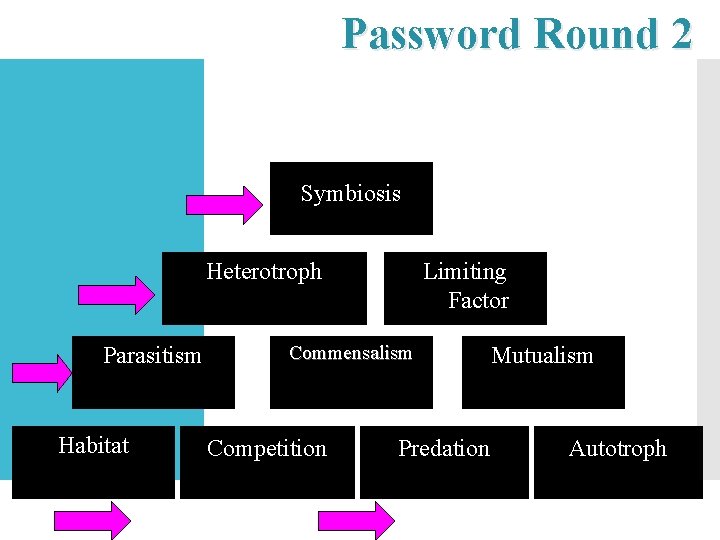
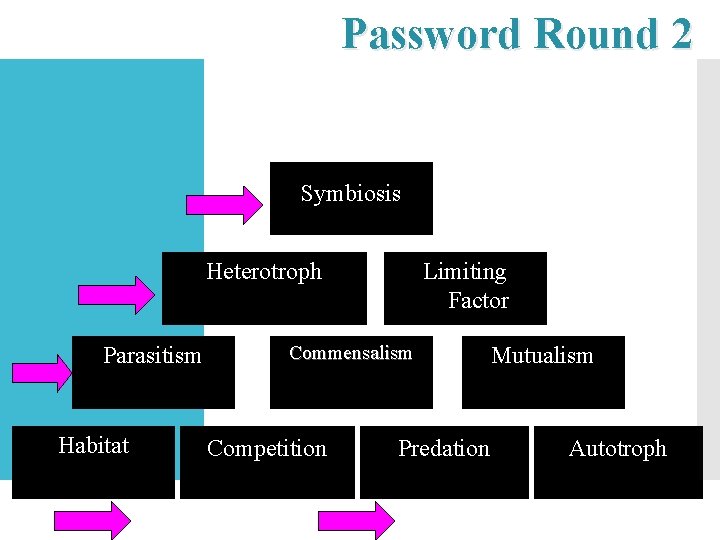
Password Round 2 Symbiosis Heterotroph Parasitism Habitat Limiting Factor Commensalism Competition Predation Mutualism Autotroph
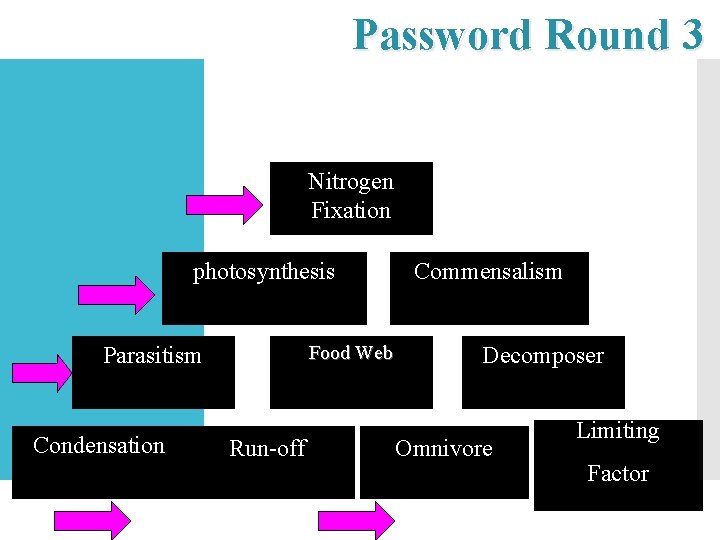
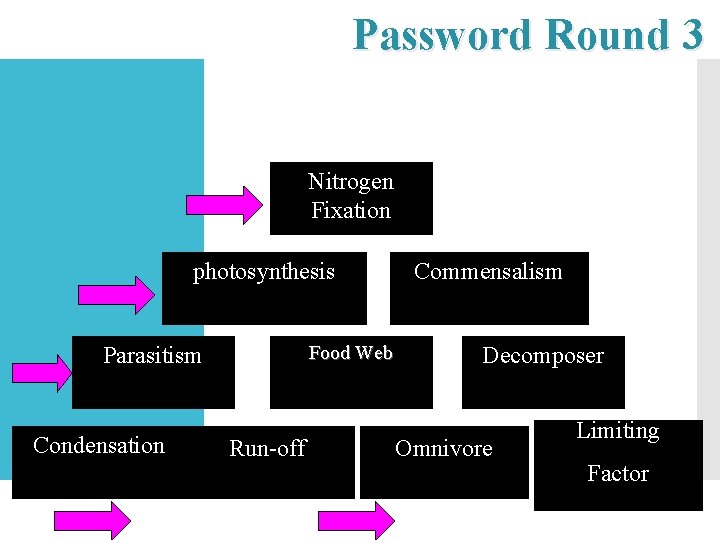
Password Round 3 Nitrogen Fixation photosynthesis Food Web Parasitism Condensation Run-off Commensalism Decomposer Omnivore Limiting Factor
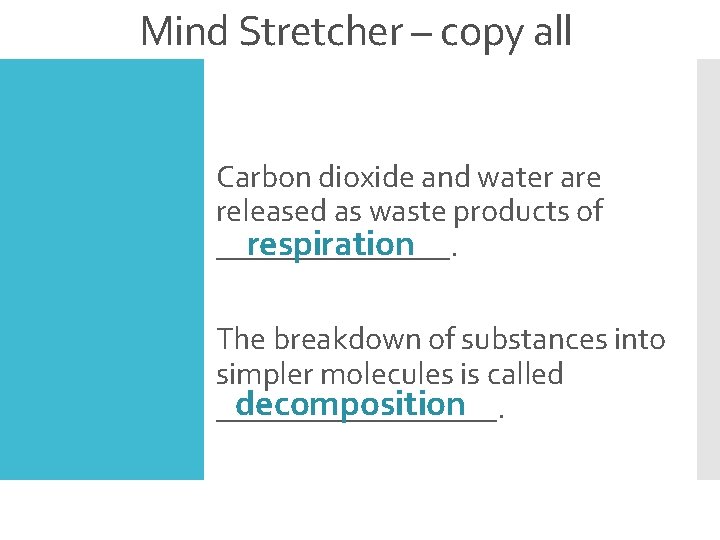
Mind Stretcher – copy all 1. Carbon dioxide and water are released as waste products of respiration ________. 2. The breakdown of substances into simpler molecules is called decomposition _________.
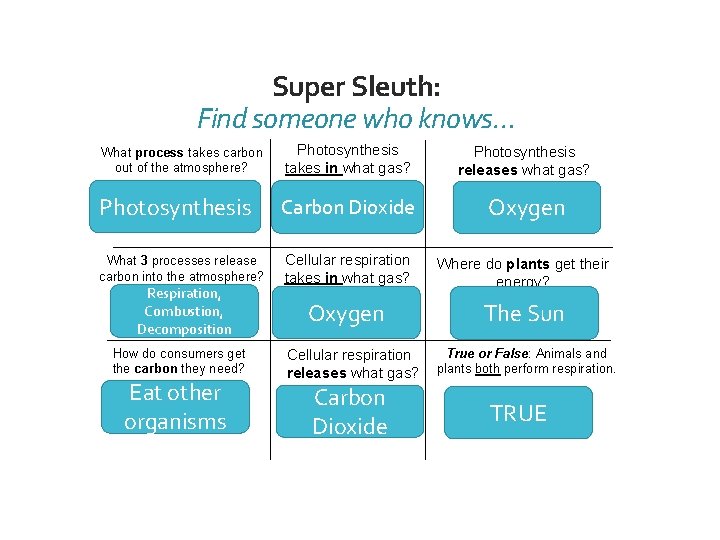
Super Sleuth: Find someone who knows… What process takes carbon out of the atmosphere? Photosynthesis What 3 processes release carbon into the atmosphere? Respiration, Combustion, Decomposition How do consumers get the carbon they need? Eat other organisms Photosynthesis takes in what gas? Photosynthesis releases what gas? Carbon Dioxide Oxygen Cellular respiration takes in what gas? Where do plants get their energy? Oxygen The Sun Cellular respiration releases what gas? Carbon Dioxide True or False: Animals and plants both perform respiration. TRUE
The Nitrogen Cycle
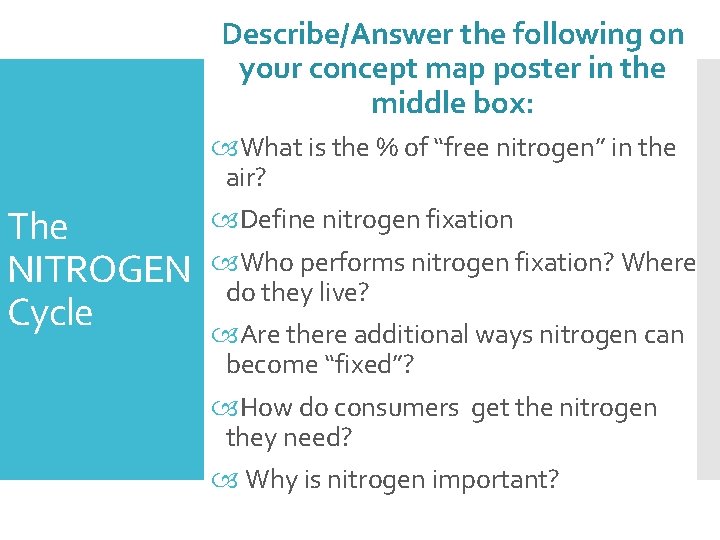
Describe/Answer the following on your concept map poster in the middle box: The NITROGEN Cycle What is the % of “free nitrogen” in the air? Define nitrogen fixation Who performs nitrogen fixation? Where do they live? Are there additional ways nitrogen can become “fixed”? How do consumers get the nitrogen they need? Why is nitrogen important?
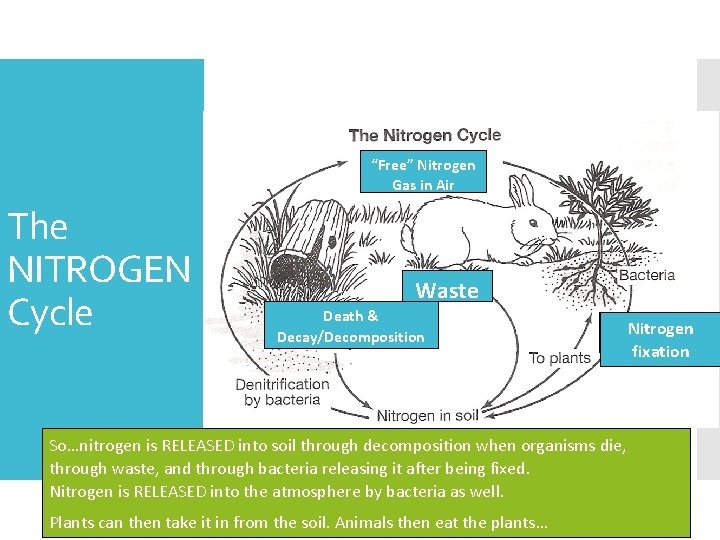
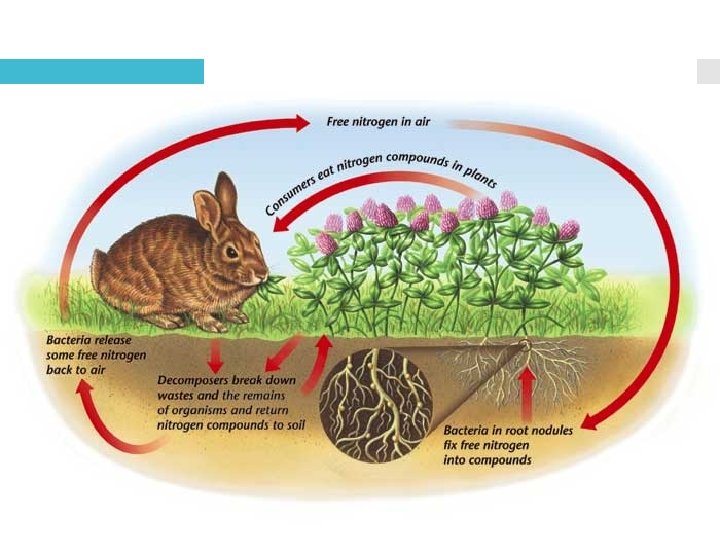
“Free” Nitrogen Gas in Air The NITROGEN Cycle Waste Death & Decay/Decomposition Nitrogen fixation So…nitrogen is RELEASED into soil through decomposition when organisms die, through waste, and through bacteria releasing it after being fixed. Nitrogen is RELEASED into the atmosphere by bacteria as well. Plants can then take it in from the soil. Animals then eat the plants…
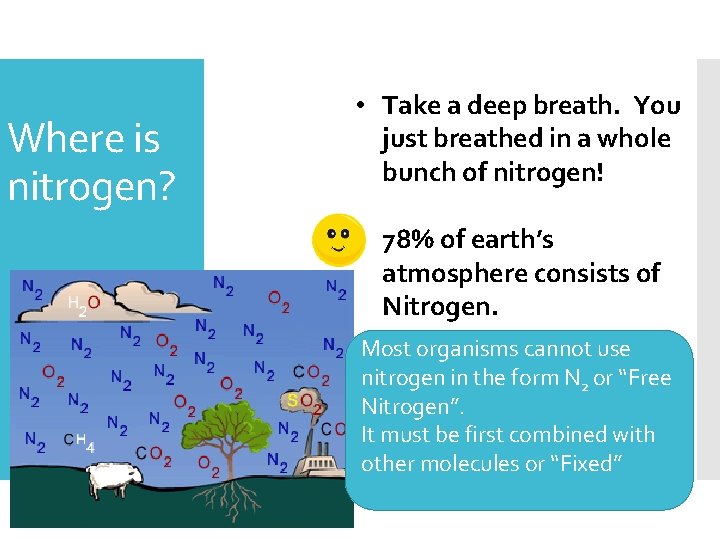
Where is nitrogen? • Take a deep breath. You just breathed in a whole bunch of nitrogen! • 78% of earth’s atmosphere consists of Nitrogen. Most organisms cannot use • nitrogen Since in nitrogen the form is N 2 so or “Free Nitrogen”. important you’d think It must be first combined with this was a good thing, other molecules or “Fixed” right?
How does nitrogen get “fixed”? Bacteria who live in “nodules” on plant roots perform nitrogen fixation. This is an example of mutualism: Bacteria get a home on plant roots Plants get the nitrogen “fixed” into a form they can use Nitrogen fixation- when bacteria transform nitrogen into a form plants can use Lightning also fixes Nitrogen.
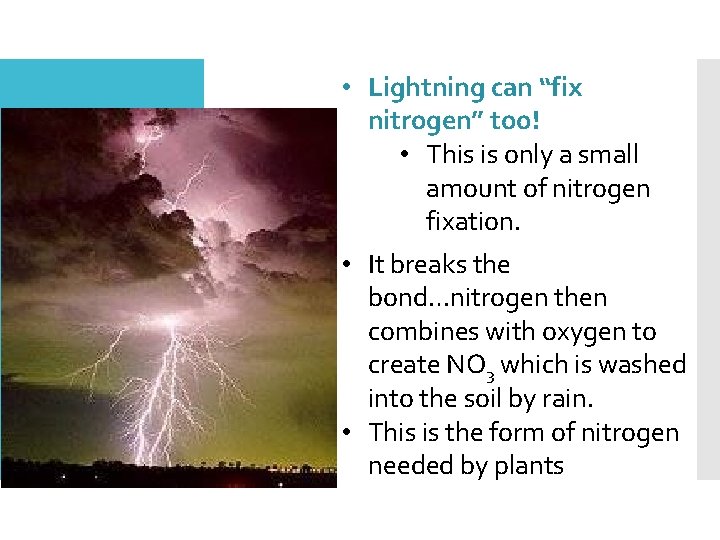
Other Ways to “Fix” nitrogen… • Lightning can “fix nitrogen” too! • This is only a small amount of nitrogen fixation. • It breaks the bond…nitrogen then combines with oxygen to create NO 3 which is washed into the soil by rain. • This is the form of nitrogen needed by plants
Simple Picture
Why is Nitrogen Important? All life requires nitrogen. It helps build protein and DNA in our cells
In Conclusion, Remember… Water, Carbon, and Nitrogen are all necessary to living things. All three are types of matter (non-living) All three are constantly being cycled through producers, consumers, decomposers, and the environment.
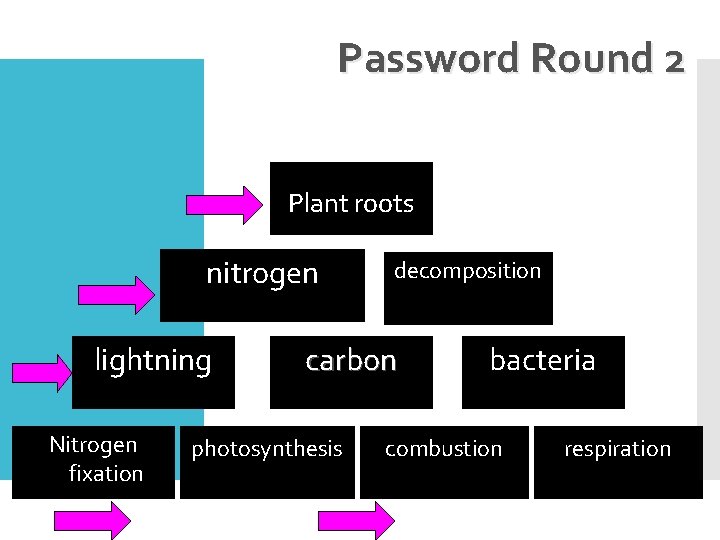
Password Round 2 Plant roots nitrogen lightning Nitrogen fixation decomposition carbon photosynthesis bacteria combustion respiration
Password Round 2 Symbiosis Heterotroph Parasitism Habitat Limiting Factor Commensalism Competition Predation Mutualism Autotroph
Password Round 3 Nitrogen Fixation photosynthesis Food Web Parasitism Condensation Run-off Commensalism Decomposer Omnivore Limiting Factor
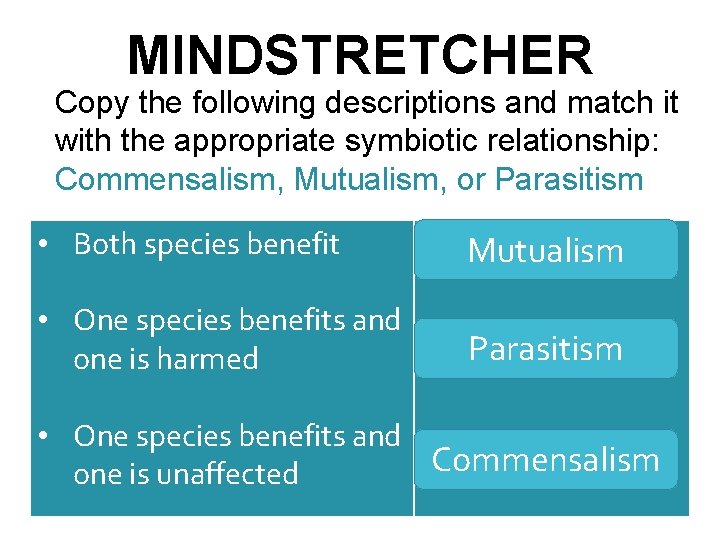
MINDSTRETCHER Copy the following descriptions and match it with the appropriate symbiotic relationship: Commensalism, Mutualism, or Parasitism • Both species benefit Mutualism • One species benefits and one is harmed Parasitism • One species benefits and Commensalism one is unaffected