Practical Applications of Awareness Courage and Love Solving

- Slides: 28
Practical Applications of Awareness, Courage, and Love: Solving Contemporary Issues Through Social Connection Michael Thurston-Rattue, M. A. (Hons) Mavis Tsai, Ph. D. Jonathan W. Kanter, Ph. D. Robert J. Kohlenberg, Ph. D. Adam M. Kuczysnki, B. S.
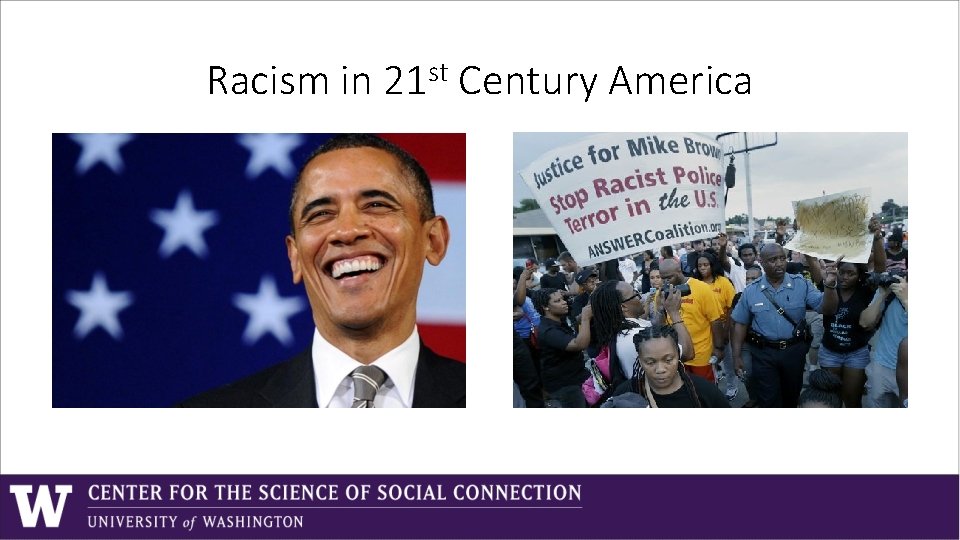
Racism in 21 st Century America
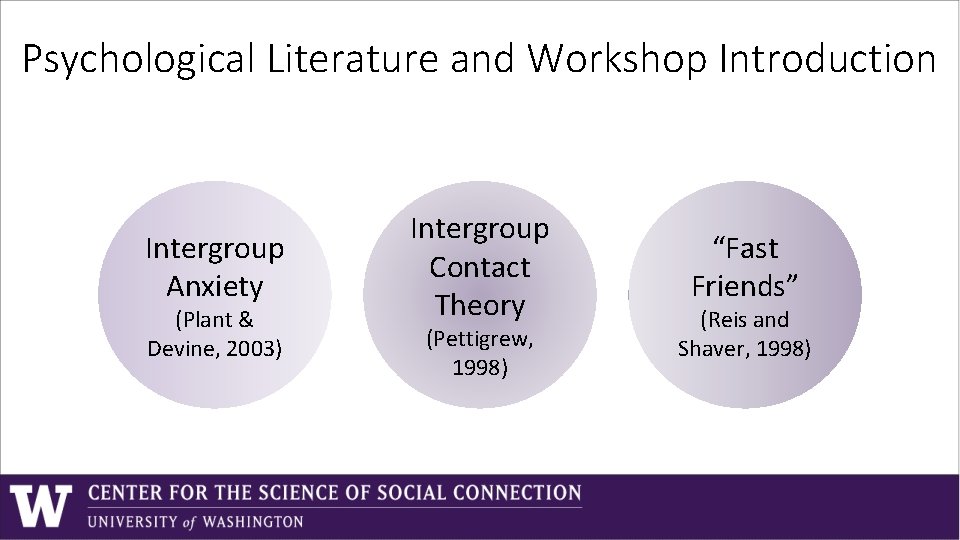
Psychological Literature and Workshop Introduction Intergroup Anxiety (Plant & Devine, 2003) Intergroup Contact Theory (Pettigrew, 1998) “Fast Friends” (Reis and Shaver, 1998)
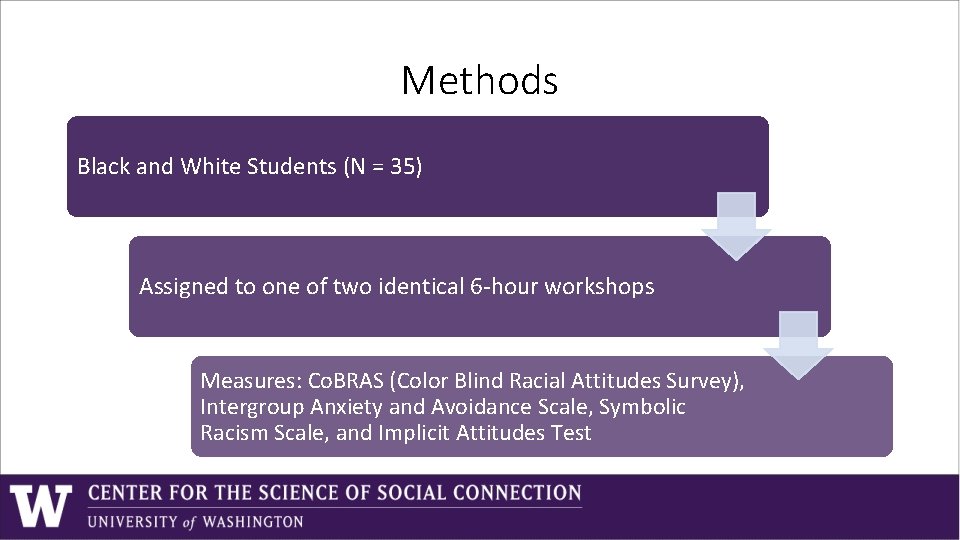
Methods Black and White Students (N = 35) Assigned to one of two identical 6 -hour workshops Measures: Co. BRAS (Color Blind Racial Attitudes Survey), Intergroup Anxiety and Avoidance Scale, Symbolic Racism Scale, and Implicit Attitudes Test
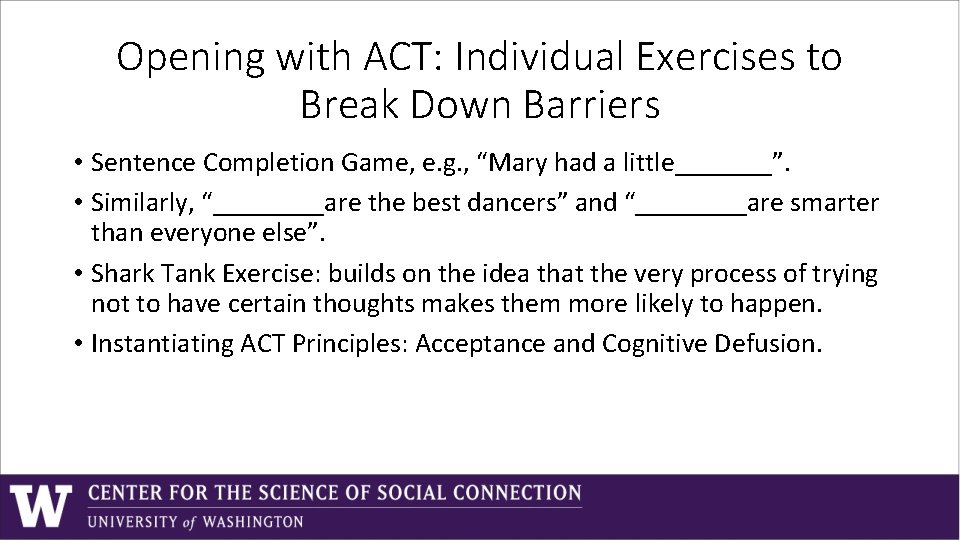
Opening with ACT: Individual Exercises to Break Down Barriers • Sentence Completion Game, e. g. , “Mary had a little_______”. • Similarly, “____are the best dancers” and “____are smarter than everyone else”. • Shark Tank Exercise: builds on the idea that the very process of trying not to have certain thoughts makes them more likely to happen. • Instantiating ACT Principles: Acceptance and Cognitive Defusion.
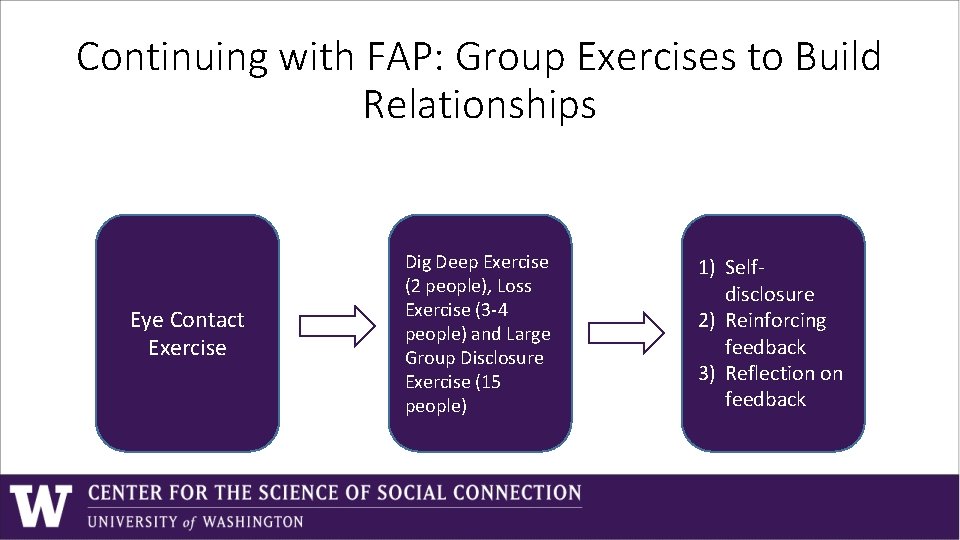
Continuing with FAP: Group Exercises to Build Relationships Eye Contact Exercise Dig Deep Exercise (2 people), Loss Exercise (3 -4 people) and Large Group Disclosure Exercise (15 people) 1) Selfdisclosure 2) Reinforcing feedback 3) Reflection on feedback
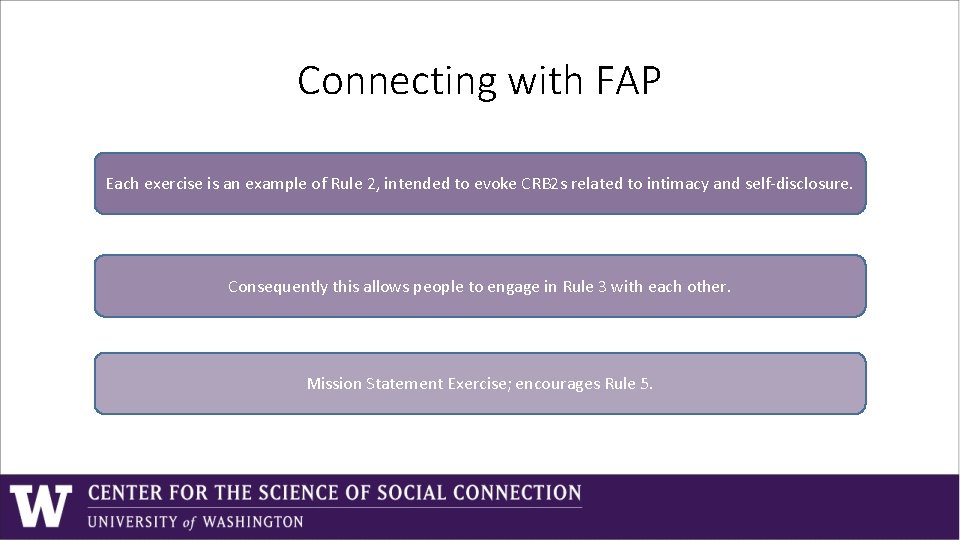
Connecting with FAP Each exercise is an example of Rule 2, intended to evoke CRB 2 s related to intimacy and self-disclosure. Consequently this allows people to engage in Rule 3 with each other. Mission Statement Exercise; encourages Rule 5.
Quantitative Results • Analyses of the data yielded no trends in the data. According to our measures the workshop did not reduce racism. Why? 1. The students scored low at baseline, meaning there was little room for them to move on our explicit measures. 2. The IAT displayed very poor test-rest reliability within the control group, and therefore was not a validly performing measure for our experimental group.
Qualitative Results Students (N = 20) took part in semi-structured qualitative interviews to discover their thoughts on how the workshop could be improved, their experiences during the workshop and whether they noticed any changes in themselves since the workshop. i) Decreased stereotyping, e. g. , “It’s difficult to humanize somebody whom you don’t really have a lot of interactions with…but at that workshop you realize that there are more similarities than differences between black and white people. ” ii) Increased awareness of the effect of personal histories on behavior, e. g. , “…[now when] I meet someone and they’re rude to me I don’t think ‘oh, they’re a mean person’, I think ‘oh, something must have happened to them; they have a back-story. ’” iii) Deepened social connections, e. g. , “I think the best part about it for me, was watching people transform. Seeing people go from being cooped up and defensive, having their walls up, and slowly over the course of the workshop, have their walls come down, and share more and more to the point where they’re crying and they’re experiencing something that they don’t get to experience in everyday life. ”
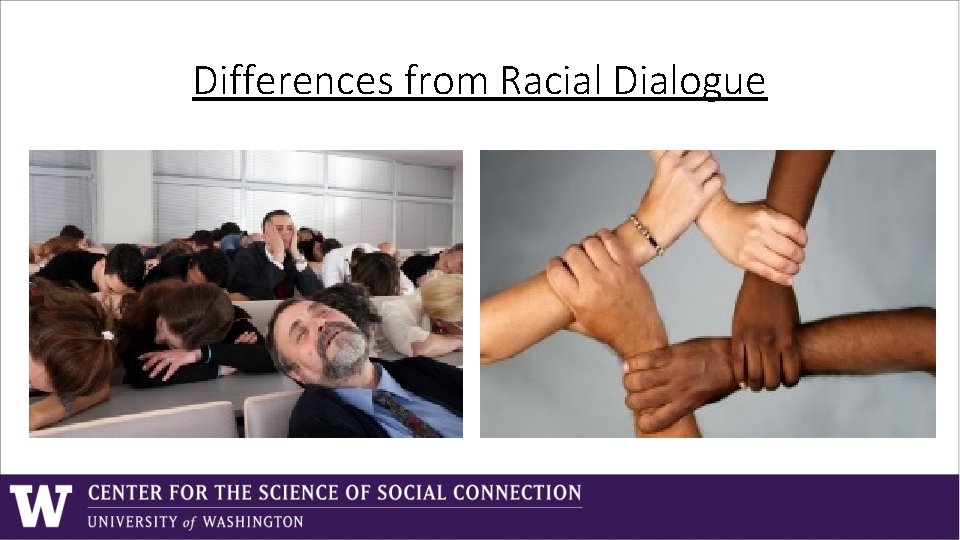
Differences from Racial Dialogue
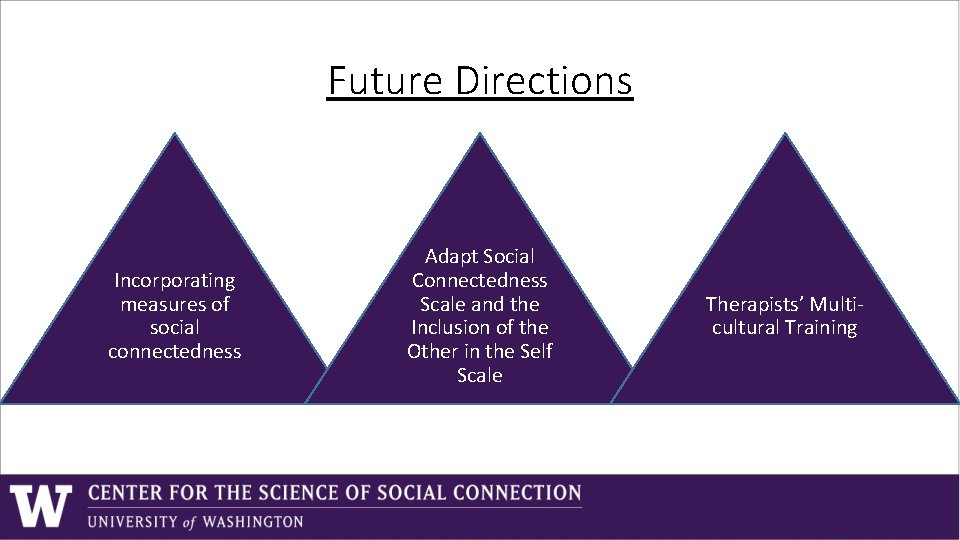
Future Directions Incorporating measures of social connectedness Adapt Social Connectedness Scale and the Inclusion of the Other in the Self Scale Therapists’ Multicultural Training
Thank you Michael J. Thurston-Rattue mjtr@uw. edu
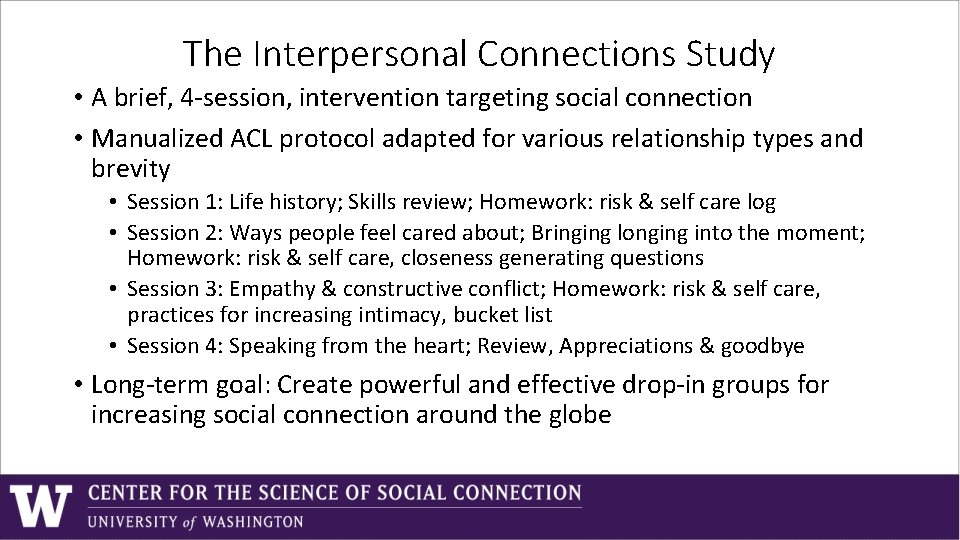
The Interpersonal Connections Study • A brief, 4 -session, intervention targeting social connection • Manualized ACL protocol adapted for various relationship types and brevity • Session 1: Life history; Skills review; Homework: risk & self care log • Session 2: Ways people feel cared about; Bringing longing into the moment; Homework: risk & self care, closeness generating questions • Session 3: Empathy & constructive conflict; Homework: risk & self care, practices for increasing intimacy, bucket list • Session 4: Speaking from the heart; Review, Appreciations & goodbye • Long-term goal: Create powerful and effective drop-in groups for increasing social connection around the globe
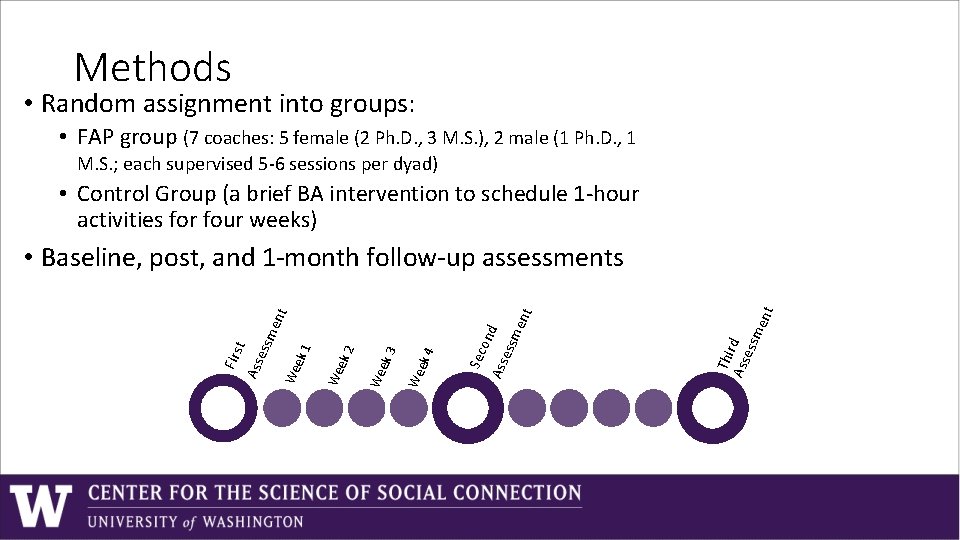
Methods • Random assignment into groups: • FAP group (7 coaches: 5 female (2 Ph. D. , 3 M. S. ), 2 male (1 Ph. D. , 1 M. S. ; each supervised 5 -6 sessions per dyad) • Control Group (a brief BA intervention to schedule 1 -hour activities for four weeks) nt Thi Ass rd ess me ond ess me nt Ass Sec ek 4 We ek 3 We ek 2 We ek 1 We ess Ass Firs t me nt • Baseline, post, and 1 -month follow-up assessments
Targeted Awareness, Courage, Love Skills
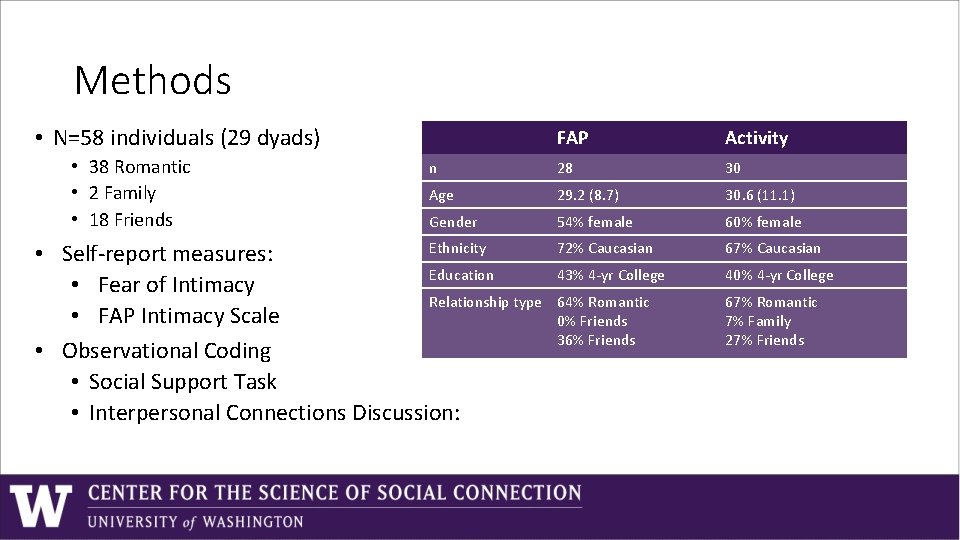
Methods • N=58 individuals (29 dyads) • 38 Romantic • 2 Family • 18 Friends FAP Activity n 28 30 Age 29. 2 (8. 7) 30. 6 (11. 1) Gender 54% female 60% female 72% Caucasian 67% Caucasian 43% 4 -yr College 40% 4 -yr College 64% Romantic 0% Friends 36% Friends 67% Romantic 7% Family 27% Friends Ethnicity • Self-report measures: Education • Fear of Intimacy Relationship type • FAP Intimacy Scale • Observational Coding • Social Support Task • Interpersonal Connections Discussion:
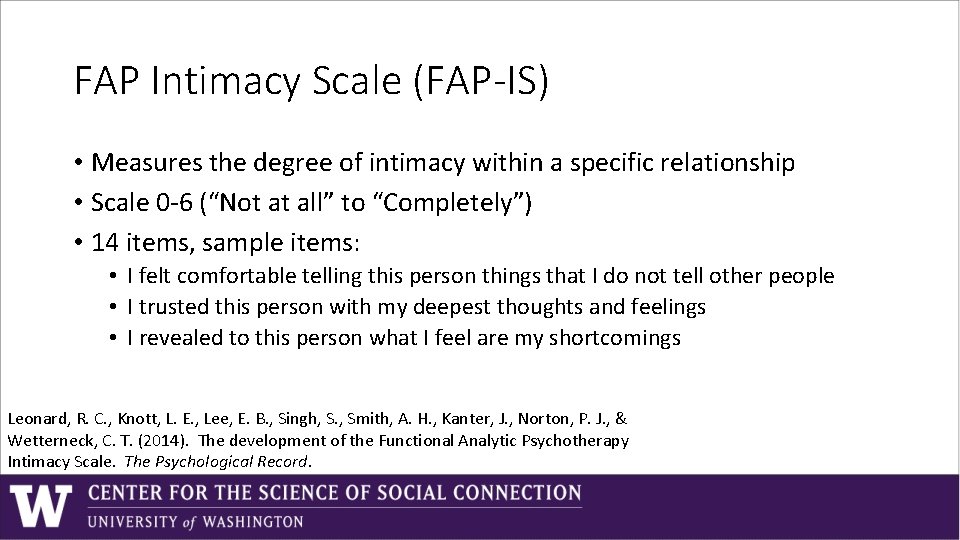
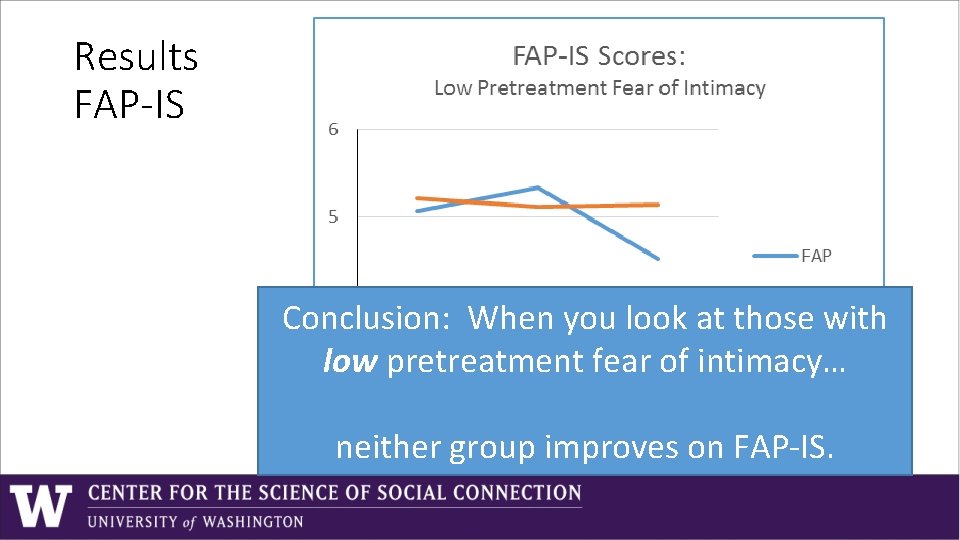
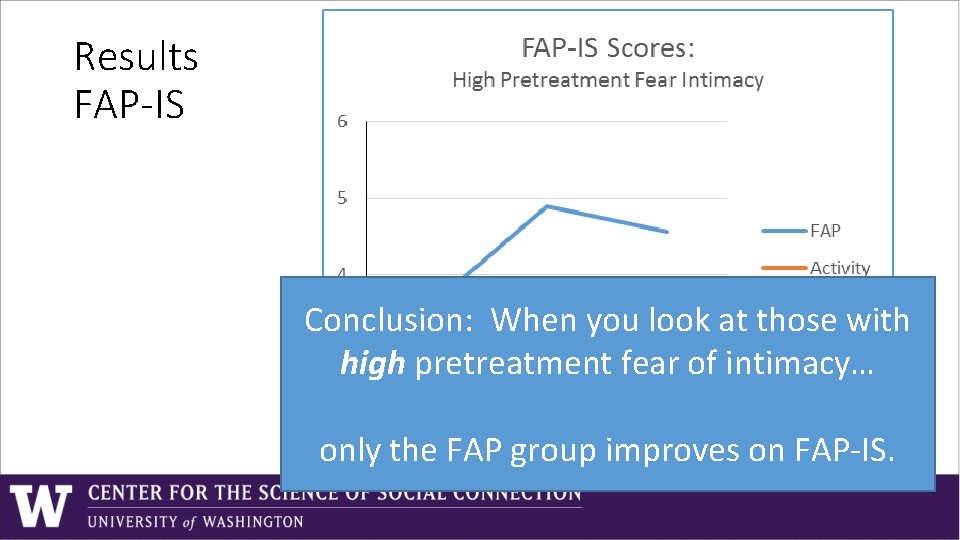
FAP Intimacy Scale (FAP-IS) • Measures the degree of intimacy within a specific relationship • Scale 0 -6 (“Not at all” to “Completely”) • 14 items, sample items: • I felt comfortable telling this person things that I do not tell other people • I trusted this person with my deepest thoughts and feelings • I revealed to this person what I feel are my shortcomings Leonard, R. C. , Knott, L. E. , Lee, E. B. , Singh, S. , Smith, A. H. , Kanter, J. , Norton, P. J. , & Wetterneck, C. T. (2014). The development of the Functional Analytic Psychotherapy Intimacy Scale. The Psychological Record.
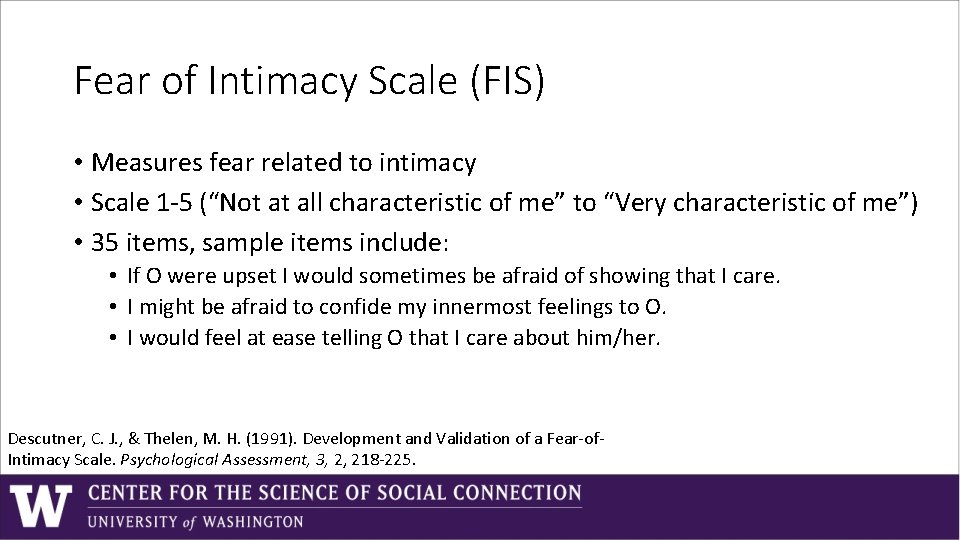
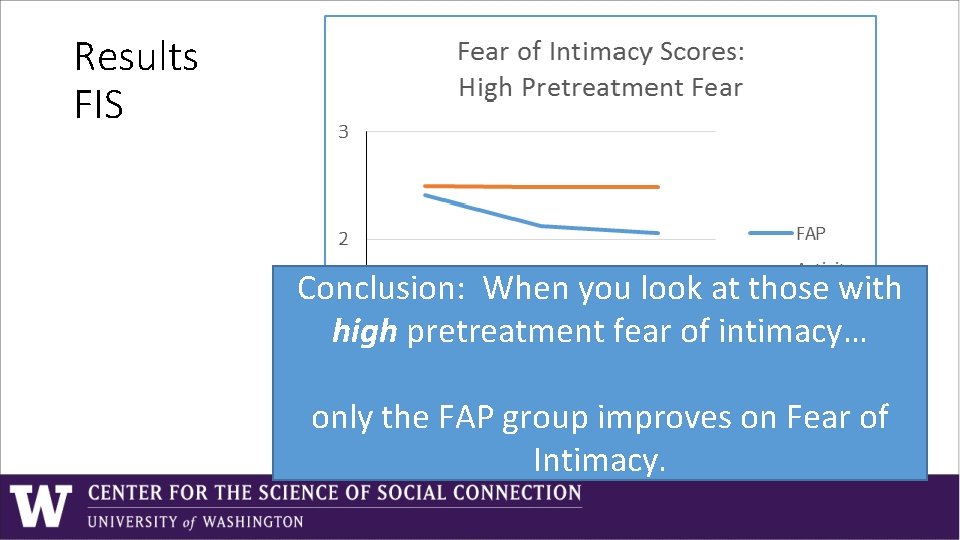
Fear of Intimacy Scale (FIS) • Measures fear related to intimacy • Scale 1 -5 (“Not at all characteristic of me” to “Very characteristic of me”) • 35 items, sample items include: • If O were upset I would sometimes be afraid of showing that I care. • I might be afraid to confide my innermost feelings to O. • I would feel at ease telling O that I care about him/her. Descutner, C. J. , & Thelen, M. H. (1991). Development and Validation of a Fear-of. Intimacy Scale. Psychological Assessment, 3, 2, 218 -225.
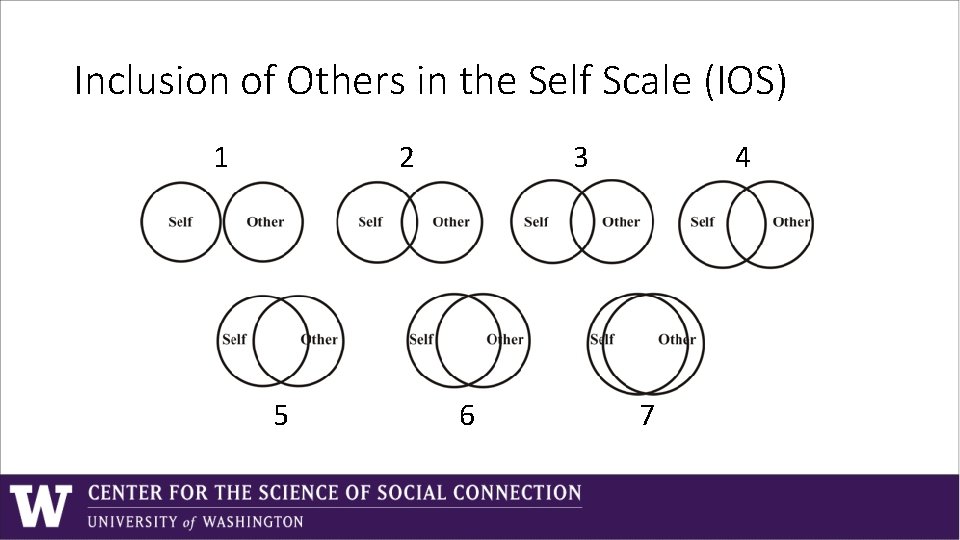
Inclusion of Others in the Self Scale (IOS) 1 2 5 3 6 4 7
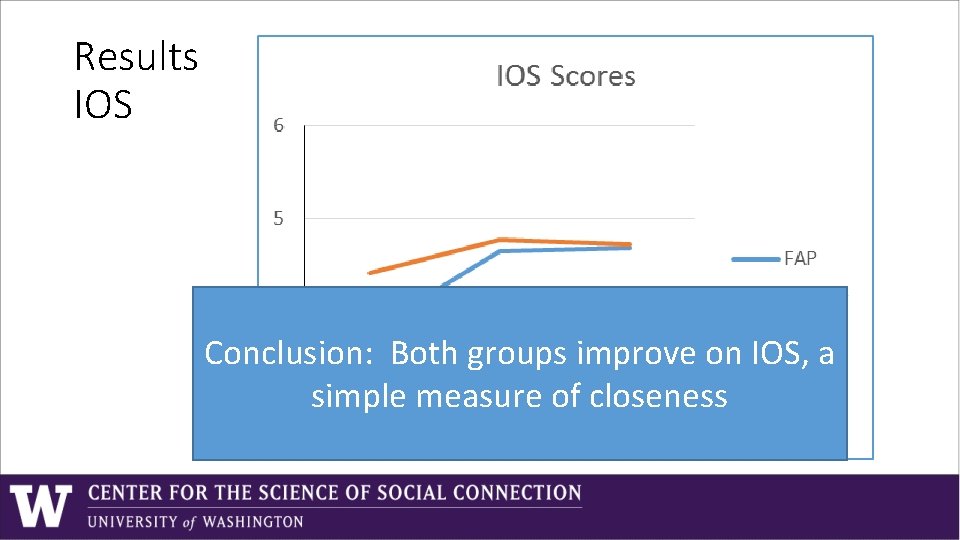
Results IOS Conclusion: Both groups improve on IOS, a simple measure of closeness
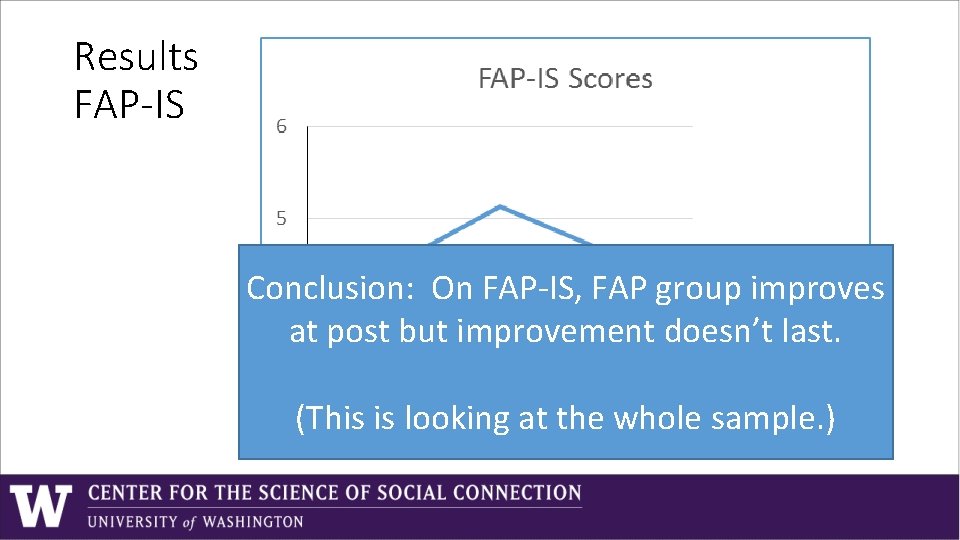
Results FAP-IS Conclusion: On FAP-IS, FAP group improves at post but improvement doesn’t last. (This is looking at the whole sample. )
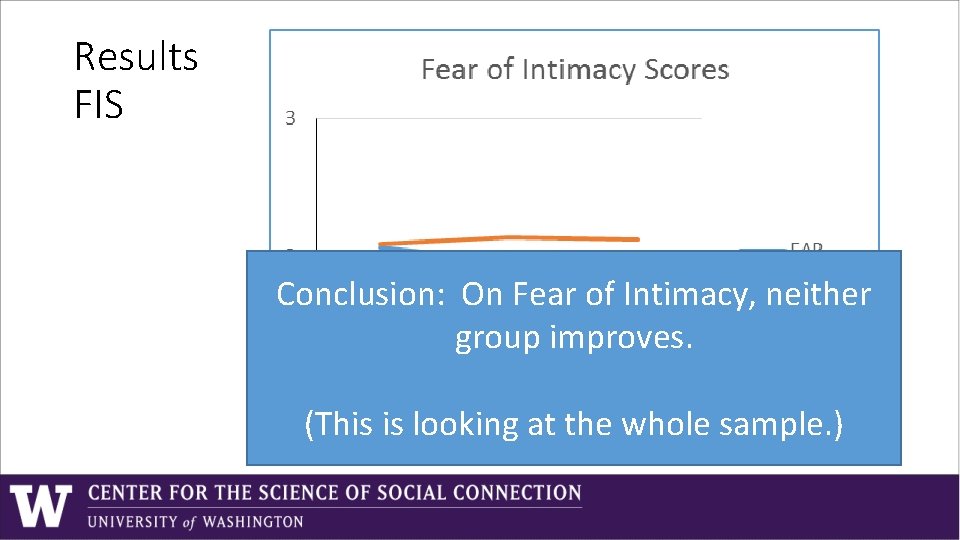
Results FIS Conclusion: On Fear of Intimacy, neither group improves. (This is looking at the whole sample. )
We recruited ANYONE who wanted to improve their relationship, so our sample included people who were already doing quite well. What if we look just at the people who had room to improve?
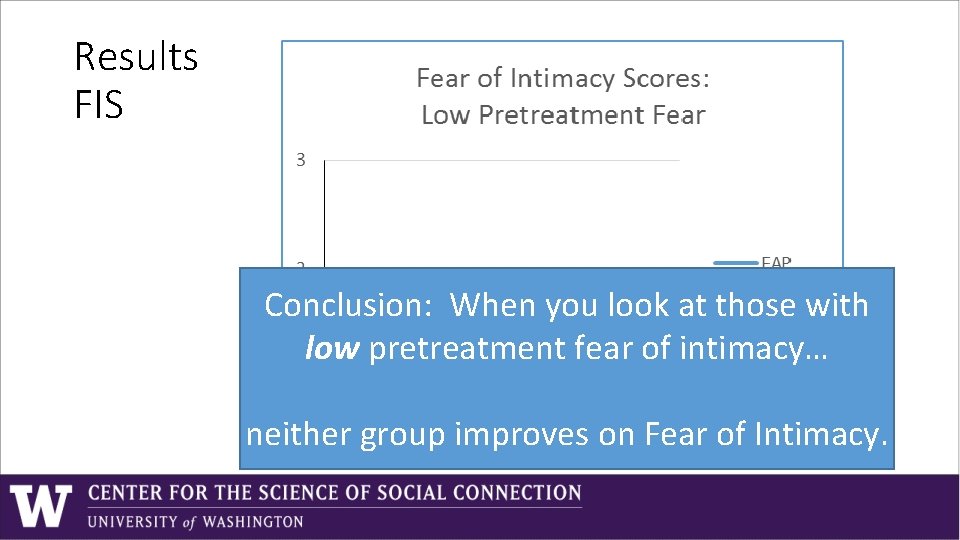
Results FIS Conclusion: When you look at those with low pretreatment fear of intimacy… neither group improves on Fear of Intimacy. No differences for low pretreatment fear of intimacy
Results FIS Conclusion: When you look at those with high pretreatment fear of intimacy… Significant interaction for high pretreatment fear of intimacy F (2, 54) =. 3. 45, p =. 038 FAP significantly lower at Post and 1 -month follow-up FAP n = 13, Activity n = 16 only the FAP group improves on Fear of Intimacy.
Results FAP-IS Conclusion: When you look at those with low pretreatment fear of intimacy… neither group improves on FAP-IS. No differences for low pretreatment fear of intimacy
Results FAP-IS Conclusion: When you look at those with high pretreatment fear of intimacy… Significant interaction for high pretreatment fear of intimacy F(1. 4, 36. 7) = 5. 83, p =. 01 FAP significantly lower at Post and 1 -month follow-up FAP n = 13, Activity n = 16 only the FAP group improves on FAP-IS.
Thank you! • Project Coordinator: Adam Kuczynski • CSSC Director & Data Analysis: Jonathan Kanter • Study coaches: • • Andrew Fleming Andy Paves Crissy Anderson Haley Douglas Maria Santos Nicole Stettler Sarah Sullivan-Singh