POPULATIONS AND ECOSYSTEMS ORGANISM INDIVIDUAL Any living thing






- Slides: 49
POPULATIONS AND ECOSYSTEMS
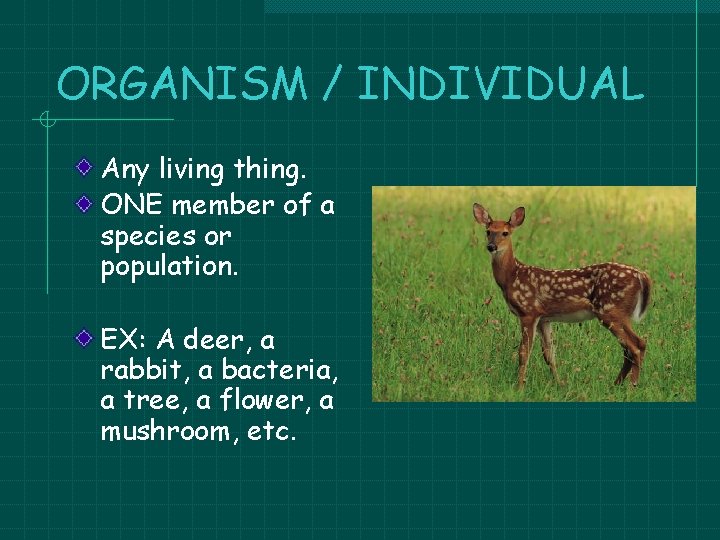
ORGANISM / INDIVIDUAL Any living thing. ONE member of a species or population. EX: A deer, a rabbit, a bacteria, a tree, a flower, a mushroom, etc.
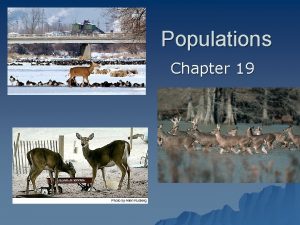
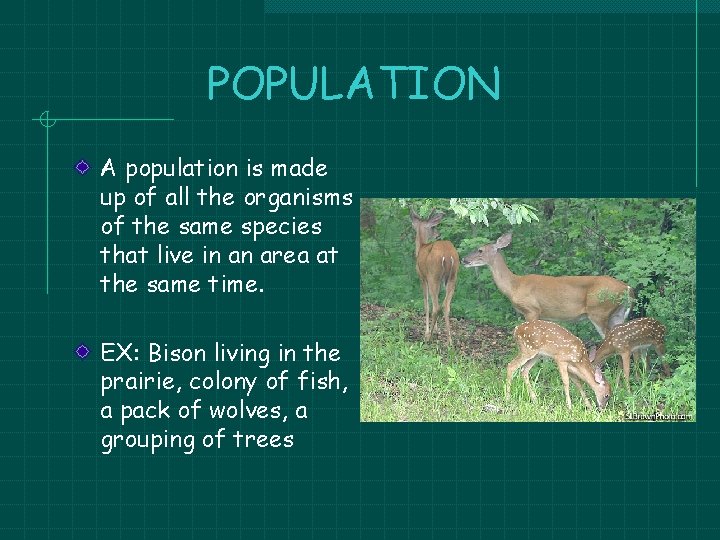
POPULATION A population is made up of all the organisms of the same species that live in an area at the same time. EX: Bison living in the prairie, colony of fish, a pack of wolves, a grouping of trees
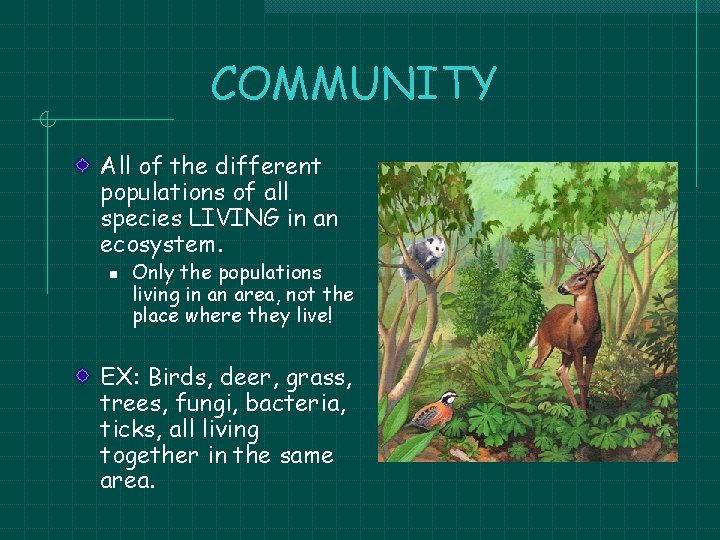
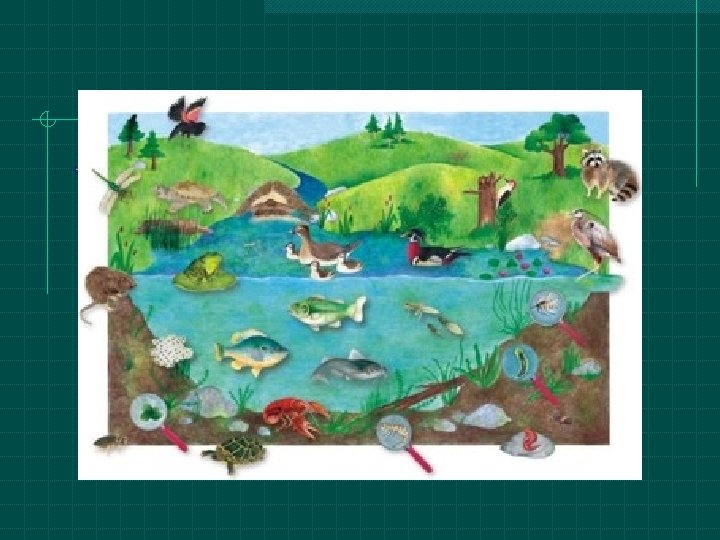
COMMUNITY All of the different populations of all species LIVING in an ecosystem. n Only the populations living in an area, not the place where they live! EX: Birds, deer, grass, trees, fungi, bacteria, ticks, all living together in the same area.
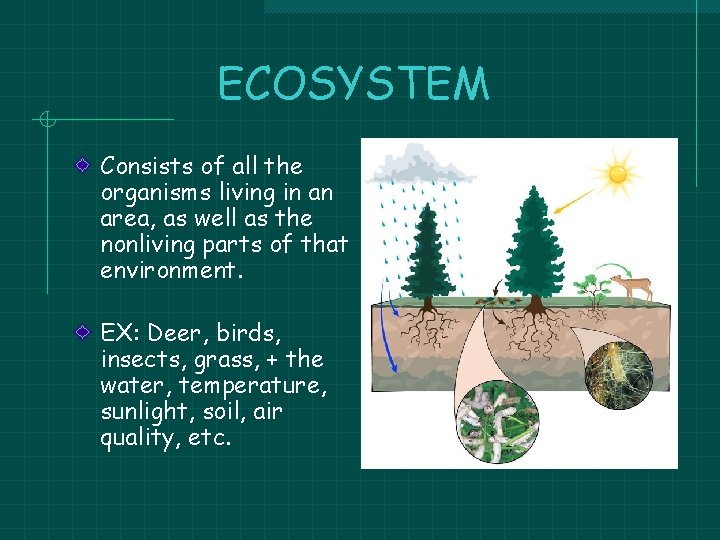
ECOSYSTEM Consists of all the organisms living in an area, as well as the nonliving parts of that environment. EX: Deer, birds, insects, grass, + the water, temperature, sunlight, soil, air quality, etc.
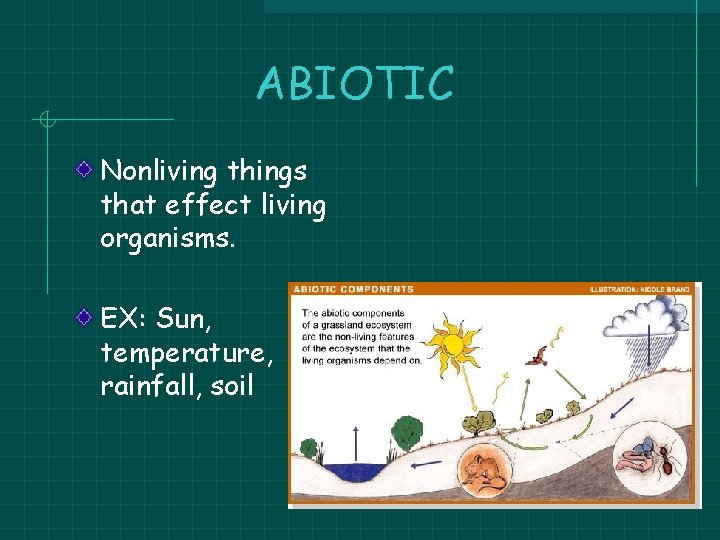
ABIOTIC Nonliving things that effect living organisms. EX: Sun, temperature, rainfall, soil
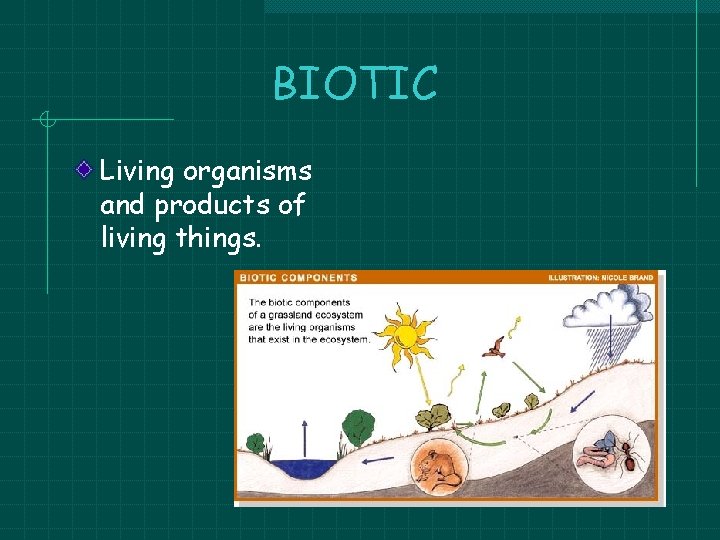
BIOTIC Living organisms and products of living things.
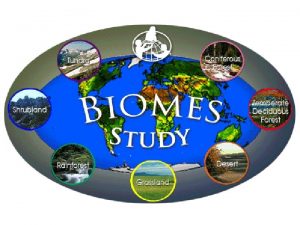
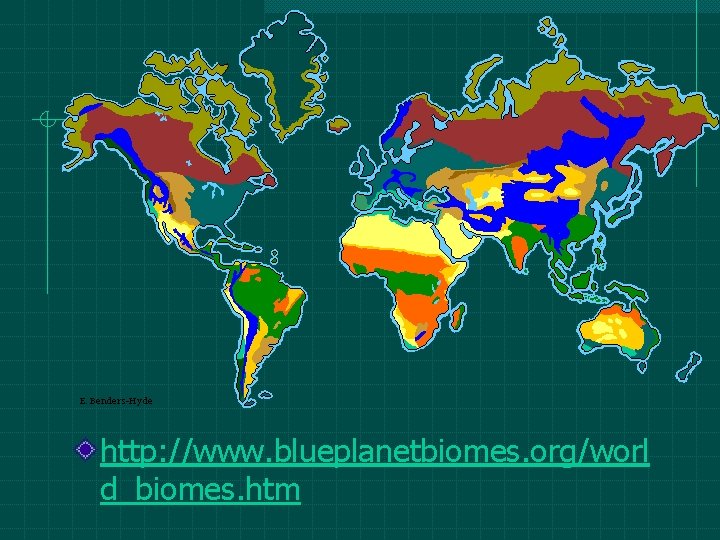
BIOMES A biome is a large geographical area of distinctive plant and animal groups. The climate and geography of a region determines what type of biome exists. 9 biomes Tundra, Deciduous Forest, Savanna, Taiga, Chaparral, Rainforest, Grasslands, Desert, Alpine. Each biome consists of many ecosystems.
http: //www. blueplanetbiomes. org/worl d_biomes. htm
WHAT IS A SPECIES? A class or group of individuals having similar characteristics. Used to classify organisms. How are organisms classified?
TAXONOMY AND BIONOMIAL NOMENCLATURE
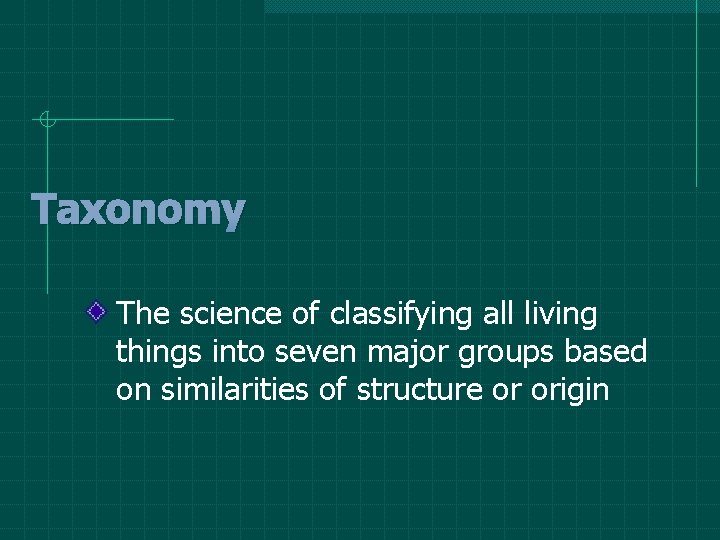
Taxonomy The science of classifying all living things into seven major groups based on similarities of structure or origin
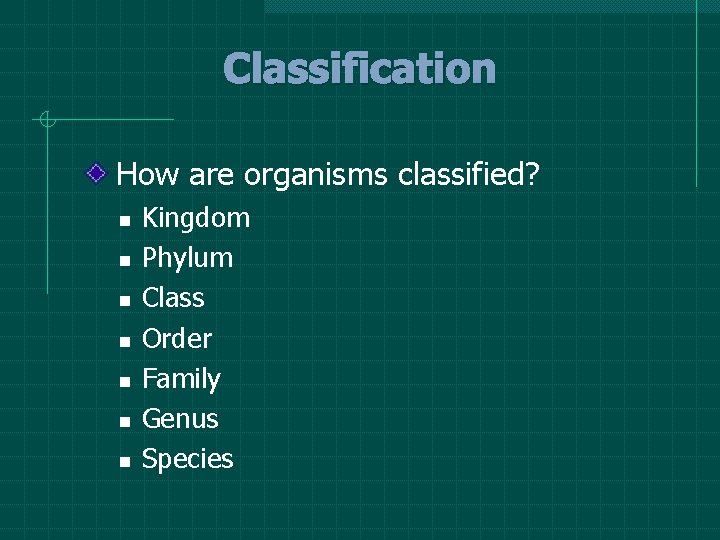
Classification How are organisms classified? n n n n Kingdom Phylum Class Order Family Genus Species
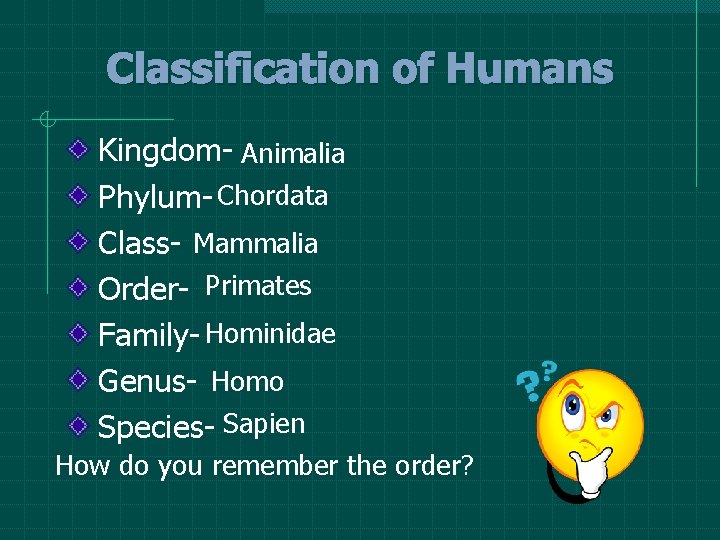
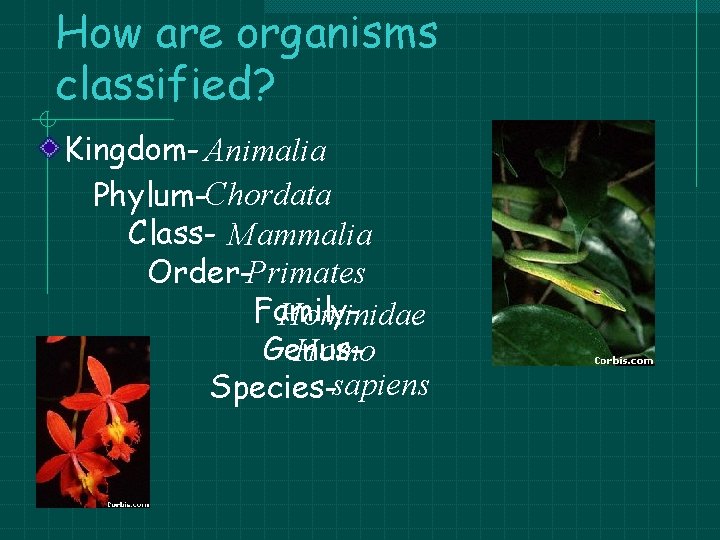
Classification of Humans Kingdom- Animalia Phylum- Chordata Class- Mammalia Order- Primates Family- Hominidae Genus- Homo Species- Sapien How do you remember the order?
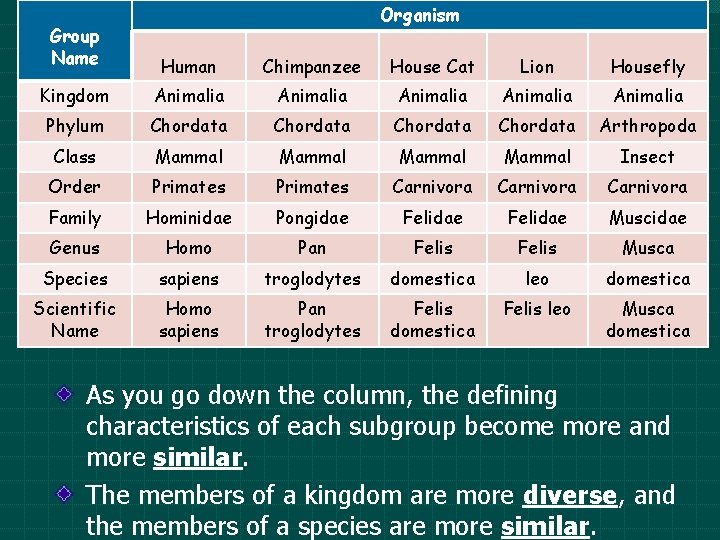
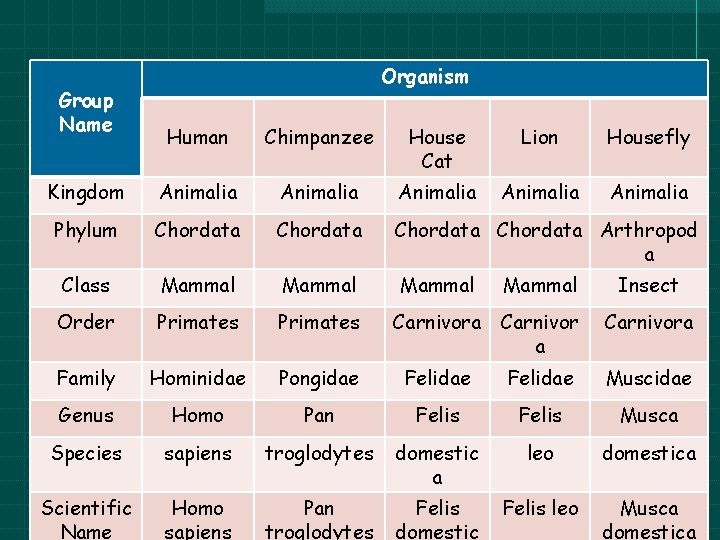
Organism Group Name Human Chimpanzee House Cat Lion Housefly Kingdom Animalia Animalia Phylum Chordata Arthropoda Class Mammal Insect Order Primates Carnivora Family Hominidae Pongidae Felidae Muscidae Genus Homo Pan Felis Musca Species sapiens troglodytes domestica leo domestica Scientific Name Homo sapiens Pan troglodytes Felis domestica Felis leo Musca domestica As you go down the column, the defining characteristics of each subgroup become more and more similar. The members of a kingdom are more diverse, and the members of a species are more similar.
If two organisms are in the same Order, they must be in the same Kingdom, Phylum, and Class.
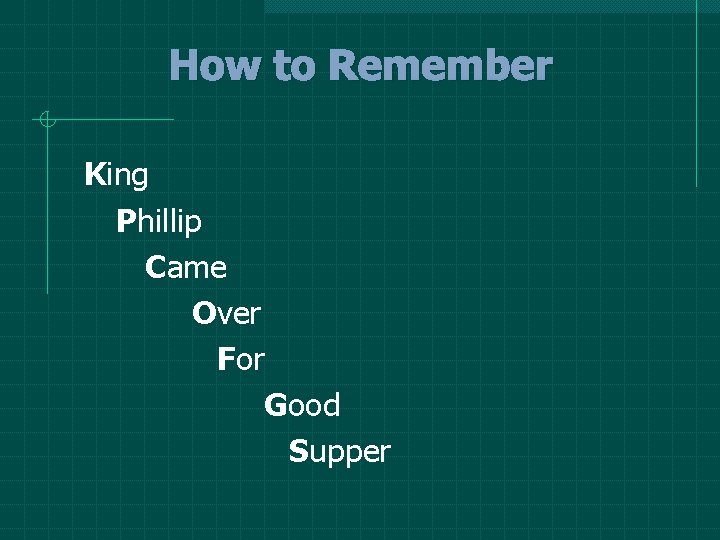
How to Remember King Phillip Came Over For Good Supper
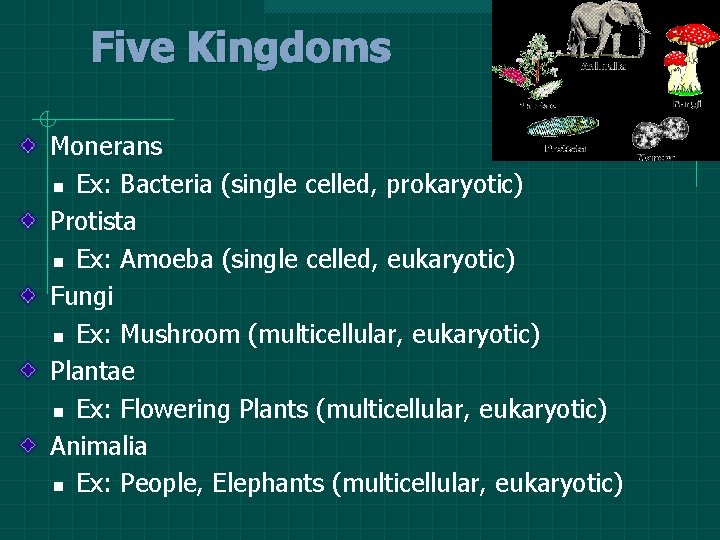
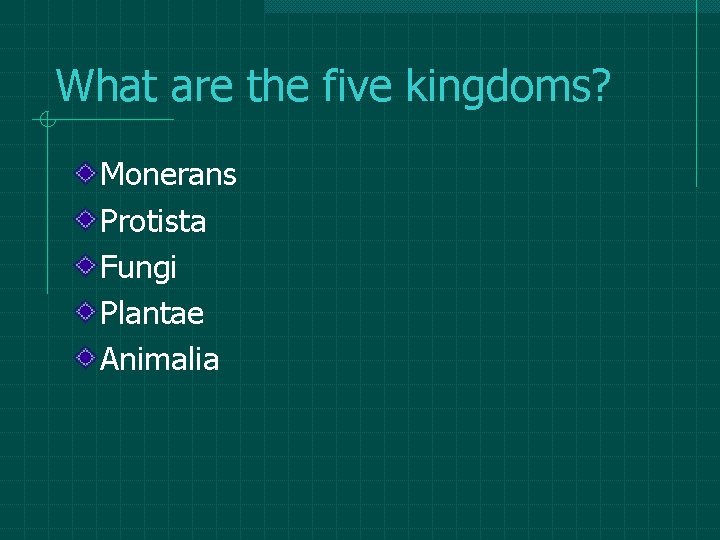
Five Kingdoms Monerans n Ex: Bacteria (single celled, prokaryotic) Protista n Ex: Amoeba (single celled, eukaryotic) Fungi n Ex: Mushroom (multicellular, eukaryotic) Plantae n Ex: Flowering Plants (multicellular, eukaryotic) Animalia n Ex: People, Elephants (multicellular, eukaryotic)
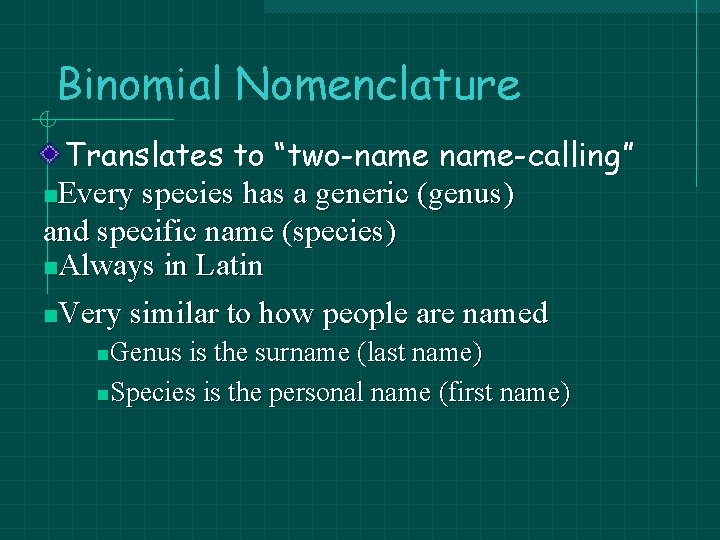
Binomial Nomenclature Translates to “two-name-calling” Every species has a generic (genus) and a specific name (species) Always in Latin Carolus Linnaeus n Known as father of taxonomy n Made up the binomial system for naming organisms Very similar to how people are named n Genus is the surname (last name) n Species is the personal name (first name)
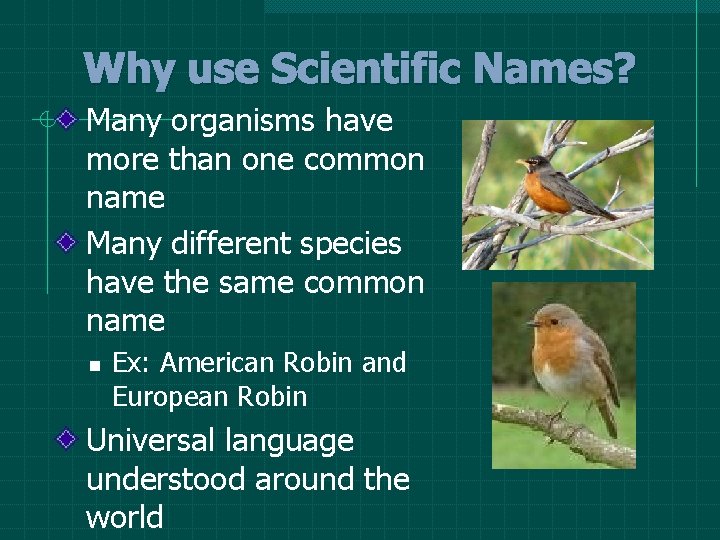
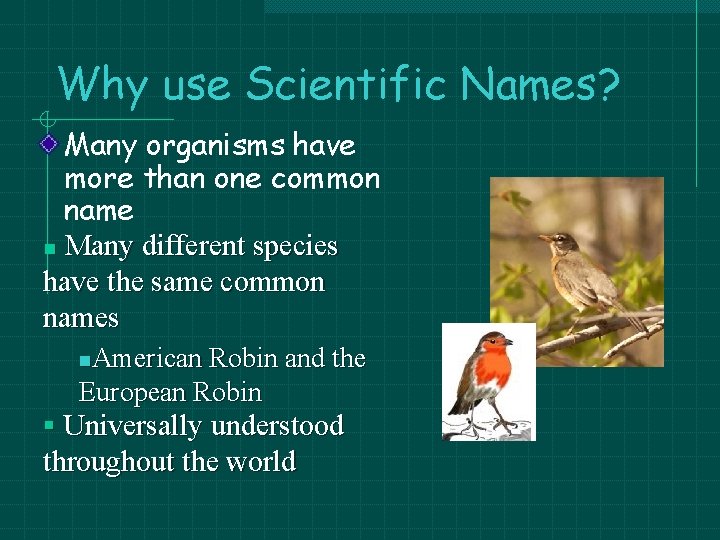
Why use Scientific Names? Many organisms have more than one common name Many different species have the same common name n Ex: American Robin and European Robin Universal language understood around the world
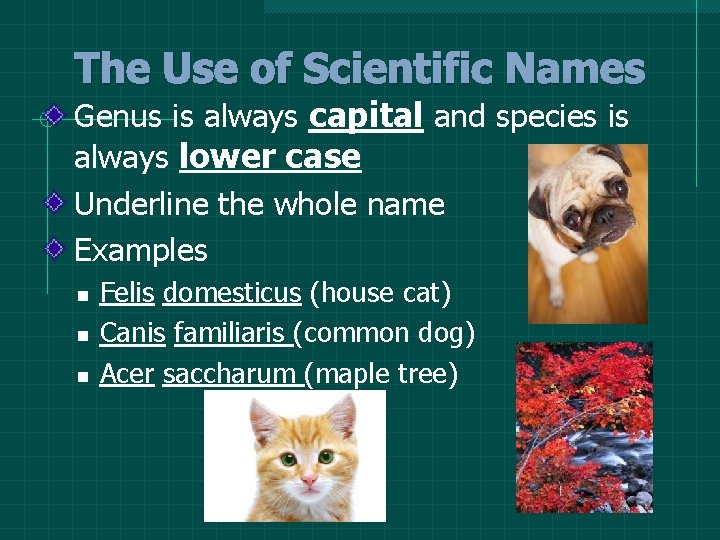
The Use of Scientific Names Genus is always capital and species is always lower case Underline the whole name Examples n n n Felis domesticus (house cat) Canis familiaris (common dog) Acer saccharum (maple tree)
http: //www. pbs. org/wgbh/nova/beta/evolution/classifying-life. html
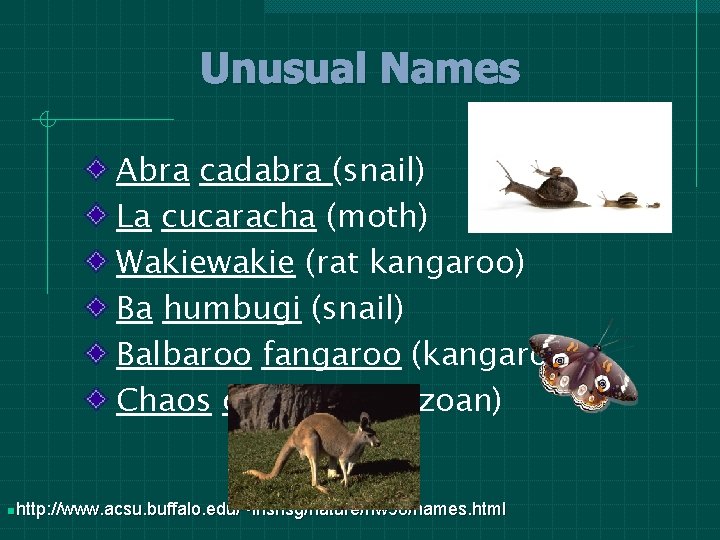
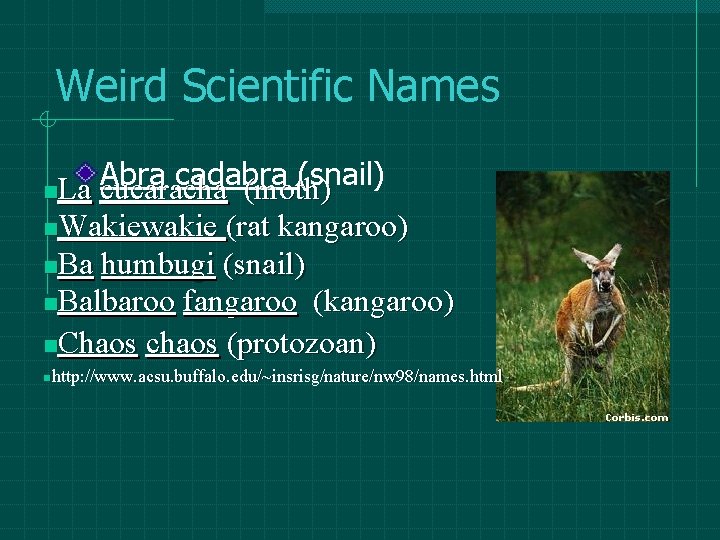
Unusual Names Abra cadabra (snail) La cucaracha (moth) Wakiewakie (rat kangaroo) Ba humbugi (snail) Balbaroo fangaroo (kangaroo) Chaos chaos (protozoan) nhttp: //www. acsu. buffalo. edu/~insrisg/nature/nw 98/names. html
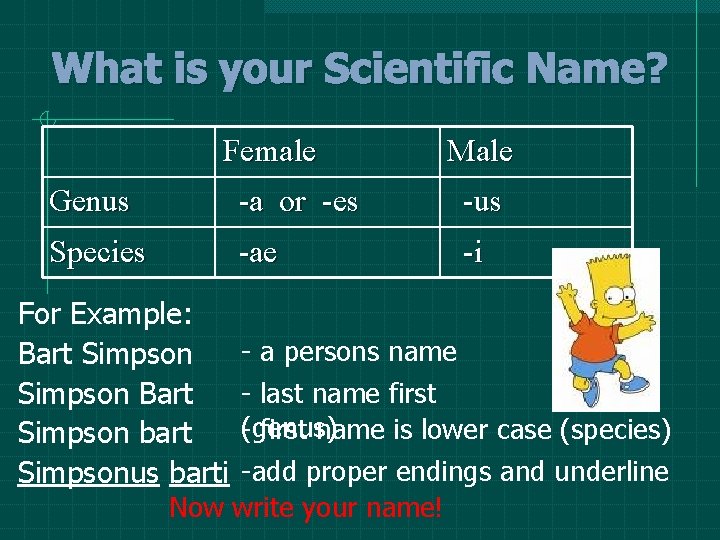
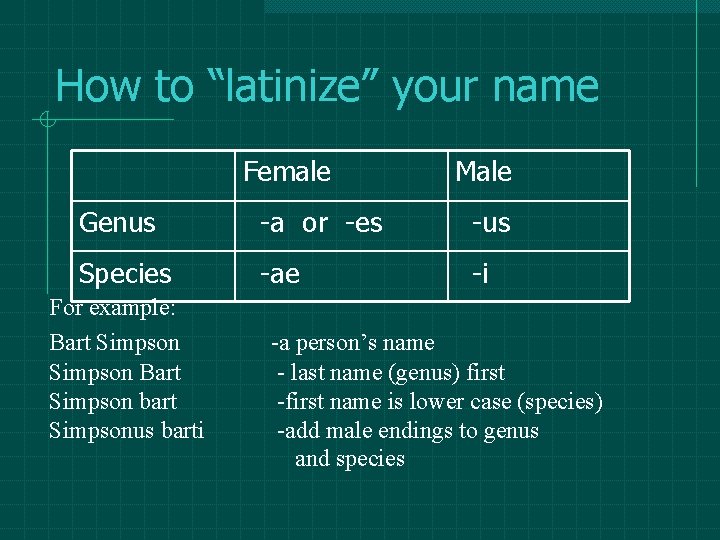
What is your Scientific Name? Female Male Genus -a or -es -us Species -ae -i For Example: Bart Simpson bart Simpsonus barti - a persons name - last name first -(genus) first name is lower case (species) -add proper endings and underline Now write your name!
Group Name Organism Human Chimpanzee House Cat Lion Housefly Kingdom Animalia Animalia Phylum Chordata Arthropod a Class Mammal Order Primates Family Hominidae Pongidae Felidae Muscidae Genus Homo Pan Felis Musca Species sapiens troglodytes domestic a leo domestica Scientific Name Homo sapiens Pan troglodytes Felis domestic Felis leo Musca domestica Mammal Carnivora Carnivor a Insect Carnivora
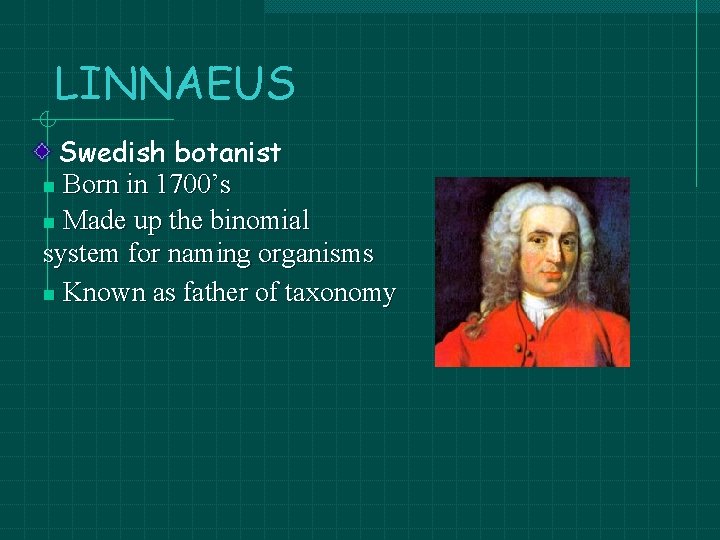
LINNAEUS Swedish botanist n Born in 1700’s n Made up the binomial system for naming organisms n Known as father of taxonomy
How are organisms classified? Kingdom- Animalia Phylum-Chordata Class- Mammalia Order-Primates Family. Hominidae Genus. Homo Species-sapiens
Acronym to remember Kings Play Cards On Fat Green Stools King Phillip came over for good supper Make up your own
Binomial Nomenclature Translates to “two-name-calling” n. Every species has a generic (genus) and specific name (species) n. Always in Latin n. Very similar to how people are named Genus is the surname (last name) n. Species is the personal name (first name) n
Why use Scientific Names? Many organisms have more than one common name n Many different species have the same common names American Robin and the European Robin n § Universally understood throughout the world
How does it work? Genus is always capital and species is always lower case Examples of scientific names: n. Felis domesticus (house cat) n. Canis familiaris (common dog) n. Acer saccharum (maple tree) n. Satter kari n
Weird Scientific Names Abra cadabra (snail) La cucaracha (moth) n. Wakiewakie (rat kangaroo) n. Ba humbugi (snail) n. Balbaroo fangaroo (kangaroo) n. Chaos chaos (protozoan) n nhttp: //www. acsu. buffalo. edu/~insrisg/nature/nw 98/names. html
How to “latinize” your name Female Male Genus -a or -es -us Species -ae -i For example: Bart Simpson bart Simpsonus barti -a person’s name - last name (genus) first -first name is lower case (species) -add male endings to genus and species
TAXONOMY pages 8 and 9 Science of classifying all living things into seven major categories
Which group on the chart do you think has the most organisms in it? Kingdom
What are the five kingdoms? Monerans Protista Fungi Plantae Animalia
1. What do all animals have in common? Heterotrophic Eukaryotic Multicellular
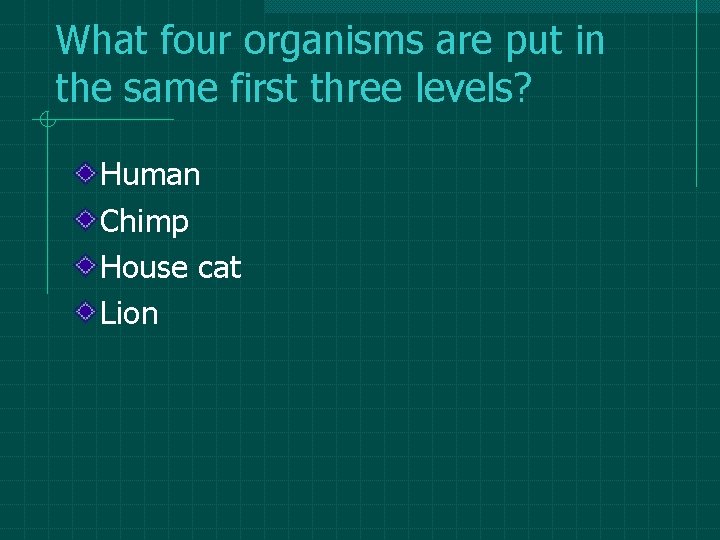
What four organisms are put in the same first three levels? Human Chimp House cat Lion
3. What do you notice about the characteristics of the groups as you move down the Animalia kingdom? They become more similar
3. Compare the characteristics of a kingdom verses a species. What do you notice? Kingdom is more diverse Species is more similar
Are the cat and housefly the same species? NO, because the groups above them don’t all match. Species is like a first name it means little unless the last name (genus) is with it.
4. If two organisms are in the same Order, they must be in the same… Kingdom Phylum Class
5. Every organism is given a scientific name that consists of what? Genus Species Which one is always capitalized? Which one is always lower case?
7. Which two organisms are most closely related on the chart? WHY Cat and lion They are the same in 6 of the 7 levels of classification.
7. A human is most closely related to what organism on the chart? WHY Chimp They are the same in 4 of the 7 levels of classification.