PHYSIOLOGY OF PREGNANCY Pregnancy 1 Fertilization 2 Placenta

- Slides: 29
PHYSIOLOGY OF PREGNANCY
Pregnancy 1. Fertilization 2. Placenta development, nutrition 3. Hormonal changes during pregnancy 4. Other physiological changes 5. Metabolism
Fertilization
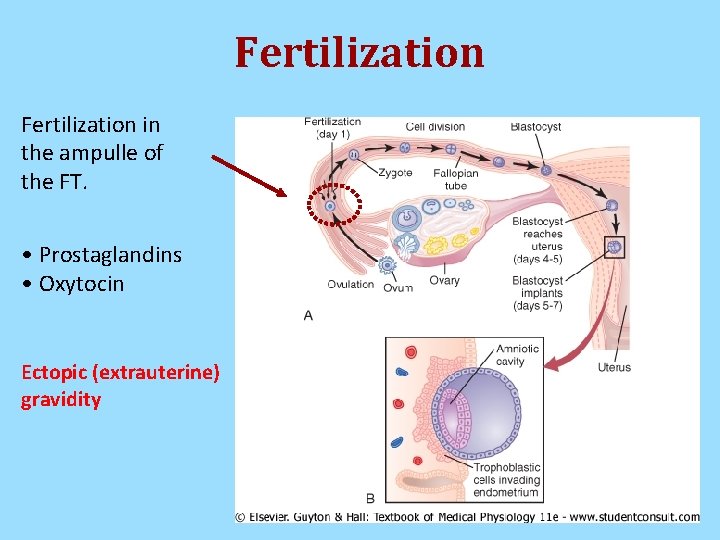
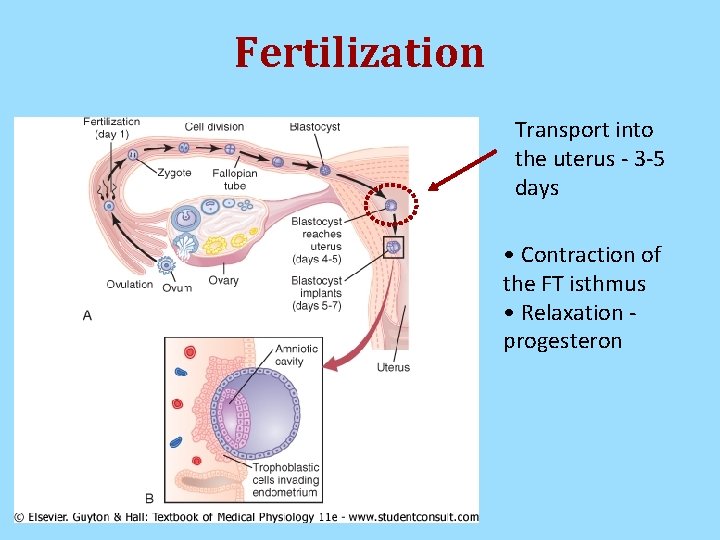
Fertilization in the ampulle of the FT. • Prostaglandins • Oxytocin Ectopic (extrauterine) gravidity
Fertilization Transport into the uterus - 3 -5 days • Contraction of the FT isthmus • Relaxation progesteron
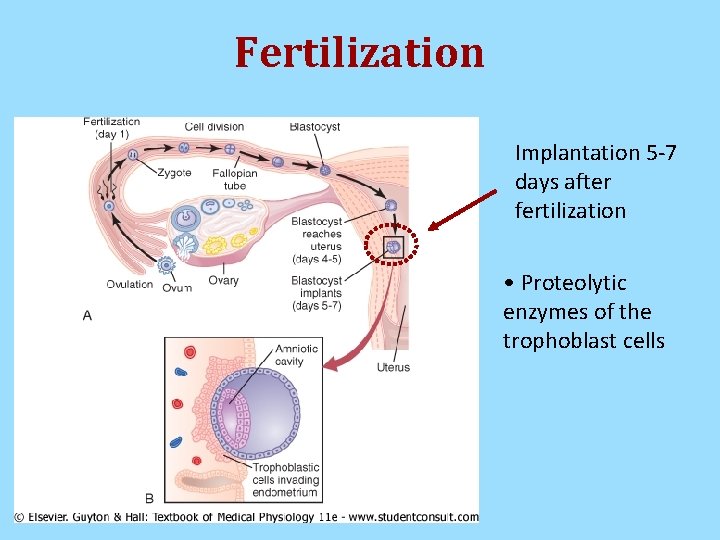
Fertilization Implantation 5 -7 days after fertilization • Proteolytic enzymes of the trophoblast cells
Placenta
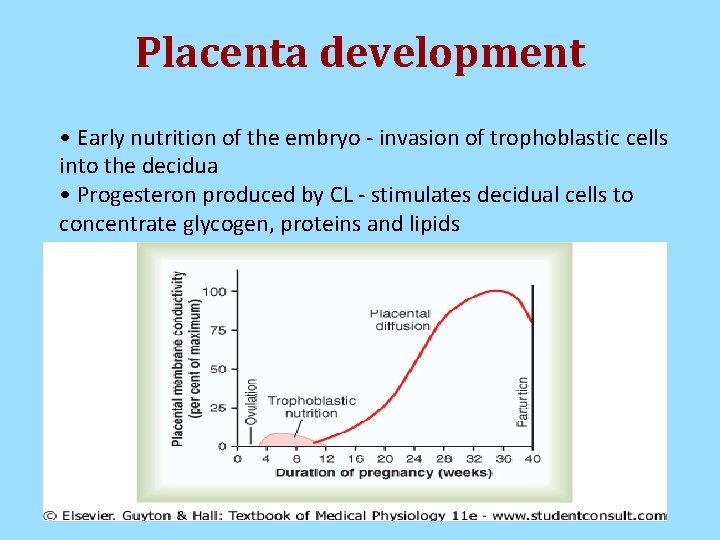
Placenta development • Early nutrition of the embryo - invasion of trophoblastic cells into the decidua • Progesteron produced by CL - stimulates decidual cells to concentrate glycogen, proteins and lipids
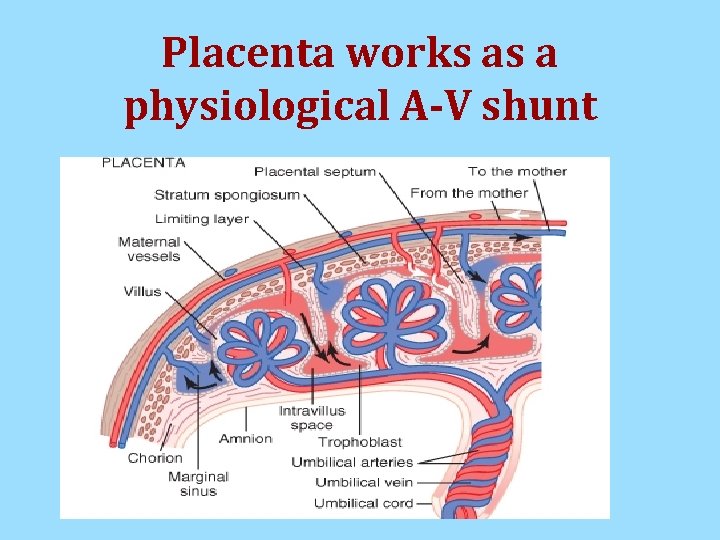
Placenta works as a physiological A-V shunt
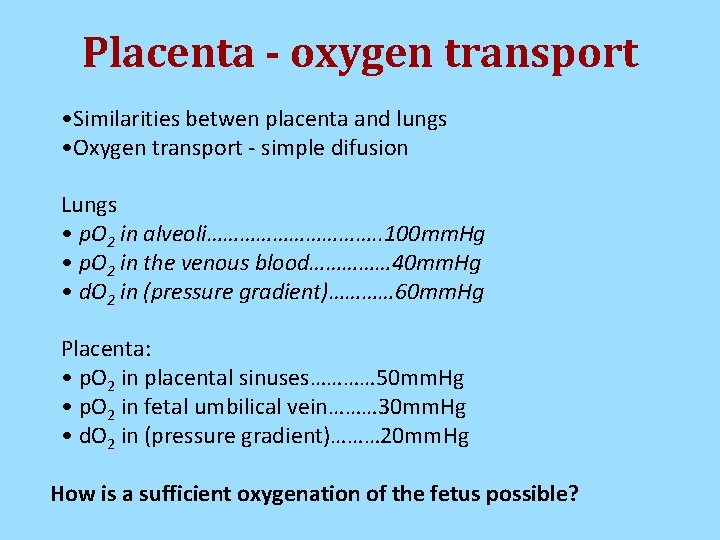
Placenta - oxygen transport • Similarities betwen placenta and lungs • Oxygen transport - simple difusion Lungs • p. O 2 in alveoli……………. . 100 mm. Hg • p. O 2 in the venous blood…………… 40 mm. Hg • d. O 2 in (pressure gradient)………… 60 mm. Hg Placenta: • p. O 2 in placental sinuses………… 50 mm. Hg • p. O 2 in fetal umbilical vein……… 30 mm. Hg • d. O 2 in (pressure gradient)……… 20 mm. Hg How is a sufficient oxygenation of the fetus possible?
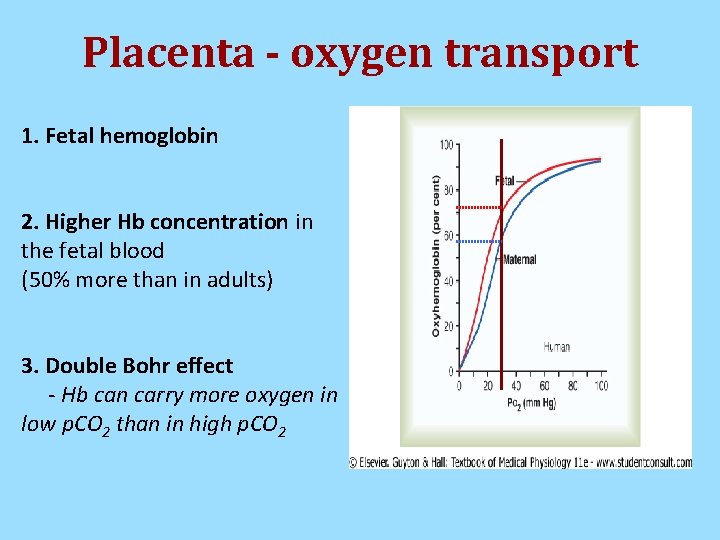
Placenta - oxygen transport 1. Fetal hemoglobin 2. Higher Hb concentration in the fetal blood (50% more than in adults) 3. Double Bohr effect - Hb can carry more oxygen in low p. CO 2 than in high p. CO 2
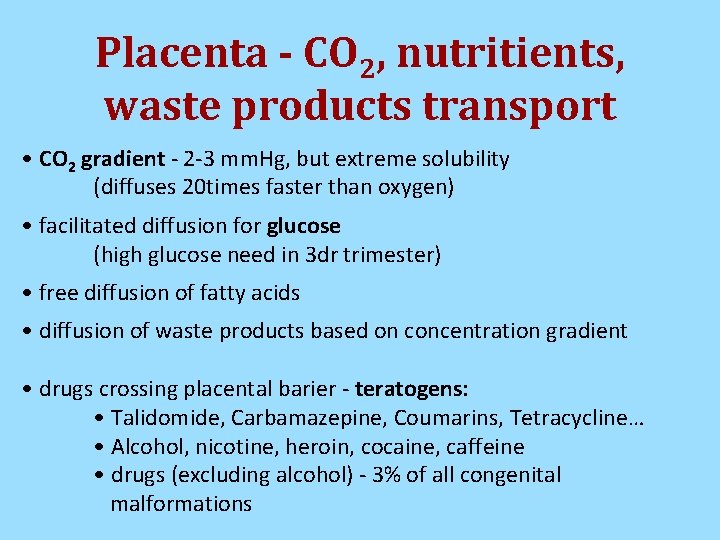
Placenta - CO 2, nutritients, waste products transport • CO 2 gradient - 2 -3 mm. Hg, but extreme solubility (diffuses 20 times faster than oxygen) • facilitated diffusion for glucose (high glucose need in 3 dr trimester) • free diffusion of fatty acids • diffusion of waste products based on concentration gradient • drugs crossing placental barier - teratogens: • Talidomide, Carbamazepine, Coumarins, Tetracycline… • Alcohol, nicotine, heroin, cocaine, caffeine • drugs (excluding alcohol) - 3% of all congenital malformations
Hormonal Changes During Pregnancy
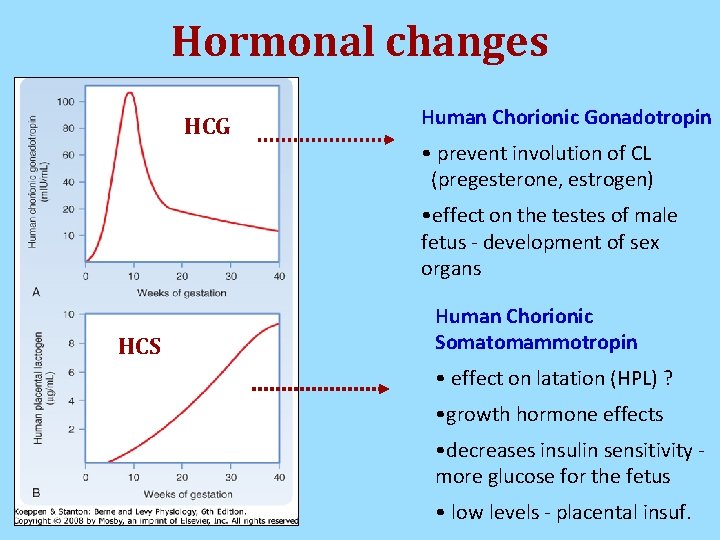
Hormonal changes HCG Human Chorionic Gonadotropin • prevent involution of CL (pregesterone, estrogen) • effect on the testes of male fetus - development of sex organs HCS Human Chorionic Somatomammotropin • effect on latation (HPL) ? • growth hormone effects • decreases insulin sensitivity more glucose for the fetus • low levels - placental insuf.
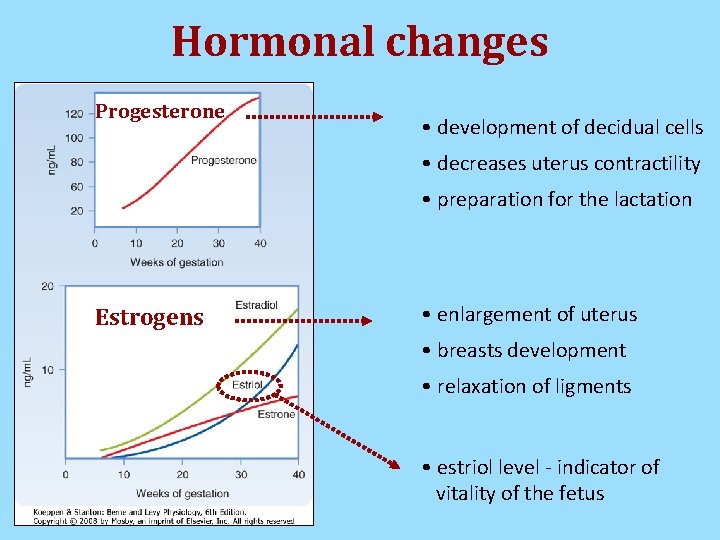
Hormonal changes Progesterone • development of decidual cells • decreases uterus contractility • preparation for the lactation Estrogens • enlargement of uterus • breasts development • relaxation of ligments • estriol level - indicator of vitality of the fetus
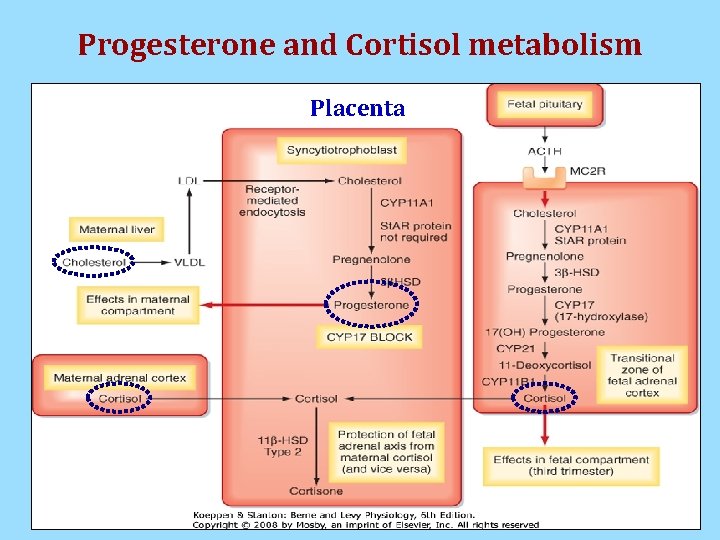
Progesterone and Cortisol metabolism Placenta
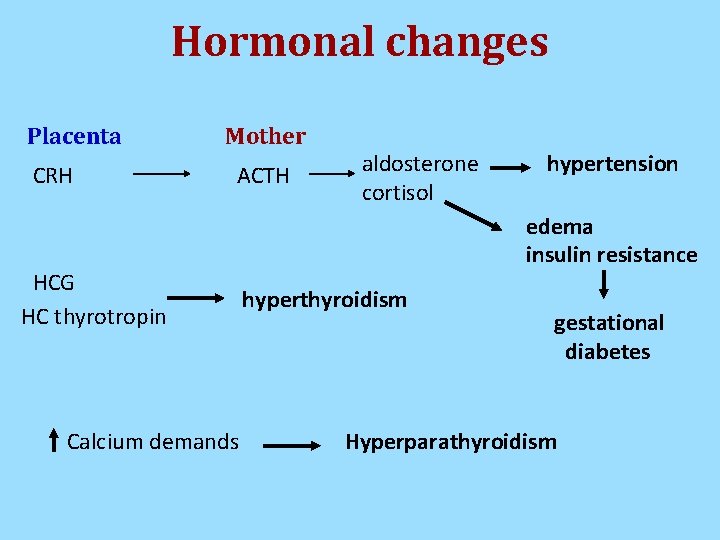
Hormonal changes Placenta CRH Mother ACTH HCG HC thyrotropin Calcium demands aldosterone cortisol hypertension edema insulin resistance hyperthyroidism gestational diabetes Hyperparathyroidism
Other Physiological Changes
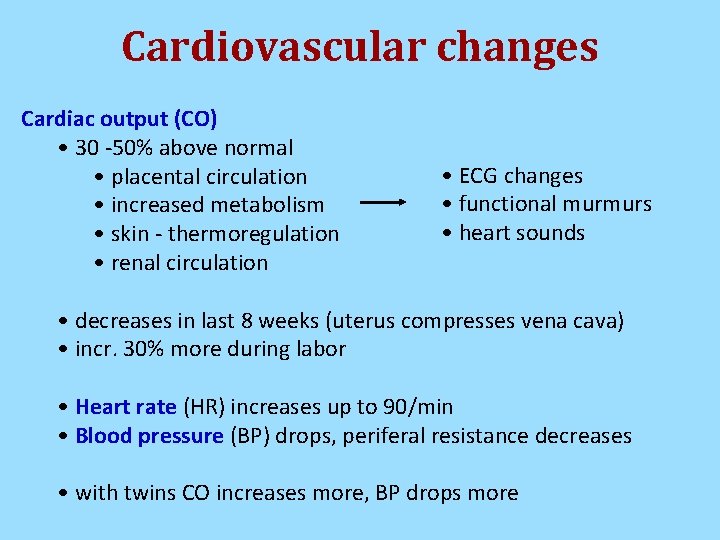
Cardiovascular changes Cardiac output (CO) • 30 -50% above normal • placental circulation • increased metabolism • skin - thermoregulation • renal circulation • ECG changes • functional murmurs • heart sounds • decreases in last 8 weeks (uterus compresses vena cava) • incr. 30% more during labor • Heart rate (HR) increases up to 90/min • Blood pressure (BP) drops, periferal resistance decreases • with twins CO increases more, BP drops more
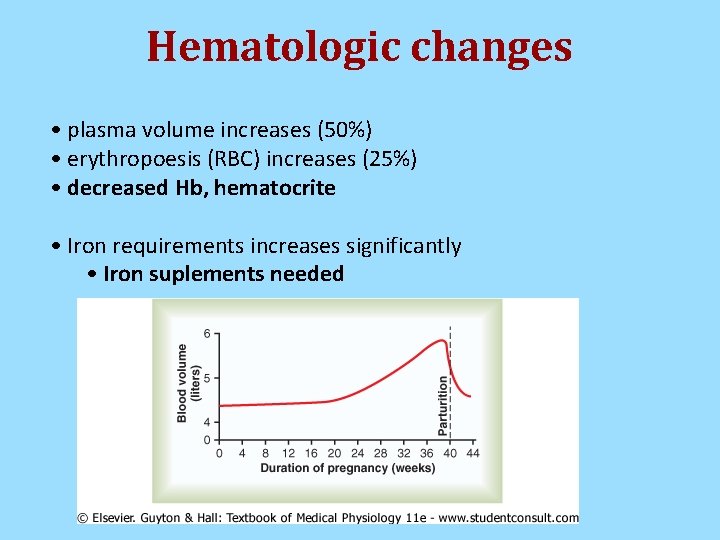
Hematologic changes • plasma volume increases (50%) • erythropoesis (RBC) increases (25%) • decreased Hb, hematocrite • Iron requirements increases significantly • Iron suplements needed
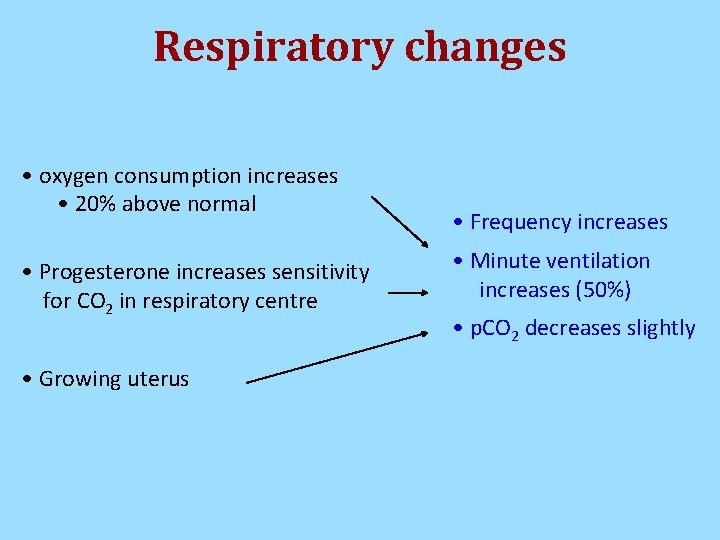
Respiratory changes • oxygen consumption increases • 20% above normal • Progesterone increases sensitivity for CO 2 in respiratory centre • Growing uterus • Frequency increases • Minute ventilation increases (50%) • p. CO 2 decreases slightly
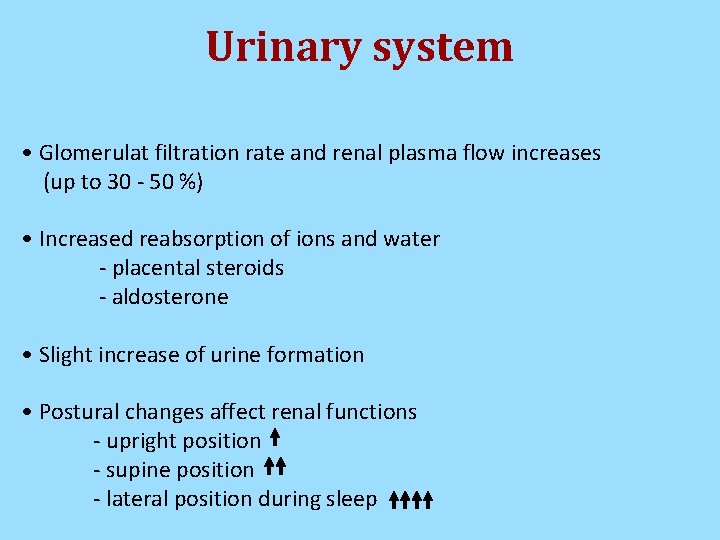
Urinary system • Glomerulat filtration rate and renal plasma flow increases (up to 30 - 50 %) • Increased reabsorption of ions and water - placental steroids - aldosterone • Slight increase of urine formation • Postural changes affect renal functions - upright position - supine position - lateral position during sleep
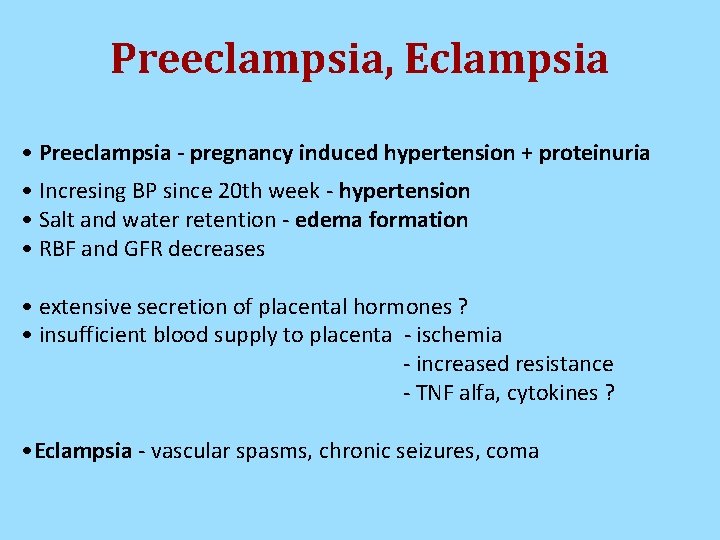
Preeclampsia, Eclampsia • Preeclampsia - pregnancy induced hypertension + proteinuria • Incresing BP since 20 th week - hypertension • Salt and water retention - edema formation • RBF and GFR decreases • extensive secretion of placental hormones ? • insufficient blood supply to placenta - ischemia - increased resistance - TNF alfa, cytokines ? • Eclampsia - vascular spasms, chronic seizures, coma
Nutrition and Metabolism
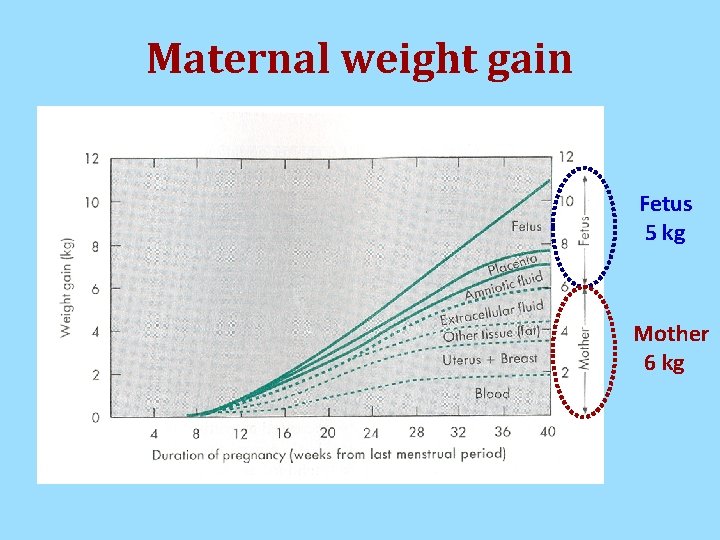
Maternal weight gain Fetus 5 kg Mother 6 kg
Maternal-Fetal Metabolism • 250 - 300 extra kcal/day should be ingested - 85% fetal metabolism, 15% stored in maternal fat • Extra protein intake - 30 g/day • End of pregnancy - fetal glucose need 5 mg/kg/min (mother 2, 5 mg/kg/min) • 2 phases of pregnancy: 1 st - 20 th week - mother´s anabolic phase: - anabolic metabolism of the mother - quite small nutrition demands of the conceptus 21 - 40 week (esp. last trimester): - high metabolic demands of the fetus - accelerated starvation of the mother
Maternal-Fetal Metabolism Mother´s anabolic phase: - normal or increased sensitivity to insulin - lower plasmatic glucose level - lipogeneses, glycogen stores increases - growth of breasts, uterus, weight gain Catabolic phase (accelerated starvation): - maternal insuln resistance - increased transport of nutritients trough placental membrane - lipolysis • Insulin resistance caused by HCS, cortisol and growth hormone
Special nutrition need in pregnancy • High protein diet, higher energy uptake • Iron supplements - 300 mg ferrous sulfate • B - vitamins - erythropoesis • Folic acid (folate) - reduces risk of neural tube defects • Vitamin D 3 + Ca supplements • Before parturition - K vitamin (prevention of intracranial bleeding during the labor)
Thank you for attention