Personal Financial Planning in a lifecycle Context 7




- Slides: 45
Personal Financial Planning in a life-cycle Context 7 July 2015
Disclaimer This presentation is intended to provide a general overview for information and educational purposes only and is not a comprehensive treatment of the subject matter. The information is provided generally without considering specific circumstances and should not be regarded as a substitute for professional advice. The Investor Education Centre (“IEC”) has not advised on, passed on the merit of, endorsed or recommended any of the products/services or types of products/services referred to in this presentation. Readers/Audiences should seek professional advice if they consider necessary. The IEC endeavours to ensure that the information contained in this presentation is accurate as of the date of its presentation, but the information is provided on an "as is" basis and the IEC does not warrant its accuracy, timeliness, or completeness. The IEC has no obligation to update this presentation as law and practices change. In no event shall the IEC accept or assume any liability (including third party liability) nor entertain any claim for any loss or damage of any kind howsoever caused arising from or in connection with the use of or reliance upon this presentation (including whether caused by the IEC’s negligence or any error or omission in information or otherwise). Examples and case studies provided in this presentation are for educational purposes only. All background information, characters and situations created for the examples and the case studies are fictitious. Copyright for presentations The Investor Education Centre (“IEC”) is the owner of the copyright and other intellectual property rights in this presentation. This presentation (in whole or in part) may not be reproduced or distributed, or used for commercial purposes, without the prior written permission of the IEC. Copyright © 2014 Investor Education Centre. All rights reserved. 2
Contents § § § What is financial planning? The financial planning process Financial planning at different life stages Case studies Q&A
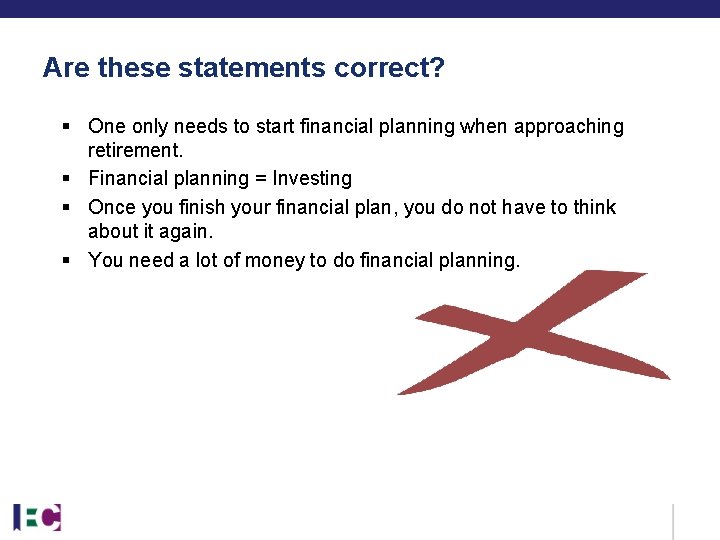
Are these statements correct? § One only needs to start financial planning when approaching retirement. § Financial planning = Investing § Once you finish your financial plan, you do not have to think about it again. § You need a lot of money to do financial planning.
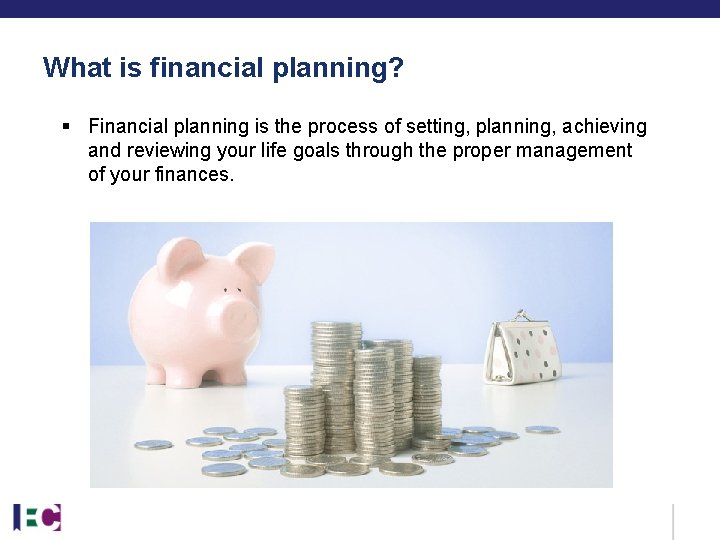
What is financial planning? § Financial planning is the process of setting, planning, achieving and reviewing your life goals through the proper management of your finances.
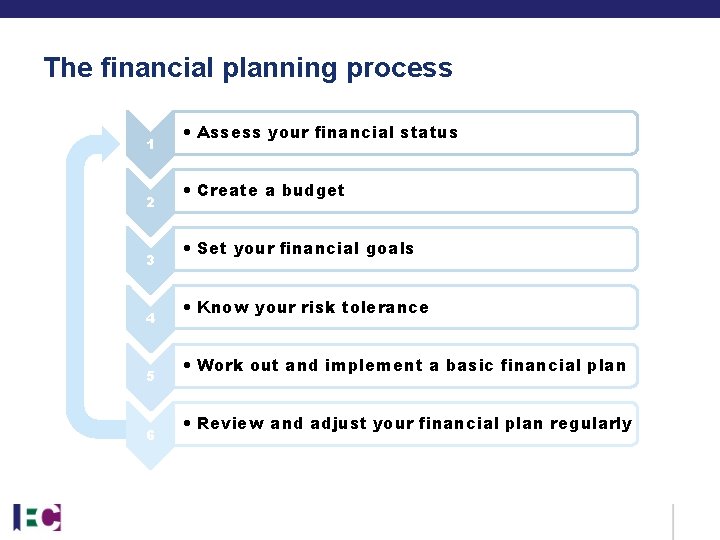
The financial planning process 1 2 3 4 5 6 • Assess your financial status • Create a budget • Set your financial goals • Know your risk tolerance • Work out and implement a basic financial plan • Review and adjust your financial plan regularly
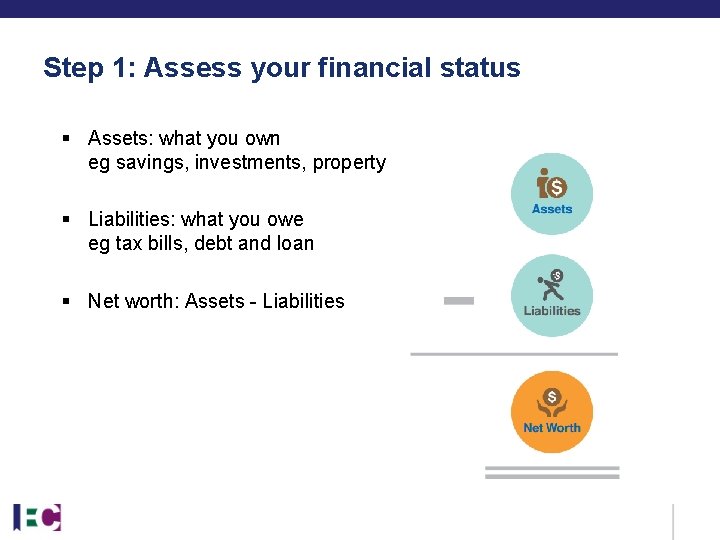
Step 1: Assess your financial status § Assets: what you own eg savings, investments, property § Liabilities: what you owe eg tax bills, debt and loan § Net worth: Assets - Liabilities
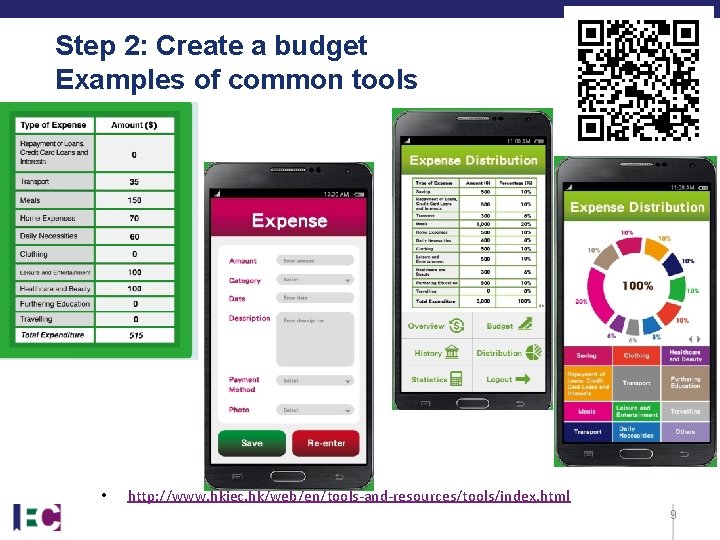
Step 2: Create a budget § Track your spending § Expenses diary § Understand the nature of your expenses § Fixed vs Variable § Regular vs Occasional § Plan ahead with a budget planner
Step 2: Create a budget Examples of common tools • http: //www. hkiec. hk/web/en/tools-and-resources/tools/index. html 9
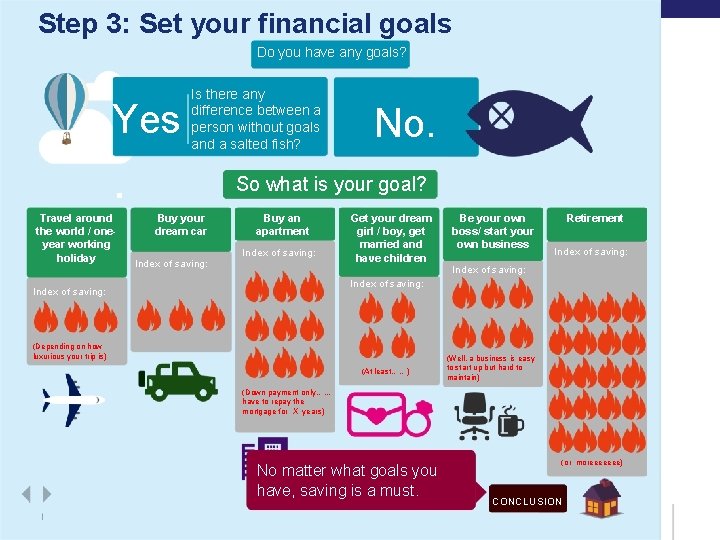
Step 3: Set your financial goals Do you have any goals? Yes . Travel around the world / oneyear working holiday Is there any difference between a person without goals and a salted fish? No. So what is your goal? Buy your dream car Index of saving: Buy an apartment Index of saving: Get your dream girl / boy, get married and have children Be your own boss/ start your own business Retirement Index of saving: (Depending on how luxurious your trip is) (At least……) (Well, a business is easy to start up but hard to maintain) (Down payment only…. . . have to repay the mortgage for X years) No matter what goals you have, saving is a must. (or moreeeeeee) CONCLUSION
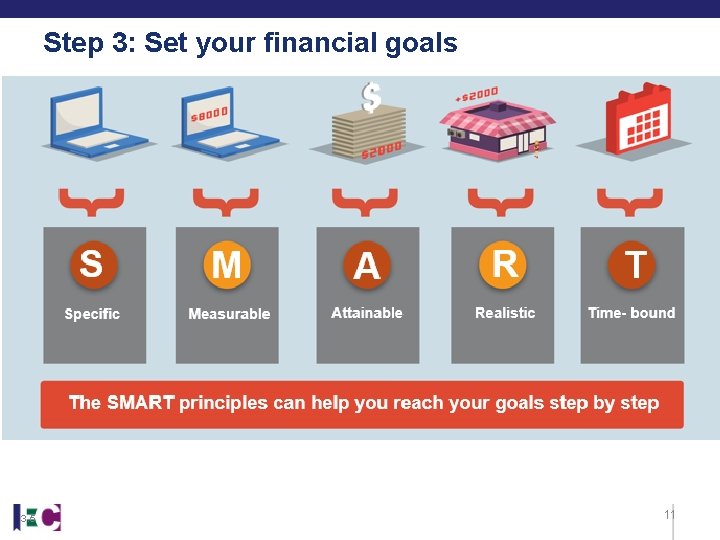
Step 3: Set your financial goals S M A R T Specific Measurable Attainable Realistic Time- bound The SMART principles can help you reach your goals step by step 3. 5 11
Step 3: Set your financial goals § Different needs and goals at different life stages § Make a list of all needs and goals § Set SMART goals Example: My laptop is out of order. Specific - I need a new laptop. Measurable - I need $7, 500 to buy the laptop. Attainable - I will put aside $1, 500 a month to purchase the laptop. Realistic - I can save $1, 500 a month by working part-time. Time-bound - I will save $ 7, 500 in 5 months. § Map out the cost of each financial goal
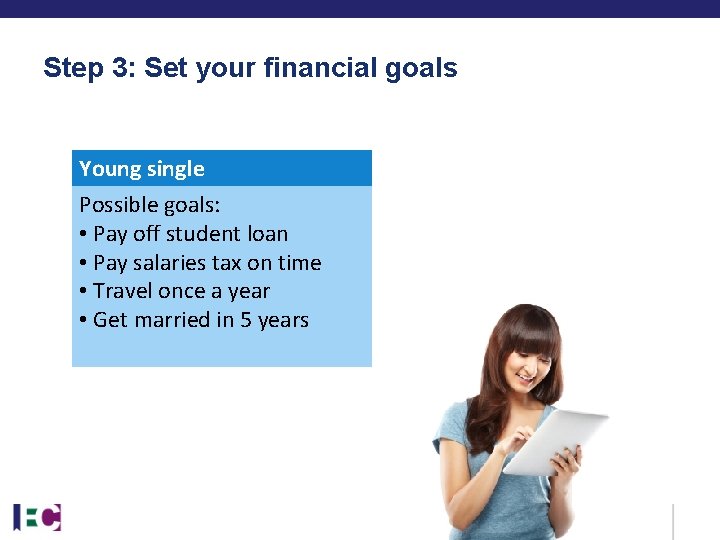
Step 3: Set your financial goals Young single Possible goals: • Pay off student loan • Pay salaries tax on time • Travel once a year • Get married in 5 years
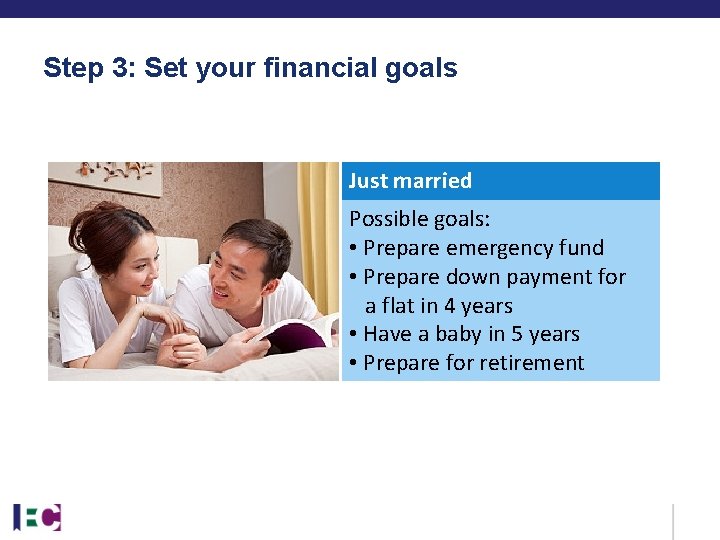
Step 3: Set your financial goals Just married Possible goals: • Prepare emergency fund • Prepare down payment for a flat in 4 years • Have a baby in 5 years • Prepare for retirement
Step 3: Set your financial goals Married with children Possible goals: • Repay mortgage on time • Hire a maid • Take out an insurance plan • Save for children’s education • Prepare for retirement
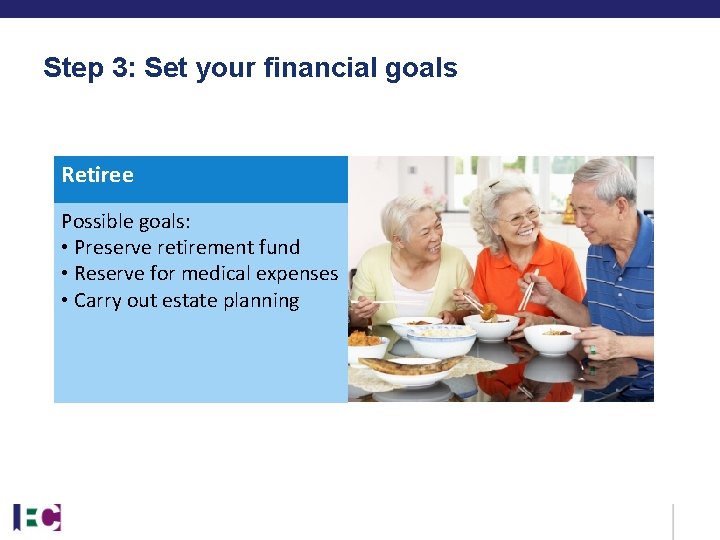
Step 3: Set your financial goals Retiree Possible goals: • Preserve retirement fund • Reserve for medical expenses • Carry out estate planning
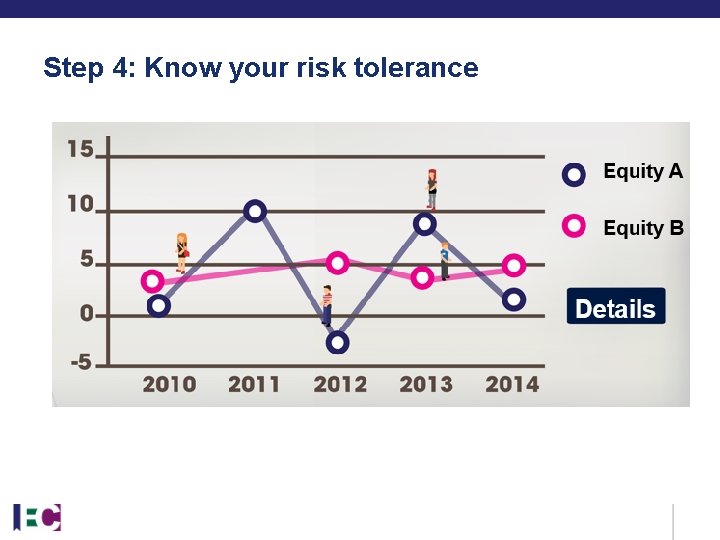
Step 4: Know your risk tolerance
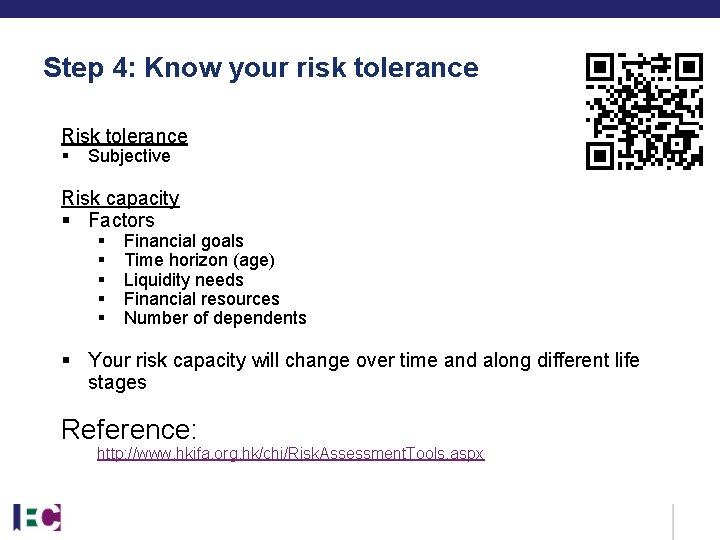
Step 4: Know your risk tolerance Risk tolerance § Subjective Risk capacity § Factors § § § Financial goals Time horizon (age) Liquidity needs Financial resources Number of dependents § Your risk capacity will change over time and along different life stages Reference: http: //www. hkifa. org. hk/chi/Risk. Assessment. Tools. aspx
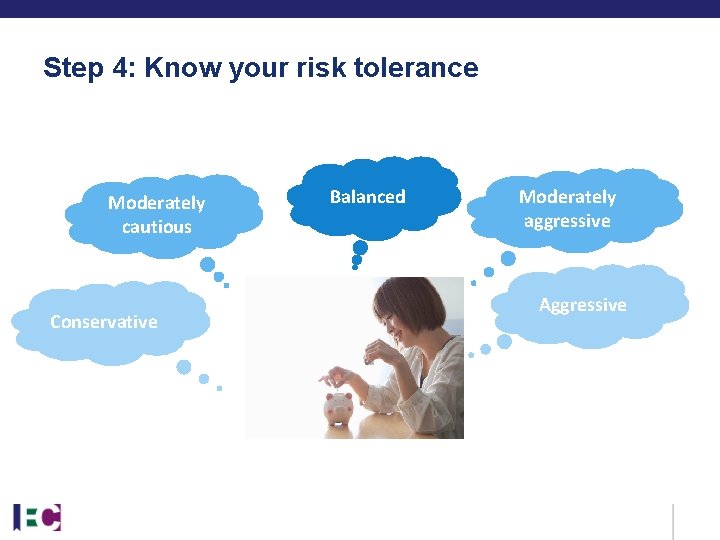
Step 4: Know your risk tolerance Moderately cautious Conservative Balanced Moderately aggressive Aggressive
Step 5: Work out and implement a basic financial plan § Prioritise your needs and goals § Identify action steps to reach your goals § Choose financial products according to your risk tolerance and capacity § Understand your rights and responsibilities in purchasing financial products § Maintain a diversified investment portfolio
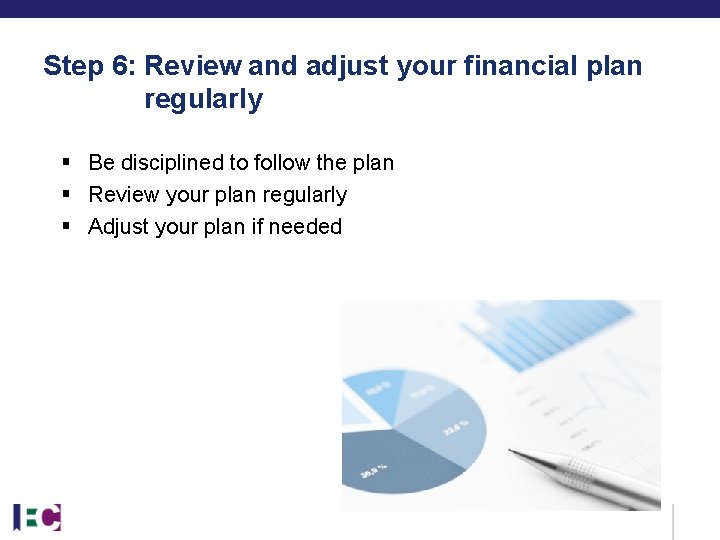
Step 6: Review and adjust your financial plan regularly § Be disciplined to follow the plan § Review your plan regularly § Adjust your plan if needed
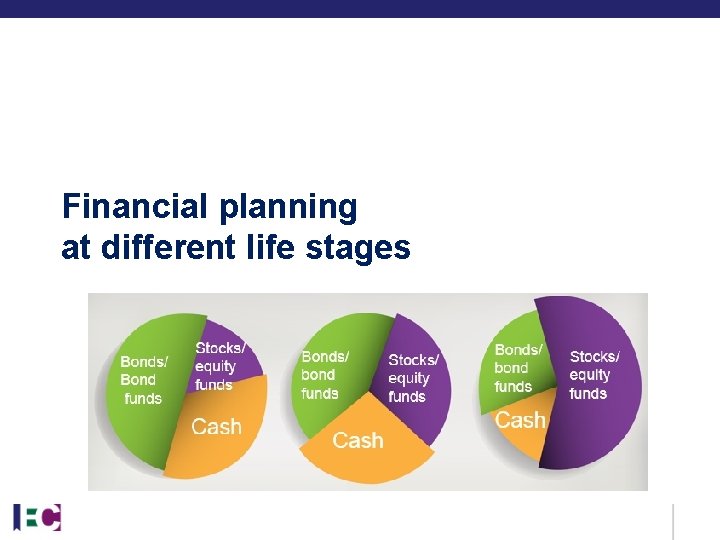
Financial planning at different life stages
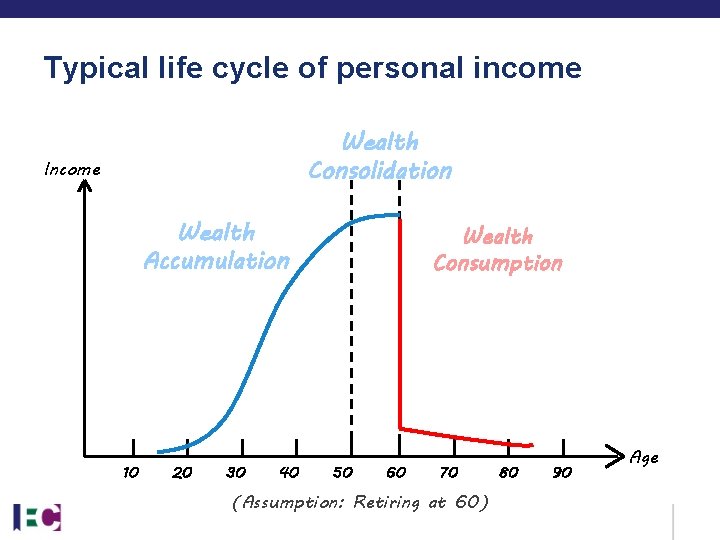
Typical life cycle of personal income Wealth Consolidation Income Wealth Accumulation 10 20 30 40 Wealth Consumption 50 60 70 (Assumption: Retiring at 60) 80 90 Age
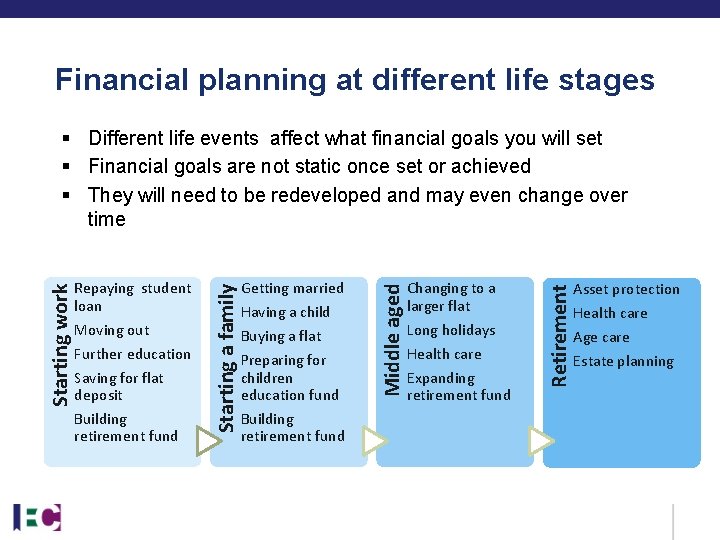
Financial planning at different life stages Further education Saving for flat deposit Building retirement fund Buying a flat Preparing for children education fund Building retirement fund Changing to a larger flat Long holidays Health care Expanding retirement fund Retirement Moving out Getting married Having a child Middle aged Repaying student loan Starting a family Starting work § Different life events affect what financial goals you will set § Financial goals are not static once set or achieved § They will need to be redeveloped and may even change over time Asset protection Health care Age care Estate planning
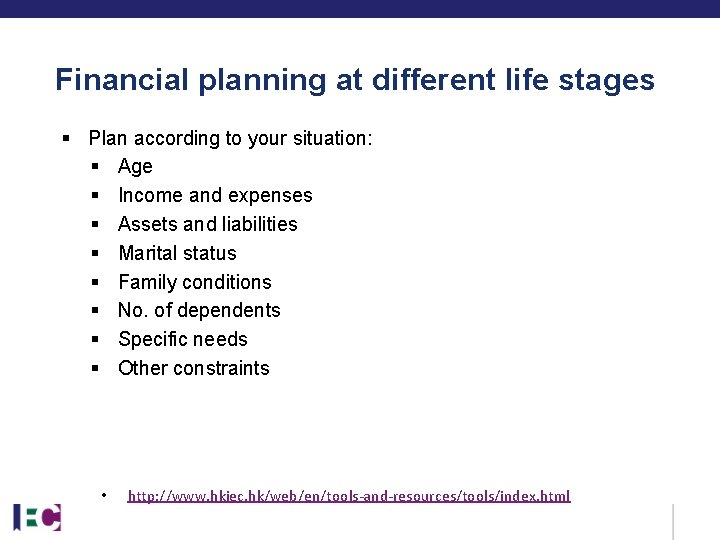
Financial planning at different life stages § Plan according to your situation: § Age § Income and expenses § Assets and liabilities § Marital status § Family conditions § No. of dependents § Specific needs § Other constraints • http: //www. hkiec. hk/web/en/tools-and-resources/tools/index. html
Case studies 26
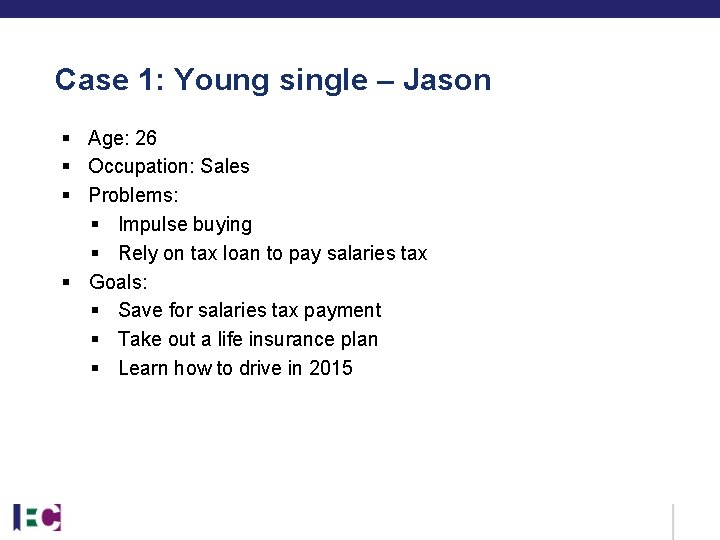
Case 1: Young single – Jason § Age: 26 § Occupation: Sales § Problems: § Impulse buying § Rely on tax loan to pay salaries tax § Goals: § Save for salaries tax payment § Take out a life insurance plan § Learn how to drive in 2015
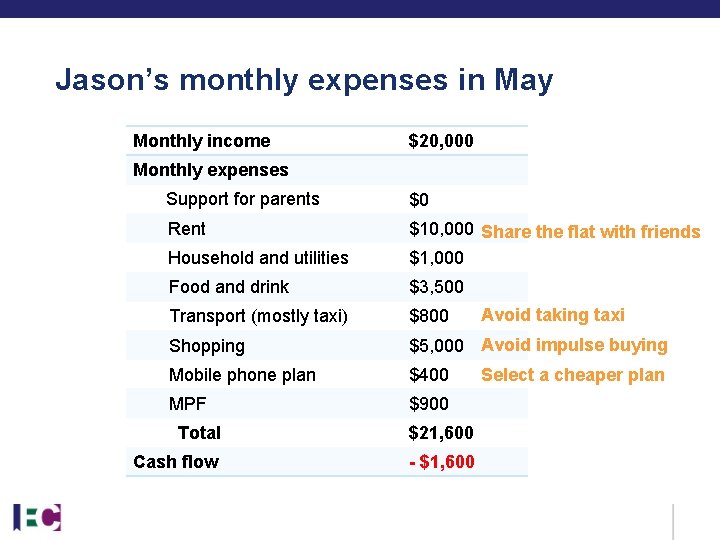
Jason’s monthly expenses in May Monthly income $20, 000 Monthly expenses Support for parents Rent $0 Household and utilities $10, 000 Share the flat with friends $1, 000 Food and drink $3, 500 Transport (mostly taxi) $800 Shopping $5, 000 Avoid impulse buying Mobile phone plan $400 MPF $900 Total $21, 600 Cash flow - $1, 600 Avoid taking taxi Select a cheaper plan
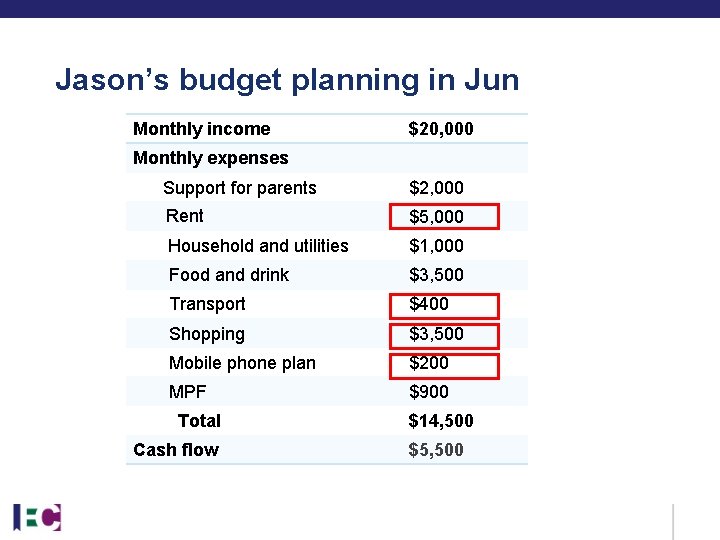
Jason’s budget planning in Jun Monthly income $20, 000 Monthly expenses Support for parents Rent $2, 000 $5, 000 Household and utilities $1, 000 Food and drink $3, 500 Transport $400 Shopping $3, 500 Mobile phone plan $200 MPF $900 Total $14, 500 Cash flow $5, 500
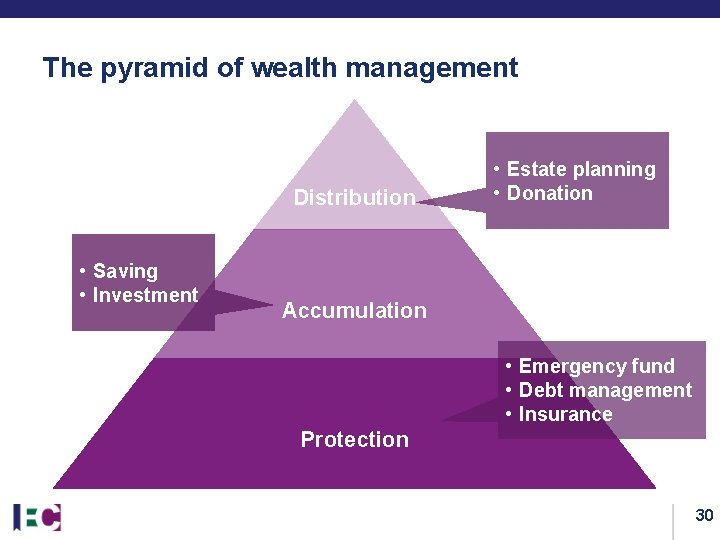
The pyramid of wealth management Distribution • Saving • Investment • Estate planning • Donation Accumulation • Emergency fund • Debt management • Insurance Protection 30
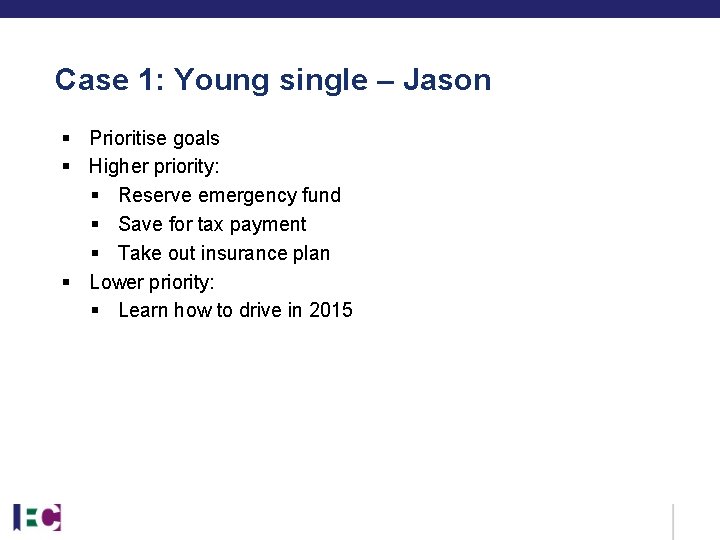
Case 1: Young single – Jason § Prioritise goals § Higher priority: § Reserve emergency fund § Save for tax payment § Take out insurance plan § Lower priority: § Learn how to drive in 2015
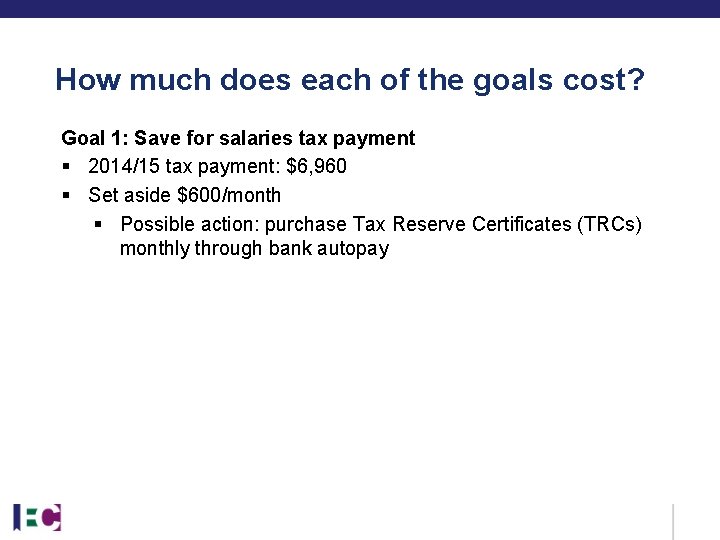
How much does each of the goals cost? Goal 1: Save for salaries tax payment § 2014/15 tax payment: $6, 960 § Set aside $600/month § Possible action: purchase Tax Reserve Certificates (TRCs) monthly through bank autopay
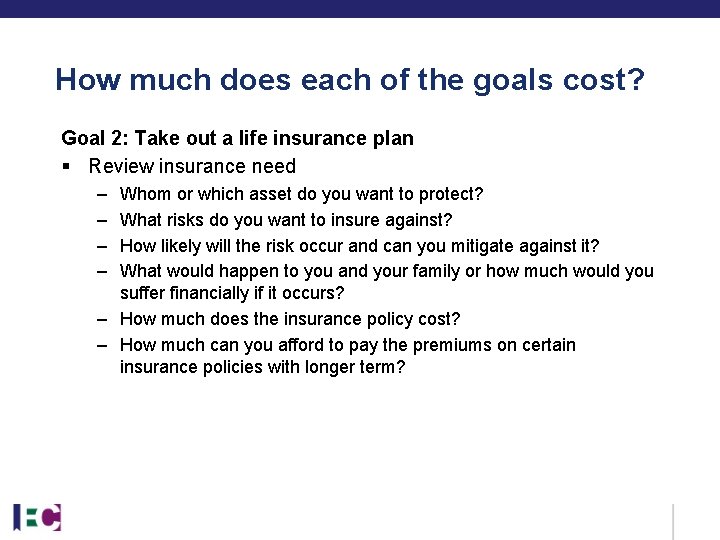
How much does each of the goals cost? Goal 2: Take out a life insurance plan § Review insurance need – – Whom or which asset do you want to protect? What risks do you want to insure against? How likely will the risk occur and can you mitigate against it? What would happen to you and your family or how much would you suffer financially if it occurs? – How much does the insurance policy cost? – How much can you afford to pay the premiums on certain insurance policies with longer term?
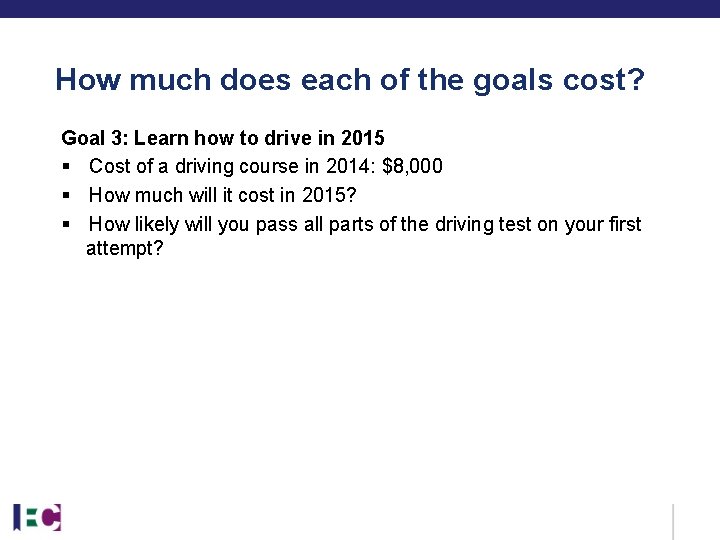
How much does each of the goals cost? Goal 3: Learn how to drive in 2015 § Cost of a driving course in 2014: $8, 000 § How much will it cost in 2015? § How likely will you pass all parts of the driving test on your first attempt?
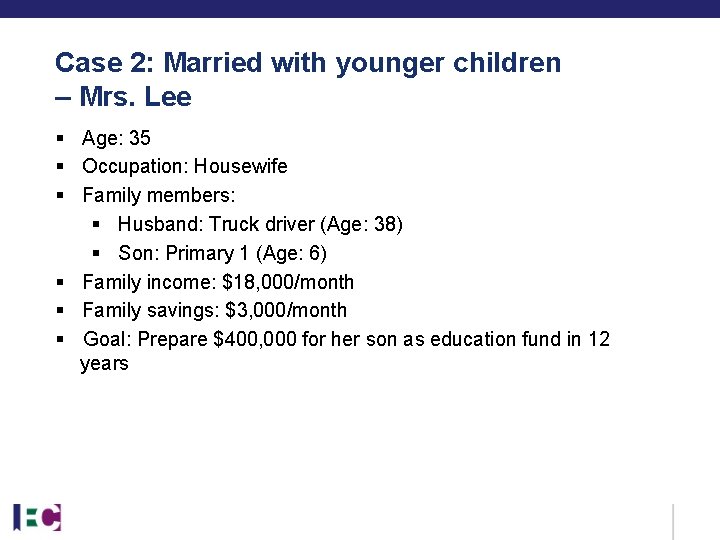
Case 2: Married with younger children – Mrs. Lee § Age: 35 § Occupation: Housewife § Family members: § Husband: Truck driver (Age: 38) § Son: Primary 1 (Age: 6) § Family income: $18, 000/month § Family savings: $3, 000/month § Goal: Prepare $400, 000 for her son as education fund in 12 years
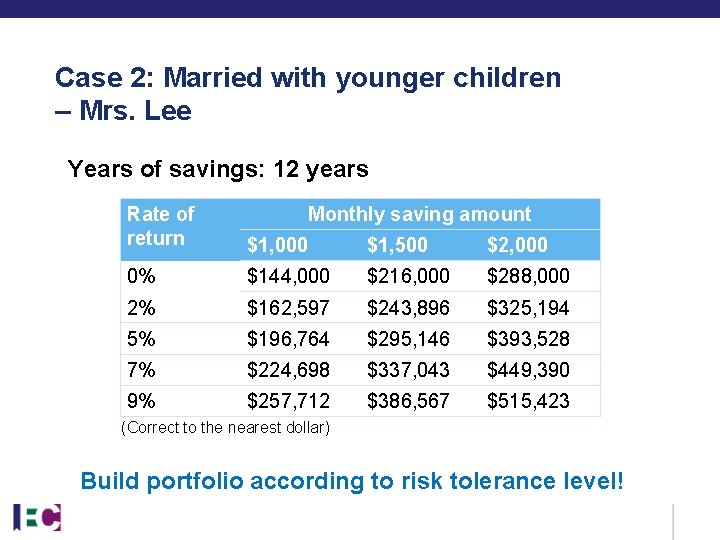
Case 2: Married with younger children – Mrs. Lee Years of savings: 12 years Rate of return Monthly saving amount $1, 000 $1, 500 $2, 000 0% $144, 000 $216, 000 $288, 000 2% $162, 597 $243, 896 $325, 194 5% $196, 764 $295, 146 $393, 528 7% $224, 698 $337, 043 $449, 390 9% $257, 712 $386, 567 $515, 423 (Correct to the nearest dollar) Build portfolio according to risk tolerance level!
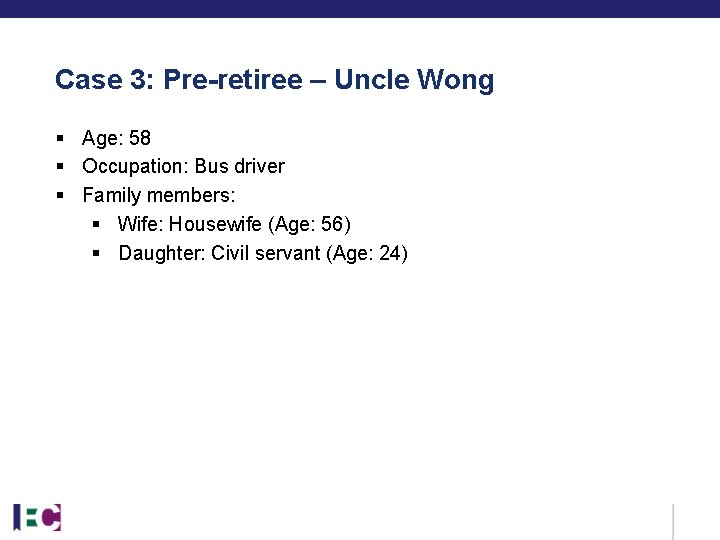
Case 3: Pre-retiree – Uncle Wong § Age: 58 § Occupation: Bus driver § Family members: § Wife: Housewife (Age: 56) § Daughter: Civil servant (Age: 24)
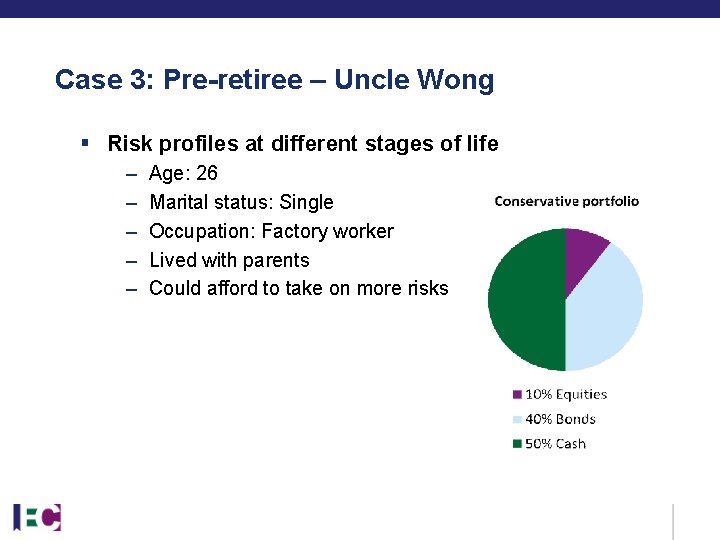
Case 3: Pre-retiree – Uncle Wong § Risk profiles at different stages of life – – – Age: 26 Marital status: Single Occupation: Factory worker Lived with parents Could afford to take on more risks
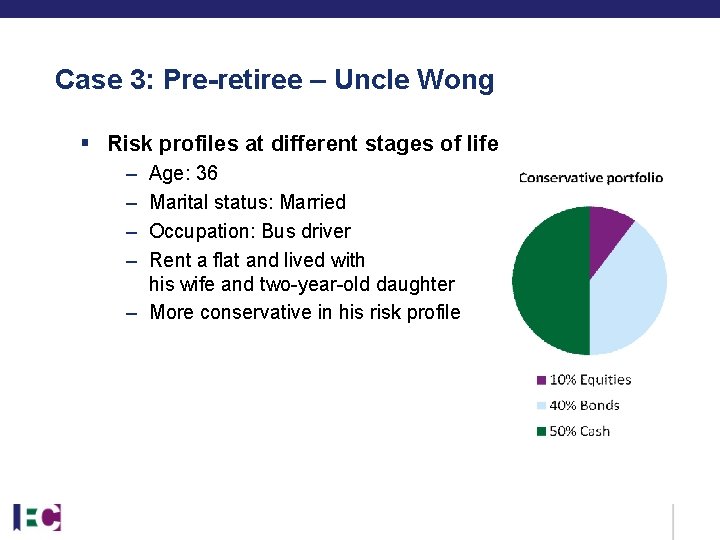
Case 3: Pre-retiree – Uncle Wong § Risk profiles at different stages of life – – Age: 36 Marital status: Married Occupation: Bus driver Rent a flat and lived with his wife and two-year-old daughter – More conservative in his risk profile
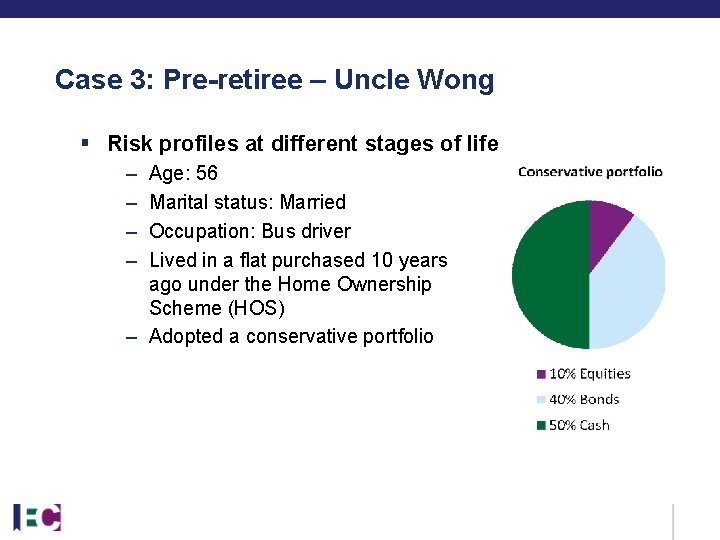
Case 3: Pre-retiree – Uncle Wong § Risk profiles at different stages of life – – Age: 56 Marital status: Married Occupation: Bus driver Lived in a flat purchased 10 years ago under the Home Ownership Scheme (HOS) – Adopted a conservative portfolio
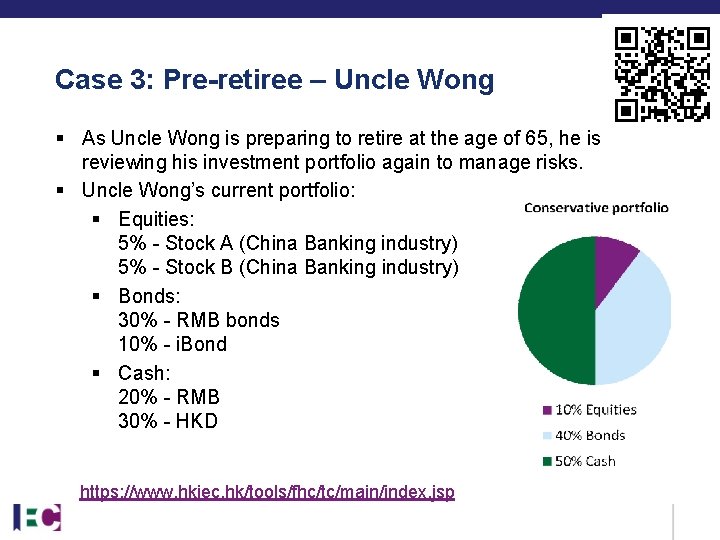
Case 3: Pre-retiree – Uncle Wong § As Uncle Wong is preparing to retire at the age of 65, he is reviewing his investment portfolio again to manage risks. § Uncle Wong’s current portfolio: § Equities: 5% - Stock A (China Banking industry) 5% - Stock B (China Banking industry) § Bonds: 30% - RMB bonds 10% - i. Bond § Cash: 20% - RMB 30% - HKD https: //www. hkiec. hk/tools/fhc/tc/main/index. jsp
Diversification § Risks are unavoidable § Diversification § Investment vehicles perform differently under different market conditions in general (eg stock vs bond) § Invest in different assets (eg stock, currency, bond) § Invest in different markets (eg regional or global investment through funds, foreign currency deposits, etc) § Investment distribution affected by risk profile (aggressive vs conservative) § Don’t put all the eggs in one basket
Summary § Financial planning ≠ Investing § Financial planning has to take into account the different stage of lives – birth, working period, retirement period, etc. § A comprehensive and holistic personal financial planning process covers a number of areas: § Cash flow management § Tax planning § Risk Management and insurance planning § Investment planning § Retirement planning § Estate planning
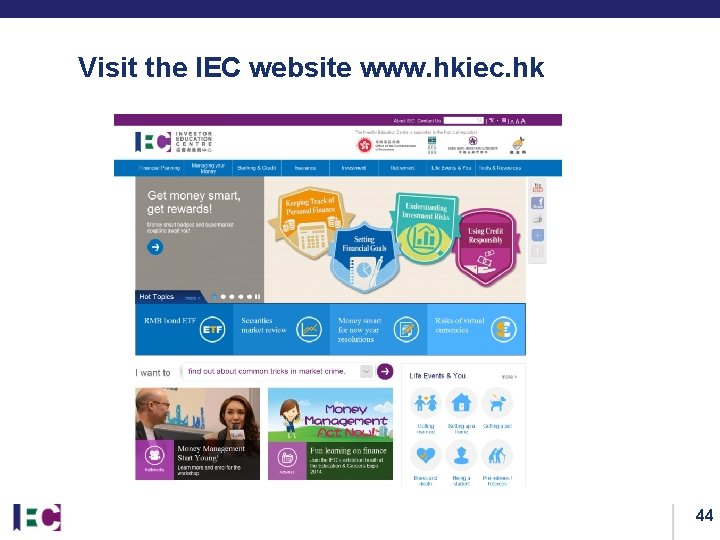
Visit the IEC website www. hkiec. hk 44
Thank you 45