Parenteral Medications Unit XIII Keith Rischer RN MA

- Slides: 36
Parenteral Medications Unit XIII Keith Rischer, RN, MA, CEN, CCRN
Definitions ØParenteral q. Intradermal (ID) q. Subcutaneous q. Intramuscular (IM) q. Intravenous (IV)
If not done correctly… A drug response that is too rapid or too slow Ø Nerve injury with associated pain Ø Localized bleeding Ø Tissue necrosis Ø Sterile abscess Ø Decreased therapeutic effect Ø
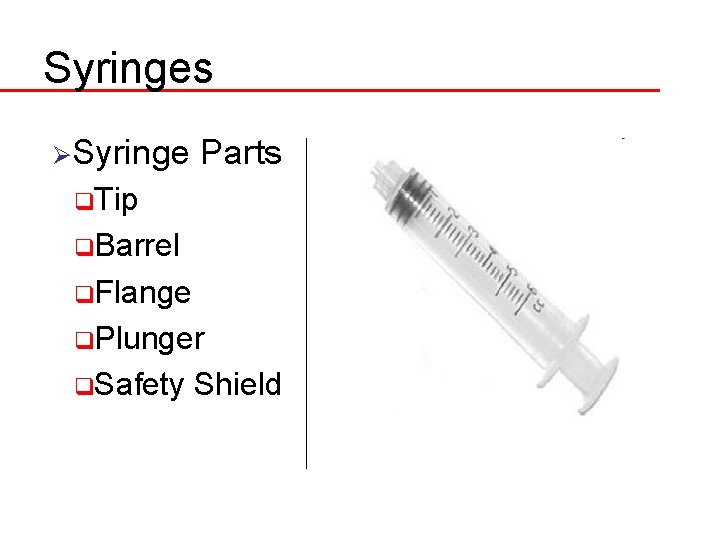
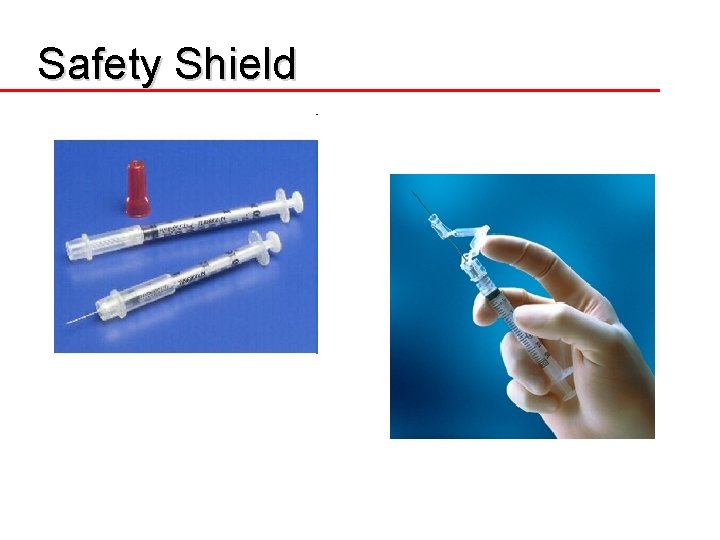
Syringes ØSyringe Parts q. Tip q. Barrel q. Flange q. Plunger q. Safety Shield
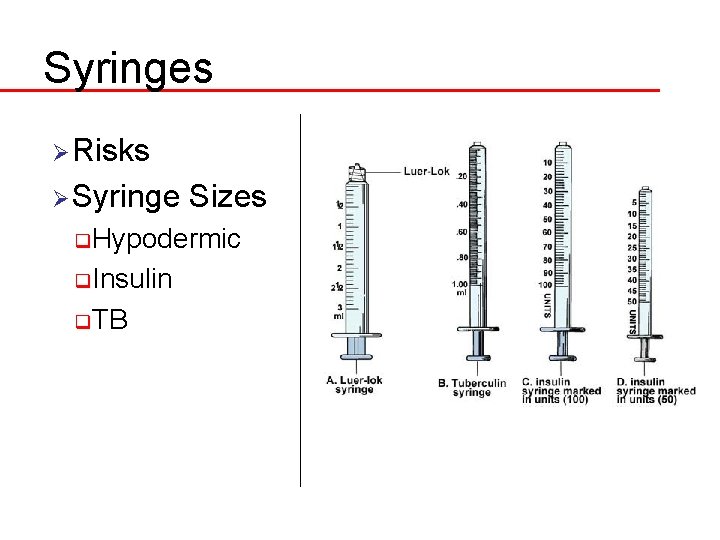
Syringes Ø Risks Ø Syringe Sizes q. Hypodermic q. Insulin q. TB 3 cc rige
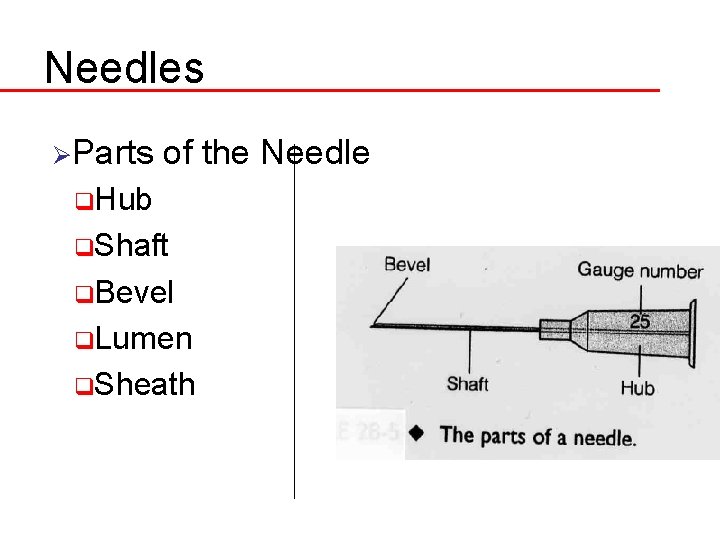
Needles ØParts of the Needle q. Hub q. Shaft q. Bevel q. Lumen q. Sheath
Needles Ø Length 1/2” to 1 1/2” Intradermal q 25 to 27 g q Three eighths to five eighths of an inch Subcutaneous 25 to 27 g Three eighths to five eighths of an inch Intramuscular 20 to 25 g One half to 1 1/2 inches
Safe Administration Ø Handwashing Ø Check Ø Gloving Injury Ø Recapping Needles Ø Sharps Container Ø Needle Sticks Ø Asepsis Ø 6 Rights Ø Allergies Ø Sites Ø Knowledge of Meds for Tissue
Safety Shield
Selection of Injection Site Ø Amount and character of medication Ø What is the amount and condition of the muscle mass? Ø What is the frequency of the injection?
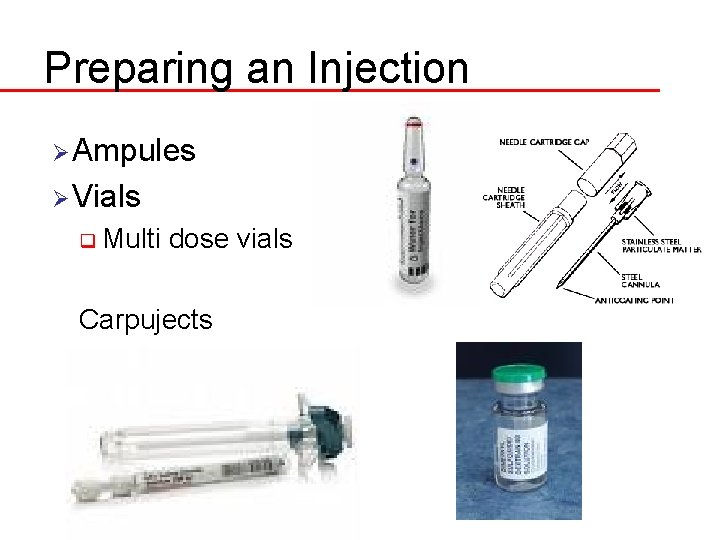
Preparing an Injection Ø Ampules Ø Vials q Multi dose vials Carpujects
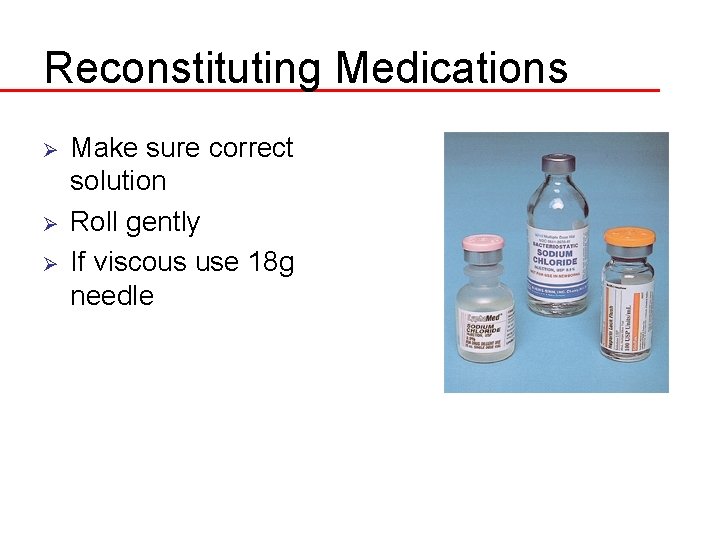
Reconstituting Medications Ø Ø Ø Make sure correct solution Roll gently If viscous use 18 g needle
Site Preparation Hand hygiene Ø Prevent contamination Ø q Syringe q Needle Ø Cleanse site q Alcohol swab q Chloroprep Ø Apply gloves
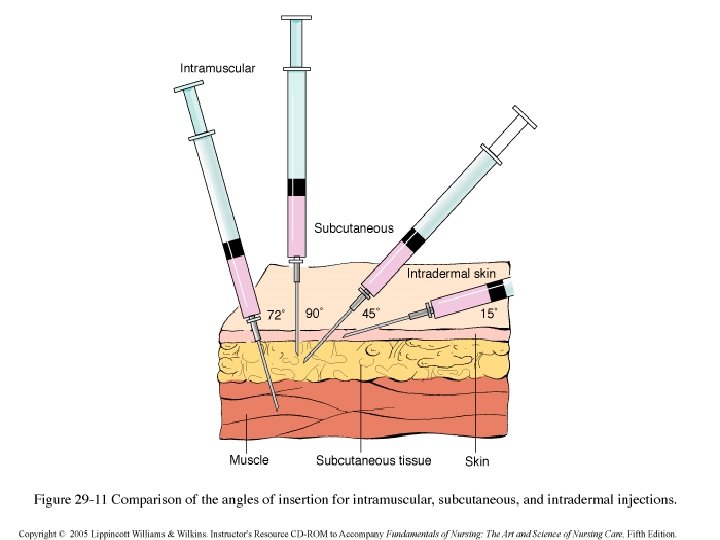
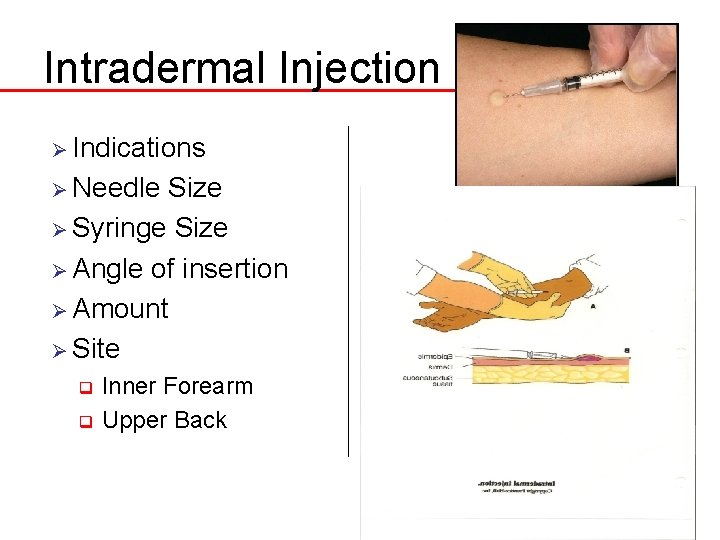
Intradermal Injection Ø Indications Ø Needle Size Ø Syringe Size Ø Angle of insertion Ø Amount Ø Site Inner Forearm q Upper Back q
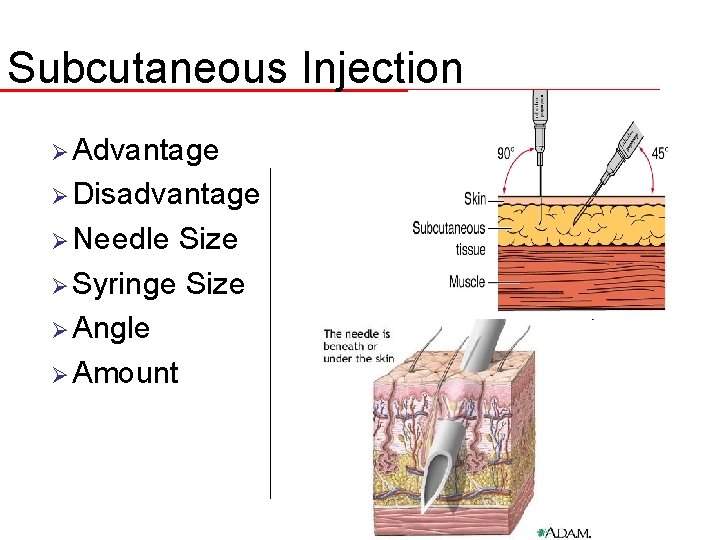
Subcutaneous Injection Ø Advantage Ø Disadvantage Ø Needle Size Ø Syringe Size Ø Angle Ø Amount
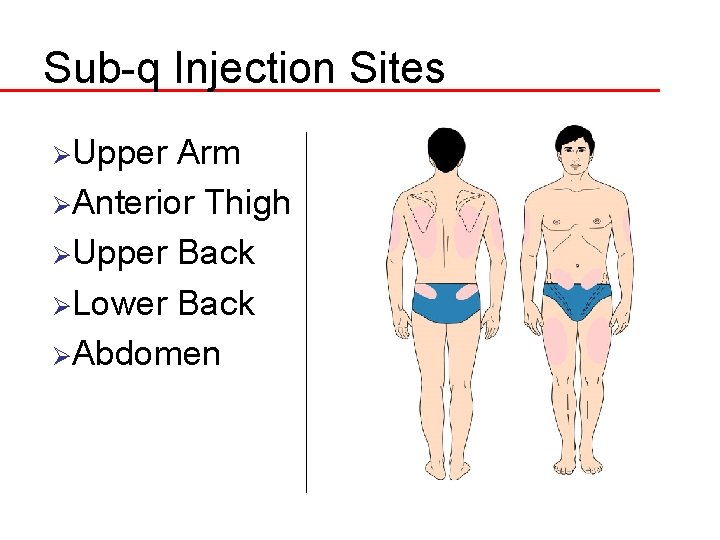
Sub-q Injection Sites ØUpper Arm ØAnterior Thigh ØUpper Back ØLower Back ØAbdomen
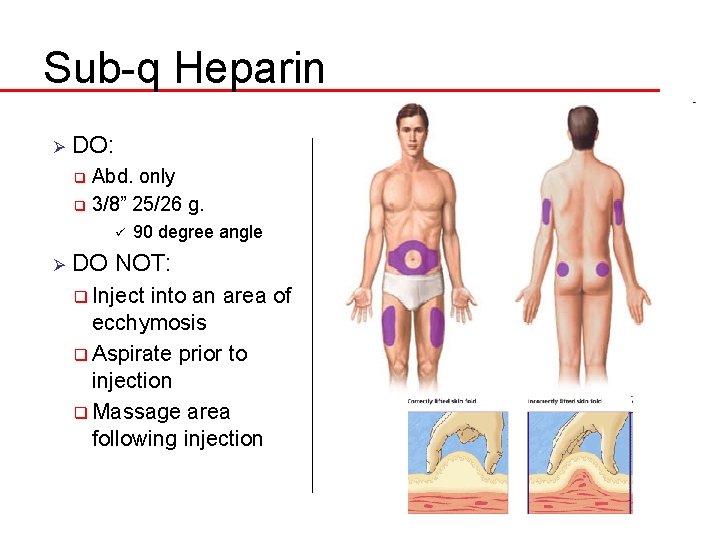
Sub-q Heparin Ø DO: Abd. only q 3/8” 25/26 g. q ü Ø 90 degree angle DO NOT: q Inject into an area of ecchymosis q Aspirate prior to injection q Massage area following injection
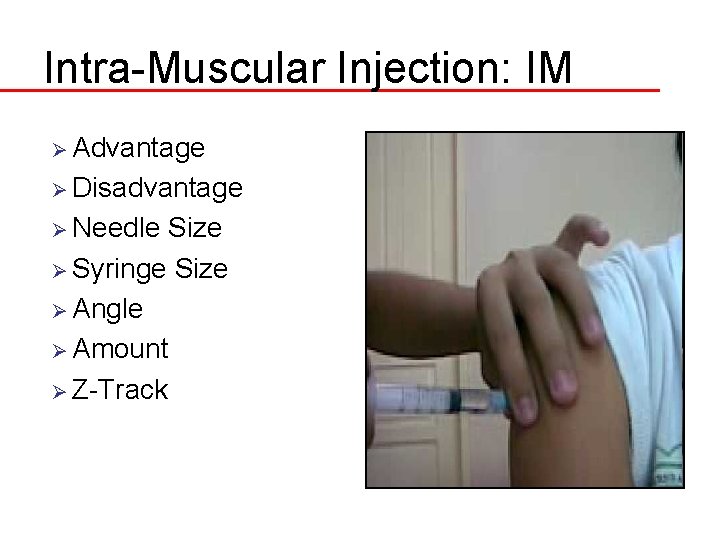
Intra-Muscular Injection: IM Ø Advantage Ø Disadvantage Ø Needle Size Ø Syringe Size Ø Angle Ø Amount Ø Z-Track
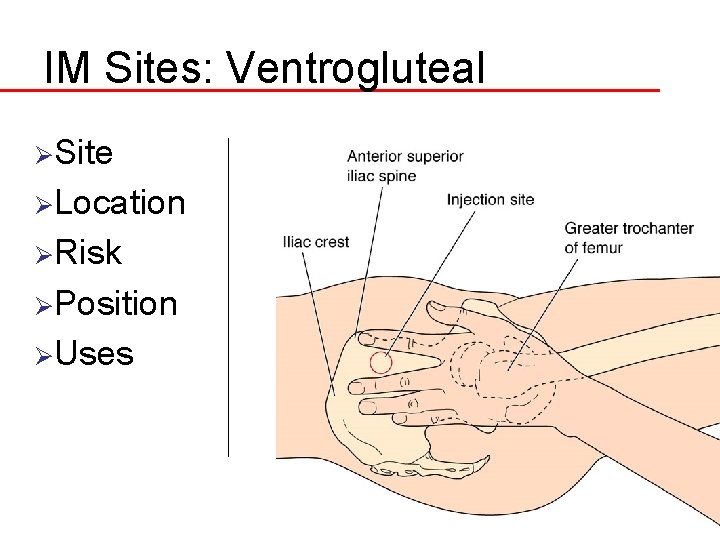
IM Sites: Ventrogluteal ØSite ØLocation ØRisk ØPosition ØUses
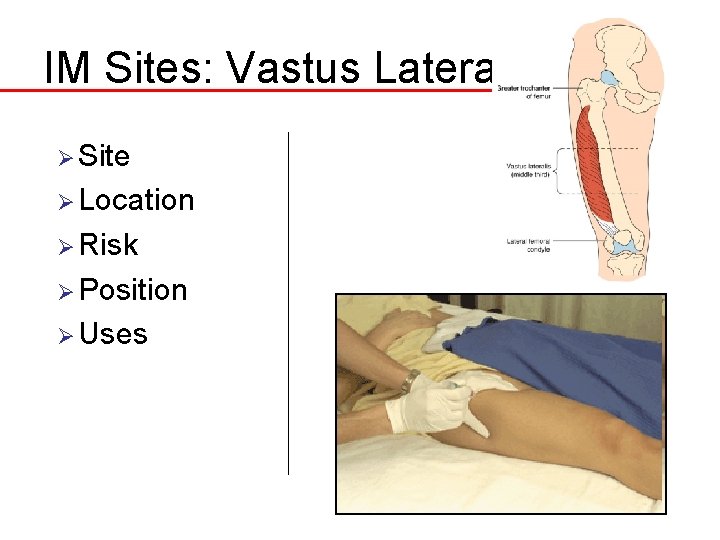
IM Sites: Vastus Lateralis Ø Site Ø Location Ø Risk Ø Position Ø Uses
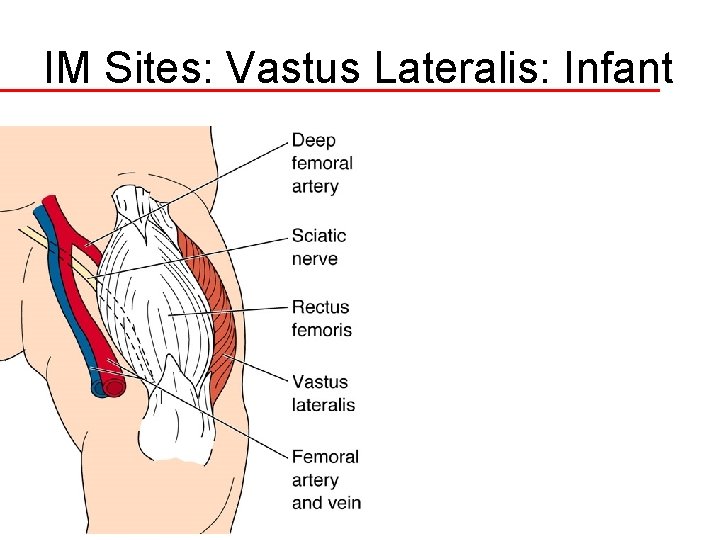
IM Sites: Vastus Lateralis: Infant
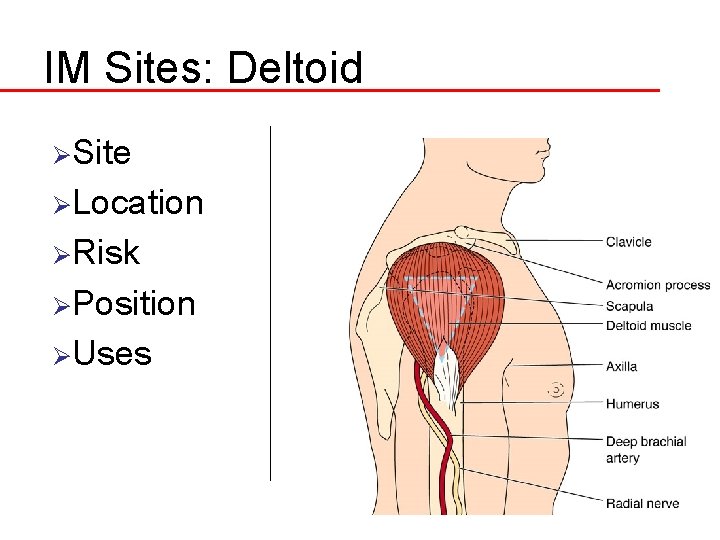
IM Sites: Deltoid ØSite ØLocation ØRisk ØPosition ØUses
Determining Site & Needle Size Ø Amount & Characteristic of Medication Ø Amount & Condition of Muscle Mass Ø Frequency of Injection Ø Type of Medication Ø Age Ø Recommended Route
Comfortable Injections Ø Appropriate Needle Ø Position of Client q Relax muscle Ø Proper q Rotate sites Ø Insert q Injection Site Needle Quickly Hold syringe steady Ø Diversion Ø Z-Track
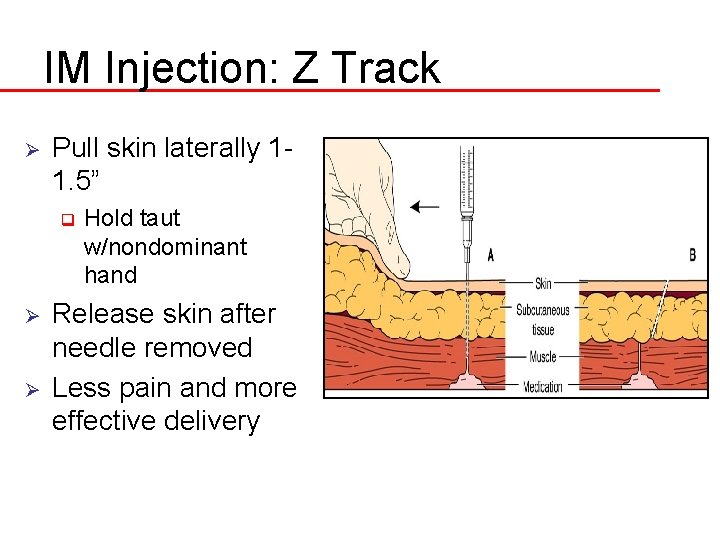
IM Injection: Z Track Ø Pull skin laterally 11. 5” q Ø Ø Hold taut w/nondominant hand Release skin after needle removed Less pain and more effective delivery
Complications of IM Injections Ø Infection Ø Lipodystrophy Ø Nerve Damage Ø Ecchymosis
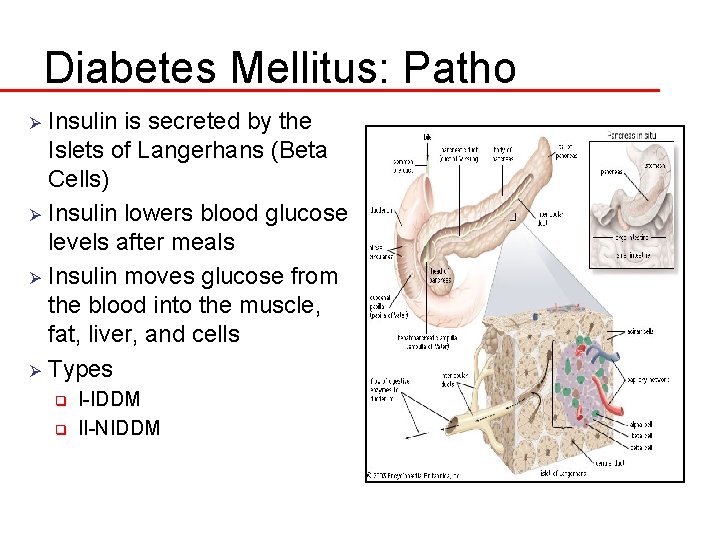
Diabetes Mellitus: Patho Insulin is secreted by the Islets of Langerhans (Beta Cells) Ø Insulin lowers blood glucose levels after meals Ø Insulin moves glucose from the blood into the muscle, fat, liver, and cells Ø Types Ø q q I-IDDM II-NIDDM
Diabetes Mellitus Ø Normal Blood Glucose q 99 mg/dl – upper level of normal q Hemoglobin A 1 c Ø Type II Medications q Stimulates the pancreas to release more insulin and to increase sensitivity of body cells to insulin q Given twice daily, before meals ü ü ü Glyburide (Diabeta) Glucophage (Metformin) Rosiglitazone (Avandia)
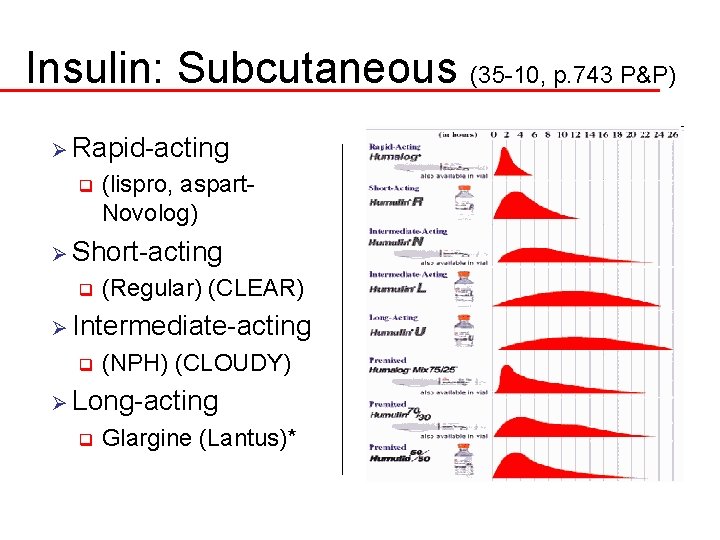
Insulin: Subcutaneous (35 -10, p. 743 P&P) Ø Rapid-acting q (lispro, aspart. Novolog) Ø Short-acting q (Regular) (CLEAR) Ø Intermediate-acting q (NPH) (CLOUDY) Ø Long-acting q Glargine (Lantus)*
Insulin: Nursing Implications Ø Monitor & assess for hypoglycemia Anxiety/restlessness q Tremors q Diaphoretic q Cool/pale q Altered LOC q ü Ø Confusion…lethargy…unconscious Glucagon 1 mg dose-may repeat in 15” q Give subq or IM if unresponsive q
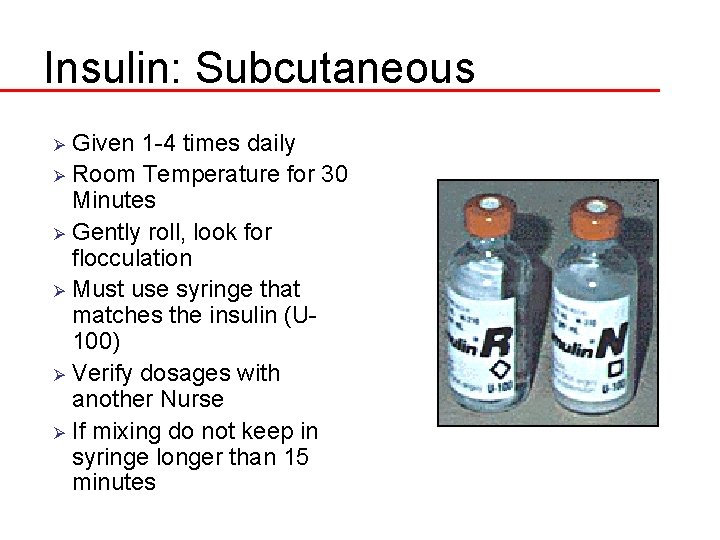
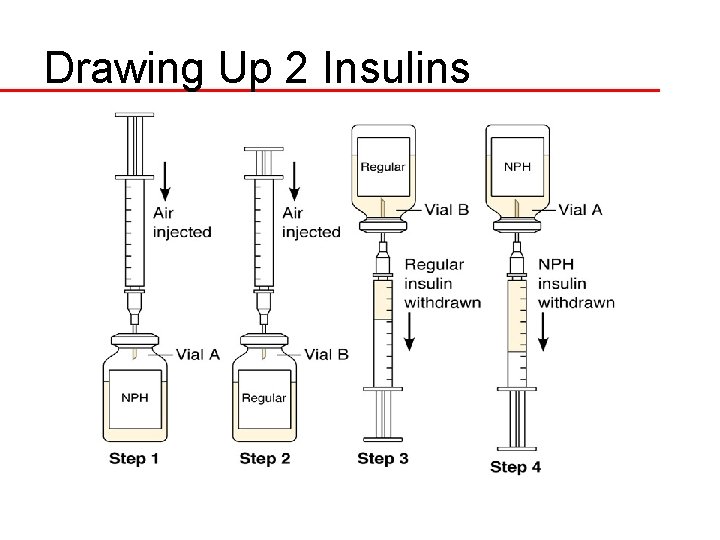
Insulin: Subcutaneous Given 1 -4 times daily Ø Room Temperature for 30 Minutes Ø Gently roll, look for flocculation Ø Must use syringe that matches the insulin (U 100) Ø Verify dosages with another Nurse Ø If mixing do not keep in syringe longer than 15 minutes Ø
Drawing Up 2 Insulins
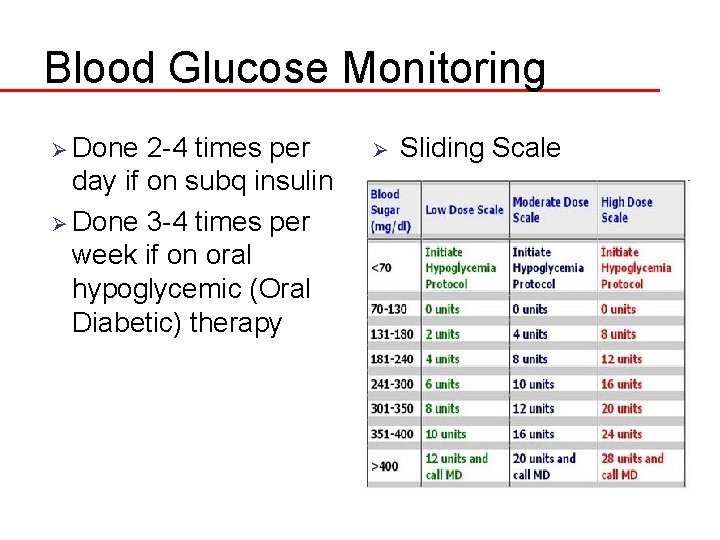
Blood Glucose Monitoring Ø Done 2 -4 times per day if on subq insulin Ø Done 3 -4 times per week if on oral hypoglycemic (Oral Diabetic) therapy Ø Sliding Scale
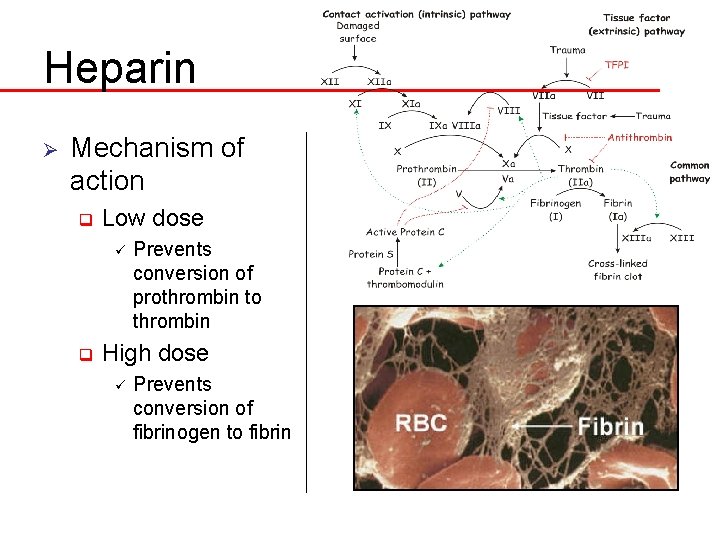
Heparin Ø Mechanism of action q Low dose ü q Prevents conversion of prothrombin to thrombin High dose ü Prevents conversion of fibrinogen to fibrin
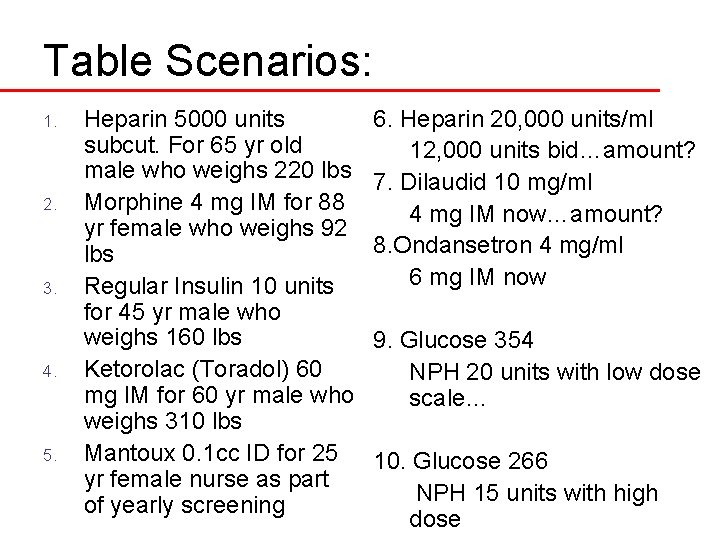
Table Scenarios: 1. 2. 3. 4. 5. Heparin 5000 units subcut. For 65 yr old male who weighs 220 lbs Morphine 4 mg IM for 88 yr female who weighs 92 lbs Regular Insulin 10 units for 45 yr male who weighs 160 lbs Ketorolac (Toradol) 60 mg IM for 60 yr male who weighs 310 lbs Mantoux 0. 1 cc ID for 25 yr female nurse as part of yearly screening 6. Heparin 20, 000 units/ml 12, 000 units bid…amount? 7. Dilaudid 10 mg/ml 4 mg IM now…amount? 8. Ondansetron 4 mg/ml 6 mg IM now 9. Glucose 354 NPH 20 units with low dose scale… 10. Glucose 266 NPH 15 units with high dose