Concepts of Chronicity Keith Rischer RN MA CEN

- Slides: 20
Concepts of Chronicity Keith Rischer, RN, MA, CEN 1
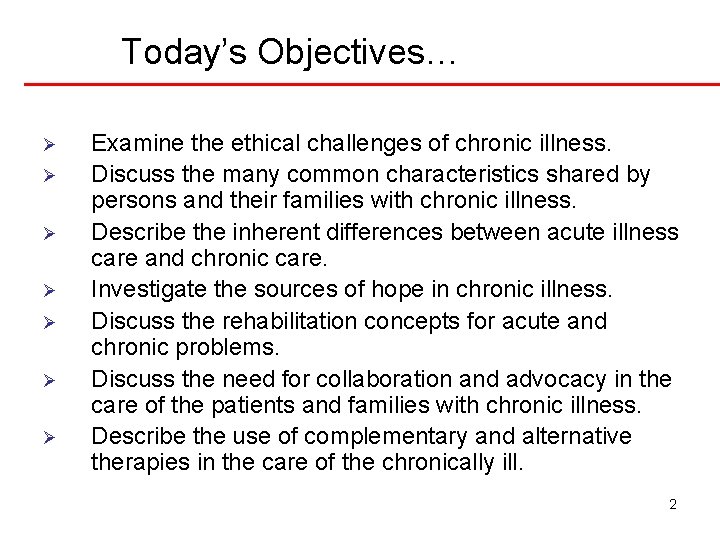
Today’s Objectives… Ø Ø Ø Ø Examine the ethical challenges of chronic illness. Discuss the many common characteristics shared by persons and their families with chronic illness. Describe the inherent differences between acute illness care and chronic care. Investigate the sources of hope in chronic illness. Discuss the rehabilitation concepts for acute and chronic problems. Discuss the need for collaboration and advocacy in the care of the patients and families with chronic illness. Describe the use of complementary and alternative therapies in the care of the chronically ill. 2
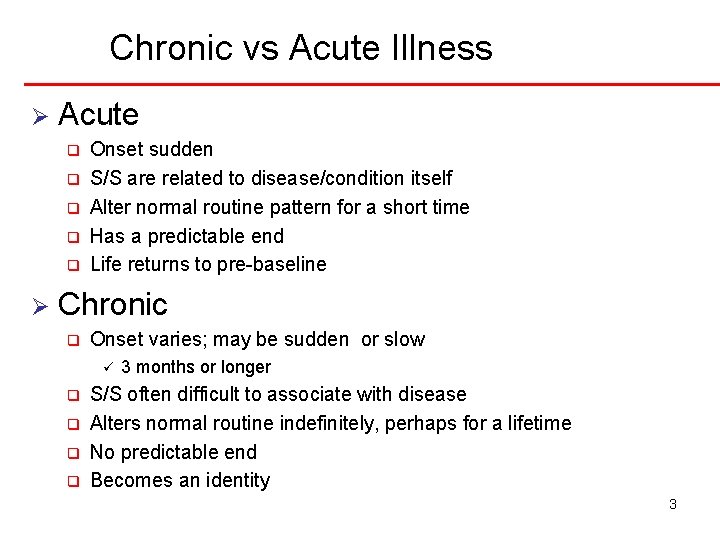
Chronic vs Acute Illness Ø Acute q q q Ø Onset sudden S/S are related to disease/condition itself Alter normal routine pattern for a short time Has a predictable end Life returns to pre-baseline Chronic q Onset varies; may be sudden or slow ü q q 3 months or longer S/S often difficult to associate with disease Alters normal routine indefinitely, perhaps for a lifetime No predictable end Becomes an identity 3
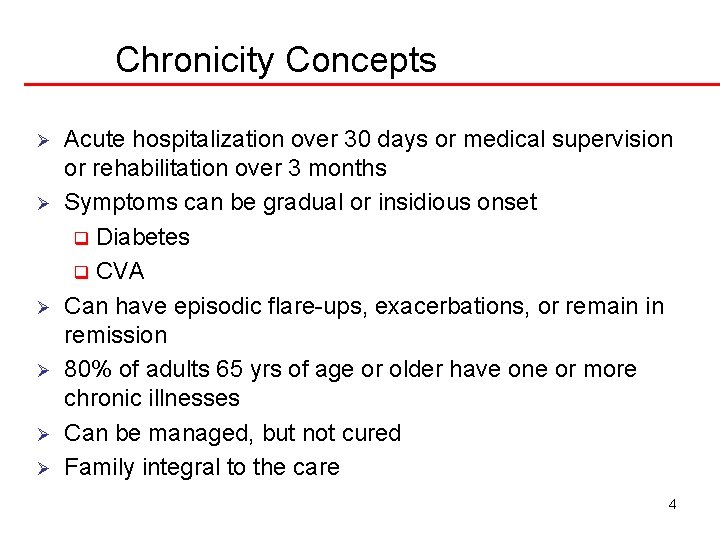
Chronicity Concepts Ø Ø Ø Acute hospitalization over 30 days or medical supervision or rehabilitation over 3 months Symptoms can be gradual or insidious onset q Diabetes q CVA Can have episodic flare-ups, exacerbations, or remain in remission 80% of adults 65 yrs of age or older have one or more chronic illnesses Can be managed, but not cured Family integral to the care 4
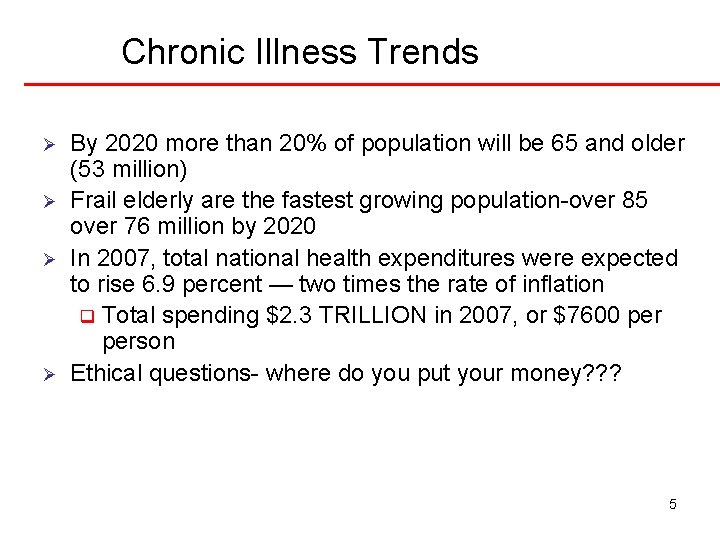
Chronic Illness Trends Ø Ø By 2020 more than 20% of population will be 65 and older (53 million) Frail elderly are the fastest growing population-over 85 over 76 million by 2020 In 2007, total national health expenditures were expected to rise 6. 9 percent — two times the rate of inflation q Total spending $2. 3 TRILLION in 2007, or $7600 person Ethical questions- where do you put your money? ? ? 5
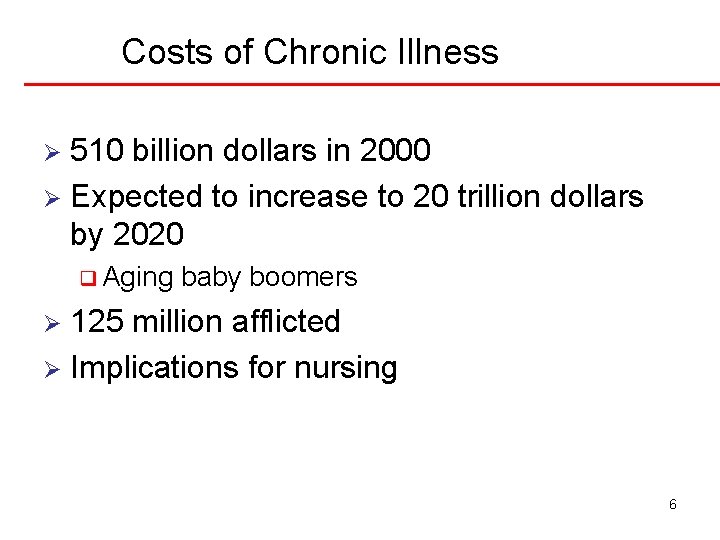
Costs of Chronic Illness 510 billion dollars in 2000 Ø Expected to increase to 20 trillion dollars by 2020 Ø q Aging baby boomers 125 million afflicted Ø Implications for nursing Ø 6
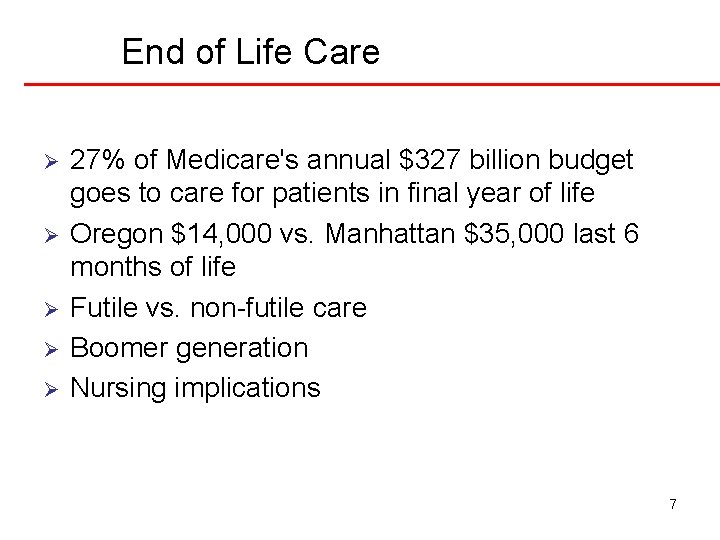
End of Life Care Ø Ø Ø 27% of Medicare's annual $327 billion budget goes to care for patients in final year of life Oregon $14, 000 vs. Manhattan $35, 000 last 6 months of life Futile vs. non-futile care Boomer generation Nursing implications 7
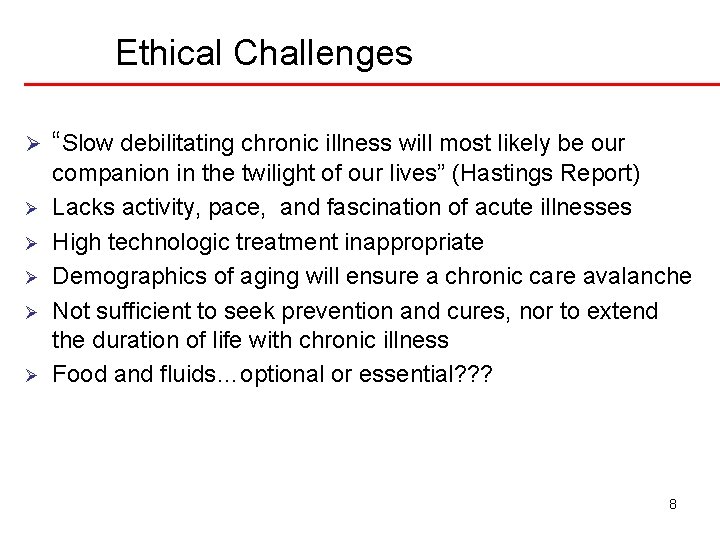
Ethical Challenges Ø “Slow debilitating chronic illness will most likely be our Ø Ø Ø companion in the twilight of our lives” (Hastings Report) Lacks activity, pace, and fascination of acute illnesses High technologic treatment inappropriate Demographics of aging will ensure a chronic care avalanche Not sufficient to seek prevention and cures, nor to extend the duration of life with chronic illness Food and fluids…optional or essential? ? ? 8
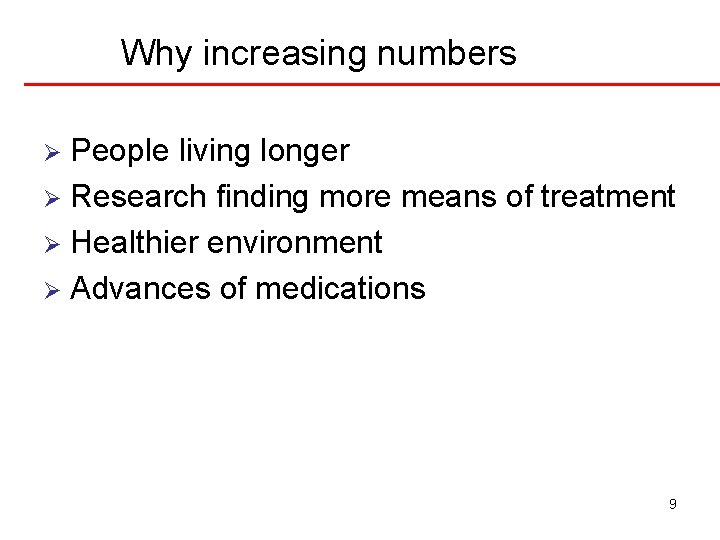
Why increasing numbers People living longer Ø Research finding more means of treatment Ø Healthier environment Ø Advances of medications Ø 9
Impact on client Age and life stages influences Ø Infancy to adolescence Ø q growth Ø Young to middle age q Family Ø and development and work concerns Older adult greatest number q normal aging process q aging and chronicity - bad combo q 10
Coming to terms with chronicity Ø Achieving highest level of wellness by q Juggling act q Focusing on abilities q Following medical regimen q Prevent further disability q Resist isolation 11
Rehabilitation Ø Ø Learning to live with chronic illness Stroke leading cause of disability - $30 billion each year What are we doing about these costs? ? ? Accidents leading cause of death among young adults 12
Goals of Rehabilitation Prevention of injury Ø Restoration of function Ø How does this differ for someone 5 years old vs someone 85 years old? ? ? Ø 13
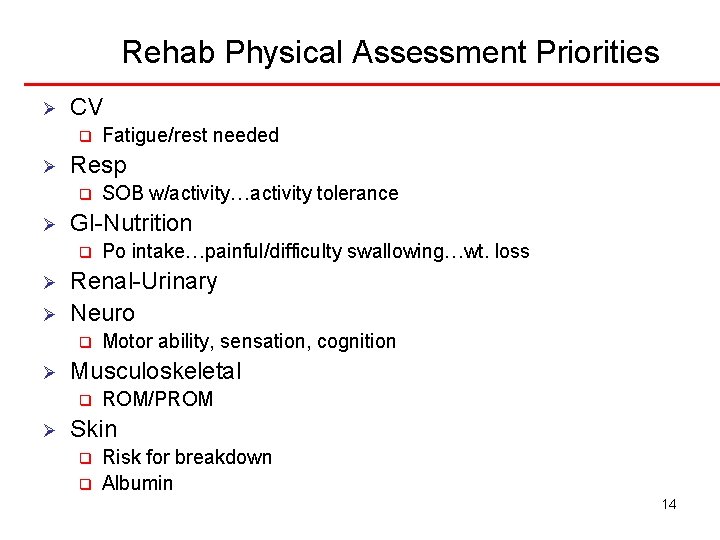
Rehab Physical Assessment Priorities Ø CV q Ø Resp q Ø Ø Motor ability, sensation, cognition Musculoskeletal q Ø Po intake…painful/difficulty swallowing…wt. loss Renal-Urinary Neuro q Ø SOB w/activity…activity tolerance GI-Nutrition q Ø Fatigue/rest needed ROM/PROM Skin q q Risk for breakdown Albumin 14
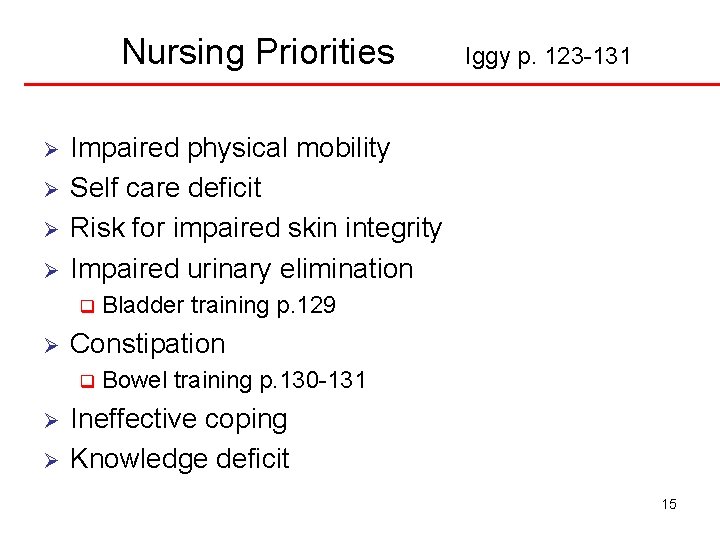
Nursing Priorities Ø Ø Impaired physical mobility Self care deficit Risk for impaired skin integrity Impaired urinary elimination q Ø Ø Bladder training p. 129 Constipation q Ø Iggy p. 123 -131 Bowel training p. 130 -131 Ineffective coping Knowledge deficit 15
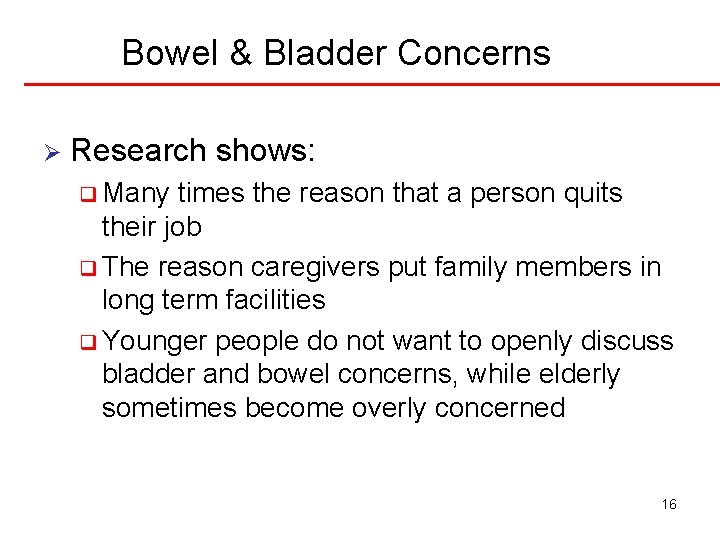
Bowel & Bladder Concerns Ø Research shows: q Many times the reason that a person quits their job q The reason caregivers put family members in long term facilities q Younger people do not want to openly discuss bladder and bowel concerns, while elderly sometimes become overly concerned 16
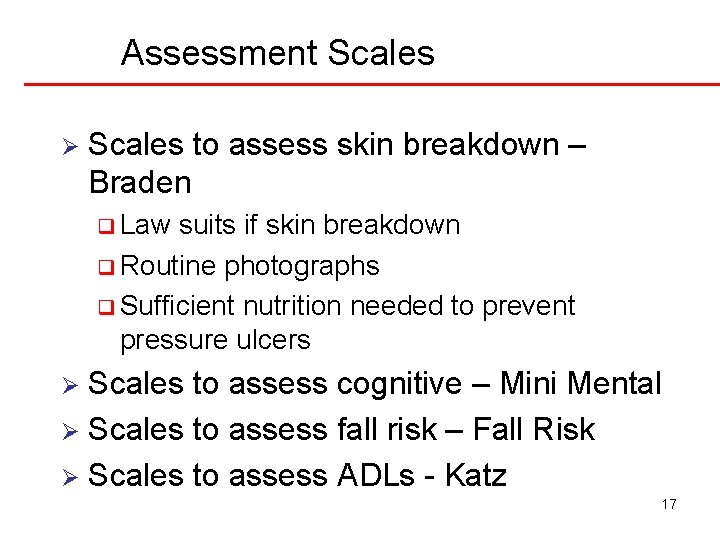
Assessment Scales Ø Scales to assess skin breakdown – Braden q Law suits if skin breakdown q Routine photographs q Sufficient nutrition needed to prevent pressure ulcers Scales to assess cognitive – Mini Mental Ø Scales to assess fall risk – Fall Risk Ø Scales to assess ADLs - Katz Ø 17
Sources of hope Ø “Sources of Hope in Chronic Illness” by Edith D. Hunt Raleigh q 90 pts, 45 with cancer & 45 with chronic illness q Most common reported sources for supporting hopefulness were family, friends, and religious beliefs (family, friends, faith) 18
Genomics Ø Ø Ø Human Genome Project – International New gene based strategies for disease detection, management, and treatment. Nurses link between patient and services Recognize patterns of inheritance Genetic information may be empowering or disabling (stigmatizing) Nurses need to know how to obtain genetic information 19
Alternative Therapies Ø Ø Holism-define Alternative Therapies q q q q Music therapy Acupuncture/accupressure Healing touch/therapeutic touch Relaxation/guided imagery Massage Meditation/relaxation therapy Aromatherapy Ø “Energy” vs “non-energy” Ø http: //www. allina. com/ahs/anw. nsf/page/ihh_ho me http: //www. woodwinds. org/Careservice/4_Heali ng_Arts/index. cfm? loadfile=1_oils. cfm# Ø 20