Panic disorder Essence Panic attack A period of

- Slides: 20
Panic disorder
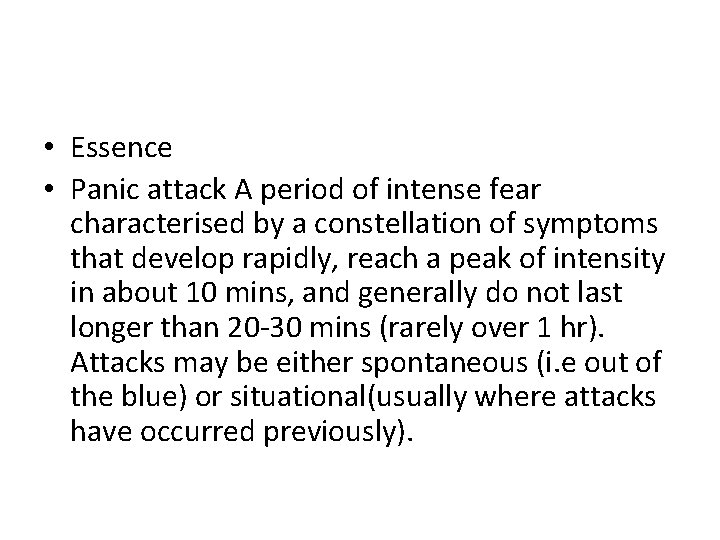
• Essence • Panic attack A period of intense fear characterised by a constellation of symptoms that develop rapidly, reach a peak of intensity in about 10 mins, and generally do not last longer than 20 -30 mins (rarely over 1 hr). Attacks may be either spontaneous (i. e out of the blue) or situational(usually where attacks have occurred previously).
• Sometimes attacks may occur during sleep (nocturnal panic attacks), and rarely, physiological symptoms of anxiety may occur without the psychological component (nonfearful panic attacks).
• Panic disorder: Recurrent panic attacks, which are not secondary to substance misuse, medical conditions, or another psychiatric disorder. Frequency of occurrence may vary from many attacks a day, to only a few attacks a year.
• There is usually the persistent worry about having another attack or the consequences of the attack (which may lead to phobic avoidance of places or situations), and significant behavioural changes related to the attack.
Symptoms/signs • Physical symptoms/signs are related to autonomic arousal (e. g. tremor, tachycardia, tachypnoea, hypertension, sweating, GI upset) which are often compounded by HVS (in 50“ 60% of cases). • Concerns of death from cardiac or respiratory problems may be a major focus, leading to patients presenting (often repeatedly) to emergency medical services.
• Panic disorder may be undiagnosed in patients with unexplained medical symptoms (chest pain, back pain, GI symptomsincluding IBS, fatigue, headache, dizziness, or multiple. symptoms) • Thoughts of suicide (or homicide) should be elicited as acute anxiety (particularly when recurrent) can lead to impulsive acts (usually directed towards self). N. B. Risk of attempted suicide is substantially raised where there is comorbid depression, alcohol misuse, or substance misuse.
• Epidemiology • Lifetime prevalence: 4. 2% for panic disorder, 8% for panic attacks
• Comorbidity • Agoraphobia (30 -50%), depressive disorder (up to 68%), other anxiety and related disorders (up to 50%, e. g. social phobia, OCD), alcohol (up to 30%) and substance misuse, bipolar affective disorder (20%), medical conditions (e. g. mitral valve prolapse, hypertension, cardiomyopathy, COPD, IBS, migraine).
Differential diagnosis • Other anxiety or related disorder (panic attacks may be part of the disorder), substance or alcohol misuse/withdrawal (e. g. amphetamines, caffeine, cocaine, theophylline, sedative-hypnotics, steroida), mood disorders, psychiatric disorders secondary to medical conditions, medical conditions presenting with similar symptoms (e. g. endocrine: carcinoid syndrome, Cushing's disease/syndrome, hyperthyroidism, hypoglycemia, hypoparathyroidism, phaeochromocytoma; haematological: anaemia, cardiac: arrhythmias, mitral valve prolapse, MI; respiratory: COPD/asthma, HVS; neurological: epilepsy esp. TLE, vestibular dysfunction).
• Investigations • There are no specific tests for panic disorder, however basic investigations should be performed to exclude physical causes (e. g. FBC, U&Es, glucose, TFTs, ECG, and if supported by history/physical examination: toxicology, Ca 2+, urinary VMA/p. HVA, ECHO, and EEG).
Symptoms associated with panic attacks • Palpitations, pounding heart, or accelerated heart rate. • Sweating. • Trembling or shaking. • Sense of shortness of breath or smothering. • Feeling of choking or difficulties swallowing (globus hystericus). • Chest pain or discomfort.
• Nausea or abdominal distress. • Feeling dizzy, unsteady, light-headed, or faint. • Derealisation or depersonalisation (feeling detached from oneself or one's surroundings). • Fear of losing control or going crazy. • Fear of dying. • Numbness or tingling sensations (paraesthesia). • Chills or hot flashes.
Aetiological models The serotonergic model The noradrenergic model The GABA model The lactate model The false suffocation carbon dioxide hypothesis • The neuroanatomical model • The genetic hypothesis • • •
Management guidelines • Pharmacological • SSRIs (e. g. paroxetine [at least 40 mg], Beneficial effect may take 3 -8 weeks. • Alternative antidepressant TCAs (e. g. imipramine or clomipramine)
• BDZs (e. g. alprazolam or clonazepam) should be used with caution (due to potential for abuse/dependence/cognitive impairment) but may be effective for severe, frequent, incapacitating symptoms. Use for 1 -2 weeks in combination with an antidepressant
• If successful Continue treatment for -1 yr before trial discontinuation (gradual tapering of dose). Do not confuse withdrawal effects (10 -20% of patients) with re-emergence of symptoms (50 -70% of patients). If symptoms recur, continue for -1 yr before considering second trial discontinuation.
• • Psychological Behavioural methods Cognitive methods Psychodynamic methods
Emergency treatment of an acute panic attack • Maintain a reassuring and calm attitude (most panic attacks spontaneously resolve within 30 mins). • If symptoms are severe and distressing consider prompt use of BDZs (immediate relief of anxiety may help reassure the patient, provide confidence that treatment is possible, and reduce subsequent emergency presentations).
• If first presentation, exclude medical causes (may require admission to hospital for specific tests). • If panic attacks are recurrent, consider differential diagnosis for panic disorder and address underlying disorder (may require psychiatric referral).